

Louvered Vinyl Shutters: A West TN Homeowner’s Guide
By midafternoon in West Tennessee, problem windows start announcing themselves. Sun fades the fabric, rooms on the hot side of the house warm up too early, and worn exterior shutters make the whole front elevation look more tired than it really is. Homeowners in Jackson, Milan, Dyersburg, and Humboldt usually start shopping for shutters for the same reason. They want the house to look finished and hold up better in our weather.
Wood shutters can look sharp at first, but our humidity and heat are hard on them. Paint breaks down, corners start to move, and upkeep turns into a repeating expense. Store-bought shutters often create a different problem. The panel looks thin, the proportions are off, and the color or size rarely fits the house well enough to look intentional from the street.
Louvered vinyl shutters solve that problem with a style that still suits West Tennessee homes and a material that asks for less maintenance. A key advantage emerges when they are custom-sized and installed correctly. That is the difference between a shutter that looks like an afterthought and one that genuinely improves the house. Blinds Galore helps homeowners sort through those trade-offs before they spend money on the wrong option.
The Smart Solution for Your West Tennessee Home
A homeowner might start with one simple complaint. The front of the house looks flat. Or the west-facing rooms stay hotter than the rest of the house. Or the shutters that came with the house now look chalky, crooked, or undersized.
Those issues usually connect back to one thing. The wrong material, the wrong proportions, or both.
Why homeowners keep coming back to this style
Louvered vinyl shutters work because they solve several practical problems at once. They improve curb appeal, they hold up better than many homeowners expect, and they fit the architecture people have in West Tennessee. Ranch homes, traditional brick homes, farmhouses, and newer subdivisions can all wear this style well when the scale is right.
There’s also a reason the look feels familiar. Louvered shutters have deep roots in architecture. Their history goes back to ancient Greece and Rome, and they later became a staple on 18th-century Southern U.S. plantation homes, where wood shutters provided shade and ventilation in hot climates before the design carried into modern vinyl versions with greater durability, as outlined in this history of exterior louvered shutters.
That history matters because it explains why the style still feels correct on so many Southern homes. It isn't a passing design trend. It's a practical form that lasted.
What works in this climate
West Tennessee puts exterior products through real stress. We get heat, humidity, rain, pollen, and long stretches of direct sun. Decorative products that look fine in a warehouse often don't look fine after a few seasons outside.
A well-made vinyl shutter is a strong fit when you want:
- Less upkeep: no scraping, staining, or repainting cycle.
- Reliable curb appeal: the house stays tidy-looking without constant touch-ups.
- A classic exterior line: louvers add depth and structure around windows.
Practical rule: If shutters don't look proportional from the street, the whole front elevation feels off, no matter how nice the siding, door, or landscaping may be.
The smartest approach is to treat shutters as part of the home's architecture, not as an afterthought. When homeowners do that, the result looks intentional instead of added-on.
Understanding Louvered Vinyl Shutter Construction
A good shutter isn't just a rectangle with angled slats. Its strength comes from how the whole panel is built. Once you understand the parts, it becomes much easier to spot the difference between a sturdy product and a flimsy one.
The parts that actually matter
Most homeowners notice the louvers first. Installers notice the frame.
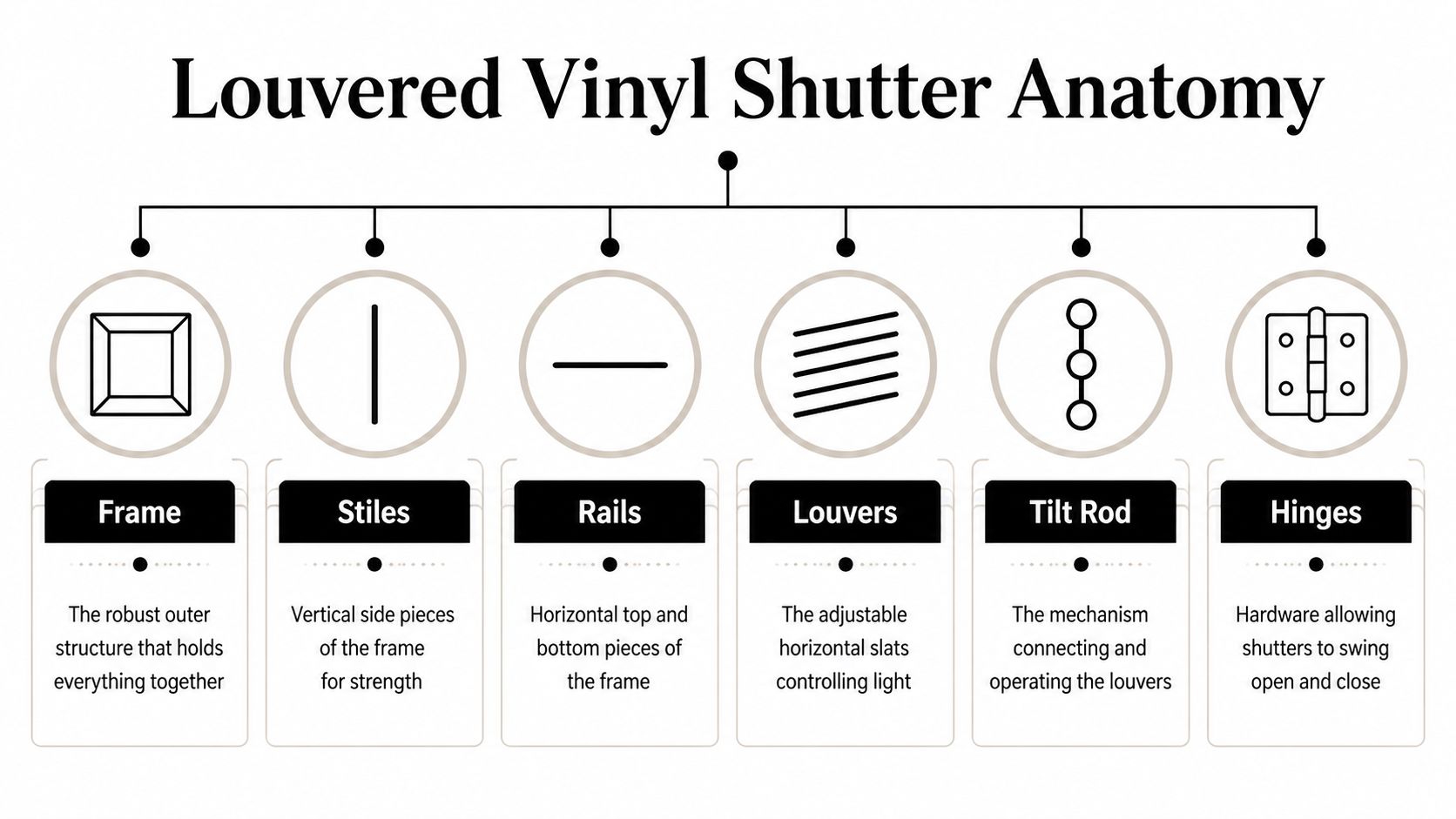
Here’s the simple anatomy:
- Stiles: the vertical side pieces that give the panel structure
- Rails: the horizontal members that tie the panel together
- Louvers: the angled slats that create the signature look
- Mid-rails or cross-pieces: added support on some styles, especially larger or shaped shutters
- Fastener points: the areas that take the most stress during installation and weather exposure
Consider a screen door. If the perimeter frame is weak, the center never stays true. This principle applies to shutters. A thin panel may look acceptable out of the box, but once it faces heat and wind, every weak point starts to show.
Why the material matters
Higher-quality louvered vinyl shutters are often made from UV-stabilized polypropylene copolymer. That matters because sun exposure is one of the biggest reasons exterior products fail early. Better formulations resist the brittleness, fading, and distortion that cheaper products struggle with.
One manufacturer’s product details note that better-made vinyl shutters can be up to 21% thicker and 25% heavier than competing products, helping prevent warping or cracking and maintain structural integrity in temperatures from -20°F to 140°F. That same product information ties the stronger build to long-term stability in harsh weather in this louvered vinyl shutter specification page.
That extra thickness and weight aren't just sales language. They affect how the shutter feels in your hand, how flat it sits against the house, and how well it resists stress over time.
A shutter should feel like a finished exterior component, not like packaging material pretending to be trim.
What separates a quality shutter from a bargain one
When I look at vinyl shutters for a West Tennessee home, I care less about the display rack and more about how the panel will behave after seasons of heat, rain, and expansion cycles.
Watch for these trade-offs:
| Build detail | Better outcome | Common problem with cheaper options |
|---|---|---|
| Heavier panel | More stable appearance on the wall | Flexing and waviness |
| Thicker material | Better resistance to stress | Cracking or distortion |
| UV-stabilized construction | More consistent color retention | Premature chalking or fade |
| Clean, reinforced edges | Better finish and durability | Fragile-looking perimeter lines |
Why big-box buying often disappoints
The biggest issue with mass-market shutters usually isn't that they exist. It's that they force homeowners to make a style decision based on limited widths, limited colors, and very little guidance about proportion.
That creates three predictable problems:
- Panels look too narrow for the window.
- Color coordination feels close but not right against brick, siding, or trim.
- The material quality isn't obvious until after installation.
A better path is to evaluate shutters the way a professional does. Start with the panel structure, then the material, then the finish, and only then the color. If the build quality is weak, the rest won't save it.
Lasting Benefits for Your Home and Budget
The best reason to choose louvered vinyl shutters isn't that they're trendy. It's that they keep solving problems year after year without adding new ones. That matters in West Tennessee, where exterior products need to handle long summers, damp air, and plenty of weather swings.
Durability that fits real life
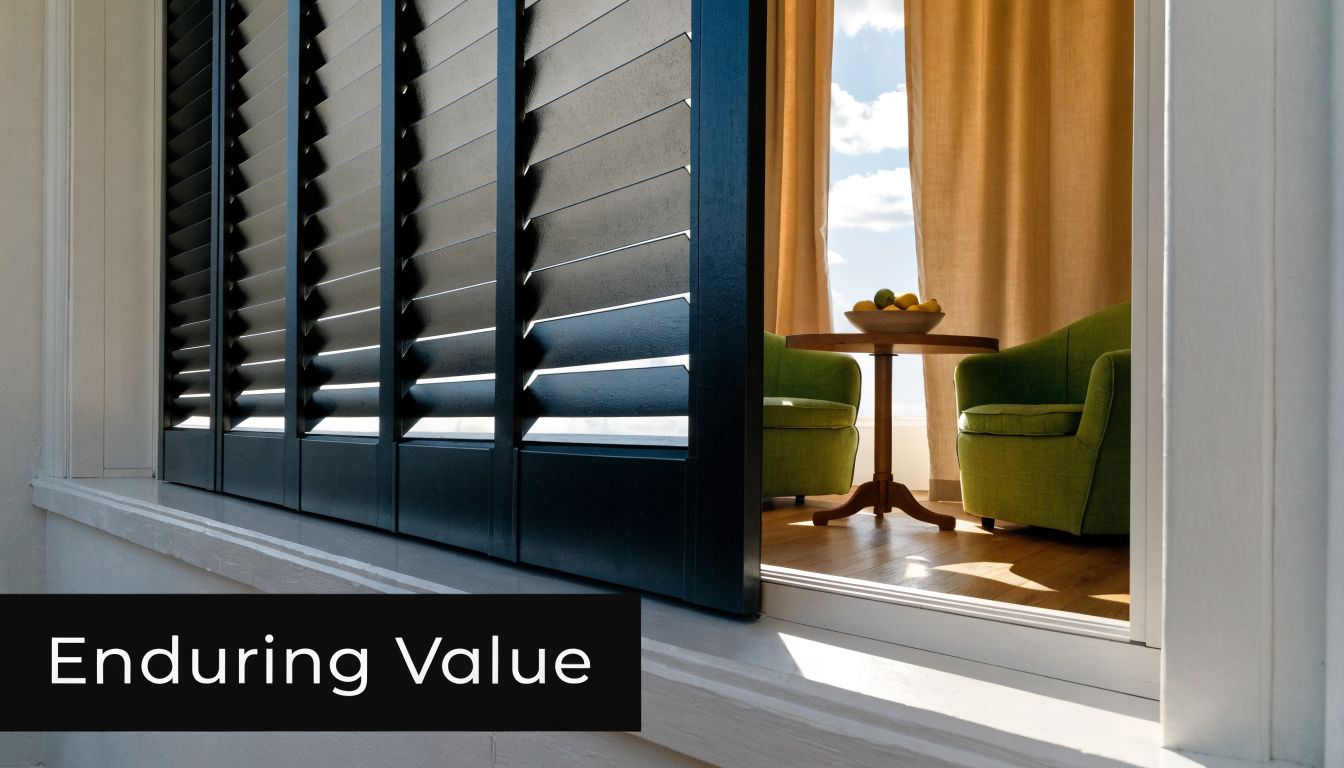
Most homeowners don't want another exterior feature that needs babysitting. That's one of vinyl's strongest advantages. It gives you the shutter look without dragging you into the regular paint-and-repair cycle associated with wood.
In practical terms, that means a lot fewer seasonal chores. You aren't checking for peeling finish, soft spots, or swelling after wet weather. For rental properties and busy family homes, that's a major benefit.
A quality vinyl shutter also tends to stay visually consistent. That's important because shutters sit in a very visible place on the home. When they age poorly, everyone sees it from the driveway.
Help with summer heat
Homeowners usually think of shutters as decorative first. That's understandable. But they can also contribute to comfort around the window opening.
The practical benefit is straightforward. According to this vinyl shutter product overview discussing insulation value, louvered vinyl shutters can improve a window's insulation value, and their low thermal conductivity helps block solar heat gain. In West Tennessee, that matters because sun exposure on the wrong side of the house can make rooms feel hotter and harder to keep comfortable during summer.
That doesn't mean shutters replace good windows, insulation, or interior treatments. It means they can support the overall envelope of the home while giving you the exterior look you want.
On a hot western exposure, small improvements around the window often matter more than homeowners expect.
Privacy, light, and a cleaner exterior line
Louvered shutters create visual depth around windows. That's one reason homes look more finished with them than without them. But the value isn't only from the street.
They also help reinforce a sense of privacy and softness around the opening. Even on decorative exterior shutters, the louvered profile changes how the window reads from both inside and outside. The home feels less bare and less exposed.
For homeowners in neighborhoods with HOA standards, that clean and consistent look often matters just as much as durability. A shutter style that looks architecturally appropriate and stays looking that way is easier to live with than a patchwork of replacements and fading finishes.
Where the money side becomes clear
The financial case for vinyl usually isn't about chasing the cheapest starting point. It's about avoiding repeat expenses and repeat frustration.
The value shows up in several ways:
- Lower maintenance pressure: less time and money spent on repainting or repairs
- Better visual longevity: the house keeps its curb appeal longer
- Practical comfort benefits: reduced solar heat gain can support lower cooling demand
- Consistent neighborhood appearance: helpful when you want upgrades that satisfy HOA expectations
A lot of people regret buying shutters twice. First they buy the inexpensive option. Then they buy the one that should've been installed to begin with.
The better move is to choose the product that fits the climate, the house style, and the maintenance tolerance of the homeowner. For many homes in this part of Tennessee, that's louvered vinyl.
Customizing Your Shutters to Match Your Style
Once the material choice is settled, the next decision is appearance. When considering appearance, homeowners often realize how limited off-the-shelf buying really is. The right shutter doesn't just fit the opening. It fits the home.
Color, profile, and shape
The look of louvered vinyl shutters depends on proportion more than people think. A slightly wider panel can make a front elevation feel balanced. The wrong color can make even a quality shutter look generic.
Factory finishes matter here because they tend to hold their appearance better than field fixes. Some vinyl shutter lines are available in multiple colors, which makes it easier to coordinate with brick, siding, trim, and front doors without settling for a near match.
Special shapes matter too. Arched and cathedral-top windows need more than a standard rectangle hung nearby and called good. On homes with unique top lines, shaped shutters can preserve symmetry that would otherwise be lost.
One detail most homeowners never hear about
Louver direction is a small design choice with real practical consequences. Most decorative vinyl shutters come with louvers angled downward because that matches the traditional historic look. But there is a lesser-known alternative.
This guide on shutter louvers up or down notes that reversing louvers to an upward tilt can improve rain runoff in storm-prone areas. That won't be the right choice for every house, but it's exactly the kind of detail that gets ignored when someone buys strictly from a shelf tag.
That trade-off is worth thinking through:
- Downward louvers: classic appearance, historically familiar
- Upward louvers: a custom option that may suit certain wet exposures better
- Default ordering: usually follows the traditional downward orientation unless requested otherwise
Matching exterior and interior decisions
Good shutter planning doesn't happen in isolation. If the outside of the home has a strong traditional line, the inside often benefits from the same discipline. Homeowners who are coordinating exterior upgrades with interior window treatments may also want to compare options for vinyl shutters for interior spaces so the overall house feels connected rather than pieced together.
The best-looking homes usually don't have the most expensive details. They have the most consistent ones.
What custom gets right that stock rarely does
Custom selection helps with more than vanity. It gives you control over the decisions that shape the final result.
That includes:
- Window-by-window fit: especially important when front elevations aren't perfectly uniform
- Architectural compatibility: matching the home instead of forcing the home to match a limited SKU list
- Intentional visual rhythm: shutters align with the scale of the windows and trim
- Better finish choices: the color looks selected, not substituted
The point of customization isn't excess. It's accuracy. When shutters are chosen with the house in mind, they look like they belong there.
Vinyl vs Wood vs Composite Shutters Compared
A Jackson homeowner usually notices the material question after they have already picked a shutter style. That is where expensive mistakes start. The right material decides how the shutters will look after a few humid summers, heavy rains, and long stretches of sun on the front elevation.
Big-box displays can make these materials look closer than they really are. On an actual West Tennessee home, the differences show up in upkeep, finish life, and how well the shutters keep their shape over time.
Shutter Material Comparison
| Feature | Louvered Vinyl Shutters | Wood Shutters | Composite Shutters |
|---|---|---|---|
| Moisture resistance | Handles humidity and rain well | More likely to swell, rot, or lose finish if maintenance slips | Usually better than wood in damp conditions |
| Maintenance | Low upkeep | Highest upkeep of the three | Moderate upkeep, depending on product quality |
| Durability outdoors | Holds up well for many decorative applications | Strong material, but exposure demands regular protection | Often chosen for added stability |
| Initial cost | Usually the most budget-friendly custom route | Often the most expensive once finish work is included | Commonly priced above vinyl |
| Traditional authenticity | Delivers the classic shutter look | Closest match to historic construction | Can resemble wood well from the street |
| Best fit for many West TN homes | Strong mix of value, appearance, and low maintenance | Best for homeowners willing to maintain them | Good for buyers who want a heavier material feel |
Wood has appeal, but it asks more from the homeowner
Wood still has a place. On historic homes, high-end restorations, or projects where exact millwork details matter, wood can be the right call.
It also asks for steady maintenance. In West Tennessee, moisture gets into neglected finish lines fast, and afternoon sun can wear exposed faces harder than homeowners expect. If the shutters are decorative, many families decide that repainting and repair work is not worth the added expense just to keep the material authentic.
That is the trade-off.
Composite fills a narrower lane
Composite often appeals to homeowners who want something with more heft than vinyl and less maintenance than wood. In the right product line, that can be a good middle-ground choice.
It is not automatically the better buy. Some composite options push the budget up without giving a visible benefit from the curb, especially on standard suburban homes in Jackson, Medina, Humboldt, and nearby areas. That is where custom guidance matters more than showroom language.
Why vinyl fits so many West Tennessee homes
Vinyl wins a lot of these comparisons for practical reasons. It gives homeowners the louvered look they want, stands up well to local weather, and keeps maintenance simple.
That matters more than many shoppers realize. Store-stock shutters are often chosen by shelf size and price tag first, then forced onto windows that need a different width, height, or profile. A custom vinyl shutter, measured and installed for the house, usually looks better and causes fewer regrets than a more expensive material picked from limited in-stock options.
For a closer material breakdown, compare vinyl shutters vs wood for West Tennessee homes.
The practical decision
Choose wood if architectural authenticity matters enough to justify ongoing maintenance. Choose composite if you want a different material feel and are comfortable paying more for it. Choose vinyl if you want a clean, classic shutter appearance with lower upkeep and better day-to-day value.
That answer may not sound fancy. It holds up well on real houses.
Why Professional Installation is Non-Negotiable
A lot of shutters look disappointing for one simple reason. They were installed as if close enough was good enough.
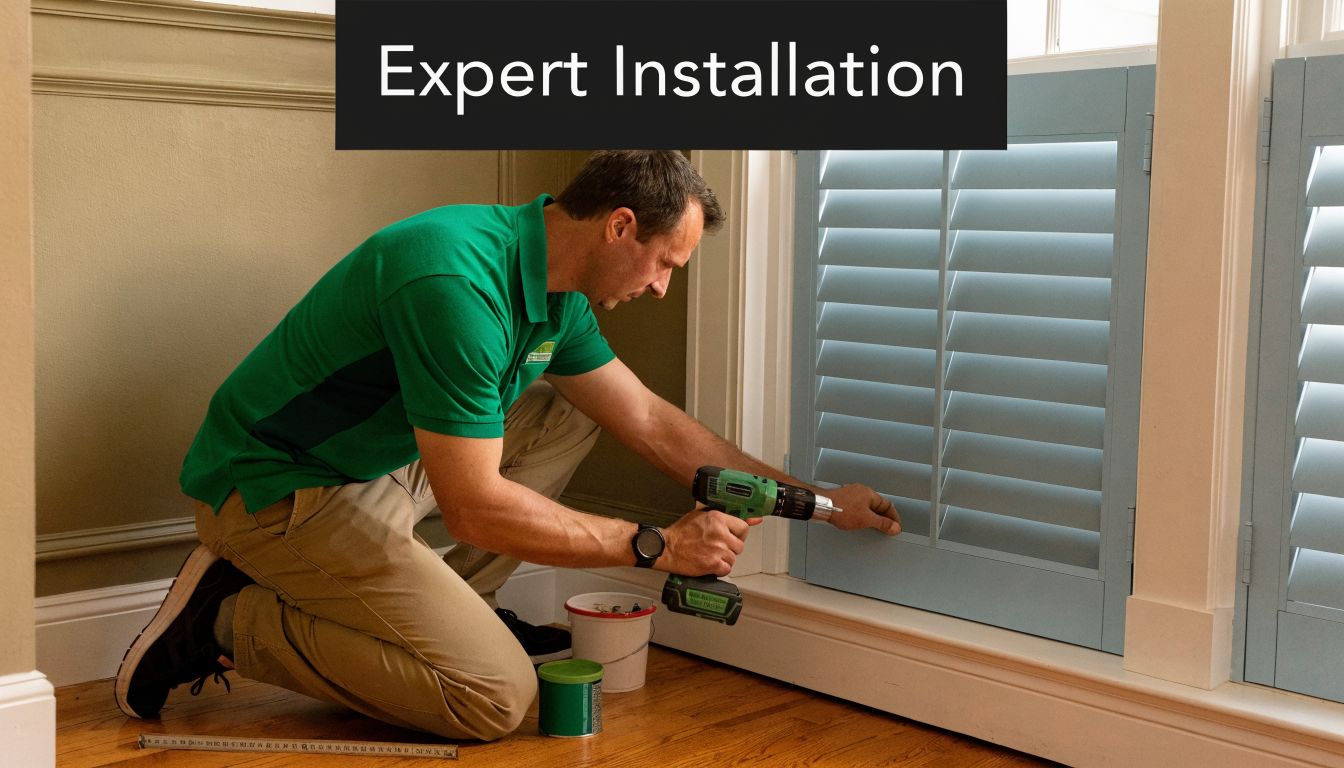
Sizing errors ruin the whole effect
Proper shutter sizing is not guesswork. A common rule is for each shutter to measure about half the window's sash width, and for a 32-40 inch window that typically means panels between 14.5 and 17.75 inches wide to maintain visual balance and avoid gaps, according to this sizing guide for louvered vinyl shutters.
That sounds simple until you stand in front of a real house with trim variations, brick molding, siding transitions, and windows that aren't as uniform as they appeared from the driveway.
The usual DIY mistakes are predictable:
- Panels too skinny: the shutters look fake from the street
- Spacing too loose: gaps make the installation look unfinished
- Mounting points chosen poorly: the panel sits awkwardly or stresses over time
- Measurements taken from the wrong reference point: the pair doesn't align with the sash correctly
Field note: The eye catches bad shutter proportions immediately, even when the homeowner can't explain why the house looks off.
Different exteriors require different methods
Installation on brick isn't the same as installation on vinyl siding. Fiber cement creates its own considerations. Even the same shutter can behave differently depending on what sits behind it and how the fasteners are placed.
That’s one reason I push homeowners to take measuring seriously before they ever order product. If you're trying to understand the basics, this guide on how to measure for plantation shutters is helpful for learning how small measuring mistakes create big visual problems.
And before hiring any installer, it’s smart to review a solid list of questions to ask a contractor. Homeowners who ask better questions usually get better work.
Installation quality protects the investment
Good installation does more than secure the shutter. It preserves the look you paid for.
A professional checks symmetry across the elevation, not just one window at a time. They account for surface condition, fastener fit, and how the shutters will read from the curb. They also know when the wall itself is creating the problem and when the product is.
This short video gives a useful visual sense of installation technique and why process matters.
Why this isn't the place to cut corners
Homeowners sometimes spend carefully on the shutter and casually on the install. That usually backfires. The product can be good and still look wrong if it's installed poorly.
Professional custom installation is what turns a shutter from a box purchase into a finished architectural detail. On a house with visible front-facing windows, that difference shows every day.
Get Your Perfect Shutters from Blinds Galore Today
A lot of West Tennessee homeowners reach the same point. The house needs better curb appeal, the front windows look bare, and the big-box options seem cheaper until you hold them up against the trim and realize they were never going to look built for that home.
That is usually the main decision. Choose an off-the-shelf shutter that gets close, or order a custom fit that looks right from the start.
For homes across Jackson, Paris, Lexington, Humboldt, and the surrounding area, that difference shows up fast. Window sizes vary. Brick, siding, and trim details vary. Sun exposure varies too, especially on front elevations that take a hard afternoon hit. A louvered vinyl shutter can be a smart long-term choice here, but only if the size, color, and installation method suit the house.
What local homeowners usually need most
Homeowners rarely ask for the most complicated option. They want straight answers, durable materials, and shutters that look like they belong on the home instead of looking added later.
That usually comes down to a few practical needs:
- Accurate measuring so the shutter width and height stay in proportion to the window
- Product guidance based on the house instead of whatever is sitting on a store rack
- A custom install plan that accounts for siding profile, trim clearance, and curb-facing sightlines
- Reliable follow-through if an adjustment is needed after installation
Why Blinds Galore is the right call
Blinds Galore gives West Tennessee homeowners the part big-box stores usually cannot. Real guidance at the house itself. That includes free in-home consultations, product recommendations, precise measuring, and installation that matches the architecture instead of forcing a stock size into place.
That matters on a brick traditional in Jackson, a rental refresh in Humboldt, or a curb appeal update in Lexington, Paris, or a nearby town. The right shutter is not just a product choice. It is a proportion, fit, and finish decision.
A shutter should match the house, not the shelf.
Blinds Galore also backs the work with a 100% satisfaction promise, which matters when you are buying something meant to stay on the house for years, not just get through one season.
Ready to get it right the first time? Contact Blinds Galore for a free in-home consultation, professional measuring, expert recommendations, and custom installation. If you are in West Tennessee, the team can help you compare options clearly and choose louvered vinyl shutters that fit your home and your budget.
You might also like

Best Plantation Shutter Brands – 2026 Review
If you're looking at your windows right now and thinking the room needs more polish, better privacy,

What Are Plantation Shutters Made Of
You're probably looking at a window right now thinking the same thing a lot of West Tennessee homeowners
Contemporary Roman Shades: Modern Styles for Your Home
You know the feeling. Your old blinds work, but they don't do your room any favors. They look hard,
Sliding Glass Window Treatments for Your West TN Home
That sliding glass door probably does two jobs at once in your home. It opens your living space to the
Vertical Blinds vs Horizontal Blinds: The Definitive Homeowner’s Guide
When you're trying to decide between vertical and horizontal blinds, it really comes down to your
Cordless Blinds vs Corded Blinds A Modern Homeowner’s Guide
When you're weighing the pros and cons of cordless blinds vs corded blinds, the verdict for today's