


Hunter Douglas Vertical Blinds: Guide & Inspiration
If you're staring at a sliding glass door, a wide living room window, or a sun-heavy patio opening and wondering what will look good and work well every day, you're not alone. Large windows are wonderful until it's time to control glare, get privacy at night, and keep the room from feeling bare or overheated.
That’s where hunter douglas vertical blinds often come into the conversation. They’re built for wide openings, they come in more than one style, and they can solve several problems at once without making a room feel boxed in. For many West Tennessee homeowners, they hit a useful middle ground between soft drapery and strictly functional blinds.
Why Choose Hunter Douglas Vertical Blinds for Your Home
A lot of homeowners first look at vertical blinds because of one practical need. They have a patio door, a wall of glass, or a broad opening that standard horizontal blinds don’t handle gracefully. Then the next question comes quickly. Will vertical blinds look dated, or can they still feel customized and current?
With Hunter Douglas, the answer usually depends on the collection and material you choose, not the category itself. Some styles feel crisp and architectural. Others soften the room and act more like drapery.
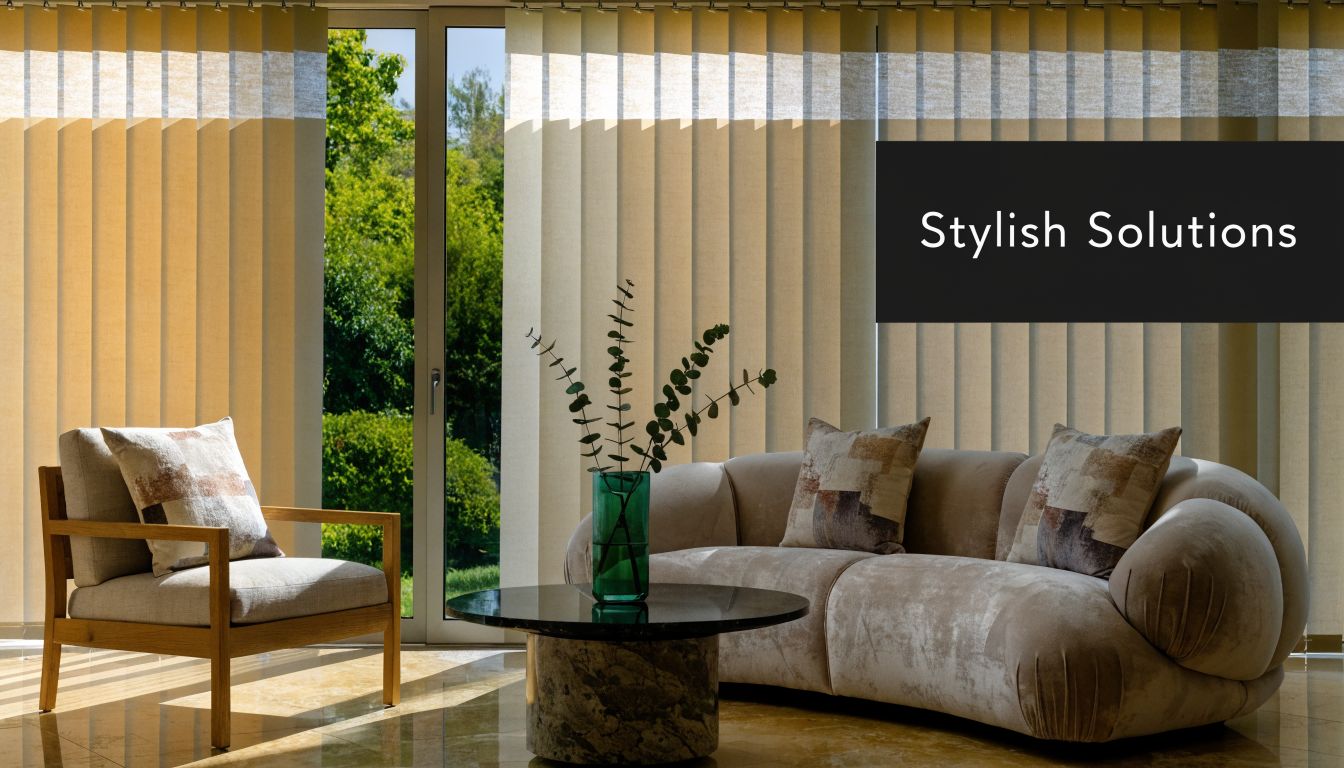
Why the brand stands out
Hunter Douglas didn’t appear overnight. Its roots go back to 1919, and its major breakthrough came in 1946, when new casting technology for lightweight aluminum made mass production of the first 2-inch Venetian blinds possible, which helped reshape the window covering industry according to this history of Hunter Douglas.
That history matters for homeowners because long-running brands tend to refine both design and hardware over time. When people buy window treatments for a high-use area like a patio door, they usually care about more than color. They want dependable movement, a good fit, and a product line that hasn’t been treated like an afterthought.
A good fit for real-life rooms
In West Tennessee homes, vertical blinds often work best in spaces like these:
- Sliding glass doors: They move in the same direction as the door, so access feels natural.
- Large picture windows: They cover broad glass expanses without forcing you into multiple small treatments.
- Sun-facing rooms: They help manage harsh afternoon light while still allowing flexibility.
- Home offices or dens: They let you adjust privacy and brightness without fully darkening the room.
Practical rule: The bigger the glass area, the more important it is to choose a treatment that opens cleanly and doesn’t fight the way you use the room.
Some homeowners get confused because they think vertical blinds are only for older homes or office buildings. That’s usually based on older, basic vinyl products people remember from years ago. Today’s Hunter Douglas options include softer materials, cleaner lines, and more polished headrails, so the finished look can feel much more intentional.
Exploring Hunter Douglas Vertical Blind Collections
Not all hunter douglas vertical blinds are built for the same homeowner. Three names come up often: Cadence®, Somner®, and Vertical Solutions®. If the names blur together, the easiest way to sort them out is by asking what you want the blinds to do first. Do you want them to look softer, offer the broadest style selection, or stay simple and practical?
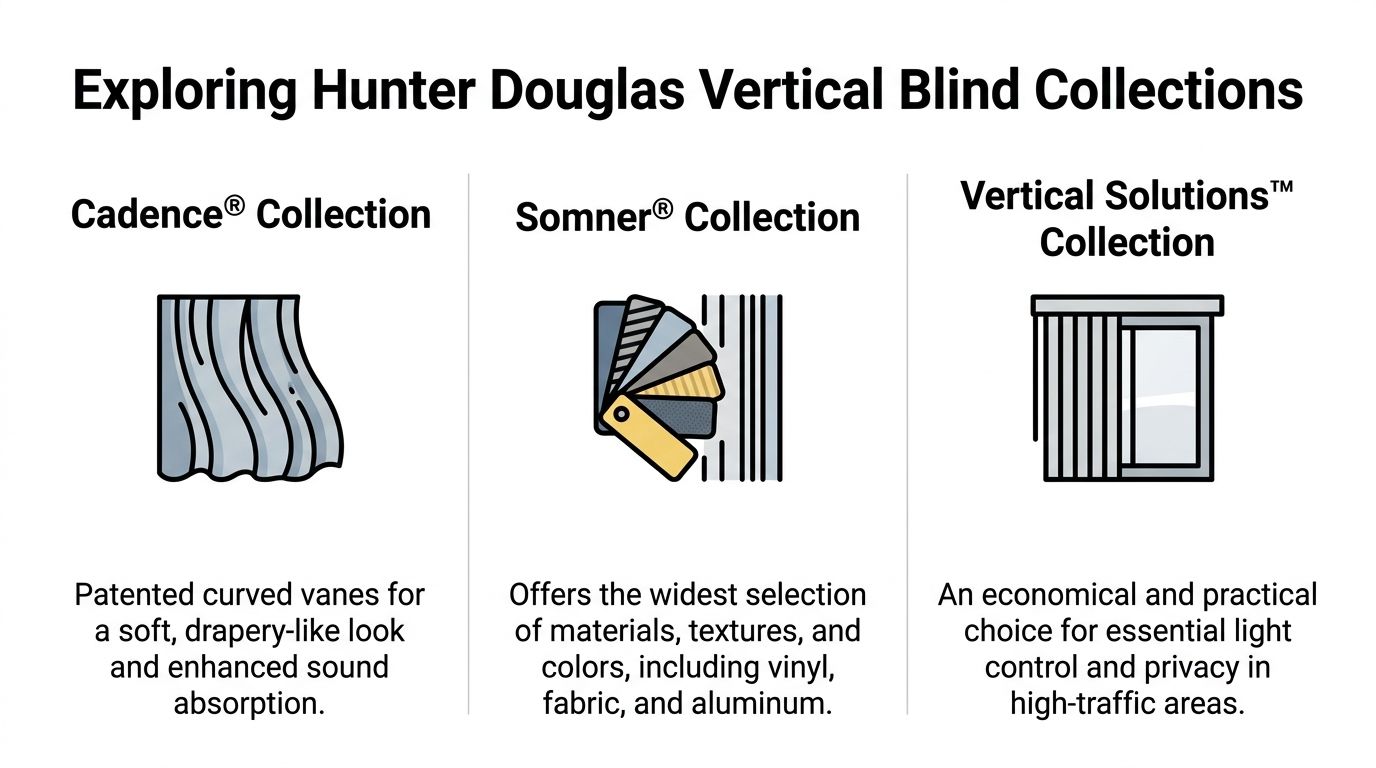
Cadence for a softer drapery feel
Cadence is the collection people often notice when they want vertical blinds that don’t feel stiff. The vanes have a more sculpted, flowing look, so the treatment reads more like a fabric panel system than a row of flat slats.
That matters in living rooms, formal dining rooms, and primary bedrooms where homeowners want coverage for a wide opening without giving up softness. It’s a strong option if you like drapery but want a cleaner, more structured operating system.
Somner for the broadest design range
Somner is often the best fit when style flexibility leads the decision. It offers a wide mix of looks and materials, so it’s easier to coordinate with traditional, transitional, or modern interiors.
According to Hunter Douglas vertical blind product details, Somner and Cadence include fabric-wrapped vane options that can diffuse up to 70% of incoming light while maintaining outward visibility. The same source notes that GreenScreen® ECO fabric is recyclable, antimony-free, and uses soil-release technology that resists UV degradation, helping it keep a “like-new” appearance for twice as long in high-sun areas.
If your room gets strong daylight but you don’t want a harsh, shiny blind surface, fabric-wrapped vanes are often where the conversation gets more interesting.
Vertical Solutions for a straightforward, useful choice
Vertical Solutions is the practical member of the group. It’s often the right answer for homeowners who want dependable light control, privacy, and a clean appearance without chasing every decorative detail.
That doesn’t mean it looks cheap. It means it keeps the focus on function, easy operation, and broad coverage. In busy households, rental properties, and secondary rooms, that can be exactly the right call.
Hunter Douglas Vertical Blind Collections at a Glance
| Collection | Key Feature | Best For | Available Materials |
|---|---|---|---|
| Cadence | Curved vane design with a softer appearance | Rooms where you want a drapery-like look | Fabric-wrapped options and other selected finishes |
| Somner | Broadest style flexibility | Homeowners who want more choices in look and feel | Vinyl, fabric, and aluminum options |
| Vertical Solutions | Streamlined and practical | High-use spaces and straightforward light control | Selected vertical blind materials for everyday function |
Which one tends to fit which room
Here’s a simple way to think through it:
- Choose Cadence if your first priority is appearance and you want the blinds to feel more decorative.
- Choose Somner if you want the most room to customize material, texture, and overall style.
- Choose Vertical Solutions if you want a clean, sensible treatment for wide glass and everyday use.
Homeowners comparing options for broad openings may also find ideas in this guide to best blinds for large windows.
One common point of confusion is whether “better” always means “more expensive-looking.” It doesn’t. The best collection is the one that matches your room, your traffic level, and how you use the door or window every day.
Understanding Materials and Operating Systems
When homeowners struggle to choose vertical blinds, the issue usually isn’t color first. It’s material and operation. In plain terms, what are the vanes made of, and how do the blinds open and close?
Those two decisions shape daily life more than often anticipated. A treatment can look beautiful in a sample book and still be wrong for a home with pets, children, frequent patio use, or heavy sun.

Material choices in plain language
Some vertical blinds lean more functional. Others lean more decorative.
- Vinyl: Usually easier to wipe down and a smart fit for messy or high-traffic areas.
- Fabric-wrapped vanes: Better when you want a softer look and gentler light in the room.
- Aluminum: Useful when you prefer a more sleek, architectural appearance.
If you’ve got kids coming in from the backyard, dogs brushing past the door, or a kitchen-adjacent patio entrance, easy-clean materials often make the most sense. If the opening sits in a formal sitting room or a quiet den, the visual softness of fabric may be worth prioritizing.
How the hardware affects everyday use
A vertical blind is only as pleasant as its track system. If it drags, catches, or feels flimsy, even a beautiful vane won’t fix that. Hunter Douglas uses the PermaTrak® carrier train mechanism, which is designed for reliable operation on openings up to 191 inches wide according to Hunter Douglas architectural specifications.
That number helps explain why vertical blinds remain such a strong option for oversized glass. They aren’t just adapted for large openings. They’re built around them.
Wand operation versus older cord systems
Many readers can become confused, especially when recalling older vertical blinds with dangling cords and chains. Hunter Douglas offers the PermAssure® Safety Wand, a cord-free operating option that eliminates entanglement risks, and the hardware is backed by a Lifetime Guarantee in the same product specifications.
For many households, a wand system feels simpler because there’s less visual clutter and fewer moving parts hanging down. You pull, guide, and rotate the vanes from one control point instead of managing separate cords.
A safety feature is only useful if people will actually use it every day. That’s why simple operation often matters more than flashy features.
Manual operation and motorization
Some homeowners still prefer a straightforward manual system. That’s completely reasonable. Manual operation keeps the interaction direct and familiar.
Others want motorized control because the window is tall, wide, awkward to reach, or used constantly. Motorization can make a large treatment feel lighter and more convenient to use. It’s similar to the difference between opening a heavy gate by hand and pressing a button. Both can work. One just reduces effort and repetition.
A simple decision guide
If you’re stuck, use this filter:
- Start with traffic level. Busy door or occasional-use window?
- Think about cleaning. Do you want wipe-down simplicity or a softer designer finish?
- Consider safety. Cord-free options are easier for many households.
- Look at reach and size. Large or awkward openings may justify upgraded operation.
- Match the room’s mood. Crisp and minimal, or softer and more layered?
Homeowners often spend too much time debating color before they’ve answered those questions. The better order is function first, material second, color third.
Benefits and Limitations for West Tennessee Homes
West Tennessee homes deal with bright sun, humid seasons, active family life, and plenty of patio-door traffic. That combination makes vertical blinds more practical than many homeowners expect. They’re especially useful when a room needs flexible light control throughout the day instead of a treatment that stays fully open or fully closed.
Hunter Douglas’s continued market leadership and product expansion have supported ongoing innovation in made-to-measure blinds, which has helped produce vertical blinds with stronger UV protection and energy efficiency for homeowners, as noted in Hunter Douglas’s 100 years of innovation overview.
Where they shine in this region
For a sun-exposed family room or breakfast area, vertical blinds can help cut glare while still letting the room feel open. That matters when sunlight hits television screens, fades furnishings, or makes afternoon rooms uncomfortable.
They also work well for sliding patio doors because they stack to the side instead of lifting upward. That movement tends to feel more natural when people are moving in and out often.
Homeowners who want more ideas specific to door coverage may like this article on privacy for sliding patio doors.
Honest limitations to consider
Vertical blinds aren’t perfect for every taste or every room. If you love the fullness of custom drapery, some vertical styles may still feel more structured than soft.
They can also move or tap lightly in a draft near frequently used doors. Some homeowners don’t mind that at all. Others notice it right away and prefer heavier or more fabric-forward options.
The best window treatment isn’t the one with the longest feature list. It’s the one that fits the room’s light, traffic, and the way your household actually lives.
Best fit versus poor fit
They tend to be a strong fit for:
- Patio doors and sliders
- Large living room windows
- Sunrooms and bright dens
- Rental and high-use spaces
They may be a weaker fit for:
- Small accent windows
- Rooms where you want a very layered, luxurious fabric look
- Spaces where you rarely need flexible adjustment
That balance matters. A good decision comes from matching the product to the room, not trying to make one treatment style solve every design goal in the house.
The Blinds Galore Custom Installation Process
A lot of window treatment problems start long before installation day. They start with a rushed measurement, a guessed color choice, or a homeowner trying to translate a sample card under store lighting into a real room.
That’s why the process matters as much as the product.
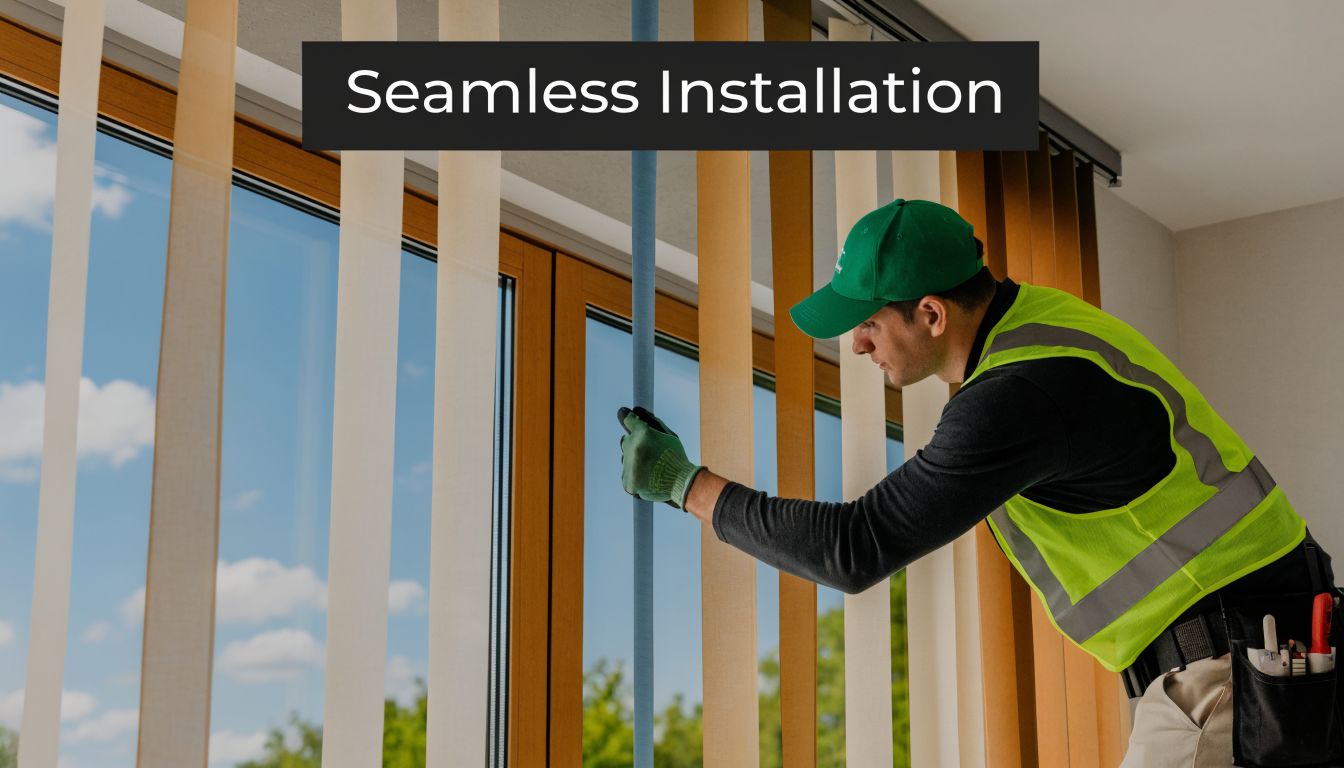
It starts with the room, not the catalog
With wide windows and patio doors, small measurement errors can create obvious problems. The stack can land awkwardly. The coverage can feel skimpy. The opening direction can interfere with how the door functions.
That’s why in-home evaluation matters. You can see how the light enters, where furniture sits, how often the door is used, and whether the homeowner would be happier with a softer vane, a simpler material, or a different stack arrangement.
Why custom measuring changes the outcome
A made-to-measure blind should fit the opening and the room’s use pattern, not just the raw width and height. That includes questions like these:
- Which side should the blind stack to? This affects walk-through convenience.
- Is the mounting surface suitable? Hardware needs the right support.
- How much clearance is available? Trim, handles, and nearby walls can affect operation.
- Will the homeowner need easy daily access? That changes recommendations.
If you want to understand why measurements need to be precise before ordering, this guide on how to measure windows for blinds shows the kinds of details that matter.
Installation is where details show up
A professional installer doesn’t just hang the headrail and leave. Good installation means the treatment is leveled properly, the vanes hang evenly, the operation feels smooth, and the finished look matches what was promised.
That’s especially important with vertical blinds because crooked alignment is easy to see. A wide opening magnifies small mistakes.
This short video gives a helpful visual sense of the installation process and what goes into a finished result.
Why homeowners usually prefer full service
Buying blinds from a shelf or a generic online listing can look simpler at first. But the homeowner still has to choose a collection, material, operation style, stack direction, mount type, and exact size. If one of those choices is off, the savings disappear quickly.
A full-service approach removes that friction. The room gets measured correctly, the product gets matched to the opening, and the installation gets finished by someone who knows how the hardware is supposed to perform.
Good installation is quiet. The blinds open smoothly, close evenly, and stop drawing attention to themselves because everything works the way it should.
For homeowners who value custom install and 100% satisfaction, that part isn’t an add-on. It’s the reason the treatment feels finished instead of improvised.
Maintenance and When to Repair or Replace
Vertical blinds are often easier to live with than people think. Day to day, most maintenance comes down to keeping dust off the vanes, wiping spots before they set in, and making sure the blinds aren’t being forced when something feels stuck.
For routine care, a simple habit works well. Dust lightly, wipe where needed, and check the track if operation starts to feel rough. Homeowners sometimes pull harder when the actual problem is a misaligned vane or a worn carrier.
Basic maintenance that helps
A few habits can extend the life and appearance of the blinds:
- Dust regularly: A soft cloth, light duster, or gentle vacuum attachment usually handles surface dust.
- Spot clean early: Small marks are easier to remove before they build up.
- Keep the track clear: If the headrail area collects debris, operation may feel less smooth.
- Rotate before drawing: On many systems, proper sequencing helps reduce strain.
When repair makes sense
Some issues don’t mean the whole blind has failed. A vane may need replacement. A carrier may be the problem. The operating mechanism might need attention while the rest of the blind is still worth keeping.
Many homeowners get frustrated by Hunter Douglas repair support. It can feel fragmented because customers are often directed back to the original dealer, which doesn’t help much if they’ve moved, inherited the blinds with the home, or can’t track down who installed them. That gap is described in Hunter Douglas repair options guidance.
When replacement is the smarter move
Replacement becomes the better path when the damage is spread across multiple parts, the blinds no longer match the room’s needs, or the hardware and vanes have both reached the point where patching one issue won’t solve the broader wear.
A few examples usually point toward replacement:
- Multiple broken components
- Severe fading or visible age across the whole treatment
- Operation problems that keep returning
- A style that no longer fits the room or household needs
If one part failed, repair may be sensible. If the blind has several problems at once, replacement often creates less hassle and a better long-term result.
That’s why local guidance matters so much. A homeowner doesn’t just need a parts page. They need a realistic opinion about whether fixing the current blind is worth the effort.
For immediate help with that decision, call (731) 571-5179.
Understanding Cost and The Blinds Galore Advantage
Hunter Douglas vertical blinds are usually best understood as a custom home upgrade, not a one-size-fits-all shelf product. Cost depends on the width and height of the opening, the collection you choose, the vane material, and whether you prefer a simple operating system or upgraded convenience.
That means two patio doors can produce very different quotes even when they look similar at first glance. One homeowner may choose a practical vinyl option with straightforward operation. Another may prefer fabric-wrapped vanes, a more decorative look, and enhanced convenience features.
What affects the final price most
The biggest pricing factors are usually these:
- Size of the opening
- Collection selected
- Material type
- Operating system
- Customization and installation needs
For homeowners, the better question isn’t just “What do vertical blinds cost?” It’s “What am I getting for the money?” With a premium product, the answer usually includes fit, finish, hardware quality, appearance, and a more personalized result.
Why local service changes the value
The advantage of working with a local specialist is that the purchase doesn’t stop at ordering. You get guidance before the sale, a custom install, and a real person to call if something later needs adjustment or repair.
That matters more than people realize. Big-box shopping can feel efficient until you need advice on stack direction, vane material, mounting details, or service after installation. Then the convenience often disappears.
A local team can also help you decide whether a premium collection is worth it in your room or whether a more practical solution makes better sense. That kind of advice protects your budget because it keeps you from overbuying in one room and underbuying in another.
The real advantage
The strongest value usually comes from combining product quality with correct planning, professional installation, and ongoing support. That’s what turns a window treatment from a purchase into a finished improvement to the home.
If you want Hunter Douglas quality with personal help, custom install, and 100% satisfaction, the simplest next step is to schedule a consultation and talk through the room before making a decision. You can reach Blinds Galore at (731) 571-5179.
Frequently Asked Questions
Are Hunter Douglas vertical blinds only for sliding glass doors
No. They’re especially good for sliding doors, but they also work well on large picture windows, wide openings in living rooms, sunrooms, and some office spaces. Any area with broad glass and a need for adjustable light control can be a good candidate.
Do vertical blinds look outdated
They can if you choose a very basic style that doesn’t suit the room. They usually don’t when the material, color, and collection are selected carefully. Fabric-wrapped vanes and more refined collections can look much more current than the older vertical blinds many people remember.
Are they hard to clean
Most aren’t. The easiest ones to maintain are usually wipeable materials used in high-traffic spaces. Fabric-forward styles may need a gentler approach, but routine maintenance is still manageable for most homeowners.
Are vertical blinds good for sunny West Tennessee rooms
Yes, often very good. They allow flexible control over glare and privacy, which is useful in bright rooms that change throughout the day. They’re especially practical when a space needs light management without feeling shut off.
Can existing Hunter Douglas vertical blinds be repaired
Sometimes, yes. If the issue is isolated to a vane, carrier, or operating component, repair may be worth exploring. If the treatment has broader wear, repeated operating trouble, or visible aging throughout, replacement may be the better option.
Should I buy online or work with a local expert
For large openings, local help is usually the safer path. Vertical blinds involve more decisions than many homeowners expect, including exact measurements, stack direction, mounting details, and operation style. Professional guidance reduces mistakes and usually leads to a better finished result.
If you're ready to compare hunter douglas vertical blinds in your own home, Blinds Galore can help with in-home guidance, custom install, repairs, and a 100% satisfaction approach from start to finish. Call (731) 571-5179 to schedule your consultation and get expert help choosing the right fit for your West Tennessee home.
You might also like

Best Plantation Shutter Brands – 2026 Review
If you're looking at your windows right now and thinking the room needs more polish, better privacy,

What Are Plantation Shutters Made Of
You're probably looking at a window right now thinking the same thing a lot of West Tennessee homeowners

Contemporary Roman Shades: Modern Styles for Your Home
You know the feeling. Your old blinds work, but they don't do your room any favors. They look hard,

Sliding Glass Window Treatments for Your West TN Home
That sliding glass door probably does two jobs at once in your home. It opens your living space to the
Vertical Blinds vs Horizontal Blinds: The Definitive Homeowner’s Guide
When you're trying to decide between vertical and horizontal blinds, it really comes down to your
Cordless Blinds vs Corded Blinds A Modern Homeowner’s Guide
When you're weighing the pros and cons of cordless blinds vs corded blinds, the verdict for today's