
Honeycomb Shades Home Depot: West TN Local Expertise
You’re probably here because a room in your house is doing something it shouldn’t. The bedroom gets blasted with morning sun. The den feels hotter than the rest of the house. A front room in Jackson, Milan, or Humboldt looks great, but it leaks glare, privacy, and comfort all day long.
That’s when a lot of homeowners type honeycomb shades home depot into Google.
I get why. Honeycomb shades are popular for a reason. Home Depot carries cellular shades from brands like Bali, Levolor, and Home Decorators Collection, and their product listings highlight the same core benefit homeowners care about most: the honeycomb-shaped cells trap air and help keep homes cooler in summer and warmer in winter, while reviews often mention easy installation on standard windows and strong light blocking for everyday rooms (Home Depot cellular shades).
After working with West Tennessee homeowners for more than 18 years, I’ll tell you the part the big-box search doesn’t show clearly enough. The shade itself is only half the job. The fit is the other half. If the window is slightly out of square, deeper than expected, trimmed oddly, or just plain old, a good shade can still perform badly.
That’s where people lose time and money. They buy a solid product, then fight the measuring, the bracket placement, the light gaps, and the return process. If you want custom install and 100% satisfaction, you need more than a product page. You need someone who’s seen West Tennessee homes up close and knows how to fit the treatment to the window, not force the window to accept the treatment.
Your Guide to Honeycomb Shades in West Tennessee
You walk into a west-facing room in Jackson at 4:30 in the afternoon, and the problem is obvious. The sun is beating through the glass, the room feels hotter than the rest of the house, and the neighbors can see in once the lights come on. Homeowners who want one window treatment to handle heat, glare, and privacy usually end up looking at honeycomb shades for good reason.
They fit a wide range of homes across West Tennessee. In a newer house in Medina, they keep the window line clean and simple. In an older home near Lexington or Savannah, they soften the opening without the heavy look of layered drapes.
The reason they stay popular is practical. The cellular design helps with comfort, the profile stays neat, and the fabric options give you real control over light and privacy. That matters more here than many homeowners expect, especially in rooms that get hit hard by afternoon sun.
Why homeowners keep coming back to cellular shades
The advantage is the cell structure. Those air pockets help slow heat transfer at the glass, which is why honeycomb shades usually outperform flatter shade styles in rooms that run hot or feel exposed.
For West Tennessee homes, that is quite straightforward:
- South- and west-facing rooms need better glare control and more help with heat.
- Bedrooms usually do better with blackout fabric and a tighter, more exact fit.
- Living rooms and kitchens often need filtered light instead of full darkening.
- Older homes need careful measuring because what are considered standard windows often aren't.
One bad assumption causes a lot of trouble. Homeowners see a clean product photo online, pick a size that looks close enough, and expect custom performance from an off-the-shelf shade. That is where the big-box route starts costing time.
A ready-made shade can work on a plain, square opening with enough mounting depth. Many homes around Jackson, Humboldt, Milan, and the surrounding towns do not give you that kind of window. Uneven trim, shallow frames, and openings that are slightly out of square create light gaps, crooked hems, and operating problems fast.
That is the difference between shopping a product and solving the window. At Blinds Galore, we measure the opening, check the mounting conditions, recommend the right fabric and lift style, and install it to fit the home as it is. That saves homeowners from the usual DIY cycle of reorder, return, patch, and frustration.
What Exactly Are Honeycomb Cellular Shades
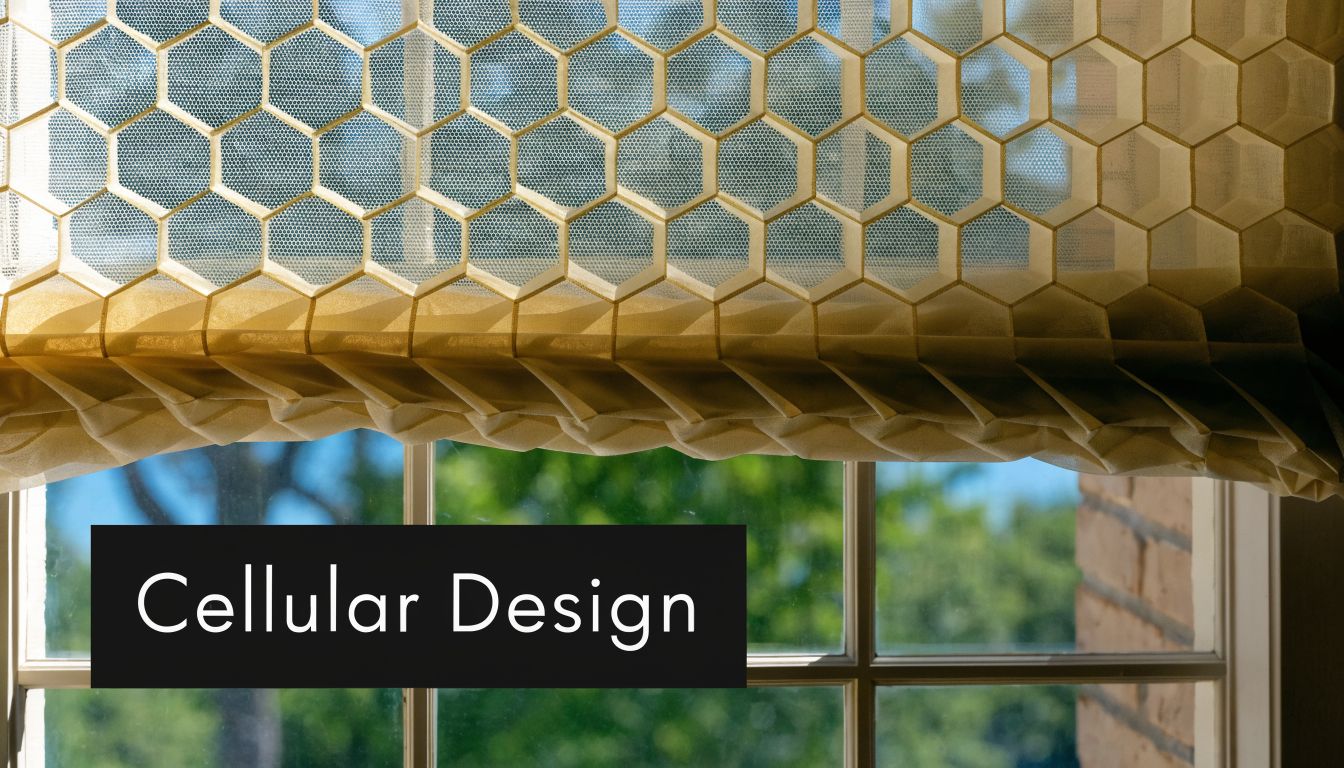
Honeycomb shades and cellular shades are the same product. “Honeycomb” describes the shape you see from the side. “Cellular” describes the pockets, or cells, built into the fabric. Both names point to the same design.
Think of them like a lightweight insulated jacket for your windows. The fabric folds into pockets that hold air. That trapped air helps slow the movement of heat at the glass, which is why these shades feel different from a basic pleated shade or roller shade.
The parts that matter
You don’t need to memorize shade engineering, but you should know the main components.
- Fabric face. This is the visible material inside the room. It can be light filtering or blackout depending on the room’s needs.
- Cells. These are the air pockets formed by the folded fabric. They’re the reason the shade insulates better than a flat shade.
- Headrail. This houses the operating mechanism and mounts to the window.
- Bottom rail. This helps the shade hang evenly and operate smoothly.
- Lift system. Cordless is common now, and for good reason. It keeps the look cleaner and removes dangling cords.
How they differ from other shade types
A pleated shade can look similar at first glance, but it doesn’t have the same air-trapping structure. A roller shade can look sleek, but it’s still a flatter barrier. Faux wood blinds give you tilt control, but they don’t seal a window opening the same way a well-fitted cellular shade does.
That’s why homeowners who search honeycomb shades home depot are usually looking for more than appearance. They want performance.
If your room has glare in the afternoon and temperature swings at night, cellular shades are usually the first style I’d look at.
Why the mount matters
The same shade can perform well in one window and disappoint in another. Inside mount gives a cleaner built-in look, but only if the window has enough depth and the opening is reasonably consistent. Outside mount can solve shallow-depth problems and help cover more of the glass area.
A common pitfall in many DIY projects is that people focus on color and price first, then realize too late that the window itself decides what’s possible.
The Triple-Threat Benefits Energy Efficiency Light and Privacy
Honeycomb shades earn their keep in three ways. They help with temperature control, light control, and privacy. If one room is bothering you every day, it’s usually because one or more of those three is out of balance.
Energy efficiency that actually matters
In West Tennessee, you need a window treatment that works in more than one season. Summer sun is brutal. Winter cold still matters. Honeycomb shades help because the cells trap air and create thermal resistance between the room and the glass.
The biggest jump in insulation comes when you move from single cell to double cell. Double-cell honeycomb shades can offer R-values between 3.5 and 4.5, while single-cell shades typically range from 2.0 to 2.5, and that improved thermal resistance can lead to annual heating and cooling savings of up to 20% to 30% in moderate climates like West Tennessee (Perfect Lift cellular shade details).
That’s why I don’t treat cellular shades like a decoration-only purchase. They’re part of a comfort strategy. If your utility bills feel high, it also helps to look at broader easy ways to lower your electric bill, because window treatments work best when the rest of the house is running efficiently too.
For a deeper look at insulation-focused options, see these window coverings for insulation.
Light control by room, not by trend
Not every room needs blackout. That’s one of the biggest mistakes I see. Homeowners pick the darkest option because they’re tired of glare, then the room feels closed off all day.
A smarter approach is to match the opacity to the room:
- Bedroom. Blackout is often the right call.
- Media room. Strong room-darkening or blackout.
- Living room. Light filtering usually feels better.
- Street-facing room. A privacy-first fabric often makes sense.
The right fabric changes how the room feels every hour of the day. Good light should feel controlled, not eliminated.
Privacy without the heavy look
Privacy is where cellular shades beat a lot of bulkier treatments. They give you a clean face to the room and block direct view-in without the visual weight of drapes.
That matters in neighborhoods where windows face the street or sit close to neighboring houses. You want coverage, but you don’t want the room to feel shut down.
A shade that solves privacy but leaves side gaps or hangs unevenly didn’t solve the problem. It just changed it.
That’s why fit matters just as much as fabric. The performance people expect from honeycomb shades depends on getting both right.
How to Choose the Right Honeycomb Shade Style
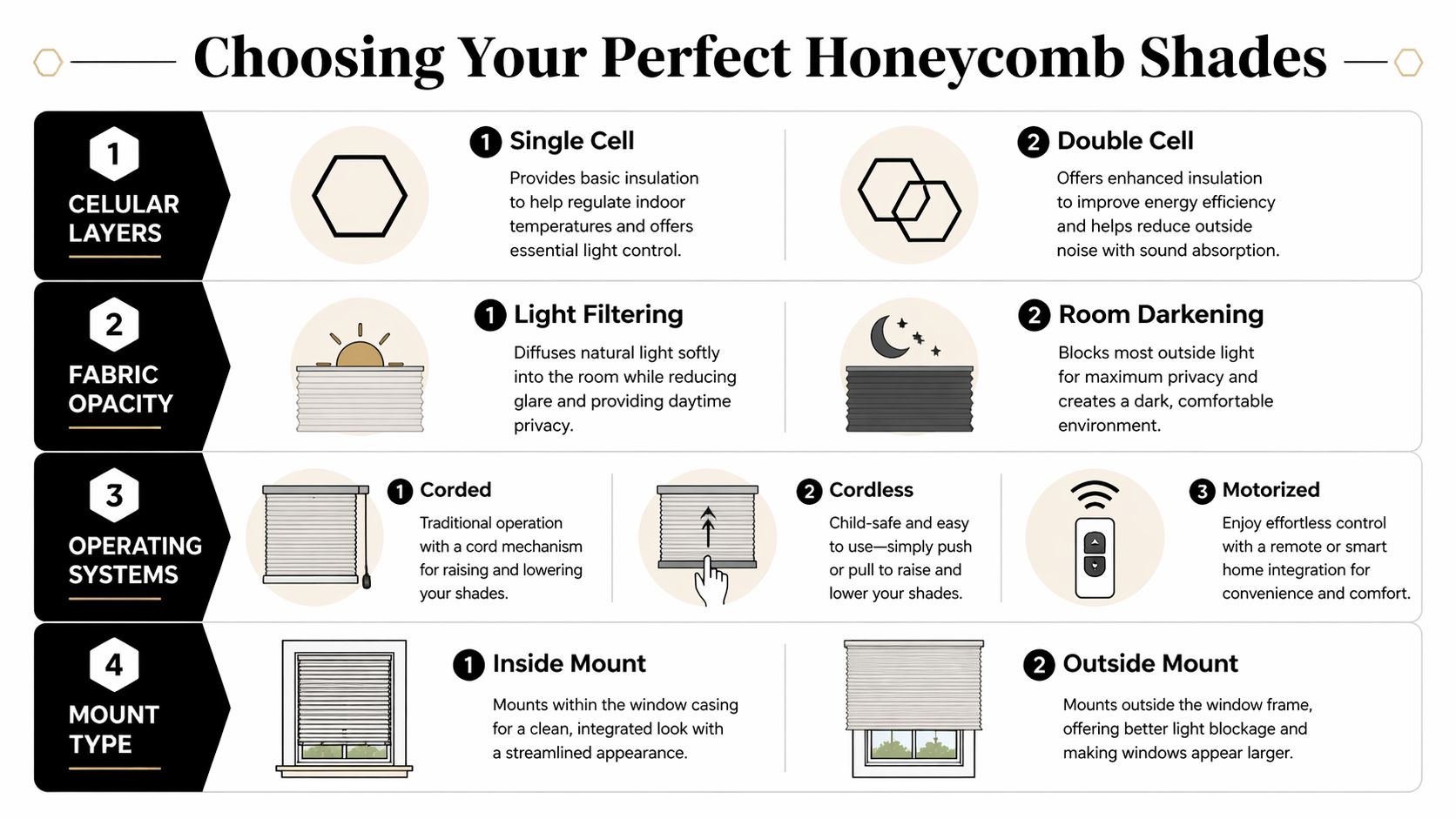
Most homeowners get overwhelmed because they’re trying to make five decisions at once. Don’t do that. Choose your honeycomb shade in this order: cell structure, opacity, lift system, and mount type. Once those are right, color and texture get much easier.
Start with single cell or double cell
Single-cell shades are slimmer and often fit more easily in shallower windows. They’re a practical choice when you want the cellular look and some insulation without adding as much bulk.
Double-cell shades make more sense when the room has a real comfort problem. If the glass gets hot in the afternoon or the room feels cold near the window in winter, that extra layer is worth discussing. The tradeoff is simple. More insulation usually means a slightly fuller product.
Then choose the fabric opacity
This choice changes the room more than the color does.
Light filtering works well in family rooms, kitchens, and casual spaces where you want softened daylight. It cuts harsh glare and still lets the room stay open and natural.
Room darkening is a middle ground. It blocks a lot more light than light filtering fabric but doesn’t always create full darkness at the window edge.
Blackout is for homeowners who want the strongest light control available in this category. Blackout honeycomb shades can achieve over 99% light blockage, and the bonded blackout liner can reduce UV transmission by up to 99%, which helps protect furnishings from fading (YELLOW BLINDS Skyline blackout cellular shade).
That’s why blackout fabric works. It isn’t just “darker fabric.” The construction combines an opaque layer with the light-diffusing cellular structure.
Don’t ignore cell size
Cell size affects both appearance and stack. Smaller cells can look a little more custom on smaller windows. Larger cells often look cleaner on wider openings and can feel more architectural.
You don’t need to obsess over fractions of an inch first. But you do want the cell size to match the scale of the window. Tiny cells on a large picture window can look too busy. Bigger cells on a narrow bathroom window can feel oversized.
Pick the lift system based on daily use
People should be more practical.
- Cordless is what I recommend most often. It keeps the look clean and avoids dangling cords.
- Top-down/bottom-up works well when privacy and daylight need to coexist, especially on front-facing windows.
- Motorized makes sense for tall windows, hard-to-reach spaces, or whole-home convenience.
- Traditional corded systems still exist in some categories, but most homeowners prefer cleaner operation.
Selection rule: Choose the operating system based on who uses the room every day, not on what looked good in the store.
Mount type decides the finished look
Inside mount gives you that neat built-in appearance people like. But it only works when the window depth and opening are suitable.
Outside mount is the fix for a lot of common problems. It can help cover trim inconsistencies, improve light blockage, and visually enlarge a small window. It’s also the better answer when the window casing doesn’t cooperate.
A lot of homeowners searching honeycomb shades home depot assume the product choice is the hard part. It usually isn’t. The hard part is matching style, operation, and mount to the actual window.
If you want a broader framework before choosing a specific shade, this guide on how to choose window treatments is a useful place to start.
The Home Depot Route vs The Blinds Galore Experience
Here’s the honest comparison. The Home Depot route works for some people. If your windows are standard, your measurements are accurate, and you’re comfortable installing brackets and troubleshooting fit issues yourself, it can be a reasonable path.
But that’s not the same as saying it’s the right path for most West Tennessee homes.
What the Home Depot route usually looks like
You browse online or in-store, choose from standard sizes or a cut-to-width option, and handle the measuring yourself. That can feel straightforward at first, especially when the product photos and dimensions look close enough.
The problem shows up at installation. Home Depot customer Q&As reveal frequent unanswered questions about fitting angled or uneven windows, and that DIY struggle often leads to poor fits, light gaps, and returns (Bali angled cellular shade listing).
That issue matters here because a lot of homes in West Tennessee are not textbook windows. Trim shifts. Openings are imperfect. Sills aren’t always level. A shade can be “the right size” on paper and still fit poorly in the actual opening.
What full-service looks like instead
A professional process starts at the window, not the shelf. You look at the room’s light exposure, privacy needs, depth, trim condition, and how the homeowner uses the space. Then the product is selected to suit those realities.
That’s where Blinds Galore fits as one local option. They provide in-home consultation, professional measuring, custom install, and a 100% satisfaction promise, which is the kind of service model that removes most of the guesswork homeowners run into with DIY orders.
The biggest hidden cost in DIY window treatments isn’t always the shade. It’s ordering the wrong shade once, then losing time trying to fix it.
Comparing Your Window Treatment Options
| Feature | The Home Depot Route | The Blinds Galore Experience |
|---|---|---|
| Product selection | Standard sizes, cut-to-width options, broad online inventory | Product recommendations based on your exact window and room |
| Measuring | Homeowner handles it | Professional measuring handled for you |
| Installation | Primarily self-install | Custom install included as part of the service approach |
| Non-standard windows | Can be difficult to troubleshoot | Addressed during measuring and product selection |
| Fit issues | Can lead to gaps, reorders, or returns | Reduced through in-home evaluation before ordering |
| Samples in your room | Limited compared with in-home consultation | Physical samples viewed in your lighting and décor |
| Responsibility if something looks off | Homeowner often has to diagnose the issue | One point of contact handles the project |
| Peace of mind | Depends on your DIY skill and window condition | Centered on getting the fit and finish right |
My direct recommendation
If you have a very standard guest room window and you’re comfortable with tools, the big-box route can work.
If the room matters, the window is unusual, or you want the shade to look right the first time, go with a measured, installed solution. That’s especially true for bedrooms, front rooms, and any opening where side gaps or uneven alignment will annoy you every single day.
Installation and Care From DIY Headaches to Guaranteed Success
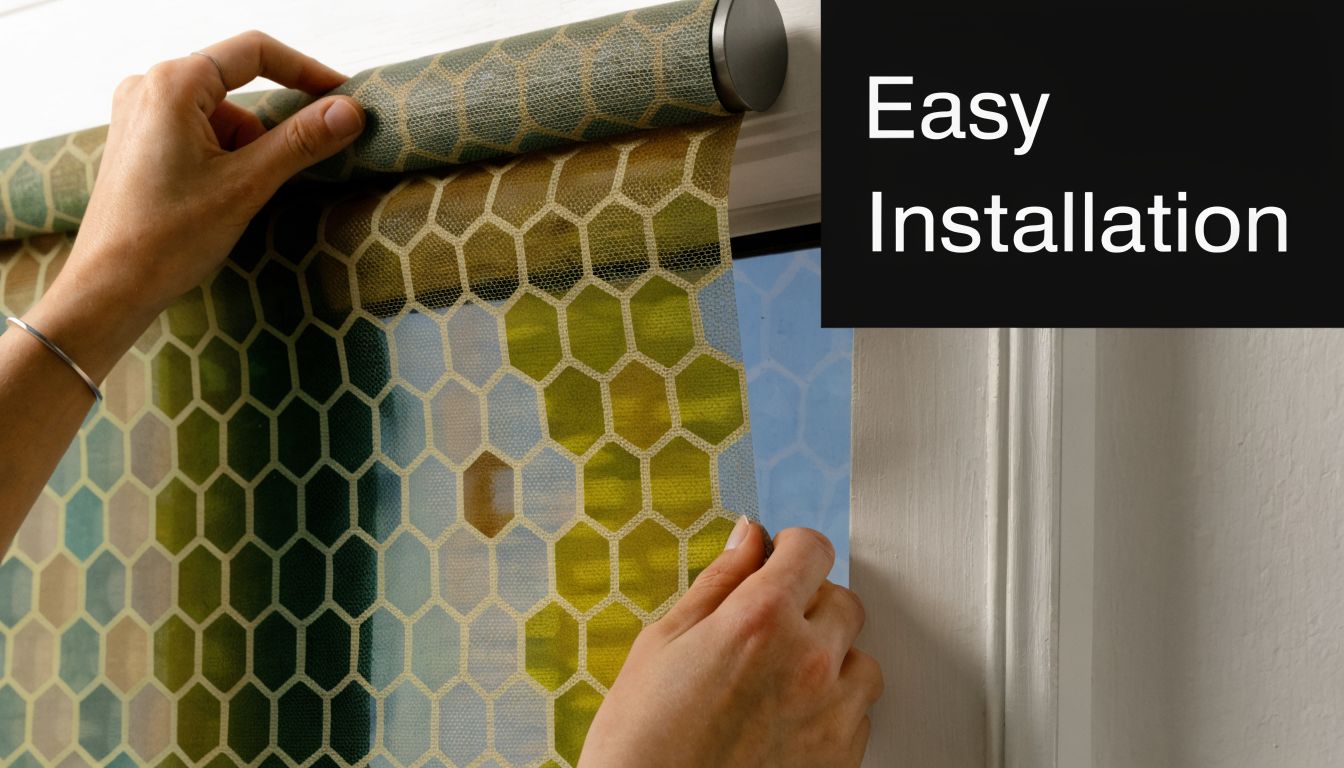
The installation stage is where a lot of confidence disappears. The box says the shade fits your opening. Then you open the hardware bag, hold up the brackets, and realize the window frame isn’t as square or forgiving as you thought.
Why DIY gets frustrating fast
Home Depot offers a wide range of cordless honeycomb shades, and their cellular category includes over 100 SKUs from brands like ACHIM and Perfect Lift, but the lineup is primarily designed for standard window sizes and self-installation rather than integrated custom installation for non-standard fits (Home Depot cordless cellular shades).
That means the burden falls on you to get several details right:
- Bracket placement has to be level and correctly spaced.
- Mount depth has to match the product requirements.
- Shade clearance has to account for trim, handles, or uneven casing.
- Finished appearance depends on the opening being more consistent than many real homes are.
If you want to understand what homeowners are up against before ordering, this guide on how to measure windows for blinds is worth reviewing.
What guaranteed success actually means
Custom install changes the whole experience. You’re not opening a box and hoping your measurements survive contact with an old window frame. The job is measured, ordered, and installed around the opening you have.
That matters because a shade can technically function and still look wrong. It can raise and lower fine while showing uneven side gaps, rubbing at one corner, or stopping slightly crooked. A professional install catches those issues before they become your daily irritation.
Here’s a helpful look at a typical installation process:
Simple care that keeps them looking good
Cellular shades are low-maintenance if you treat them gently.
- Dust lightly with a soft cloth, duster, or vacuum brush attachment.
- Use cool air from a hair dryer to push debris out of the cells when needed.
- Lower and raise evenly instead of yanking one side.
- Spot-clean carefully only if the fabric type allows it.
A good shade should disappear into your routine. You shouldn’t have to keep adjusting it, straightening it, or working around a poor fit.
That’s why I push homeowners toward a solution with custom install and 100% satisfaction when the room matters.
Frequently Asked Questions for West Tennessee Homeowners
Are honeycomb shades from Home Depot good quality?
Some are solid products. The problem usually isn’t that the shade is bad. The problem is that many homeowners buy a decent product for a window that needs a custom approach. Standard windows can do fine with off-the-shelf options. Challenging windows usually don’t.
Are honeycomb shades worth it in West Tennessee?
Yes, especially in rooms that take hard sun or feel uncomfortable near the glass. Cellular shades solve more than one problem at once. They can help with comfort, light control, and privacy without making the room look heavy.
Should I choose blackout or light filtering?
Use the room, not the product label, to decide. Bedrooms and media rooms usually need blackout. Living rooms, dining rooms, and kitchens often feel better with light filtering fabric unless glare is severe.
What if my windows are older or slightly uneven?
That’s exactly where DIY gets risky. Older homes often have windows that look standard but aren’t. A slight variation in width, depth, or squareness can create visible gaps and uneven hanging. Professional measuring removes most of that uncertainty.
Is cordless the right choice?
For most homeowners, yes. Cordless operation looks cleaner and is simpler for everyday use. It’s also the option many people prefer when they want a sleek appearance.
What’s the difference between buying a product and hiring a local expert?
You’re not just paying for a shade. You’re paying to avoid a chain of problems. Measuring, fit, operation, mounting depth, and final appearance all affect whether the finished result feels custom or looks improvised.
What if I’m also considering window film?
That can make sense in some rooms, especially where glare and solar exposure are part of the problem. If you’re comparing approaches, this overview of professional installation for home window film is a useful companion resource because it helps you think through where film fits and where shades still do the heavier lifting for privacy and light control.
How do I get a clear answer for my specific windows?
Call and talk to someone who works in these homes every day. A local recommendation is more useful than guessing from a product grid. If you want help with selection, measuring, custom install, and 100% satisfaction, call (731) 571-5179 and get a direct answer based on your actual windows, not a generic size chart.
If you’re done second-guessing measurements and want honeycomb shades that fit properly, contact Blinds Galore. They serve West Tennessee with in-home consultation, custom install, and a 100% satisfaction approach that takes the stress out of the project. Call (731) 571-5179 to get started.
You might also like

Best Plantation Shutter Brands – 2026 Review
If you're looking at your windows right now and thinking the room needs more polish, better privacy,

What Are Plantation Shutters Made Of
You're probably looking at a window right now thinking the same thing a lot of West Tennessee homeowners
Contemporary Roman Shades: Modern Styles for Your Home
You know the feeling. Your old blinds work, but they don't do your room any favors. They look hard,
Sliding Glass Window Treatments for Your West TN Home
That sliding glass door probably does two jobs at once in your home. It opens your living space to the
Vertical Blinds vs Horizontal Blinds: The Definitive Homeowner’s Guide
When you're trying to decide between vertical and horizontal blinds, it really comes down to your
Cordless Blinds vs Corded Blinds A Modern Homeowner’s Guide
When you're weighing the pros and cons of cordless blinds vs corded blinds, the verdict for today's