

Vertical Blinds Alternative Top Picks for 2026
If you're staring at a patio door covered by rattling, yellowing vertical blinds, you're not alone. Across Jackson, Dyersburg, Milan, and the rest of West Tennessee, I keep seeing the same problem. The slats twist, one breaks off, the track starts sticking, and the whole room looks older than it really is.
That’s why so many homeowners start looking for a better vertical blinds alternative after one small annoyance turns into a daily one. You walk through the room, the blinds clack together, sunlight leaks through the gaps, and your cooling system works harder than it should. At that point, replacing them stops being a style decision and becomes a comfort decision.
The good news is you’ve got much better choices now. Some are built for energy savings, some are better for heavy daily use, and some make a room look cleaner and more intentional. In West Tennessee, the best choice usually comes down to three things: how much sun the room gets, how often the door gets used, and whether you want the window treatment to disappear or make a statement.
Why West Tennessee Homes Need an Upgrade from Vertical Blinds
A lot of homes in our area still have old vertical blinds on patio doors and wide windows for one reason. They were the default for years. They covered big glass fairly cheaply, and they were easy for builders and landlords to install.
But “good enough” doesn’t hold up forever.
The everyday problems homeowners get tired of
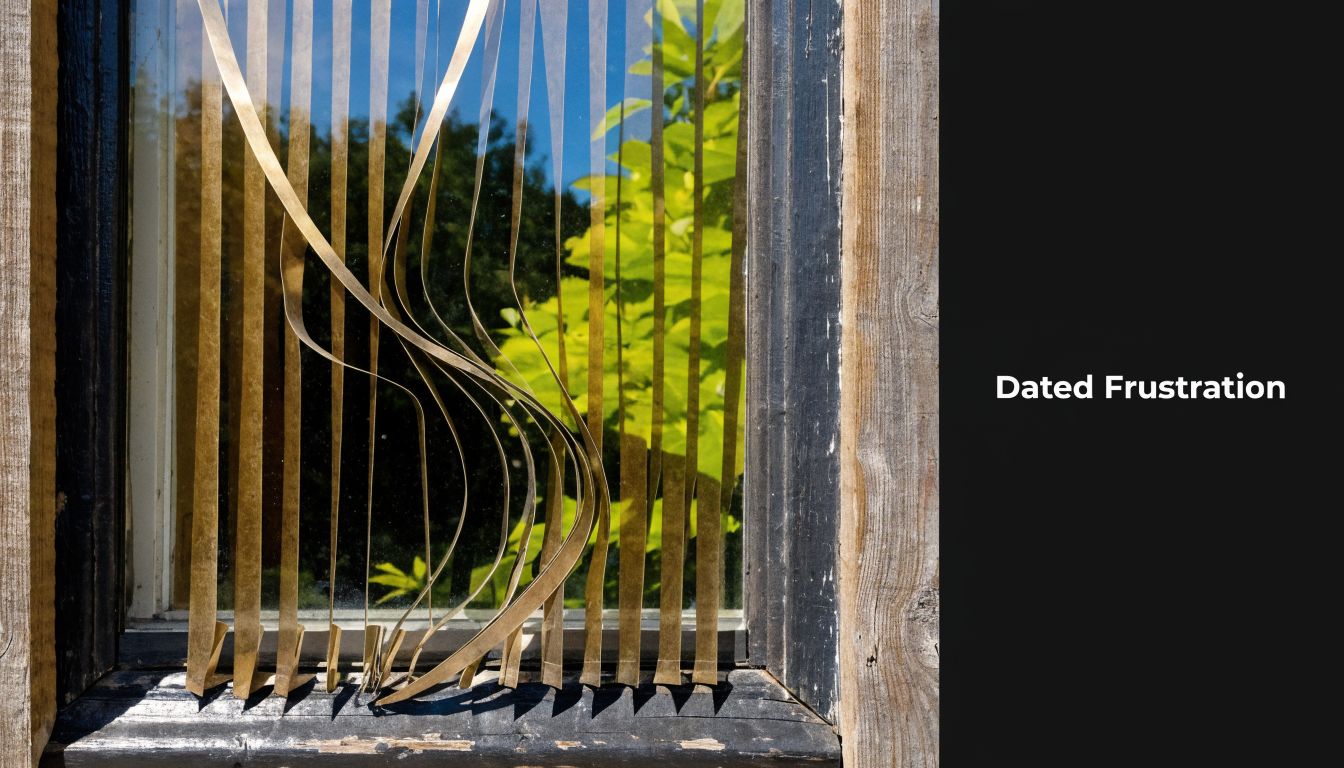
I hear the same complaints over and over. The blinds are noisy. They don’t hang straight anymore. They catch dust. Kids and pets push through them. One slat bends, then another disappears, and pretty soon the whole thing looks pieced together.
That wear matters more on a sliding glass door than on a regular window. You’re not just opening it to adjust light. You’re moving it every day to let the dog out, head onto the patio, bring groceries in, or watch the kids in the backyard.
Here’s the bigger issue. Traditional vertical blinds just don’t help enough with comfort. West Tennessee weather swings around, and large glass doors are one of the weakest spots in the house for heat gain and heat loss. If the window treatment isn’t pulling its weight, you feel it.
Old vertical blinds usually fail in two places first. The slats and the track. Once both start acting up, replacement makes more sense than repair.
Why the old look stands out more now
Design changed. Homes here still lean traditional, farmhouse, transitional, and comfortable contemporary. Old vinyl verticals don’t fit any of those styles well. They read as leftover builder-grade material, especially next to updated flooring, painted walls, better lighting, and remodeled kitchens.
And this isn’t some tiny niche problem. The global vertical blinds market reached USD 3.2 billion in 2024 and North America accounted for USD 1.1 billion, so there’s still a lot of vertical product in homes. But alternatives are gaining traction for good reason. Modern cellular shades can reduce heat transfer by up to 64%, which is exactly the kind of performance traditional verticals struggle to match.
What an upgrade should actually do
A smart vertical blinds alternative should solve more than one problem. It should:
- Handle daily traffic well so you’re not babying it every time the door opens
- Look cleaner than a row of thin dangling slats
- Improve comfort near large glass
- Fit the style of the room instead of dragging it backward
- Require less fuss for cleaning and upkeep
If your current blinds are clattering, bending, and making the room feel dated, replacing them isn’t cosmetic. It’s practical.
The Top Vertical Blinds Alternatives A Quick Comparison
You walk into a home in Jackson or Dyersburg with a big back window or sliding glass door, and the wrong treatment shows up fast. Some options look good in a showroom, then struggle with hard afternoon sun, daily traffic, or the heavier, more traditional style many West Tennessee homes already have. The best replacement is the one that fits the room, holds up, and helps keep the space more comfortable.
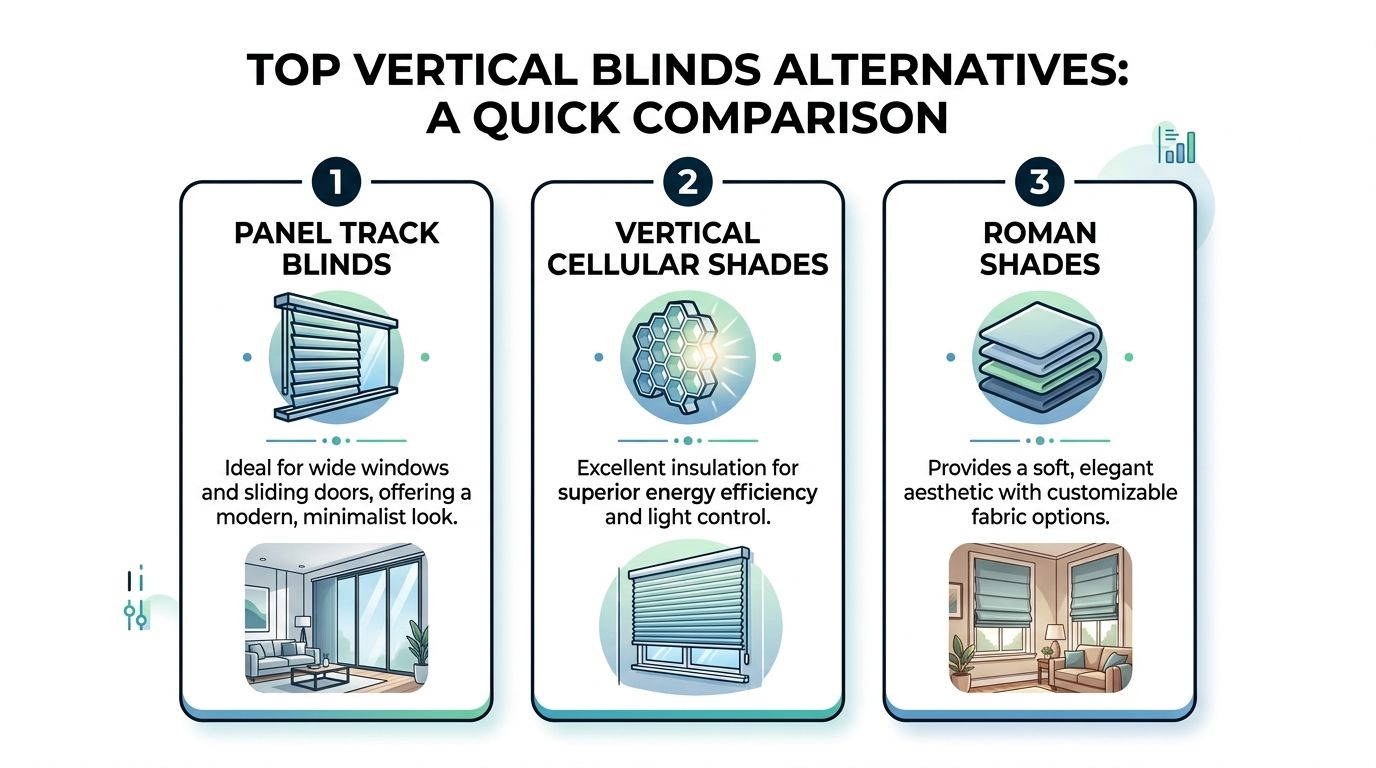
Here’s the short answer. For many homes here, panel track blinds and vertical cellular shades belong at the top of the list. Shutters are the premium choice for long-term value. Drapes bring softness where a room feels flat or too exposed. Roller shades work best where you want a cleaner, simpler look without adding visual weight.
Vertical blind alternatives at a glance comparison
| Alternative | Best For | Light Control | Energy Efficiency | Durability |
|---|---|---|---|---|
| Panel track blinds | Sliding doors, wide modern windows | Good to very good depending on fabric | Good, especially with solar fabrics | Very good |
| Vertical cellular shades | Hot rooms, large glass, energy-conscious homes | Very good, with multiple opacity choices | Excellent | Very good |
| Plantation shutters | Permanent upgrade, classic homes, resale appeal | Excellent | Good | Excellent |
| Curtains and drapes | Soft style, layered design, traditional spaces | Very good when layered | Good | Moderate to good depending on fabric and use |
| Roller shades | Clean, simple look on large windows | Good to very good depending on fabric | Good | Good |
My blunt take on the top options
Start with how the room is used, not just how the treatment looks in a sample book.
If you open and close the door all day, panel track blinds usually make the most sense. If that room stays hot in summer or feels chilly next to glass in winter, vertical cellular shades are the stronger choice. If you want the treatment to look like part of the house instead of an add-on, shutters win. If the room feels stark, drapes can fix that fast. If you want simple lines and easy operation, roller shades are a safe pick.
For larger openings, it also helps to compare products built specifically for oversized glass. Our guide to the best blinds for large windows breaks down what works best when standard window treatments start falling short.
If your old verticals bothered you because they felt cheap and noisy, choose a replacement with fewer moving parts and stronger materials.
What keeps these alternatives ahead
Homeowners across West Tennessee want more from a window treatment than basic coverage. They want something that looks cleaner from the living room, handles humidity and sun better, and does not turn into a maintenance problem after a year or two.
That is why these alternatives keep gaining ground. Panel tracks cut down on clutter. Vertical cellular shades do a better job managing comfort near glass. Shutters bring lasting structure and resale appeal. Drapes and roller shades give you style range that old vinyl verticals never had.
A simple way to choose fast
Use this chart if you want to narrow it down quickly.
| Your priority | Strongest pick |
|---|---|
| Clean look for a sliding door | Panel track blinds |
| Better comfort near hot or drafty glass | Vertical cellular shades |
| Highest long-term visual value | Plantation shutters |
| Softer, more finished style | Curtains and drapes |
| Minimal look with straightforward function | Roller shades |
Panel Track Blinds Sleek and Contemporary Coverage
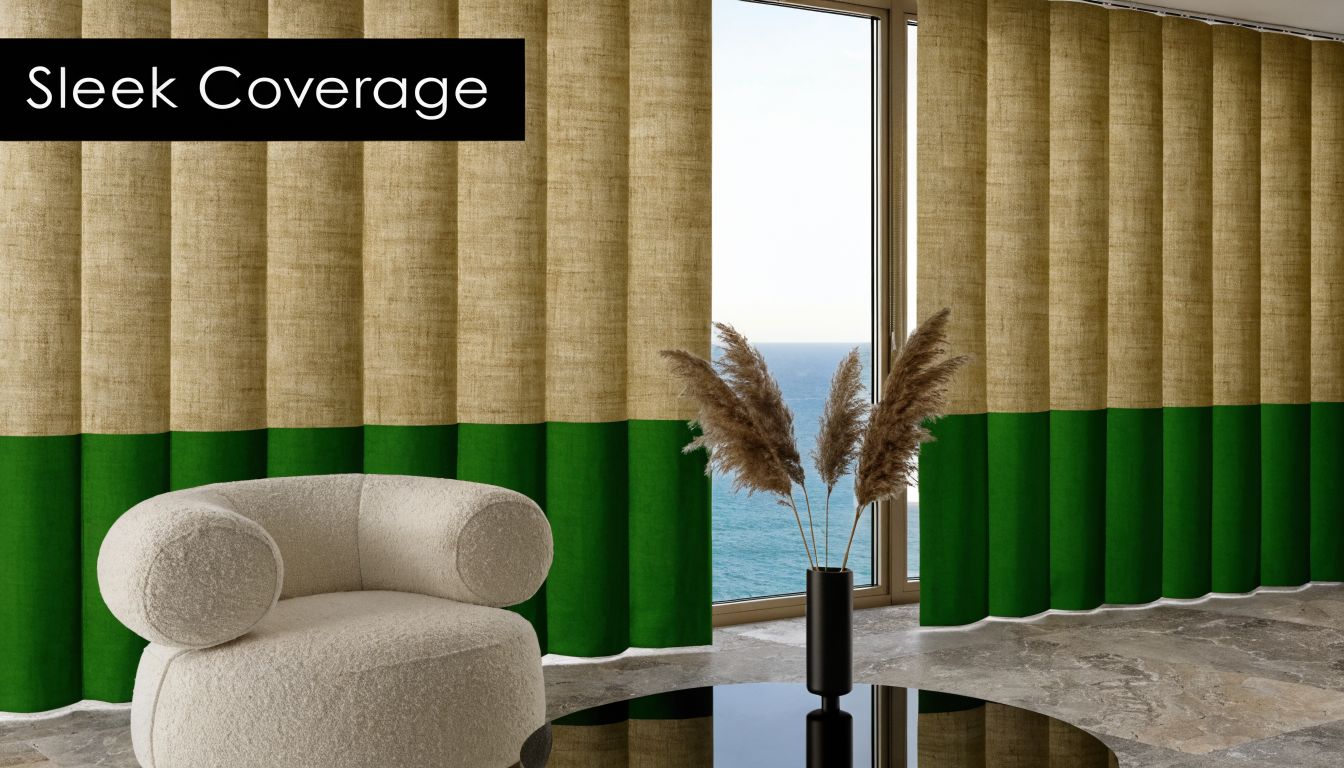
Panel track blinds are what vertical blinds should have grown into years ago. Instead of a bunch of narrow slats flopping around independently, you get wide fabric panels that slide across a track with a much cleaner look.
For a lot of homes, especially those with updated interiors, this is the best straight-line replacement. It keeps the side-to-side function people are used to, but drops the cheap plastic feel.
Why panel tracks work so well on big glass
The biggest advantage is simplicity. Fewer moving parts usually means fewer headaches. Wide panels move as a group, not as dozens of separate dangling pieces, so the whole system feels more controlled and less fussy.
That matters on doors and large windows where the treatment gets opened and closed constantly. It also looks better from across the room. You get broad vertical lines instead of visual clutter.
According to Elevated Views on panel track blinds, panel track systems typically use panels that are 11.5" or 17" wide. With solar fabrics, they can reach a U-factor of 0.35 to 0.45, block up to 95% of UV rays, and require 70% less maintenance than vertical blinds because they have fewer moving parts.
That’s a meaningful upgrade in real houses, especially where west-facing glass gets hammered by afternoon sun.
What they do better than old verticals
Panel tracks shine in a few specific ways:
- Cleaner operation: They glide instead of clattering.
- Better appearance: The room feels designed, not patched together.
- Fabric flexibility: You can go textured, woven, solar, or room-darkening depending on the room.
- Lower upkeep: There’s less individual hardware to fight with.
If you’ve got a broad opening and want a sharper look without going formal, this is the practical sweet spot.
Panel tracks are for homeowners who want order. If you’re tired of individual slats doing their own thing, this is your fix.
What to watch before you choose them
They’re not perfect. The stack takes space when open, so you need to think about where the panels will collect. In some rooms that’s no issue. In tighter layouts, it matters.
They also lean more modern than traditional. That’s a plus in many homes, but if your interior is heavily classic or cottage-style, drapery or shutters may feel more natural.
For homeowners comparing solutions for oversized openings, this guide to best blinds for large windows is worth reading because scale matters more than people think. A treatment can be attractive in a sample book and still feel awkward once it spans a wide wall of glass.
See how the movement differs
The biggest difference with panel tracks is how deliberate they feel in motion. That’s hard to appreciate until you watch them in action.
My recommendation on panel tracks
Choose panel track blinds if your room has:
- A sliding door you use every day
- A more updated interior
- A need for glare control without a heavy look
- No patience for tangled slats
Skip them if you want a highly traditional look or if you need the treatment to disappear almost completely when open. In those cases, another option may fit better.
Vertical Cellular Shades The Energy Efficiency Champion
If comfort is your top priority, vertical cellular shades are the best vertical blinds alternative on the board. Nothing else in this category makes a stronger insulation argument.
This is the option I point to when a homeowner says, “That room is always hotter than the rest of the house,” or “We can feel heat coming off that glass.” Those are classic signs that the opening needs more than basic coverage.
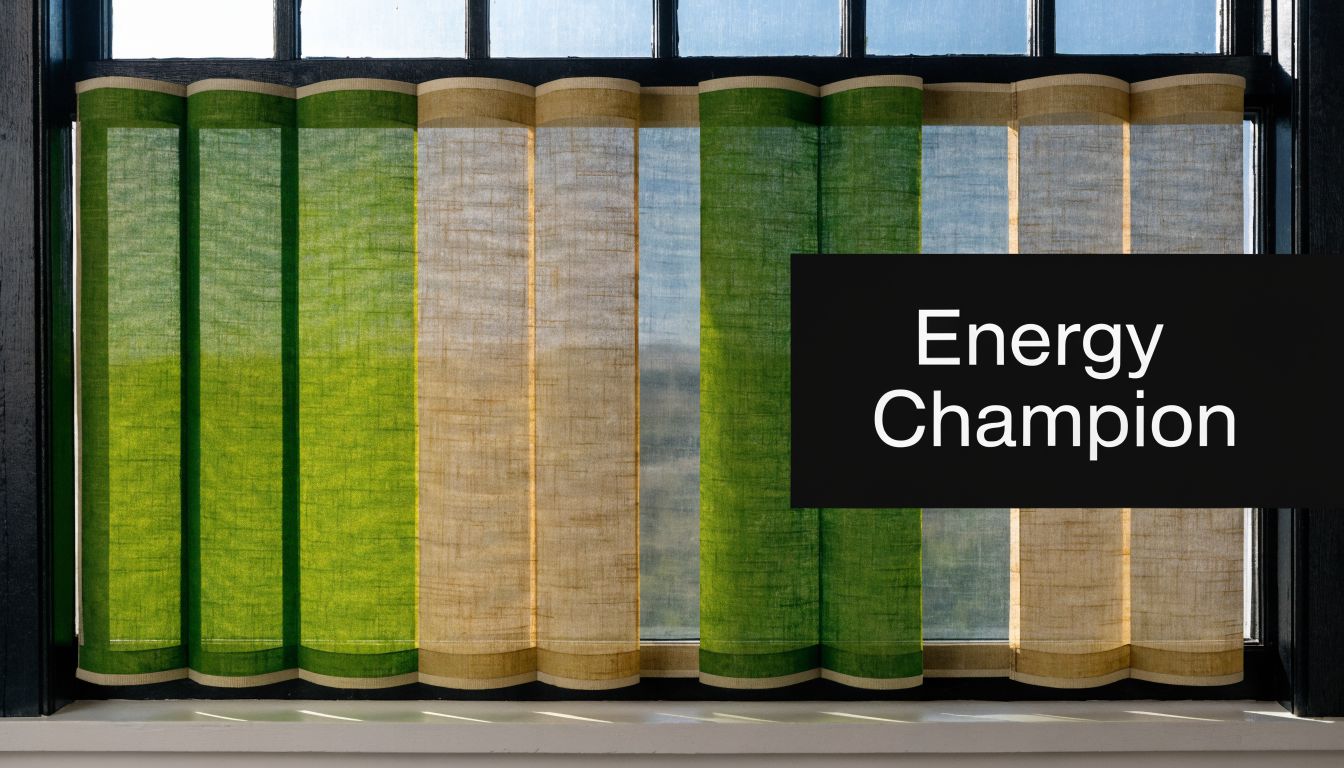
Why the honeycomb design matters
Vertical cellular shades use air-trapping cells to slow heat transfer. This insulation capability sets them apart. Traditional vertical blinds mostly manage light and privacy. Cellular shades do that too, but they also insulate.
That matters in West Tennessee because large glass openings can turn a comfortable room into the warmest room in the house during summer. The effect gets worse when the door faces heavy afternoon sun.
According to Blindsgalore’s breakdown of vertical blind alternatives, vertical cellular shades can reach an R-value of 3.5 to 5.0, compared with 1.5 to 2.5 for vertical blinds. The same source notes they can reduce heat gain through glass doors by up to 65% and deliver 30% to 50% energy savings on heating and cooling in a humid subtropical climate like Tennessee’s.
That’s why I call them the performance choice.
What those numbers mean in plain English
You don’t have to care about R-values to understand the benefit. Higher insulation means the room feels more stable. Less heat pours in. Less conditioned air escapes. The area near the door becomes more usable during the hottest and coldest stretches of the year.
For homeowners planning broader comfort upgrades, this piece on energy-saving remodels fits right into the same conversation. Good window treatments won’t replace insulation or HVAC work, but they absolutely support those improvements where the house loses performance at the glass.
Why they fit more rooms than people expect
Some homeowners assume cellular shades look too technical or too plain. That’s outdated thinking. The newer versions are cleaner, softer, and more versatile than many people expect.
They work well when you need:
- Filtered daylight without harsh glare
- Room darkening for media rooms or bedrooms near large glass
- Quieter operation than loose slats
- A refined look that doesn’t dominate the room
And if you’re specifically researching lower-utility options, this guide to best blinds for energy efficiency is a useful next read.
Practical rule: If the main complaint is heat, stop shopping by color first. Shop by insulation first.
My recommendation on vertical cellular shades
Pick vertical cellular shades when:
| Situation | Verdict |
|---|---|
| Patio door gets blasted by sun | Excellent choice |
| You want quieter operation | Excellent choice |
| Energy savings matter more than trendiness | Excellent choice |
| You need a crisp, ultra-architectural statement | Good, but shutters may win on look |
Their only real drawback is that they aren’t the most “decorative” option in the traditional sense. They’re more about performance and neat presentation than dramatic style. For a lot of homeowners, that’s exactly the right trade.
Classic Choices Shutters Curtains and Roller Shades
A lot of West Tennessee homeowners get tired of vertical blinds for one simple reason. They look temporary. If your house in Jackson, Humboldt, or Dyersburg has good bones, you need a window treatment that looks like it belongs there.
Shutters, curtains, and roller shades all solve that problem in different ways. The right pick depends on whether you want lasting value, a softer finished look, or clean everyday function.
Plantation shutters for permanent value
Plantation shutters are my first recommendation when the goal is a built-in look that suits the house. They feel settled and intentional, especially in the traditional brick homes, ranch homes, and Southern-style interiors you see all over West Tennessee.
They also hold up. That matters in homes with heavy sun, humidity, and daily use. Instead of fighting with dangling vanes or warped-looking plastic, you get a solid treatment with clean lines and reliable light control. Tilt the louvers and you can cut glare while still bringing in daylight.
If you like that timeless style, these examples of louvered shutters for windows show why shutters keep earning their place year after year.
Choose shutters if you want:
- A classic, architectural look
- Strong durability over the long haul
- Better control over privacy and daylight
- A treatment that adds visible value to the room
Here’s the drawback. Shutters are structured. If you want a loose, casual, fabric-heavy look, they are not the right fit. On some doors, they can also keep a more framed appearance even when opened.
Curtains and drapes for softness and warmth
Curtains do a job hard treatments cannot do well. They add softness, texture, and visual comfort fast.
That makes them a smart choice in bedrooms, dining rooms, formal living rooms, and any space that feels a little sharp or bare. In many West Tennessee homes, that means balancing wood floors, painted walls, stone fireplaces, and big windows with something that makes the room feel more finished.
They also give you design flexibility. Pattern, color, lining, pleat style, and hardware all change the mood of the room. If the window is awkward or the proportions feel off, drapery can help correct that visually.
I recommend curtains most often when a homeowner wants one of these two outcomes:
- A richer, more decorative finish
- Layered function with light filtering, privacy, and some added softness at the glass
I would not put fabric at the top of the list for a hard-used patio door. In a busy back door setup with kids, pets, or constant traffic, curtains can get tugged, handled, and knocked out of shape unless the layout is planned carefully.
Curtains make a room feel more comfortable. They usually do not make the best workhorse treatment for a heavily used sliding door.
Roller shades for simple, clean function
Roller shades are the practical pick for homeowners who want less visual clutter. They stay tight to the window, operate cleanly, and fit homes that are being updated with simpler finishes.
I like them in kitchens, home offices, casual living rooms, renovated ranch homes, and rental properties where you want a neat look without a lot of fuss. They also work well on large windows where you want to keep as much view as possible when the shade is up.
Their limitation is style presence. Roller shades are neat and useful, but they do not bring the same architectural weight as shutters or the same softness as drapery. That is fine if your priority is function and a clean look.
Which of these classic options should you pick
Here’s my straight answer for West Tennessee homes.
| If you want… | Choose… |
|---|---|
| A built-in upscale look | Plantation shutters |
| Softness and decorative flexibility | Curtains or drapes |
| Minimal visual clutter | Roller shades |
If you want the best resale look and the most permanence, pick shutters. If the room feels cold or unfinished, pick curtains. If you want a simple, low-profile treatment that stays out of the way, pick roller shades.
These options keep showing up for a reason. They solve real problems, they suit local home styles well, and they look far better than aging vertical blinds in the average West Tennessee room.
Matching the Right Alternative to Your Space
The right product depends less on trends and more on where it’s going. A patio door, a sunroom, and a big front living room window don’t ask for the same solution. If you treat them the same, one of them will disappoint you.
Best choice for a high-traffic sliding door
For heavy daily use, I’d narrow it to two options. Panel track blinds if you want a sleek look and easy function. Vertical cellular shades if heat control is your main problem.
I wouldn’t make delicate fabric panels the first choice for a household where people are constantly moving in and out. You need something that operates cleanly and holds up under repetition.
Ask yourself:
- Does this door get used multiple times a day?
- Do kids or pets push through the opening?
- Do you need durability more than decoration?
If the answer is yes, prioritize operation first. Style comes second.
Best solution for the hottest room in the house
Some rooms in West Tennessee take a beating from the sun. That’s especially true when July and August settle in. According to Elden Blinds on alternatives for vertical blinds, West Tennessee averages 92°F highs in July and August, and vertical cellular shades can reduce cooling costs by 20% to 30% by reaching R-values up to 4.5, compared with R-2 for standard vertical blinds.
That’s not just technical talk. It means a room can stay steadier and place less strain on the HVAC system.
If your complaint sounds like this, choose cellular shades:
“The rest of the house feels fine, but this room always heats up in the afternoon.”
Best pick for a formal living room or front-facing space
Here, appearance carries more weight. If the room is meant to look polished when guests walk in, shutters or drapery usually make the stronger impression.
Shutters give you structure and symmetry. Drapery gives you softness and presence. Roller shades can work too, but only if the room’s style is already clean and restrained.
I’d use this simple decision path:
| Room type | Best fit |
|---|---|
| Formal living room | Shutters or drapes |
| Casual den with patio access | Panel tracks or vertical cellular |
| Large stationary window | Roller shades or drapes |
| Sun-heavy family room | Vertical cellular shades |
Best option when you want the view to stay important
Some homeowners don’t want the treatment to become the focal point. They want the backyard, pool, tree line, or natural light to stay center stage.
For that, roller shades and panel tracks are usually better than ornate treatments. They stay visually simpler. They also work well in homes that have been updated with cleaner trim, neutral paint, and less decorative clutter.
Best for rentals and practical upgrades
If you own rental property or manage a house that gets hard use, don’t overcomplicate it. Pick the option that balances durability, appearance, and maintenance. Fancy doesn’t matter if it can’t hold up.
My short list for practical ownership is:
- Panel tracks for good looks and easier daily operation
- Roller shades for straightforward function on standard windows
- Vertical cellular shades where utility savings and comfort matter most
The rule that saves people the most frustration
Match the product to the room’s behavior, not just the room’s style. That one decision prevents most regret.
A beautiful treatment that fights the way you live becomes a nuisance fast. The best vertical blinds alternative is the one that feels right on a Tuesday afternoon, not just the one that looks good in a sample book.
Get Your Perfect Custom Solution from Blinds Galore
A patio door in West Tennessee gets used hard. Kids run through it, dogs nose against it, summer sun beats on it all afternoon, and cheap window treatments start showing their weaknesses fast.
That is why custom is usually the smarter buy.
Why custom matters on large windows and doors
Wide glass makes small mistakes obvious. If the treatment is too short, stacks too wide, drags at the bottom, or uses the wrong control, the whole opening looks off and works worse than it should.
Custom sizing fixes those problems before they start. You get better coverage, a cleaner look, and operation that feels right day after day. On sliders and oversized windows, that difference is easy to see.
Off-the-shelf products can work on a basic window. On a big opening, they often look pieced together and wear out faster under daily use.
What good guidance should include
Good advice starts in the room itself. Sun exposure, traffic flow, trim depth, furniture placement, and how often that door or window gets used should drive the recommendation.
A solid in-home consultation should sort out:
- Which product fits the opening
- What light control makes sense for the room
- How much stack-back you need to live with
- Whether comfort, privacy, or appearance should lead the decision
- Which materials will hold up best in your household
That is how you avoid buying something that looks fine in a sample book but annoys you every week after installation.
Good window treatment advice starts with the room, not the catalog.
Why installation makes or breaks the result
A lot of product complaints trace back to bad installation. Crooked brackets, weak anchors, uneven spacing, and sloppy measurements will ruin even a good shade or panel system.
Professional installation gives you straighter lines, smoother movement, and fewer service issues later. It also protects your investment, especially on the largest and most-used openings in the house.
In Jackson, Dyersburg, Milan, and the rest of West Tennessee, those back doors and family room windows deal with heat, glare, and constant traffic. You will notice bad installation quickly.
The local advantage
A local specialist should understand how homes in this part of the state are built and lived in. A ranch in Humboldt, a newer home in Medina, and a traditional house in Union City may not need the same product, but the priorities stay familiar. Cut glare. Handle humidity. Hold up to daily use. Keep the room looking put together.
Blinds Galore serves West Tennessee with free in-home consultations, professional measuring, custom installation, and products from trusted brands like Norman, Graber, and CACO. With more than eighteen years focused on window coverings, they know which vertical blind alternatives hold up best in local homes and which ones are likely to become a headache.
If you want the job done right the first time, talk to Blinds Galore. They bring samples to your home, measure the opening, install the product correctly, and stand behind the work with 100% satisfaction. Call (731) 571-5179 for direct help choosing the right fit for your West Tennessee home.
You might also like

Best Plantation Shutter Brands – 2026 Review
If you're looking at your windows right now and thinking the room needs more polish, better privacy,
What Are Plantation Shutters Made Of
You're probably looking at a window right now thinking the same thing a lot of West Tennessee homeowners
Contemporary Roman Shades: Modern Styles for Your Home
You know the feeling. Your old blinds work, but they don't do your room any favors. They look hard,
Sliding Glass Window Treatments for Your West TN Home
That sliding glass door probably does two jobs at once in your home. It opens your living space to the
Vertical Blinds vs Horizontal Blinds: The Definitive Homeowner’s Guide
When you're trying to decide between vertical and horizontal blinds, it really comes down to your
Cordless Blinds vs Corded Blinds A Modern Homeowner’s Guide
When you're weighing the pros and cons of cordless blinds vs corded blinds, the verdict for today's