

Transform Your Home with Black Windows with Shutters
You’ve picked black windows, or you’re close to it. You love the clean lines, the contrast, and the way dark frames sharpen the whole exterior. Then the next question hits. Do you add shutters, skip them, match them, or soften the look with something lighter?
That hesitation makes sense, especially in West Tennessee. Homes around Jackson, Medina, Milan, Lexington, Humboldt, and the surrounding communities deal with strong sun, long humid stretches, pollen, storms, and a mix of architectural styles that can either make black windows with shutters look custom and intentional, or slightly off. The difference usually isn’t the color alone. It’s proportion, material, and fit.
I’ve seen homeowners get this right when they stop treating shutters as an afterthought. Black windows already create a strong outline. The shutters have to support that choice, not compete with it. When they do, the whole house settles into place.
The Timeless Appeal of Black Windows and Shutters
A lot of homeowners worry that black windows with shutters might feel too trendy. That concern usually comes up right after they see a beautiful online photo and start wondering whether the look will still feel right ten years from now.
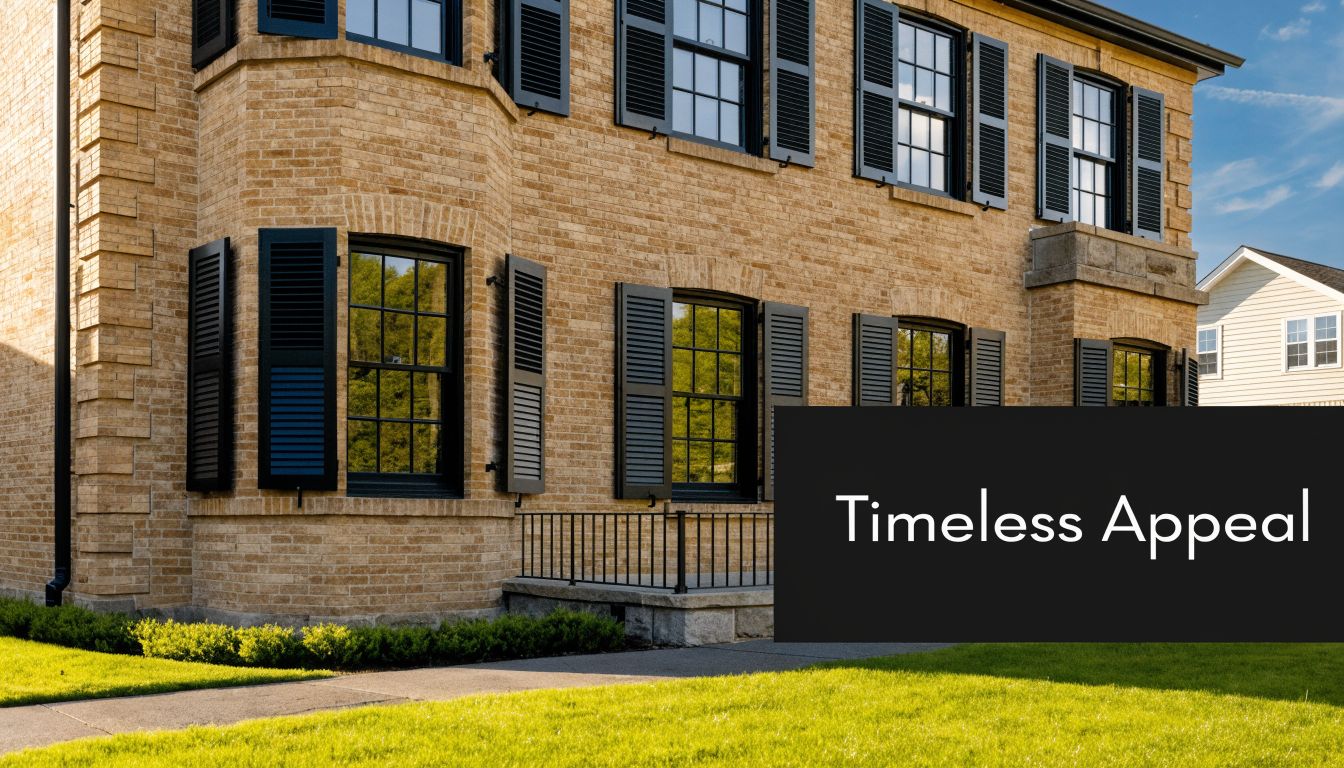
The better way to think about it is this. Black-framed windows aren’t new at all. They have documented historical precedent going back to the late 1700s in New England, where wooden sashes were often painted black so the heavy grid bars visually receded against dark interiors before electricity, as noted in this history of black windows in early American homes. That matters because it places black windows in the category of recurring architectural language, not a passing fad.
Why the look keeps returning
Black works because it gives a window visual weight. On a brick home, it can make openings read more crisply. On painted siding, it can add definition where white trim would disappear. On traditional homes, shutters complete the composition and keep the windows from looking bare.
That pairing is especially effective when the shutters are sized correctly and relate to the home’s style. A narrow modern frame with bulky decorative shutters usually looks forced. A well-scaled shutter beside a black window looks settled and architectural.
Black windows don’t need help standing out. They need surrounding elements that make the bold choice feel balanced.
What homeowners in West Tennessee usually want
Those I engage with aren’t chasing drama for its own sake. They want three things:
- Curb appeal that lasts. They want the home to look current without locking into a short-lived style.
- Materials that can handle humidity. West Tennessee heat and moisture expose weak finishes fast.
- A finished exterior. Black windows look strongest when the rest of the trim story feels intentional.
That’s why shutters still matter. They can reinforce the boldness of black frames, or they can soften them with contrast. Both approaches work. The right one depends on the house, not just the color chip.
Design Principles for Pairing Shutters with Black Frames
Think of black windows with shutters the way you’d think about framing a piece of art. The window is the focal point. The shutter is the supporting border. If the border is too heavy, too small, too ornate, or wrong for the room, the eye notices the mismatch before it notices the beauty.
Start with architectural alignment
Some homes want contrast. Others want continuity.
A traditional brick Colonial or Georgian-inspired home usually benefits from shutters that look rooted in that style. A modern farmhouse often handles simpler shutter profiles better. A contemporary exterior may not want exterior shutters at all unless they’re very restrained and clearly intentional.
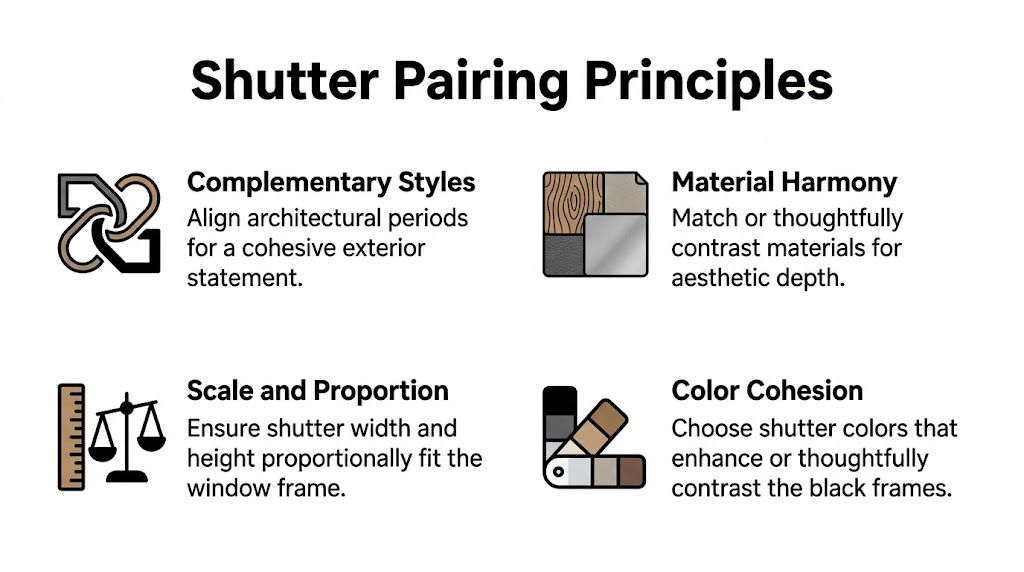
Here’s the practical filter I use:
- Traditional brick homes usually look best with raised-panel or louvered shutters that have some depth and formality.
- Farmhouse exteriors can carry simple board-and-batten styles well, especially when the trim package is clean.
- More transitional homes often benefit from understated louvered shutters that don’t overwhelm the black frame.
Use contrast with intention
Black shutters with black windows create a unified, refined look. That can be striking on light brick, painted white exteriors, or homes with simple rooflines. It can also make the house feel too visually heavy if the facade already has dark roofing, dark gutters, and dark garage doors.
White shutters with black windows create sharper contrast. That approach feels crisper and often a little more traditional. Wood tones can warm up the whole composition, especially if the house has stone, tan brick, or earthy siding.
Practical rule: If the house already has several dark exterior elements, lighten the shutters or introduce texture so the windows stay defined instead of blending into one dark mass.
Texture matters as much as color
Homeowners often focus on black versus white and miss the bigger issue. Smooth black against smooth black can look flat if the house lacks other texture. That’s where material choice, slat profile, panel depth, and surrounding trim become important.
A few pairings that usually work well:
| Home exterior | Black frame pairing that usually works | What to avoid |
|---|---|---|
| Red or warm brick | Black shutters with visible panel depth, or stained wood | Thin, flimsy shutters that look pasted on |
| White siding | Black shutters for a classic statement, or soft wood tones for warmth | Oversized shutters that dominate the wall |
| Stone or mixed masonry | Dark shutters with subtle texture | High-gloss finishes that feel out of place |
Scale fixes most mistakes
Even beautiful shutters fail when the proportions are wrong. If shutters are too narrow, they look decorative in the wrong way. If they’re too tall or mounted awkwardly, they fight the window instead of framing it.
Good design here is simple. The shutter should look like it belongs to the window opening. It should never look borrowed from another house.
Choosing the Right Shutter Style and Material
Style gets attention first, but in West Tennessee, material is what determines whether you still like the decision after a few summers. Heat, humidity, moisture, and sun exposure will expose weak materials quickly. That’s why choosing black windows with shutters isn’t just a design exercise. It’s also a durability decision.
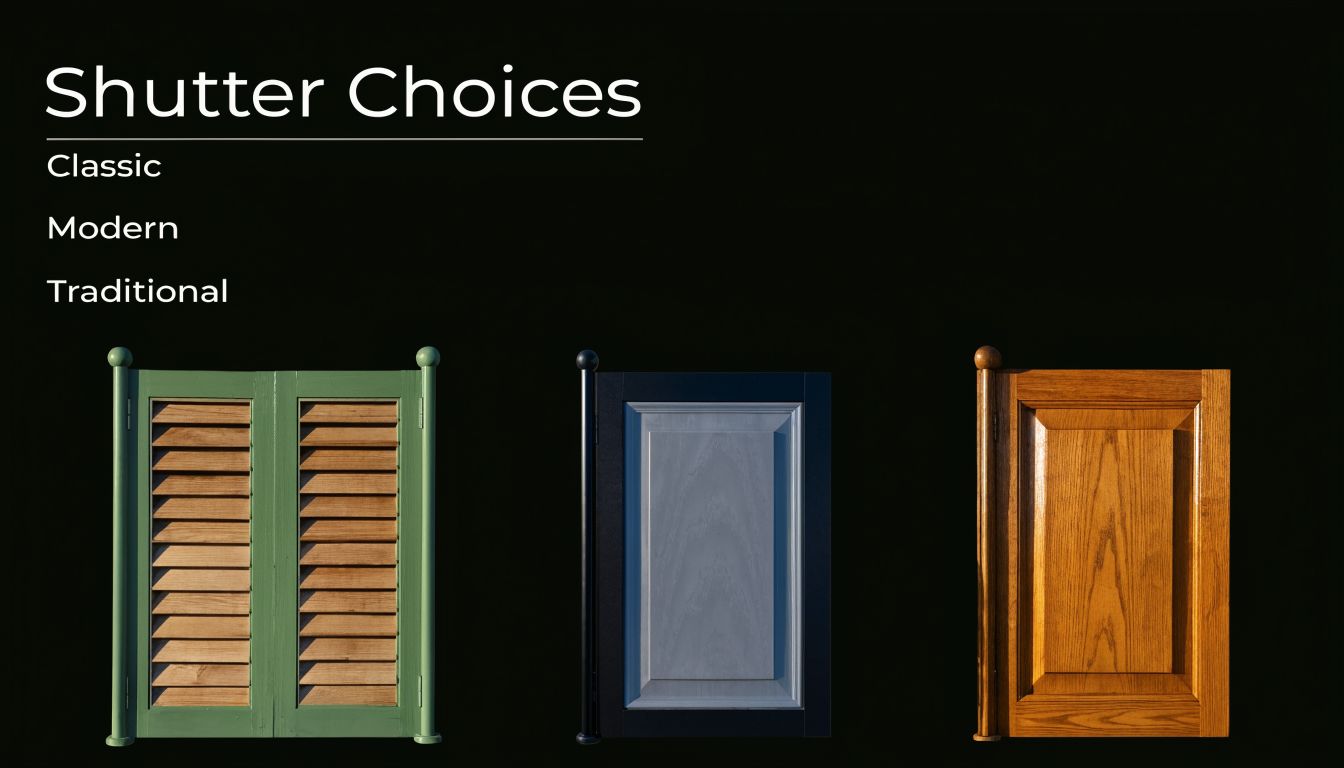
Which shutter style fits your house
Plantation shutters usually come up when homeowners are talking about interior shutters, and for good reason. They suit black-framed windows well because the strong lines of the frame pair naturally with adjustable louvers. Inside the home, they give you control over privacy and light without making the room feel overdone.
Board and batten shutters work better when you want a more casual or farmhouse look. They bring a little texture and a little weight. On the right house, they look grounded. On a formal brick home, they can feel too rustic.
Raised-panel shutters read more traditional. They can be a strong fit for brick homes across Jackson and nearby communities where the goal is formal curb appeal rather than cottage style.
Bahama shutters have a distinct look and can be appealing visually, but they need the right architecture. On most West Tennessee homes, they make sense only when the rest of the exterior supports that coastal or tropical influence.
Material choices that hold up better here
The short version is simple. Material matters more in our climate than most homeowners expect.
Wood has warmth and character, but it also asks more of you. In humid conditions, wood can swell, move, crack, or demand refinishing sooner than people planned for. Composite options can help bridge the gap, depending on the product and finish quality. High-quality vinyl or PVC products often make the most sense for homeowners who want a stable exterior and less upkeep.
One reason is documented product performance. Modern UV-resistant vinyl shutters can maintain structural integrity and color for over a decade, with less than a 5% color shift after 5,000 hours of accelerated weathering testing, according to this product data on UV-resistant black vinyl shutters. That same source also notes stronger fade and abrasion performance than painted wood.
What works versus what doesn't
Here’s where I get practical.
- Works well. UV-resistant vinyl or PVC for exteriors that take direct afternoon sun.
- Works well. Interior plantation shutters in moisture-resistant materials in kitchens, bathrooms, and sun-heavy rooms.
- Can work. Real wood where the style demands it and the homeowner accepts maintenance.
- Usually doesn’t work long-term. Cheap decorative shutters with light fasteners, shallow profiles, and low-grade finishes.
If you’re comparing options side by side, this guide on vinyl shutters vs wood is worth reviewing before you commit.
A quick check on a sample tells you a lot. Hold it. Look at the edges. Look at the finish depth. Ask how it will respond to heat, moisture, and daily exposure, not just how it looks under showroom lighting.
A short product walkthrough helps too.
My material advice for West Tennessee homes
If the project is exterior and black is part of the palette, I’d lean toward stable, low-maintenance materials unless there’s a strong architectural reason not to. Dark finishes already ask more from the surface. You want the substrate underneath to be dependable.
The best shutter is the one that still looks right in August, not just the one that looked good in a sample board.
Mastering Color and Contrast for Maximum Curb Appeal
Color decisions go wrong when homeowners isolate the window and forget the rest of the house. Black windows with shutters don’t exist by themselves. They sit next to brick undertones, roof color, trim color, stone, porch posts, and landscaping.
Match the shutter decision to the body color
On white or cream exteriors, black shutters with black frames create the strongest graphic contrast. That look is clean and classic. It also works because the light wall color gives the dark elements room to breathe.
On red brick or brown brick, all-black can still work, but the finish and texture matter more. A flat, featureless black shutter beside a richly textured brick facade can look cheap. A shutter with depth, louvers, or panel detail tends to feel more intentional.
On gray siding, the answer depends on temperature. Cooler grays usually pair better with crisp blacks and charcoals. Warmer grays often benefit from a wood tone or softer contrast so the house doesn’t start feeling cold.
Add warmth when the exterior needs it
Some houses don’t need more contrast. They need balance.
That’s where stained wood tones or wood-look materials can help. They break up the black just enough to keep the home inviting. This is especially useful on facades with a lot of masonry or on homes where black windows are already paired with dark gutters, doors, or roofing.
A few practical combinations that tend to hold up visually:
- White siding plus black frames. Best when you want a crisp, traditional statement.
- Warm brick plus black frames. Often improved by shutters with visible depth or natural warmth.
- Stone and mixed textures. Usually strongest when the shutter color supports the dominant undertone instead of competing with it.
If you notice the shutter color before you notice the house, the choice is probably too aggressive.
Don’t ignore the home’s age and personality
Older homes usually want restraint. Newer builds can handle sharper contrast. A historic-looking home with ultra-modern shutter styling can feel disconnected. A newer farmhouse can carry bolder black pairings better because the style already accepts stronger contrast.
For homeowners who like historical inspiration before choosing a final exterior palette, this article on vintage window shutters is a useful reference point.
Accent colors can work too, but they need discipline. Deep green or navy can look excellent with black frames when they echo another element on the property. If they show up nowhere else, they tend to feel added on.
Optimizing for Privacy Light Control and Energy Savings
The design side gets the attention, but most homeowners live with shutters because of what they do every day. Light control, privacy, and comfort matter more than the exterior photo once you’ve spent a full summer in the house.
Interior shutters give you better control
For black-framed windows, interior plantation shutters are often the most practical companion because they let you fine-tune privacy without shutting a room down completely. Louvers let you redirect light instead of just blocking it.
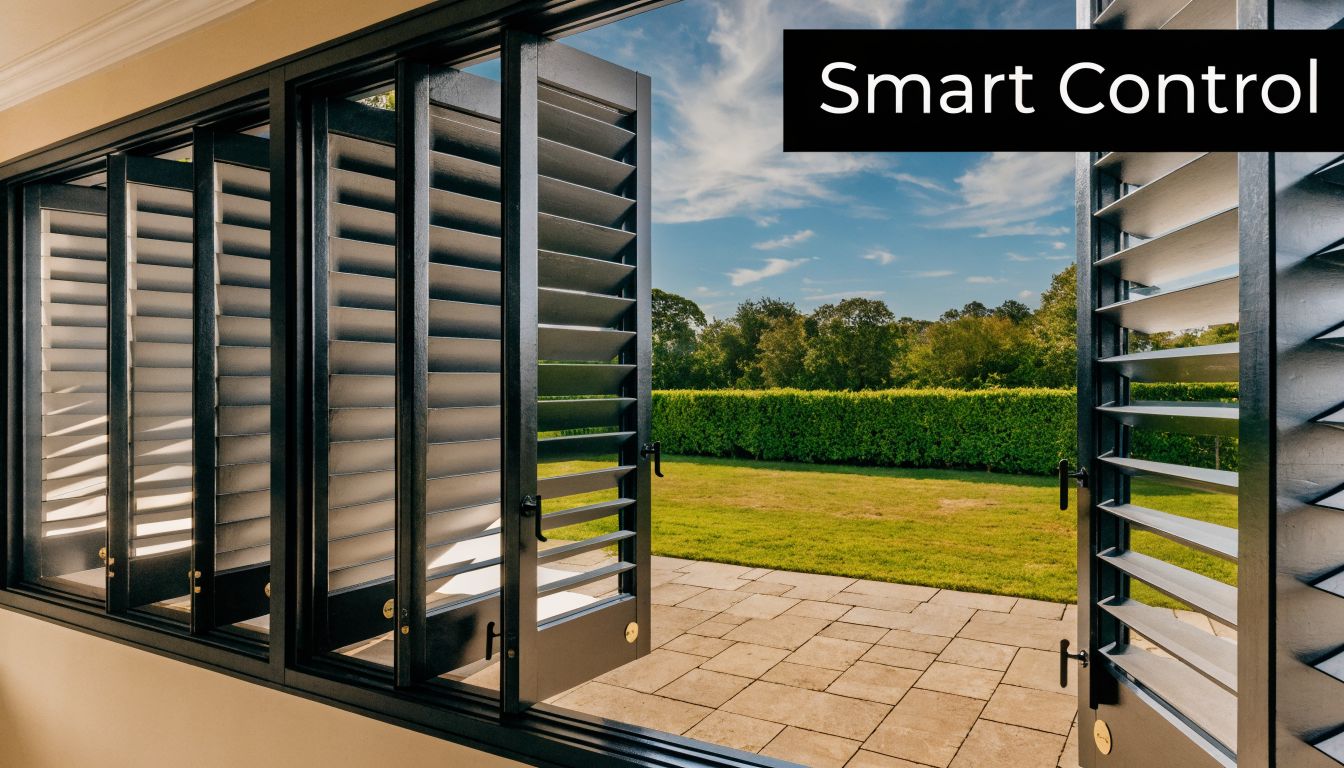
Smaller louvers tend to feel more traditional and a bit more detailed. Larger louvers usually feel more open and contemporary. The right choice depends on room style, window scale, and how much view-through you want when the louvers are tilted.
Dark color and heat are real concerns
In West Tennessee, it’s fair to ask whether black surfaces create extra heat issues. They can absorb more heat than lighter colors, so the answer isn’t to ignore the concern. The answer is to choose better materials and better overall window performance.
For black-framed windows paired with custom interior plantation shutters made from cellular PVC, manufacturers report U-values as low as 0.35 BTU/hr·ft²·°F, along with moisture resistance and a projected lifespan of 25+ years, in this overview of modern black shutters and energy performance. The same source notes potential HVAC savings in modeled conditions when the shutter system and fit are done well.
That matters in our climate because humidity and temperature swings don’t just test comfort. They test materials, finishes, and how tightly the treatment fits the opening.
A dark finish isn’t automatically a bad choice in a hot climate. A poor material choice is.
Where the full system matters most
Shutters help, but they work best when they’re part of a larger strategy. If your windows are older or underperforming, it’s smart to understand how glazing affects comfort too. This explanation of the benefits of double glazed windows gives helpful context on why better glass can improve energy savings and indoor quiet.
For many homes, the best result comes from combining strong windows with properly fitted shutters. Fit is a big deal. Gaps reduce privacy, leak light, and weaken the insulating effect.
A few rooms where shutters earn their keep fastest:
- Street-facing living rooms where you want daylight without an open view inside.
- Bedrooms where light direction matters in the morning and privacy matters at night.
- West-facing rooms that take the hardest afternoon sun.
- Bathrooms and kitchens where moisture resistance matters.
If energy efficiency is high on your list, this guide on insulated window shutters is worth a look before you finalize materials.
Your Custom Shutter Project with Blinds Galore
Most shutter problems start before installation day. The wrong style gets chosen from a small sample. Measurements are taken too casually. The homeowner tries to force a standard size onto a non-standard opening. Then the final result looks close, but not right.
That’s why a custom process matters.
What a better process looks like
A proper project starts in the home, not in a warehouse aisle. Light looks different on your wall than it does in a showroom. Brick undertones change with the time of day. Black finishes can read soft, crisp, or harsh depending on surrounding trim and glass.
Professional measuring is just as important. Plantation shutters and exterior shutter pairings need clean proportions and reliable fit. If the measurements are off, you’ll notice it every time you open, tilt, or step back from the curb.
Why installation changes the result
Even a quality shutter can look second-rate if it’s installed poorly. Panels need to sit square. Hardware needs to align. Exterior pieces need to look intentional against the frame and facade.
For homeowners comparing upgrades, broader reading on the benefits of energy efficient windows can help clarify how window and shutter decisions often work together, especially when comfort and utility costs are part of the goal.
A local custom install process also gives you something big-box ordering rarely does. Accountability. If a detail needs correction, there’s a real team behind the work.
What to expect from Blinds Galore
Blinds Galore keeps the process straightforward:
- Free in-home consultation so you can see real samples in your own lighting
- Professional measuring to avoid the fit problems that derail otherwise good projects
- Custom install so the finished product looks clean and works the way it should
- 100% satisfaction because the job isn’t done when the boxes arrive. It’s done when the shutters look right and operate right
If you’re ready to talk through options for your home, call (731) 571-5179.
Creating a Lasting Impression with Your New Windows
Black windows with shutters work best when the choices are disciplined. The color gets the attention first, but lasting success comes from matching the shutters to the house, choosing materials that can handle West Tennessee weather, and making sure the proportions feel natural.
That’s part of why shutters have stayed relevant for so long. They weren’t invented as decoration. Their roots go back to ancient Greece, where they served ventilation and security needs long before glass was common, which you can read in this overview of the history of window shutters. Good design tends to last when it begins with function.
The decisions that matter most
If you want a result you’ll still love years from now, keep your focus on a few essentials:
- Style fit. The shutter should match the architecture, not fight it.
- Material durability. In our climate, stable materials often outperform pretty ones that need constant upkeep.
- Color balance. The best contrast supports the home’s overall palette.
- Installation quality. Even strong products can look wrong when the fit is off.
Confidence comes from getting specific
Homeowners usually feel overwhelmed when they’re trying to decide too much at once. Break it down. Start with the house style. Then evaluate material. Then narrow color. Then confirm proportions.
That process turns a vague idea into a finished exterior that looks considered, not copied.
If you want help sorting through black windows with shutters for your own home, call (731) 571-5179 and get expert guidance before you order anything. The right combination can sharpen curb appeal, improve comfort, and make the whole house feel more complete.
If you’re ready to upgrade your home with custom shutters, shades, or blinds, Blinds Galore makes the process easy with free in-home consultations, professional measuring, custom install, and 100% satisfaction. Call (731) 571-5179 to get started on a solution that fits your windows, your style, and the way your home handles West Tennessee weather.
You might also like

Best Plantation Shutter Brands – 2026 Review
If you're looking at your windows right now and thinking the room needs more polish, better privacy,
What Are Plantation Shutters Made Of
You're probably looking at a window right now thinking the same thing a lot of West Tennessee homeowners
Contemporary Roman Shades: Modern Styles for Your Home
You know the feeling. Your old blinds work, but they don't do your room any favors. They look hard,

Sliding Glass Window Treatments for Your West TN Home
That sliding glass door probably does two jobs at once in your home. It opens your living space to the
Vertical Blinds vs Horizontal Blinds: The Definitive Homeowner’s Guide
When you're trying to decide between vertical and horizontal blinds, it really comes down to your
Cordless Blinds vs Corded Blinds A Modern Homeowner’s Guide
When you're weighing the pros and cons of cordless blinds vs corded blinds, the verdict for today's