


Sliding Glass Window Treatments for Your West TN Home
That sliding glass door probably does two jobs at once in your home. It opens your living space to the patio, deck, or backyard, and it also creates one of the trickiest spots in the house to cover well. In West Tennessee, that challenge gets more obvious fast. Morning glare cuts across the room, summer heat builds near the glass, and once the sun goes down, the whole space can feel exposed.
Most homeowners start with the same question. Should you pick something simple that moves easily, or something softer that looks better with the room? The right answer usually isn't about choosing style over function. Good sliding glass window treatments need to handle daily traffic, privacy, light control, and the way our local weather works from season to season.
Homes with large glass openings have become common enough that many builders and remodelers now treat them as a major design feature rather than an afterthought. If you're comparing broader residential window and door solutions, it's easy to see why the treatment around the glass matters just as much as the door itself.
Transform Your Sliding Glass Doors
At 4:30 in a West Tennessee living room, the patio door often takes over the whole space. Sun hits the floor hard, the TV starts to glare, and by evening the same glass that made the room feel open can make it feel exposed.
A good treatment changes that experience fast. It gives you control over light, privacy, and heat without turning a high-traffic door into a daily irritation. That matters in homes across Jackson, Milan, Humboldt, and the smaller towns in between, where sliding doors get used constantly and summer humidity makes every bit of solar heat more noticeable.
I see the same concerns come up again and again during in-home consultations. Homeowners want a cleaner look than worn-out verticals, but they also need something that clears the handle, stacks back neatly, and holds up when kids, guests, or dogs head outside all day. The best choice solves those practical problems first, then improves the room visually.
Bare glass gives you a view. The right treatment gives you control.
The right fit can soften glare, protect furniture and flooring from harsh sun, add privacy after dark, and make the room feel finished instead of exposed. If your biggest concern is visibility from the backyard or neighboring houses, these privacy options for sliding patio doors are a smart place to start.
It also helps to look at the door as part of the whole opening, not as an afterthought. If you're comparing broader residential window and door solutions, the treatment around the glass affects comfort and usability just as much as the door itself.
A sliding door should work for the way you live. With the right custom treatment, measured and installed correctly, it becomes one of the most useful and attractive features in the room.
Exploring Your Sliding Glass Window Treatment Options
Some treatments look great in a photo but become annoying after a week of real use. Others aren't flashy, but they handle traffic, glare, and privacy better than expected. For sliding glass window treatments, the best choice depends on how you use the door and how much performance you need from it.
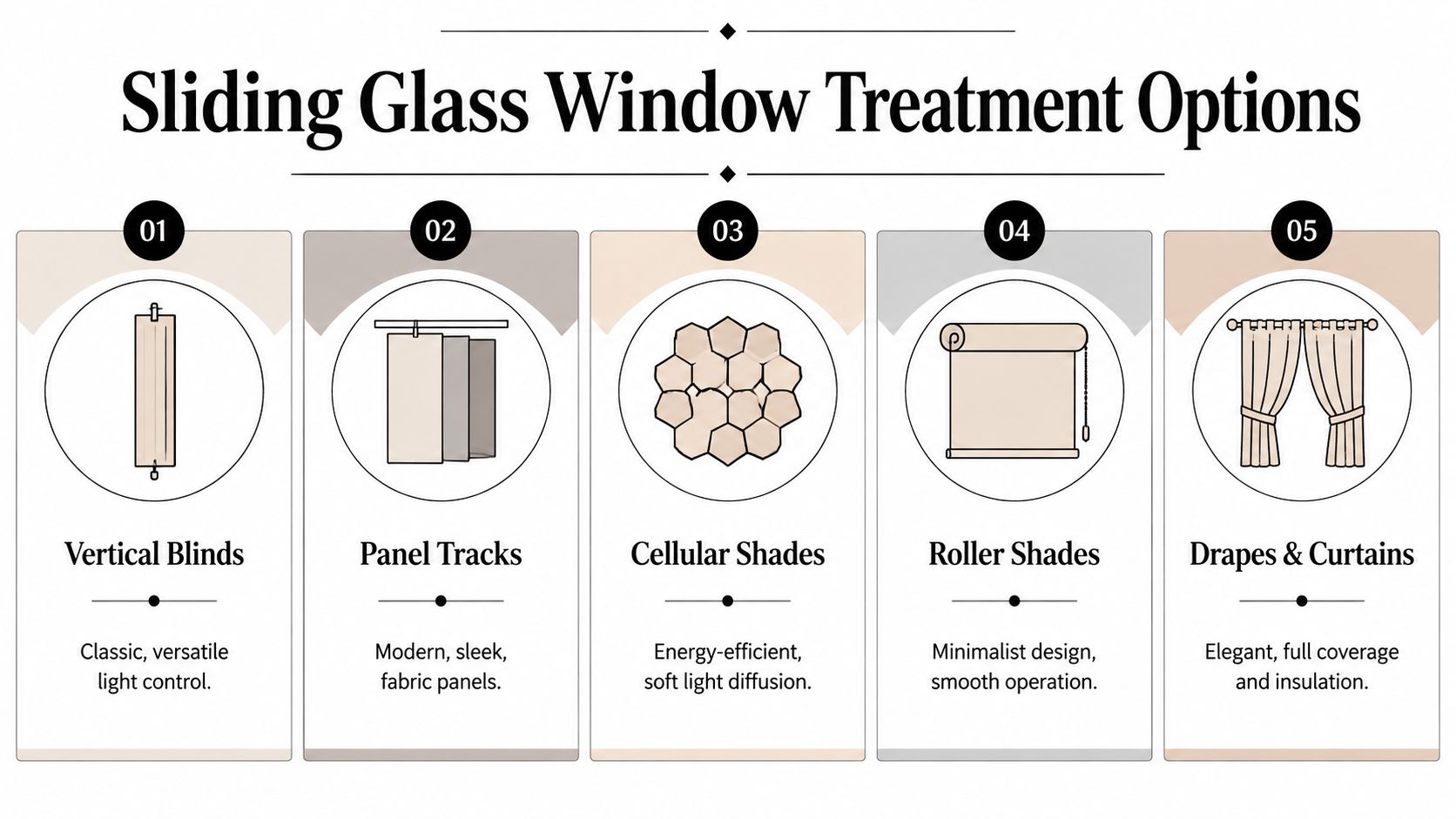
Vertical blinds
Vertical blinds are the longtime standard for a reason. They suit a wide opening, they move in the same direction as the door, and they make it easy to tilt for changing light. In rental properties, offices, and practical family spaces, they still earn their place.
Their biggest strength is straightforward function. You can open them for full access, angle them for privacy, or close them completely without much fuss. They also have a familiar look, which some homeowners still prefer.
The downside is style. Traditional verticals can feel dated if the room leans more contemporary or layered. If that's what you're trying to avoid, these alternatives to vertical blinds can help you compare newer options that solve the same problem with a different look.
Panel track systems
Panel tracks are the cleaner, more modern cousin of vertical blinds. Instead of many narrow vanes, you get large fabric panels that slide neatly across the opening. The look is simpler and more architectural.
Panel-track sliding systems represent the modern engineered solution for sliding glass doors, using flat fabric panels that are 11½" or 17" wide and slide horizontally on a bottom-mounted track with interlocking weight mechanisms. They also offer 450+ color and texture combinations with selectable openness factors and opacity levels for more precise light control, as described by Fabric Works.
Practical rule: If you want a sliding door treatment to look intentional in a modern room, fewer, wider panels usually read cleaner than many narrow slats.
Panel tracks work especially well in rooms with wide patio doors, open-concept layouts, and a more current design style. They also tend to stack more neatly than many people expect. What they don't always do best is provide the soft, dressed look that fabric drapery brings.
Vertical cellular shades
If energy performance matters, vertical cellular shades deserve serious attention. They combine side-to-side operation with the insulating advantages of honeycomb construction.
These shades work well for homeowners who feel temperature swing near the glass and want a treatment that addresses that issue directly. The profile is softer than vinyl blinds and often more refined than older door coverings.
They're especially useful when the room gets strong sun and you still need the door to stay accessible. The trade-off is that the look is more structured and functional than decorative. If your main goal is adding softness or drama to the room, drapery may do that job better.
Drapes and curtains
Drapes bring warmth in a way hard materials usually don't. They can make a large glass opening feel finished, soften acoustics, and help tie together upholstery, rugs, and wall color.
For some homes, especially traditional interiors or bedrooms with sliding doors, drapes are the right visual answer. They can also be layered with another treatment when you want both softness and performance.
Their weakness is practical. Fabric can take up stack-back space, get handled more often near a traffic path, and require sturdier hardware over a wide span. In homes with constant in-and-out use, drapes can be less convenient than treatments designed specifically to glide with the door.
Roller shades
Roller shades fit minimalist spaces nicely, but they aren't always the first choice for a frequently used sliding door. They move vertically, which means they can be less convenient on a broad opening where people pass through often.
Still, they can work in the right setup, especially on adjacent windows or doors that don't serve as the main daily exit. If your room favors clean lines and simple hardware, they're worth discussing as part of the overall design.
Sliding Glass Window Treatment Comparison
| Treatment Type | Best For | Light Control | Operation |
|---|---|---|---|
| Vertical Blinds | Everyday practicality, easy access | Adjustable by tilting slats | Side-to-side draw with vane tilt |
| Panel Tracks | Modern rooms, wide openings | Filtered to room-darkening depending on fabric | Horizontal glide on track |
| Vertical Cellular Shades | Energy-conscious homes, strong sun exposure | Soft filtered light to more private coverage | Side-to-side glide |
| Drapes & Curtains | Softer style, layered interiors | Depends on fabric and lining | Hand-drawn on rod or track |
| Roller Shades | Minimal look on less frequently used openings | Varies by fabric | Up-and-down lift |
No one treatment wins in every category. The best one is the one that matches how your door gets used on an ordinary Tuesday, not just how it looks in a showroom.
How to Choose the Perfect Treatment for Your Home
Choosing between styles gets easier when you stop asking which option is best in general and start asking which one fits your room. Sliding glass window treatments should solve a few very specific problems. Light, privacy, door traffic, and heat near the glass usually matter more than trends.
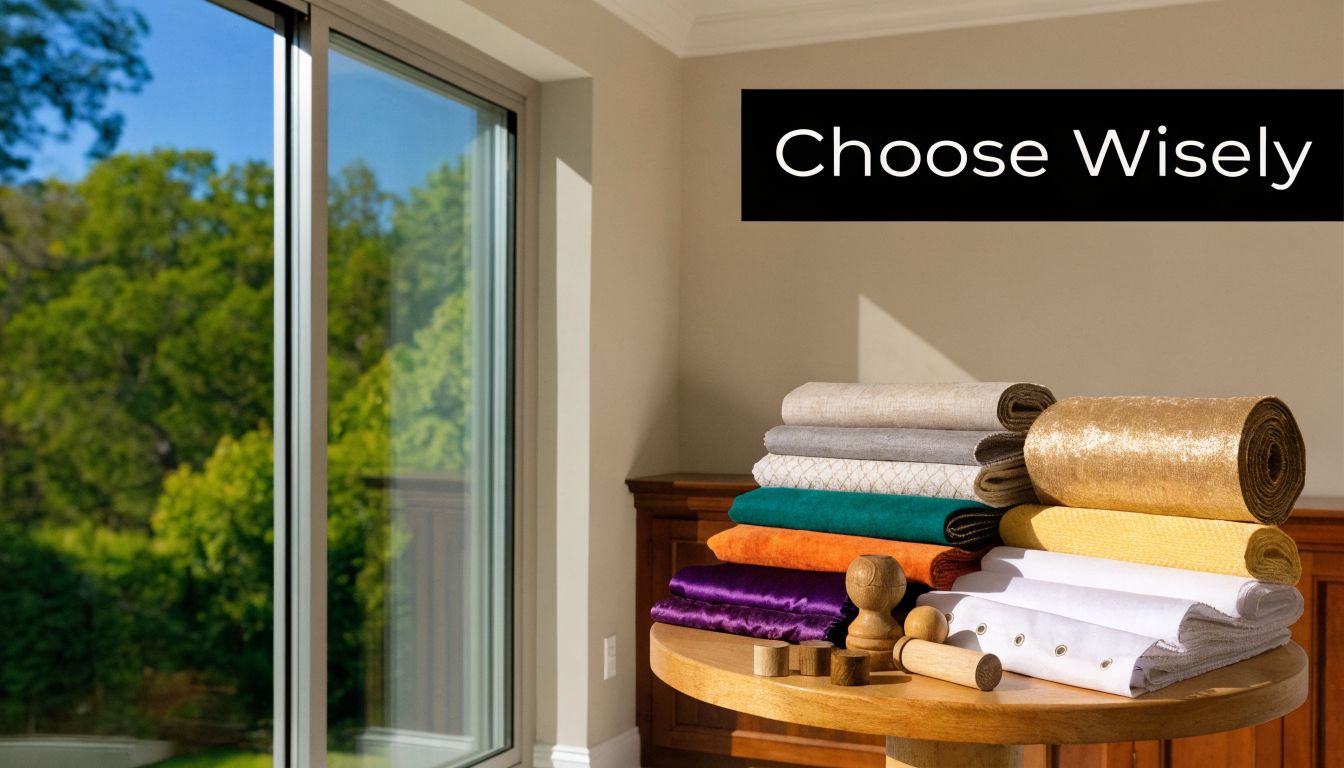
Start with light and privacy
Some homeowners want to keep a backyard view during the day but still cut glare. Others need full nighttime privacy because the door faces a neighbor or a street. Those are different problems, and they call for different materials.
A light-filtering panel track can keep the room bright without leaving the glass completely exposed. A more opaque fabric gives stronger privacy but changes the feel of the room. If you mainly use the room in the evenings, heavier coverage may make sense. If daytime openness matters most, a filtered material often feels better to live with.
Try this quick check:
- If glare is the main complaint, look for materials that soften daylight instead of only blocking it.
- If nighttime visibility bothers you, prioritize opacity and edge coverage over the prettiest fabric sample.
- If you want one room to do both, layered operation usually works better than asking one product to handle every condition perfectly.
Consider energy performance honestly
West Tennessee homes deal with long cooling seasons, humid air, and enough winter chill that glass can still feel cold. That's why insulation at a sliding door isn't just a bonus. In many rooms, it's part of comfort.
Cellular shades with honeycomb construction achieve R-values up to R-4, and the honeycomb-within-a-honeycomb construction creates dual air pockets that trap air more effectively than single-cell designs, according to Blinds Galore’s guide to shades for sliding glass doors.
That matters because the door is a large sheet of glass. If the room gets hot in summer or feels drafty in winter, cellular shades are one of the few options that directly address that issue with the product design itself.
A treatment that looks good but leaves the room uncomfortable usually gets blamed on the room. Most of the time, it's the wrong product for the glass.
Match the treatment to traffic
A patio door near the kitchen gets used differently than one in a guest room. If people move through it constantly, operation matters as much as appearance.
For high-traffic doors, focus on smooth side-to-side movement, compact stacking, and materials that hold up to touch. Panel tracks, vertical blinds, and vertical cellular shades all make more sense here than treatments that need to be raised fully before the doorway is clear.
This video gives a helpful look at how sliding door treatments operate in real spaces.
Think about style last, not first
The opposite approach is often taken: starting with color or pattern, then trying to force that choice into the room's practical needs. A better order is function first, then aesthetics inside the right category.
Here are the style shortcuts I use most often:
- Modern interiors usually pair well with panel tracks and clean fabrics.
- Traditional or transitional rooms often benefit from drapery, especially when you want softness.
- Utility spaces, rentals, and straightforward family rooms often still do best with well-made vertical blinds.
- Rooms with major sun exposure often call for cellular shades even when another option initially seems more decorative.
If you want the room to stay open by day and feel insulated at night, a layered strategy can outperform a single all-purpose treatment. That approach often gives you more control over comfort without sacrificing the daytime look you wanted.
The Importance of Professional Measuring and Installation
A sliding glass door is where DIY mistakes show up fast. A treatment that's slightly off on a regular window may still look acceptable. On a large patio door, even a small measuring error can leave uneven gaps, drag on the floor, interfere with the handle, or stack awkwardly when open.
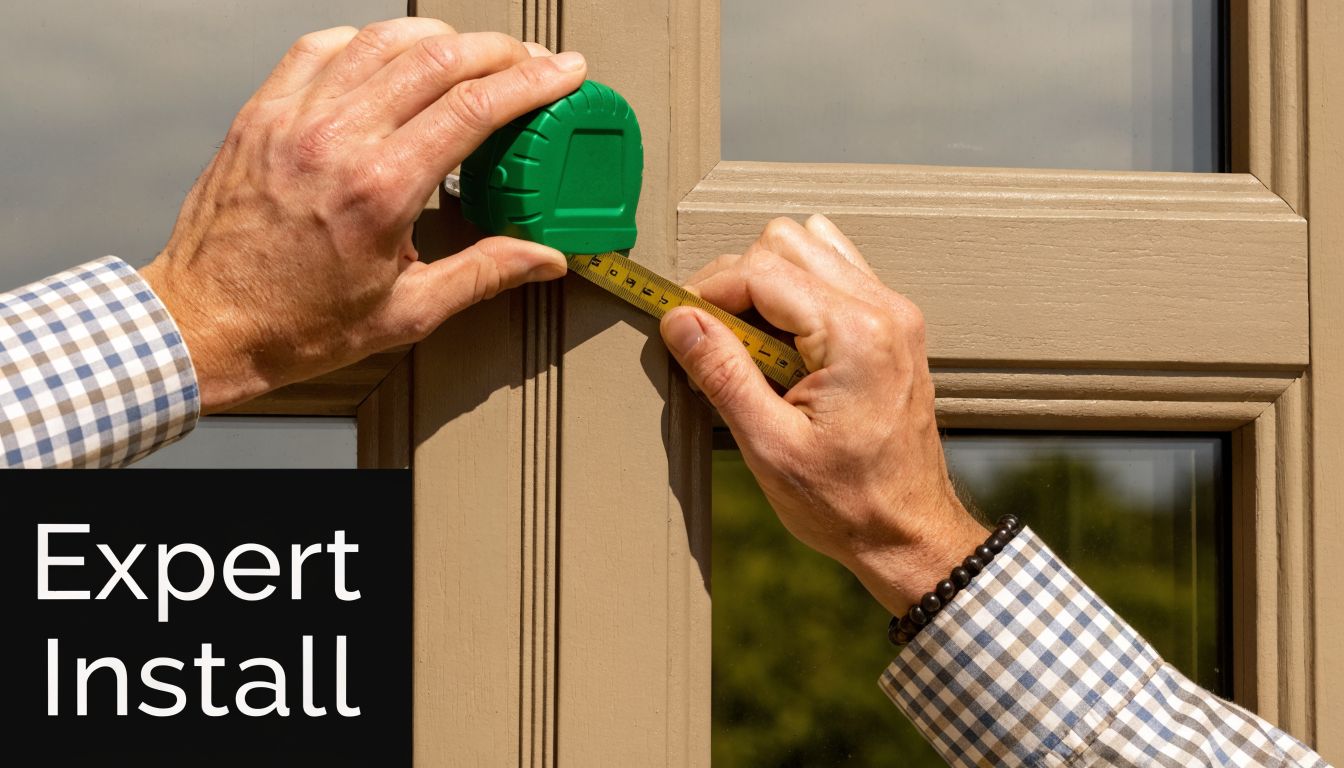
Where DIY usually goes wrong
Most measuring problems happen before the order is ever placed. Homeowners measure only the glass instead of the full installation area. They miss trim depth. They forget the stack-back space needed when the treatment is open. Or they don't account for the handle and how far the product projects into the room.
Then installation creates a second wave of problems:
- Uneven mounting: A long headrail or track makes even a small slope obvious.
- Poor clearance: The treatment rubs the handle or hangs too close to the moving panel.
- Weak hardware placement: Fasteners don't land where they should, and operation suffers over time.
- Bad fit at the edges: Gaps let in light and reduce privacy exactly where you wanted control.
Before hiring anyone for home work, it's smart to review practical advice on choosing reliable home contractors, especially for projects where precision matters more than raw labor.
Why expert guidance matters on large glass
The more advanced the system, the more important guidance becomes. That's especially true if you're considering layered treatments for a sliding door. A simple single product may be straightforward. A two-part setup with different functions needs planning so the components don't fight each other.
A useful nuance from Hunter Douglas on patio and sliding glass door treatments is that multi-layer systems, such as a light-filtering panel track paired with a motorized blackout or insulating shade behind it, can deliver better real-world energy savings and comfort than a single all-in-one product. That's a strong idea, but it's also one that's best handled with professional guidance.
The wider the opening, the less room there is for guesswork.
Measuring is only half the job
Ordering correctly sized product isn't the finish line. Proper installation determines whether it glides smoothly, stacks where it should, and stays aligned after months of use. That's why broad openings deserve more than a tape measure and a best guess.
If you're trying to understand what's involved before scheduling service, this guide on how to measure windows for blinds is helpful. But for sliding doors, most homeowners are better served by custom install from the start. That's how you avoid reordering, patching walls, or living with a treatment that never feels quite right.
A professionally measured and installed treatment doesn't just look cleaner. It works the way you expected on day one and keeps working that way.
Maintaining Your New Window Treatments
By the time a sliding glass door treatment has been in place for a few weeks, its maintenance needs become obvious. It gets handled constantly, catches kitchen grease or patio dust faster than other window coverings, and takes more wear from traffic, pets, and kids coming in from the backyard. In West Tennessee, summer humidity adds another layer. Dust clings faster, and fabric can hold moisture if the room stays closed up.
The good news is that regular care is simple. Short, routine cleaning sessions usually do more for appearance and performance than an occasional heavy scrub.
Keep cleaning simple and regular
Start with the least aggressive method. A microfiber cloth, feather duster, or vacuum with a brush attachment will handle day-to-day dust on vertical vanes, panel track fabrics, roller shade surfaces, and woven materials. If you stay ahead of buildup, you reduce staining and help the treatment keep its original shape and finish.
Spot cleaning depends on the material. Vinyl and other hard surfaces usually wipe down with a lightly damp cloth and mild soap. Fabric panels and drapery need more caution. Too much water can leave rings, cause rippling, or change how the fabric hangs. If you're unsure, test a hidden corner first.
Sun-facing doors need a little more attention. On many West Tennessee patios, the treatment on the back of the house takes steady afternoon sun, and that exposure can dry out dust into the surface if it sits too long.
Don't ignore the hardware
A treatment can look clean and still operate poorly if the track is full of grit. I see that often with sliding door setups. Homeowners assume the carrier or headrail is wearing out, but the actual problem is pet hair, fine dirt, or debris packed into the track.
A few habits prevent most service calls:
- Vacuum the track area regularly: Dust, hair, and outdoor grit affect how smoothly panels glide.
- Use a light touch: Pulling too hard can strain carriers, vanes, or panel attachments.
- Fix small problems early: A loose clip, twisted vane, or dragging panel is easier and cheaper to correct before other parts start wearing unevenly.
If the treatment suddenly feels stiff, don't force it. Clean the track first and check for obstructions. That one step solves a lot of day-to-day problems.
Good upkeep protects the custom fit
Maintenance is about more than keeping the treatment looking nice. It helps preserve the way it opens, stacks, and covers the glass. That matters even more with custom sliding door treatments, where proper alignment and smooth operation are part of what you paid for.
Older vertical blinds stayed popular for years for a practical reason. They were straightforward to clean, easy to repair, and well suited to busy patio doors. That same principle still applies today. Products that hold up best in real homes are usually the ones homeowners can maintain without a lot of fuss.
Good maintenance is simple. Clean lightly, keep the track clear, and deal with minor issues before they become expensive ones. That approach goes a long way toward protecting privacy, light control, and energy performance year after year.
Your Local West Tennessee Window Treatment Expert
West Tennessee homeowners don't need a one-size-fits-all answer for sliding doors. A patio door in Jackson may need glare control and privacy without losing the backyard view. A lake-area property may need something that handles strong sun. A family home in Humboldt may need a treatment that can take daily traffic without becoming a nuisance.
That's why local guidance matters. A specialist who sees these homes in person can spot issues that don't show up in an online order form. Room orientation, trim details, traffic patterns, humidity, and how the glass is used all influence the right choice.

What local service changes
Big-box shopping usually gives you product categories. Local service gives you decisions that fit the room. That's a real difference with sliding glass window treatments, because the best option often depends on details that aren't obvious until someone stands in the space with samples and takes precise measurements.
That kind of visit helps answer questions homeowners wrestle with in real time:
- Will this stack too wide?
- Will the fabric feel too heavy in this room?
- Will the treatment clear the door handle?
- Will it still look balanced next to nearby windows?
Those are the questions that separate a decent result from a treatment that feels custom.
A better result from start to finish
Blinds Galore serves homeowners across the greater Jackson area with in-home consultation, product guidance, professional measuring, and custom install that takes the risk out of large sliding door projects. Instead of guessing from small online samples, you can compare materials, colors, and operating styles in your own light and against your own furnishings.
That matters whether you're considering modern panel tracks, insulating cellular shades, classic vertical blinds, or soft drapery. The right recommendation depends on your priorities, not on whatever happens to be sitting in a warehouse.
With trusted brands such as Norman, Graber, and CACO, plus a strong focus on fit and follow-through, the process stays simple. The goal is straightforward. Help you choose a treatment that looks right, operates smoothly, and performs well in your home over time.
Homeowners also want peace of mind, and they should. Sliding doors are too prominent and too expensive to get wrong. That's why professional measuring, expert installation, and 100% satisfaction matter. If you want a result that feels custom because it is custom, local service is hard to beat.
If you're ready to improve privacy, manage heat and glare, and make that patio door look finished, call Blinds Galore at (731) 571-5179 for a free in-home consultation.
Blinds Galore helps West Tennessee homeowners find the right custom solution for difficult openings like patio and sliding doors. Visit Blinds Galore to schedule your consultation, or call (731) 571-5179 for expert guidance, professional custom install, and a 100% satisfaction commitment.
You might also like

Best Plantation Shutter Brands – 2026 Review
If you're looking at your windows right now and thinking the room needs more polish, better privacy,

What Are Plantation Shutters Made Of
You're probably looking at a window right now thinking the same thing a lot of West Tennessee homeowners
Contemporary Roman Shades: Modern Styles for Your Home
You know the feeling. Your old blinds work, but they don't do your room any favors. They look hard,

Vertical Blinds vs Horizontal Blinds: The Definitive Homeowner’s Guide
When you're trying to decide between vertical and horizontal blinds, it really comes down to your
Cordless Blinds vs Corded Blinds A Modern Homeowner’s Guide
When you're weighing the pros and cons of cordless blinds vs corded blinds, the verdict for today's

Roller Shades vs Cellular Shades A Complete Comparison
When you're trying to choose between roller shades and cellular shades, it really boils down to