

Sliding Glass Door Wood Blinds: Perfect Styles
A lot of homeowners around Jackson end up staring at the same problem every evening. The sliding glass door brings in great light all day, then turns into a wide-open privacy issue at night. The old fix is usually one of two things: bare glass with a bit of regret, or a set of tired verticals that clatter, tangle, and make the whole room feel dated.
That’s why sliding glass door wood blinds keep coming up in real conversations. People want something that looks finished, works smoothly, and holds up in a house that gets lived in. Kids run through that door. Dogs push past it. Sun hits it hard. In West Tennessee, humidity gets involved too.
Wood blinds aren’t some passing fad. The history of window coverings shows that wide-slatted wood and faux wood blinds became staples in American homes in the 1980s, especially for large sliding patio doors. That staying power matters. These treatments have lasted because they solve a real design and function problem better than a lot of alternatives.
If you’ve been bouncing between curtains, shutters, and blinds, the right answer usually comes down to how the door is used, how much moisture that room sees, and whether you want a clean custom look or a workaround that will bug you six months from now. If privacy is your main pain point, this guide on privacy for sliding patio doors is also worth a look.
The End of Awkward Sliding Door Coverings
A sliding door shouldn’t be the most awkward opening in the house, but it often is. Standard window treatments are built around regular windows. A patio door is wider, used more often, and takes more abuse. That’s why the treatment that looks fine in a catalog can feel completely wrong once it’s installed over a real door.
Why sliding doors expose bad blind choices fast
The first issue is movement. You’re not just opening and closing a covering for light control. You’re also trying to get through the doorway without fighting fabric, cords, or heavy stacked material.
The second issue is scale. A big glass opening can swallow a room if the covering looks flimsy, too busy, or obviously off-the-shelf. Good sliding glass door wood blinds don’t just cover glass. They make that whole wall feel intentional.
A patio door covering has to do two jobs at once. It needs to operate like a door treatment and look like part of the room.
Why wood and wood-look styles still work
This is where wood and faux wood stand out. They bring structure to a big opening. They also read as more finished than basic vinyl, especially in living rooms, dens, and kitchens where the patio door is visible from half the house.
That old “office vertical blind” reputation doesn’t really fit today’s better-made options. Wider slats, cleaner tracks, and better finishes have changed the look. You can get something that feels warm and substantial instead of rattly and temporary.
For most homeowners, the real decision isn’t whether to cover the door. It’s how to cover it without creating a daily annoyance. That’s where orientation matters first.
Choosing Your Path Vertical vs Horizontal Blinds
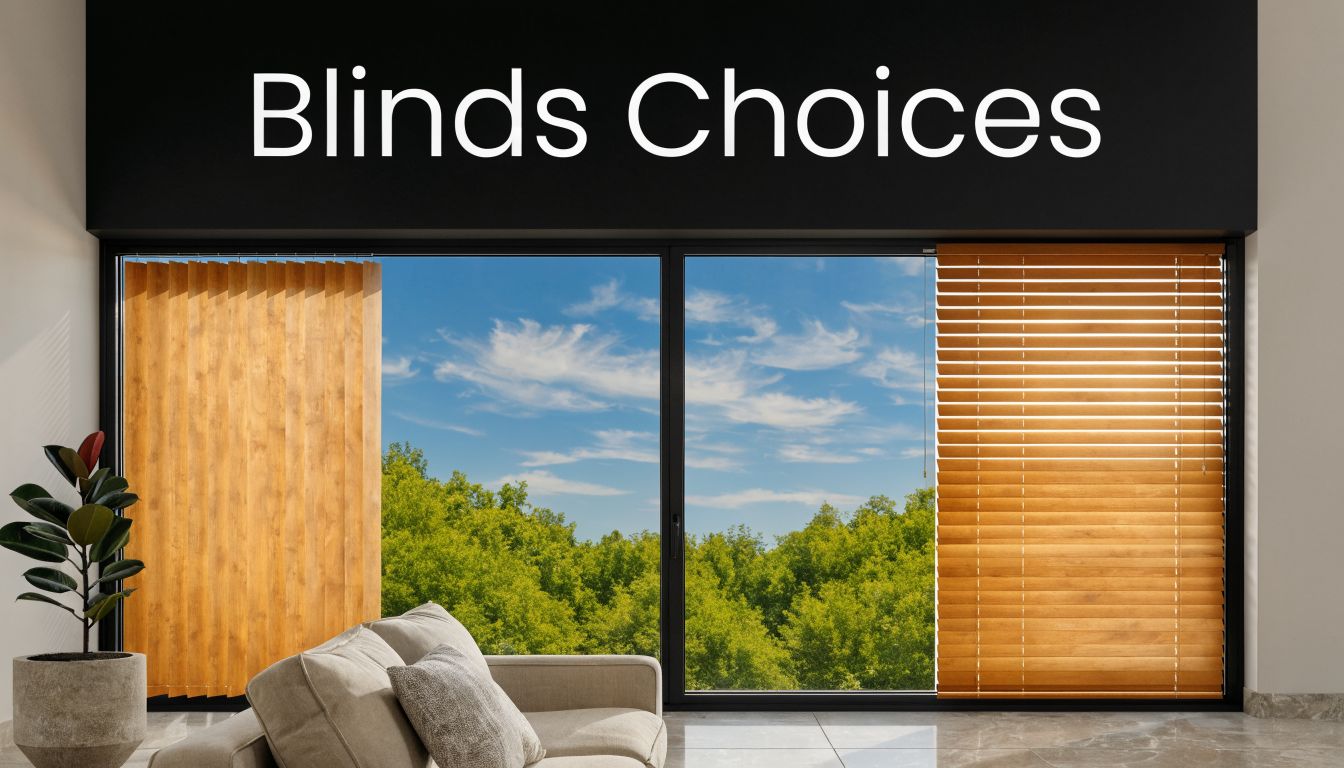
The first fork in the road is simple. Do you want the slats to run vertical or horizontal? Both can work over a sliding door, but they behave very differently in day-to-day life.
Why vertical often makes more sense
Vertical blinds move in the same direction as the door. That sounds basic, but it’s the reason they remain such a practical match. You slide the treatment aside, walk through, and close it back without lifting a heavy blind bundle.
Historically, vertical blinds became a natural partner for large glass openings because they were easier to operate and less dust-prone than horizontal slats on big spans. If you want a quick primer on how they work, this overview of what are vertical blinds is helpful.
Verticals tend to work best when:
- The door gets used constantly: Daily in-and-out traffic calls for something that clears the opening quickly.
- You want easier access: Side-to-side operation feels natural over a patio door.
- You want a cleaner stack: Vertical vanes usually gather to one side or split in the center without creating a large lifted mass at the top.
When horizontal can still be the right call
Horizontal blinds can look sharper in some interiors, especially if you already have horizontal wood blinds on nearby windows and want the room to feel consistent. The key is not treating the patio door like one giant window.
The better approach is usually a door-specific setup, often with separate operating sections so one side can stay closed while the active panel is easier to access. That gives you more control, but it also introduces more moving parts and more weight.
Here’s the honest trade-off:
| Style | Best fit | Main advantage | Main drawback |
|---|---|---|---|
| Vertical blinds | High-traffic patio doors | Side-to-side operation suits the door | More traditional appearance unless upgraded |
| Horizontal blinds | Rooms prioritizing a matched wood-blind look | Familiar look and strong visual continuity | Can feel bulkier and less convenient on a frequently used door |
Practical rule: If the sliding door is your family’s main path to the patio, vertical usually wins on function. If the door is used less often and appearance is driving the choice, horizontal can work with the right configuration.
The call I’d make in a lived-in house
For most West Tennessee homes, vertical is the safer recommendation over a sliding door. It’s easier to live with. It usually snags less, stacks better, and causes fewer daily complaints.
Horizontal still has a place, but it needs a more careful setup to avoid becoming something that looks great for a week and annoys you every day after that.
Real Wood vs Faux Wood The West Tennessee Humidity Factor
This is the part generic guides usually skip. In West Tennessee, the room itself doesn’t make the whole decision. The moisture in the air does too.
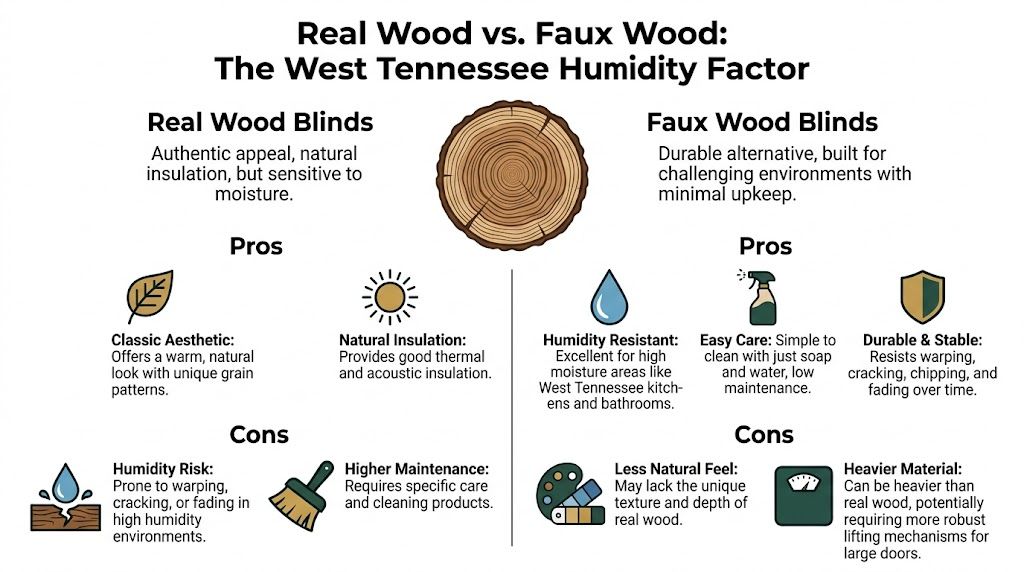
If you’re looking at sliding glass door wood blinds because you love the warmth of stained wood, that instinct makes sense. Real wood has a look that faux wood still imitates rather than duplicates. But around Jackson, Humboldt, Medina, and the surrounding area, humidity can turn a good-looking choice into a maintenance problem if the product and location aren’t matched carefully.
What real wood does best
Real wood blinds bring depth, grain variation, and a lighter feel than many people expect. On the right opening, they’re beautiful. They fit especially well in formal living spaces, home offices, and lower-moisture rooms where the door isn’t getting hit with steam, cooking humidity, or strong afternoon sun every day.
They also tend to appeal to homeowners who want the authentic material, not just the look. That matters. For some interiors, faux wood is close. Real wood is still real wood.
Where real wood gets risky in West Tennessee
The problem is climate. SelectBlinds notes that real wood blinds face significant warping risks in humid West Tennessee climates, where summer humidity averages 60-70%, and manufacturer tests show real wood failure rates can exceed 30% in environments with sustained relative humidity over 50%. That’s the kind of detail homeowners need before choosing a material for a big patio opening.
A sliding door is often one of the hardest-working and most exposed areas in a house. It gets sunlight, repeated use, changing temperatures, and sometimes moisture from nearby kitchens, laundry areas, or backyard traffic. That combination can be rough on natural wood.
If you want a broader homeowner-friendly primer on understanding the effects of humidity on wood, that resource helps explain why wood products react the way they do when moisture levels swing.
In a dry room, real wood can be a smart finish choice. On a busy sliding door in a humid house, it can be the product homeowners regret later.
Why faux wood is often the smarter local choice
High-quality faux wood solves the main local problem. It gives you the wood look with much less concern about warping, cracking, or finish instability. That makes it a strong candidate for patio doors near kitchens, breakfast rooms, sun-facing living areas, and any opening that gets handled all day.
It’s also easier to recommend when durability matters more than material purity. Rentals, family homes, pet-heavy households, and remodels done for long-term practicality often benefit from faux wood first.
For a deeper side-by-side look, this comparison of faux wood blinds vs real wood blinds is useful.
Real Wood vs Faux Wood Blinds for Sliding Doors
| Attribute | Real Wood Blinds | Faux Wood Blinds |
|---|---|---|
| Appearance | Authentic grain and natural character | Wood-look finish with a more uniform appearance |
| Humidity performance | More vulnerable in humid conditions | Better suited for moisture-prone spaces |
| Weight | Often lighter in feel | Typically heavier |
| Maintenance | Needs gentler care | Easier routine cleanup |
| Best use case | Drier rooms where natural material is the priority | Busy sliding doors and higher-humidity spaces |
The choice that usually ages better
If a homeowner tells me they want the richest, most natural look and the room stays fairly controlled, I understand the case for real wood. But if they want the best chance of long-term stability on a frequently used sliding glass door, faux wood is usually the safer answer in this part of Tennessee.
That isn’t the glamorous answer. It’s the one that tends to hold up.
How to Measure for a Flawless Custom Fit
Most blind problems that get blamed on the product start with the measurement. A beautiful set of blinds with a bad fit will leak light, drag, bind, or leave the whole opening looking slightly off. Sliding doors are unforgiving that way.
Start with the mount type
Before you pick up the tape, decide whether you want an inside mount or an outside mount.
An inside mount sits within the frame and gives a more built-in look. It only works if the opening has enough depth and the trim or handle won’t interfere with the blind’s movement.
An outside mount goes above and beyond the opening. This is often the better route on sliding doors because it gives you more coverage and more forgiveness if the frame isn’t ideal.
How to measure width and height
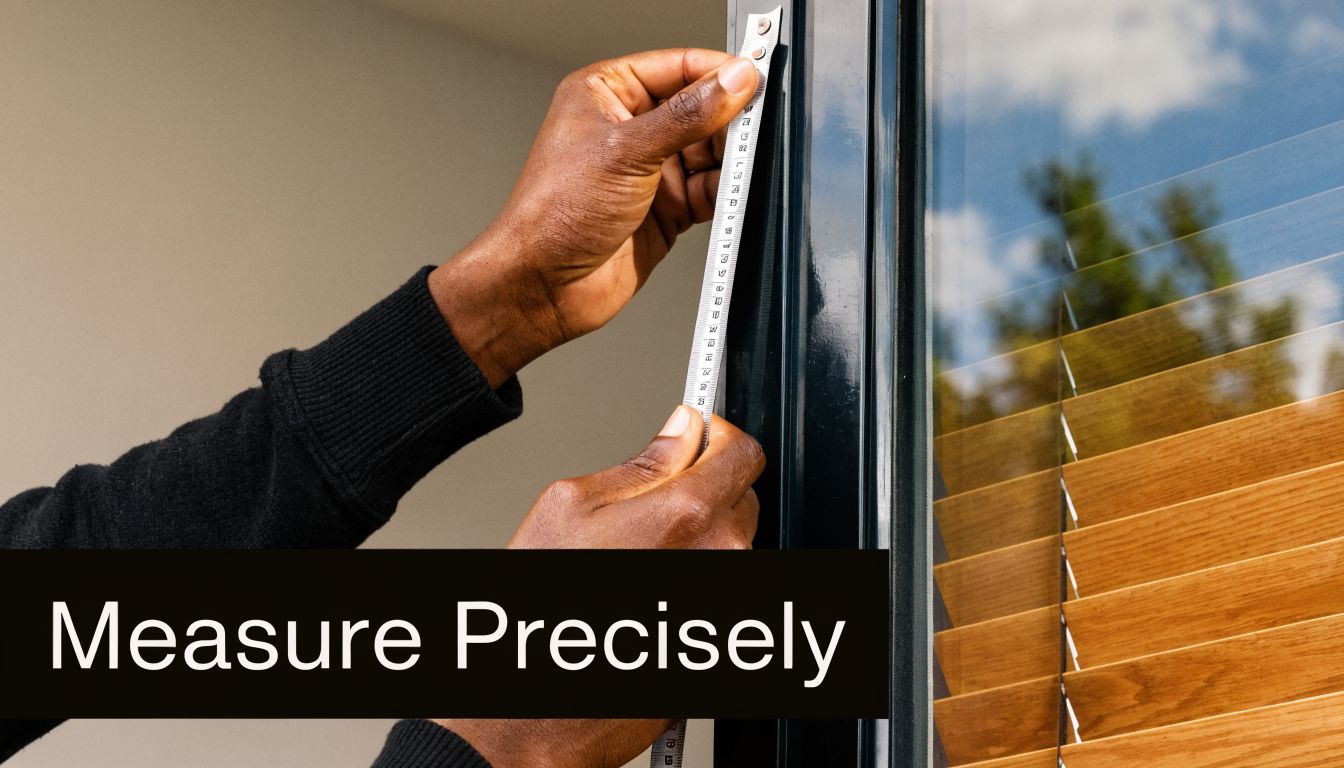
Use a steel tape measure, not a cloth one. Measure carefully and write everything down.
- Measure the width at three points. Take one measurement at the top, one in the middle, and one at the bottom.
- Measure the height at three points. Check left, center, and right from the top of the casing to the sill or floor area you want covered.
- Use the narrowest width and shortest height when the guide calls for that approach. That helps account for openings that aren’t perfectly square.
For vertical blinds over sliding doors, the overlap matters just as much as the opening itself. The Bali measuring guide recommends adding 3 inches of overlap per side, or 6 inches total, for better light control and privacy. The same guide notes that ignoring that overlap leads to 15% of light leakage complaints.
Measurement check: If you measure only the glass or only the visible opening, you’ll usually end up with a treatment that looks skimpy and lets light in around the edges.
What homeowners miss most often
A few mistakes show up again and again:
- Forgetting stack space: Blinds need room to gather when open. If you ignore that, you can lose access or block more glass than expected.
- Ignoring handles and trim: Sliding door hardware can interfere with slats or headrails.
- Measuring casually: Being off even a little on a large opening is enough to make the whole installation look wrong.
This quick visual can help if you want to see measuring basics in action.
Why professional measuring saves headaches
Measuring a regular bedroom window is one thing. Measuring a patio door for custom wood or faux wood blinds is another. You’re dealing with width, overlap, traffic flow, hardware clearance, and how the treatment will stack once it’s open.
That’s why a professional measure is often money well spent. It prevents the kind of small error that turns into a daily reminder every time you walk outside.
Upgrading Your Blinds With Modern Operating Systems
The look of the blind matters. The way it operates matters just as much. A great-looking treatment that’s annoying to use won’t stay closed when it should, won’t get adjusted properly through the day, and won’t feel custom for very long.
Why wand control still makes sense
For many sliding door setups, a wand-operated system is the most straightforward choice. It keeps operation simple and avoids the visual clutter of cords. That cleaner look matters on a large opening where every component is easy to see from across the room.
It also helps in homes with children and pets. Cordless-style operation removes one of the common frustrations and safety concerns that older blind systems brought into busy family spaces.
Where motorization earns its keep
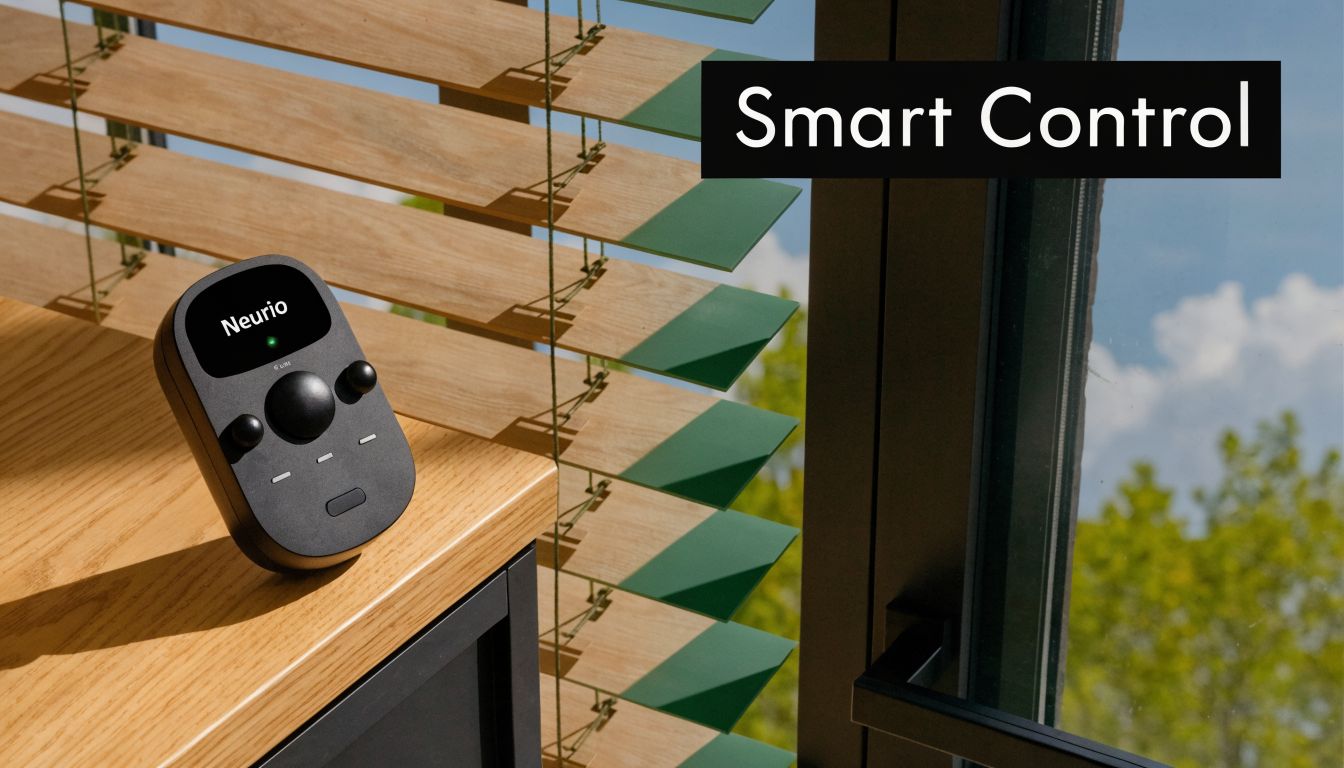
Motorization isn’t just a luxury add-on anymore. On large patio doors, it can be the feature that makes the treatment easier to use every day. If the opening is wide, the door gets strong sun, or the homeowner wants quick light management in the morning and evening, powered operation starts to make a lot of sense.
The 2025 trend discussion on motorized sliding door coverings reports that the smart shades market is growing by 25% annually, and that motorized options for sliding doors can offer up to 40% better light control than manual versions. For Tennessee households, that can contribute to annual energy savings of $150-$250 by helping manage solar heat gain on large patio doors. Since that source presents a 2025 trend outlook, it’s best read as a current projection and market direction rather than a timeless rule for every product.
Who benefits most from a motorized setup
Motorization tends to make the most sense for a few types of homes:
- Wide openings: Big patio doors are the easiest place to appreciate button-based control.
- Hard-to-reach areas: Furniture placement can make manual operation awkward.
- Frequent light adjustment: If you’re always chasing glare, motorization removes friction.
- Accessibility needs: Easier operation can make the room more comfortable to use day after day.
If a blind is hard to operate, people stop using it correctly. Good control systems don’t just add convenience. They improve how the room performs.
The practical trade-off
The trade-off is cost and complexity. Manual wand systems are simpler and still very effective. Motorization adds convenience, cleaner operation, and better day-to-day control, but it needs proper planning during product selection and installation.
For homeowners who use the patio door constantly and want the treatment to feel unobtrusive, modern operating systems can be worth serious consideration. On the right opening, they change the experience more than a stain color ever will.
Your Guide to Installation and Long-Term Care
A sliding door treatment can be measured well, ordered well, and still disappoint if the installation is sloppy. It's during installation that level lines, secure brackets, and smooth track alignment stop being small details and start being the whole job.
If you’re installing it yourself
A handy homeowner can install some blind systems successfully, but patio doors don’t leave much room for guesswork. Brackets need to be anchored firmly, the headrail has to sit level, and the stack direction needs to make sense for how the door opens.
A few habits help:
- Mark bracket positions carefully: Don’t trust a quick eyeball on a wide opening.
- Check clearance before tightening everything down: Handles, trim, and nearby walls can all interfere.
- Test movement early: Slide, tilt, and stack the blind before calling the job done.
If your actual patio door is dragging, misaligned, or not closing cleanly, it helps to fix the door before blaming the blind. Homeowners dealing with that issue may find this guide to adjusting patio doors useful as a basic reference.
Care that actually fits the material
Long-term care depends on whether you chose real wood or faux wood.
For real wood, keep cleaning gentle. Regular dusting with a soft cloth or brush attachment is the safer habit. Avoid saturating the slats or using harsh cleaners that can affect the finish.
For faux wood, routine cleanup is simpler. Dust first, then wipe with a lightly damp cloth when needed. In busy door areas, that easy maintenance is one of the reasons faux wood keeps winning practical comparisons.
A blind over a patio door doesn’t fail all at once. It usually starts with small signs. Rough travel, slight misalignment, slats that won’t hang cleanly, or finish wear where the room gets the most sun and moisture.
Why custom install is usually the better call
This is one of those projects where professional installation often protects the purchase. A custom product deserves a custom install, especially over a large opening that gets used every day. Proper mounting, clean alignment, and correct operation from the start save a lot of frustration later.
That’s also the easiest path to 100% satisfaction. If you want the treatment to look right, clear the doorway properly, and hold up the way it should, having it measured and installed by a specialist is the low-stress option.
If you’re ready to sort out your sliding glass door without guessing, Blinds Galore offers custom install, professional measuring, and 100% satisfaction for homeowners across West Tennessee. For help choosing between real wood and faux wood, vertical or horizontal, or manual versus motorized operation, call (731) 571-5179 and schedule a free in-home consultation.
You might also like

Best Plantation Shutter Brands – 2026 Review
If you're looking at your windows right now and thinking the room needs more polish, better privacy,

What Are Plantation Shutters Made Of
You're probably looking at a window right now thinking the same thing a lot of West Tennessee homeowners
Contemporary Roman Shades: Modern Styles for Your Home
You know the feeling. Your old blinds work, but they don't do your room any favors. They look hard,
Sliding Glass Window Treatments for Your West TN Home
That sliding glass door probably does two jobs at once in your home. It opens your living space to the
Vertical Blinds vs Horizontal Blinds: The Definitive Homeowner’s Guide
When you're trying to decide between vertical and horizontal blinds, it really comes down to your
Cordless Blinds vs Corded Blinds A Modern Homeowner’s Guide
When you're weighing the pros and cons of cordless blinds vs corded blinds, the verdict for today's