

9 Best Window Treatments for Jackson TN Home Theaters and Media Rooms
Quick answer: For home theaters and media rooms in Jackson, TN, the single best window treatment is a motorized blackout roller shade — it blocks 100% of outside light, eliminates glare on screens, and can be controlled with a remote or smart-home system. Cellular shades, plantation shutters, and layered drapery are strong runners-up depending on your budget and décor. The right choice depends on window size, room layout, and how much light control versus insulation you need. A free in-home consultation from a local specialist is the fastest way to nail the perfect fit.
Why Window Treatments Matter More in a Media Room Than Anywhere Else
When most homeowners in Jackson, TN think about window treatments, they focus on privacy or curb appeal. But in a home theater or dedicated media room, window coverings become mission-critical equipment — as important as your receiver or speaker setup. The wrong treatment (or no treatment at all) can ruin picture quality, spike your energy bill, and turn a $5,000 home theater investment into a frustrating experience. Here’s why getting this decision right matters so much.
The Science of Light and Picture Quality
Every lumen of stray light that enters a media room raises the room’s ambient light level, which directly competes with your projector or TV’s output. A mid-range 4K projector typically produces 2,000–3,500 ANSI lumens. Even a single uncovered window on a sunny Jackson afternoon can flood a room with the equivalent of 10,000+ lux — completely washing out the image. The fix isn’t a brighter projector; it’s controlling the light at the source.
- Glare on flat-panel TVs causes eye strain and washes out blacks.
- Projector screens need near-total darkness for accurate color reproduction.
- UV light from uncovered windows can fade upholstery and screen surfaces over time.
Energy Efficiency Is a Bonus, Not an Afterthought
West Tennessee summers are no joke — Jackson regularly sees heat indices above 100°F from June through August. A media room with south- or west-facing windows can heat up fast, forcing your HVAC to work overtime and creating uncomfortable viewing conditions. Insulating window treatments like cellular shades can reduce heat gain through windows by up to 40%, according to the U.S. Department of Energy. That means lower utility bills and a more comfortable room year-round — a genuine win-win for Jackson homeowners.
1. Motorized Blackout Roller Shades — the Gold Standard
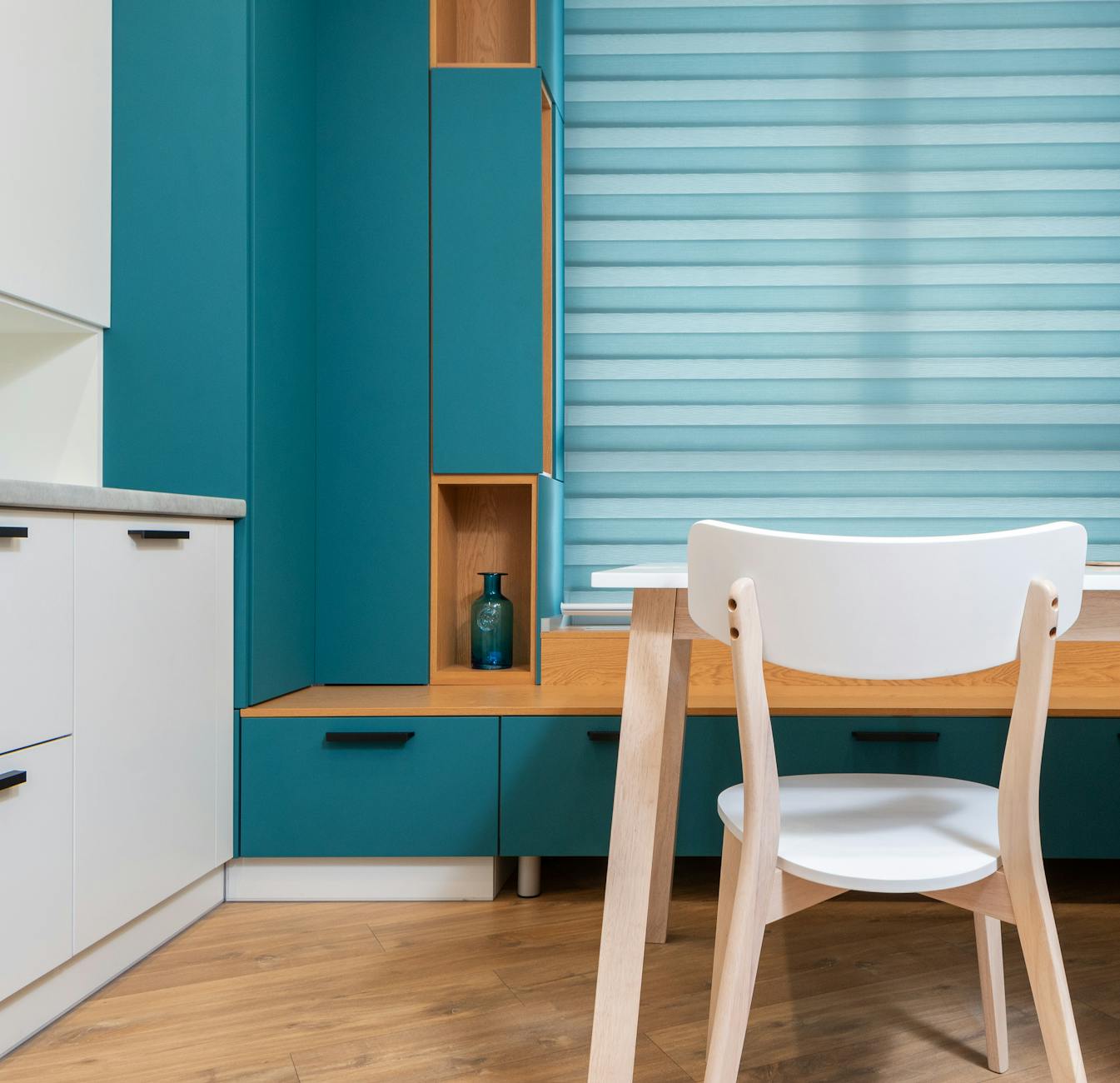
If you only read one section of this guide, make it this one. Motorized blackout roller shades are the single most popular and effective window treatment for home theaters and media rooms across Jackson, TN and the surrounding West Tennessee area. They combine total light control, convenience, and clean modern aesthetics into one package — and they integrate seamlessly with today’s smart-home systems.
What Makes Them the Top Pick
Motorized blackout roller shades sit at the top of the list for one simple reason: they deliver 100% light blockage with zero effort. A single press of a remote — or a voice command through Alexa, Google Home, or Apple HomeKit — drops every shade in the room simultaneously. No fumbling with cords when the movie is about to start. Blackout fabric (typically rated at Openness Factor 0%) uses a tightly woven, often triple-pass coated material that stops all visible light transmission.
- Available in fabric widths up to 144 inches for large picture windows.
- Motorized systems can be programmed for scheduled operation — shades down at sunset automatically.
- Side channels or cassette headrails eliminate light gaps at the edges for true cinema-grade darkness.
Cost and Installation Considerations
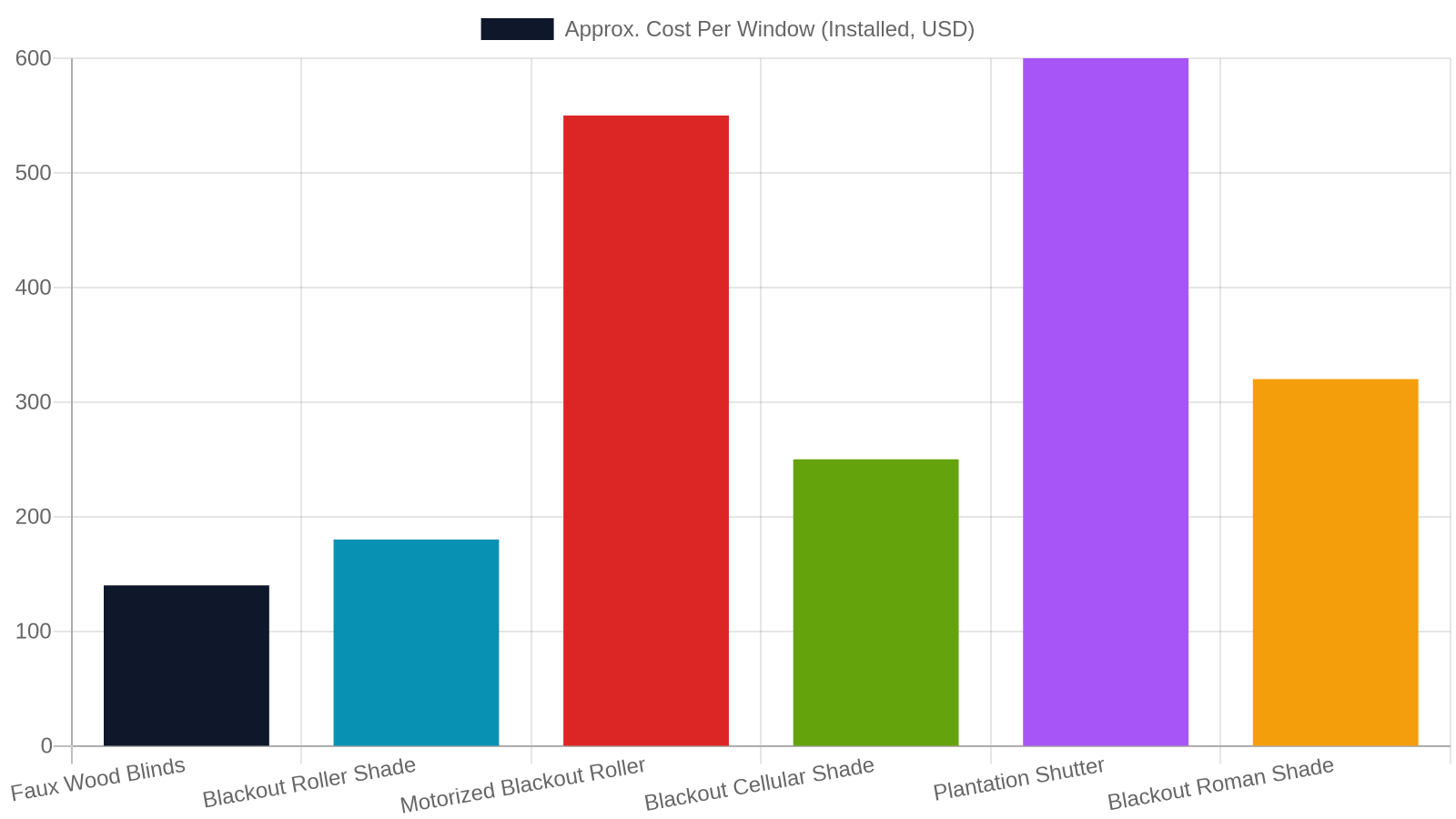
Motorized blackout roller shades are a premium product, and pricing reflects that. Expect to invest $300–$800 per window for a quality motorized unit, including professional installation. Hardwired motors are the most reliable; battery-operated motors (rechargeable via USB) are a solid option when running wire isn’t practical. In older Jackson-area homes where retrofitting wiring is difficult, battery-powered motors have improved dramatically — top brands now offer 12–18 months of battery life per charge. Professional measuring is essential: even a ¼-inch gap at the window frame can let in a distracting sliver of light during a dark scene.
2. Blackout Cellular Shades — Insulation Meets Darkness
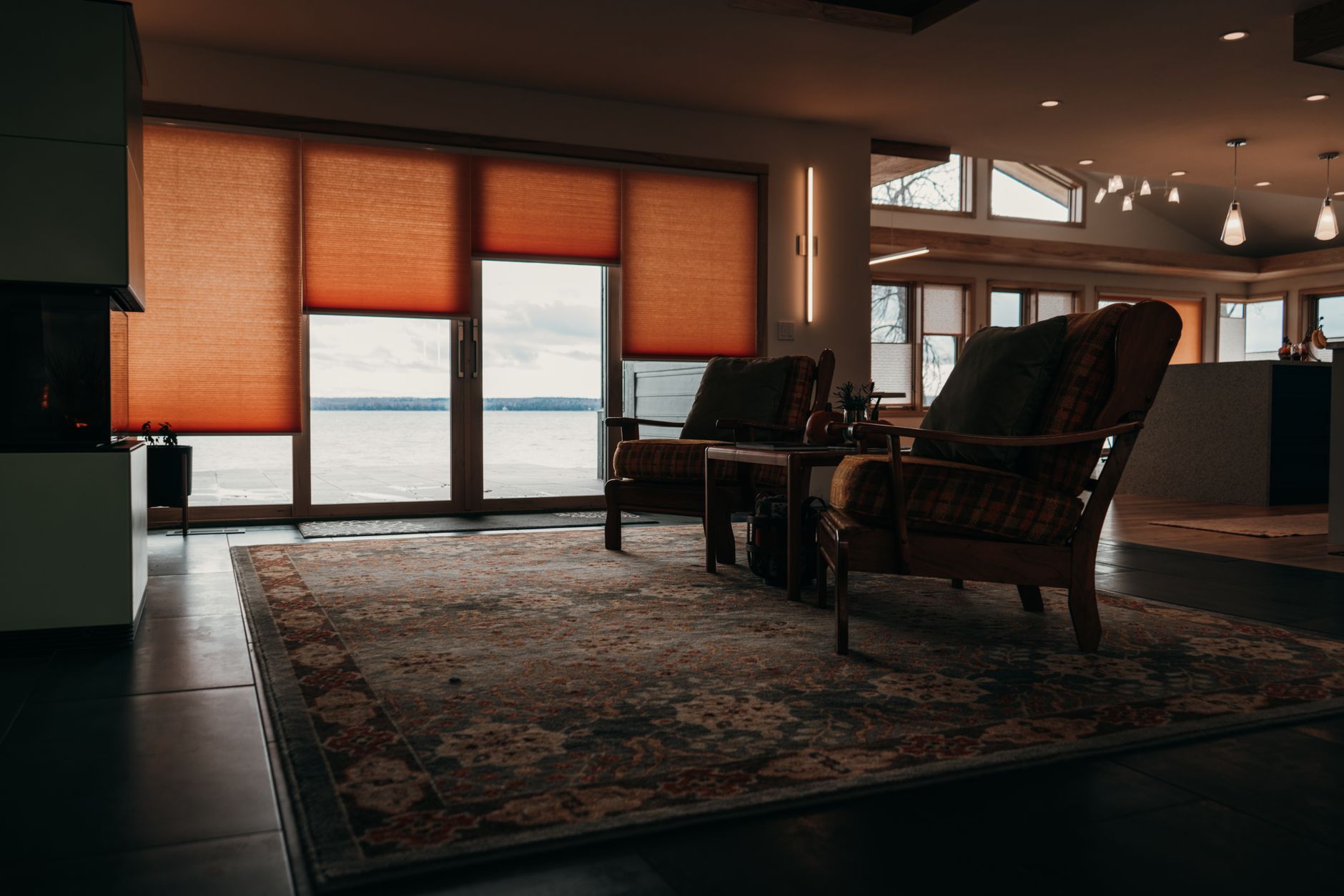
For homeowners who want light control and energy efficiency in one product, blackout cellular shades are a compelling alternative to roller shades. They’re especially well-suited to Jackson, TN’s climate — where keeping summer heat out and winter warmth in can make a real difference on your monthly utility bill. And unlike some window treatments, they look equally at home in a dedicated theater or a multipurpose family room.
How the Honeycomb Structure Works
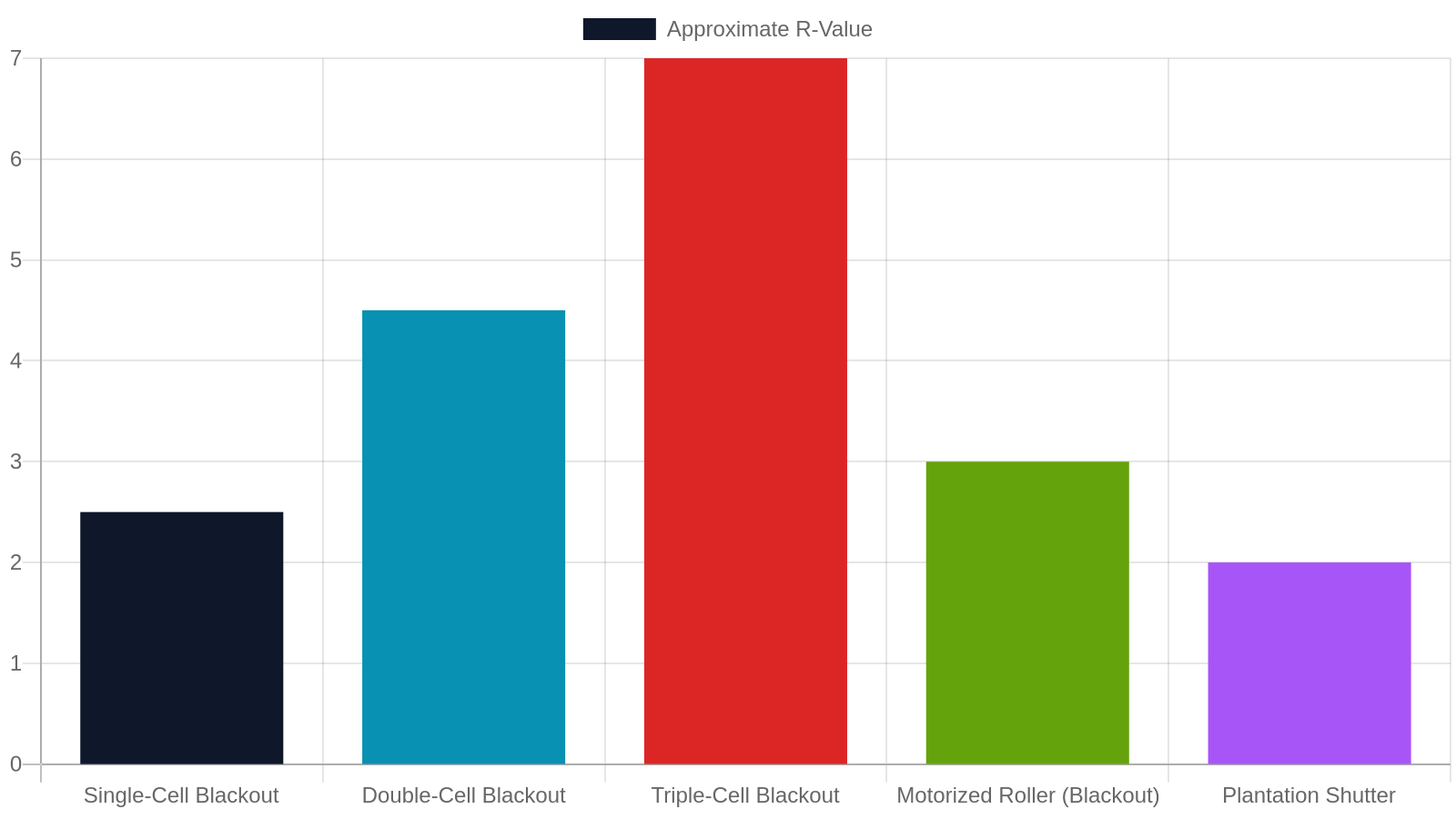
Cellular shades — also called honeycomb shades — get their name from the hexagonal air pockets built into the fabric. Those pockets trap air and act as a thermal buffer between your room and the window glass. In a blackout cellular shade, the cells are constructed from an opaque, light-blocking material that prevents any light transmission. Double-cell and triple-cell configurations offer progressively better insulation: triple-cell blackout shades can achieve an R-value of approximately R-6 to R-8, making them among the most energy-efficient soft window treatments available.
- Triple-cell blackout shades reduce outside noise by 30–40% compared to single-layer shades.
- Cordless and top-down/bottom-up lift options add flexibility for odd window configurations.
- Available in dozens of neutral and accent colors to complement any media room décor.
Best Use Cases in Jackson Homes
Blackout cellular shades shine in media rooms that double as guest bedrooms or home offices — spaces where you need light control sometimes but not always. The top-down/bottom-up feature is particularly useful: lower the top section for privacy while raising the bottom for natural light during daytime use, then reverse it completely for movie night. For Jackson homeowners dealing with hot west-facing windows, the insulating properties of cellular shades can reduce cooling costs by an estimated 15–25% per treated window during peak summer months.
3. Plantation Shutters — Timeless Style with Solid Light Control
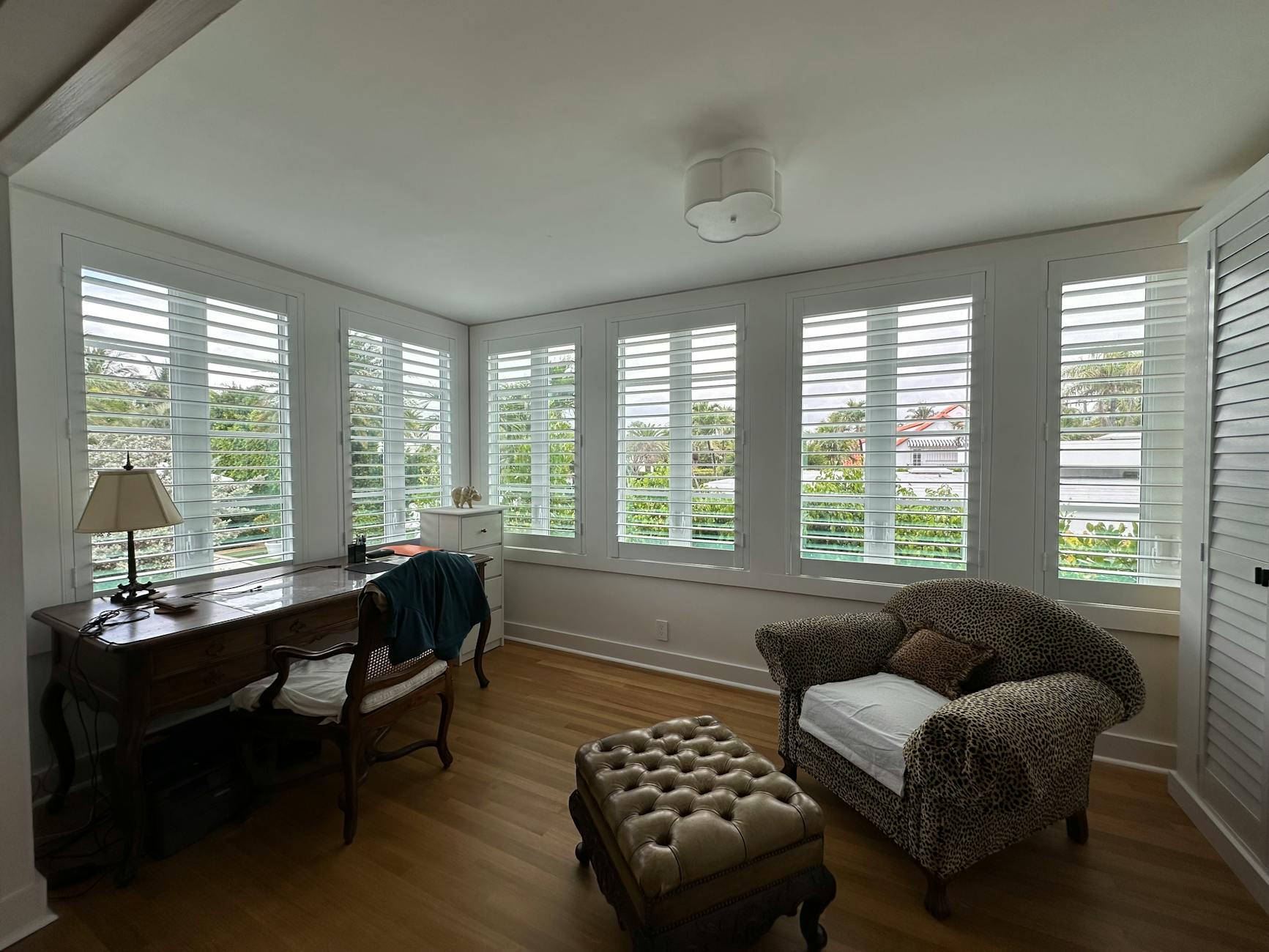
Plantation shutters are the most durable and architecturally integrated window treatment you can install in a home theater or media room. Unlike fabric shades, they won’t fade, sag, or need replacing every decade. Custom-built shutters from a local Jackson specialist are measured and fitted precisely to your window opening — no light gaps, no rattling, no off-the-shelf compromises.
Adjustable Louvers Give You Precision
Plantation shutters are a West Tennessee staple — you’ll find them in homes from Jackson to Lexington to Henderson — and for good reason. Their wide, adjustable louvers (typically 2.5-inch, 3.5-inch, or 4.5-inch slats) let you dial in exactly how much light enters the room. Tilt the louvers closed and you block the majority of direct sunlight and glare. For a media room, full-height plantation shutters with a center divider rail give you the most flexibility: keep the top panel open for ambient light during casual TV viewing and close everything for movie mode.
- Louvers in the closed position block approximately 85–95% of incoming light — not quite blackout, but very effective for flat-panel TV viewing.
- Hardwood and faux-wood options available; faux wood is recommended for Jackson’s humid summers.
- Shutters add measurable resale value — studies suggest a return of 60–80% of installation cost at resale.
Pairing Shutters with Drapes for Full Blackout
If you love the look of plantation shutters but need true blackout capability for a projector setup, the solution is simple: layer blackout drapes behind the shutters. During the day, the shutters handle light filtering and privacy beautifully. At movie time, draw the drapes closed over the shutters for complete darkness. This layered approach is popular in Jackson-area homes where the media room also serves as a formal sitting room — the shutters provide the polished, permanent look, while the drapes handle the cinematic heavy lifting. Explore our custom-built shutters to see the full range of styles and finishes available.
4. Dual Shades — One Shade, Two Modes
Not every media room is a dedicated, lights-always-off theater. Many Jackson homeowners have multipurpose spaces — a room that’s a home office by day and a movie room by night. Dual shades are engineered for exactly this kind of flexibility, offering a seamless transition between open, light-filled mode and privacy-focused, screen-ready mode — all within a single, sleek shade.
How the Dual-Layer System Works
Dual shades (also called day-night shades or banded shades) consist of two layers of alternating opaque and sheer fabric bands. By rolling the shade up or down, you align either the opaque bands (for privacy and light blocking) or the sheer bands (for filtered natural light). It’s an elegant mechanical solution that gives you two distinct settings without swapping out any hardware. For a media room that also serves as a home office or playroom, this versatility is genuinely useful — bright and airy during the day, dimmed and focused when the screen goes on.
- Blackout-rated dual shades align the opaque bands fully for maximum darkness.
- Available in motorized versions for smart-home integration.
- Fabric bands typically come in 2.5-inch or 3-inch widths.
Aesthetic Appeal in Modern Media Rooms
Dual shades have a distinctly modern, architectural look that pairs well with contemporary home theater designs. When the bands are aligned for filtered light, the alternating pattern creates a subtle visual texture on the window that looks intentional and polished — far more interesting than a plain roller shade in the up position. They’re available in a wide palette of neutrals, and the fabric is typically easy to clean with a damp cloth, which matters in a room where popcorn and drinks are part of the experience. For Jackson homeowners who want a sleek, low-profile treatment that doesn’t scream ‘window covering,’ dual shades are an excellent choice.
5. Blackout Roman Shades — Soft Elegance for the Cinephile
If your media room leans more toward a sophisticated lounge aesthetic than a tech-forward theater, blackout Roman shades deliver the light control you need without sacrificing the soft, refined look you want. They’re a favorite among interior designers working with Jackson-area homeowners who want their media room to feel like a curated living space — not a dark box with equipment in it.
The Fabric Fold Difference
Roman shades stack into neat horizontal folds when raised, creating a soft, tailored look that feels more like interior design than a window covering. In a blackout Roman shade, the fabric is lined with a light-blocking interliner — typically a thick, foam-backed or triple-woven material — that prevents light transmission while maintaining the shade’s elegant drape. For homeowners in Jackson who’ve invested in quality furniture, built-in cabinetry, or custom millwork in their media rooms, Roman shades complement the space without looking utilitarian.
- Flat-fold Romans give the cleanest look; relaxed Romans have a softer, more casual drape.
- Custom fabric options allow you to match or coordinate with existing upholstery.
- Blackout lining adds slight acoustic dampening — helpful for reducing echo in hard-surfaced rooms.
Sizing and Mounting Considerations
Roman shades require precise measuring to perform well. An inside-mount Roman shade must be cut to exact window width — typically ¼ to ½ inch narrower than the opening — to operate smoothly without binding. An outside-mount shade should extend at least 2 inches beyond the window frame on each side to minimize light bleed around the edges. For media rooms with large or unusually shaped windows, custom fabrication from a local Jackson specialist is the only reliable option. Off-the-shelf Roman shades rarely fit correctly and almost never achieve true blackout performance at the edges.
6. Vertical Blinds and Panel Track Systems — for Sliding Doors and Wide Windows
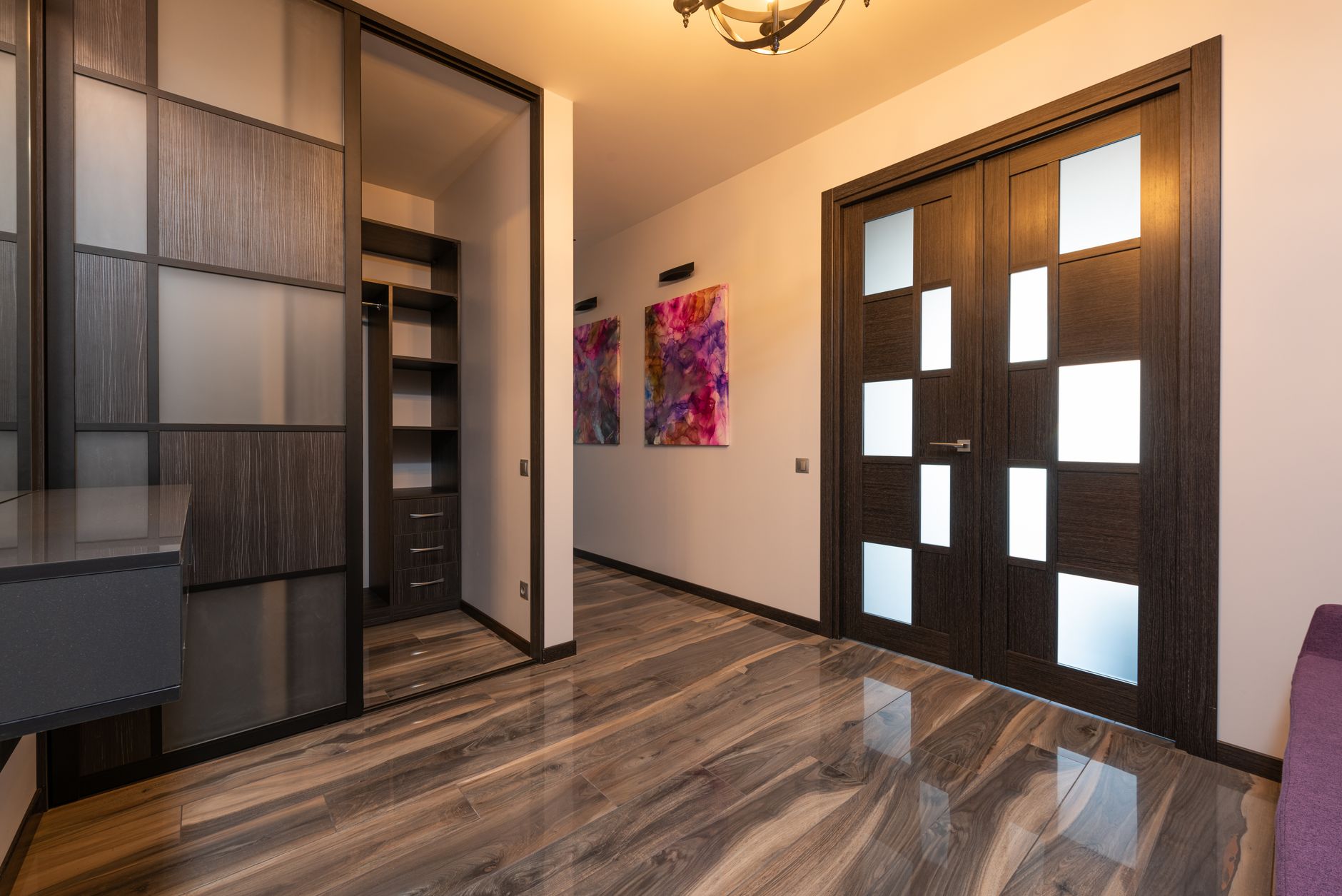
Standard window treatments are designed for standard windows — but media rooms often feature anything but standard openings. Wide-format windows, sliding glass doors, and corner window configurations all require specialized solutions. Vertical blinds and panel track systems are the workhorses of the wide-opening world, and they’re more stylish than their reputation suggests when specified in the right fabric and configuration.
Solving the Wide-Window Problem
Many home theaters and media rooms in Jackson-area homes feature wide picture windows, sliding glass doors to a patio, or large architectural openings that standard shades can’t span without a seam. Vertical blinds and panel track systems are purpose-built for these wide openings. Vertical blinds use individual fabric or PVC vanes (typically 3.5 inches wide) that rotate to control light and stack neatly to one side when open. Panel track systems use wider fabric panels (12–24 inches) that slide on a track — a more modern, architectural look that works beautifully in contemporary media rooms.
- Blackout fabric vanes or panels are available for both systems.
- Panel tracks can span openings up to 16 feet wide without visible seams.
- Both systems are compatible with motorized operation for smart-home integration.
Patio Door Considerations in West Tennessee Homes
A media room with a patio door presents a unique challenge: you need to be able to open the door without dismantling your window treatment. Vertical blinds and panel tracks both handle this gracefully — the vanes or panels stack to one side, leaving the door fully accessible. For Jackson homeowners whose media room opens onto a back porch or deck, this is a practical necessity. Opt for a split-stack configuration (panels stack to both sides) for the cleanest look and easiest door access. Blackout-rated fabric vanes in a vertical system can block up to 99% of light when fully closed.
7. Layered Drapery — the Classic Theater Look

There’s a reason every real movie theater uses heavy, floor-length drapes on its walls — and it’s not just aesthetics. Layered drapery combines light control, acoustic treatment, and dramatic visual impact in a single design element. For homeowners in Jackson and the surrounding communities of Milan and Henderson who want their media room to feel genuinely cinematic, custom drapes are worth serious consideration.
The Two-Layer Formula
Professional home theater designers have used layered drapery for decades, and the formula hasn’t changed much: a sheer or light-filtering inner layer paired with a heavy blackout outer layer. The sheer panel handles daytime privacy and diffuses harsh sunlight for casual viewing. The blackout drape — typically a thick, interlined fabric in a deep neutral — pulls closed for full cinematic darkness. Floor-to-ceiling panels hung from a ceiling-mounted rod create the immersive, enveloping feel of a real movie theater, which is part of why this approach remains popular in upscale Jackson homes.
- Ceiling-mounted rods make windows appear taller and the room more dramatic.
- Velvet and chenille fabrics add acoustic absorption — reducing echo and improving sound quality.
- Pinch-pleat and goblet-pleat headers give a formal, tailored appearance.
Acoustic Benefits of Heavy Drapes
Here’s a benefit most homeowners don’t consider: heavy drapes absorb sound. In a room with hard floors, drywall, and glass surfaces, sound waves bounce around and create echo and reverb that muddy dialogue and music. A pair of floor-to-ceiling blackout drapes on each window wall can reduce mid-frequency reverberation by 15–25%, according to acoustic engineering data. That’s a meaningful improvement in dialogue clarity — particularly important if your media room doubles as a music listening room. For Jackson homeowners who’ve invested in quality audio equipment, drapes are an inexpensive acoustic upgrade hiding in plain sight.
9 Media Room Window Treatments Compared at a Glance
Use this table to quickly compare the nine treatments covered in this guide across the factors that matter most for a home theater or media room.
8. Faux Wood Blinds — the Budget-Friendly Baseline
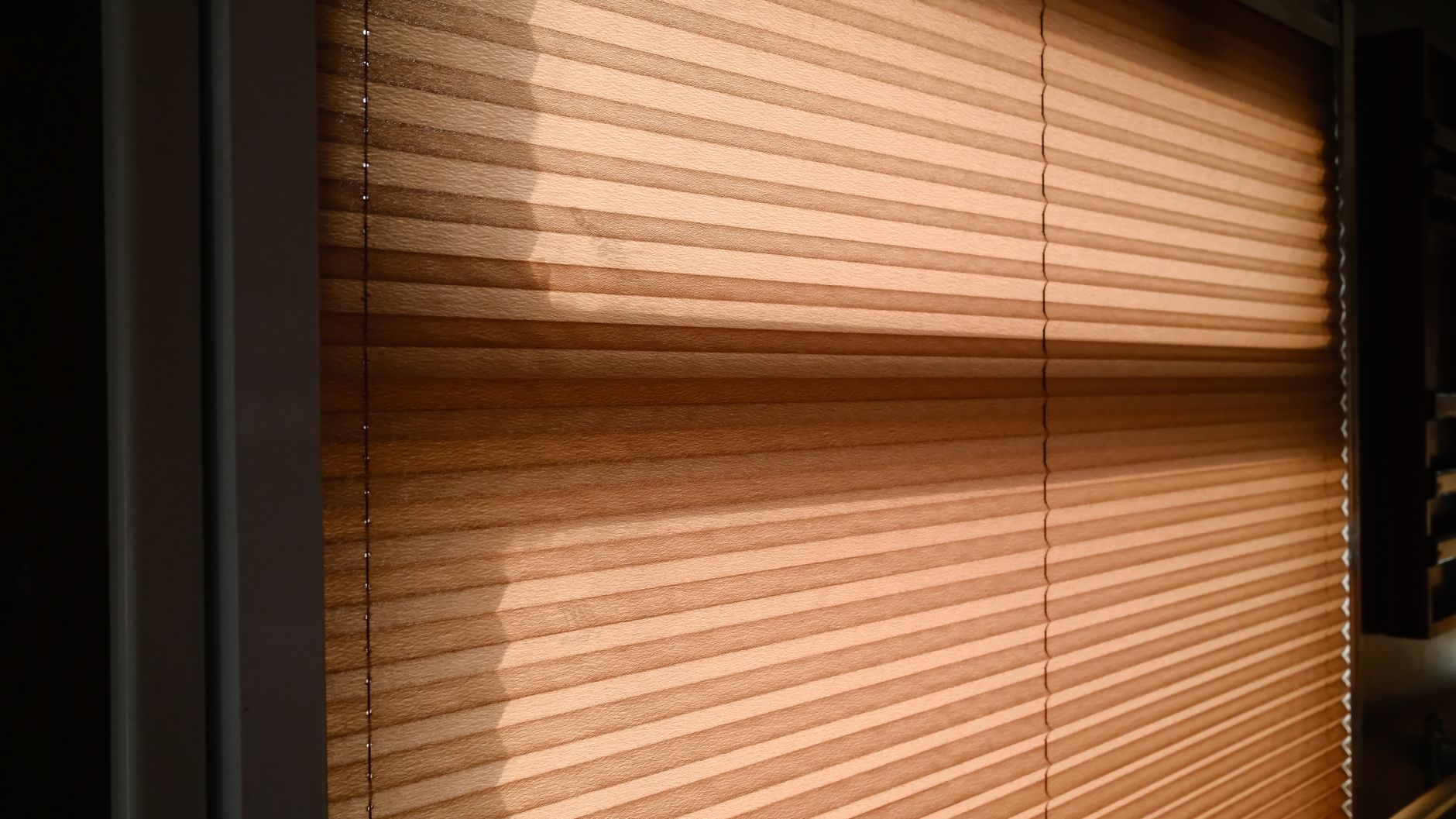
Not every media room needs a $500-per-window motorized shade system. For homeowners in Jackson, TN who want a clean, practical, and affordable baseline window treatment — especially in a casual TV room rather than a dedicated projector theater — custom faux wood blinds deliver solid performance at a price that makes sense. They’re durable, moisture-resistant, and look far more polished than their price point suggests.
Why Faux Wood Works in High-Humidity Spaces
West Tennessee’s humidity is hard on real wood. Genuine wood blinds can warp, crack, and discolor in rooms that experience temperature swings — and a media room with electronics running generates its own heat. Faux wood blinds (typically PVC or a composite of PVC and wood fiber) are completely moisture-resistant, dimensionally stable, and available in a wide range of stained and painted finishes that convincingly mimic real wood. They’re also significantly less expensive: a custom faux wood blind typically costs $80–$200 per window installed, compared to $200–$400 for real wood.
- 2-inch slats are the most popular size for media rooms — wide enough to control light effectively.
- Available in room-darkening (not full blackout) configurations.
- Easy to clean with a damp cloth — practical for a room where snacks happen.
Limitations for Dedicated Theater Rooms
To be straightforward: faux wood blinds are a room-darkening treatment, not a blackout treatment. Light leaks between slats and around the headrail are inherent to the horizontal blind design. For a casual TV room or a space with a flat-panel display, that’s usually acceptable — you’re blocking 80–85% of incoming light, which is enough to eliminate glare on a good TV. But for a projector-based theater where you need near-total darkness, faux wood blinds alone won’t cut it. Pair them with blackout curtains for a budget-friendly layered solution, or consider upgrading to a dedicated blackout shade for the best results. Learn more about custom faux wood blinds from Blinds Galore and whether they’re the right fit for your space.
9. Smart Home Integration — Automating Your Media Room Window Treatments
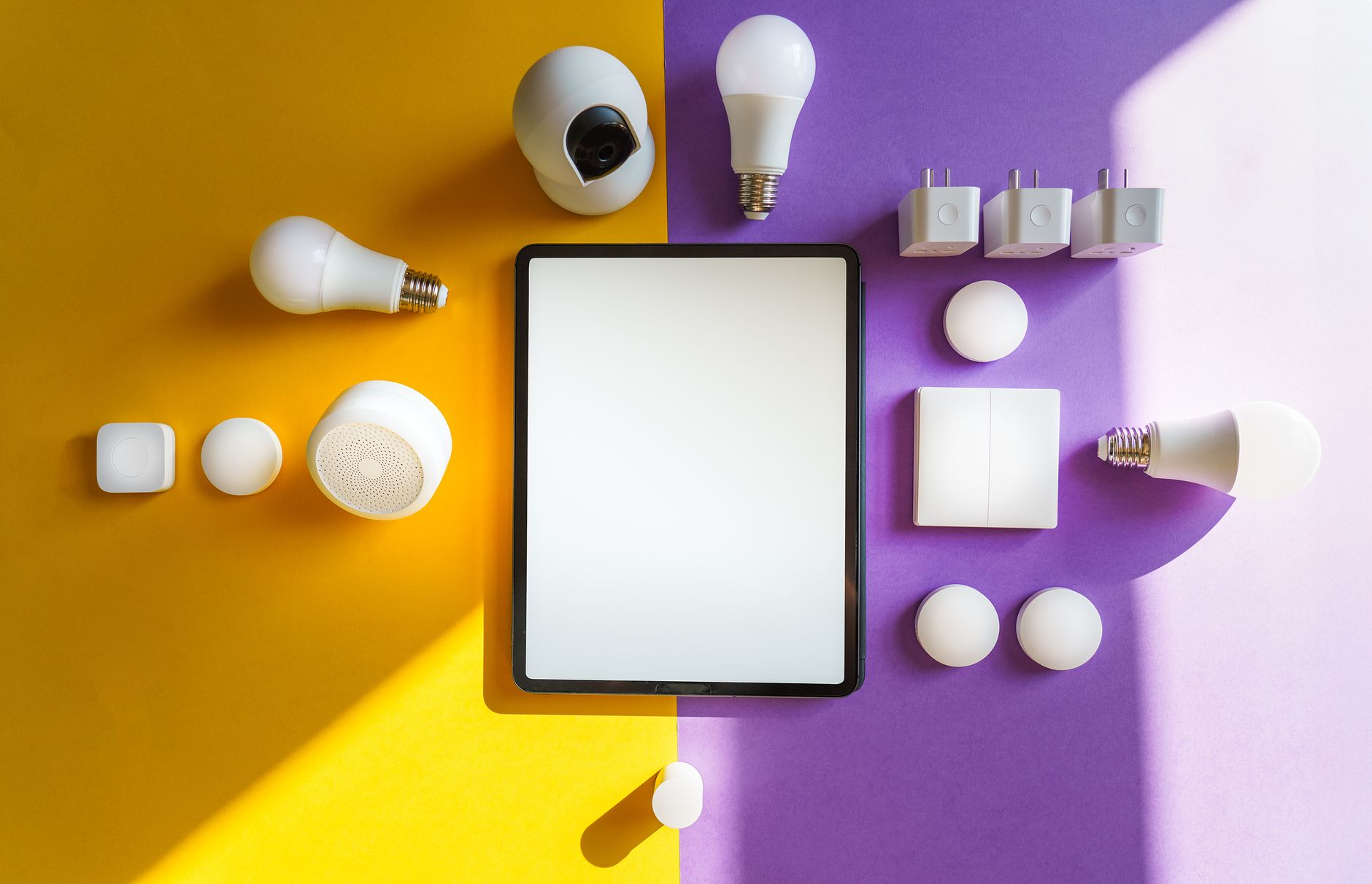
The most convenient home theater window treatment is one you never have to think about. Smart motorized window treatments integrate with your existing home automation system to make light control completely effortless — shades lower automatically when your movie starts, and raise again when the credits roll. For Jackson homeowners who’ve already invested in a smart-home ecosystem, adding motorized shades is the natural next step.
Compatible Platforms and What They Offer
Modern motorized window treatments can integrate with virtually every major smart-home platform. The most common in Jackson-area homes are Amazon Alexa, Google Home, Apple HomeKit, and Samsung SmartThings. Integration allows you to control shades by voice, include them in scenes or routines (e.g., ‘Movie Time’ lowers all shades and dims the lights simultaneously), and set schedules. Some systems — like Lutron Serena and Hunter Douglas PowerView — have their own dedicated apps with more granular control. For a home theater, the killer feature is scene integration: one button press or voice command triggers the entire room to shift into theater mode.
- Lutron Caséta and RadioRA systems offer the most reliable wireless performance.
- Zigbee and Z-Wave compatible motors work with most hub-based smart-home systems.
- Wi-Fi direct motors are easiest to set up but can be affected by network congestion.
Wired vs. Battery-Powered Motors
The choice between hardwired and battery-powered motors comes down to your home’s construction and your appetite for maintenance. Hardwired motors are the most reliable — no batteries to replace, no charging to remember — but they require an electrician to run low-voltage wiring to each window, which adds cost and complexity in finished rooms. Rechargeable battery motors have improved dramatically; premium brands now offer 12–18 months per charge on a standard USB-C connection. For a media room in an existing Jackson home where opening walls isn’t practical, rechargeable battery motors are an excellent compromise. Solar-powered motors are also available for windows that receive direct sunlight — though in a blackout media room, that’s rarely applicable.
How to Choose the Right Treatment for Your Specific Media Room
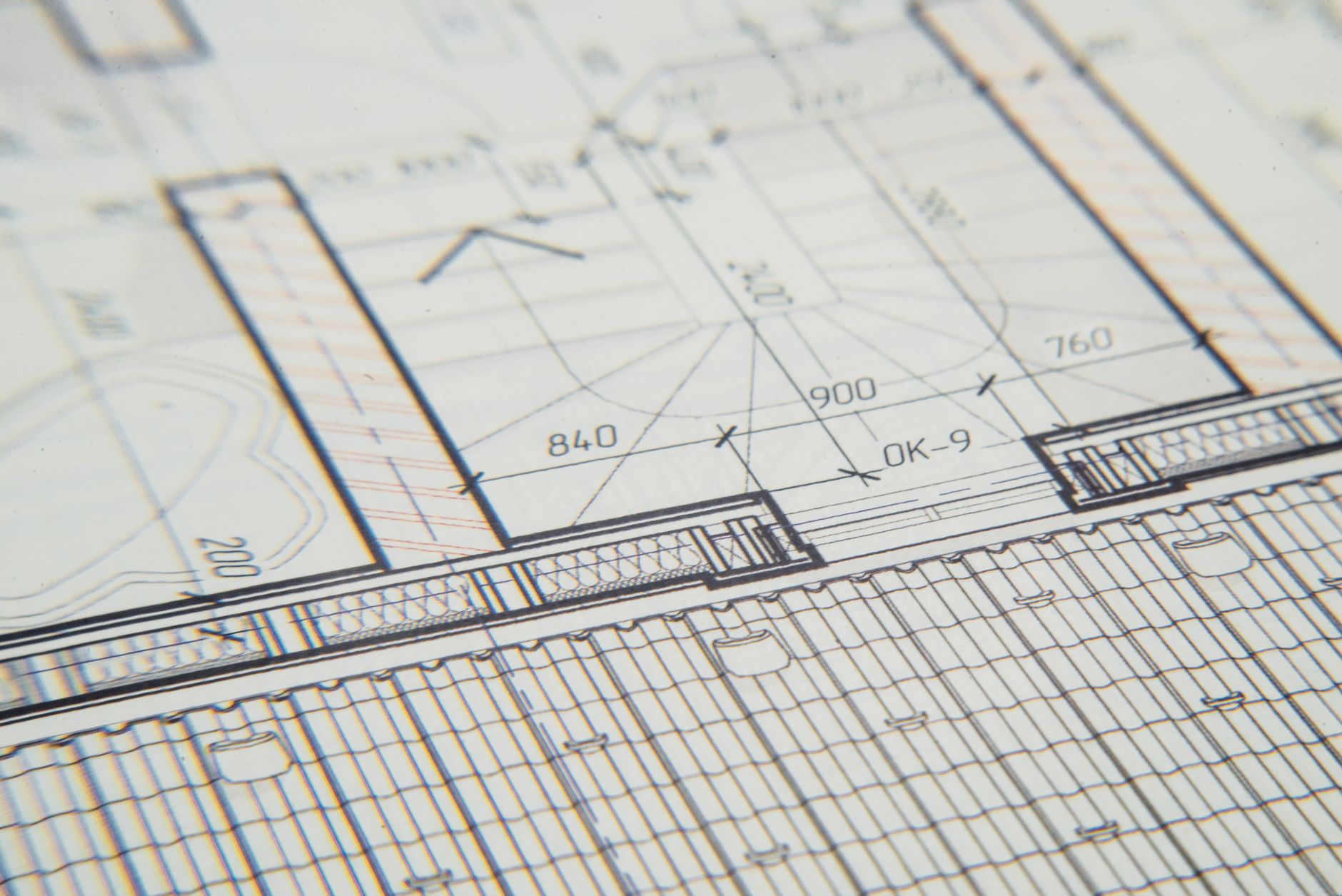
With nine solid options on the table, the challenge shifts from ‘what exists’ to ‘what’s right for my specific room.’ The answer depends on a handful of key variables: your display type, your window orientation, your budget, and how the room is used day-to-day. Here’s a practical framework for narrowing down the field.
Projector Room vs. Flat-Panel TV Room
The single biggest variable in choosing a media room window treatment is whether you’re using a projector or a flat-panel TV. Projectors require near-total darkness — even a small amount of ambient light dramatically reduces perceived contrast and color accuracy. For projector rooms, only true blackout treatments (motorized blackout roller shades, blackout cellular shades, or layered blackout drapes) will perform adequately. Flat-panel TVs are far more forgiving — a quality 4K OLED or QLED display can produce 1,000–2,000 nits of peak brightness, which overpowers moderate ambient light. Room-darkening treatments like faux wood blinds or plantation shutters are often sufficient for flat-panel setups.
Window Orientation and Jackson's Sun Patterns
In Jackson, TN, south- and west-facing windows receive the most direct sunlight — south-facing windows get consistent sun throughout the day, while west-facing windows take the brunt of the intense late-afternoon sun. If your media room has west-facing windows, you’ll want the highest-performing blackout treatment you can afford, because afternoon viewing sessions will otherwise be a battle against glare. East-facing windows are the most forgiving — morning sun is lower intensity and the room is typically in shade by afternoon. North-facing windows receive the least direct sun year-round and are the easiest to manage with any of the treatments listed in this guide.
Ready to Transform Your Jackson TN Media Room?
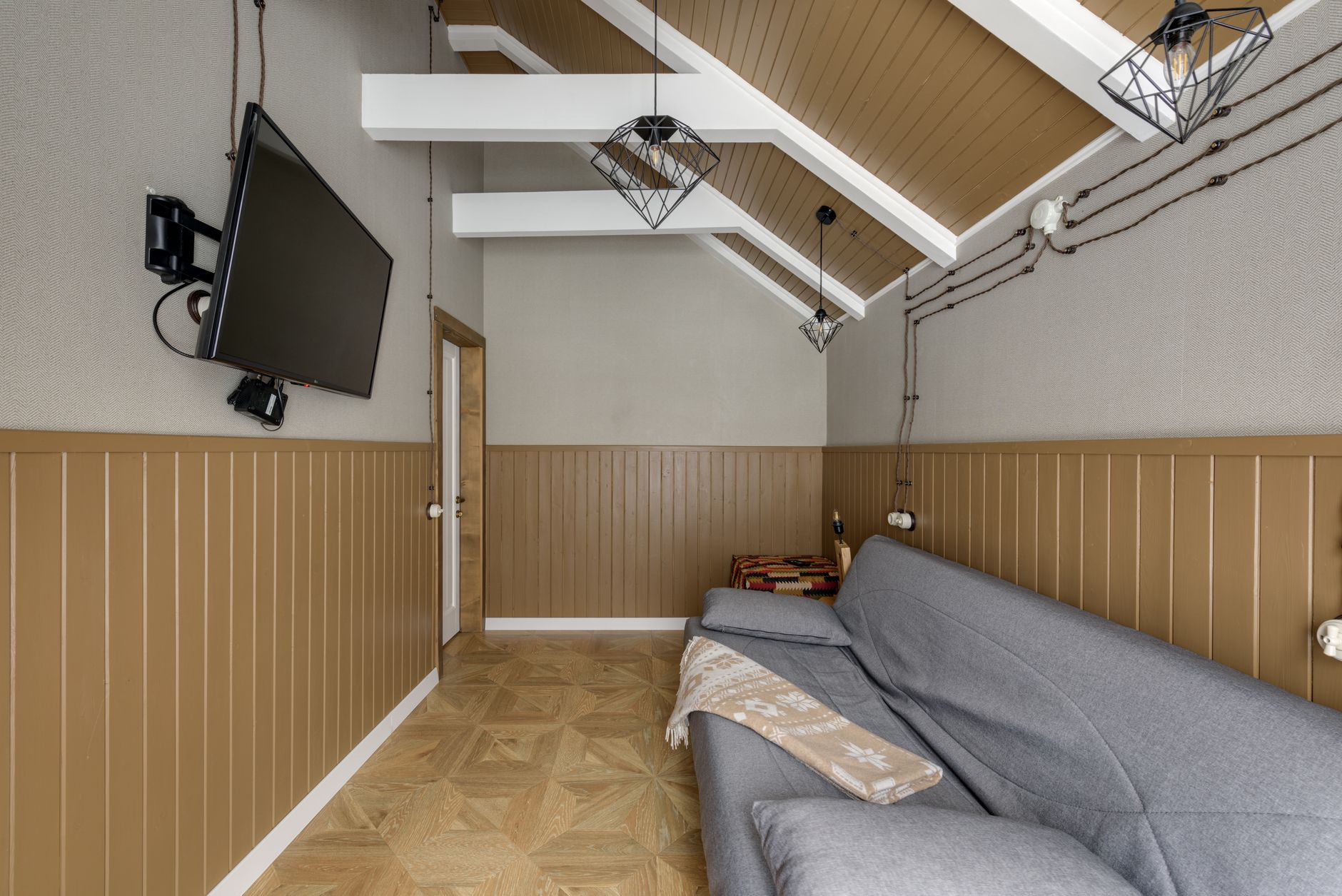
You’ve done the research. You know the options. Now it’s time to take the next step toward the media room experience you’ve been imagining. Whether you’re in Jackson, Lexington, Henderson, Milan, or anywhere across West Tennessee, Blinds Galore is ready to help you get it exactly right — with custom window treatments, expert installation, and a satisfaction guarantee that means you’ll never be left with a result you don’t love.
The Free In-Home Consultation Advantage
Choosing the right window treatment for a media room isn’t something you should have to figure out alone — or from a big-box store aisle where no one can answer your questions. Blinds Galore brings the showroom to your home, measuring every window precisely, showing you fabric and finish samples in your actual lighting conditions, and recommending the treatment that fits your room, your lifestyle, and your budget. With over 18 years of experience serving Jackson, Lexington, Henderson, Milan, and the surrounding West Tennessee communities, the team has seen every window configuration imaginable — and knows exactly how to solve each one.
- Free in-home consultation — no pressure, no obligation.
- Professional measuring included with every order.
- 100% satisfaction guarantee on every installation.
Get Started Today
Don’t let another movie night get ruined by glare, heat, or light leaking around a shade that never quite fit right. Call Blinds Galore at (731) 571-5179 to schedule your free in-home consultation, or visit blindswesttn.com to explore the full range of custom blinds, shades, and shutters available for Jackson, TN homeowners. You can also reach out through the contact page and a local specialist will get back to you promptly. Your perfect home theater window treatment is closer — and more affordable — than you think.
Frequently Asked Questions
What is the best window treatment for a home theater room?
Motorized blackout roller shades are the top choice for dedicated home theater rooms because they block 100% of incoming light, integrate with smart-home systems, and operate with a single button press or voice command. For projector-based theaters, true blackout performance is essential — room-darkening treatments like faux wood blinds or plantation shutters alone won't provide enough darkness.
Do plantation shutters block enough light for a media room?
Plantation shutters with closed louvers block approximately 85–95% of incoming light, which is sufficient for flat-panel TV viewing but not ideal for projector setups. For full blackout capability, pair shutters with blackout drapes behind them — the shutters handle daytime aesthetics while the drapes deliver cinema-grade darkness when needed.
How much do motorized blackout shades cost in Jackson TN?
In the Jackson, TN market, motorized blackout roller shades typically cost between $300 and $800 per window installed, depending on window size, motor type (hardwired vs. battery), and fabric selection. Battery-powered motorized options are on the lower end of that range and are a practical choice for existing homes where running wiring isn't feasible.
Can I use regular blinds in a home theater?
Standard horizontal blinds — including faux wood and aluminum blinds — are room-darkening, not blackout. They block 80–85% of light, which works for casual TV viewing on a flat-panel display. For a projector-based home theater, you'll need a true blackout treatment like motorized roller shades, blackout cellular shades, or blackout drapes to achieve the darkness required for good picture quality.
Do blackout shades help with sound in a media room?
Blackout shades themselves provide minimal acoustic benefit, but heavy blackout drapes and blackout Roman shades with thick interlining do absorb some mid-frequency sound and can reduce room echo by 15–25%. For meaningful acoustic improvement, floor-to-ceiling blackout drapes in a heavy fabric like velvet or chenille are the most effective window treatment option.
Does Blinds Galore serve areas outside Jackson TN?
Yes — Blinds Galore serves the greater West Tennessee area, including Lexington, Henderson, Milan, and surrounding communities. The company offers free in-home consultations throughout the region, bringing samples and measurement tools directly to your home. Call (731) 571-5179 to confirm service availability in your specific area.
You might also like

7 Best Custom Blinds for Sunrooms and Screened Porches in Jackson, TN
Quick answer: The best custom blinds for sunrooms and screened porches in Jackson, TN balance UV protection,
Faux Wood Blinds vs Cellular Shades: Your 9-Point Guide for West Tennessee Sunrooms
Quick answer: For West Tennessee sunrooms and screened porches, faux wood blinds win on moisture resistance,
7 Best Custom Shades for Jackson TN Bedrooms: Light and Privacy Guide
Quick answer: The best custom shades for Jackson, TN bedrooms balance light control, privacy, and style
How to Measure Windows for Custom Shades: Your 9-Step Guide for Jackson, TN Homes
Quick answer: To measure windows accurately for custom shades in Jackson, TN, you need a steel tape measure,
Plantation Shutters vs. Faux Wood Blinds: Which Adds More Resale Value in Jackson, TN?
Quick answer: For Jackson, TN homeowners weighing resale impact, custom interior plantation shutters
How to Compare Plantation Shutters, Blinds, and Shades Using Product Videos in Jackson, TN
Quick answer: Choosing between plantation shutters, blinds, and shades in Jackson, TN comes down to four