Faux Wood Blinds vs Cellular Shades: Your 9-Point Guide for West Tennessee Sunrooms
Quick answer: For West Tennessee sunrooms and screened porches, faux wood blinds win on moisture resistance, durability, and classic curb appeal — making them ideal for high-humidity spaces exposed to the elements. Cellular shades, on the other hand, deliver superior insulation (up to R-6 in double-cell configurations) and light diffusion, making them better suited for climate-controlled sunrooms where energy efficiency is the priority. Your best choice depends on whether your space is open-air or fully enclosed, how much direct sun it receives, and your budget. Both options can be custom-fitted by Blinds Galore for Jackson, TN and surrounding West Tennessee communities.
1. Why West Tennessee Sunrooms Demand a Smarter Window Treatment Choice
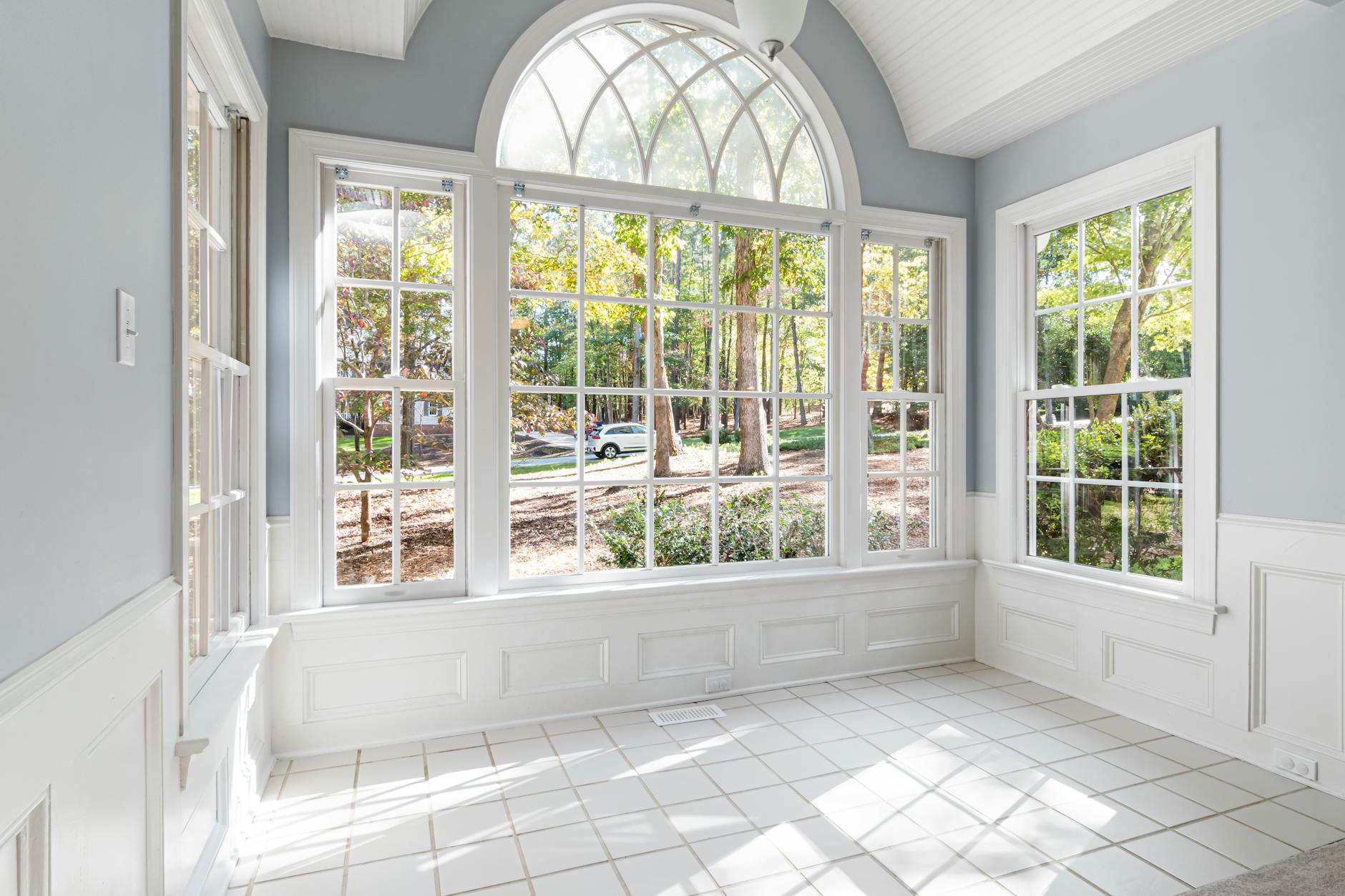
Choosing window treatments for a sunroom or screened porch in West Tennessee isn’t the same as picking blinds for a bedroom. These spaces live at the intersection of indoors and outdoors, and the products you install need to survive heat, humidity, UV radiation, and — in the case of screened porches — direct contact with outdoor air. Getting this decision right saves you money, frustration, and repeat installation fees down the road.
The West Tennessee Climate Challenge
Jackson, TN and the surrounding communities of Lexington, Henderson, and Milan sit squarely in a humid subtropical climate zone. Summers routinely push past 90°F with relative humidity levels hovering between 70% and 85% — conditions that are brutal on standard window treatments. Wood warps, fabric fades, and cheap vinyl cracks under that kind of punishment.
Sunrooms and screened porches amplify every one of those stresses. Glass panels trap radiant heat, UV exposure is relentless from spring through fall, and screened porches invite moisture-laden air directly into contact with your window coverings. Choosing the wrong product means replacing it in two or three years instead of ten or fifteen.
Two Products Built for the Job — But in Different Ways
Faux wood blinds are engineered from PVC or a PVC-composite material that resists warping, cracking, and moisture absorption. Cellular shades (also called honeycomb shades) use a pleated fabric architecture with air pockets that act as insulation barriers. Both are purpose-built to outperform standard window coverings, but they solve different problems — and understanding those differences is the whole game when you’re outfitting a West Tennessee sunroom or screened porch.
2. What Exactly Are Faux Wood Blinds? (A Clear Definition)
Before you can compare faux wood blinds to cellular shades, you need a clear picture of what each product actually is — how it’s made, how it performs, and what it’s designed to do. Let’s start with faux wood blinds, which are the more familiar of the two for most West Tennessee homeowners.
Materials and Construction
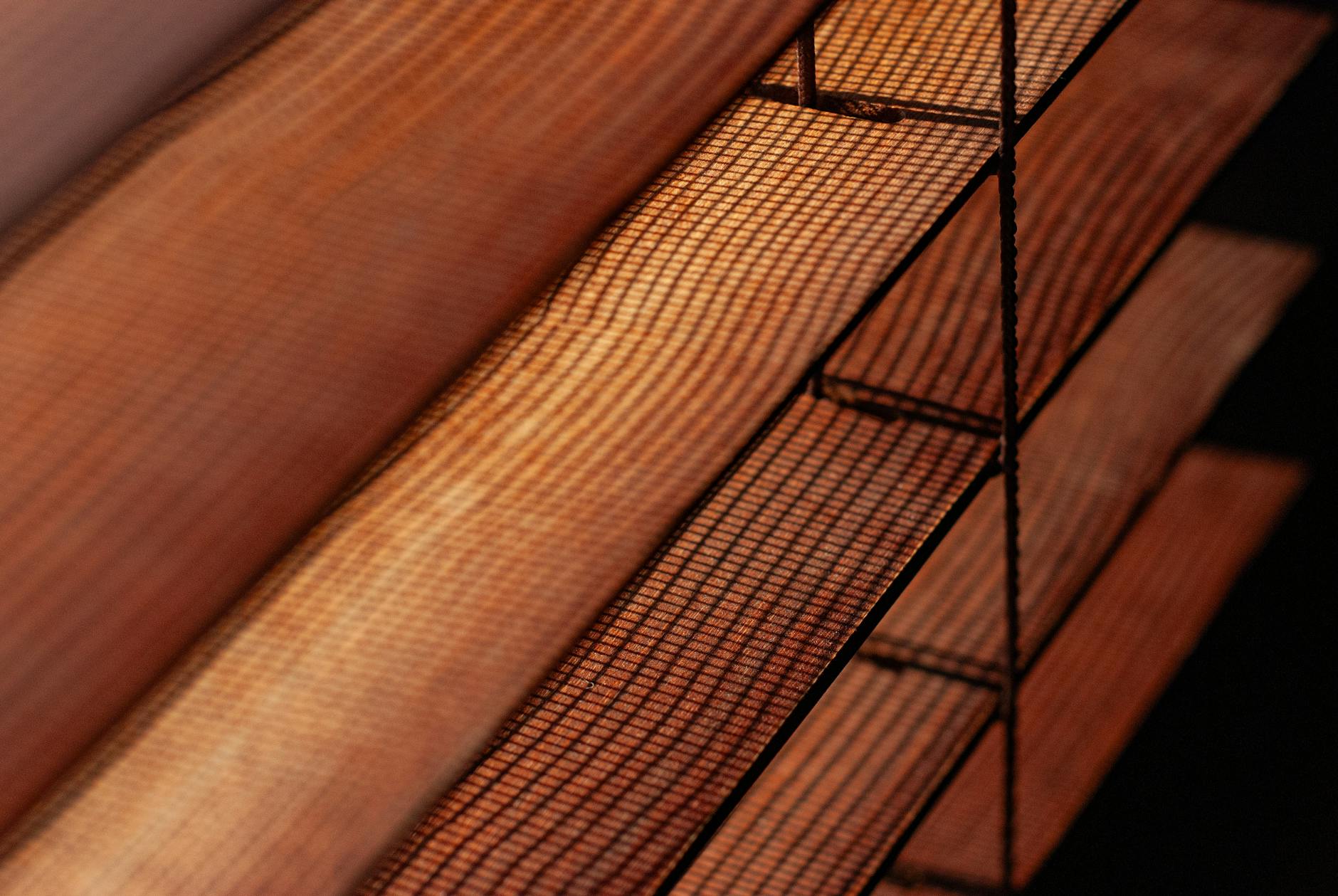
Faux wood blinds are horizontal slatted blinds manufactured from PVC (polyvinyl chloride) or a composite blend of real wood fiber and PVC. Slat widths typically come in 2-inch or 2½-inch options. The PVC construction is what gives faux wood blinds their defining advantage: they will not warp, swell, or crack when exposed to moisture and temperature swings.
High-quality faux wood blinds — like those Blinds Galore sources for custom installations — feature UV-stabilized finishes that resist fading for 10 to 15 years under normal sun exposure. They’re also significantly heavier than real wood blinds of the same size, which contributes to a solid, premium feel when you tilt or raise them.
How They Look and Operate
Faux wood blinds mimic the grain and warmth of real hardwood at roughly 30–50% less cost. They’re available in dozens of stain and paint finishes — from classic white and alabaster to rich espresso and chestnut — making them easy to match to existing trim and cabinetry. Operation is via a standard cord-and-tilt system or, increasingly, cordless and motorized lift mechanisms that are safer for households with children and pets.
For sunrooms with wide window spans, faux wood blinds can be ordered in custom widths up to 96 inches, and custom heights up to 96 inches as well, ensuring a precise fit without unsightly gaps.
3. What Exactly Are Cellular Shades? (A Clear Definition)
Cellular shades are a newer product category than traditional blinds, and many homeowners in Jackson and West Tennessee aren’t fully familiar with how they work. Once you understand the honeycomb architecture, the energy-efficiency claims start to make a lot more sense — and so do the limitations.
The Honeycomb Architecture Explained
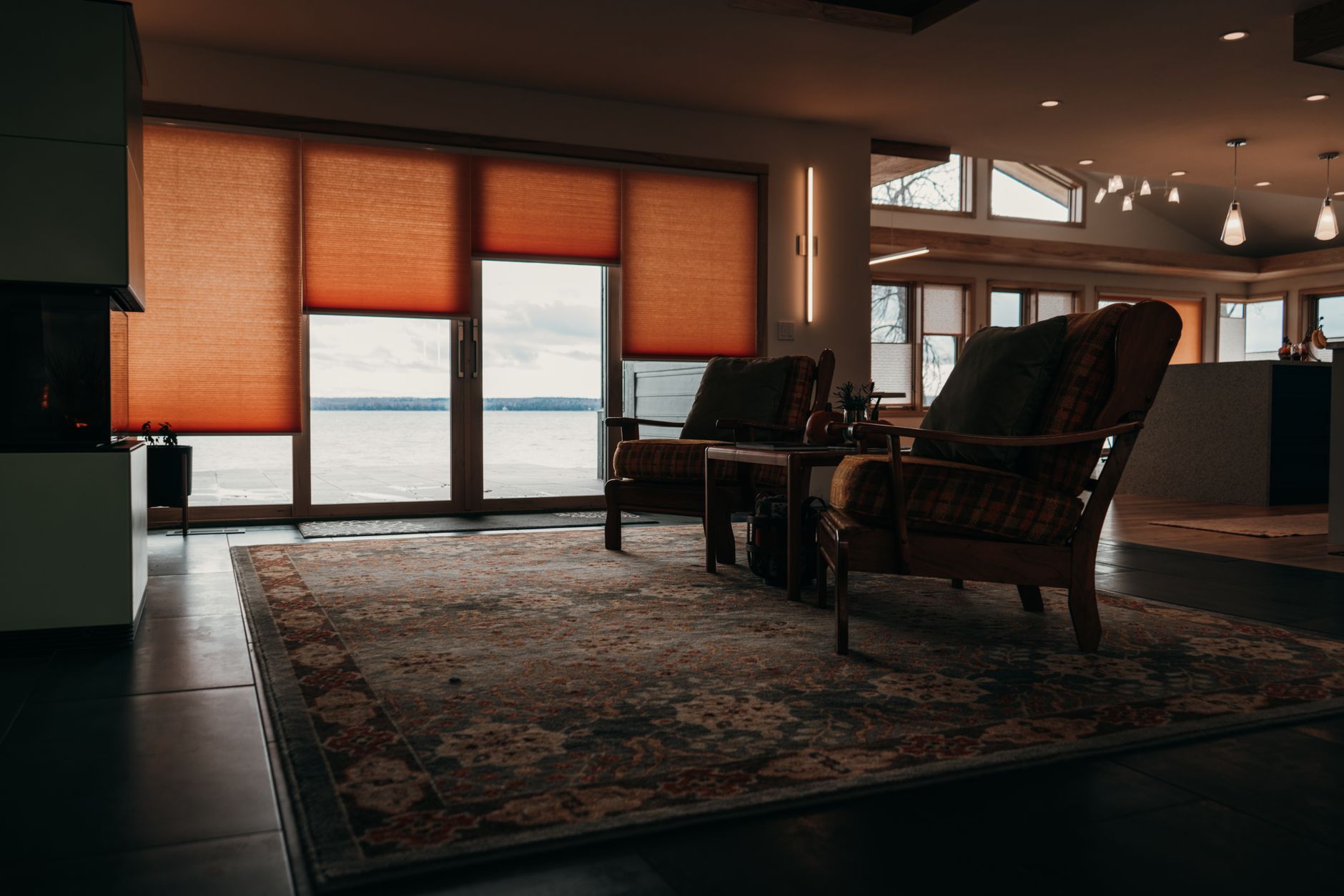
Cellular shades — sometimes called honeycomb shades — are soft fabric window coverings constructed from pleated layers of nonwoven polyester fabric. When viewed from the side, the fabric folds form hexagonal air pockets that look exactly like a honeycomb. Those air pockets are the key to the product’s performance: they trap a layer of still air between the window glass and your living space, creating a thermal buffer.
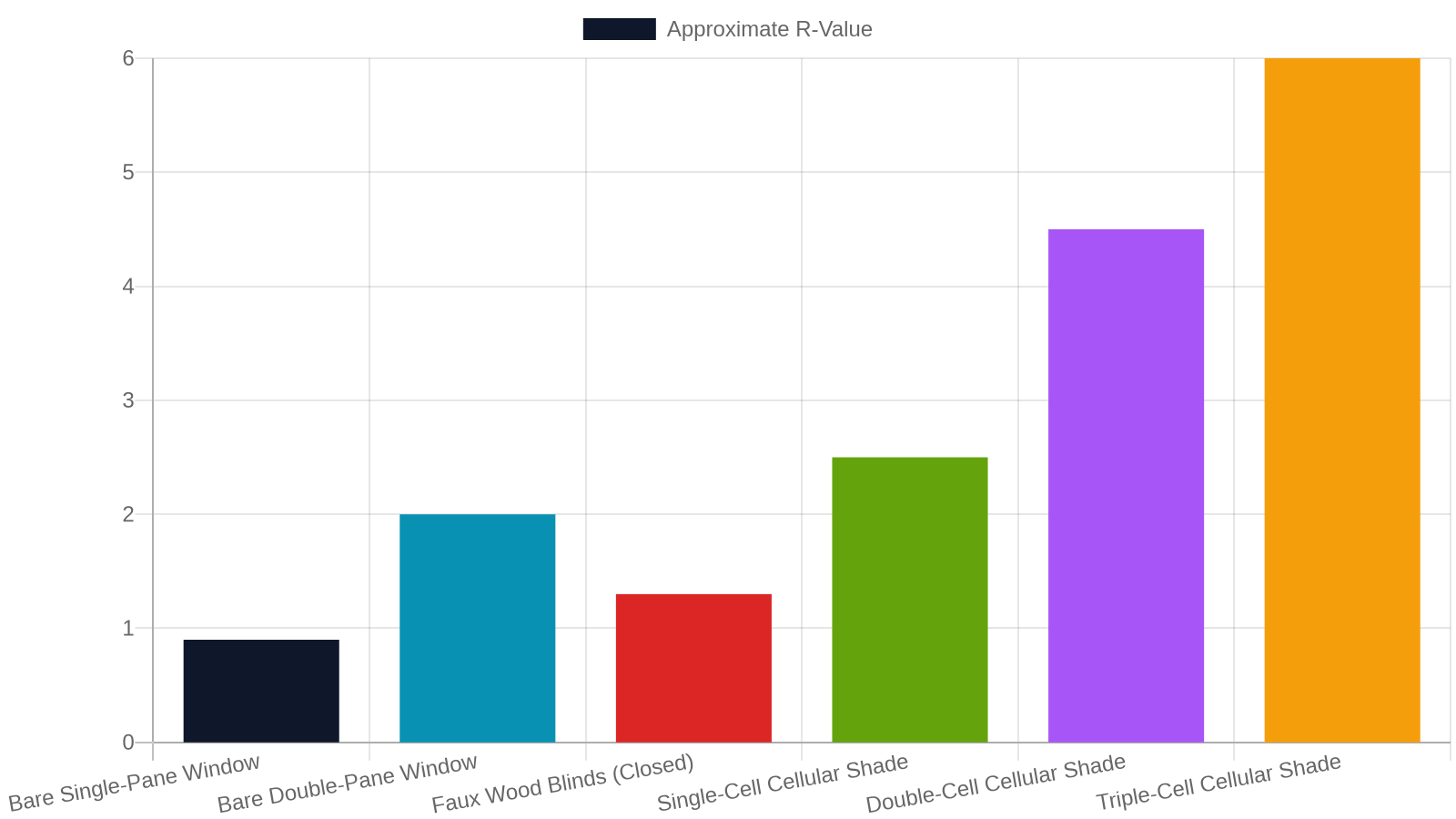
Cellular shades come in three cell configurations: single-cell (one air pocket layer, R-value approximately 2.0–2.5), double-cell (two layers, R-value approximately 3.5–4.5), and triple-cell (three layers, R-value up to 5.5–6.0). For a sun-drenched West Tennessee sunroom, double-cell is the most popular balance of performance and cost.
Light Filtering vs. Blackout Options
Cellular shades are available in three opacity levels: sheer/light-filtering, which diffuses sunlight into a soft glow; room-darkening, which blocks roughly 85–95% of incoming light; and blackout, which eliminates virtually all light. For sunrooms, most homeowners prefer light-filtering or room-darkening fabrics — they soften the intense afternoon sun without making the space feel like a cave.
Top-down/bottom-up cellular shades are a particularly popular configuration for sunrooms: you can lower the top of the shade to let in sky light while raising the bottom to block direct ground-level sun glare — giving you privacy and brightness at the same time.
4. Moisture and Humidity Resistance: A Critical Factor for Screened Porches
Of all the performance factors that matter for West Tennessee sunrooms and screened porches, moisture resistance may be the most decisive. Jackson’s summers are genuinely humid — and screened porches, by definition, are not sealed environments. Here’s how each product holds up when the air gets thick.
Faux Wood Blinds in High-Humidity Environments
PVC-based faux wood blinds are essentially waterproof. They won’t swell, warp, or develop mold when exposed to the high-humidity conditions that are a fact of life in West Tennessee from May through September. This makes them the default recommendation for screened porches and open-air sunrooms where outdoor air circulates freely.
In a side-by-side test conducted by a major window covering manufacturer, PVC faux wood blinds showed zero dimensional change after 500 hours of humidity cycling between 30% and 90% relative humidity. Real wood blinds, by contrast, warped measurably after just 72 hours at 85% humidity. The PVC advantage is real and significant.
Cellular Shades and Moisture: Know the Limits
Standard cellular shades are made from nonwoven polyester fabric — and while polyester itself resists moisture reasonably well, the glued honeycomb cell structure can delaminate over time in persistently damp environments. Mold and mildew can also develop inside the air pockets if the shade is repeatedly exposed to condensation or rain splash-back.
Some manufacturers offer moisture-resistant cellular shades with treated fabrics, but even these are rated for climate-controlled spaces — not open screened porches. Bottom line: cellular shades belong in fully enclosed, HVAC-conditioned sunrooms, not on screened porches or semi-open spaces.
5. Energy Efficiency and Insulation: Where Cellular Shades Shine
Energy efficiency is a growing priority for West Tennessee homeowners — and for good reason. A sunroom with large glass panels can add hundreds of dollars a year to your cooling bill if the windows aren’t properly managed. Here’s how faux wood blinds and cellular shades compare on the insulation scorecard.
R-Values and What They Mean for Your Energy Bill
The R-value of a window covering measures its resistance to heat transfer — the higher the number, the better the insulation. A bare single-pane window has an R-value of approximately 0.9. A standard double-pane window gets you to about R-2.0. Add a double-cell cellular shade and you can push the effective R-value of that window assembly to R-4.5 to R-6.0 — a meaningful improvement that translates to lower cooling bills in a West Tennessee summer.
The U.S. Department of Energy estimates that cellular shades can reduce heat gain through windows by up to 40% in summer and reduce heat loss by up to 20% in winter. For a sunroom with six to eight large windows, that’s a real number on your utility statement.
Faux Wood Blinds and Energy Performance
Faux wood blinds do provide some solar control — closed slats can block up to 99% of direct sunlight, which significantly reduces solar heat gain. However, because the slats don’t seal tightly (there are always small gaps between them), they offer minimal insulation value. The R-value of a closed faux wood blind is estimated at approximately R-1.0 to R-1.5 — better than nothing, but far below what cellular shades deliver.
For a fully enclosed, air-conditioned sunroom where you’re fighting to keep cooling costs under control, cellular shades are the more energy-efficient choice by a wide margin.
6. UV Protection and Fade Resistance for Sun-Drenched Spaces
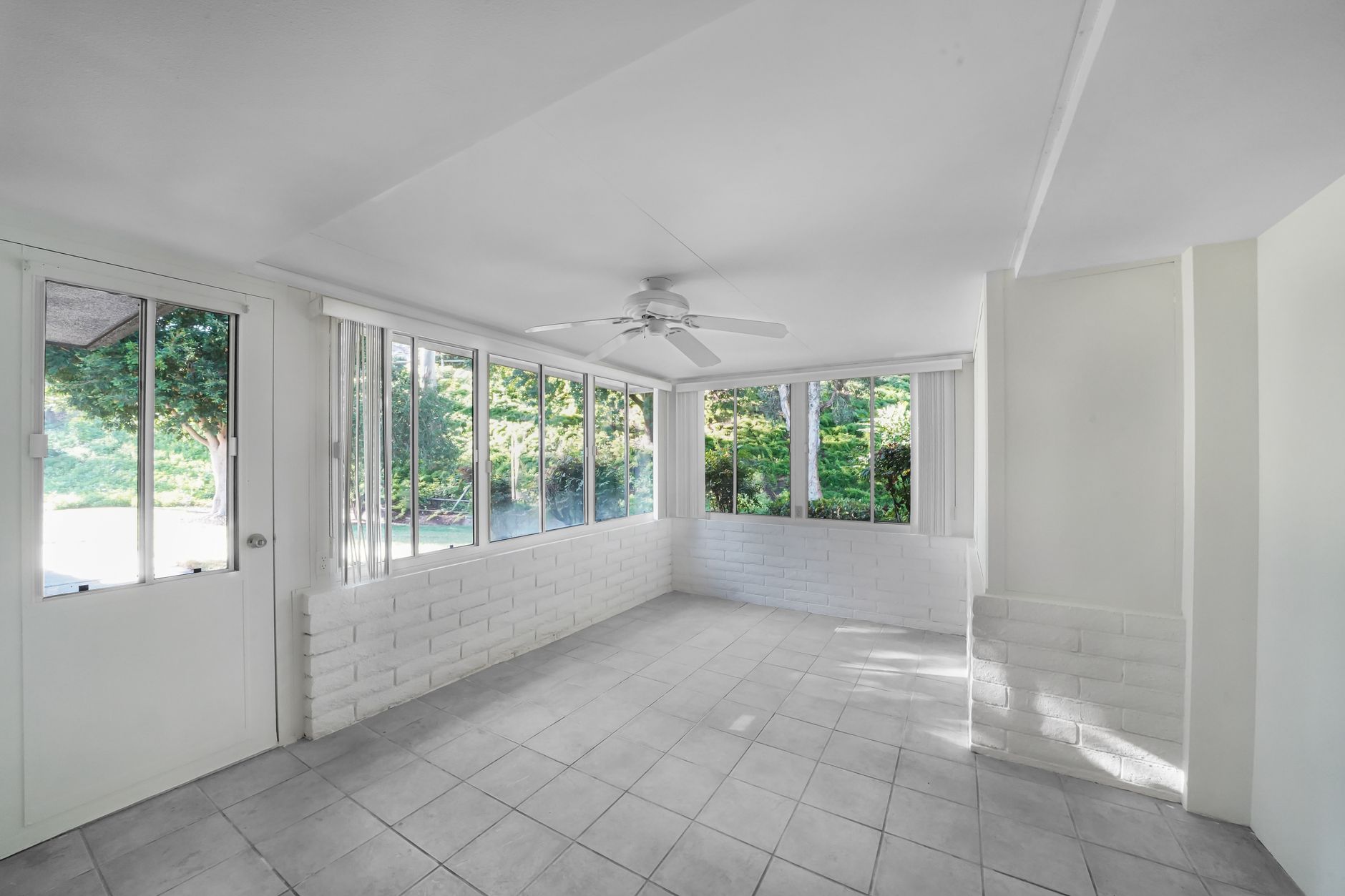
Sunrooms are, by design, sun-filled spaces — that’s the whole point. But relentless UV exposure is also the enemy of everything inside them, from your sofa cushions to your hardwood floors. Understanding how each window treatment handles UV is essential before you make a final decision.
Protecting Your Furniture and Flooring
West Tennessee sunrooms get intense UV exposure from roughly March through October. UV radiation is the primary cause of fading in upholstery, hardwood floors, rugs, and artwork — and a sunroom with unprotected windows can fade furnishings five times faster than a standard interior room. Both faux wood blinds and cellular shades provide UV protection, but in different ways and to different degrees.
Closed faux wood blind slats block virtually all direct UV rays — up to 99% when fully closed. Cellular shades with light-filtering fabric typically block 85–95% of UV rays while still allowing diffused natural light into the space. For maximum furniture protection, faux wood blinds in the fully closed position offer a slight edge.
How Each Product Holds Up to UV Itself
It’s not just your furniture that needs UV protection — your window treatments do too. PVC faux wood blinds with UV-stabilized finishes are rated to resist color fading for 10–15 years under direct sun exposure. Lower-quality faux wood blinds without UV stabilizers can yellow or become brittle in as little as 3–5 years in a sunny West Tennessee sunroom.
Cellular shades made from solution-dyed polyester fabric (where the color is embedded in the fiber rather than applied as a surface coating) also offer excellent fade resistance — typically 7–12 years before noticeable color shift. Always ask your window treatment provider whether the fabric is solution-dyed or surface-printed before purchasing for a high-sun application.
7. Durability, Maintenance, and Lifespan Compared
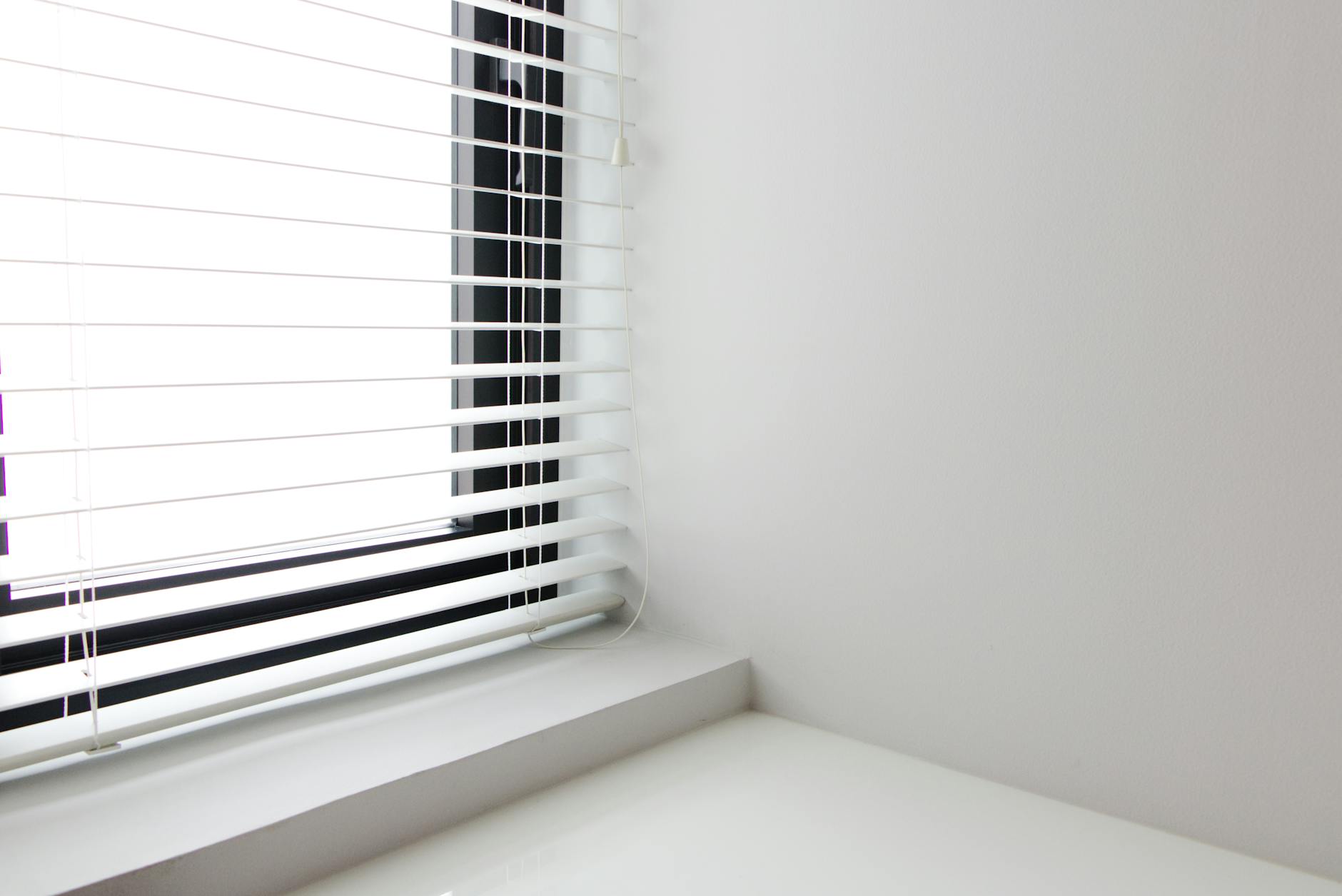
Durability and ease of maintenance are practical concerns that often get overlooked in the excitement of choosing colors and styles. For a sunroom or screened porch — spaces that see heavy use and environmental stress — these factors should weigh heavily in your decision.
Cleaning and Day-to-Day Maintenance
Faux wood blinds are among the easiest window treatments to clean. A damp cloth or sponge wipes down individual slats in minutes, and because the PVC surface is non-porous, dust and pollen don’t embed themselves into the material. For screened porches that collect airborne debris, this is a significant practical advantage. Most faux wood blinds can even be spot-cleaned with a mild soap solution without any risk of damage.
Cellular shades are more delicate. The pleated fabric traps dust inside the honeycomb cells, and cleaning requires either a vacuum with a brush attachment or compressed air. Wet cleaning is generally not recommended and can damage the cell structure or cause delamination. In a dusty or pollen-heavy environment — which describes most West Tennessee screened porches in spring — cellular shades require noticeably more maintenance effort.
Expected Lifespan by Product Type
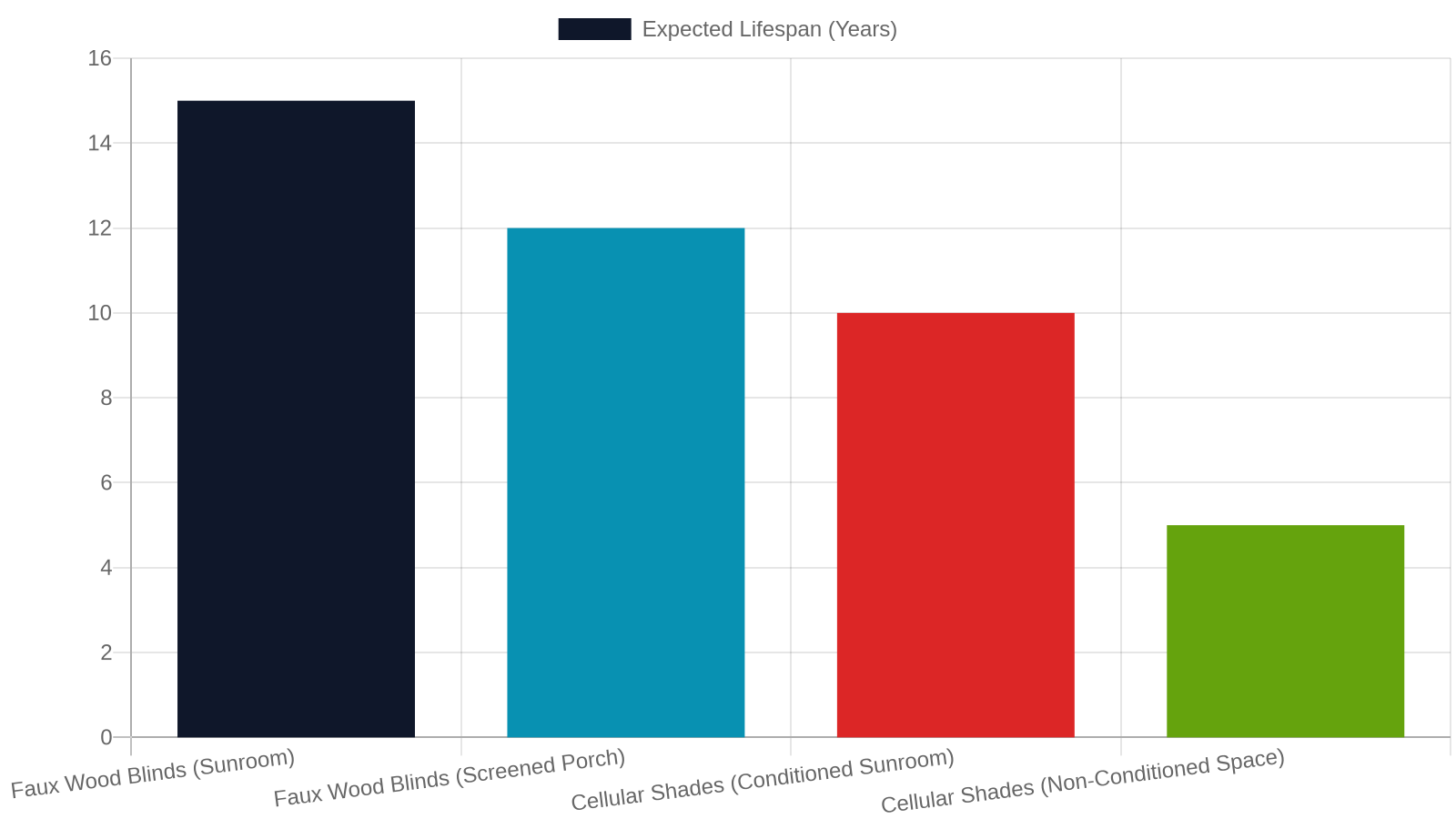
With proper care, high-quality faux wood blinds in a sunroom or screened porch environment typically last 10–15 years before slats show significant wear or the lift cord mechanism needs replacement. The PVC material itself doesn’t degrade in humidity or UV at the rate that fabric or real wood does.
Cellular shades in a climate-controlled sunroom typically last 7–12 years before the fabric shows noticeable fading or the cell structure begins to lose its shape. In a non-conditioned or high-humidity environment, that lifespan can drop to 4–6 years. Cordless cellular shades have fewer mechanical failure points than corded versions, which can extend usable life.
Faux Wood Blinds vs Cellular Shades: 10-Point Comparison for West TN Sunrooms
Use this side-by-side comparison to quickly identify which product fits your specific sunroom or screened porch situation. Ratings are relative to each other within the context of sunroom and screened porch applications.
8. Cost Comparison: What to Budget for Jackson, TN Sunrooms

Budget is always part of the conversation, and it’s worth being specific about what custom window treatments actually cost in the Jackson, TN market. Both faux wood blinds and cellular shades are available across a range of price points, and the right choice depends on balancing upfront cost against long-term value.
Faux Wood Blind Pricing
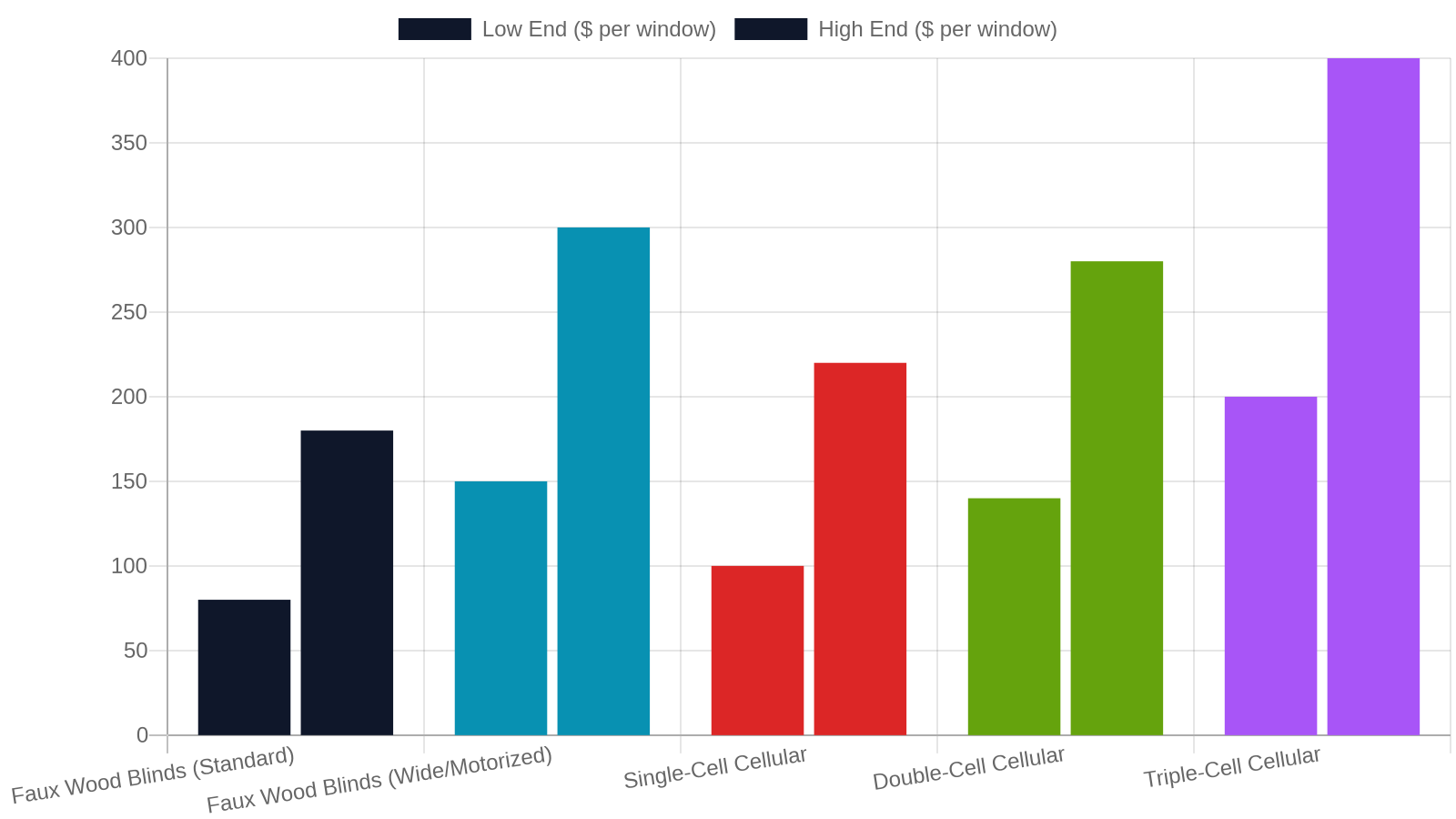
Custom faux wood blinds are priced per window based on width, height, and selected features (cordless lift, motorization, decorative valance). As a general benchmark for the West Tennessee market, expect to budget $80–$180 per window for professionally measured and installed custom faux wood blinds in standard sunroom sizes (up to 48 inches wide). Wider windows — common in sunrooms with panoramic panels — can run $150–$300+ per opening.
Motorized faux wood blinds add approximately $50–$150 per window to the base price but deliver significant convenience for hard-to-reach sunroom windows. Over a 10–15 year lifespan, the per-year cost of quality faux wood blinds works out to roughly $8–$20 per window annually — an excellent value proposition.
Cellular Shade Pricing
Cellular shades carry a higher upfront cost than faux wood blinds in most configurations. Single-cell cellular shades for a standard sunroom window typically run $100–$220 per window installed; double-cell shades range from $140–$280 per window; and triple-cell or specialty configurations can reach $200–$400 per window. Top-down/bottom-up functionality adds another $30–$60 per window.
Motorized cellular shades — increasingly popular for sunrooms where manual operation is awkward — add $80–$200 per window. When you factor in a shorter lifespan in non-ideal environments, the total cost of ownership for cellular shades in a screened porch setting can exceed that of faux wood blinds by 30–50% over a 10-year period.
9. Aesthetic Appeal: Which Product Looks Better in a Sunroom?
Function matters most in a sunroom or screened porch — but you also want your window treatments to look great. The good news is that both faux wood blinds and cellular shades have strong aesthetic credentials; they just express very different design personalities.
The Look of Faux Wood Blinds
Faux wood blinds deliver a classic, structured aesthetic that pairs naturally with traditional and transitional sunroom styles — think painted wood trim, brick floors, and rattan furniture. The horizontal slatted look creates strong visual lines that frame windows crisply and add a sense of architectural definition. When open, the slats stack neatly at the top of the window, leaving the view completely unobstructed.
Color options have expanded dramatically in recent years. Beyond the standard white and off-white, you can now find faux wood blinds in warm grays, soft taupes, and rich wood-tone stains that coordinate beautifully with the natural materials common in West Tennessee sunrooms and screened porches.
The Look of Cellular Shades
Cellular shades offer a softer, more contemporary look that suits modern, transitional, and Scandinavian-inspired sunroom designs. When light-filtering fabric is used, the shade glows with a warm, diffused luminosity that many homeowners find more inviting than the sharp shadow patterns cast by blind slats. The clean, flat face of a cellular shade also reads as less visually busy than a slatted blind, which can make small sunrooms feel more open.
Cellular shades are available in hundreds of fabric colors and textures, from crisp whites and warm linens to deep charcoals and botanical greens. For sunrooms with a spa-like or nature-inspired design direction, a soft sage or warm sand cellular shade can be a genuinely beautiful choice.
Ready to Choose the Right Window Treatment for Your West Tennessee Sunroom?
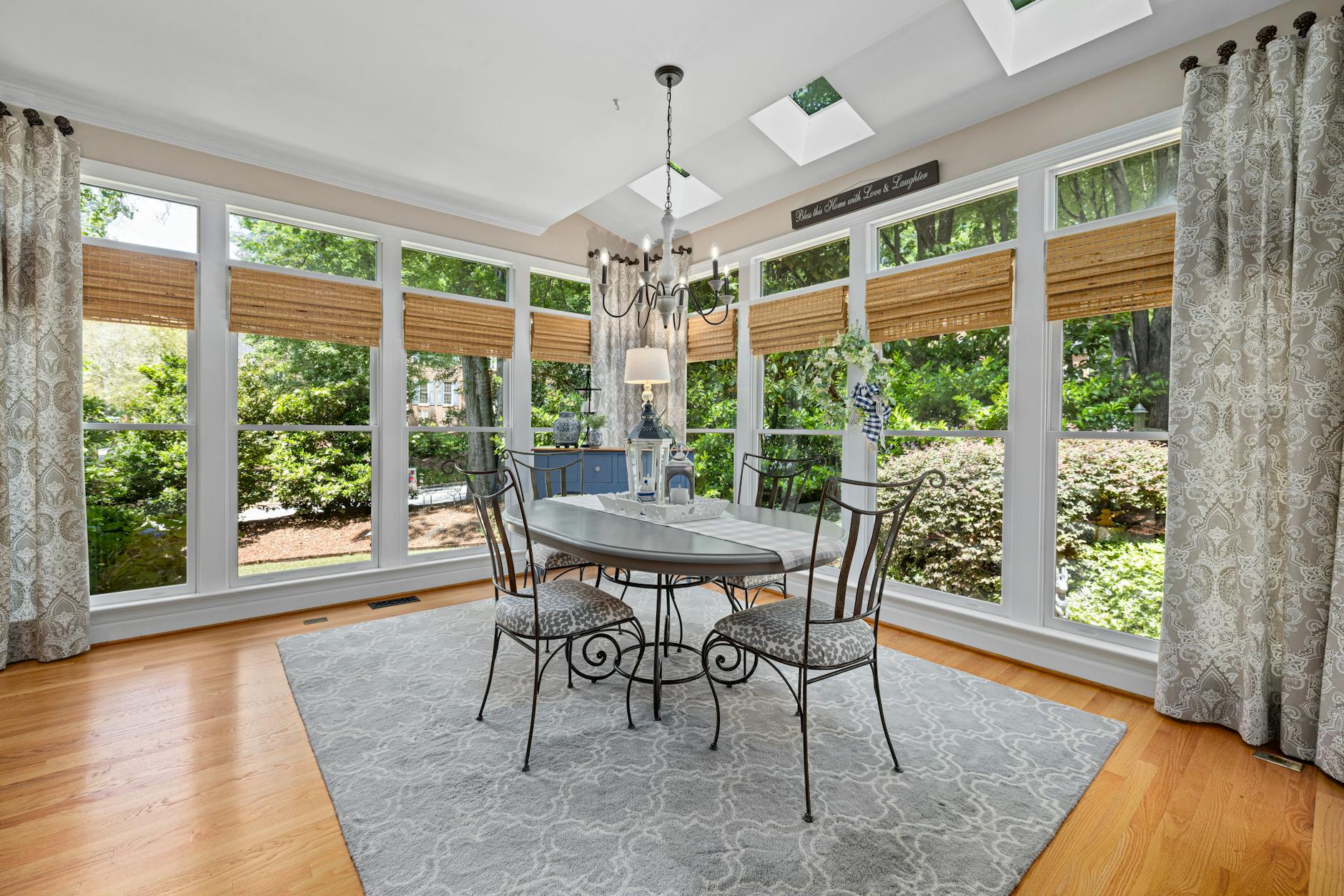
You’ve done the research — now it’s time to make a decision that you’ll be happy with for the next decade or more. Whether you land on faux wood blinds, cellular shades, or a combination of both, the key is getting precise measurements and professional installation. That’s exactly where Blinds Galore comes in.
The Simple Decision Framework
If you’re still not sure which product is right for your space, use this quick framework:
- Screened porch or open-air sunroom? → Choose faux wood blinds. Moisture resistance is non-negotiable.
- Fully enclosed, HVAC-conditioned sunroom? → Cellular shades are worth the investment for energy savings and light quality.
- Budget is the primary driver? → Faux wood blinds offer the best value per dollar in most sunroom configurations.
- Energy efficiency is the top priority? → Double-cell cellular shades deliver the highest R-value return.
- Want the lowest-maintenance option? → Faux wood blinds win — wipe clean in minutes.
Of course, many homeowners choose a combination: faux wood blinds on screened porch windows and cellular shades on interior sunroom windows — getting the best of both worlds.
Get a Free In-Home Consultation in Jackson, TN
At Blinds Galore, we’ve been helping homeowners across Jackson, Lexington, Henderson, Milan, and the greater West Tennessee area find the perfect window treatments for over 18 years. We bring the showroom to your home — no pressure, no guesswork. Our team will measure every window precisely, show you samples in your actual light conditions, and recommend the solution that fits your space, your lifestyle, and your budget.
Every installation is backed by our 100% satisfaction guarantee. If it’s not right, we make it right — period. Ready to upgrade your sunroom or screened porch? Explore our custom faux wood blind options and see why West Tennessee homeowners trust Blinds Galore for their most important spaces. Or give us a call today at (731) 571-5179 to schedule your free in-home consultation — we’d love to help you get it right the first time.
Frequently Asked Questions
Are faux wood blinds good for screened porches in Tennessee?
Yes — faux wood blinds are one of the best choices for Tennessee screened porches. Their PVC construction resists warping, cracking, and mold even in the high humidity that West Tennessee experiences from spring through fall. They're also easy to wipe clean when pollen and dust accumulate.
Can cellular shades be used on a screened porch?
Standard cellular shades are not recommended for screened porches or open-air environments. The fabric honeycomb structure can delaminate and develop mold when repeatedly exposed to moisture and outdoor humidity. Cellular shades perform best in fully enclosed, HVAC-conditioned sunrooms.
How much do custom blinds cost for a sunroom in Jackson, TN?
Custom faux wood blinds for a sunroom in Jackson, TN typically run $80–$300 per window installed, depending on size and features like cordless lift or motorization. Cellular shades range from $100–$400 per window. Contact Blinds Galore at (731) 571-5179 for a free in-home estimate.
Which is more energy efficient — faux wood blinds or cellular shades?
Cellular shades are significantly more energy efficient. Double-cell cellular shades can achieve an R-value of 3.5–4.5 and reduce window heat gain by up to 40%, compared to an R-value of only 1.0–1.5 for closed faux wood blinds. For a conditioned sunroom, cellular shades will have a greater impact on your energy bill.
How long do faux wood blinds last in a sunroom?
High-quality UV-stabilized faux wood blinds typically last 10–15 years in a sunroom environment. In a screened porch with direct outdoor air exposure, expect 10–12 years with normal care. Cheaper blinds without UV stabilizers may yellow or become brittle in 3–5 years under intense sun.
What is the easiest window treatment to clean in a sunroom?
Faux wood blinds are the easiest sunroom window treatment to clean. Individual PVC slats can be wiped down with a damp cloth in minutes, and the non-porous surface resists dust and pollen buildup. Cellular shades require a vacuum with a brush attachment and cannot be wet-cleaned without risk of damage.
You might also like
How to Choose the Right Window Treatment Style Using Product Videos
Quick answer: Choosing the right window treatment — blinds, shades, or plantation shutters — comes
7 Best Custom Blinds for Laundry Rooms and Utility Spaces in Jackson, TN
Quick answer: The best custom blinds for laundry rooms and utility spaces in Jackson, TN are moisture-resistant

8 Best Custom Blinds for Kitchens with Large Windows in Jackson, TN
Quick answer: For kitchens with large windows in Jackson, TN, the best custom blinds balance moisture

9 Best Window Treatments for Jackson TN Home Theaters and Media Rooms
Quick answer: For home theaters and media rooms in Jackson, TN, the single best window treatment is a
7 Best Custom Blinds for Sunrooms and Screened Porches in Jackson, TN
Quick answer: The best custom blinds for sunrooms and screened porches in Jackson, TN balance UV protection,
7 Best Custom Shades for Jackson TN Bedrooms: Light and Privacy Guide
Quick answer: The best custom shades for Jackson, TN bedrooms balance light control, privacy, and style