

Plantation Shutters vs. Faux Wood Blinds: Which Adds More Resale Value in Jackson, TN?
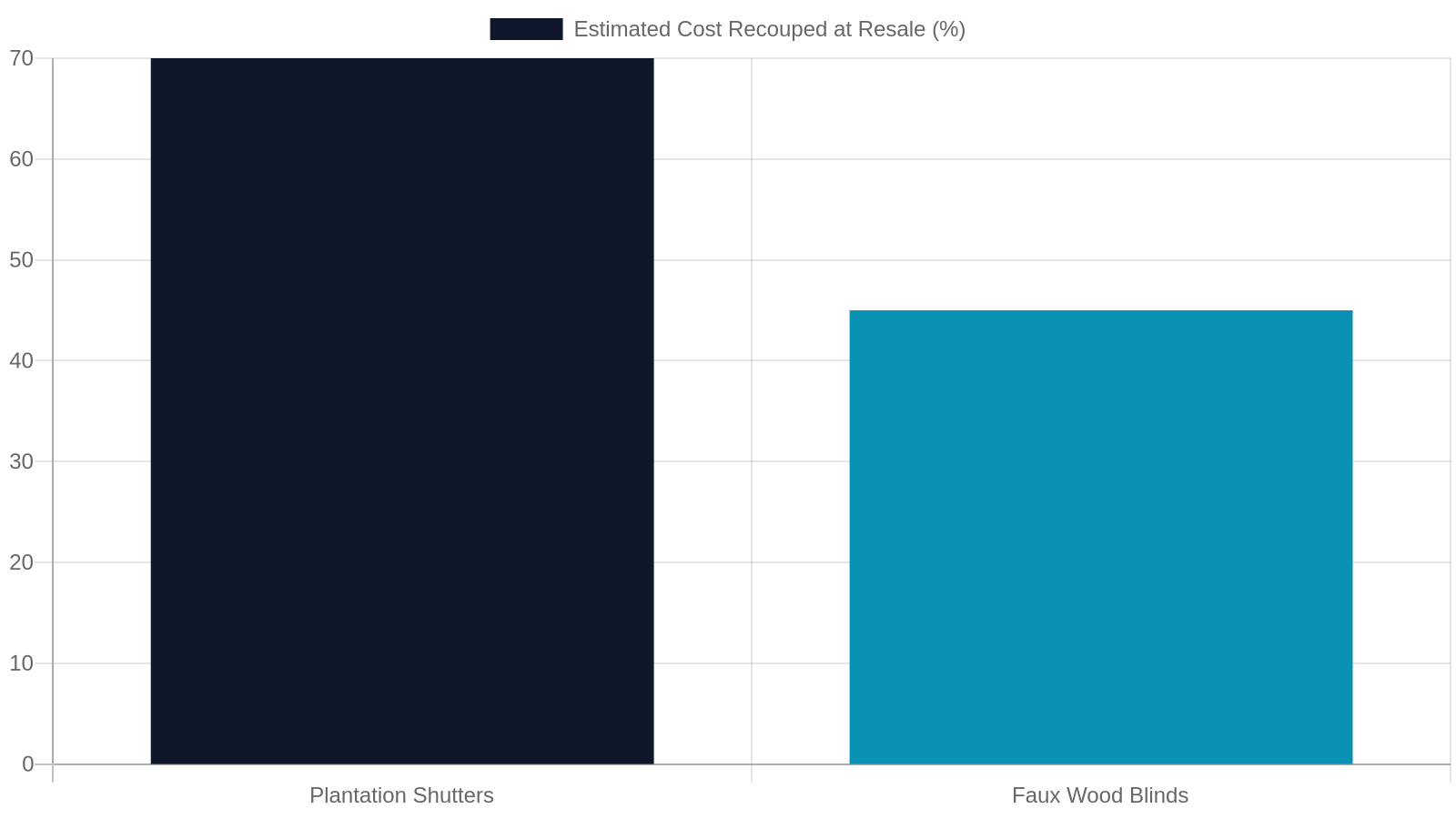
Quick answer: For Jackson, TN homeowners weighing resale impact, custom interior plantation shutters generally deliver a stronger return on investment than faux wood blinds — but both outperform bare windows. Plantation shutters can recoup 60–80% of their cost in appraised home value and signal quality to buyers, while premium faux wood blinds offer a budget-friendly upgrade that still impresses. The best choice depends on your timeline, budget, and the price tier of your home. This guide breaks down costs, ROI data, durability, aesthetics, and local buyer preferences to help you decide.
1. Why Window Treatments Actually Affect Home Resale Value
Before diving into the shutter-versus-blind debate, it helps to understand why window treatments matter at all when you’re trying to sell your home. The answer lies in three overlapping factors: appraised value, buyer perception, and negotiating power. Sellers who invest in quality window coverings before listing often recoup far more than the cost of the upgrade — and they spend fewer days on the market.
What Appraisers and Real Estate Agents Say
Most homeowners focus on kitchens and bathrooms when prepping for resale, but window treatments are a surprisingly powerful line item. According to the National Association of Realtors’ Remodeling Impact Report, interior upgrades that improve light control, privacy, and visual cohesion consistently rank among the top features buyers notice during showings. Appraisers in Tennessee classify built-in window treatments — particularly plantation shutters — as permanent fixtures, meaning they can be included in a home’s appraised value rather than treated as personal property.
Faux wood blinds, when professionally installed and uniform throughout a home, also signal move-in readiness, which reduces the negotiating leverage buyers use to discount the asking price.
The Jackson, TN Buyer Mindset
In the greater Jackson, TN market — including communities like Lexington, Henderson, and Milan — buyers tend to favor homes that feel finished and low-maintenance. West Tennessee’s humidity and intense summer sun mean that window treatments aren’t just decorative; they’re functional necessities. A home with quality window coverings already installed tells buyers they won’t need to budget an extra $2,000–$8,000 after closing. That perceived savings often translates directly into stronger offers and faster sales.
2. Defining the Contenders: Plantation Shutters vs. Faux Wood Blinds
To make a fair comparison, you need a clear picture of what each product actually is — and how they differ in construction, installation, and classification. These aren’t just aesthetic choices; they’re structural and financial decisions that ripple through your home’s appraisal, your listing photos, and your buyer negotiations.
What Are Custom Interior Plantation Shutters?
Plantation shutters are solid-panel window coverings with wide horizontal louvers (typically 2.5 to 4.5 inches) mounted inside or outside the window frame on hinges. Custom-built shutters are measured and fabricated specifically for each window opening, ensuring a flush, built-in look. Materials range from real hardwood to engineered wood and high-density PVC composites. In Jackson, TN’s climate — where summer humidity regularly tops 70% — PVC and composite shutters are especially popular because they resist warping and moisture damage.
Because they’re attached to the home’s structure, plantation shutters are classified as a permanent fixture by most appraisers and lenders, giving them a unique advantage over other window coverings at resale.
What Are Faux Wood Blinds?
Faux wood blinds are horizontal slatted blinds made from PVC, vinyl, or composite materials engineered to mimic the look of real wood. They operate via a tilt rod and lift cord (or cordless mechanism), allowing precise light control. Premium faux wood blinds — especially custom-sized versions — are far superior to the builder-grade blinds found at big-box stores. They’re thicker, heavier, more moisture-resistant, and available in a wider range of finishes and colors. For Jackson homeowners on a tighter pre-sale budget, high-quality faux wood blinds offer a compelling middle ground between bare windows and full shutter installations.
3. Cost Comparison: What You'll Spend in Jackson, TN

Cost is almost always the first question homeowners ask — and rightfully so. The gap between plantation shutters and faux wood blinds is real, but so is the difference in what each product returns at resale. Here’s a realistic look at what Jackson, TN homeowners can expect to spend, based on current regional pricing.
Plantation Shutter Pricing
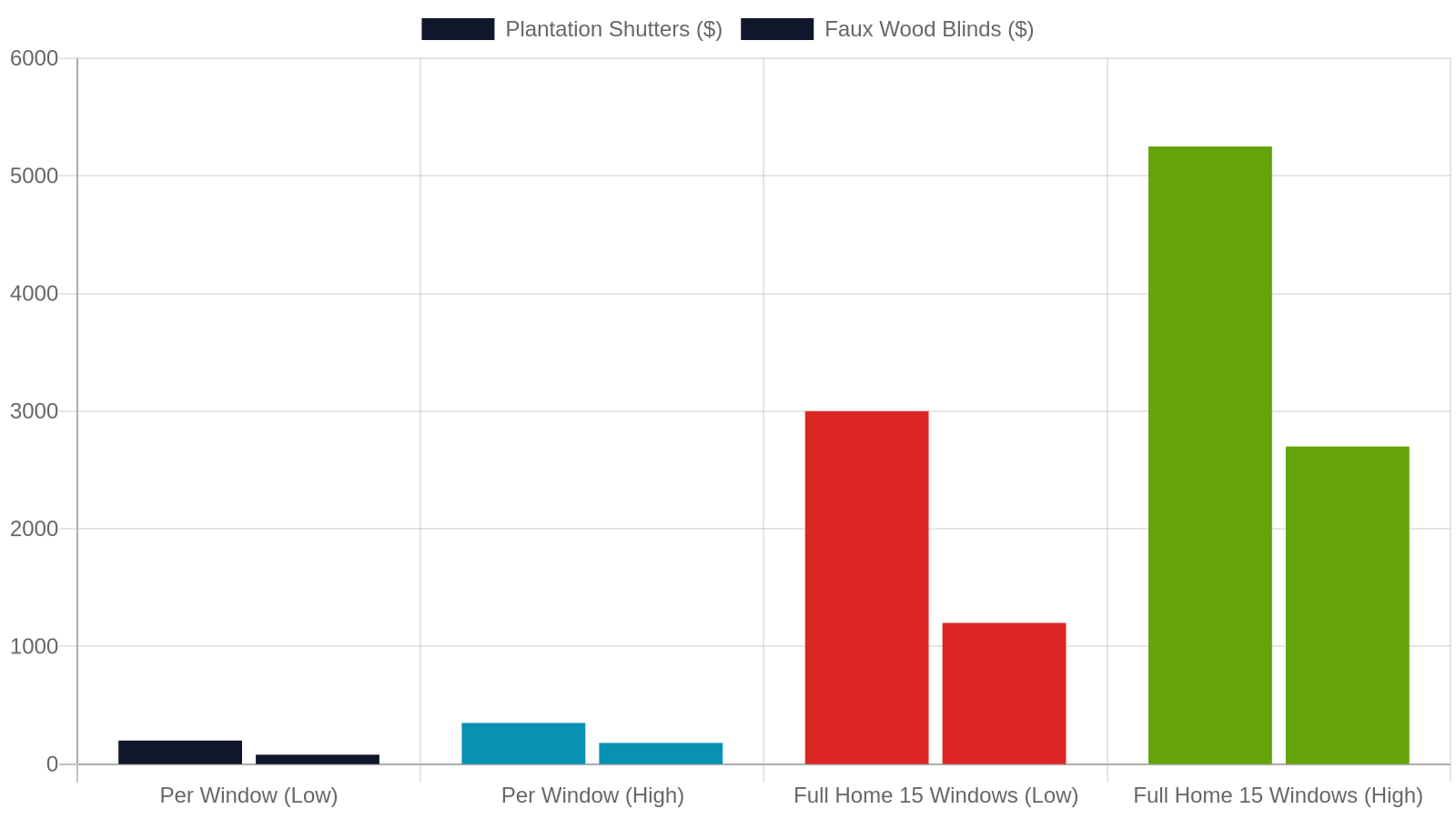
Custom plantation shutters in the Jackson, TN area typically run $200–$350 per window for standard-sized openings, including professional measuring and installation. Larger specialty windows — arched, bay, or oversized — can push costs to $400–$600+ per opening. A typical 3-bedroom, 2-bath home in West Tennessee has 12–18 windows, putting a full-home shutter installation in the $2,400–$6,300 range. High-end hardwood shutters on the upper end of that scale are less common locally; most Jackson homeowners opt for composite or PVC shutters that balance aesthetics, durability, and price.
Faux Wood Blind Pricing
Custom-measured faux wood blinds are considerably more affordable. Expect to pay $80–$180 per window for premium custom faux wood blinds, professionally installed. For the same 12–18 window home, a full installation lands in the $960–$3,240 range — roughly 40–60% less than shutters. That cost gap is significant for homeowners who need to upgrade multiple rooms before listing. However, it’s worth noting that the per-window price difference narrows considerably when you factor in the long-term durability and appraised-value bump that shutters provide.
4. Resale ROI: Which Treatment Pays You Back More?

Return on investment for window treatments comes in two flavors: hard ROI (measurable appraisal value) and soft ROI (buyer perception, faster sales, fewer price negotiations). Plantation shutters tend to excel at the former; faux wood blinds shine at the latter. Both matter — especially in a competitive West Tennessee market.
Plantation Shutters and Appraised Value
Because plantation shutters are permanent fixtures, they can be included in a home’s formal appraisal. Industry data from the National Association of Realtors and regional appraisers suggest that quality built-in shutters recoup approximately 60–80% of their installed cost in added appraised value. On a $4,500 full-home shutter installation, that’s a potential $2,700–$3,600 bump in appraised value — before you even account for the competitive advantage during showings. In a market like Jackson, TN, where median home prices hover around $220,000–$260,000 (as of 2024), a $3,000+ value add is meaningful.
Faux Wood Blinds and Buyer Perception ROI
Faux wood blinds don’t typically move the appraisal needle the way shutters do, but they deliver strong perception ROI. A home with uniform, high-quality faux wood blinds throughout photographs better, shows better, and signals move-in readiness. Real estate professionals often note that buyers will discount asking prices by $1,500–$3,000 when they see bare or damaged windows — meaning a $1,500 faux wood blind installation can effectively prevent a $2,000–$3,000 price reduction. That’s a net positive of $500–$1,500 even without an appraisal bump.
5. Durability and Lifespan: A Long-Term Value Lens
Resale value isn’t just about what something costs today — it’s about what it’s worth years from now. Durability directly affects whether a window treatment is still an asset or a liability when you’re ready to list. In Jackson, TN’s climate, with its humid summers and mild but variable winters, material performance over time is a real consideration.
How Long Do Plantation Shutters Last?
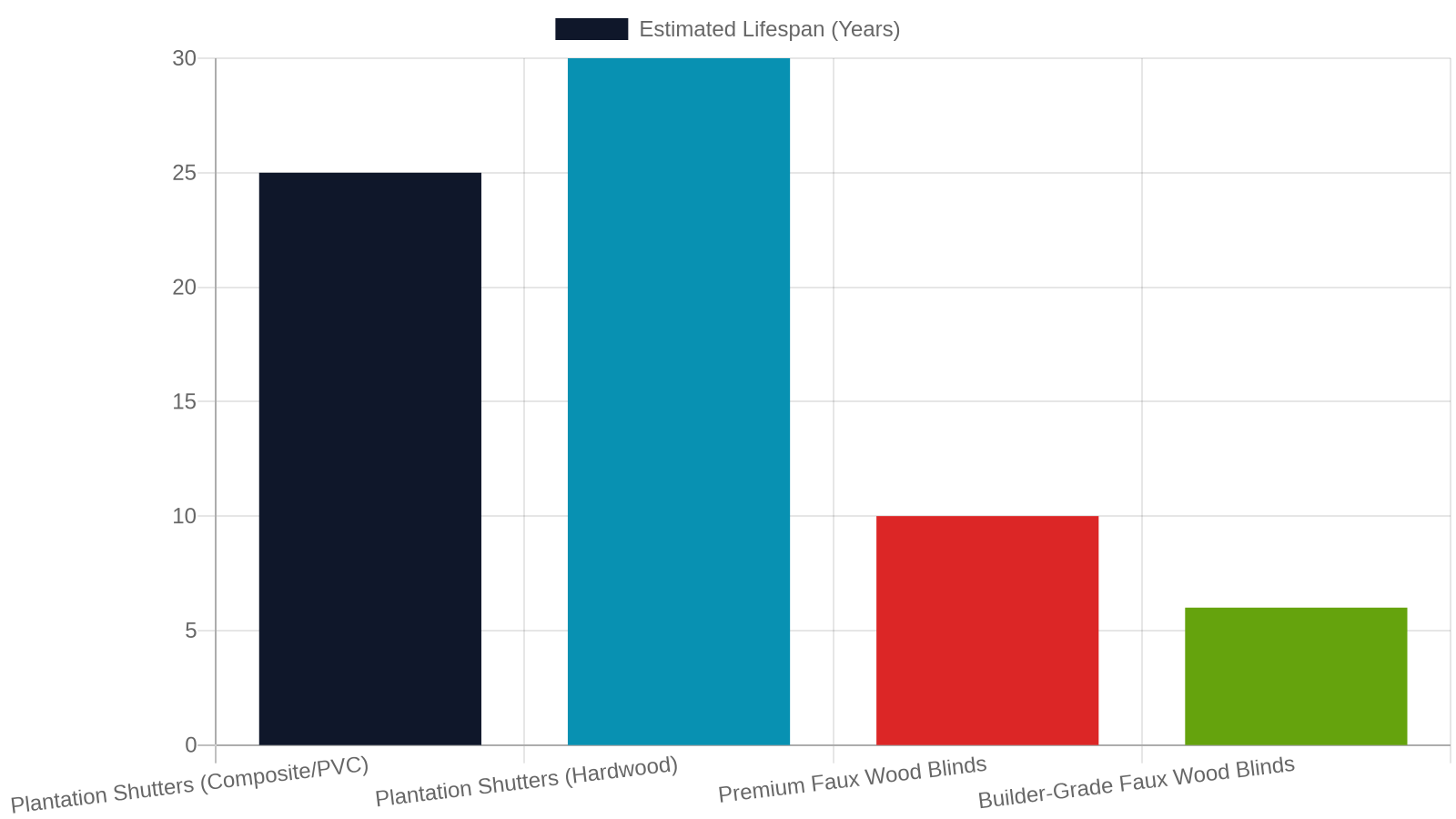
Quality plantation shutters — particularly composite and PVC models suited to West Tennessee’s humid climate — routinely last 20–30 years with minimal maintenance. Hardwood shutters can last even longer when properly cared for. This longevity means that shutters installed today will still be adding value when you sell 5, 10, or even 15 years from now. They don’t fade, yellow, or warp the way cheaper window coverings do, and they require nothing more than an occasional wipe-down with a damp cloth. For buyers, that durability is a selling point: they’re inheriting a window treatment they won’t need to replace for decades.
How Long Do Faux Wood Blinds Last?
Premium faux wood blinds have a lifespan of approximately 7–12 years under normal residential use. In rooms with high sun exposure — a common challenge in West Tennessee’s long summers — lower-quality faux wood blinds can begin to bow, discolor, or develop cord issues within 5–7 years. However, premium custom faux wood blinds from a reputable supplier are significantly more durable than builder-grade options, often lasting 10+ years without visible degradation. If you’re selling within 2–3 years of installation, this durability gap matters less; if you’re playing a longer game, shutters’ superior lifespan is a stronger investment.
6. Aesthetics and Buyer Appeal: What West Tennessee Buyers Actually Want
Aesthetics are subjective — but buyer preferences in specific markets are not. Understanding what Jackson and West Tennessee buyers respond to emotionally during showings can help you choose the window treatment that creates the strongest first impression. Both shutters and faux wood blinds have genuine aesthetic strengths; the question is which aligns better with your home’s style and your target buyer.
The Timeless Appeal of Plantation Shutters
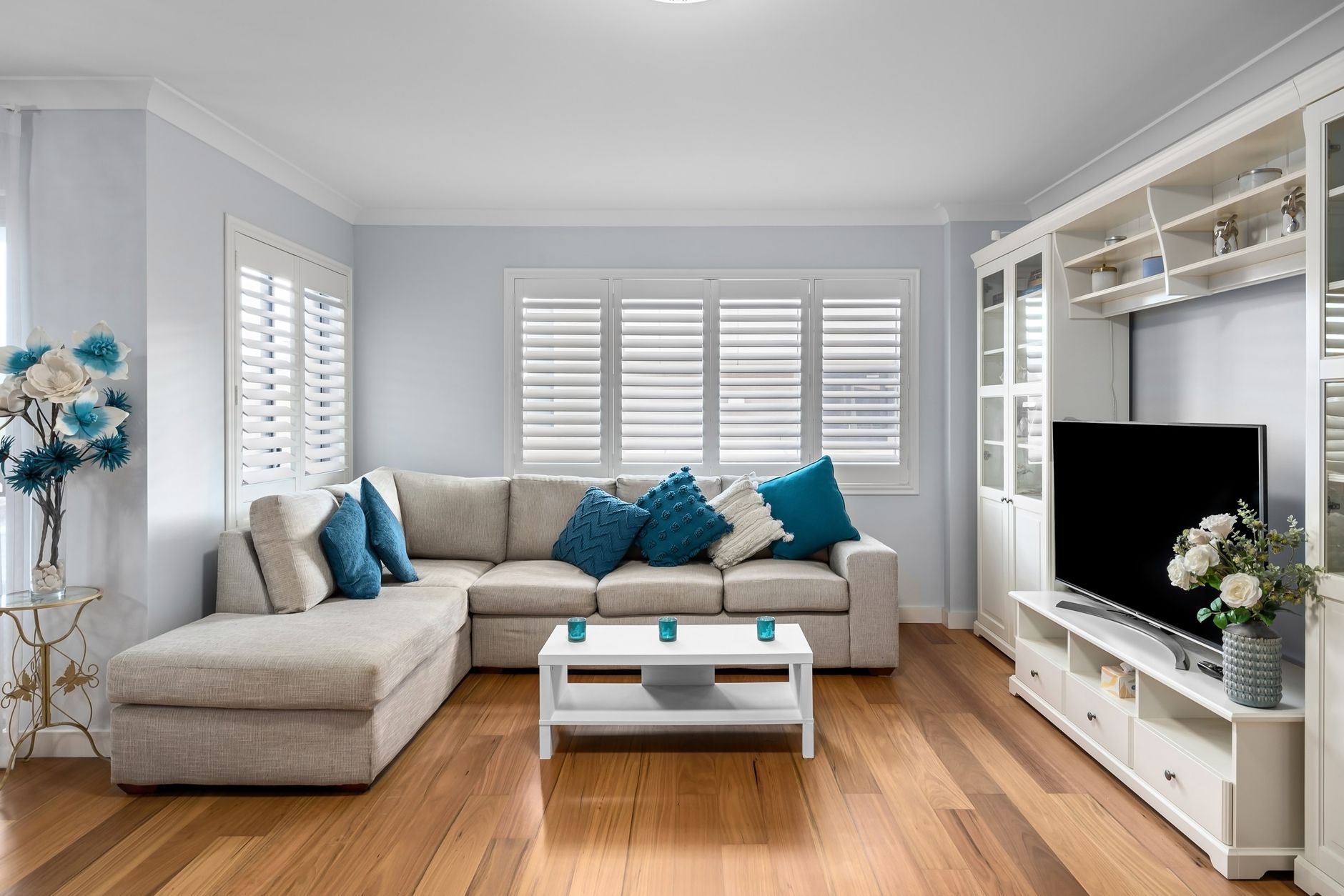
Plantation shutters have a classic, architectural quality that transcends decorating trends. Whether a home is a 1970s ranch, a 1990s colonial, or a newer craftsman build, white or off-white plantation shutters complement virtually any style. In West Tennessee, where traditional and transitional home styles dominate, shutters signal quality craftsmanship and permanence. Real estate listing photos with plantation shutters consistently outperform those with standard blinds in click-through rates on platforms like Zillow and Realtor.com — an indirect but real advantage in today’s online-first home search market.
The Versatile Appeal of Faux Wood Blinds
Faux wood blinds offer a clean, neutral look that appeals to a broad range of buyers. Available in dozens of stain and paint finishes — from bright white to warm chestnut — they can be matched to trim, cabinetry, or flooring for a cohesive look. For buyers who plan to redecorate, blinds feel less permanent and therefore less imposing than shutters. This can actually be an advantage in some scenarios: a buyer who wants to add their own drapery panels or curtains over the windows will appreciate blinds as a functional base layer rather than a fixed architectural element they’d need to work around.
7. Energy Efficiency: A Selling Point That Saves Money Now and Later
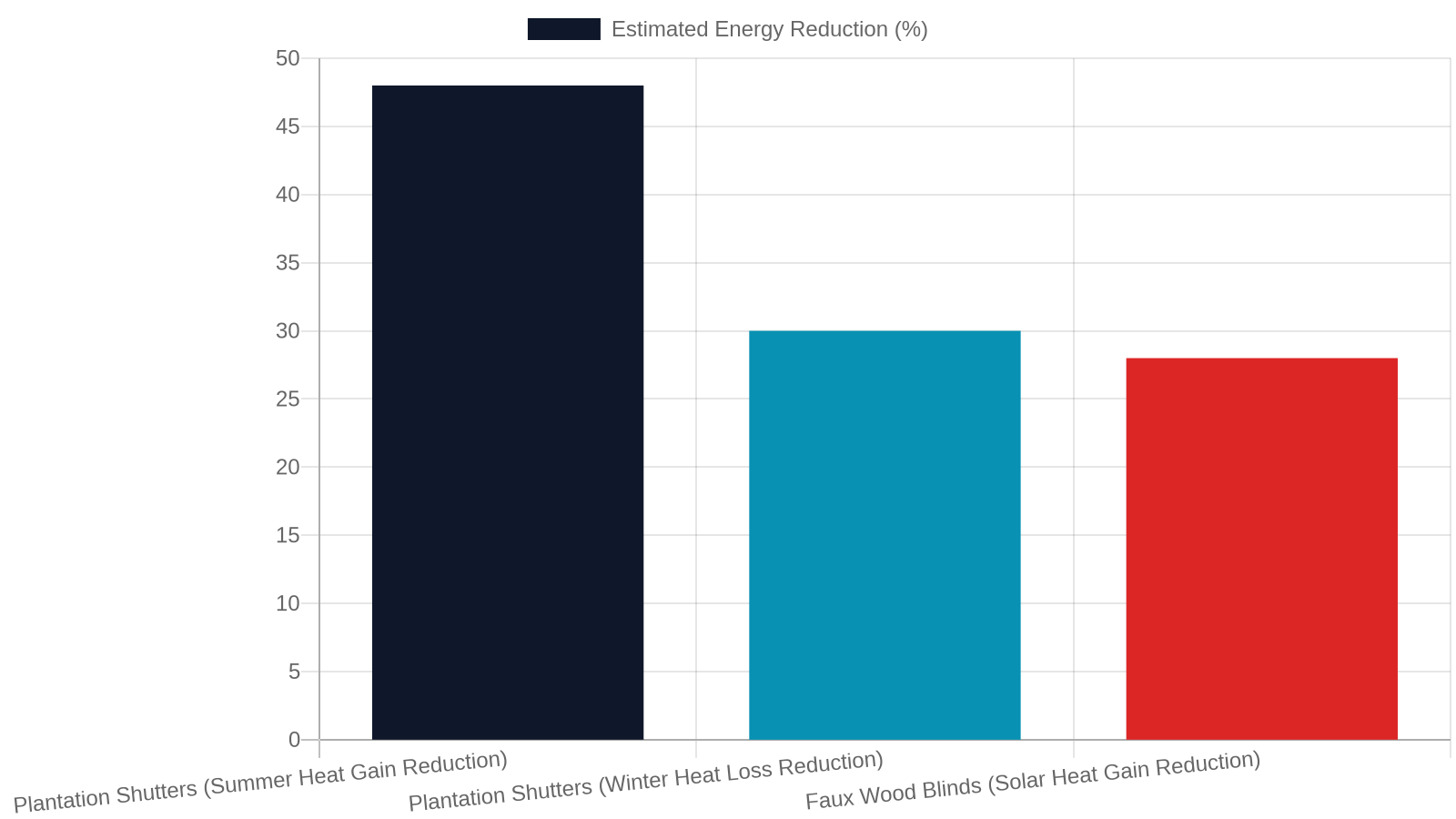
Energy efficiency has moved from a nice-to-have to a genuine purchase driver for many buyers. In West Tennessee’s hot, humid summers, window treatments that reduce cooling loads can translate into real monthly savings — and that’s a story sellers can tell with utility bill comparisons. Both plantation shutters and faux wood blinds offer measurable energy benefits, though they differ in degree.
Plantation Shutters and Insulation Value
Plantation shutters create a physical air gap between the window glass and the room interior, acting as an insulating layer. Studies from the Lawrence Berkeley National Laboratory indicate that interior shutters can reduce heat gain through windows by up to 45–51% in summer and reduce heat loss by up to 30% in winter. In Jackson, TN — where summer temperatures regularly exceed 90°F and cooling costs dominate utility bills — that insulation value is a genuine selling point. Sellers who can demonstrate lower average utility bills have a concrete, numbers-based argument for their asking price.
Faux Wood Blinds and Light/Heat Control
Premium faux wood blinds also provide meaningful light and heat control, particularly when closed fully. Their thicker slats (typically 2 inches) block more direct sunlight than fabric shades or aluminum mini-blinds. However, because they don’t create the same sealed air gap as shutters, their insulation performance is somewhat lower — estimated at a 20–35% reduction in solar heat gain when fully closed. That’s still a meaningful improvement over bare windows, and for buyers concerned about energy costs, even partial insulation value is a positive talking point.
8. Light Control, Privacy, and Livability During the Listing Period

Livability during the listing period is an underrated factor in the shutter-versus-blind decision. You’re not just choosing what buyers will see — you’re choosing what you’ll live with for the weeks or months your home is on the market. Both options offer meaningful light and privacy control, but they do it differently.
Showing Your Home in the Best Light — Literally
During the listing period, you’re living in your home while simultaneously staging it for buyers. Window treatments that give you precise light control make this balancing act easier. Plantation shutters excel here: their adjustable louvers let you flood a room with diffused natural light for daytime showings while providing complete privacy at night. Buyers touring a home with plantation shutters often comment on how bright and airy rooms feel — even when the shutters are partially closed — because the louvers direct light upward toward ceilings rather than creating harsh glare.
Privacy Without Sacrificing Natural Light
Faux wood blinds offer excellent privacy when tilted closed, but they tend to create a more binary choice: fully open (maximum light, minimum privacy) or fully closed (maximum privacy, minimum light). Some premium faux wood blinds now feature a top-down/bottom-up option that allows the bottom half to remain closed for privacy while the top half stays open for light — a feature that’s particularly appealing in street-facing bedrooms and bathrooms. If your home has windows that face a busy street or a neighbor’s house, this feature is worth specifying when ordering.
Plantation Shutters vs. Faux Wood Blinds — 10-Point Comparison for Jackson, TN Homeowners
Use this side-by-side breakdown to quickly assess which window treatment aligns with your resale goals, budget, and timeline.
9. Maintenance and Upkeep: What Buyers Inherit
Buyers think about what they’re inheriting — not just aesthetically, but practically. A window treatment that looks great on day one but requires constant upkeep or breaks down within a few years is a liability, not an asset. Here’s how each option stacks up on the maintenance front.
Caring for Plantation Shutters
Plantation shutters are among the easiest window treatments to maintain. PVC and composite shutters — the most popular choice in Jackson, TN — require nothing more than a damp microfiber cloth wipe-down every few weeks. They don’t accumulate fabric dust, they don’t need dry cleaning, and they don’t have cords or mechanisms that wear out and break. For buyers with allergies or pets, this low-maintenance profile is a genuine selling point. A home with shutters effectively says: these windows are taken care of, and they’ll stay that way.
Caring for Faux Wood Blinds
Premium faux wood blinds are also relatively easy to maintain — easier than real wood blinds, which can warp if wiped with a damp cloth. A dry duster or vacuum brush attachment handles routine cleaning, and occasional damp-cloth spot cleaning works for stubborn marks. The main maintenance concern with faux wood blinds over time is the cord and tilt mechanism: on lower-quality models, cords can fray and tilt rods can loosen after several years of daily use. Cordless and motorized options eliminate this concern entirely and are increasingly popular for homes with young children, where corded blinds present a safety consideration that some buyers flag during inspections.
10. When to Choose Shutters, When to Choose Blinds

There’s no single right answer for every Jackson, TN home — but there are clear patterns that help narrow the decision. Your home’s price tier, your timeline to sale, your budget, and the specific rooms you’re upgrading all factor into which product delivers the best return. Here’s a practical decision framework.
Scenarios Where Plantation Shutters Win
Choose plantation shutters when: (1) Your home is priced in the upper tier of your neighborhood (above $250,000 in Jackson, TN), where buyers expect premium finishes. (2) You have 2+ years before you plan to sell, giving you time to recoup the investment through both appraised value and energy savings. (3) You have large, architecturally prominent windows — bay windows, floor-to-ceiling panels, or arched transoms — where shutters’ custom-fit look is most dramatic. (4) You want a permanent upgrade that benefits your daily living AND your eventual sale. In these scenarios, the higher upfront cost of shutters is consistently justified by the returns.
Scenarios Where Faux Wood Blinds Win
Choose premium faux wood blinds when: (1) You’re listing within 6–12 months and need to maximize visual impact per dollar spent. (2) Your home is in the $150,000–$220,000 price range, where buyers expect quality but not luxury-tier finishes. (3) You have a large number of windows and a limited pre-sale budget — faux wood blinds let you cover every window in the home for the cost of shuttering just a few rooms. (4) Your target buyer is a first-time homeowner or investor who values move-in readiness over architectural detailing. In these cases, faux wood blinds deliver excellent value without overinvesting for the market.
The Hybrid Approach: Shutters Where It Counts
Many savvy Jackson, TN homeowners split the difference: plantation shutters in the primary living spaces (living room, primary bedroom, dining room) where buyers spend the most time during showings, and premium faux wood blinds in secondary rooms (bedrooms 2 and 3, laundry, utility spaces). This hybrid approach captures the appraisal and perception benefits of shutters in the rooms that matter most, while keeping total project cost in the $3,000–$5,000 range — a sweet spot that’s often fully recouped at resale in the Jackson market.
11. Professional Installation: Why It Matters for Resale

Even the best window treatment delivers subpar results if it’s installed poorly. For resale purposes especially, the quality of the installation is as important as the quality of the product. Here’s why professional installation — and the consultation that precedes it — is a non-negotiable part of the equation.
The Difference Between DIY and Professional Fit
A plantation shutter or faux wood blind that’s even slightly off-level, misaligned, or poorly fitted sends the wrong signal to buyers — it suggests the home has been maintained carelessly. Professional installation ensures precise measurements, flush mounting, and consistent reveal gaps around every frame. In a home where buyers are scrutinizing every detail, that consistency matters. Professionally installed window treatments also come with installation warranties, giving buyers additional peace of mind. DIY installations, even when done carefully, rarely achieve the tight tolerances that make window treatments look truly custom and built-in.
What a Free In-Home Consultation Covers
At Blinds Galore, our free in-home consultations include professional measuring of every window, material and finish recommendations based on your home’s style and your resale goals, and a transparent quote with no surprises. We bring samples directly to your home so you can see how colors and textures look in your actual lighting — not under showroom fluorescents. For homeowners preparing to sell, we can also advise on which rooms to prioritize for maximum buyer impact within your budget. It’s the kind of personalized guidance that makes the difference between a good investment and a great one.
Ready to Upgrade Your Windows Before You List?
You’ve done the research. Now it’s time to make a decision that adds real value to your Jackson, TN home — and Blinds Galore is ready to help you every step of the way. Whether you’re listing in 60 days or planning ahead for a sale two years from now, the right window treatments installed by professionals make a measurable difference in your final sale price, your days on market, and your buyer’s first impression.
Start with a Free In-Home Consultation
If you’re preparing to sell your home in Jackson, Lexington, Henderson, Milan, or anywhere across West Tennessee, the smartest first step is a professional assessment of your windows. Blinds Galore has been helping West Tennessee homeowners make confident window treatment decisions for over 18 years. We bring the showroom to you — samples, measurements, and honest recommendations included — at no charge. Call us at (731) 571-5179 to schedule your free in-home consultation, or reach out through our contact page to pick a time that works for you.
Explore Your Custom Shutter and Blind Options
Whether you’ve decided on plantation shutters, faux wood blinds, or a hybrid approach, Blinds Galore has the products, expertise, and local knowledge to make your investment count. Our custom-built plantation shutters are measured and fabricated specifically for your windows — no gaps, no wobble, no off-the-shelf compromises. And if faux wood blinds are the right fit for your budget and timeline, explore our custom faux wood blind options to see the full range of finishes and features available. Every installation comes with our 100% satisfaction guarantee — because your home deserves nothing less.
Frequently Asked Questions
Do plantation shutters increase home value in Tennessee?
Yes. Because plantation shutters are classified as permanent fixtures, Tennessee appraisers can include them in a home's appraised value. Homeowners typically recoup 60–80% of the installed cost in added appraised value, plus they can speed up the sale by improving buyer perception and reducing price negotiations.
Are faux wood blinds worth it before selling a house?
Absolutely, especially in the $150,000–$220,000 price range common in Jackson, TN. Premium faux wood blinds signal move-in readiness and prevent buyers from discounting the asking price for bare or damaged windows. The $1,000–$2,500 investment often prevents $2,000–$3,000 in buyer concessions.
How long do plantation shutters last in West Tennessee's climate?
Composite and PVC plantation shutters — the most popular choice in West Tennessee's humid climate — typically last 20–30 years with minimal maintenance. They resist warping, fading, and moisture damage far better than real wood shutters or standard faux wood blinds.
What is the best window treatment for homes in Jackson, TN?
For upper-tier homes ($250,000+) or long-term investments, custom plantation shutters offer the best combination of appraised value, durability, and energy savings. For mid-range homes or sellers on a tighter timeline, premium faux wood blinds deliver strong visual impact at a lower cost. Many homeowners use both — shutters in main living areas, faux wood blinds in secondary rooms.
Can I get a free estimate for plantation shutters or blinds in Jackson, TN?
Yes. Blinds Galore offers free in-home consultations throughout Jackson and the surrounding West Tennessee area, including Lexington, Henderson, and Milan. Call (731) 571-5179 to schedule a visit — they'll measure your windows, bring samples, and provide a transparent quote at no charge.
Do faux wood blinds hold up in humid Southern climates?
Premium faux wood blinds perform well in humid climates like Jackson, TN because they're made from PVC or composite materials that resist moisture, unlike real wood blinds that can warp. Builder-grade faux wood blinds are less durable; investing in custom, thicker-slat versions significantly improves performance in high-humidity environments.
You might also like

How to Choose the Right Window Treatment Style Using Product Videos
Quick answer: Choosing the right window treatment — blinds, shades, or plantation shutters — comes

7 Best Custom Blinds for Laundry Rooms and Utility Spaces in Jackson, TN
Quick answer: The best custom blinds for laundry rooms and utility spaces in Jackson, TN are moisture-resistant

8 Best Custom Blinds for Kitchens with Large Windows in Jackson, TN
Quick answer: For kitchens with large windows in Jackson, TN, the best custom blinds balance moisture

9 Best Window Treatments for Jackson TN Home Theaters and Media Rooms
Quick answer: For home theaters and media rooms in Jackson, TN, the single best window treatment is a
7 Best Custom Blinds for Sunrooms and Screened Porches in Jackson, TN
Quick answer: The best custom blinds for sunrooms and screened porches in Jackson, TN balance UV protection,
Faux Wood Blinds vs Cellular Shades: Your 9-Point Guide for West Tennessee Sunrooms
Quick answer: For West Tennessee sunrooms and screened porches, faux wood blinds win on moisture resistance,