

Custom Shutters for Jackson TN Kitchen Windows: Style, Durability and Maintenance Guide
Quick answer: Custom shutters are the top-rated window treatment for Jackson, TN kitchen windows because they combine timeless style with genuine durability in a high-moisture, high-traffic environment. Plantation-style shutters with 3.5-inch or 4.5-inch louvers give you precise light control, block heat from south- and west-facing windows, and wipe clean in seconds — no fabric to absorb cooking odors or grease. Professionally measured and installed by a local specialist, a quality set of custom shutters typically lasts 20-plus years and adds measurable resale value to your home.
Why Kitchen Windows Demand a Different Kind of Window Treatment
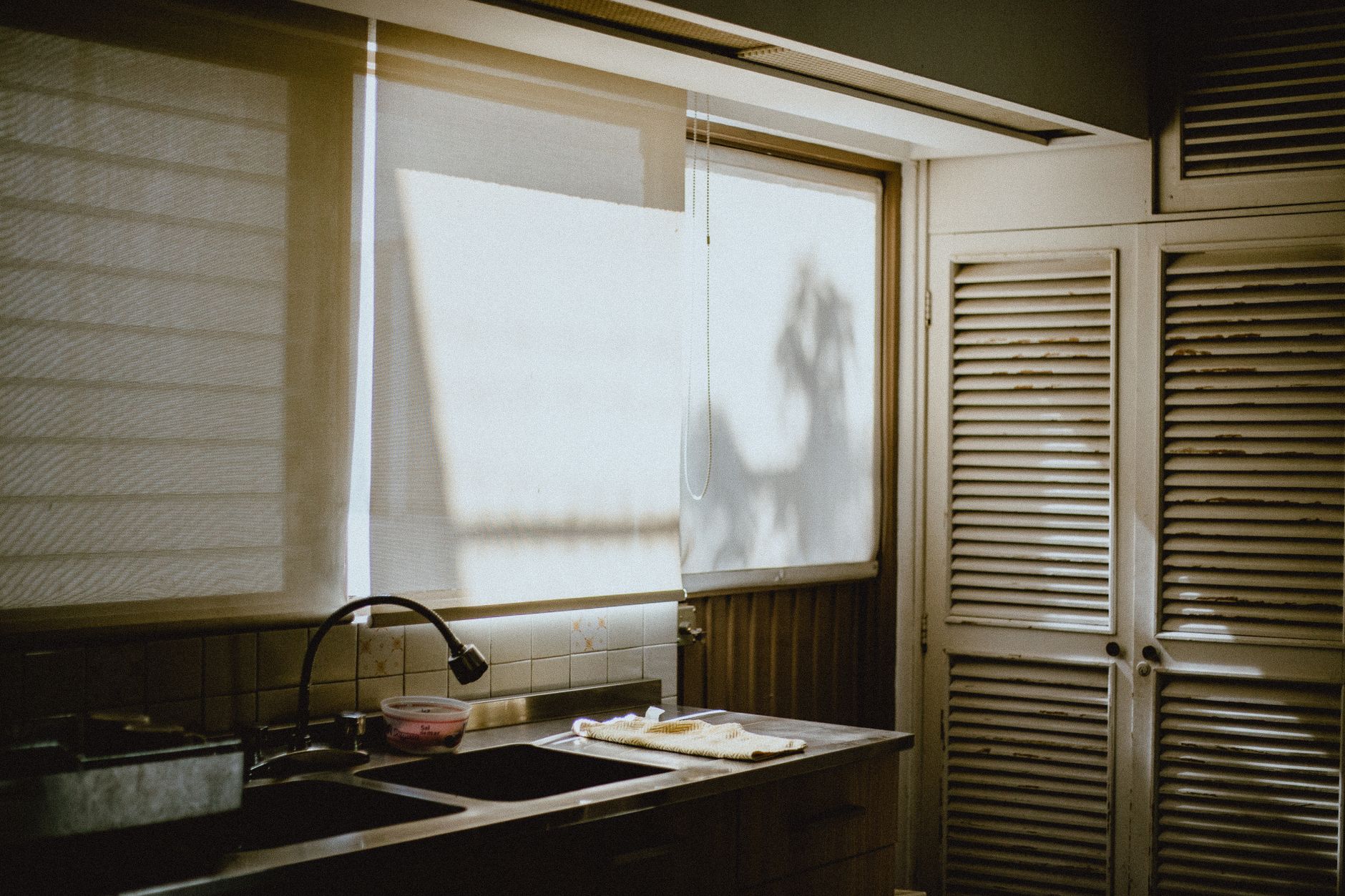
Before choosing any window treatment for your kitchen, it pays to understand what makes this room uniquely demanding. Heat, moisture, grease, and relentless sunlight combine to create an environment where durability and cleanability matter just as much as aesthetics. Custom shutters are engineered specifically to thrive in these conditions — and the difference becomes obvious within the first year of ownership.
The Unique Challenges of the Kitchen Environment
The kitchen is the hardest-working room in any home, and its windows take the brunt of that activity. Steam from boiling pots, grease mist from the stovetop, and frequent temperature swings create conditions that destroy fabric shades, warp vinyl mini-blinds, and cause wood to crack within a few years. A window treatment that looks great in the living room can fail completely above the kitchen sink.
- Humidity spikes during cooking can exceed 70% relative humidity — far above the 30-50% comfort range.
- Grease particulates settle on every surface within six feet of the range, including window coverings.
- UV exposure through south- and west-facing kitchen windows fades colors and degrades materials faster than in other rooms.
Choosing the right material from the start saves Jackson, TN homeowners hundreds of dollars in premature replacements.
Why Most Off-the-Shelf Options Fall Short
Big-box store blinds are engineered to a price point, not a performance standard. Standard 2-inch aluminum mini-blinds bend, collect grease in their slats, and are nearly impossible to clean thoroughly. Fabric roller shades absorb cooking odors and can develop mold in humid conditions. Vinyl vertical blinds yellow under direct sunlight within two to three years.
Custom shutters, by contrast, are built to the exact dimensions of your window opening — no gaps at the edges, no light leaks, and no rattling in the breeze from an open window. For kitchens in Jackson and surrounding communities like Lexington and Henderson, where summers are hot and humid, that precision fit also improves energy efficiency noticeably.
What Are Plantation Shutters and How Do They Work?

The term ‘plantation shutter’ gets used loosely, but it refers to a specific product with a precise construction. Understanding the components helps you make smarter choices about louver size, panel layout, and mounting style — all of which affect how your kitchen windows look and function every single day.
Anatomy of a Plantation Shutter
A plantation shutter is a solid interior shutter panel mounted directly to the window frame or inside the casing. Each panel is made up of a frame (the outer border), stiles (vertical dividers), rails (horizontal dividers), and louvers — the adjustable horizontal slats that control light and airflow. A tilt rod runs vertically through the louvers and lets you open or close all of them simultaneously with one gentle push.
- Louver sizes range from 2.5 inches (traditional, more privacy) to 4.5 inches (contemporary, maximum view-through).
- Panel configurations include single, bi-fold, and café-style (covering only the lower half of the window).
- Frame styles include L-frame, Z-frame, and deco frame — each suited to different window casing depths.
Café-Style vs. Full-Height Shutters for Kitchens
For kitchen windows, two configurations are especially popular. Full-height shutters cover the entire window and offer maximum light control, insulation, and a clean, uniform look. They work beautifully on large picture windows or windows above the kitchen table.
Café-style shutters cover only the bottom half of the window, leaving the upper half open for natural light while maintaining privacy at counter height. This is a favorite choice for kitchen sink windows in Jackson homes, where homeowners want to see the backyard while doing dishes without sacrificing privacy from the street. Café shutters also allow a ceiling fan or range hood to circulate air freely through the top of the window opening.
Choosing the Right Material: Wood, Faux Wood, and Composite
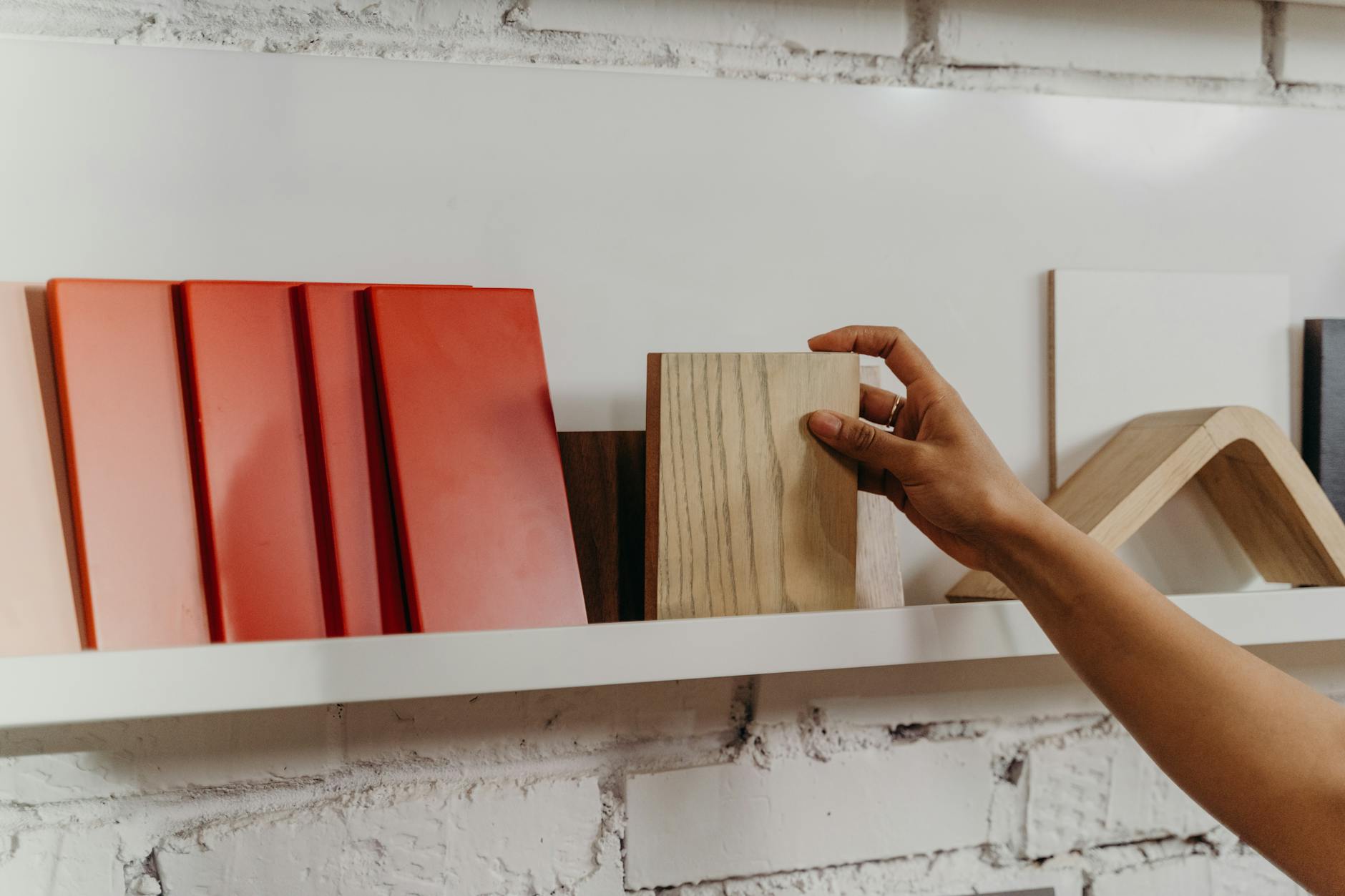
The single most important decision you’ll make when choosing kitchen shutters isn’t color or louver size — it’s material. The right material determines how long your shutters last, how easy they are to clean, and whether they’ll still look great a decade from now. Here’s an honest breakdown of your three main options.
Real Wood Shutters: Beauty With Caveats
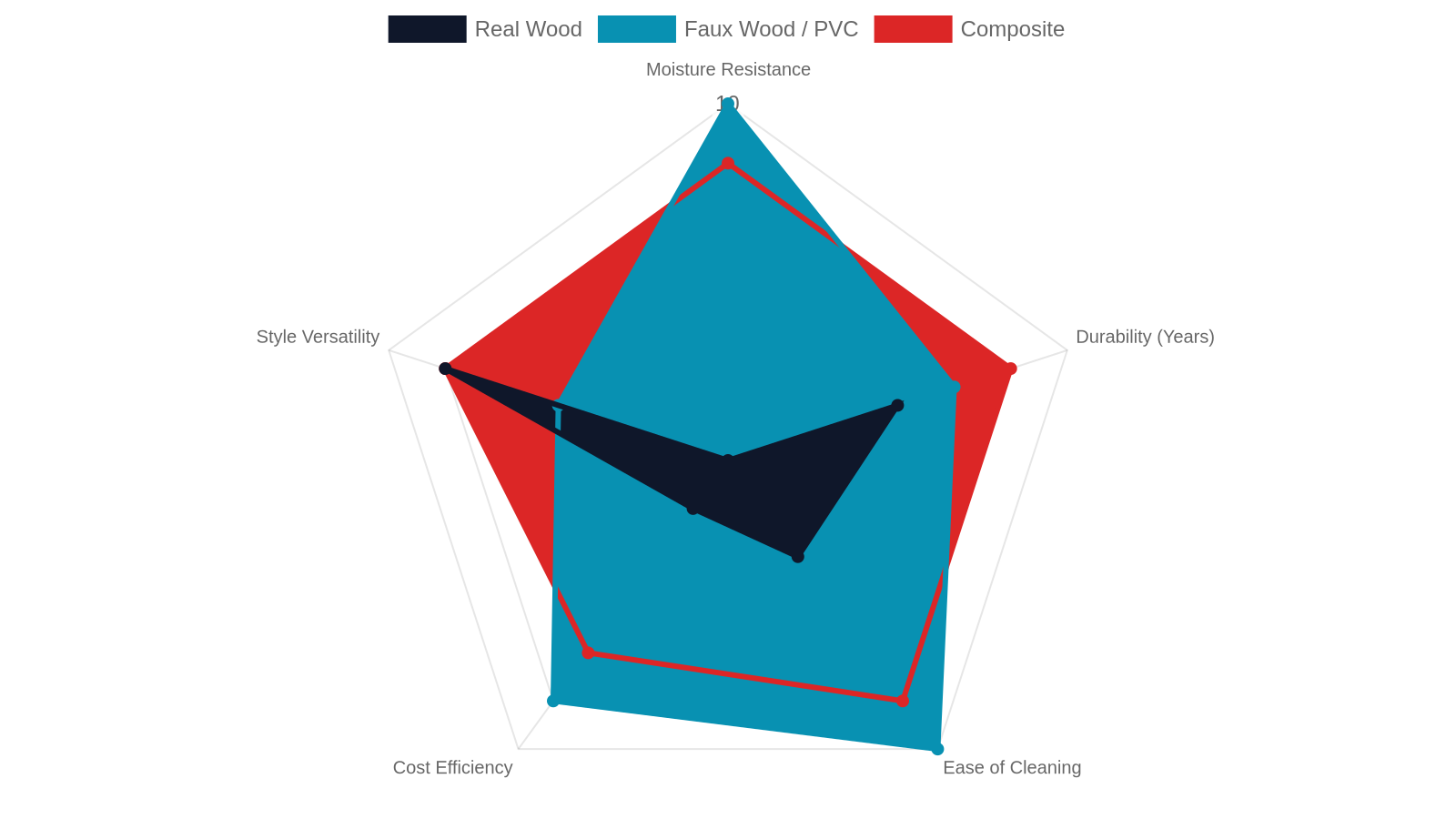
Genuine basswood and poplar shutters are the gold standard for interior shutters in living rooms, dining rooms, and bedrooms. They paint beautifully, stain to match any cabinetry, and feel substantial and premium. However, real wood is not the ideal choice for most kitchen applications in West Tennessee’s humid climate. Prolonged exposure to steam and moisture can cause wood to swell, warp, or crack — particularly in windows directly above the sink or adjacent to the range.
If you love the look of real wood and your kitchen has good ventilation, ask your Blinds Galore consultant about sealed and primed wood shutters with a moisture-resistant finish. These perform better than unfinished wood but still carry more maintenance requirements than composite alternatives.
Faux Wood and Composite: The Kitchen-Smart Choice
For kitchen windows, faux wood (PVC) and composite shutters are the practical champions. Here’s why Jackson homeowners choose them overwhelmingly for kitchens:
- 100% waterproof — PVC shutters can be wiped down with a damp cloth or even rinsed without damage.
- Warp-resistant — engineered materials don’t respond to humidity swings the way natural wood does.
- UV-stable — quality composite shutters resist yellowing for 15-20 years under direct sunlight.
- Cost-effective — typically 20-35% less expensive than comparable real wood shutters.
Composite shutters use a wood-polymer core wrapped in a PVC shell, giving them the weight and paintability of wood with the moisture resistance of plastic. They’re available in dozens of factory finishes and can be custom-painted to match your kitchen’s color palette exactly.
How Material Affects Louver Size Options
Material choice can influence which louver sizes are structurally available. Solid PVC is slightly heavier than wood at wider louver sizes, so some manufacturers limit PVC shutters to 3.5-inch louvers to prevent sagging over time. Composite shutters, with their wood-polymer core, maintain structural integrity at 4.5-inch louvers — the most popular size for contemporary kitchens because they maximize the view when open and let in the most natural light.
When you schedule a free in-home consultation with Blinds Galore, your consultant will measure your specific window dimensions and recommend the louver size that looks proportionally correct — a 4.5-inch louver on a narrow 24-inch window can look oversized, while a 2.5-inch louver on a wide bay window feels dated.
Style Guide: Matching Shutters to Your Kitchen's Design
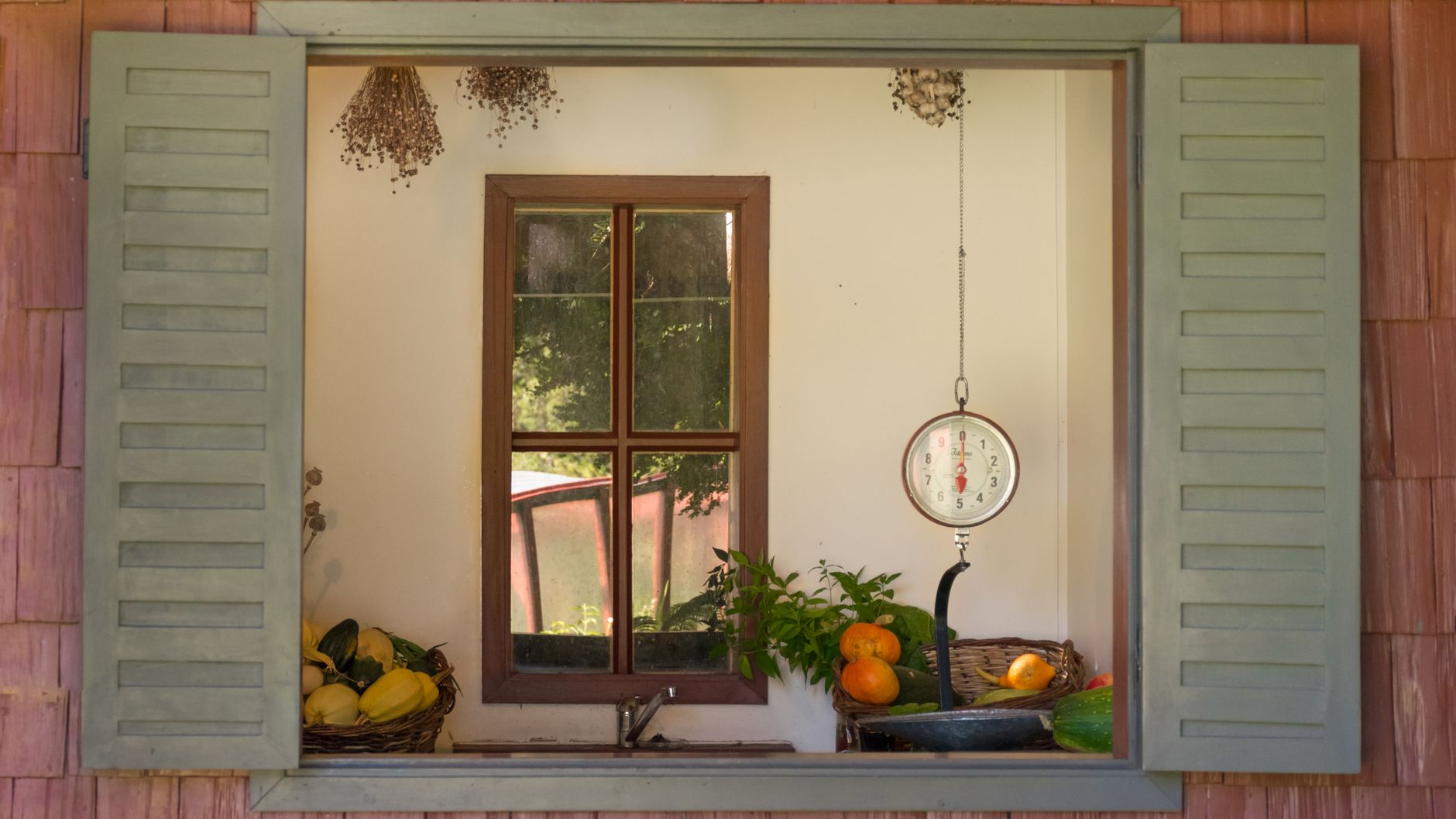
Custom shutters are one of the few window treatments that genuinely enhance a kitchen’s architectural character rather than just covering the window. The key is matching louver size, finish, and panel configuration to the room’s existing design language. Here’s how to get that right for the most common kitchen styles found across the Jackson, TN area.
Traditional and Farmhouse Kitchens
Jackson, TN homes often feature traditional or farmhouse-inspired kitchens with shaker cabinets, subway tile, and warm wood tones. For these spaces, white or antique white plantation shutters with 3.5-inch louvers are a timeless match. The clean horizontal lines of the louvers echo shaker-style cabinet doors, and a classic L-frame or Z-frame installation looks intentional and built-in rather than added on.
Consider a divider rail — a horizontal bar that splits the shutter panel into upper and lower sections — if your kitchen window is taller than 36 inches. The divider rail lets you tilt the top and bottom louvers independently, giving you privacy at eye level while flooding the upper portion of the window with light.
Modern and Contemporary Kitchens
For kitchens with flat-front cabinets, quartz countertops, and a cleaner aesthetic, 4.5-inch louvers in a bright white or cool grey finish deliver a streamlined look. Bypass shutters (panels that slide past each other on a track) work well on wide kitchen windows or pass-throughs, maintaining the horizontal emphasis of a modern design without the visual weight of bi-fold panels.
Matte finishes are trending in 2024-2025 for contemporary kitchens — ask about low-sheen paint options that reduce glare and feel more sophisticated than a standard gloss white.
Color-Matching to Cabinets and Trim
One of the biggest advantages of custom shutters over off-the-shelf products is the ability to color-match precisely. If your kitchen trim is Benjamin Moore White Dove or Sherwin-Williams Alabaster, a custom shutter manufacturer can replicate that exact tone so your shutters look like an architectural feature rather than an accessory.
For painted kitchens with bold cabinet colors — navy, forest green, or charcoal are popular in West Tennessee right now — consider white shutters as a crisp contrast, or a warm off-white that bridges the cabinet color and the wall color. Your Blinds Galore consultant can bring samples directly to your kitchen during your free in-home visit so you can see how colors interact with your actual lighting before committing.
Durability Data: How Long Do Kitchen Shutters Really Last?
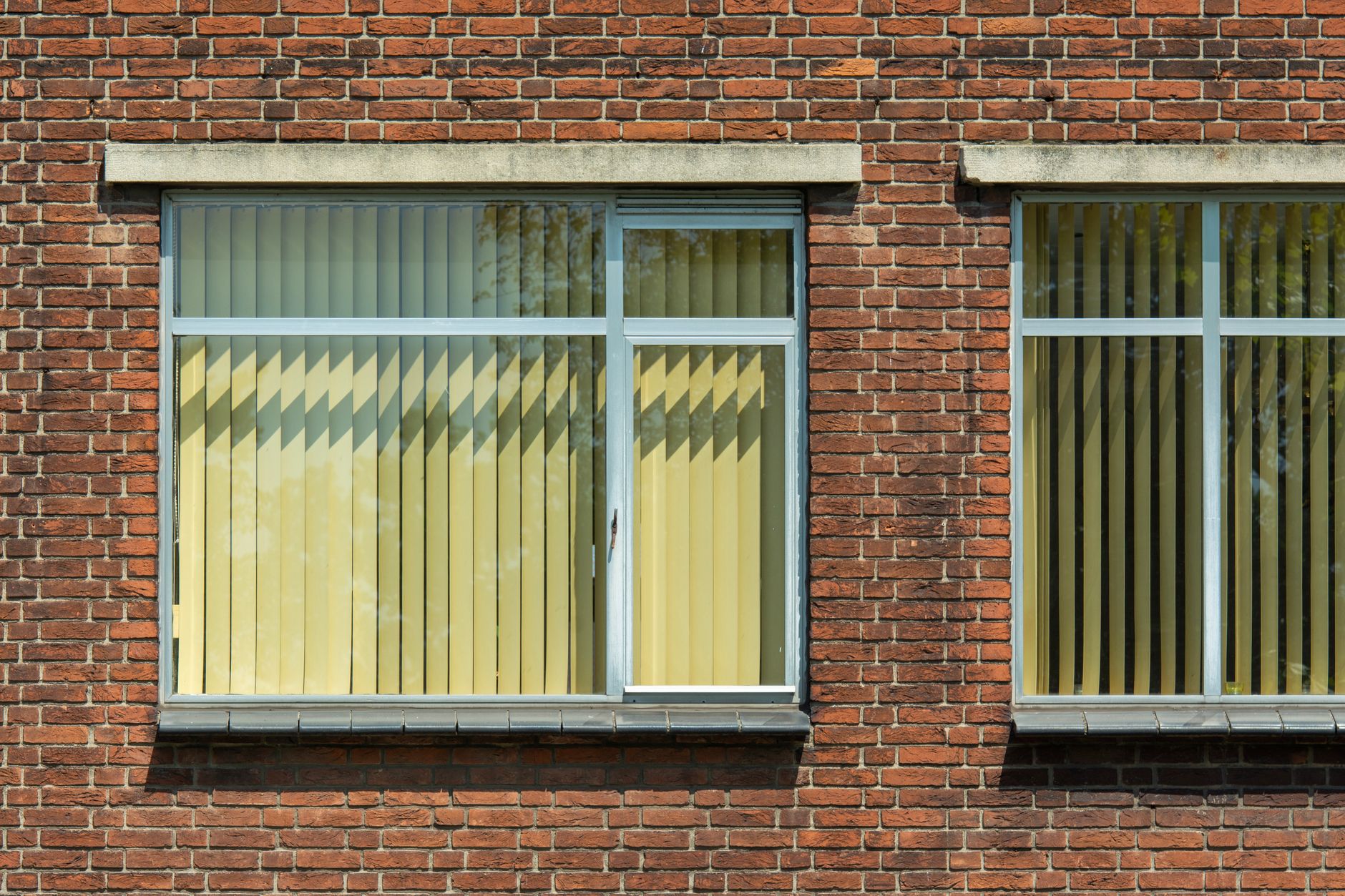
When you’re investing in custom window treatments, longevity matters. A shutter that lasts 20 years at $400 per window is a far better value than a roller shade at $80 per window that needs replacing every five years. Let’s look at the real numbers — and the conditions that determine whether your shutters reach their full lifespan.
Expected Lifespan by Material
Lifespan varies significantly by material and installation quality. Here’s what homeowners in West Tennessee can realistically expect:
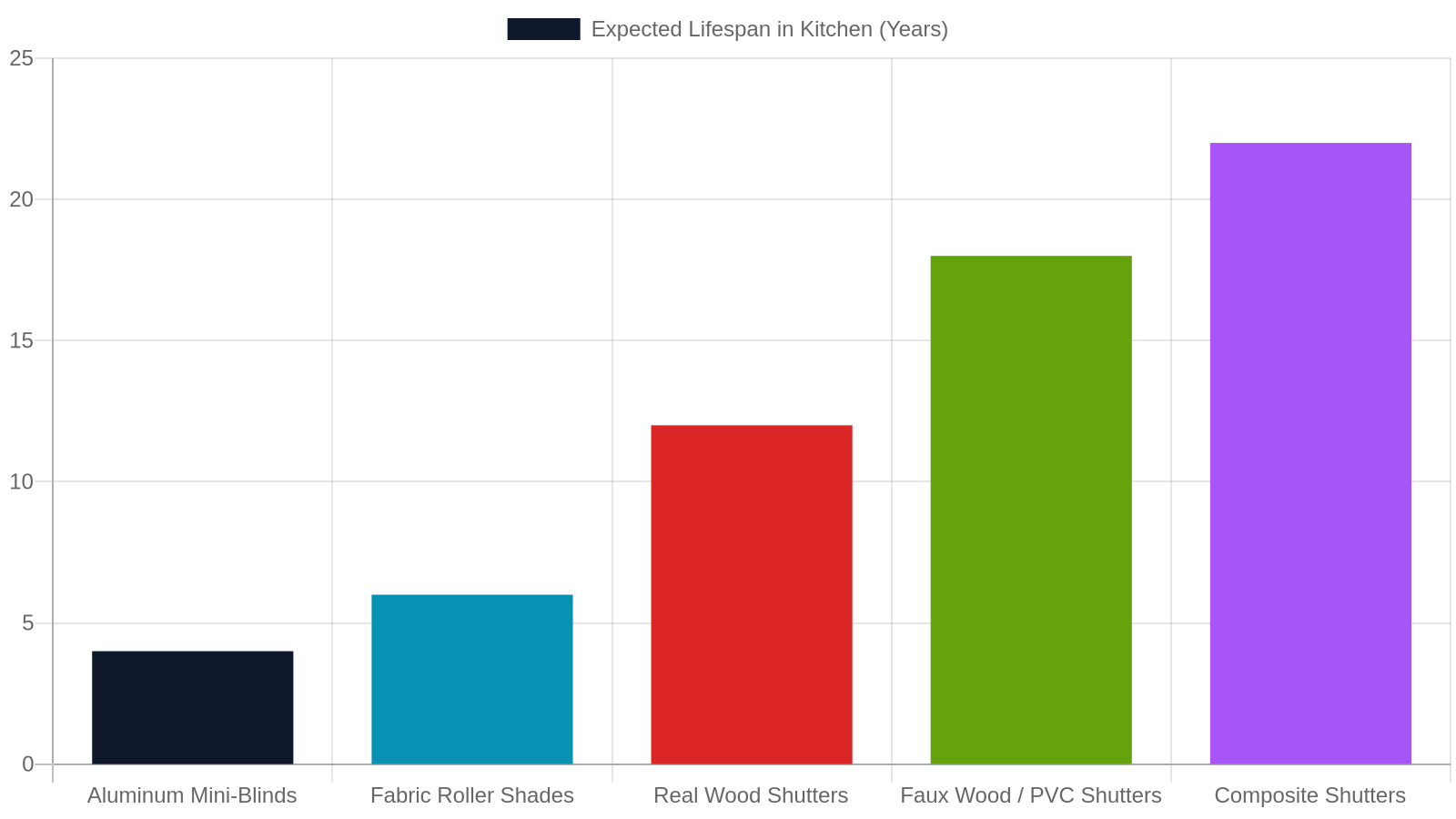
- Real wood shutters (kitchen use): 10-15 years with proper sealing and ventilation; shorter near the sink or range.
- Faux wood / PVC shutters: 15-20 years in kitchen conditions; some manufacturers offer lifetime warranties on the PVC frame.
- Composite shutters: 20-25 years; the wood-polymer core resists both moisture and UV degradation better than either pure wood or pure PVC.
By comparison, standard fabric roller shades last 5-7 years in kitchens, and aluminum mini-blinds typically need replacement within 3-5 years due to bending, yellowing, and accumulation of grease that can’t be fully cleaned.
Factors That Extend (or Shorten) Shutter Life
Installation quality is the single biggest variable in shutter longevity. A shutter mounted out of square will bind, stress the hinges, and develop cracks at the frame joints within a few years. Professional measuring — using a laser level and checking for window twist — ensures panels hang true and operate smoothly for decades.
Other factors that affect lifespan:
- Ventilation: A range hood that vents to the exterior (rather than recirculating) dramatically reduces grease and steam exposure to nearby shutters.
- Cleaning frequency: Shutters cleaned monthly last significantly longer than those cleaned annually, because grease buildup becomes acidic over time and can degrade paint and finishes.
- Direct heat exposure: Shutters within 12 inches of a gas range or electric cooktop should be a heat-resistant composite, not PVC, which can soften at sustained temperatures above 140°F.
Energy Efficiency: How Shutters Cut Your Utility Bills
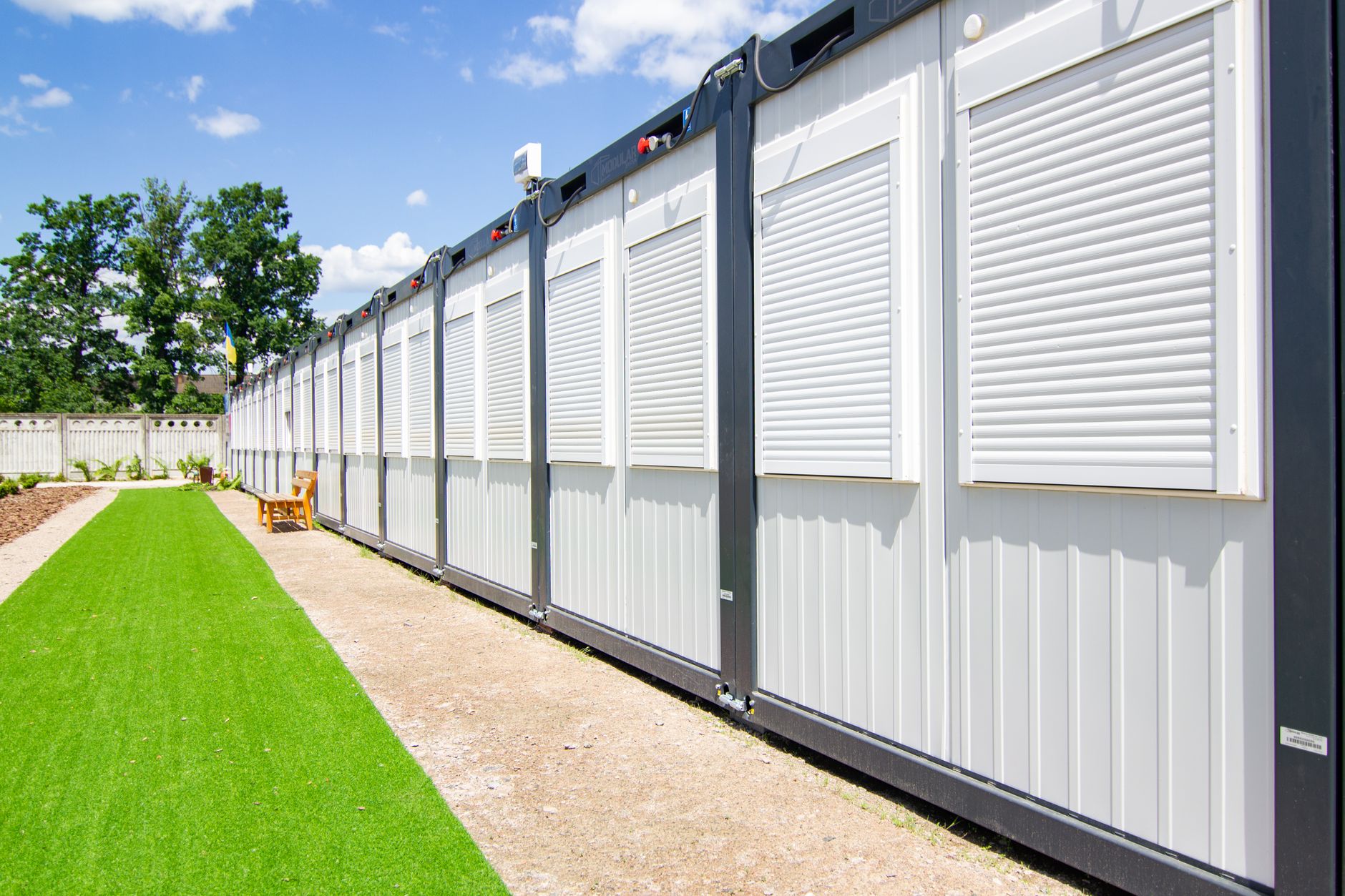
Custom shutters aren’t just a style upgrade — they’re a genuine energy-efficiency investment. In a climate like West Tennessee’s, where air conditioning runs for six or more months a year, reducing solar heat gain through kitchen windows has a measurable impact on monthly utility costs. Here’s how shutters deliver that benefit.
Insulation Value and the R-Factor
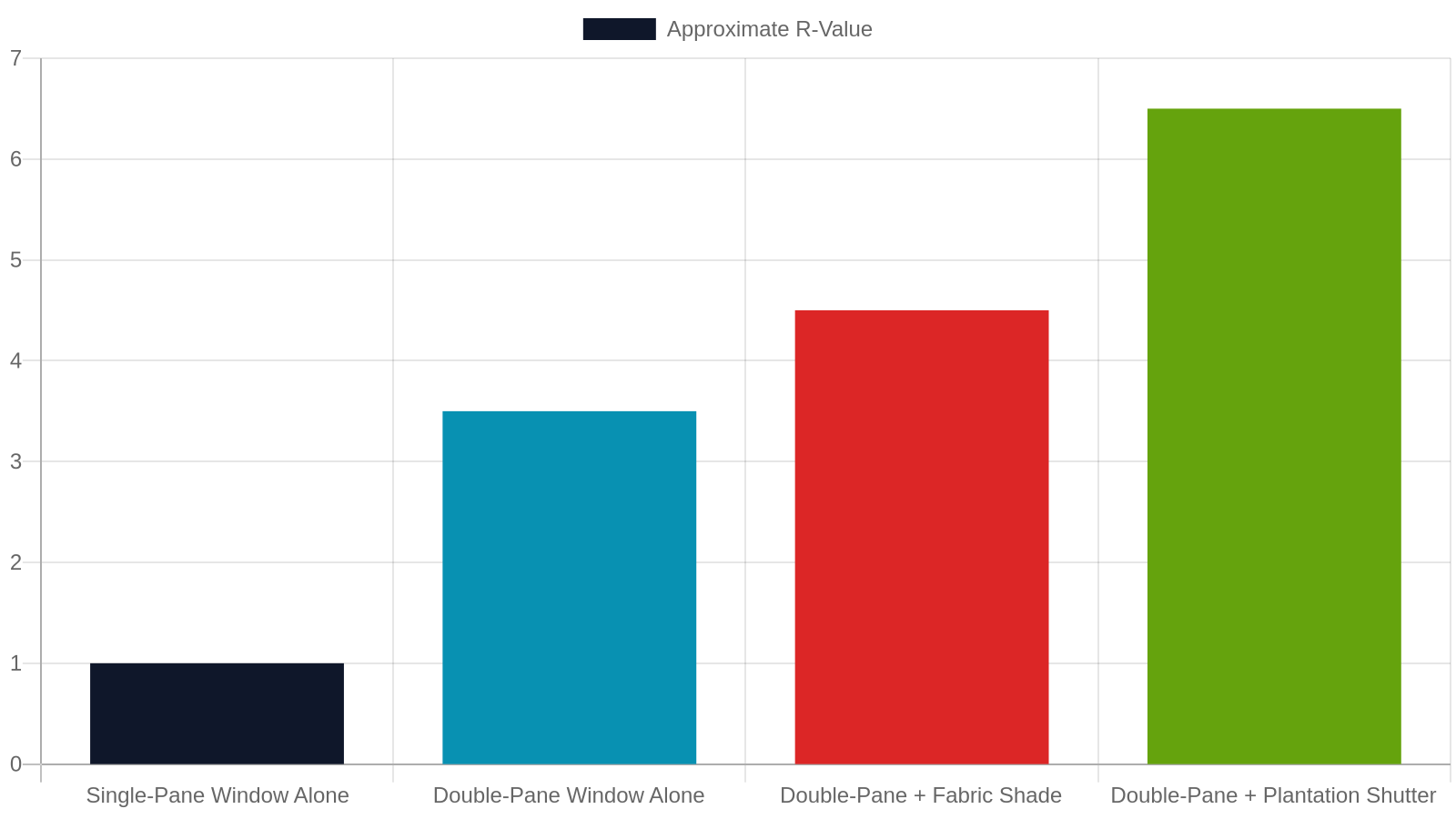
Windows are the weakest thermal link in any wall. A standard single-pane window has an R-value of approximately R-1; a quality double-pane window reaches R-3 to R-4. A properly fitted plantation shutter adds an additional R-2 to R-4 of insulation value by trapping a layer of still air between the shutter panel and the glass — effectively doubling the thermal performance of your window at a fraction of the cost of window replacement.
In Jackson, TN, where summer temperatures regularly exceed 95°F and utility bills spike accordingly, this insulation benefit is most valuable on south- and west-facing kitchen windows that receive direct afternoon sun. Closing the louvers to 45 degrees during peak afternoon hours can reduce solar heat gain through a kitchen window by up to 45%, according to data from the U.S. Department of Energy’s window treatment studies.
Light Control Without Losing Ventilation
One of the practical advantages of shutters over curtains or roller shades is the ability to control light and airflow independently. With louvers angled upward, you deflect direct sunlight toward the ceiling (reducing glare and heat gain) while still allowing a cross-breeze through the kitchen — something no solid shade or curtain can do.
This is especially useful in West Tennessee’s shoulder seasons (April-May and September-October), when outdoor temperatures are pleasant but afternoon sun is still intense. Opening the window behind your shutters while angling the louvers lets you ventilate the kitchen after cooking without flooding the room with harsh light or losing privacy.
The Complete Kitchen Shutter Maintenance Guide
One of the most common questions homeowners ask before investing in kitchen shutters is: ‘How hard are they to keep clean?’ The honest answer is that shutters are among the easiest kitchen window treatments to maintain — but only if you follow a consistent routine. Here’s a practical cleaning and maintenance schedule that keeps your shutters looking new for decades.
Weekly and Monthly Cleaning Routines
The biggest maintenance advantage of shutters over fabric window treatments is how easy they are to clean. A weekly dusting with a microfiber cloth or a vacuum brush attachment keeps louvers free of the fine grease film that settles on all kitchen surfaces. Run the cloth along each louver from front to back — this takes about 90 seconds per panel once you develop the habit.
For a monthly deeper clean, dampen a microfiber cloth with a solution of warm water and a few drops of dish soap. Wipe each louver individually, then follow with a dry cloth to prevent water spots. For composite and PVC shutters, you can use an all-purpose kitchen cleaner without worrying about damaging the finish. Avoid abrasive scrubbers, which can scratch the paint.
Dealing With Grease Buildup
Even with regular cleaning, kitchens near the range can develop stubborn grease buildup on shutter louvers over time. For this, a degreasing solution works best — diluted white vinegar (1 part vinegar to 3 parts water) cuts through grease effectively without damaging composite or PVC finishes. Apply with a soft cloth, let sit for 60 seconds, then wipe clean.
For real wood shutters, avoid vinegar solutions and use a wood-safe cleaner instead. Never soak wood shutters or let standing water sit on the frame joints — this is the fastest way to cause swelling and paint peeling.
- Quarterly: Check hinges and tilt rod for smooth operation. A tiny drop of silicone lubricant on each hinge keeps shutters swinging freely.
- Annually: Inspect the frame-to-wall seal for any gaps where cooking steam might be penetrating behind the shutter panel.
Touch-Up Painting and Minor Repairs
Custom shutters are factory-finished with a durable paint designed to resist chipping, but kitchens are tough environments. If a louver gets nicked or a frame corner chips, touch-up painting is straightforward. Ask your Blinds Galore installer for the manufacturer’s paint code at the time of installation — keeping a small sample jar on hand means you can touch up any nick within minutes.
Louver pins and tilt rods are the most common mechanical components that need attention over a shutter’s life. Replacement parts are available from most custom shutter manufacturers and can typically be installed without tools. If a panel begins to bind or a louver won’t stay in position, contact your installer before the problem worsens — early intervention prevents what would be a simple adjustment from becoming a panel replacement.
Kitchen Window Treatment Comparison at a Glance
Use this side-by-side comparison to see how custom plantation shutters stack up against the most common kitchen window treatment alternatives across the factors that matter most in a busy kitchen environment.
Measuring and Installation: Why Professional Fitting Matters

The difference between shutters that look custom-built and shutters that look like an afterthought almost always comes down to measurement and installation. This is the step where professional expertise pays for itself — and it’s why Blinds Galore includes professional measuring as part of every free in-home consultation, not as an add-on charge.
The Consequences of Imprecise Measurement
Custom shutters are manufactured to exact specifications — typically within 1/8 of an inch. If the measurements submitted to the factory are off, the resulting panels won’t fit correctly. Gaps at the edges let in light and reduce privacy; panels that are too wide won’t close properly and stress the hinges. Unlike curtains, which can be hemmed or adjusted, a custom shutter panel that’s the wrong size must be remade — adding weeks to the timeline and potentially additional cost.
Kitchen windows present specific measuring challenges: window frames in older Jackson homes are often slightly out of square, meaning the width at the top differs from the width at the bottom by as much as 3/8 of an inch. A professional measurer accounts for this by taking three width measurements and three height measurements per window and ordering to the smallest dimension with appropriate frame compensation built in.
Inside Mount vs. Outside Mount in Kitchens
Most kitchen shutters are installed as inside mounts — fitting within the window casing for a clean, built-in appearance. Inside mounting requires a minimum casing depth of 2.5 inches for most shutter frames; kitchens with shallow window sills or windows set close to the exterior wall may require an outside mount, where the frame is attached to the wall or casing face rather than inside the opening.
Outside mounts can actually be advantageous in kitchens: they allow the shutter panel to extend slightly beyond the window opening, blocking more light at the edges and creating the appearance of a larger window. Your Blinds Galore consultant will assess your specific window depth during the free in-home measuring appointment and recommend the mount type that delivers the best result for your kitchen.
Cost Breakdown: What to Budget for Kitchen Shutters in West Tennessee

Custom shutters represent a real investment — and one that pays back in durability, energy savings, and home value. Understanding what drives the cost helps you budget accurately and compare quotes fairly. Here’s a transparent look at what kitchen shutters typically cost in the West Tennessee market.
Typical Price Ranges by Window Size and Material
Custom shutter pricing is driven by three variables: window size (measured in square feet), material choice, and louver size. Here are realistic price ranges for the Jackson, TN market as of 2024-2025:
- Small kitchen window (up to 12 sq ft): $250–$450 per window for composite; $350–$600 for real wood.
- Standard kitchen window (12–20 sq ft): $400–$700 per window for composite; $550–$900 for real wood.
- Large kitchen window or bay window (20–35 sq ft): $700–$1,200 per window for composite; $900–$1,600 for real wood.
These ranges include professional measuring and installation. DIY installation is possible but not recommended for custom shutters — improper mounting voids most manufacturer warranties and risks panel damage.
Value vs. Cost: The Long-Term Math
Sticker price is only one part of the value equation. Consider the total cost of ownership over a 20-year period for a standard kitchen window:
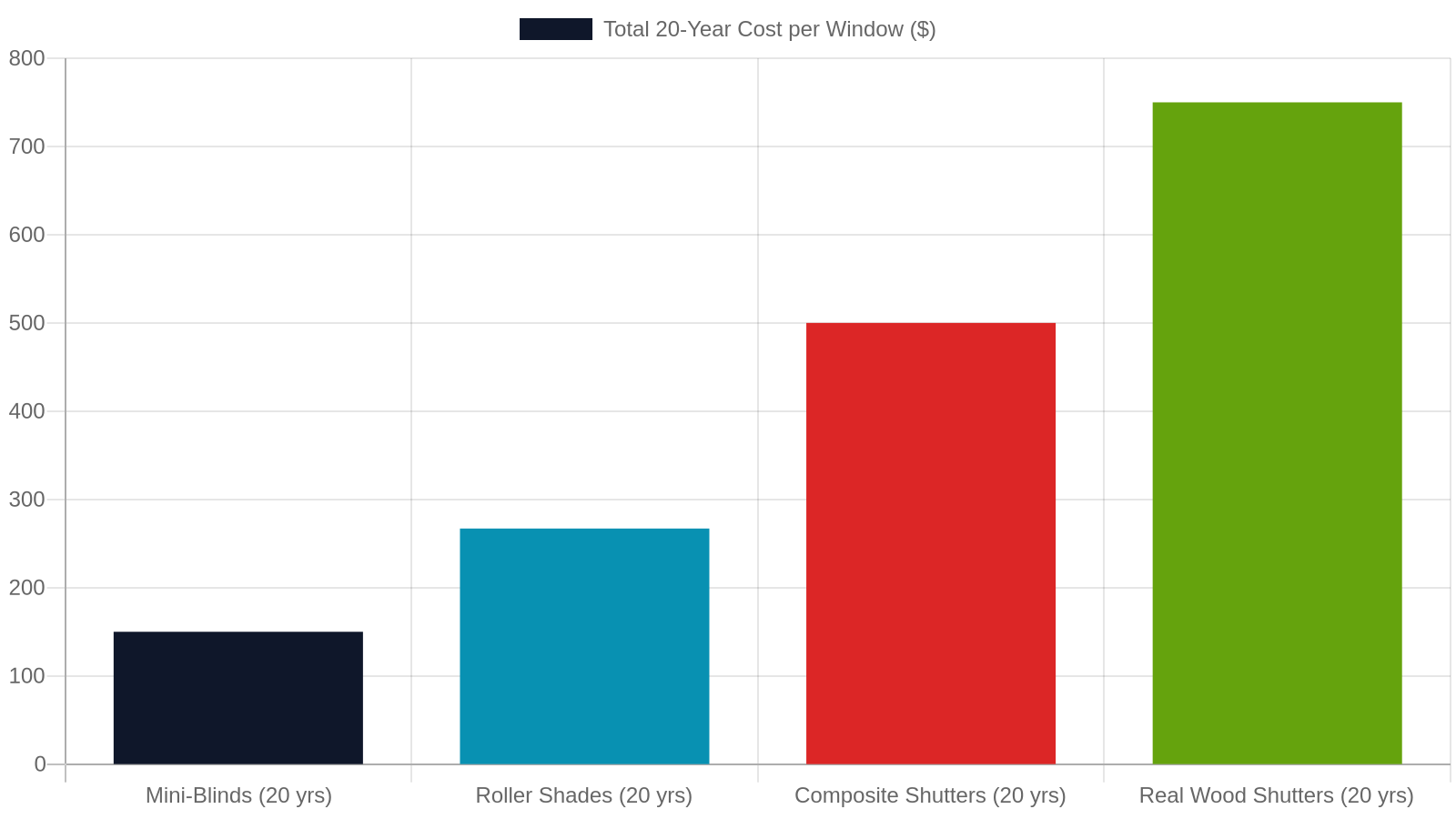
- Aluminum mini-blinds at $30 each, replaced every 4 years: $150 over 20 years, plus 5 installation trips.
- Fabric roller shade at $80, replaced every 6 years: $267 over 20 years.
- Composite plantation shutter at $500, lasting 20+ years: $500 total — and it adds to your home’s resale value.
Real estate data consistently shows that plantation shutters are among the window treatments most likely to be called out positively in home listings and to contribute to faster sales. In West Tennessee’s competitive housing market, that’s a meaningful advantage for homeowners in Jackson, Lexington, Henderson, and Milan who may sell within the next decade.
Special Considerations for Unique Kitchen Window Configurations
Not every kitchen window is a simple rectangle. Bay windows, corner windows, above-sink windows, and transom windows all require thoughtful planning to shutter correctly. Here’s how to approach the most common non-standard kitchen window configurations found in West Tennessee homes.
Shutters for Kitchen Bay Windows
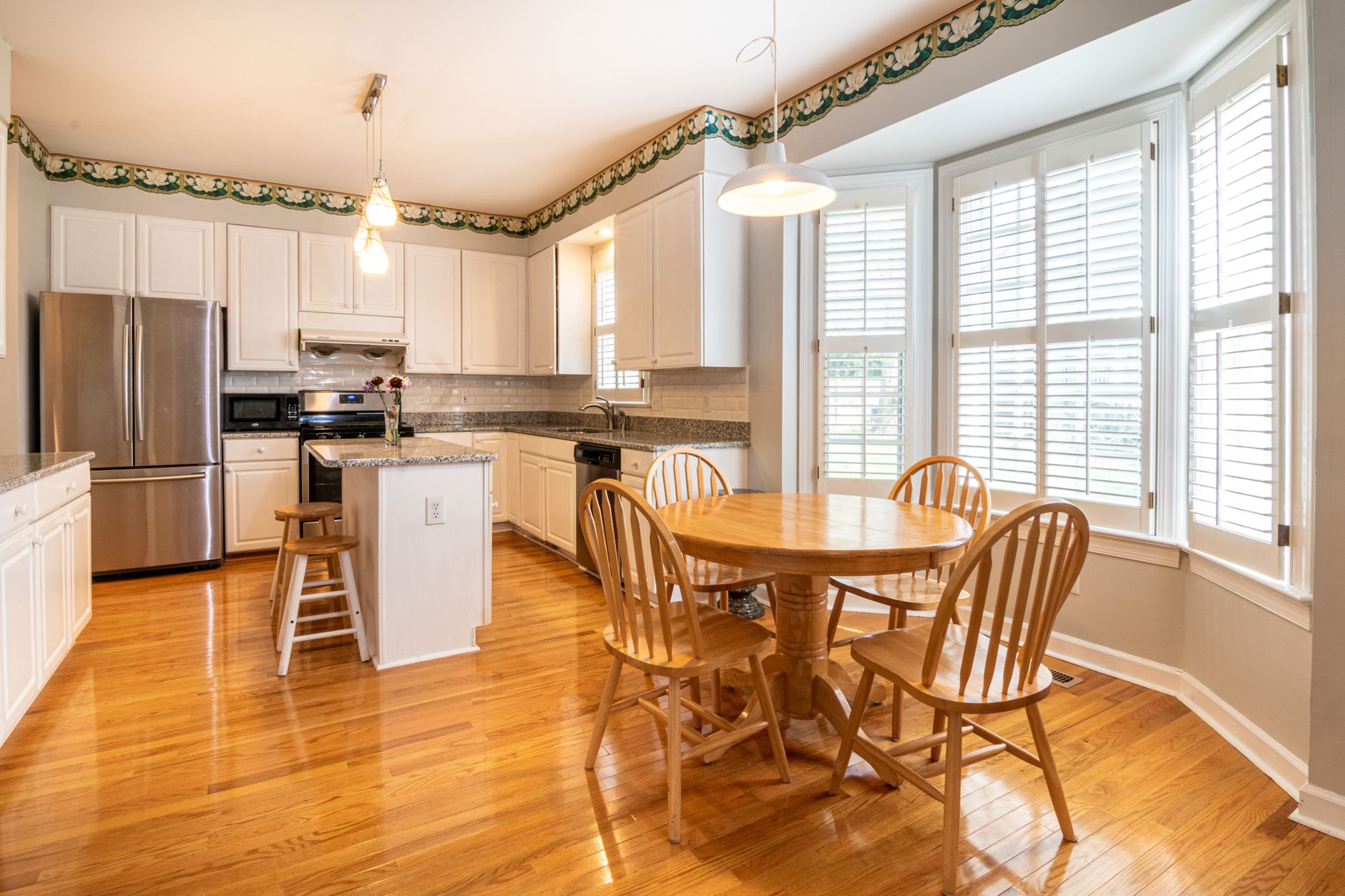
Bay windows are a beautiful feature in many Jackson-area homes, but they present a configuration challenge for shutters. The angled side panels (typically set at 30° or 45° from the main wall) require custom-angled frames that allow the shutter panels to fold back without hitting each other or the wall. This is a specialty fabrication that off-the-shelf shutters simply can’t accommodate.
For kitchen bay windows, the most common approach is to treat each facet of the bay as an independent window — ordering separate shutter panels for the center section and each angled side, with a consistent louver size and finish that ties them together visually. When all panels are open, the effect is seamless and architectural. When closed, they provide complete privacy and excellent insulation for what is often the largest thermal weak point in the kitchen.
Above-the-Sink and Above-the-Range Windows
Windows directly above the kitchen sink are among the most frequently treated windows in any home — and among the most demanding for window coverings. The combination of splashing water, steam, and daily hands-on contact makes material choice critical. PVC or composite shutters are the only materials we recommend for above-sink installations; real wood in this location is almost guaranteed to show moisture damage within five years.
Windows above or adjacent to the range require additional consideration. Keep shutters at least 18 inches from any open flame and ensure louvers can be fully opened to allow heat to escape during cooking. A café-style shutter that covers only the lower half of the window is an excellent solution here — it keeps the upper portion of the window free for heat ventilation while the lower panel provides privacy and style.
Ready to Transform Your Kitchen Windows? Here's Your Next Step
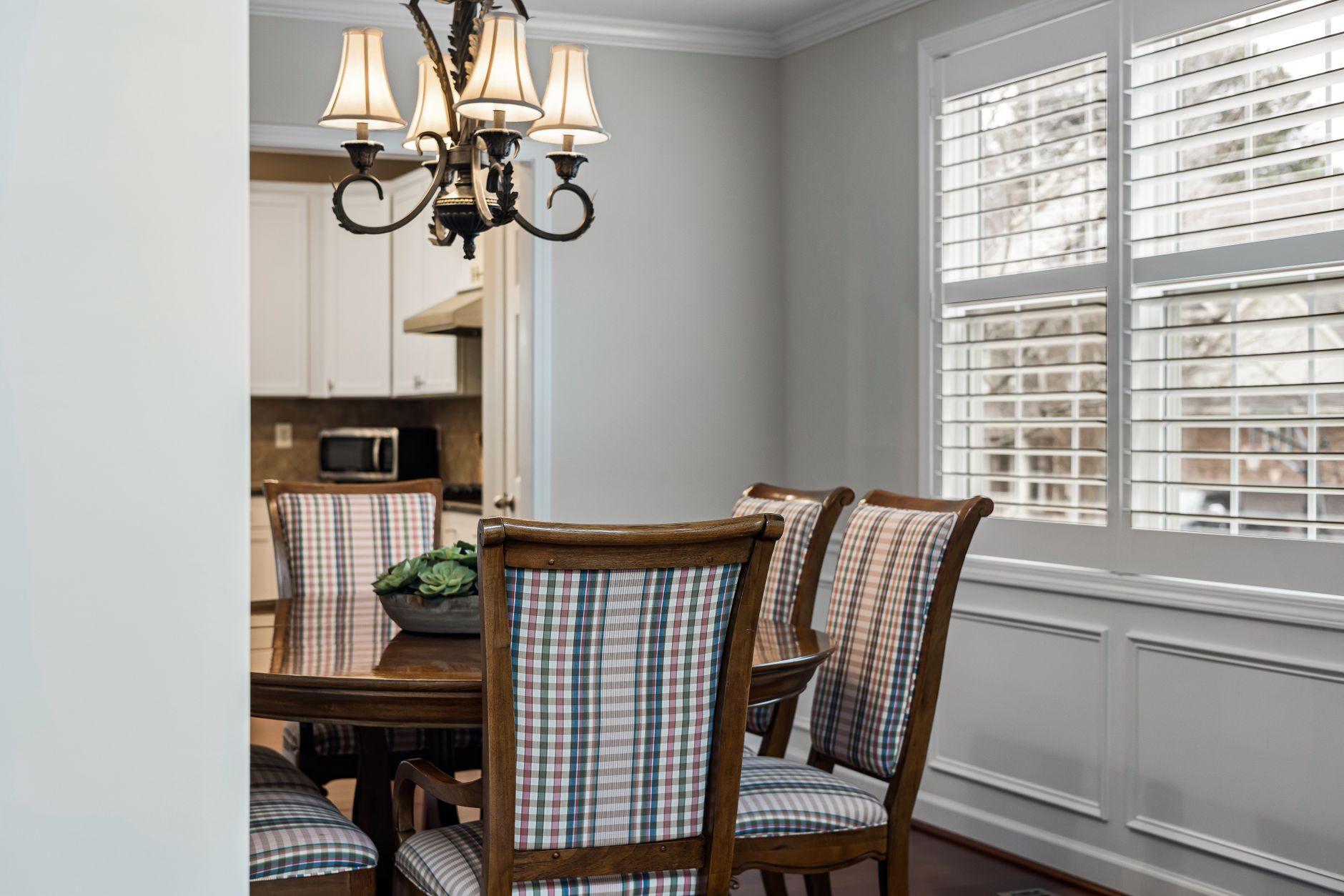
Choosing custom shutters for your Jackson, TN kitchen is one of those home improvements that you notice every single day — in the quality of light, the ease of cleaning, and the way the room simply feels more finished and intentional. The process is easier than most homeowners expect, especially when you work with a local specialist who handles everything from measurement to installation.
What to Expect From a Free In-Home Consultation
Blinds Galore’s free in-home consultation is designed to take all the guesswork out of choosing kitchen shutters. Here’s exactly what happens during the visit:
- Your consultant measures every window you’re considering — precisely, accounting for any out-of-square conditions.
- They bring physical samples of materials, louver sizes, and finishes so you can see and feel the difference in your actual kitchen light.
- They walk you through configuration options (full-height vs. café, inside vs. outside mount) and explain the pros and cons for your specific windows.
- You receive a detailed, no-obligation quote before they leave — no pressure, no follow-up sales calls if you’re not ready.
Most consultations take 45-60 minutes for a full kitchen. Homeowners across Jackson, Lexington, Henderson, and Milan consistently tell us the in-home visit made the decision easy — because seeing samples in your own kitchen lighting is completely different from viewing them in a showroom or on a screen.
Blinds Galore's Satisfaction Guarantee and Service Area
With over 18 years of experience serving West Tennessee homeowners, Blinds Galore backs every custom shutter installation with a 100% satisfaction guarantee. If something isn’t right — a panel doesn’t fit perfectly, a louver operates stiffly, or a finish doesn’t match what you approved — we make it right at no additional cost. That commitment is what has kept Jackson-area homeowners returning and referring their neighbors for nearly two decades.
Ready to see what custom shutters can do for your kitchen? Explore our custom-built shutter options and then call us at (731) 571-5179 to schedule your free in-home consultation. You can also browse our custom shades if you’re considering layering treatments for a dining area adjacent to your kitchen. We serve Jackson, Lexington, Henderson, Milan, and the surrounding West Tennessee communities — and we bring the showroom directly to your door.
Frequently Asked Questions
Are plantation shutters a good choice for kitchen windows?
Yes — plantation shutters are widely considered the best window treatment for kitchens because they resist moisture and grease, wipe clean in seconds, provide precise light control, and last 15-25 years. Composite or PVC shutters are especially well-suited to the humidity and heat of a kitchen environment.
What size louvers should I choose for kitchen shutters?
3.5-inch louvers are the most versatile choice for most kitchen windows, offering a balance of traditional style and good light control. For larger windows or a more contemporary look, 4.5-inch louvers maximize the view-through and let in the most natural light when open.
How do I clean plantation shutters in the kitchen?
Dust weekly with a microfiber cloth and do a deeper clean monthly using warm water with a few drops of dish soap. For grease buildup, a diluted white vinegar solution (1:3 vinegar to water) works well on composite and PVC shutters. Avoid abrasive scrubbers and never soak real wood shutters.
Can plantation shutters be installed above a kitchen sink?
Yes, but material choice is critical. Only composite or PVC (faux wood) shutters should be installed directly above a kitchen sink — real wood will absorb moisture and warp over time in that location. Composite shutters are 100% waterproof and hold up perfectly in high-humidity zones.
How much do custom kitchen shutters cost in Jackson TN?
In the Jackson, TN market, custom composite shutters typically cost $250–$700 per window depending on size, with real wood shutters ranging from $350–$900 per window. These prices generally include professional measuring and installation. A free in-home consultation from Blinds Galore will give you an exact quote for your specific windows.
Do shutters help with energy efficiency in a hot Tennessee summer?
Yes. A properly fitted plantation shutter adds approximately R-2 to R-4 of insulation value to your window and can reduce solar heat gain by up to 45% when louvers are angled to deflect direct sunlight. This translates to measurable savings on air conditioning costs during West Tennessee's long, hot summers.
You might also like
Custom Shutters for Jackson TN Sunrooms: Your 9-Point Light Control and Durability Guide
Quick answer: Custom shutters are the best window treatment for Jackson, TN sunrooms because they handle

Best Plantation Shutters for Jackson TN Entryways: 9 Things to Know
Quick answer: Plantation shutters are one of the best window treatment choices for Jackson, TN entryways
Custom Shutters for Bedrooms in Jackson, TN: Privacy, Light Control, and 8 Design Options
Quick answer: Custom bedroom shutters give Jackson, TN homeowners the best combination of privacy, light
Custom Shutters for Living Rooms in Jackson, TN: Your Style and Light Control Guide
Quick answer: Custom plantation shutters are one of the best investments a Jackson, TN homeowner can
Custom Shutters for Dining Rooms in Jackson, TN: Your Complete Style and Light Control Guide
Quick answer: Custom plantation shutters are the most versatile and durable window treatment for dining
Plantation Shutters for Bathroom Windows in Jackson, TN: Your 9-Point Guide to Moisture Resistance
Quick answer: Custom plantation shutters are the top moisture-resistant window treatment for Jackson,