

Custom Shutters for Jackson TN Sunrooms: Your 9-Point Light Control and Durability Guide
Quick answer: Custom shutters are the best window treatment for Jackson, TN sunrooms because they handle intense West Tennessee sun, high humidity, and wide temperature swings better than blinds or curtains. Plantation-style shutters with composite or vinyl construction resist warping and fading for 20-plus years, while adjustable louvers let you dial in exactly how much light and heat enters the room. Blinds Galore offers free in-home consultations, professional measuring, and a 100% satisfaction guarantee so your sunroom shutters fit perfectly from day one.
1. Why Sunrooms Demand a Different Window Treatment Strategy
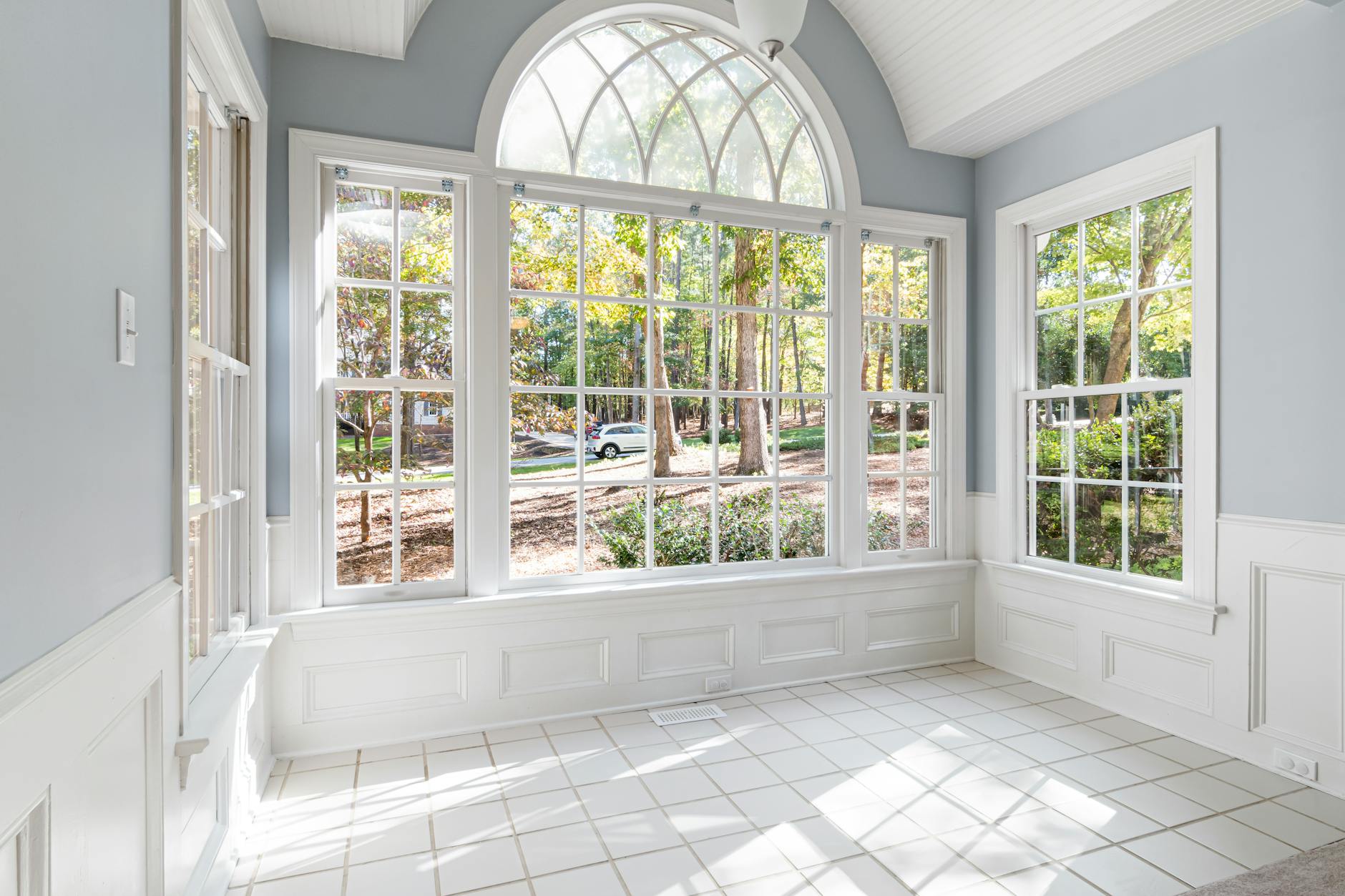
Before choosing any window covering for your sunroom, it pays to understand why this space is fundamentally different from a bedroom or living room. Sunrooms in Jackson and throughout West Tennessee face a combination of intense solar gain, high humidity, and dramatic seasonal temperature swings that eliminate most off-the-shelf window treatment options from serious consideration.
The Unique Climate Challenge of a Sunroom
A sunroom is not just another room — it is a glass-wrapped environment that experiences temperature swings of 40°F or more between a cold January morning and a blazing July afternoon in Jackson, TN. Standard fabric curtains absorb moisture and fade within a single season. Aluminum mini-blinds warp under direct UV exposure in as little as two to three years. Neither option is engineered for the punishment a West Tennessee sunroom dishes out daily.
- UV radiation is 30–50% more intense through glass than through standard exterior walls.
- Humidity levels in West Tennessee regularly exceed 70%, accelerating mold growth on fabric and wood.
- Thermal cycling — repeated expansion and contraction — cracks and warps lesser materials quickly.
Why Shutters Rise to the Top
Shutters are the only window treatment with a rigid frame that attaches directly to the window opening, giving them structural stability that fabric and slat-based products simply cannot match. Their adjustable louvers — typically available in 2.5-inch, 3.5-inch, and 4.5-inch widths — let you control light angle, not just light volume. For a sunroom, that distinction is critical: you can bounce morning light off the ceiling for a bright, glare-free reading nook while still blocking the harsh 2 p.m. western sun that turns a sunroom into an oven.
Shutters also add R-value insulation to your glass panels. A quality composite shutter can improve window insulation by up to 45%, reducing the load on your HVAC system and keeping energy bills lower through the long West Tennessee summer.
2. The Four Main Shutter Materials — and Which Wins in a Sunroom
Not all shutters are created equal, and the material you choose will determine how well your investment holds up over the next decade or two. Here is an honest breakdown of the four main shutter materials, ranked by their suitability for the demanding sunroom environment found across Jackson, TN and West Tennessee.
Solid Wood Shutters
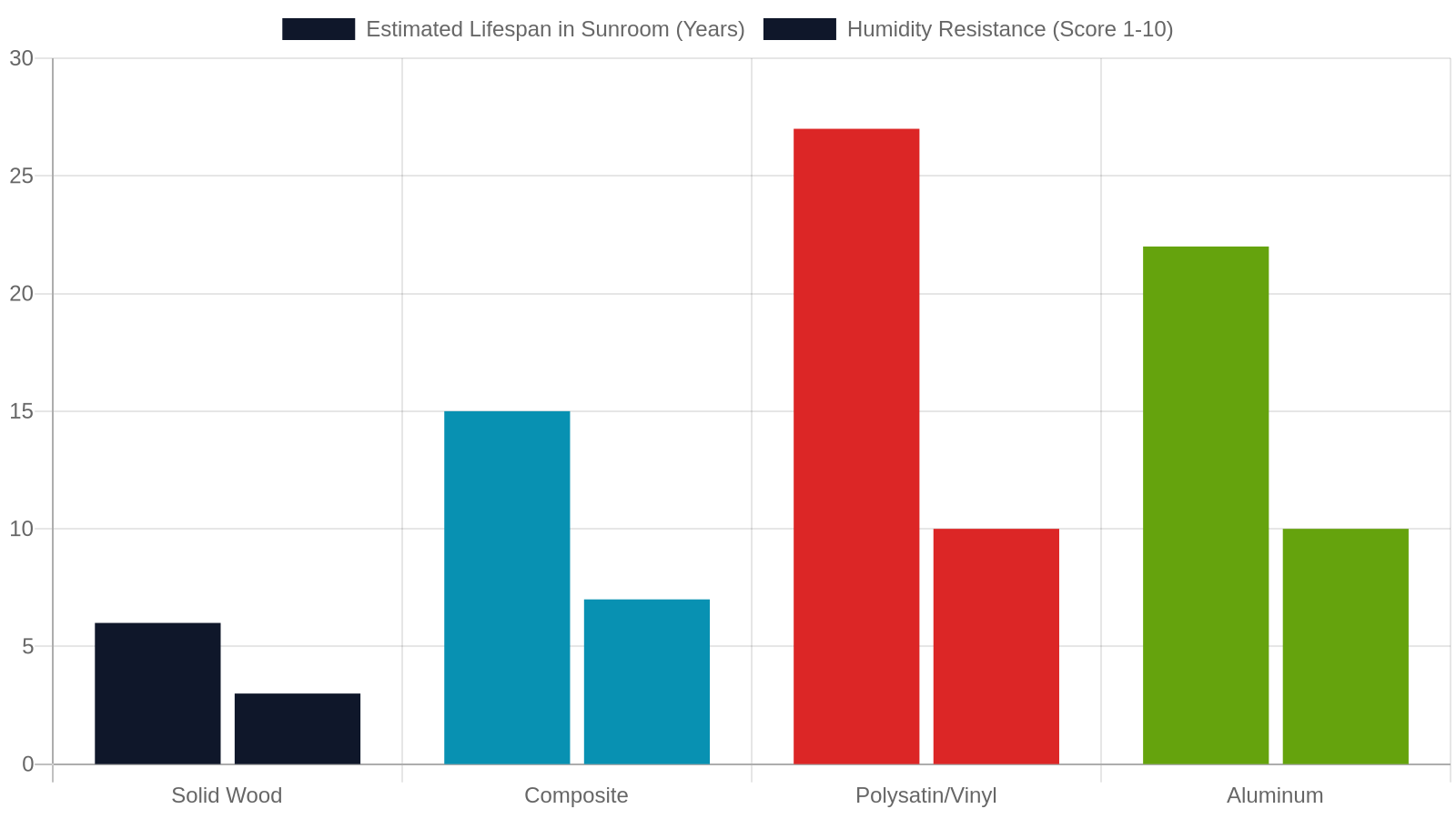
Solid wood shutters are beautiful and offer the richest paint finish, but they are not recommended for sunrooms with high humidity or direct sun exposure. Wood expands and contracts with moisture changes, causing louvers to stick or warp over time. In a climate like Jackson, TN — where summer humidity regularly sits above 75% — even premium basswood shutters can show stress within five to seven years in a sunroom environment. They are better suited to interior rooms with stable humidity.
Composite and Engineered Wood Shutters
Composite shutters use a hardwood core wrapped in a moisture-resistant polymer shell. This construction gives them the look of painted wood with dramatically better resistance to humidity and UV. Most quality composite shutters carry limited lifetime warranties and are rated for rooms with up to 85% relative humidity. They are a strong mid-range choice for sunrooms that are climate-controlled but still see significant sun exposure.
Vinyl and Polysatin Shutters — The Sunroom Champion
Full-vinyl and polysatin shutters are purpose-built for high-moisture, high-UV environments. They will not warp, crack, peel, or fade even after decades of direct sunlight. Polysatin — a dense polymer compound — is heavier and more rigid than standard vinyl, giving it a more substantial feel while remaining completely impervious to moisture. For an unconditioned or partially conditioned sunroom in West Tennessee, polysatin is the clear winner. Expect a lifespan of 25 years or more with zero maintenance beyond an occasional wipe-down.
Aluminum Shutters
Aluminum shutters are common in commercial and coastal applications. They offer excellent durability and are completely waterproof, but they conduct heat readily — a significant drawback in a sun-drenched room. They are also heavier, louder when adjusted, and carry a more industrial aesthetic that most homeowners find out of place in a residential sunroom. For most Jackson, TN homeowners, composite or polysatin shutters offer a better balance of performance and appearance.
3. Louver Size: The Single Biggest Decision for Light Control
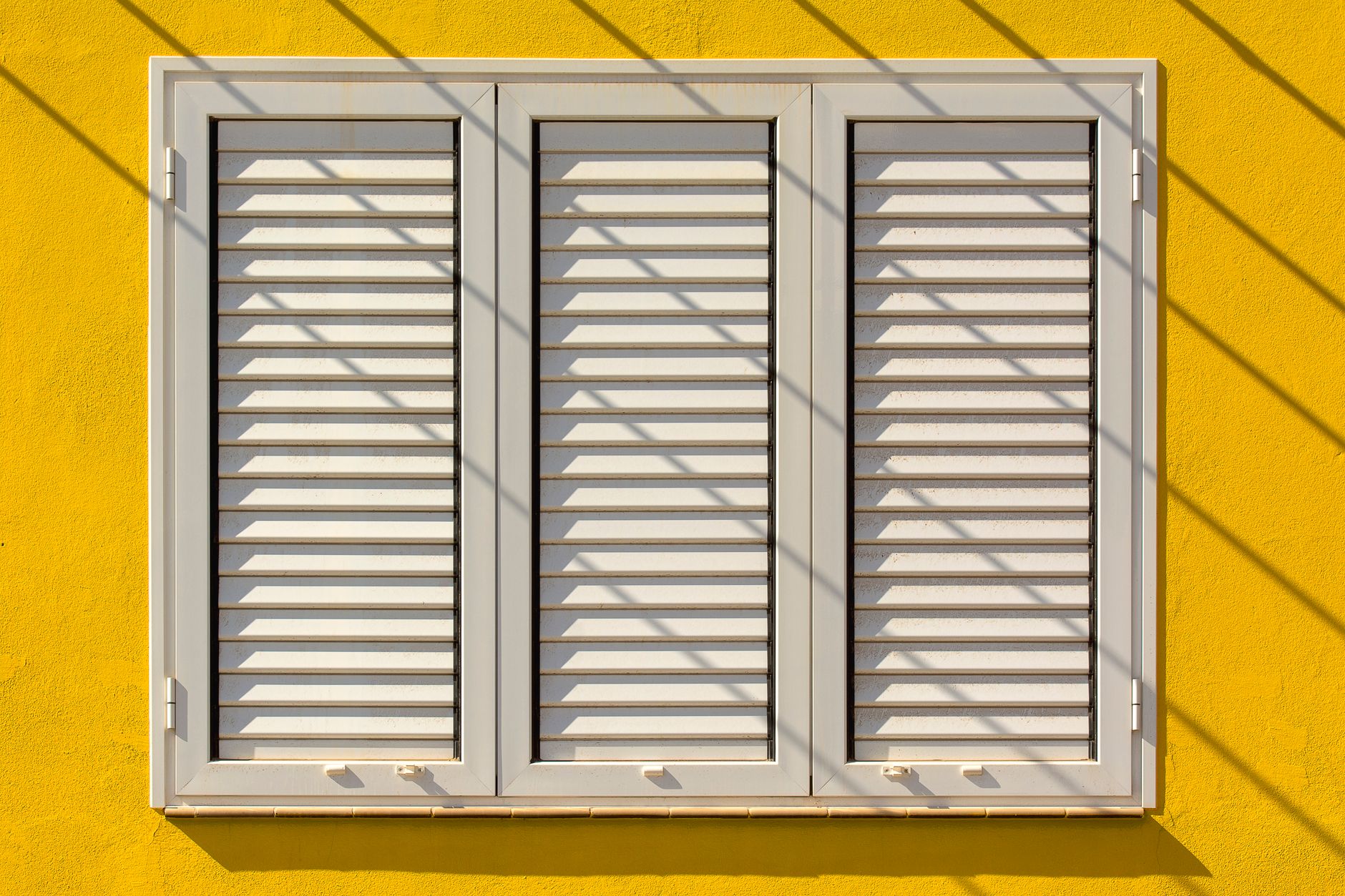
Once you have chosen your shutter material, louver size is the next decision — and it has a bigger impact on both the look and the light-control performance of your sunroom shutters than most homeowners expect. Louvers are measured by the width of each individual slat, and the three standard sizes each have a distinct personality.
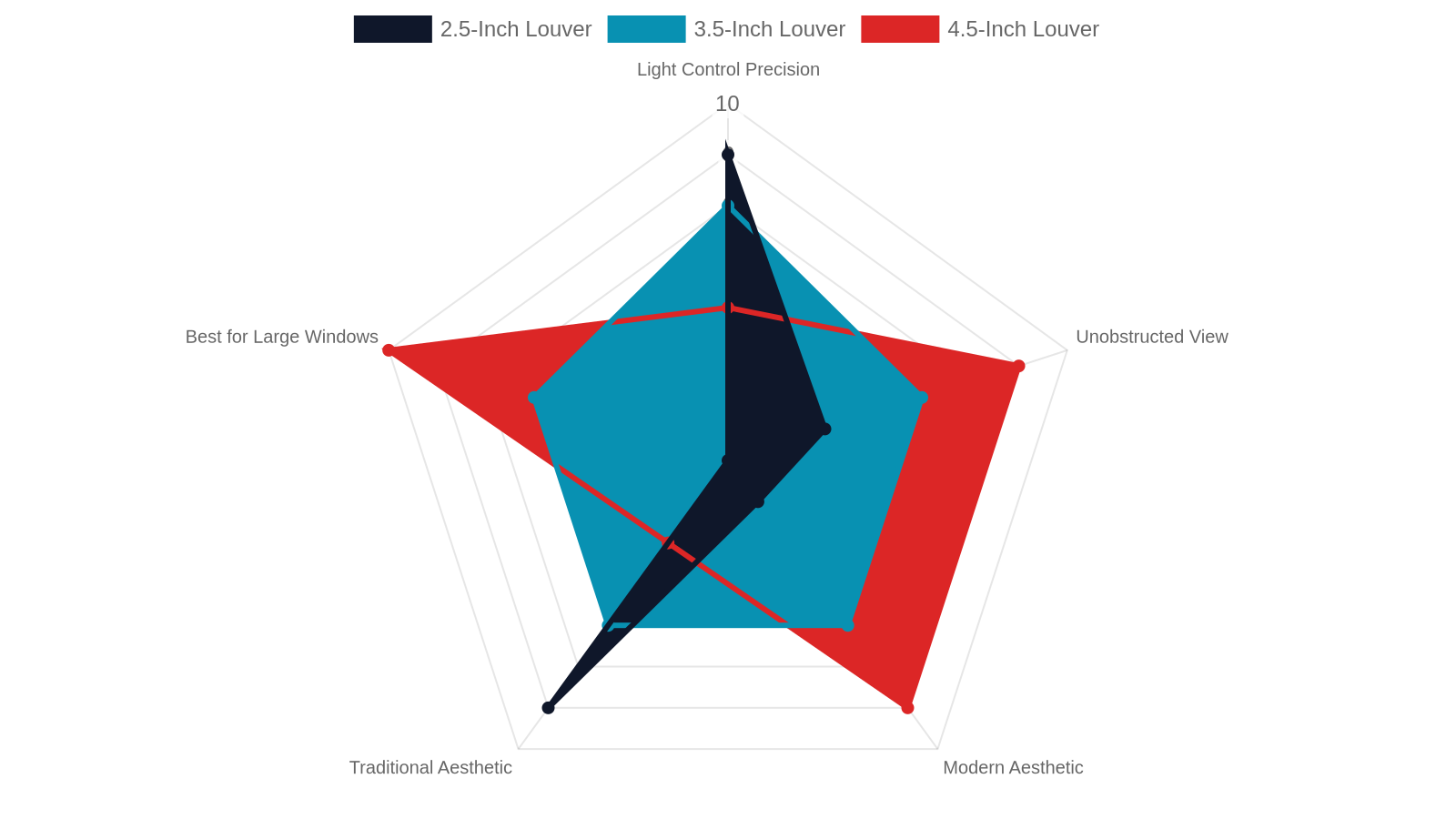
2.5-Inch Louvers — Traditional and Precise
The smallest standard louver size, 2.5-inch slats provide the most precise light control because each louver covers less area and can be angled more finely. They are the classic plantation shutter look and work beautifully on smaller sunroom windows or divided-light configurations. The trade-off: when fully open, more frame material is visible, which slightly reduces the unobstructed view compared to larger louvers.
3.5-Inch Louvers — The Most Popular Choice
The 3.5-inch louver is the most-requested size at Blinds Galore for a reason — it balances the classic shutter aesthetic with a noticeably more open view when the louvers are tilted fully open. For a typical sunroom window in the 36-to-60-inch width range, 3.5-inch louvers look proportionally correct and give you excellent light-angle control throughout the day. This is the size most interior designers specify for sunrooms and great rooms in West Tennessee homes.
4.5-Inch Louvers — Maximum View, Modern Look
The 4.5-inch louver is ideal for large picture windows, floor-to-ceiling glass panels, and contemporary sunroom designs where an unobstructed view is the priority. Fewer, larger slats mean a cleaner sightline when open and a bold, architectural statement when closed. They are particularly striking on sunrooms with 8-foot or taller walls. The larger surface area per slat does mean slightly less granular light-angle control, but for most sunroom uses — managing glare and heat — they perform excellently.
4. Specialty Sunroom Shapes: Arches, Angles, and Odd Windows
Sunrooms are rarely filled with simple rectangular windows. The architectural character that makes a sunroom special — arched transoms, angled skylights, wide sliding doors — is exactly what makes standard window treatments fall short. Custom shutters are one of the few window covering solutions that can be fabricated to fit virtually any shape.
Arched and Radius Windows
Arched windows are a hallmark of upscale sunroom designs, but they present a real challenge for window treatments. Off-the-shelf shutters simply cannot cover a true arch — the geometry requires a custom-fabricated arch shutter panel built to the exact radius of your window. At Blinds Galore, every shutter is made to measure, which means arched sunroom windows get a fitted solution that looks intentional rather than improvised. Arch shutters are typically fixed (non-operable) at the top, with operable panels below for daily light adjustment.
Angled and Trapezoid Windows
Many sunrooms built in Jackson and surrounding communities like Lexington and Henderson feature angled rooflines with trapezoid or parallelogram-shaped windows. These are among the most difficult shapes to cover with any window treatment, and they are where custom fabrication pays for itself most clearly. A precisely measured custom shutter panel eliminates the light gaps, drafts, and awkward fabric bunching that plague off-the-shelf solutions on non-rectangular windows.
Sliding Glass Doors and Bi-Fold Openings
Many sunrooms include sliding glass doors or bi-fold door systems that open to a deck or patio. Bypass shutter panels — mounted on a track system — allow shutters to slide across these wide openings just like a sliding door, maintaining the cohesive shutter aesthetic throughout the room. For bi-fold door systems, folding shutter panels can be engineered to fold back with the door, keeping the opening fully clear when you want indoor-outdoor flow.
5. Heat and UV Management: Keeping Your Sunroom Comfortable Year-Round
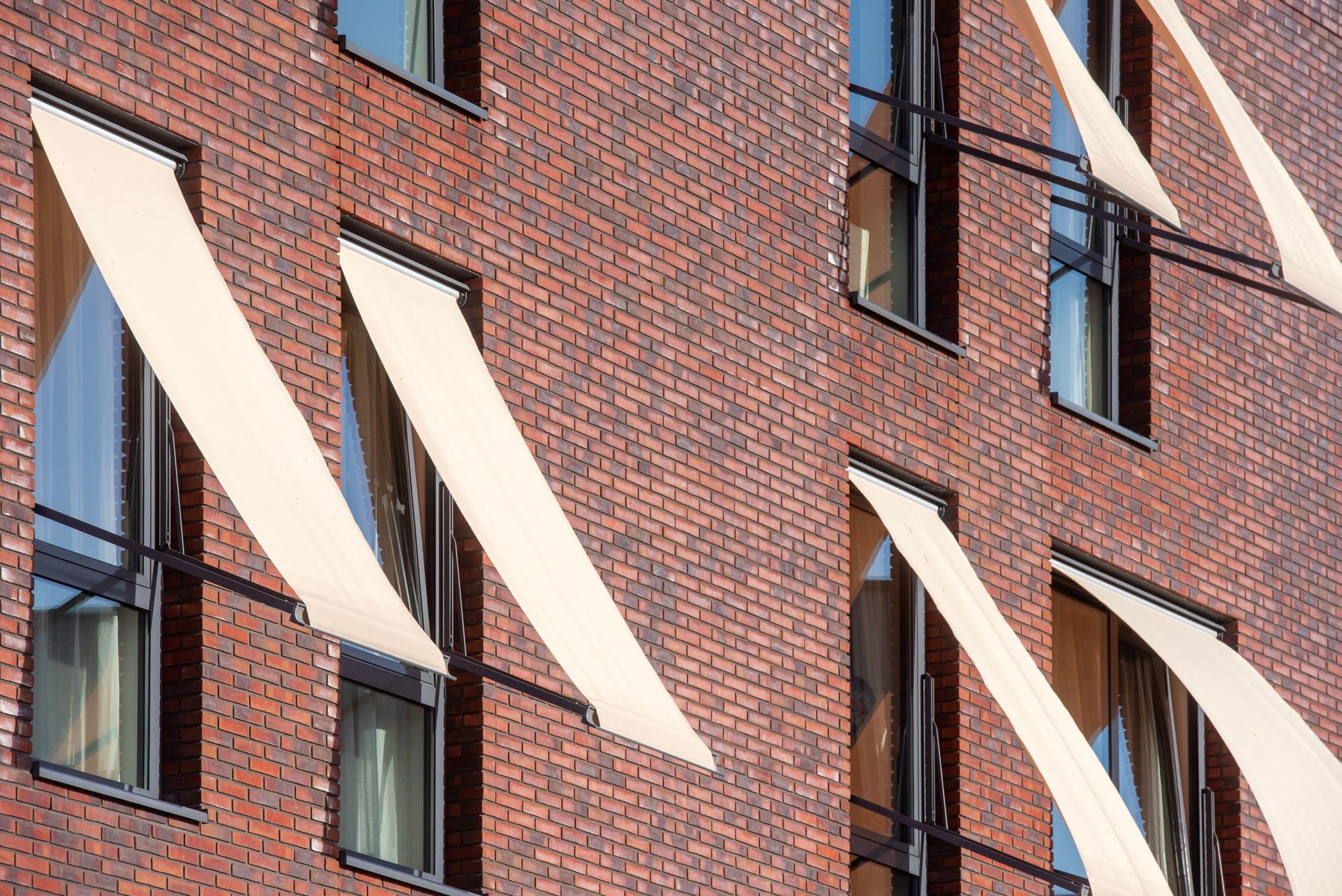
Light control and heat management are two sides of the same coin in a sunroom. The same louver adjustment that softens afternoon glare also reduces the solar heat load entering the room. Understanding how shutters interact with heat and UV helps you make smarter decisions about louver angle throughout the day and across seasons.
How Shutters Reduce Solar Heat Gain
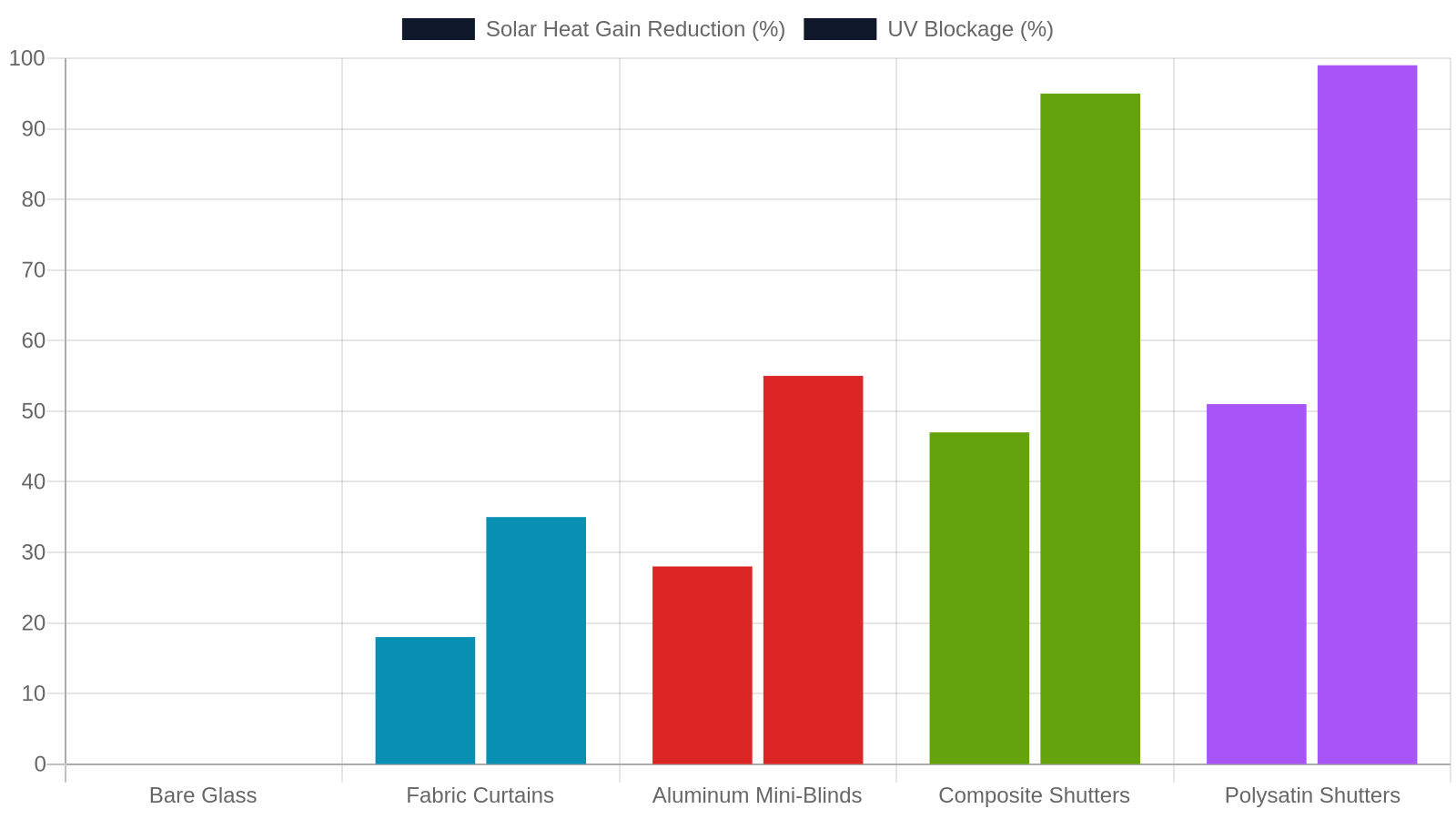
Solar heat gain — the increase in indoor temperature caused by sunlight passing through glass — is the number one comfort complaint in West Tennessee sunrooms during summer. Closed shutter louvers reflect a significant portion of incoming solar radiation back through the glass before it can convert to heat inside the room. Independent testing shows that closed interior shutters can reduce solar heat gain by up to 51% compared to uncovered glass, which translates directly to lower air conditioning costs and a more comfortable space from May through September.
UV Protection for Furniture and Flooring
UV radiation fades hardwood floors, bleaches upholstery, and degrades area rugs faster in sunrooms than anywhere else in the home. Closed or partially closed shutter louvers block up to 99% of UV rays when made from opaque materials, dramatically extending the life of your sunroom furnishings. Even at a 45-degree louver angle — which still admits pleasant diffused light — UV transmission is reduced by more than 70%. This protection alone can save hundreds or thousands of dollars in premature furniture replacement.
Winter Insulation Benefits
The insulation benefit works in both directions. On cold January mornings in Jackson, TN, closed shutters create a dead-air buffer between the cold glass and the room interior, reducing heat loss by up to 45% compared to bare glass. This makes your sunroom usable year-round rather than just during mild weather — a significant quality-of-life improvement and a real boost to the functional square footage of your home.
6. Durability Factors: What Makes a Sunroom Shutter Last 20-Plus Years

A shutter is only as durable as its weakest component. When evaluating shutter options for your Jackson, TN sunroom, look beyond the surface finish and examine the construction details that determine long-term performance. Three factors matter most: frame joinery, tilt mechanism quality, and finish durability.
Frame Construction and Joinery
The frame is the skeleton of the shutter, and its construction determines whether the panel stays square and true over decades of thermal cycling. Look for mortise-and-tenon joinery at the frame corners rather than stapled or glued butt joints. A properly jointed frame resists racking — the diagonal distortion that causes louvers to bind — even as the panel expands and contracts with temperature changes. Ask your installer specifically about joinery method before committing to any shutter brand.
Louver Tension and Tilt Mechanism
The tilt rod or hidden tilt mechanism is the most-used moving part on any shutter. Cheap plastic tension springs lose their grip within a few years, leaving louvers that flop open or won’t stay at the angle you set. Quality shutters use adjustable tension staples or stainless-steel spring clips that can be re-tensioned without removing the shutter from the window. This is a detail worth asking about — it is the difference between a shutter that works perfectly at year fifteen and one that needs replacement at year five.
Finish and Paint Quality
A factory-applied, UV-stable paint finish is far superior to field-painted shutters. Quality manufacturers apply paint in a controlled environment, achieving a consistent 3-to-5 mil dry film thickness that resists chipping, yellowing, and chalking under direct sunlight. Ask whether the finish is water-based or solvent-based, and whether it carries a separate finish warranty. For sunrooms, a finish rated for exterior exposure is worth the modest premium — it will look fresh far longer than a standard interior paint grade.
Sunroom Window Treatment Comparison at a Glance
Use this table to compare the most common sunroom window treatment options across the factors that matter most in a West Tennessee climate.
7. Measuring for a Perfect Fit: Why Professional Measuring Matters
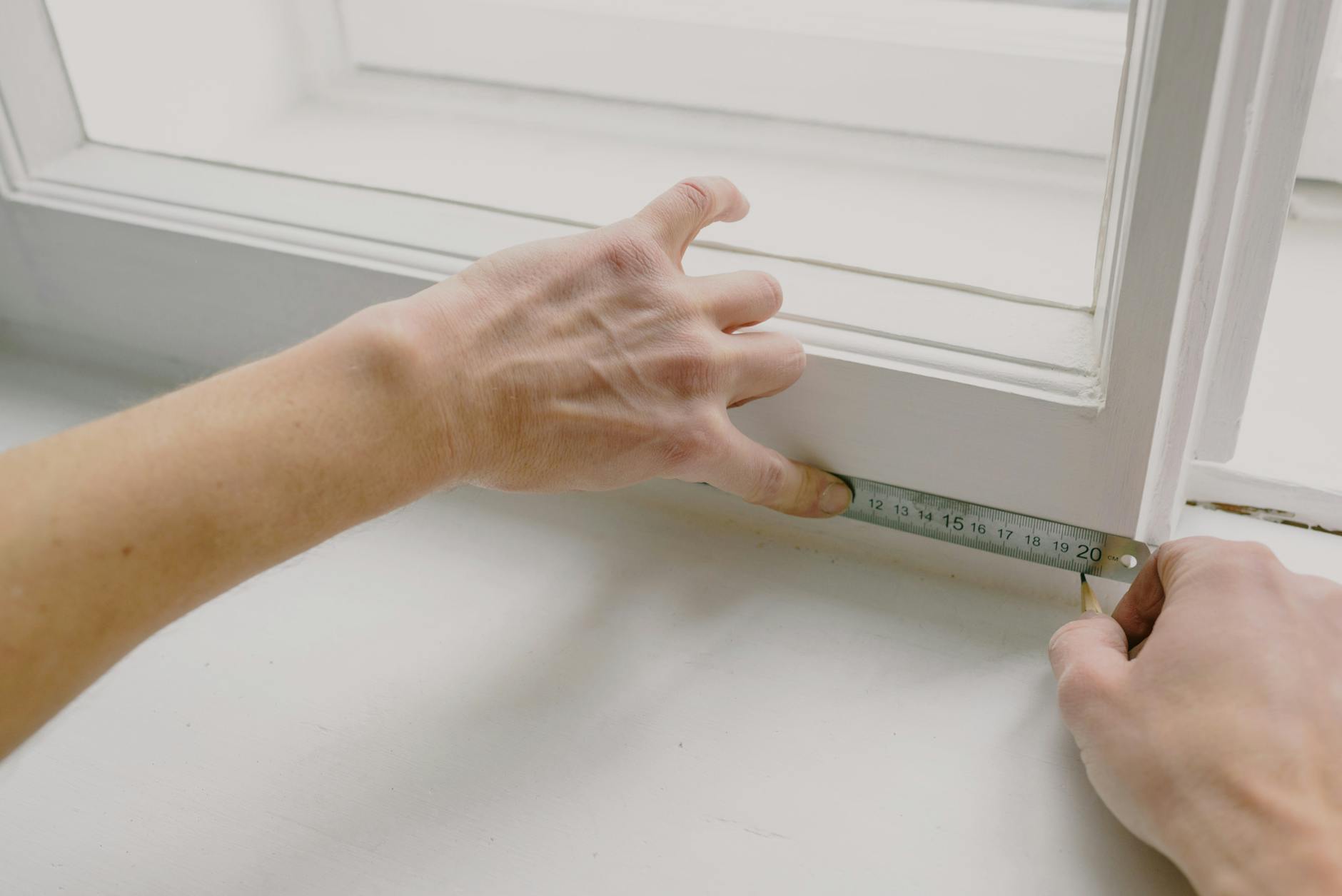
Custom shutters are only as good as the measurements behind them. A shutter that is even slightly out of square will bind, gap, or refuse to close properly — problems that are expensive to fix after installation. This is why professional measuring is not a luxury; it is a prerequisite for a result you will be happy with for the next two decades.
The Hidden Complexity of Sunroom Windows
Sunroom windows look simple from across the room, but they are rarely perfectly square or plumb. Settlement, thermal movement, and construction tolerances mean that a window measuring 36 inches wide at the top may measure 35.75 inches at the bottom — a difference invisible to the eye but significant for a rigid shutter panel. Professional measurers account for these variations by taking multiple measurements at different heights and widths, then ordering the shutter to the smallest dimension with appropriate clearance built in.
Inside Mount vs. Outside Mount
Shutters can be mounted inside the window frame (inside mount) or on the surrounding wall or casing (outside mount). Inside mounts create a clean, built-in look that most homeowners prefer, but they require a minimum frame depth — typically 2.5 to 3.5 inches — to accommodate the shutter frame and hinge clearance. Outside mounts are the solution when frame depth is insufficient or when you want to visually enlarge the window by extending the shutter panel beyond the actual glass area. A professional measurer will identify which option is appropriate for each window in your sunroom.
The Cost of DIY Measuring Mistakes
Custom shutters are made to order — there is no returning a panel that is a half-inch too wide or an inch too short. A measuring error that results in a remake typically costs $150 to $400 per panel in additional fabrication fees, plus the delay of waiting for a new panel to be produced. Professional measuring, which Blinds Galore provides at no charge as part of every free in-home consultation, eliminates this risk entirely and ensures your shutters fit perfectly the first time.
8. Cost Breakdown: What to Budget for Sunroom Shutters in West Tennessee

Budget is always part of the conversation, and custom shutters represent a meaningful investment. Understanding what drives the cost — and how that cost compares to alternatives over time — helps you make a decision you will feel confident about for years to come.
Per-Window Cost Ranges
Custom shutter pricing varies by material, louver size, and window dimensions, but here are realistic ranges for West Tennessee homeowners in 2024:
- Composite shutters: $200–$350 per window (standard rectangular, 24–48 inches wide)
- Polysatin/full-vinyl shutters: $250–$400 per window
- Solid wood shutters: $300–$500 per window
- Specialty shapes (arches, angles): Add 30–60% to the base price
A typical four-season sunroom with eight to twelve windows can expect a total investment of $2,000 to $5,500 depending on material choice and window complexity.
What Drives the Price Up or Down
Several factors push shutter costs toward the higher end of the range: larger louver sizes (4.5-inch louvers use more material per panel), specialty shapes, hidden tilt rods (which add $30–$60 per panel over traditional center tilt rods), and premium paint colors beyond standard white and off-white. Conversely, choosing a standard louver size, rectangular windows, and a stock color keeps costs at the lower end. Professional installation — which Blinds Galore includes — is typically valued at $50–$100 per window if priced separately, so bundled installation represents real savings.
Long-Term Value vs. Alternatives
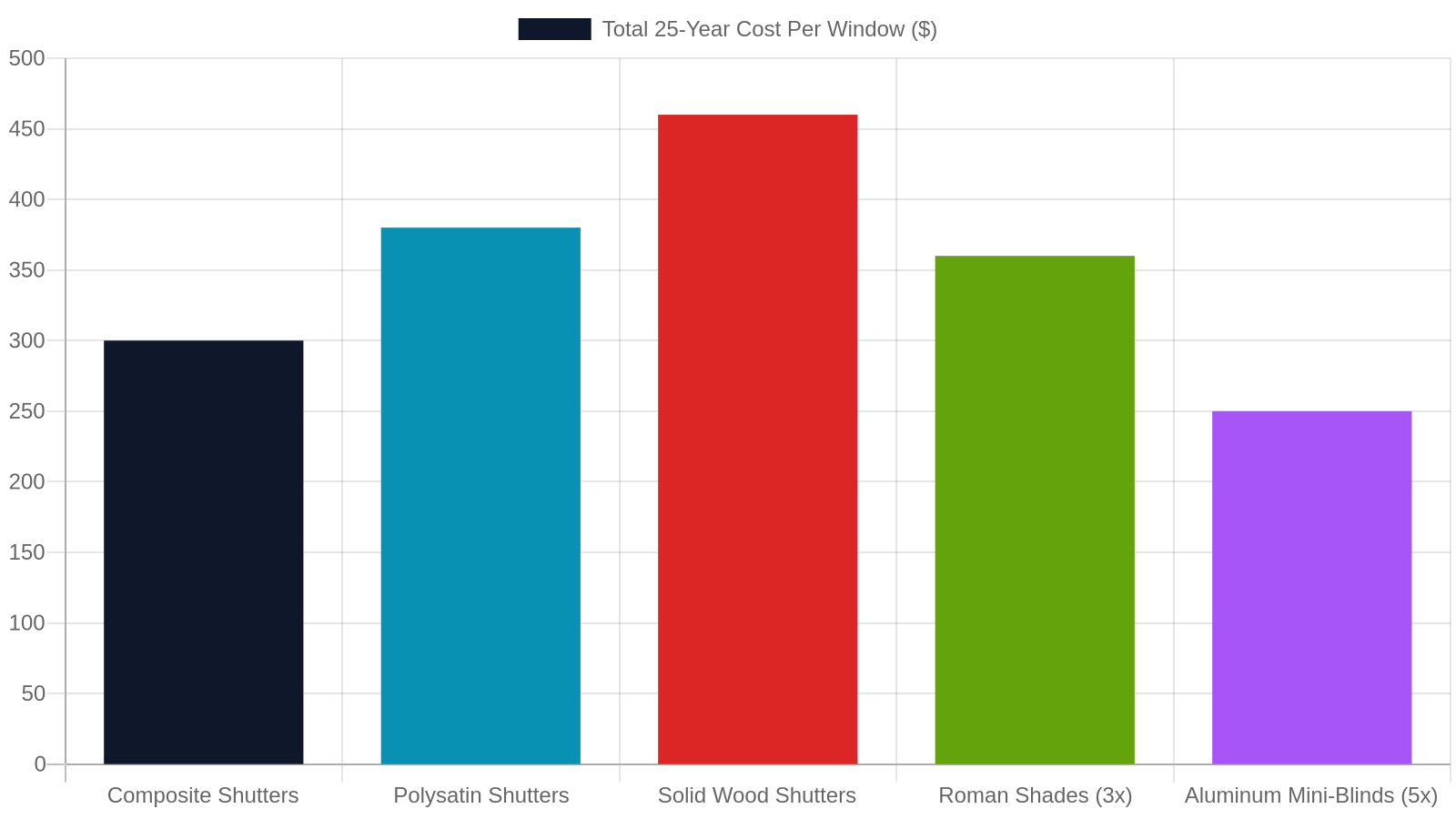
Compared to fabric Roman shades (which may need replacement every 5–8 years in a sunroom) or aluminum mini-blinds (2–4 years in direct sun), custom shutters’ 20-plus-year lifespan makes them the lowest cost-per-year option when amortized over time. A $3,000 shutter investment over 25 years costs $120 per year. Three rounds of $800 Roman shade replacements over the same period costs $2,400 — and that does not account for the labor and inconvenience of repeated replacement.
9. Ready to Transform Your Jackson TN Sunroom? Here Is Your Next Move
You have done the research. You understand the materials, the louver sizes, the cost considerations, and why custom shutters outperform every alternative in a West Tennessee sunroom. The next step is the easiest one: let Blinds Galore come to you. Serving Jackson, TN and the greater West Tennessee region, our team brings 18-plus years of local expertise directly to your home — at no charge and with zero obligation.
Start with a Free In-Home Consultation
The best way to choose the right shutter for your sunroom is to see samples in your actual space — under your actual lighting conditions, against your actual wall colors and flooring. Blinds Galore brings the showroom to you with a free in-home consultation that includes professional measuring, material samples, and a no-pressure recommendation tailored to your sunroom’s specific needs. We serve Jackson, TN and surrounding communities including Lexington, Henderson, and Milan. Call us at (731) 571-5179 to schedule your visit.
Our 100% Satisfaction Guarantee
With over 18 years of experience serving West Tennessee homeowners, Blinds Galore stands behind every installation with a 100% satisfaction guarantee. If something is not right — fit, finish, or function — we make it right. That commitment, combined with professional measuring and custom fabrication, means you are not taking a risk when you invest in custom shutters for your sunroom. You are making a decision backed by craftsmanship, experience, and a team that genuinely cares about getting it right for your home.
Explore Your Custom Shutter Options Online
Want to learn more before scheduling your consultation? Browse our custom-built shutter options to see the styles, materials, and configurations available for sunrooms and every other room in your home. You can also explore our custom shade collection if you are weighing shutters against a softer window treatment alternative. When you are ready to take the next step, our team is just a phone call away at (731) 571-5179.
Frequently Asked Questions
What is the best type of shutter for a sunroom in Jackson TN?
Polysatin or full-vinyl shutters are the best choice for most Jackson, TN sunrooms because they resist warping, fading, and moisture damage even under intense West Tennessee sun and high humidity. They carry lifespans of 25 years or more with minimal maintenance.
How much do custom shutters cost for a sunroom in West Tennessee?
Custom shutters for a West Tennessee sunroom typically cost $200–$400 per window depending on material and size. A full sunroom with eight to twelve windows generally runs $2,000–$5,500 installed, including professional measuring and installation.
Can plantation shutters be made for arched sunroom windows?
Yes. Custom-fabricated arch shutters are built to the exact radius of your window opening. The arch portion is typically a fixed decorative panel, while operable louver panels below handle daily light adjustment. Professional measuring is essential for a proper fit.
Do shutters really help keep a sunroom cooler in summer?
Yes. Closed shutter louvers can reduce solar heat gain by up to 51% compared to bare glass, and they block up to 99% of UV radiation. This meaningfully reduces the cooling load on your HVAC system and makes the sunroom comfortable even during peak West Tennessee summer heat.
How long does it take to get custom shutters installed in Jackson TN?
After your free in-home consultation and measurement appointment, custom shutters are typically fabricated and ready for installation in three to five weeks. Installation itself usually takes two to four hours for a standard sunroom, depending on the number and complexity of windows.
What louver size should I choose for my sunroom shutters?
The 3.5-inch louver is the most popular choice for sunrooms because it balances precise light control with an open view when the louvers are tilted up. Choose 4.5-inch louvers for large picture windows or a modern aesthetic, and 2.5-inch louvers for smaller windows or a more traditional look.
You might also like

Best Plantation Shutters for Jackson TN Entryways: 9 Things to Know
Quick answer: Plantation shutters are one of the best window treatment choices for Jackson, TN entryways

Custom Shutters for Bedrooms in Jackson, TN: Privacy, Light Control, and 8 Design Options
Quick answer: Custom bedroom shutters give Jackson, TN homeowners the best combination of privacy, light

Custom Shutters for Living Rooms in Jackson, TN: Your Style and Light Control Guide
Quick answer: Custom plantation shutters are one of the best investments a Jackson, TN homeowner can

Custom Shutters for Dining Rooms in Jackson, TN: Your Complete Style and Light Control Guide
Quick answer: Custom plantation shutters are the most versatile and durable window treatment for dining
Plantation Shutters for Bathroom Windows in Jackson, TN: Your 9-Point Guide to Moisture Resistance
Quick answer: Custom plantation shutters are the top moisture-resistant window treatment for Jackson,

9 Ways Custom Plantation Shutters Boost Your Jackson, TN Home’s Resale Value
Quick answer: Custom plantation shutters are one of the highest-ROI window treatments a Jackson, TN homeowner