

Custom Shutters for Dining Rooms in Jackson, TN: Your Complete Style and Light Control Guide
Quick answer: Custom plantation shutters are the most versatile and durable window treatment for dining rooms in Jackson, TN. They give you precise control over natural light — from a bright, open setting for daytime meals to a dimmed, intimate atmosphere for evening dinners — while adding lasting architectural value to your home. Hardwood and faux-wood options start around $200–$400 per window installed, and with proper care they last 20+ years. Blinds Galore offers free in-home consultations across West Tennessee so you can see samples in your actual space before committing.
Why Dining Rooms Demand a Different Window Treatment Strategy
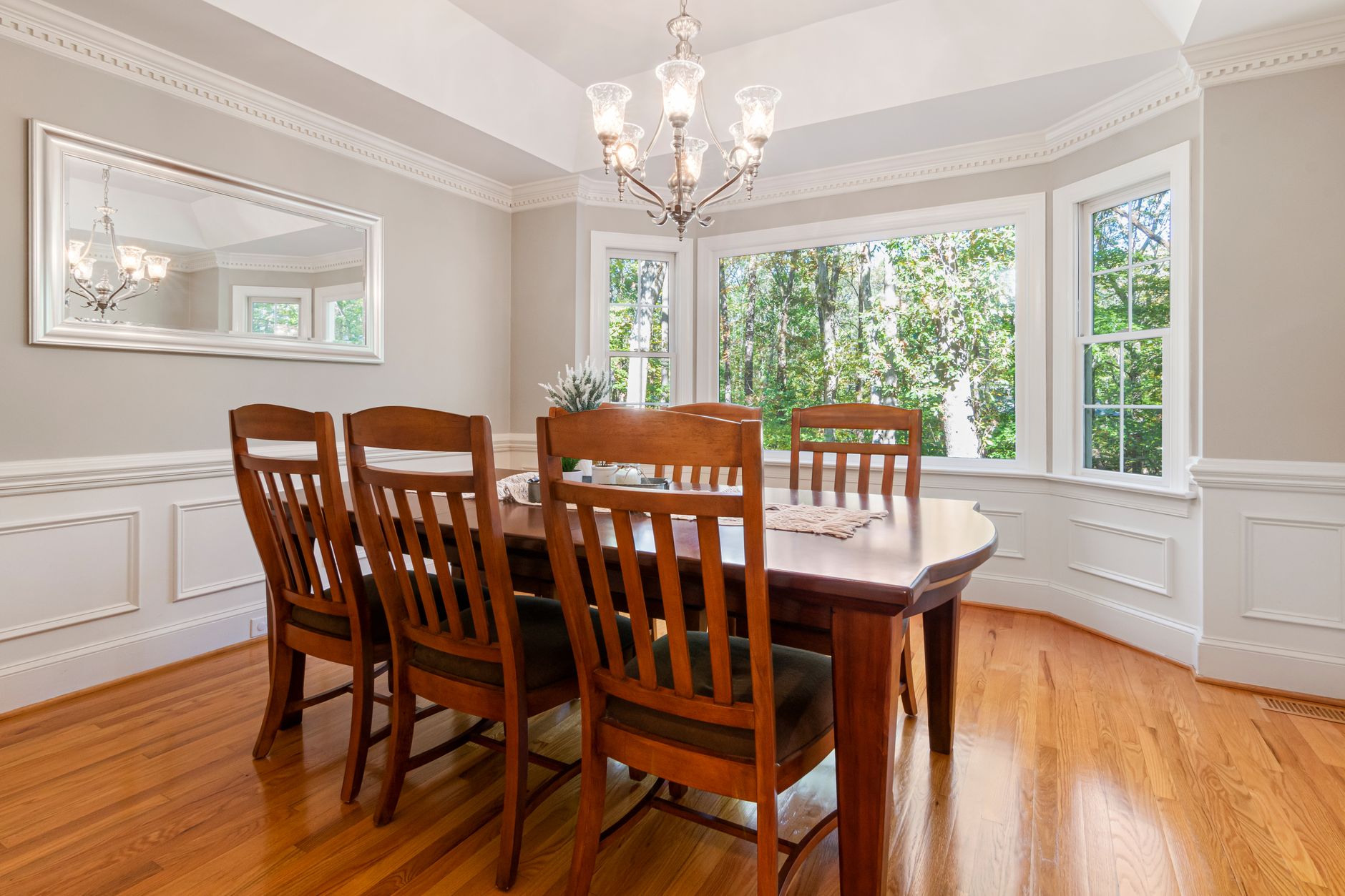
Most homeowners in Jackson, TN choose window treatments based on looks alone — and then spend years fighting with glare, heat, and privacy problems at the dinner table. The dining room is actually one of the most demanding rooms in the house when it comes to light management. Understanding why helps explain why custom shutters consistently outperform every alternative.
The Unique Lighting Challenges of a Dining Space
Dining rooms are one of the most multi-purpose rooms in any home. At 7 a.m. you want cheerful morning light streaming in over coffee. By noon you need glare off the table controlled so you can actually see your food. Come 7 p.m., you want a warm, dimmed atmosphere that makes a weeknight dinner feel like a special occasion. No other room swings through that many lighting moods in a single day.
- Glare on glossy table surfaces can make midday meals uncomfortable
- West-facing dining rooms in Jackson, TN get intense afternoon sun from roughly 2–6 p.m.
- Privacy matters — neighbors and passersby shouldn’t have a clear view of your dinner table
Why Standard Blinds and Curtains Often Fall Short
Off-the-shelf horizontal blinds give you two settings: fully open or fully closed. Curtain panels offer softness but little precision. Neither solution handles the full range of a dining room’s needs elegantly. Custom shutters, by contrast, let you tilt louvers to any angle — bouncing light toward the ceiling for a diffused glow, or angling it downward to illuminate the table without glare. That granular control is why interior designers consistently recommend shutters for dining spaces.
What Are Custom Plantation Shutters? A Clear Definition
Before choosing any window treatment, it helps to understand exactly what you’re buying. The term plantation shutter gets used loosely, but there are specific structural features that separate a true custom shutter from an imitation — and those features directly affect how well the product performs in your dining room over the next two decades.
Anatomy of a Plantation Shutter
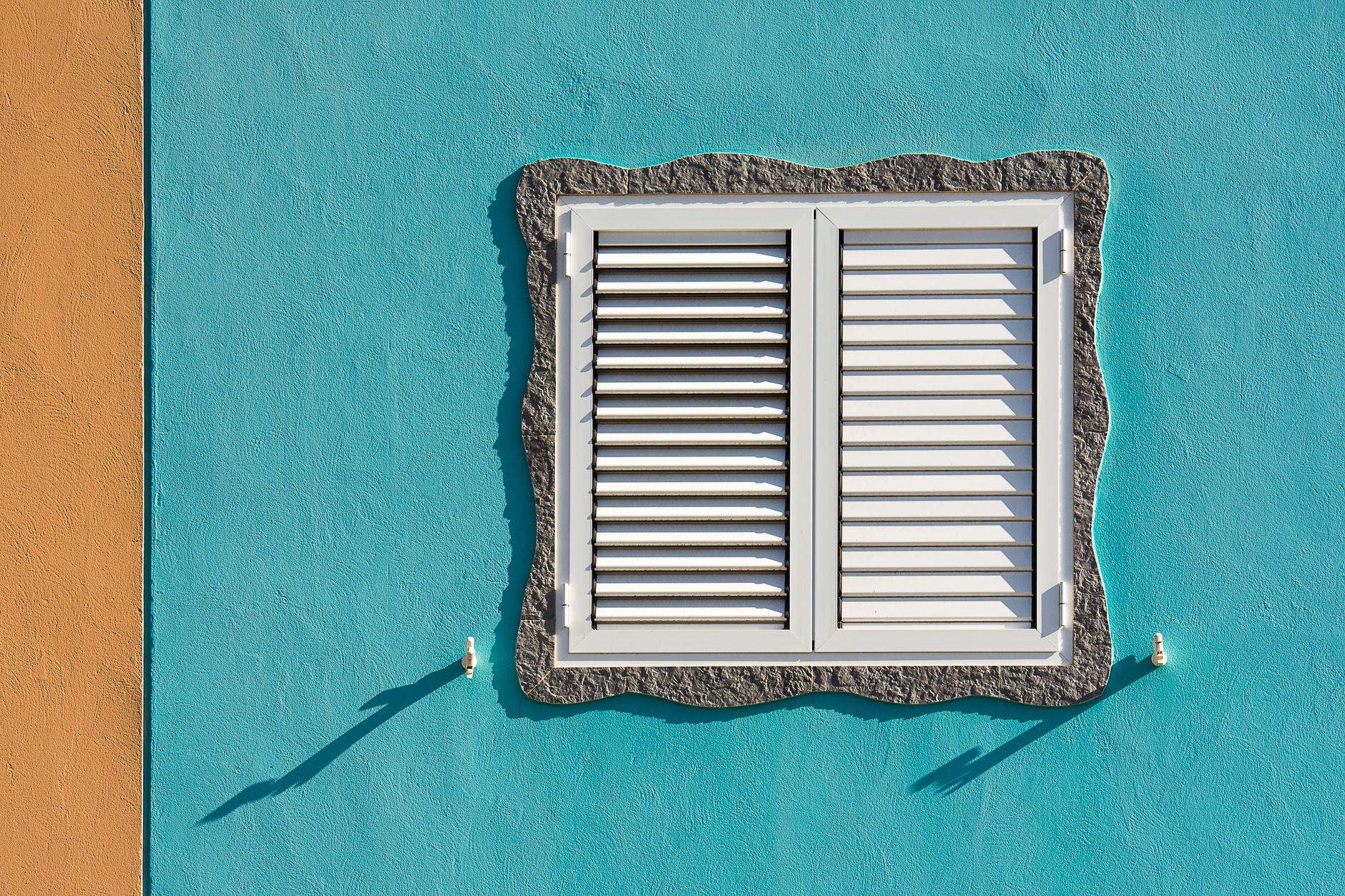
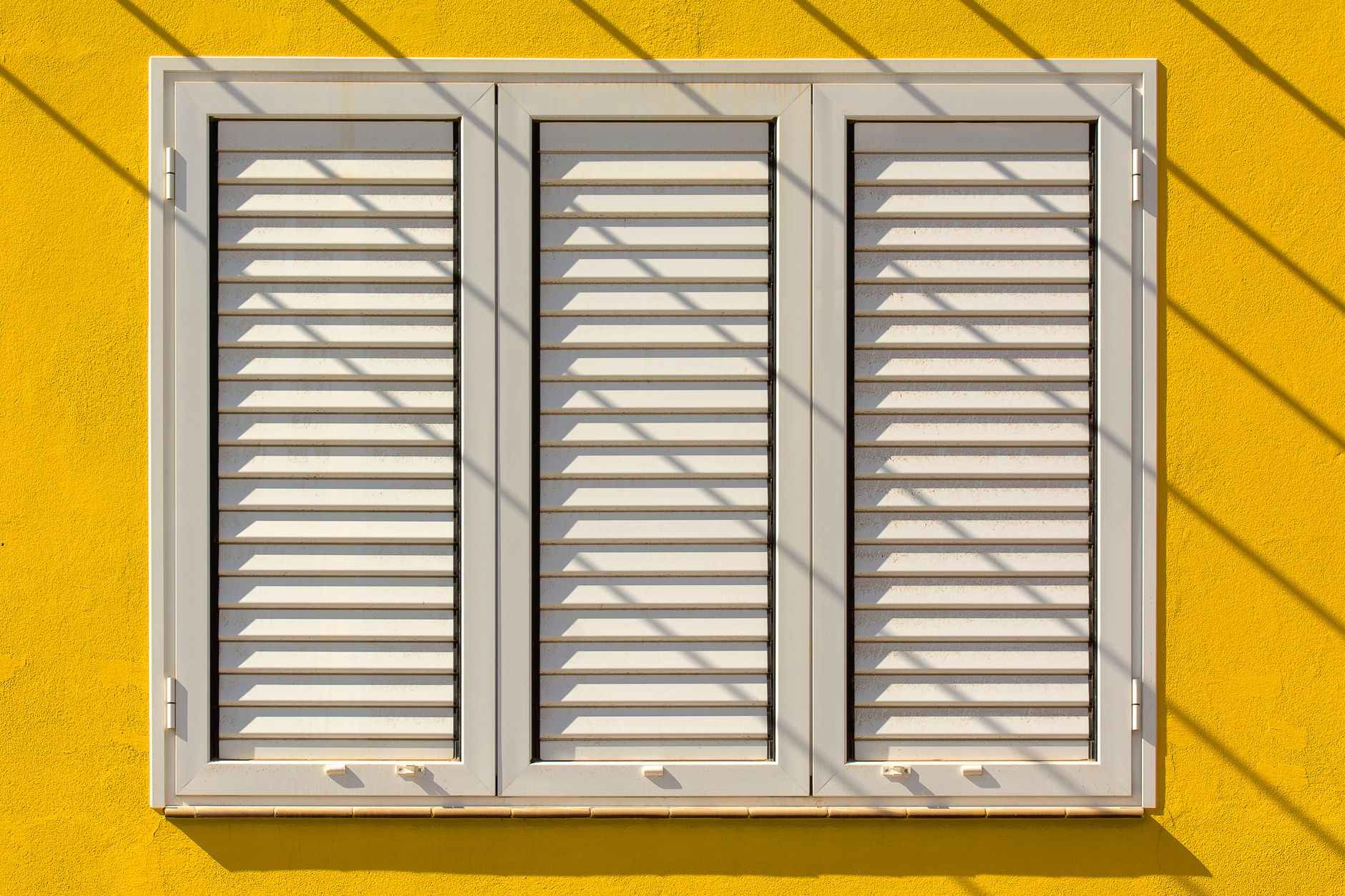
A plantation shutter is a solid interior window covering built from a rigid frame — called the stile and rail — with horizontal slats (louvers) running across the panel. Unlike ready-made shutters sold at big-box stores, custom shutters are built to the exact measurements of your window opening, including any arches, angles, or non-standard shapes common in older Jackson-area homes.
- Frame: Mounts directly to the window casing or inside the jamb
- Louvers: Typically 2.5″, 3.5″, or 4.5″ wide — larger louvers let in more light and give a more open view
- Tilt rod: The center bar (or hidden mechanism) that rotates all louvers simultaneously
- Panels: Single, bi-fold, or bypass configurations depending on window width
Custom vs. Stock: Why the Difference Matters
Stock shutters from a home improvement store are manufactured in fixed sizes and must be cut down or shimmed to fit — a process that leaves visible gaps and compromises both insulation and aesthetics. Custom-built shutters are measured to within 1/8″ of your exact window dimensions, ensuring a flush, professional fit with no light leaks around the edges. For a dining room where you’re investing in a finished, polished look, that precision is non-negotiable.
Shutter Materials Compared: Hardwood, Faux Wood, and Poly
The material your shutters are made from determines their lifespan, their response to West Tennessee’s humid climate, and their price point. There are three main categories to understand, each with distinct trade-offs for dining room use.
Real Hardwood Shutters
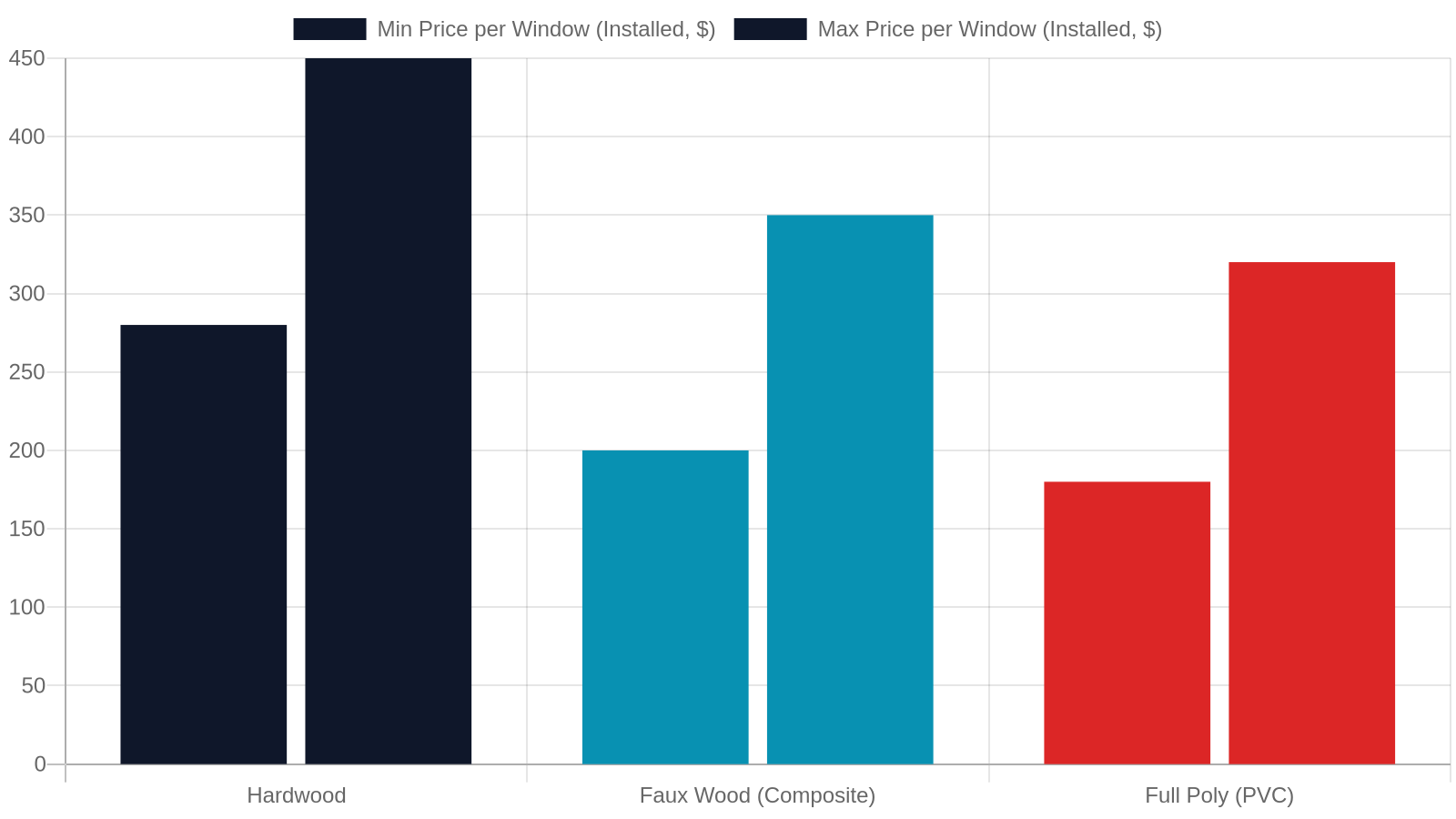
Hardwood shutters — typically crafted from basswood, poplar, or maple — are the premium choice for formal dining rooms. They accept paint and stain beautifully, feel substantial when you tilt the louvers, and can be refinished if they’re ever scratched or chipped. Expect to pay $280–$450 per window installed in the Jackson, TN market. The main drawback: hardwood is sensitive to humidity. Dining rooms near kitchens that produce a lot of steam may see slight warping over many years.
Faux Wood (Composite) Shutters
Faux wood shutters use a composite core — often MDF or PVC-wrapped wood — that resists moisture and warping far better than solid wood. They’re the most popular choice in West Tennessee homes because they handle the region’s humid summers without issue, cost roughly $200–$350 per window installed, and are virtually indistinguishable from hardwood at normal viewing distances. For most dining rooms in Jackson, Lexington, or Henderson, faux wood hits the sweet spot of performance and value.
Full Poly (PVC) Shutters
Full PVC shutters are the most moisture-resistant option — ideal for bathrooms and laundry rooms, but generally overkill for dining rooms unless your space has an unusually high humidity problem. They cost slightly less than faux wood ($180–$320 per window) but feel lighter and less substantial when operated. For a formal dining room where tactile quality matters, most homeowners prefer the weight and feel of faux wood or hardwood over full poly.
Louver Size and Light Control: Choosing the Right Width for Your Dining Room
Louver width is one of the most important — and most overlooked — decisions in the shutter selection process. It affects how much light enters the room, how private the space feels, and the overall visual weight of the shutters on your wall. Here’s how the three standard sizes stack up for dining room use.
2.5" Louvers: Traditional and Detail-Rich
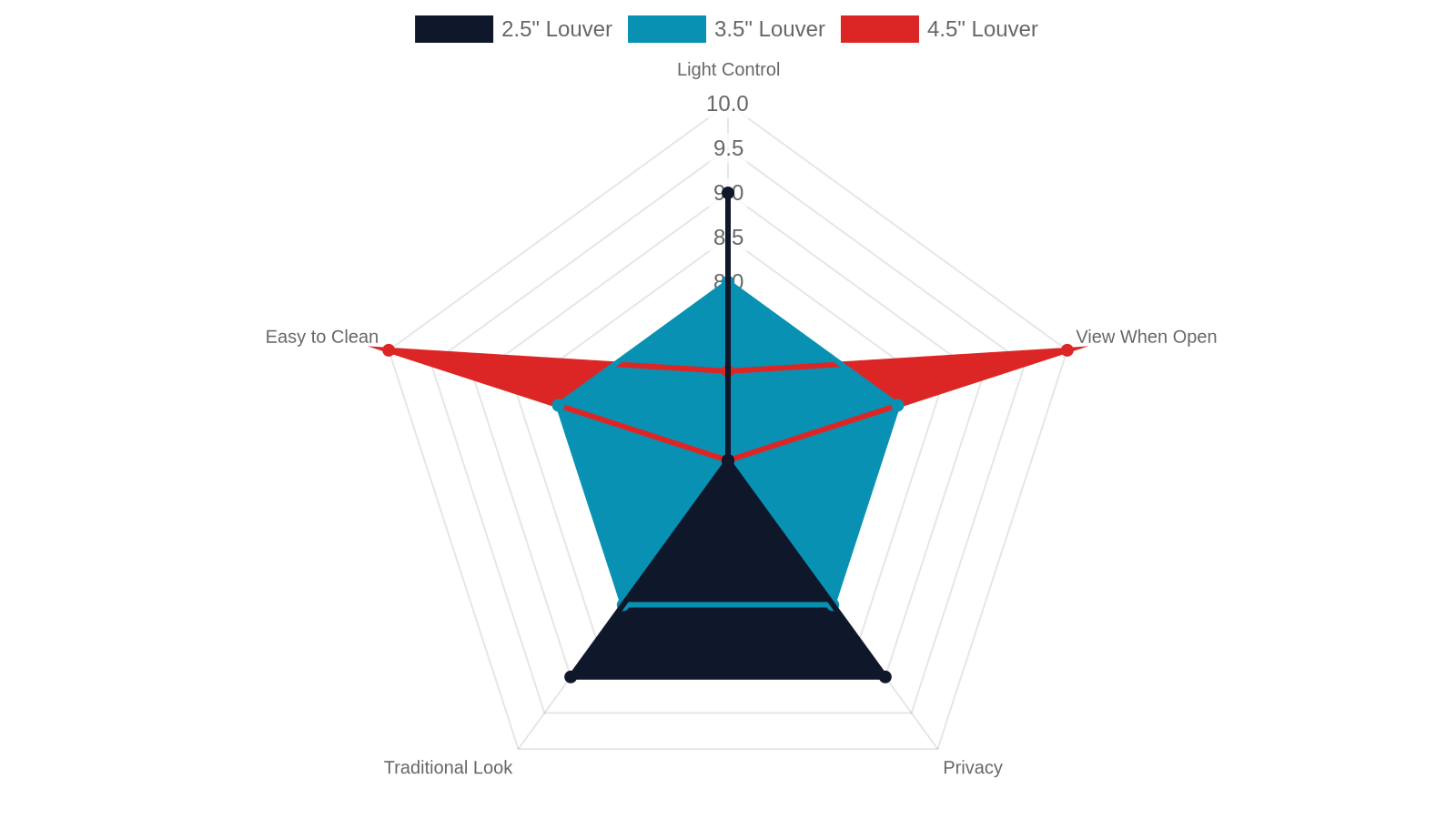
The smallest standard louver size creates a classic, cottage-style look with more horizontal lines visible across the shutter panel. More louvers per panel means finer control over light direction — you can create very subtle gradations of brightness. The trade-off is a slightly obstructed view when the louvers are open, since the slats themselves are narrower. Best for: smaller dining room windows, traditional or farmhouse-style homes, and homeowners who prioritize privacy over an unobstructed outdoor view.
3.5" Louvers: The All-Around Sweet Spot
The 3.5″ louver is the most popular size Blinds Galore installs in Jackson-area dining rooms, and for good reason. It balances traditional aesthetics with a cleaner, more open look. When the louvers are fully open, the view through the window is nearly unobstructed. When tilted, the wider slats move more light per degree of rotation, giving you faster transitions between bright and dim settings. This size works beautifully in most standard dining room windows — typically 36″–60″ wide.
4.5" Louvers: Modern, Airy, and View-Maximizing
The largest standard louver size creates a contemporary, architectural look with fewer horizontal lines and maximum visibility when open. A 4.5″ louver lets you see almost the entirety of your backyard or garden view when the shutters are open — a major selling point for dining rooms that overlook a beautiful outdoor space. These louvers are also the easiest to clean since there are fewer slats to wipe down. Best for: large windows, modern or transitional home styles, and rooms with scenic views worth preserving.
Paint, Stain, and Finish Options That Complement Dining Room Décor
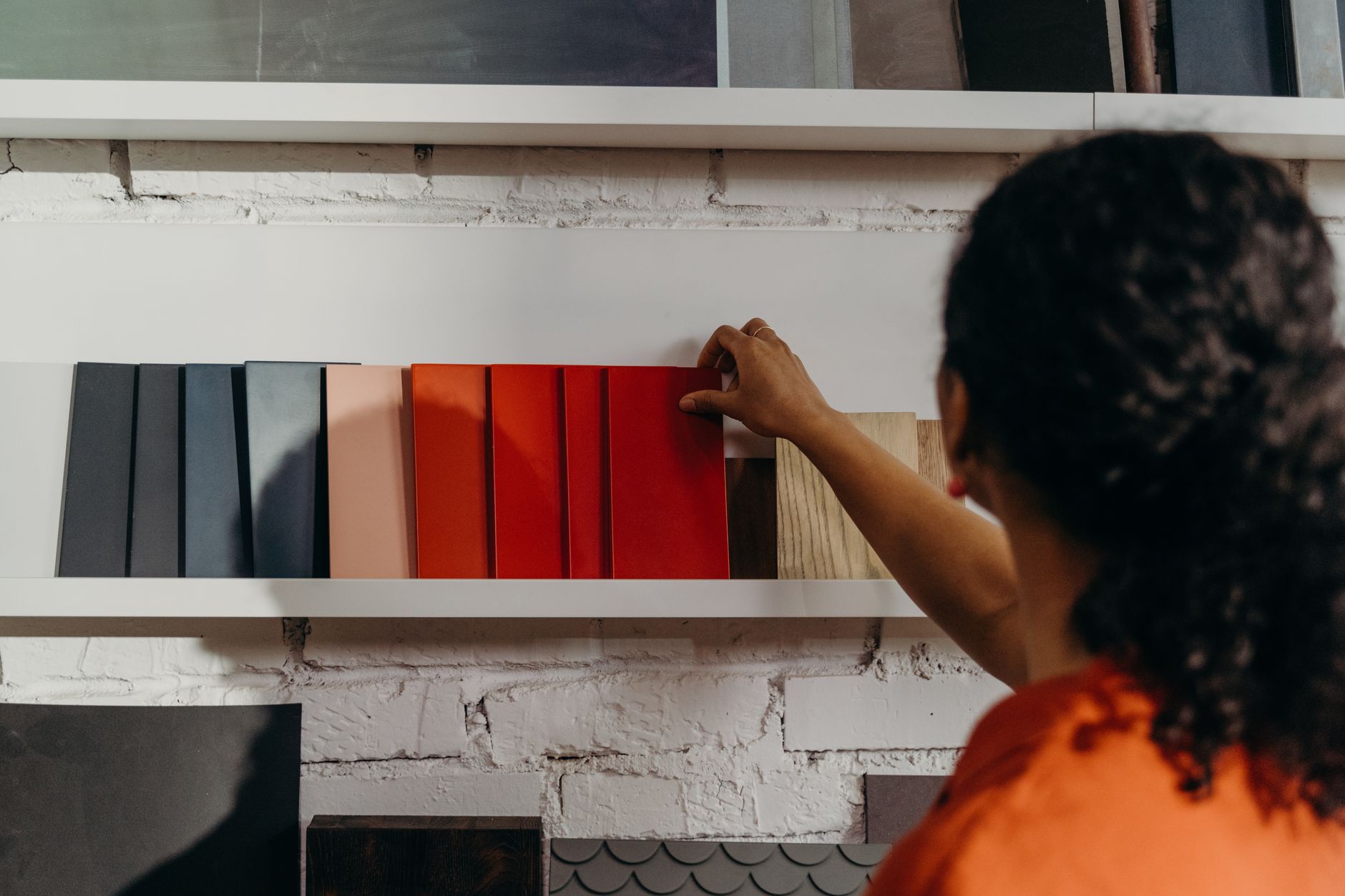
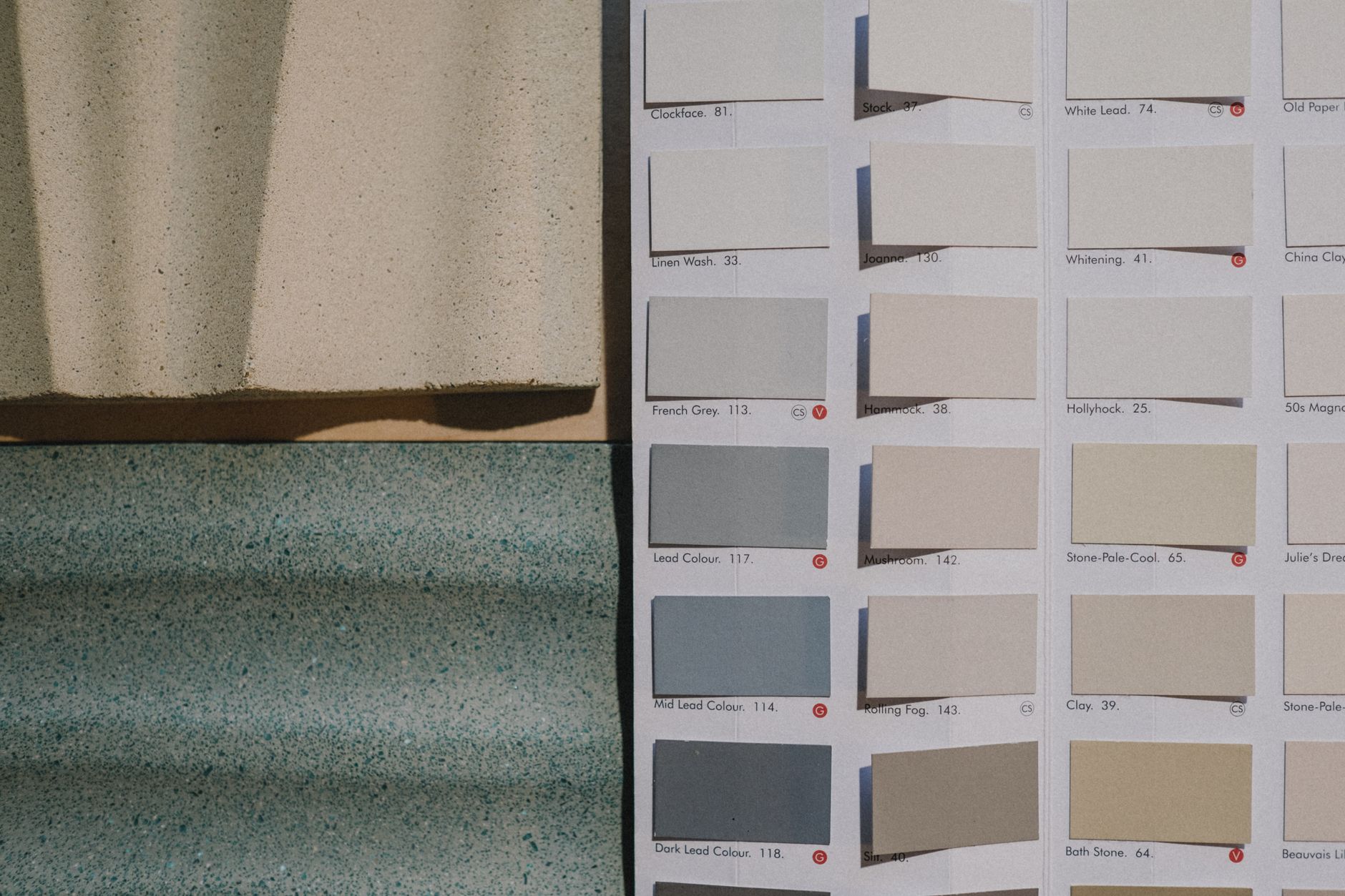
The finish on your shutters is the detail that ties the whole dining room together — or clashes with it. Custom shutters give you far more finish options than any off-the-shelf product, and the right choice depends on your existing furniture, wall color, and the overall mood you want the room to convey.
Classic White and Off-White Finishes
Bright white shutters — including shades like Antique White, Linen, and Alabaster — are the most popular finish choice in West Tennessee dining rooms because they work with virtually every wall color and furniture style. White shutters also reflect light back into the room, making smaller dining spaces feel larger and brighter. If your dining room has white or light-gray trim work, a matching white shutter creates a seamless, built-in look that adds real perceived value to the home.
Wood Stain Finishes for Warm, Formal Spaces
If your dining room features dark wood furniture — mahogany, cherry, or walnut — a matching wood stain on hardwood shutters creates a cohesive, formal aesthetic that feels intentional and designed. Popular stain options include Chestnut, Espresso, and Natural Oak. Note that stained shutters are only available on real hardwood (not faux wood or poly), so this choice does carry a premium. Expect to add roughly $40–$80 per window for a custom stain finish versus standard paint.
Bold and Painted Colors for Statement Dining Rooms
Increasingly, Jackson-area homeowners are choosing painted shutters in deep, dramatic colors — navy, sage green, charcoal, or even black — to make their dining room windows a design focal point. This works especially well in homes with neutral walls where the shutters become the primary design element. Custom shutters can be painted to match any Benjamin Moore or Sherwin-Williams color chip, giving you unlimited design flexibility. If you’re considering a bold color, this is one area where an in-home consultation pays for itself — seeing a color sample against your actual walls and in your actual lighting is essential.
Panel Configurations: How to Handle Large and Unusual Dining Room Windows
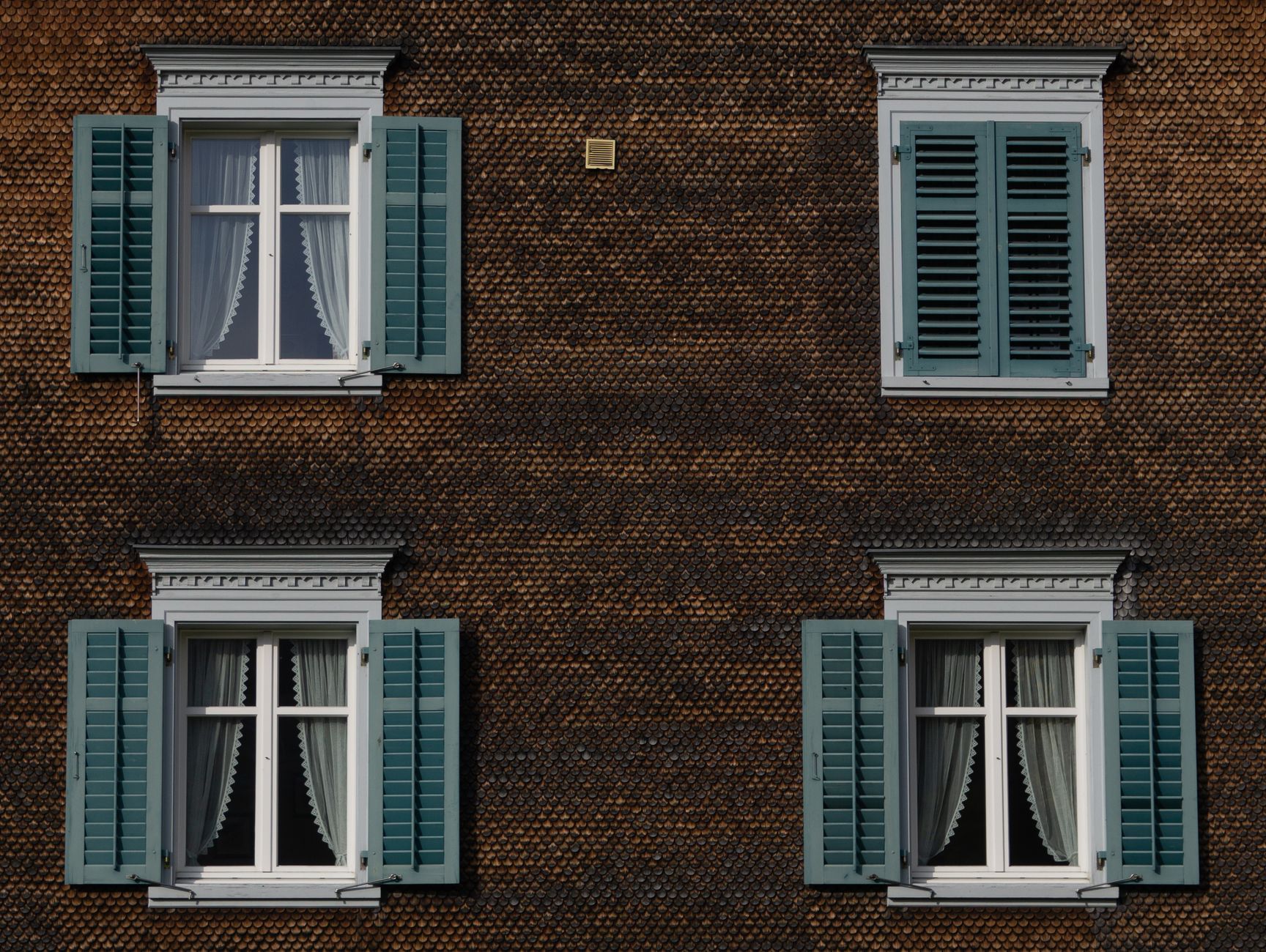
Not every dining room window is a simple rectangle. Jackson-area homes — from historic bungalows in midtown to newer construction in the surrounding communities of Milan and Lexington — present a wide variety of window shapes and sizes. The right panel configuration ensures your shutters operate smoothly and look intentional, no matter the window geometry.
Bi-Fold and Single-Panel Configurations
For standard dining room windows up to about 48″ wide, a single-panel or bi-fold shutter is the cleanest solution. Single panels swing open like a door on a piano hinge, giving you full, unobstructed access to the window. Bi-fold panels fold in half, which is useful when there’s limited clearance beside the window — a common situation in older Jackson-area homes where furniture is placed close to the wall. Both configurations are available in any louver size and finish.
Bypass and Sliding Configurations for Wide Windows
Dining rooms with wide picture windows or sliding glass doors (common in ranch-style homes throughout West Tennessee) require a bypass or sliding configuration. Instead of swinging open, the panels slide horizontally along a track — similar to a sliding door. This allows you to cover a 96″+ span without the panels swinging into the room. The trade-off is that only half the window is accessible at any given time, but for most dining room uses this is perfectly acceptable.
Arched and Specialty Shape Shutters
Many dining rooms in the Jackson area feature arched transoms, angled tops, or bay window configurations that make off-the-shelf treatments completely impractical. Custom shutters are built to match any shape — including full arches, half-rounds, and raked (angled) tops. Arched shutter panels are typically fixed (non-operable) since the curved geometry makes louver operation difficult, but they’re paired with operable rectangular panels below for full light control. Specialty shapes add roughly $100–$200 per window to the total cost but create a dramatic, finished look that’s impossible to achieve any other way.
Energy Efficiency and Comfort: What Shutters Actually Do for Your Dining Room
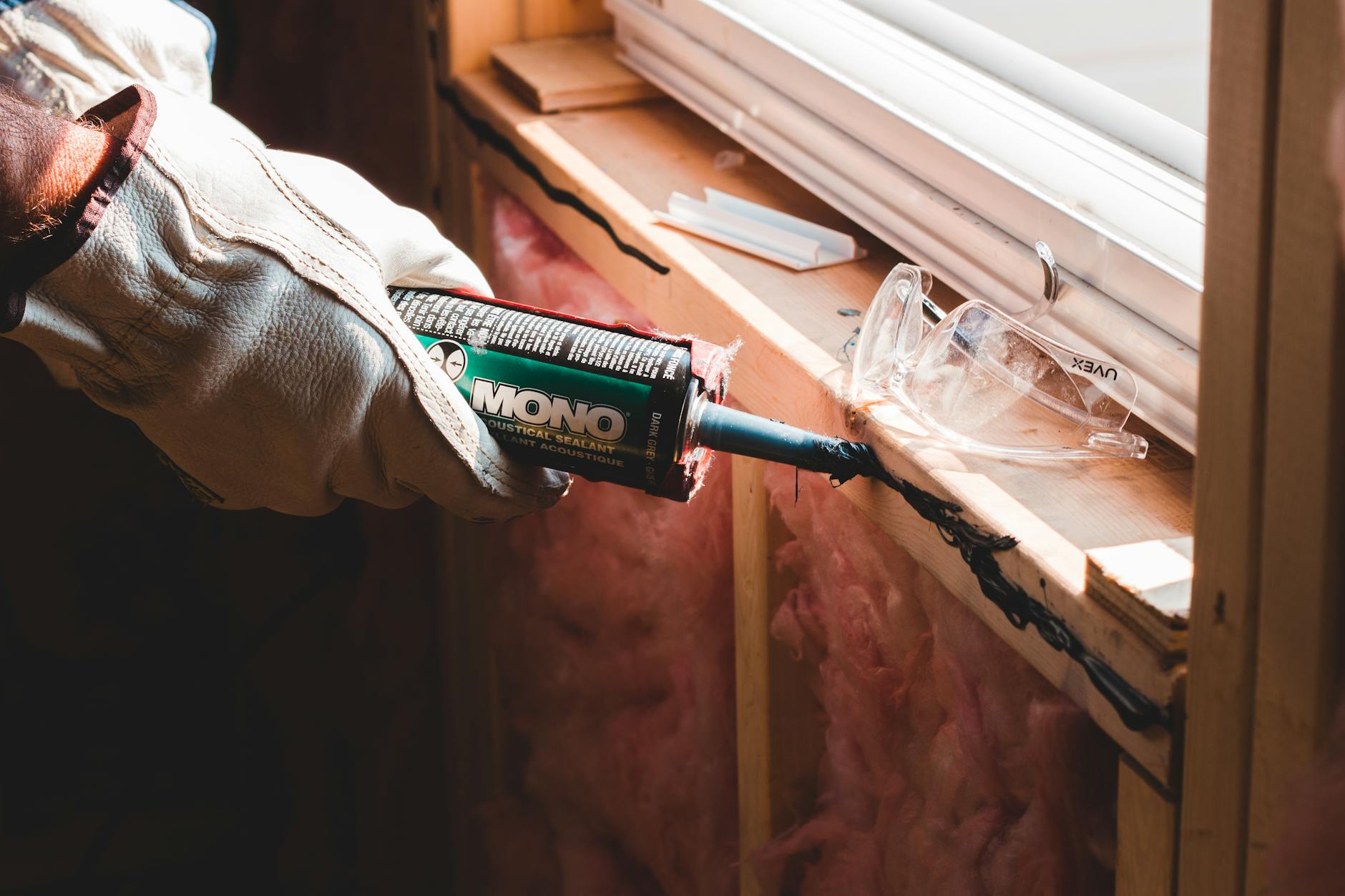
Beyond aesthetics and light control, custom shutters deliver measurable energy efficiency benefits that matter year-round in West Tennessee’s climate. Understanding the numbers helps justify the investment beyond just the visual upgrade.
Insulation Value: The R-Factor Explained
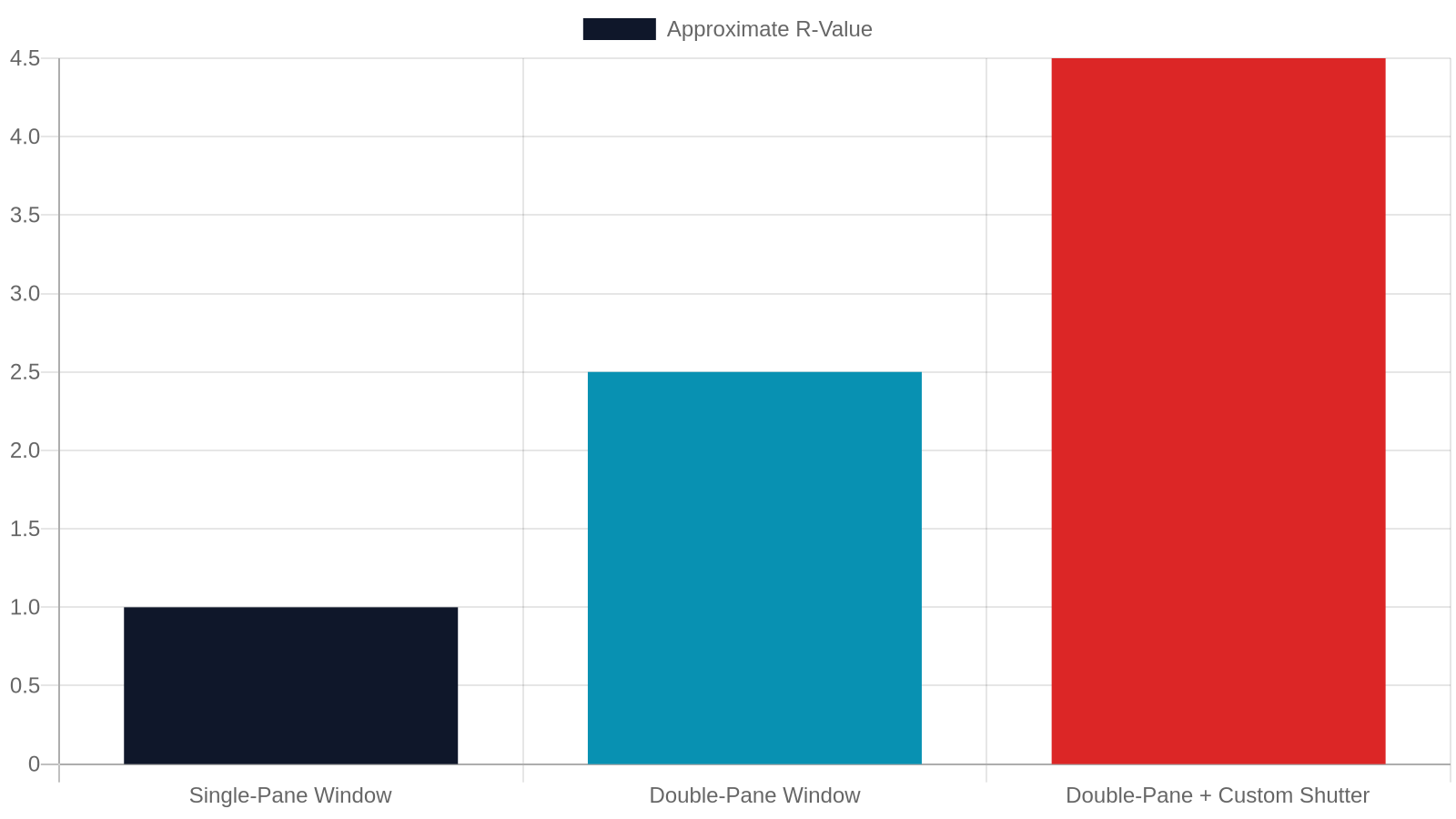
Windows are the weakest point in any home’s thermal envelope. A standard single-pane window has an R-value of about R-1. A double-pane window improves that to roughly R-2 to R-3. A custom shutter installed over a double-pane window adds approximately R-1.5 to R-2 of additional insulation by creating a dead-air space between the glass and the shutter panel. In practical terms, that means your dining room stays cooler in Jackson’s hot summers and warmer in winter — reducing the load on your HVAC system and lowering energy bills.
UV Protection for Furniture and Flooring
West Tennessee gets an average of 213 sunny days per year — well above the national average of 205. That’s great for mood, but brutal on dining room furniture, hardwood floors, and area rugs. UV radiation is the primary cause of fading in wood furniture and flooring. Custom shutters, when closed or partially closed, block up to 99% of UV rays depending on the material and louver angle. Over a 10-year period, that protection can save thousands of dollars in furniture replacement and floor refinishing costs.
Heat Gain Reduction in West-Facing Dining Rooms
If your dining room faces west — a very common orientation in Jackson subdivisions — you deal with intense afternoon heat gain from roughly 2 p.m. to sunset. Closing the louvers during peak afternoon hours can reduce solar heat gain through the window by 45–50%, according to the U.S. Department of Energy. That’s a meaningful reduction that makes late-afternoon meals far more comfortable without cranking the air conditioning.
Shutters vs. Other Dining Room Window Treatments: An Honest Comparison
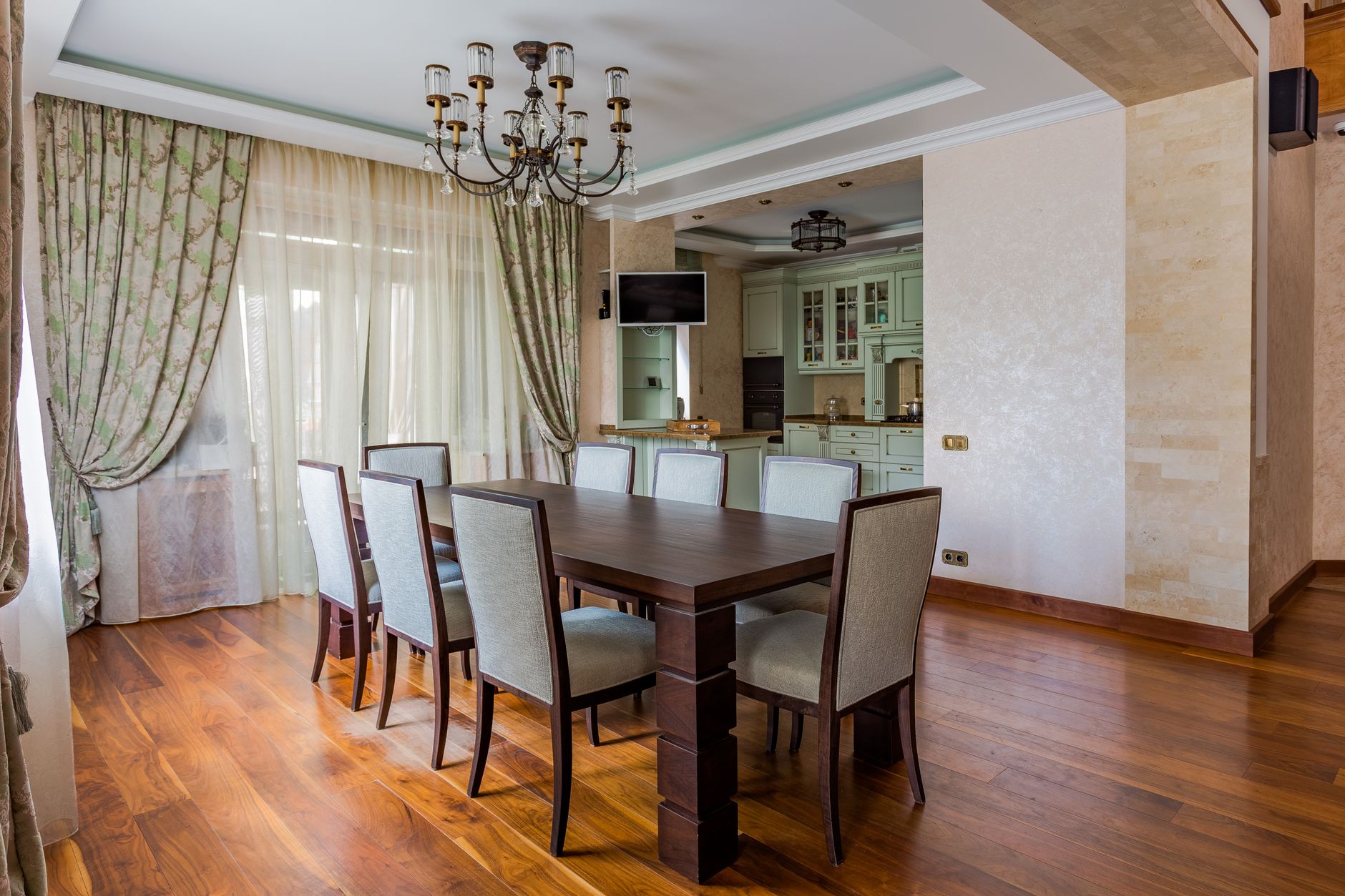
Custom shutters aren’t the right choice for every window in every home — but for dining rooms specifically, they outperform the alternatives across most of the metrics that matter. Here’s an honest look at how they compare to the two most popular fabric alternatives.
How Shutters Stack Up Against Roman Shades
Roman shades are a popular alternative for dining rooms because they offer a soft, layered look. They work well for light filtering but provide no insulation benefit and limited privacy control — when raised, the window is completely exposed. They also collect dust in their fabric folds and are harder to clean than a painted shutter louver. Roman shades typically cost $150–$350 per window installed, putting them in a similar price range to faux wood shutters, but with a shorter lifespan of 7–12 years versus 20+ for shutters.
How Shutters Stack Up Against Cellular Shades
Cellular (honeycomb) shades offer the best energy efficiency of any fabric shade — their air pockets provide genuine insulation value. However, they offer only two light settings (raised or lowered) with no ability to tilt or angle light. They’re also prone to sagging over time and can’t be cleaned as easily as shutters. For a dining room where light direction matters throughout the day, cellular shades simply can’t match the control that shutters provide.
Custom Shutters vs. Popular Alternatives: Dining Room Performance Comparison
Use this side-by-side comparison to see how custom plantation shutters measure up against the most common dining room window treatment alternatives across the criteria that matter most.
Cleaning and Maintenance: Keeping Dining Room Shutters Looking New
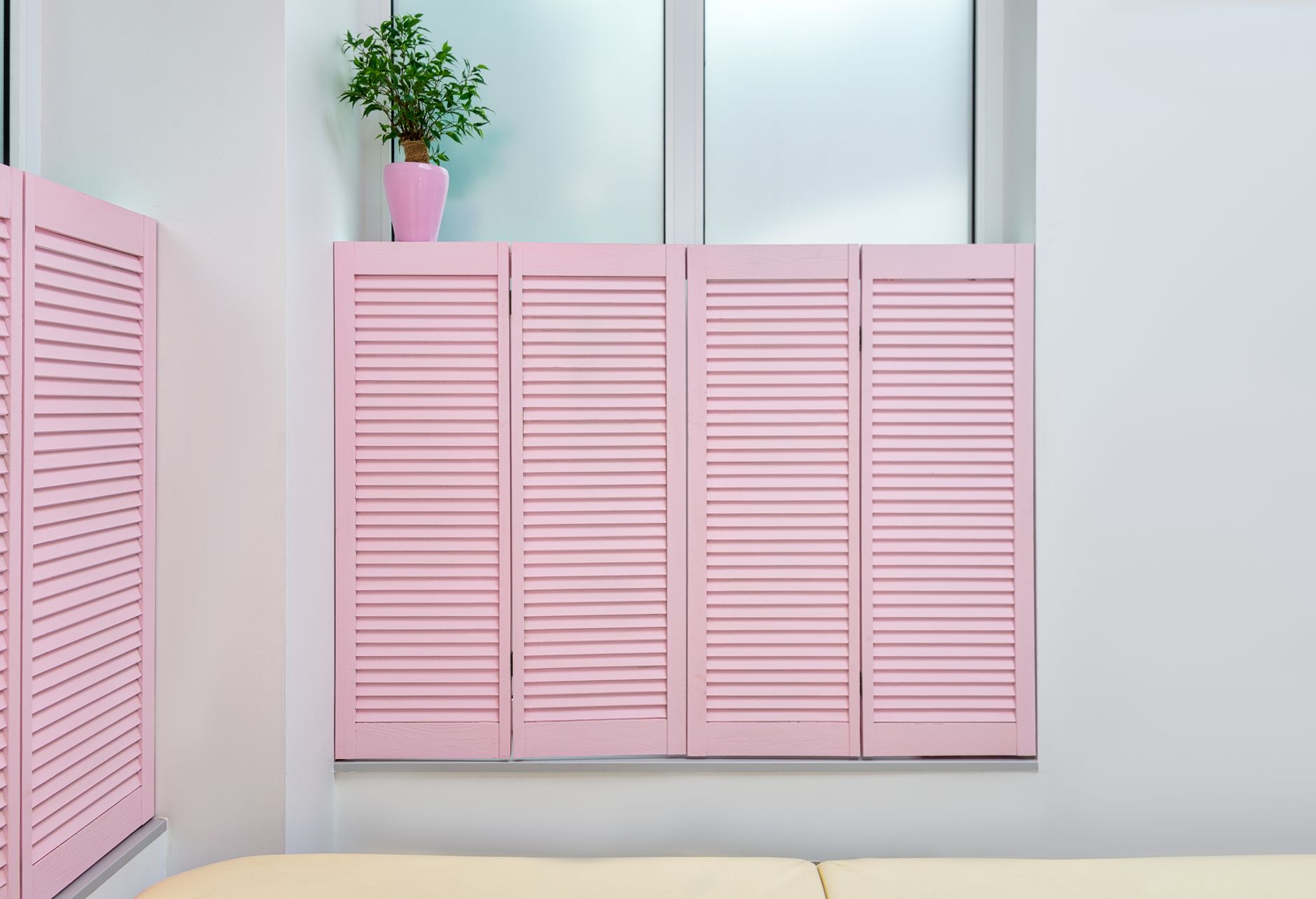
One of the biggest advantages of custom shutters over fabric window treatments is how easy they are to maintain — especially in a dining room where grease, steam, and food odors are facts of life. A simple cleaning routine keeps them looking showroom-fresh for decades.
Weekly Dusting: The 3-Minute Routine
The single most important maintenance habit for dining room shutters is regular dusting. Dining rooms generate airborne grease and food particles that settle on horizontal surfaces — including louver tops. A quick weekly pass with a microfiber duster or a damp microfiber cloth prevents buildup from hardening into a film that requires more aggressive cleaning later. Tilt the louvers to one angle, wipe across all slats, then tilt to the opposite angle and repeat. The whole process takes about 3 minutes per window.
Deep Cleaning for Grease and Cooking Residue
Dining rooms near open kitchens may need a deeper clean every 3–6 months. Mix a solution of warm water and a small amount of dish soap — nothing harsher. Wipe each louver individually with a damp (not wet) cloth, then follow with a dry cloth to prevent moisture from sitting on the surface. Avoid spray cleaners with ammonia or bleach, which can dull painted finishes over time. For hardwood shutters, a wood-safe cleaner like Murphy Oil Soap diluted in water works well for annual deep cleaning.
What to Avoid: Common Mistakes That Damage Shutters
The most common mistakes homeowners make when cleaning shutters include: using too much water (which can cause wood swelling or paint bubbling), spraying cleaner directly onto the shutter (it runs into the hinge mechanisms), and using abrasive scrubbers that scratch painted finishes. Also avoid forcing the louvers beyond their natural rotation range — the tilt mechanism is designed to stop at a specific angle, and forcing it past that point can crack the louver or strip the tilt rod connector.
The Installation Process: What to Expect from Measurement to Mounting
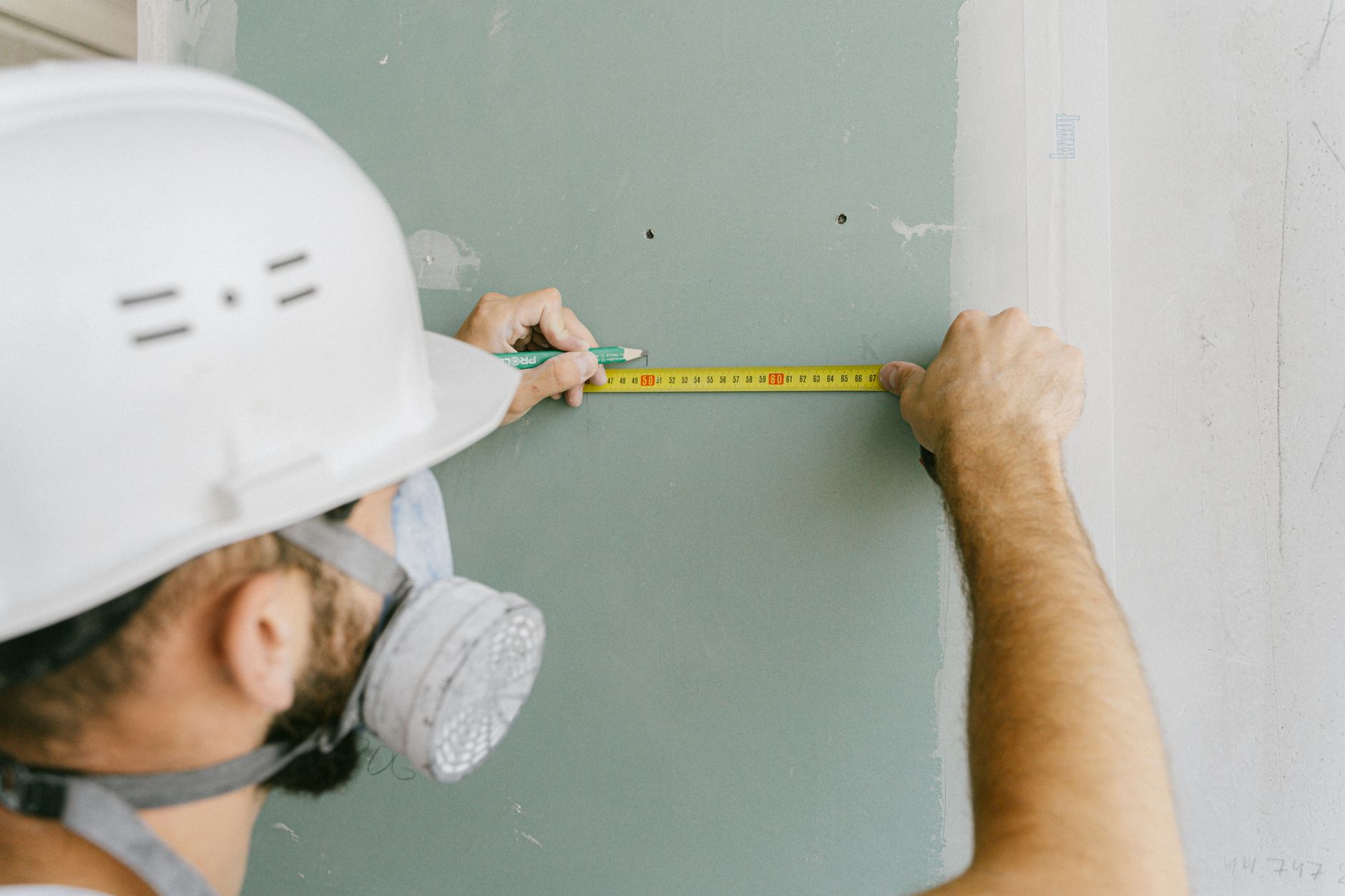
Understanding the installation timeline and process helps set realistic expectations and ensures the project goes smoothly. Here’s exactly what happens from your first call to the moment your new dining room shutters are fully operational.
Step 1: The Free In-Home Consultation
The process begins with a free in-home consultation where a Blinds Galore specialist visits your home in Jackson or the surrounding West Tennessee area. Unlike shopping in a showroom, an in-home visit lets you see actual shutter samples in your dining room’s specific lighting, against your wall colors, and next to your existing furniture. This is where louver size, material, finish, and panel configuration decisions get made — with expert guidance rather than guesswork. Most consultations take 45–60 minutes and result in a precise, no-obligation quote.
Step 2: Professional Measuring
After you approve the design, a professional measurement visit is scheduled. This is not a step to skip or DIY. Custom shutters are built to exact specifications, and a measurement error of even 1/4″ can result in panels that don’t close flush or frames that don’t sit level. Professional measuring accounts for window squareness (older homes are rarely perfectly square), wall depth, trim profiles, and any obstacles like window cranks or locks that affect the mounting approach.
Step 3: Fabrication and Installation
Once measurements are confirmed, your shutters go into production. Lead times for custom shutters typically run 3–6 weeks depending on material, finish, and current production schedules. Installation day is usually a half-day process for a standard dining room — the installer mounts the frames, hangs the panels, adjusts the hinges for smooth operation, and walks you through operating and caring for your new shutters. With Blinds Galore’s 100% satisfaction guarantee, any fit or finish issues are resolved at no cost to you.
Design Inspiration: 5 Dining Room Shutter Styles That Work in West Tennessee Homes
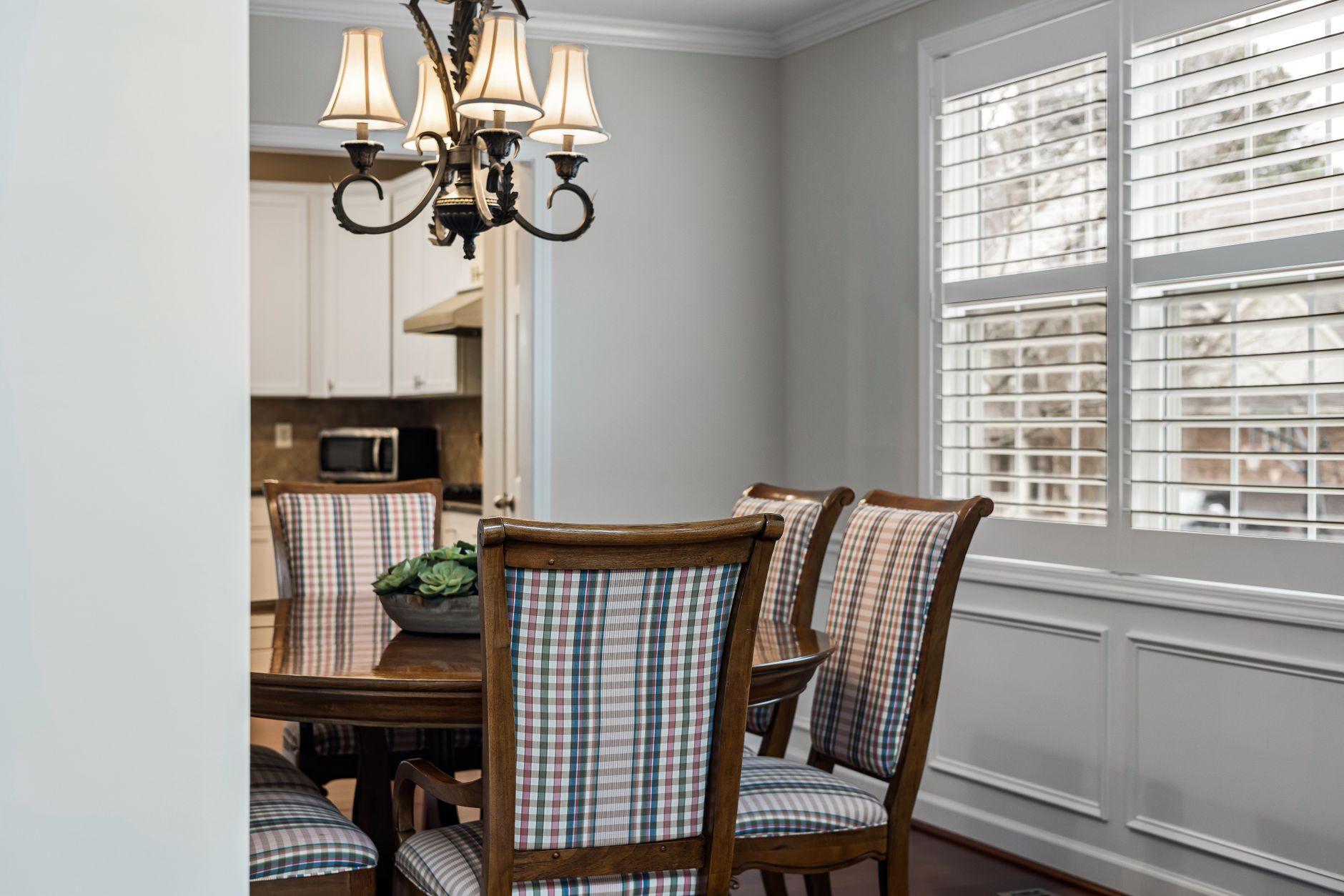
Sometimes the best way to make a decision is to see how a finished product looks in a real room. These five style directions represent the most popular dining room shutter configurations Blinds Galore has installed across West Tennessee — each one adaptable to your specific home and taste.
1. The Classic Southern Farmhouse Look
White 3.5″ faux wood shutters on a wide dining room window, paired with shiplap walls and a reclaimed wood dining table. The shutters are mounted inside the casing for a clean, built-in look. This is the most popular configuration Blinds Galore installs across Jackson, Lexington, and Henderson — it works in new construction and renovated older homes alike, and it photographs beautifully for anyone planning to list their home in the next few years.
2. The Formal Traditional Dining Room
Hardwood shutters in a rich Chestnut stain on tall, narrow windows flanking a china cabinet. The 2.5″ louvers create a fine, detailed pattern that echoes traditional millwork. This look is particularly striking in older Jackson homes with original crown molding and wainscoting — the shutters feel like they’ve always been there rather than a later addition.
3. The Modern Transitional Open-Plan
In open-plan homes where the dining area flows into the living room, 4.5″ bright white shutters provide a cohesive look across multiple windows without visually chopping up the space. The wide louvers and minimal horizontal lines keep the aesthetic clean and contemporary. When fully open, the shutters fold flat against the wall and virtually disappear, letting the room’s other design elements take center stage.
Ready to Transform Your Dining Room? Here's Your Next Step
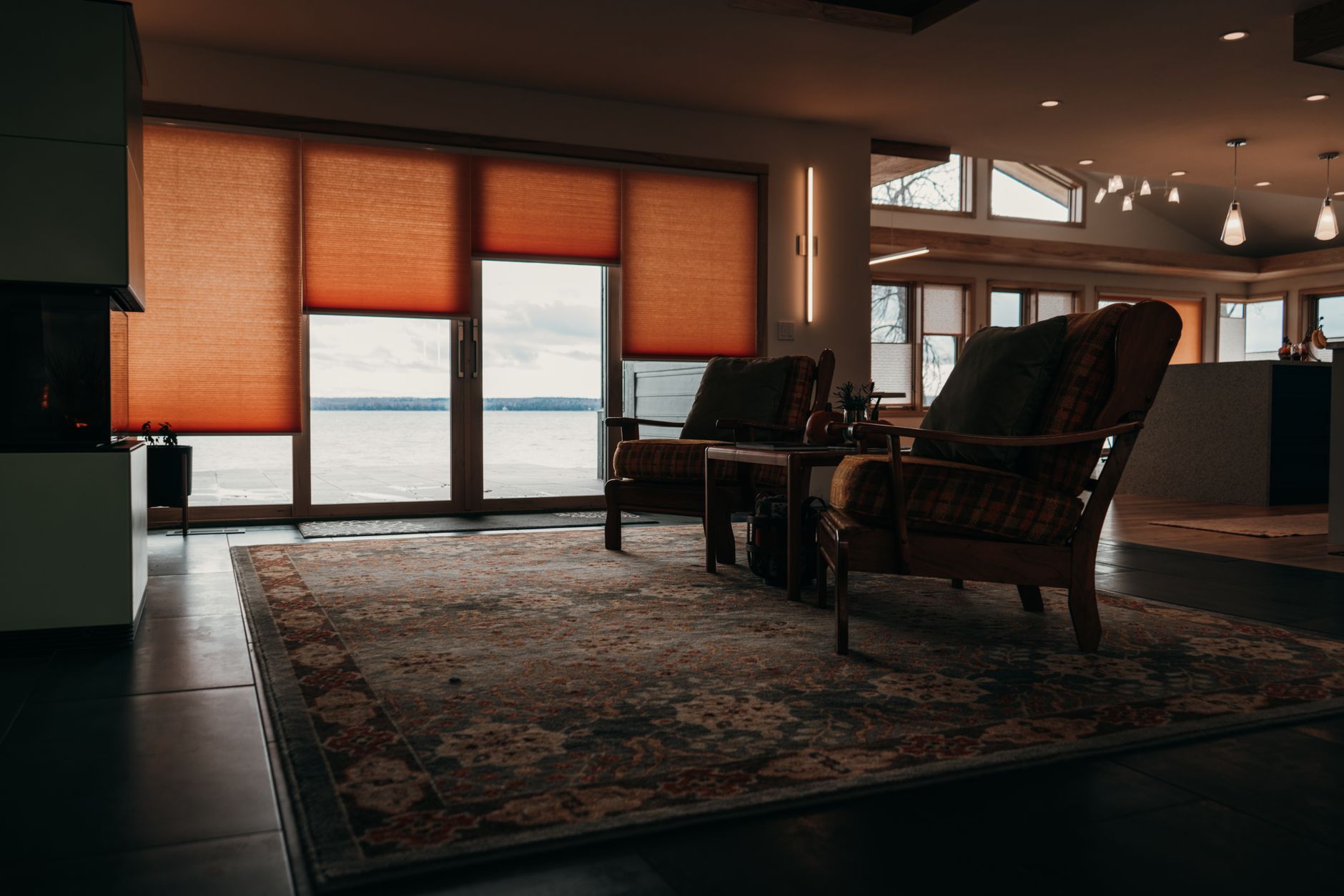
Custom shutters are one of the highest-return investments you can make in your Jackson, TN dining room — they add architectural value, improve energy efficiency, and deliver daily comfort for 20+ years. The only question is which style, material, and configuration is right for your specific space. That’s exactly what Blinds Galore’s free in-home consultation is designed to answer. Visit Blinds Galore online to learn more about everything we offer across West Tennessee.
Why Jackson, TN Homeowners Choose Blinds Galore
With over 18 years of experience serving Jackson and the surrounding West Tennessee communities of Lexington, Henderson, and Milan, Blinds Galore has measured and installed custom shutters in thousands of local dining rooms. The team understands the specific challenges of West Tennessee homes — the humidity, the intense afternoon sun, the mix of historic and new construction — and brings that local knowledge to every consultation. Every project is backed by a 100% satisfaction guarantee, so you can invest with confidence.
Schedule Your Free In-Home Consultation Today
The easiest way to get started is to schedule your free in-home consultation. A Blinds Galore specialist will come to your home, bring samples of every material, louver size, and finish option, and give you a precise quote for your dining room windows — no pressure, no obligation. You’ll leave the consultation knowing exactly what your shutters will look like, how they’ll operate, and what they’ll cost. To book your visit, call us at (731) 571-5179 or explore our custom-built shutters page to see the full range of options available for your dining room. You can also browse our custom shades collection if you’d like to compare shutters with other premium window treatment options before your consultation.
Frequently Asked Questions
How much do custom shutters cost for a dining room in Jackson, TN?
Custom shutters for a typical dining room window in Jackson, TN run between $200 and $450 per window installed, depending on material (faux wood vs. hardwood), louver size, and panel configuration. A dining room with two standard windows would typically cost $400–$900 total. Blinds Galore provides free in-home quotes so you know the exact price before committing.
Are plantation shutters good for dining rooms?
Yes — plantation shutters are widely considered the best window treatment for dining rooms because they offer precise light control at any time of day, provide meaningful insulation, are easy to clean in a room where grease and food odors are common, and add lasting architectural value to the home. They outperform fabric alternatives in durability, lasting 20–30 years with basic maintenance.
What louver size is best for a dining room?
The 3.5" louver is the most popular choice for dining rooms because it balances traditional aesthetics with a clean, open look and provides excellent light control. If your dining room has large windows or a scenic view you want to preserve, 4.5" louvers maximize the visible opening when the shutters are open. Smaller 2.5" louvers work well in traditional or cottage-style homes.
How long does it take to get custom shutters installed?
From the initial in-home consultation to installation day, the typical timeline is 4–7 weeks. The consultation and measurement visit happen within the first week, and custom fabrication takes 3–6 weeks depending on material and current production schedules. Installation itself usually takes a half-day for a standard dining room.
Do shutters help with heat and energy costs in West Tennessee?
Yes. Adding a custom shutter over a double-pane window can increase the window's effective R-value from approximately R-2.5 to R-4.5, reducing heat transfer in both summer and winter. The U.S. Department of Energy estimates that closing shutters during peak afternoon sun can reduce solar heat gain by 45–50%, which meaningfully reduces air conditioning load during West Tennessee's hot summers.
Can Blinds Galore install shutters on arched or non-standard dining room windows?
Yes. Blinds Galore custom-builds shutters for arched transoms, angled tops, bay windows, and any other non-standard shape common in Jackson-area homes. Arched sections are typically fixed panels paired with operable rectangular panels below, giving you full light control while accommodating the window's unique geometry. Specialty shapes add approximately $100–$200 per window to the total cost.
You might also like
Custom Shutters for Jackson TN Sunrooms: Your 9-Point Light Control and Durability Guide
Quick answer: Custom shutters are the best window treatment for Jackson, TN sunrooms because they handle

Best Plantation Shutters for Jackson TN Entryways: 9 Things to Know
Quick answer: Plantation shutters are one of the best window treatment choices for Jackson, TN entryways
Custom Shutters for Bedrooms in Jackson, TN: Privacy, Light Control, and 8 Design Options
Quick answer: Custom bedroom shutters give Jackson, TN homeowners the best combination of privacy, light
Custom Shutters for Living Rooms in Jackson, TN: Your Style and Light Control Guide
Quick answer: Custom plantation shutters are one of the best investments a Jackson, TN homeowner can
Plantation Shutters for Bathroom Windows in Jackson, TN: Your 9-Point Guide to Moisture Resistance
Quick answer: Custom plantation shutters are the top moisture-resistant window treatment for Jackson,

9 Ways Custom Plantation Shutters Boost Your Jackson, TN Home’s Resale Value
Quick answer: Custom plantation shutters are one of the highest-ROI window treatments a Jackson, TN homeowner