


Best Faux Wood Blinds for Jackson TN Kitchens: 9 Things You Need to Know
Quick answer: Faux wood blinds are the single best window treatment for Jackson, TN kitchens because they combine the rich look of real wood with a PVC or composite core that resists the heat, humidity, and grease splatter a kitchen produces every day. They wipe clean in seconds, won't warp or crack in West Tennessee's humid summers, cost 30–50% less than real wood, and are available in custom sizes to fit any window perfectly. For most homeowners in Jackson and the surrounding area, a 2-inch or 2.5-inch slat in a neutral white or faux-oak finish is the sweet spot of style, light control, and easy maintenance.
1. Why Kitchens Are the Hardest Room for Window Treatments

Before choosing any window treatment for your kitchen, it helps to understand why this room is uniquely punishing on materials. Kitchens in Jackson, TN homes face a combination of heat, moisture, and airborne grease that no other room in the house produces at the same intensity. Understanding these forces makes it easy to see why faux wood blinds consistently outperform every alternative.
Heat, Steam, and Grease: The Kitchen Trifecta
Your kitchen window sits just a few feet from a stovetop that can spike to 400°F, a dishwasher that vents steam, and a sink that splashes water onto the sill every single day. That combination destroys fabric shades, warps real wood, and causes aluminum mini-blinds to corrode and discolor within a year or two.
- Temperature swings in a West Tennessee kitchen can range from 65°F on a cool morning to well over 90°F near the range during a Sunday dinner.
- Relative humidity regularly tops 70% in Jackson, TN during summer months — and that’s before you add boiling pasta water to the equation.
- Airborne grease from frying coats surfaces within 3–5 feet of the stove, making any porous material a magnet for grime.
Why Standard Blinds Fail in This Environment
Real wood blinds absorb moisture and expand, causing slats to bow and tilt mechanisms to jam. Fabric Roman shades trap grease and require dry cleaning. Aluminum blinds conduct heat, feel industrial, and develop a dull oxidized finish within 18–24 months. The kitchen demands a material engineered for exactly this abuse — and that material is faux wood.
2. What Faux Wood Blinds Actually Are (and Aren't)
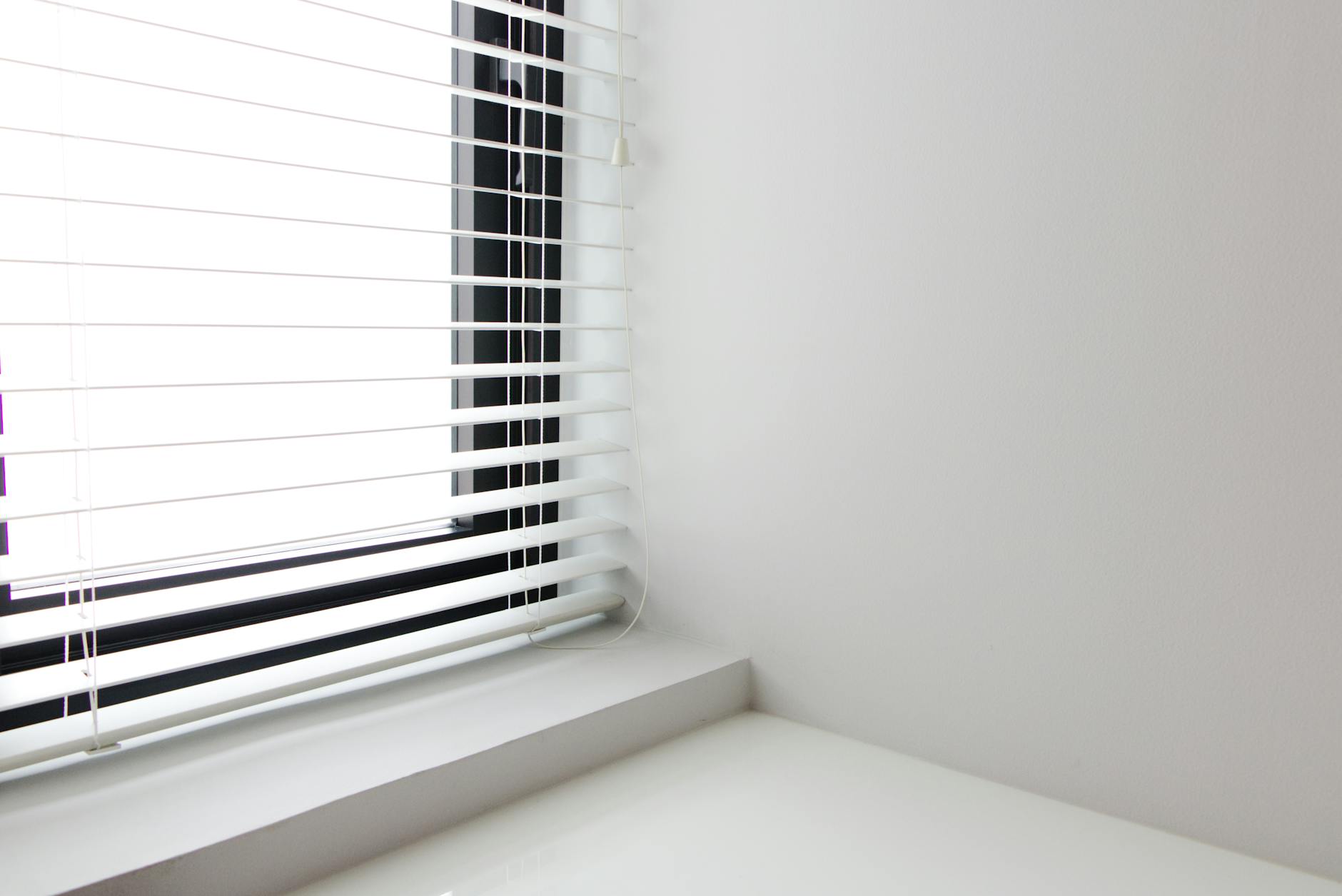
The term ‘faux wood’ gets used loosely, so let’s define it precisely. Faux wood blinds are horizontal slatted blinds manufactured from either PVC plastic or a composite of wood fiber and PVC resin. They are designed to replicate the appearance of real wood blinds at a lower price point and with dramatically better moisture resistance. Knowing exactly what you’re buying helps you compare options confidently and avoid overpaying for features you don’t need.
The Core Material: PVC vs. Composite
Faux wood blinds come in two main core materials, and the difference matters for kitchen use:
- PVC (polyvinyl chloride): 100% synthetic, completely waterproof, and the most moisture-resistant option available. Ideal for kitchens and bathrooms. Slats are typically hollow or lightly filled, making them slightly lighter than composite.
- Composite (wood-polymer blend): A mix of real wood fiber and PVC resin. Heavier and more rigid than pure PVC, with a texture that more closely mimics real wood grain. Resists moisture well but is not fully waterproof — still a strong kitchen choice for windows away from the sink.
For most Jackson-area kitchens, PVC faux wood is the recommended choice because of its complete imperviousness to humidity and splashing.
How Faux Wood Differs from Real Wood Blinds
Real wood blinds are milled from basswood, ramin, or paulownia and finished with paint or stain. They look beautiful in living rooms and bedrooms but carry three significant drawbacks for kitchens: they absorb moisture (causing warping), they cost 30–50% more than comparable faux wood, and they require careful cleaning with wood-safe products. Faux wood eliminates all three problems while delivering a nearly identical visual result from a normal viewing distance.
3. Moisture Resistance: the Number-One Kitchen Priority
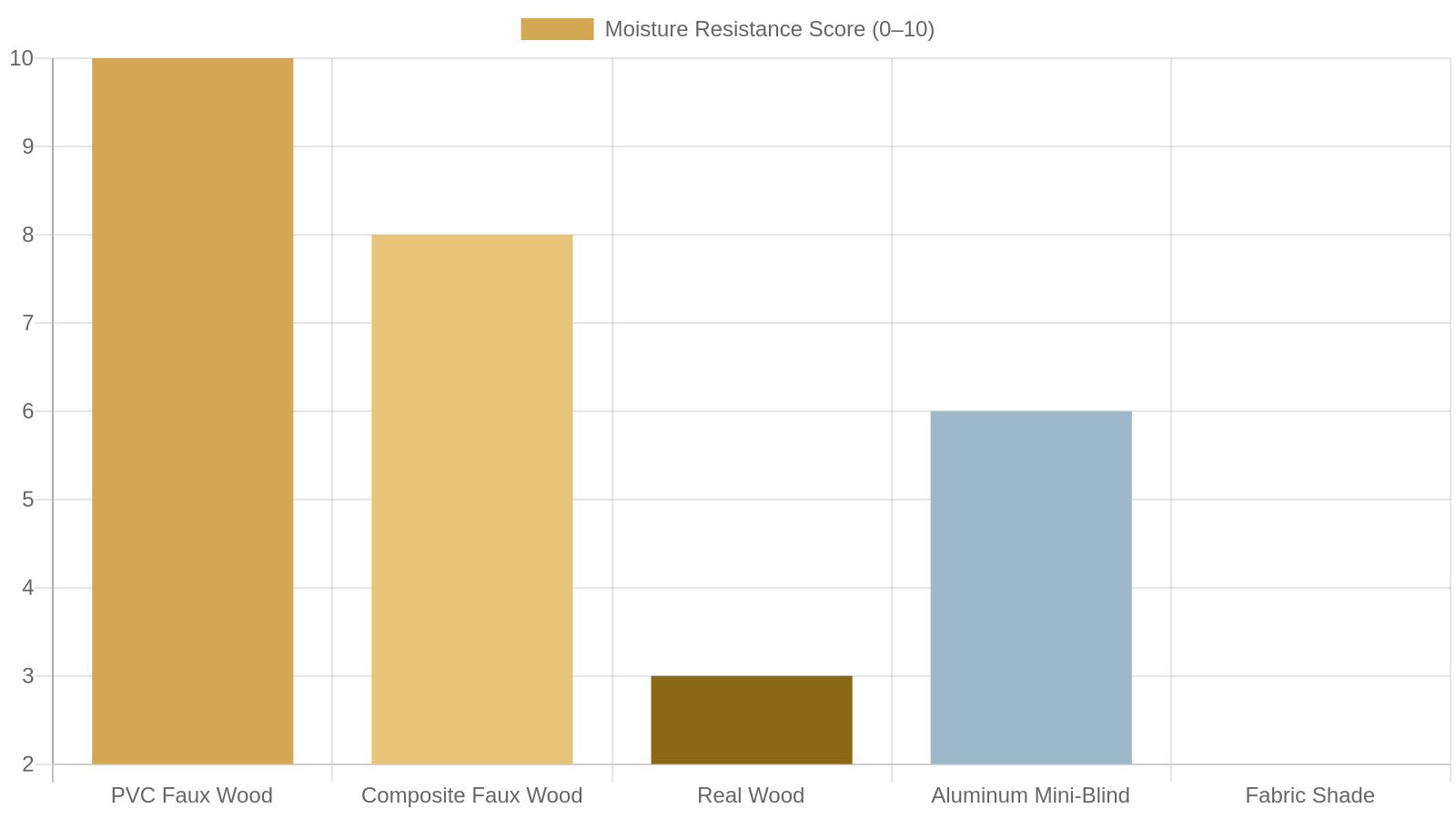
Moisture resistance is the single most important specification for any kitchen window treatment in West Tennessee. Our humid subtropical climate means your blinds face moisture stress even on days when nothing is cooking. Here’s how faux wood stacks up against the alternatives — and why the numbers make it the clear winner for Jackson, TN homeowners.
How PVC Faux Wood Handles Humidity
PVC faux wood blinds have a moisture absorption rate of essentially 0%. Independent testing by window treatment manufacturers shows that PVC slats immersed in water for 24 hours gain less than 0.1% of their dry weight — compared to 8–12% for untreated basswood slats. In practical terms, this means a PVC faux wood blind installed over your kitchen sink will look exactly the same in year five as it did on installation day, even if it gets splashed repeatedly.
Jackson, TN averages about 54 inches of rainfall per year and summer relative humidity frequently exceeds 75%. That ambient moisture alone is enough to cause real wood blinds to swell over a single season.
Warping, Cracking, and Fading Compared
Three cosmetic failure modes are common in kitchen window treatments:
- Warping: Real wood warps when moisture content changes. PVC faux wood does not warp under normal residential humidity ranges.
- Cracking: Extreme heat (above 140°F sustained) can cause PVC to soften slightly, but normal kitchen temperatures — even near a range — stay well below that threshold.
- Fading: Quality faux wood blinds use UV-stabilized pigments. Most manufacturers warrant against significant fading for 3–5 years; premium lines carry 5–7 year fade warranties.
4. Durability Over the Long Haul
Durability in a kitchen window treatment isn’t just about the material surviving moisture — it’s about the entire assembly holding up to daily operation: raising and lowering the blind multiple times a day, adjusting the tilt for morning light, and the occasional accidental tug from a curious child or a distracted cook. Faux wood blinds are engineered for exactly this kind of everyday wear.
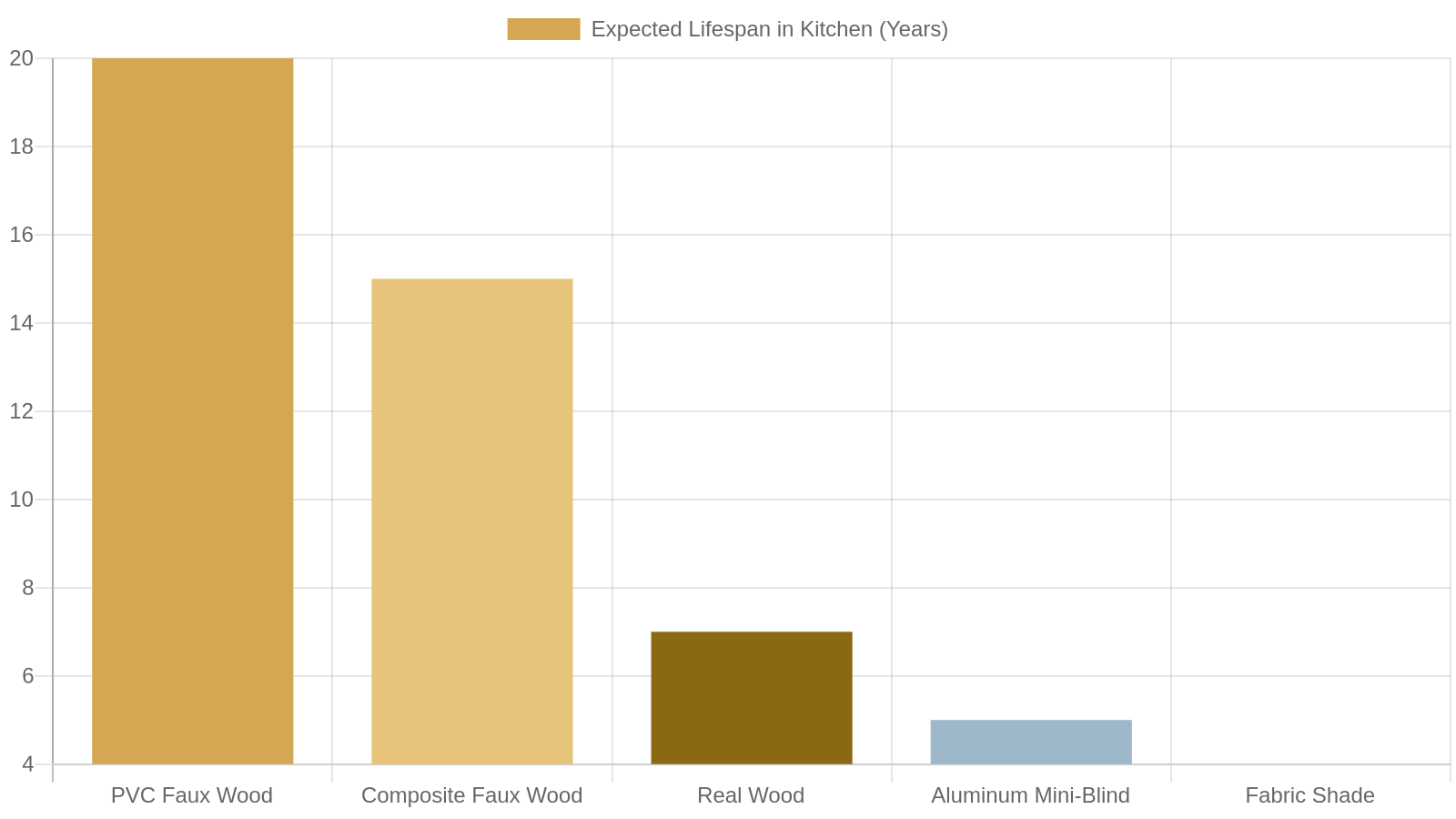
Expected Lifespan in Kitchen Conditions
Under normal kitchen use, here is what homeowners in the Jackson area can realistically expect:
- PVC faux wood blinds: 15–25 years with basic maintenance. The slats themselves rarely fail; the most common replacement parts are the lift cord and tilt mechanism, both of which can be restrung for under $20.
- Composite faux wood blinds: 10–20 years in a kitchen environment, slightly less if installed directly above a sink.
- Real wood blinds: 5–10 years in a kitchen before warping or finish degradation becomes noticeable.
- Aluminum mini-blinds: 3–7 years before corrosion, bent slats, and broken ladders make replacement necessary.
Hardware Quality: What to Look For
The slats get all the attention, but the hardware determines how long your blinds actually function smoothly. When evaluating faux wood blinds for a kitchen, look for:
- Corrosion-resistant headrail: Aluminum or galvanized steel headrails resist the humidity that causes cheaper steel to rust.
- UV-stabilized tilt wand: Plastic wands can become brittle in direct sun; UV-stabilized versions stay flexible for years.
- Lift cord quality: Braided polyester cords outlast twisted cotton cords by a factor of 3–4x in high-use windows like kitchens.
5. Easy Cleaning: a Real-World Guide
One of the most practical advantages of faux wood blinds in a kitchen is how quickly and easily they clean. Unlike fabric shades that require professional cleaning or real wood that demands careful, moisture-limited wiping, PVC faux wood tolerates water, soap, and even a gentle scrub without complaint. Here’s the cleaning routine that keeps kitchen faux wood blinds looking fresh year after year.
Weekly Dusting in Under 3 Minutes
The most effective kitchen blind cleaning routine is also the simplest. Once a week — or whenever you wipe down your countertops — run a microfiber duster or a dry microfiber cloth along the slats from top to bottom with the blind fully closed and tilted flat. This takes about 90 seconds for a standard 36-inch wide blind and removes the thin layer of grease-bonded dust before it builds up into a harder-to-remove film.
Alternatively, a clean paintbrush or a dedicated blind-cleaning tool (available at most hardware stores for $5–$10) lets you clean multiple slats at once and cuts the time to under a minute.
Monthly Deep Clean: Grease and Grime Removal
For the monthly deep clean that every kitchen blind needs, follow this simple process:
- Fill a spray bottle with a solution of 1 tablespoon dish soap + 1 cup warm water. This cuts kitchen grease effectively without damaging PVC or composite surfaces.
- Lightly mist one side of the closed blind and wipe each slat with a damp microfiber cloth.
- Flip the slats and repeat on the other side.
- Dry with a clean cloth or allow to air dry — PVC faux wood dries in minutes because it doesn’t absorb water.
Never use abrasive scrubbers, bleach-based sprays (which can yellow PVC over time), or oil-based cleaners on faux wood blinds.
Annual Soak: for Heavily Soiled Blinds
If your kitchen blind is near the stovetop and hasn’t been cleaned in several months, a full soak is the most efficient reset. Remove the blind from the headrail, lay it in a bathtub with warm water and a squirt of dish soap, and let it soak for 15–20 minutes. Rinse with the showerhead, shake off excess water, and rehang immediately — PVC faux wood can be rehung while still slightly damp without any risk of damage. This process restores even heavily grease-coated slats to like-new condition.
6. Slat Size, Color, and Style Options for Kitchens
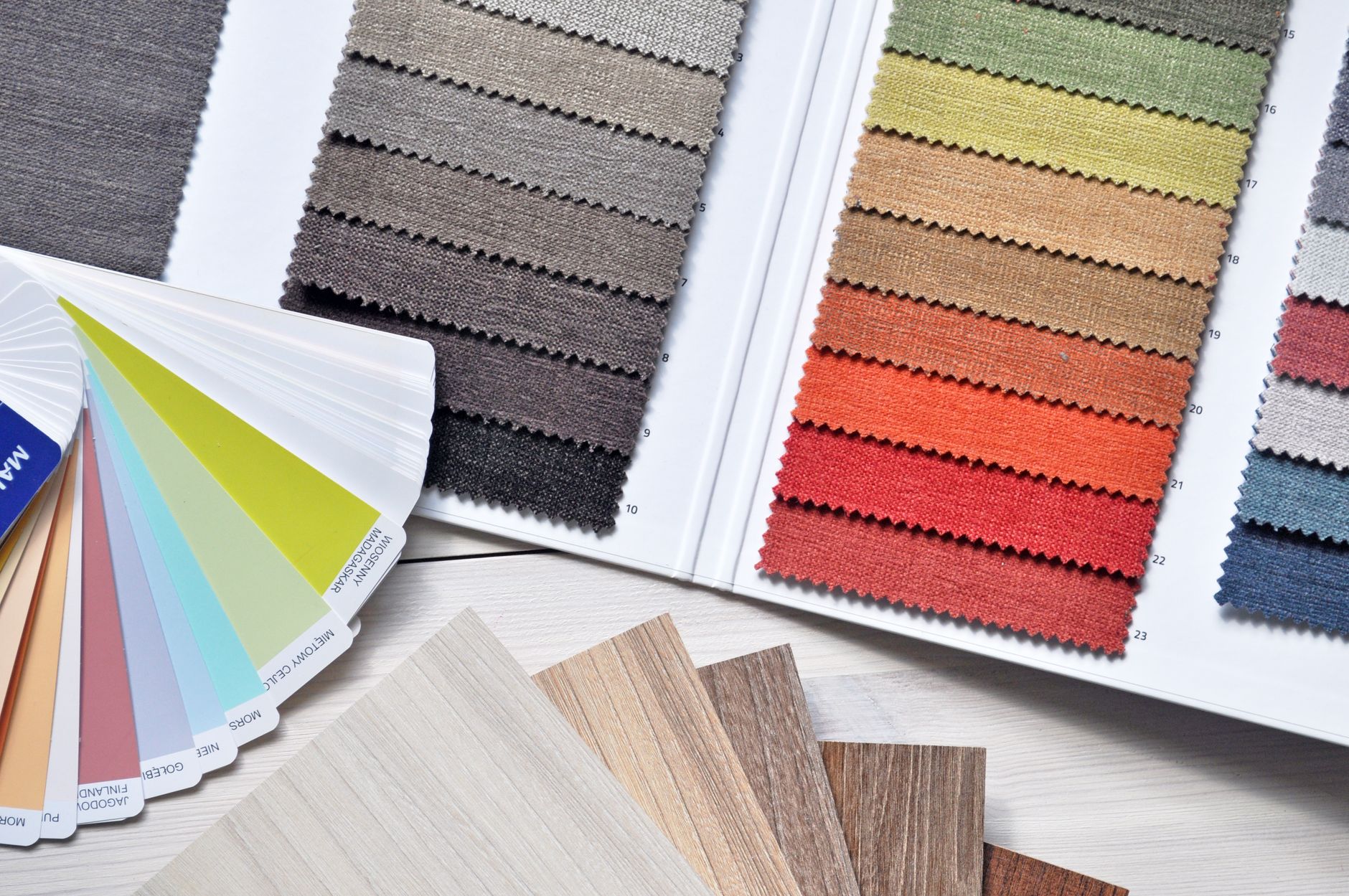
Once you’ve decided on faux wood as your kitchen blind material, the fun part begins: choosing the slat size, color, and finish that makes your kitchen look exactly the way you want it to. The options available today are far more varied than the basic white mini-blinds of the 1990s, and getting these choices right makes a significant difference in the finished look of your space.
Choosing the Right Slat Width
Faux wood blinds are available in three standard slat widths, each with different aesthetic and functional implications:
- 1-inch slats: Fine-grained look, maximum light control, best for small windows (under 24 inches wide). Less common in kitchens because the narrow slats show grease buildup more quickly.
- 2-inch slats: The most popular kitchen choice. Offers a clean, classic look, easy cleaning surface, and good light control. Works well on windows 24–48 inches wide.
- 2.5-inch slats: A bold, contemporary look that suits larger kitchen windows and open-concept spaces. Fewer slats mean less surface area to clean — a practical bonus for busy kitchens.
For most Jackson, TN kitchen windows, 2-inch or 2.5-inch slats strike the best balance of style and maintainability.
Best Colors for Kitchen Faux Wood Blinds
Color choice in a kitchen blind is partly aesthetic and partly practical. Lighter colors show dust more readily but make the room feel larger and brighter — important in smaller West Tennessee kitchen layouts. Darker tones hide minor soiling between cleanings but can make a kitchen feel heavier.
- White and off-white: The most popular kitchen choice. Reflects light, pairs with virtually any cabinet color, and is easy to match when replacing a single blind.
- Light oak / faux-wood grain: Warm and natural-looking. Pairs beautifully with honey-toned or natural wood cabinetry common in Jackson-area homes.
- Gray and greige: On-trend, pairs well with white shaker cabinets and quartz countertops.
- Dark walnut or espresso: Dramatic and modern; best in kitchens with strong natural light.
7. Custom Sizing vs. Off-the-Shelf: Why Custom Wins in Kitchens
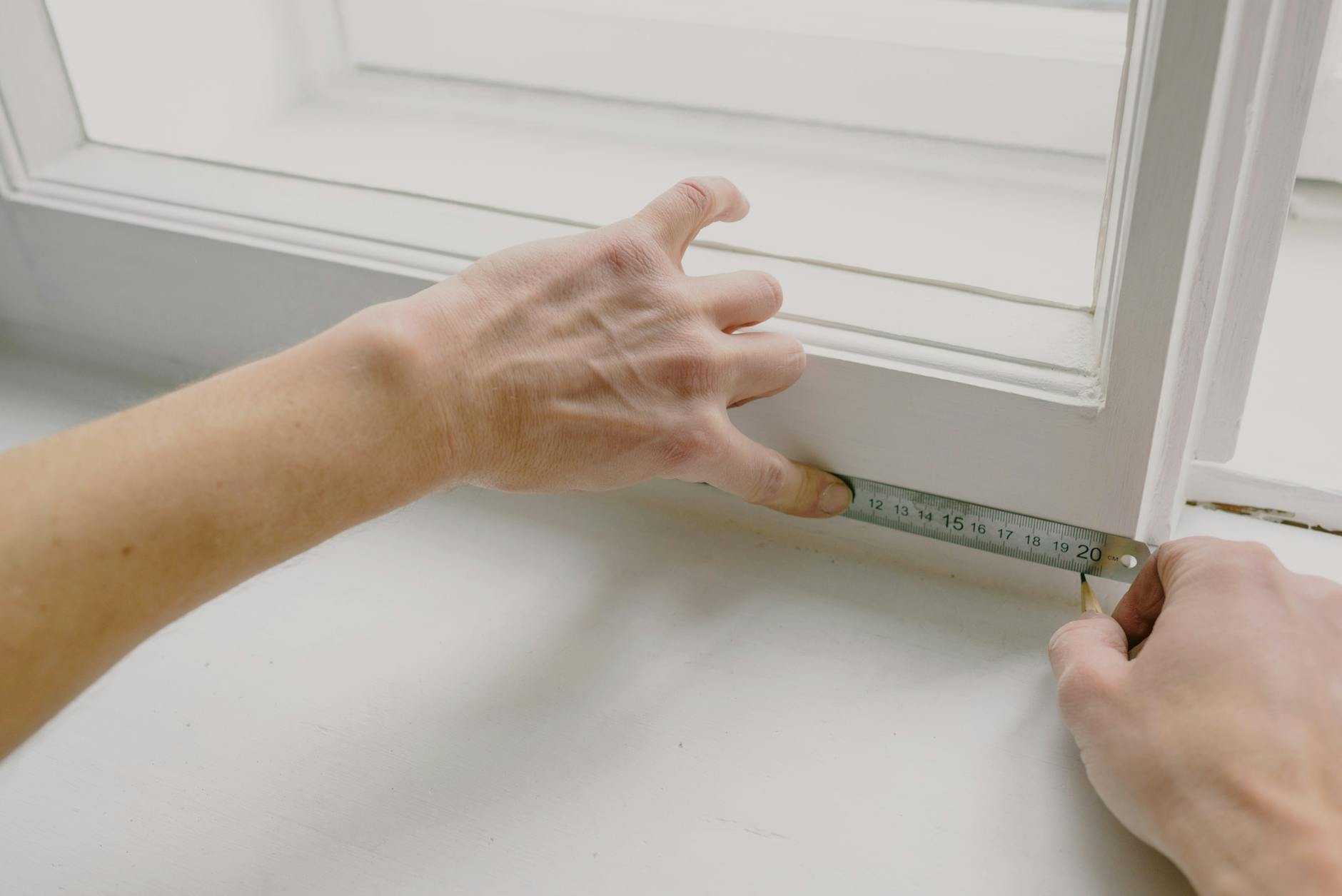
There is a meaningful difference between a blind that fits your window and a blind that fits your window perfectly. In a kitchen — where the window is often the visual focal point of the room and where light control matters for both comfort and glare on screens — that difference is especially noticeable. Custom-sized faux wood blinds are the standard that professional installers in West Tennessee recommend for every kitchen window.
The Problem with Box-Store Blinds in Kitchen Windows
Big-box store blinds come in fixed widths — typically in 1-inch increments — and are designed to be cut down to fit. The problem is that kitchen windows in older Jackson-area homes are rarely standard sizes. A window that measures 31.75 inches wide will get a 31-inch blind from the hardware store, leaving a 0.75-inch gap on each side that lets in light, reduces privacy, and looks unfinished. Multiply that across three or four kitchen windows and the result is a kitchen that never quite looks put-together.
How Custom Measuring Solves the Problem
Custom-measured faux wood blinds are manufactured to your exact window dimensions — to the nearest 1/8 inch. This means:
- Inside-mount blinds fit flush within the window frame with a consistent 1/4-inch deduction on each side for smooth operation — no gaps, no light leaks.
- Outside-mount blinds can be sized to overlap the frame by 1.5–2 inches on each side, completely blocking light from the edges.
- Odd-shaped or non-standard windows — common in older homes throughout Lexington, Henderson, and Milan — are no problem with custom sizing.
The cost difference between custom and off-the-shelf is typically $15–$40 per blind, an investment that pays for itself in appearance and longevity.
Kitchen Window Treatment Comparison at a Glance
Use this side-by-side comparison to see how faux wood blinds stack up against the most common alternatives for kitchen use in West Tennessee homes.
8. Energy Efficiency: an Underrated Kitchen Benefit
Most homeowners choose faux wood blinds for their kitchens because of durability and easy cleaning — and those are excellent reasons. But there’s a third benefit that often surprises people: faux wood blinds, used correctly, can meaningfully reduce the heat load in a kitchen during West Tennessee’s intense summer months, lowering your cooling costs and making the kitchen a more comfortable place to cook.
How Faux Wood Blinds Reduce Kitchen Heat Gain
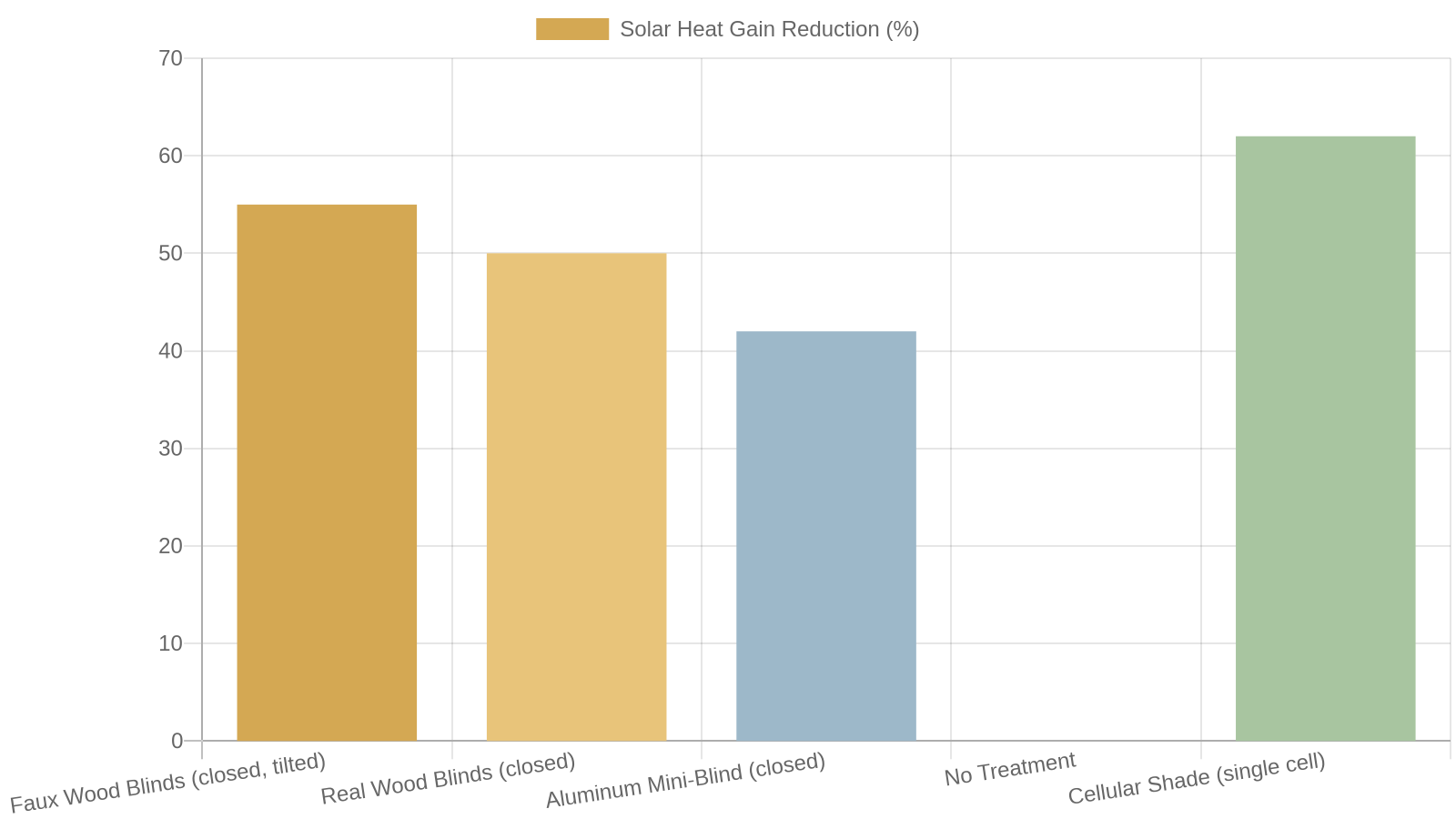
A south- or west-facing kitchen window in Jackson, TN can admit enough solar heat in July and August to raise the room temperature by 10–15°F above the rest of the house. That forces your HVAC system to work harder and drives up your energy bill. Closed faux wood blinds with the slats tilted upward (reflecting sunlight toward the ceiling rather than the floor) can reduce solar heat gain through a window by 45–65%, according to the U.S. Department of Energy’s window treatment guidelines.
For a typical 1,500 sq ft Jackson home, properly managed window coverings can reduce cooling costs by 7–15% during peak summer months — a meaningful saving given Tennessee’s long, hot summers.
Comparing Insulation Values
While faux wood blinds are not insulating in the same way as cellular shades, they do provide a meaningful barrier against radiant heat. A 2-inch PVC faux wood blind in the closed position creates a small air gap between the glass and the room that adds approximately R-0.5 to R-1.0 of insulating value — modest, but measurable. For kitchens where aesthetics and washability are the primary concerns, this is a welcome bonus rather than the main selling point.
9. Cost Breakdown: What to Budget for Kitchen Faux Wood Blinds

Budget is always part of the conversation, and it should be. Understanding the real cost of faux wood blinds — including the difference between cheap off-the-shelf options and professionally measured custom blinds — helps you make a decision you’ll be happy with for the next two decades rather than the next two years.
Price Ranges by Quality Tier
Faux wood blind pricing varies by material quality, slat width, and customization level. Here are realistic price ranges for a standard 36″ × 48″ kitchen window blind as of 2024:
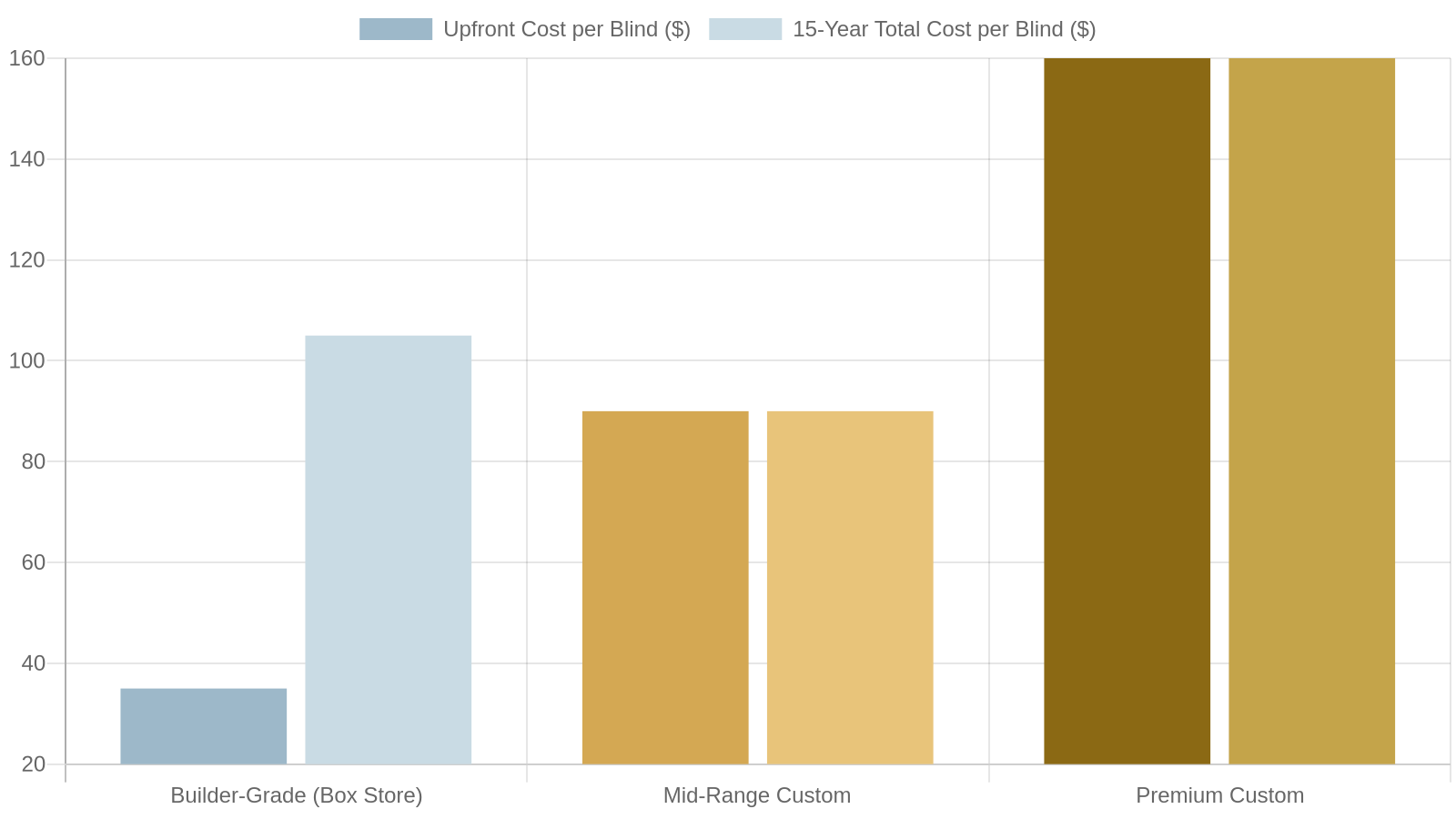
- Builder-grade / off-the-shelf (big box store): $20–$45 per blind. Standard widths only, limited color options, thinner slats, shorter hardware lifespan.
- Mid-range custom faux wood: $60–$120 per blind. Custom sizing, wider color palette, heavier-gauge slats, better hardware.
- Premium custom faux wood: $120–$200+ per blind. Motorization options, designer finishes, lifetime warranty on slats, commercial-grade hardware.
For a typical Jackson, TN kitchen with three windows, a mid-range custom installation runs approximately $180–$360 in product cost plus professional installation — a one-time investment that lasts 15–20 years.
Total Cost of Ownership: Custom vs. Box Store
The lower upfront cost of box-store blinds is often offset by shorter lifespan and replacement frequency. A $35 box-store blind replaced every 5–7 years costs $70–$105 over 15 years. A $90 custom blind that lasts 20 years costs $90 over the same period — and looks significantly better the entire time. When you factor in the time and hassle of repeated replacements, custom faux wood blinds are almost always the better financial decision over a 10-year horizon.
Ready to Upgrade Your Jackson TN Kitchen Windows?
If you’ve been living with warped wood blinds, grimy aluminum mini-blinds, or bare windows in your kitchen, the upgrade to custom faux wood blinds is one of the highest-impact, most affordable improvements you can make to your home. And in Jackson, TN, you don’t have to figure it out alone. Blinds Galore has been helping West Tennessee homeowners get this decision exactly right for over 18 years — and we make the whole process easy from the first measurement to the final installation.
What to Expect from a Free In-Home Consultation
Blinds Galore brings the showroom directly to your home — no driving across Jackson, no guessing about how a color will look in your kitchen’s actual light. During a free in-home consultation, a Blinds Galore specialist will:
- Measure every window precisely to the nearest 1/8 inch
- Bring physical samples of faux wood slat colors and finishes so you can see them in your kitchen’s actual lighting
- Recommend the right slat width and mount type for each window
- Provide a transparent, no-pressure written quote before you commit to anything
With over 18 years of experience serving Jackson, Lexington, Henderson, Milan, and the surrounding West Tennessee communities, Blinds Galore has the local knowledge to recommend products that perform in our specific climate — not just in a showroom in another state.
The Blinds Galore Satisfaction Guarantee
Every custom faux wood blind installation by Blinds Galore is backed by a 100% satisfaction guarantee. If the color, fit, or finish isn’t exactly what you expected, the team will make it right. That guarantee, combined with professional installation and local expertise, is why homeowners across West Tennessee keep calling Blinds Galore back for every room in the house — not just the kitchen.
Ready to see how custom faux wood blinds can transform your kitchen? Explore our custom faux wood blind options and upgrade your West TN kitchen today, or call us directly at (731) 571-5179 to schedule your free in-home consultation. You can also reach us through our contact page — we’d love to help you find the perfect window treatment for every room in your home.
Frequently Asked Questions
Are faux wood blinds good for kitchen windows in humid climates like Jackson TN?
Yes — PVC faux wood blinds are specifically engineered for high-humidity environments. They have a near-zero moisture absorption rate, won't warp or crack in West Tennessee's humid summers, and outlast real wood blinds by 10 or more years in kitchen conditions.
How do I clean grease off faux wood kitchen blinds?
Mix 1 tablespoon of dish soap with 1 cup of warm water in a spray bottle, lightly mist the closed blind, and wipe each slat with a microfiber cloth. For heavy buildup, remove the blind and soak it in a bathtub with warm soapy water for 15–20 minutes, then rinse and rehang.
What is the best slat size for kitchen faux wood blinds?
For most kitchens, 2-inch or 2.5-inch slats are the best choice. They offer a clean, classic look, are easy to wipe down, and provide good light control. Larger 2.5-inch slats work especially well on wider kitchen windows and have fewer slat surfaces to clean.
How much do custom faux wood blinds cost for a kitchen in Jackson TN?
Mid-range custom faux wood blinds typically cost $60–$120 per window for a standard 36"×48" kitchen window, including custom sizing. A three-window kitchen installation usually runs $180–$360 in product cost plus professional installation. Custom blinds last 15–25 years, making them more cost-effective than repeated box-store replacements.
Can faux wood blinds go above the kitchen stove or sink?
PVC faux wood blinds can be installed above a kitchen sink without any concern about water damage. For windows directly above a stove, keep the blind raised while cooking to avoid prolonged exposure to high heat and grease vapor, and clean the blind monthly to prevent grease buildup.
Does Blinds Galore offer free measuring and installation in Jackson TN?
Yes. Blinds Galore offers free in-home consultations throughout Jackson, TN and surrounding communities including Lexington, Henderson, and Milan. A specialist comes to your home, measures every window precisely, shows you physical samples, and provides a written quote — all at no charge and with no obligation.
You might also like

10 Best Custom Roman Shades for Jackson TN Living Rooms: Style and Light Control Guide
Quick answer: Custom Roman shades are one of the most versatile and stylish window treatments for Jackson,

What Makes Blinds Galore Jackson TN’s Trusted Window Treatment Expert Since 2006
Quick answer: Blinds Galore has served Jackson, TN and surrounding West Tennessee communities since 2006

Best Energy-Efficient Cellular Shades for Jackson TN Living Rooms: a Cost Savings Guide
Quick answer: Cellular shades — also called honeycomb shades — are the single most energy-efficient
Best Blackout Shades for Jackson TN Bedrooms: 9 Things to Know
Quick answer: Blackout shades block 99–100% of incoming light, making them the top choice for Jackson,

Best Faux Wood Blinds for Moisture-Prone Bathrooms and Kitchens in Jackson, TN
Quick answer: Faux wood blinds are the single best window treatment choice for moisture-prone bathrooms

Best Motorized Blinds for Large Windows in Jackson, TN: Cost and Control Guide
Quick answer: Motorized blinds are the most practical solution for large windows in Jackson, TN homes,