

Best Energy-Efficient Cellular Shades for Jackson TN Living Rooms: a Cost Savings Guide
Quick answer: Cellular shades — also called honeycomb shades — are the single most energy-efficient window covering available for Jackson TN living rooms. Their air-trapping honeycomb cells act as insulation, cutting heat gain in summer and heat loss in winter by up to 40%. In West Tennessee's hot, humid summers and chilly winters, that translates to real HVAC savings of $100–$300 per year for an average home. Single-cell shades work well in mild climates; double- and triple-cell options deliver the highest R-values (up to R-7) for maximum year-round comfort. Custom-fitted shades from a local provider eliminate gaps that off-the-shelf products leave behind, making professional measuring and installation essential for peak performance.
1. What Are Cellular Shades and How Do They Work?
Before comparing products and prices, it helps to understand exactly why cellular shades outperform every other window covering category on energy efficiency. The answer is elegantly simple: trapped air. This section breaks down the physics and puts the numbers in plain English so you can make a confident choice for your Jackson, TN living room.
The Honeycomb Science Behind the Savings
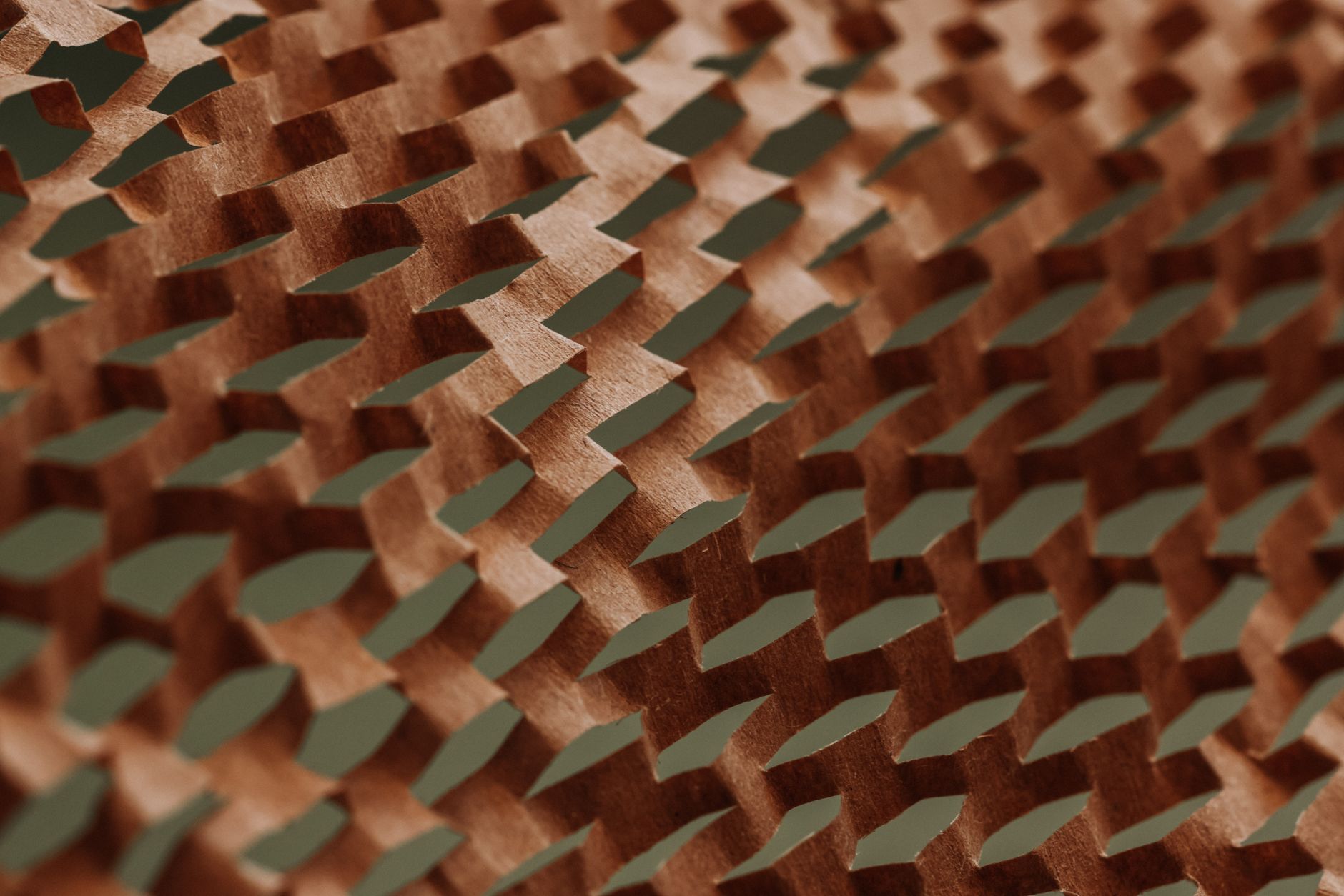
Cellular shades get their name from the honeycomb-shaped air pockets — called cells — woven directly into the fabric. Each cell traps a column of still air between your window glass and your living room. Still air is one of nature’s best insulators, and that’s the entire trick: the shade creates a thermal buffer zone that slows the transfer of heat in both directions.
In Jackson’s sweltering July heat, that buffer keeps radiant heat from pushing through your glass and warming your living room. In January, it slows the cold seeping in from single- or double-pane windows. The result is a more stable indoor temperature with less work from your HVAC system.
Cellular Shades vs. Other Window Coverings
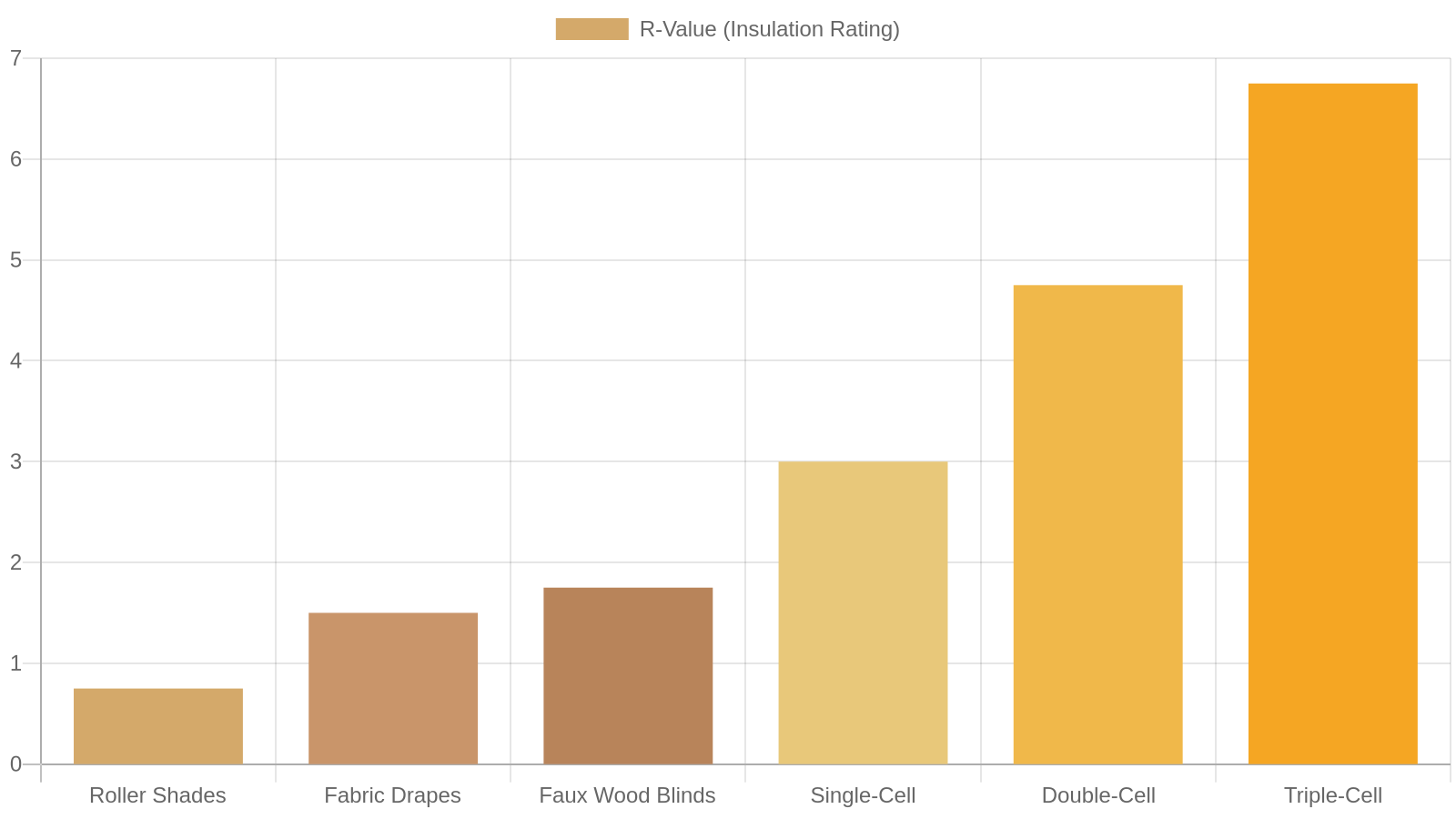
Traditional horizontal blinds, roller shades, and even most fabric drapes create little to no insulating air pocket. A standard 2-inch faux wood blind, for example, has an R-value near R-1.8, while a double-cell cellular shade can reach R-4.0 to R-5.5 and a triple-cell can push to R-6.5 to R-7.0. That difference matters enormously in West Tennessee, where summer cooling loads are among the highest in the state.
- Roller shades: R-0.5 to R-1.0
- Standard fabric drapes: R-1.0 to R-2.0
- Faux wood blinds: R-1.5 to R-2.0
- Single-cell cellular shades: R-2.5 to R-3.5
- Double-cell cellular shades: R-4.0 to R-5.5
- Triple-cell cellular shades: R-6.5 to R-7.0
2. Why Jackson TN Living Rooms Need Extra Insulation at the Windows
Cellular shades are a smart investment everywhere, but they’re a particularly smart investment in Jackson, TN. Here’s why the local climate makes window insulation more valuable — and more urgent — than homeowners often realize.
West Tennessee's Climate Challenge
Jackson sits in USDA Hardiness Zone 7b and experiences a humid subtropical climate — hot, muggy summers and cool-to-cold winters. Average July highs hover around 91°F, and the heat index regularly pushes past 100°F. January lows average 31°F, with occasional ice storms. That’s a swing of roughly 60°F between seasons, and your windows are the weakest thermal link in your home’s envelope.
The U.S. Department of Energy estimates that 25–30% of residential heating and cooling energy is lost through windows. In a West Tennessee home running the AC from May through September and the heat from November through February, that’s a significant chunk of your utility bill leaking out through the glass.
Living Rooms Are the Biggest Culprit
Living rooms typically have the largest windows in the house — picture windows, bay windows, sliding glass doors, or wide double-hung pairs. More glass means more surface area for heat transfer. South- and west-facing living room windows in Jackson homes receive intense afternoon sun from roughly 1 PM to sunset, which can raise interior temperatures by 10–15°F without proper window coverings.
Communities around Jackson — including Lexington, Henderson, and Milan — share the same climate profile, so this guidance applies equally across West Tennessee. Wherever you are, your living room windows deserve the best insulation you can give them.
3. Single-Cell vs. Double-Cell vs. Triple-Cell: Which Is Right for You?
Not all cellular shades are created equal. The number of cell layers is the single biggest factor in determining both insulating performance and price. Here’s a plain-English breakdown to help you choose the right tier for your living room and your budget.
Single-Cell Cellular Shades
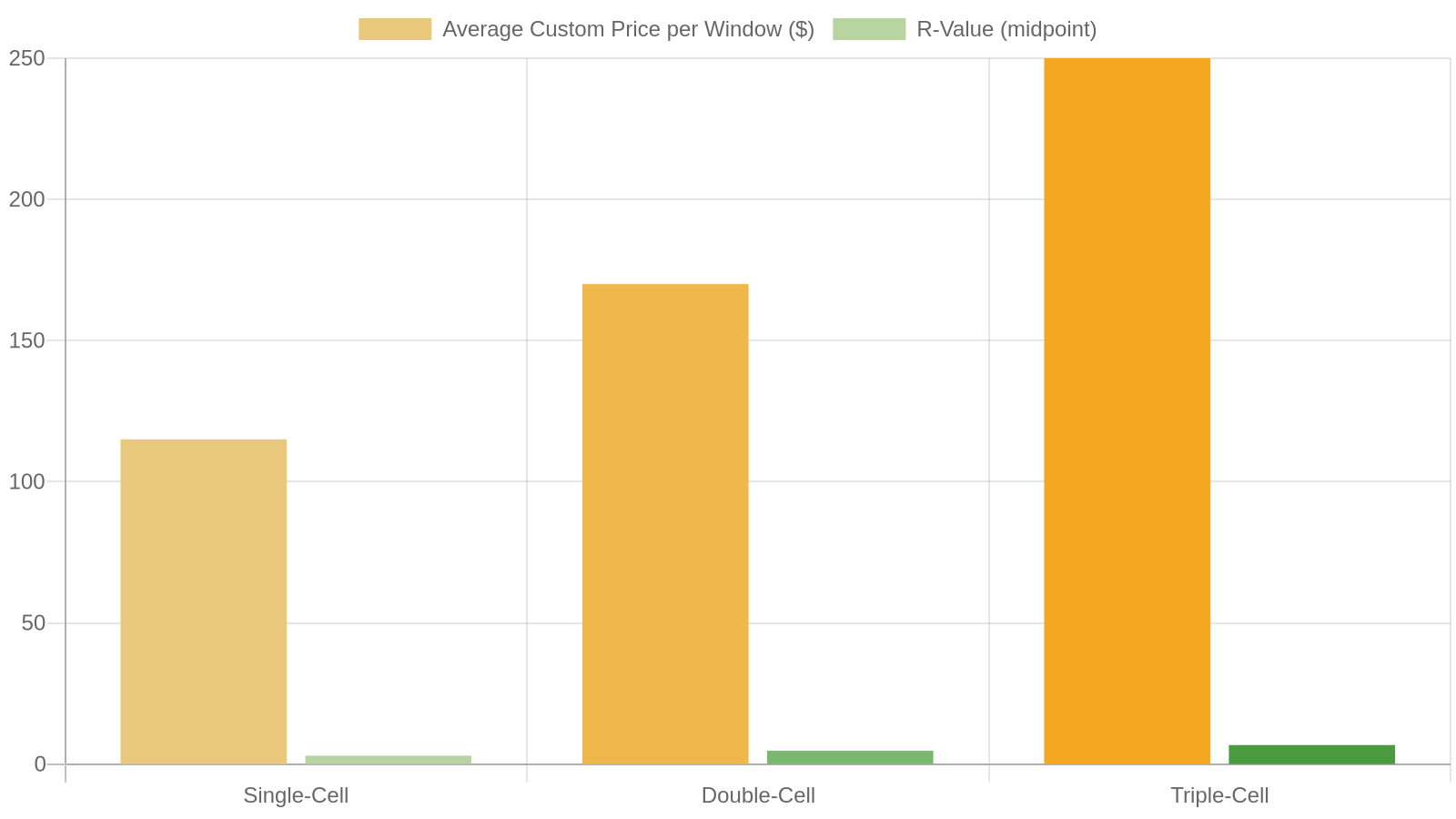
Single-cell shades have one layer of honeycomb cells. They’re the thinnest, lightest option and typically the most affordable, running $30–$80 per window for standard sizes in off-the-shelf versions, or $80–$150 per window custom-made. Their R-value of roughly R-2.5 to R-3.5 is a meaningful upgrade over bare glass (R-1.0 for single-pane, R-2.0 for standard double-pane).
Best for: rooms that already have good double- or triple-pane windows, mild climates, or budget-conscious projects where some improvement is better than none.
Double-Cell Cellular Shades
Double-cell shades stack two layers of honeycomb cells, roughly doubling the insulating air pocket. They hit an R-value of R-4.0 to R-5.5 and are the most popular choice for Jackson TN living rooms because they balance performance and price well. Custom double-cell shades typically run $120–$220 per window depending on size, fabric, and opacity.
Best for: most West Tennessee living rooms, especially those with older single-pane or standard double-pane windows. This is the sweet spot for cost-to-savings ratio in our climate.
Triple-Cell Cellular Shades
Triple-cell shades add a third honeycomb layer, pushing R-values to R-6.5 to R-7.0 — comparable to adding a layer of insulation to your wall. They’re thicker, heavier, and cost $180–$320 per window custom. The premium is worth it for large south- or west-facing picture windows that take the brunt of afternoon sun, or for homeowners with older single-pane windows who can’t yet afford a full window replacement.
Best for: large living room windows, older homes with single-pane glass, or homeowners targeting maximum energy savings and are willing to pay more upfront for faster payback.
4. Light Control Options: Sheer, Light-Filtering, and Blackout Cells

Energy efficiency and light control aren’t competing priorities — with cellular shades, you get to choose both. Understanding the fabric opacity options helps you dial in exactly the right balance of natural light, privacy, and thermal performance for your Jackson TN living room.
Sheer and Light-Filtering Cellular Shades
Light-filtering cellular shades are woven from semi-translucent fabric that softens incoming sunlight into a warm, diffused glow. They’re the most popular choice for living rooms because they preserve the sense of natural light and connection to the outdoors while still blocking 65–80% of UV radiation — protecting your furniture, flooring, and artwork from fading. Sheer versions allow even more light transmission but still provide meaningful insulation through their cell structure.
In Jackson’s bright summers, light-filtering shades reduce solar heat gain significantly without making your living room feel like a cave. They’re ideal for north- and east-facing windows that don’t receive harsh afternoon sun.
Room-Darkening and Blackout Cellular Shades
Room-darkening shades block 95–99% of incoming light and are typically made from denser, opaque fabric with a reflective or light-blocking backing. For living rooms with a home theater setup, or for west-facing windows that flood the room with blinding afternoon glare, room-darkening cellular shades solve two problems at once: they eliminate glare and deliver the highest thermal performance because the denser fabric adds another layer of resistance to heat transfer.
Blackout cellular shades are also a smart choice for living rooms that double as guest sleeping spaces. The energy savings are identical to light-filtering versions of the same cell count — the difference is purely optical.
5. Real Cost Savings: What Jackson TN Homeowners Can Expect
Numbers matter. Here’s a grounded, realistic look at what energy-efficient cellular shades can actually save a typical Jackson, TN homeowner — and how quickly that investment pays itself back.
Calculating Your Annual HVAC Savings
The U.S. Department of Energy estimates that properly installed cellular shades can reduce heat loss through windows by up to 40% in winter and reduce solar heat gain by up to 60% in summer. For a typical Jackson TN home with 10 living room windows averaging 15 square feet each, that translates to meaningful numbers.
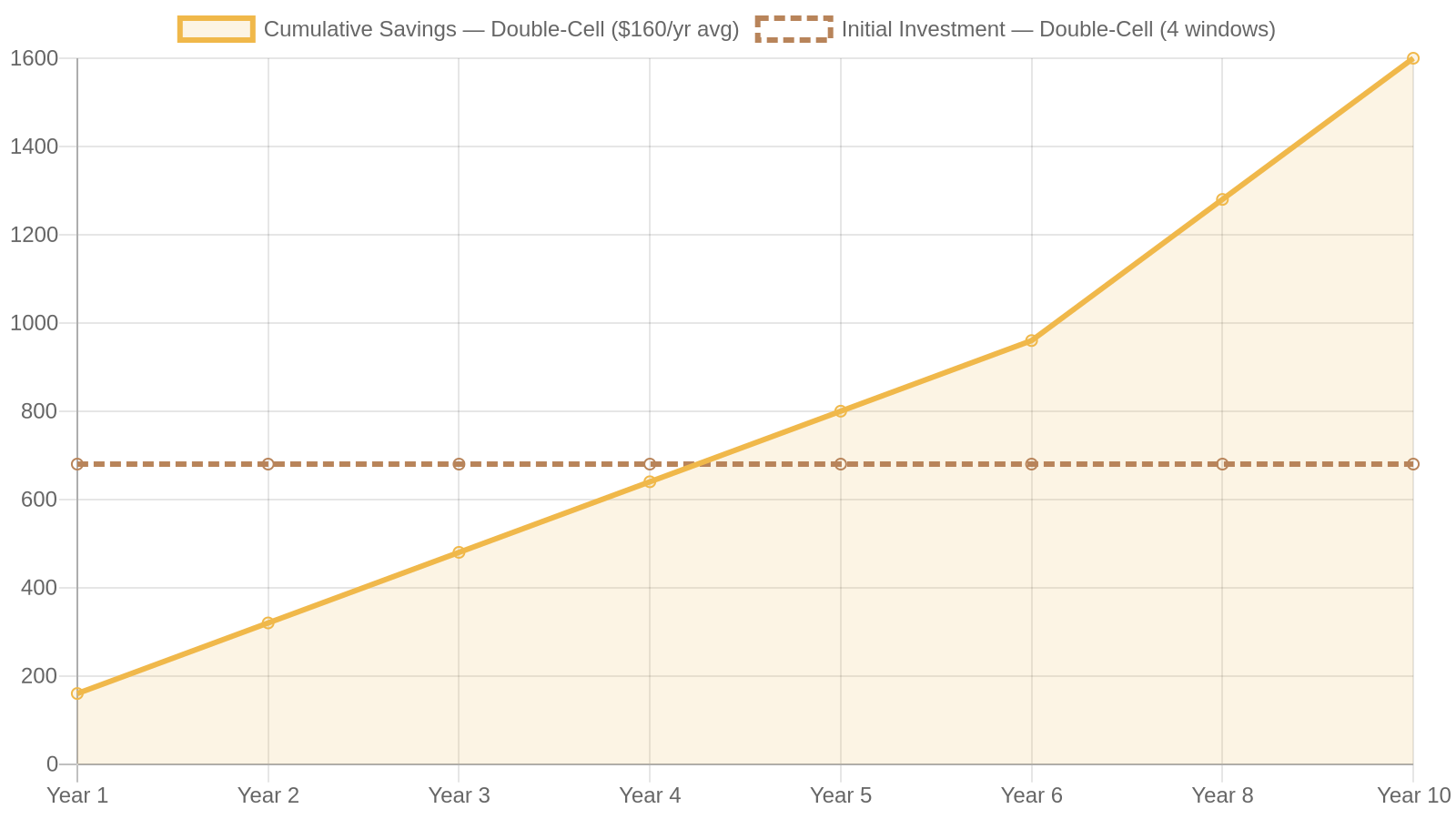
Tennessee’s average residential electricity rate is approximately $0.11 per kWh (EIA, 2023). A 1,800 sq ft home in West Tennessee typically spends $1,400–$1,800 per year on heating and cooling. If 25% of that energy is lost through windows, that’s $350–$450 in window-related energy loss annually. Cellular shades recovering 40% of that loss saves $140–$180 per year on living room windows alone — and that’s a conservative estimate that doesn’t account for reduced wear on your HVAC system.
Payback Period: How Fast Do Cellular Shades Pay for Themselves?
For a living room with four large windows outfitted with custom double-cell cellular shades at an average cost of $170 per window, the total investment is approximately $680. At $140–$180 in annual savings, the payback period is roughly 4 to 5 years. After that, every year of savings is pure return on investment — and the shades typically last 8 to 12 years with normal use.
Triple-cell shades on the same four windows would cost approximately $1,000 but save closer to $200–$250 per year, yielding a similar 4–5 year payback with higher total lifetime savings. Either way, cellular shades are one of the fastest-payback home improvement investments available to West Tennessee homeowners.
6. Top Cellular Shade Features to Look for in West Tennessee Homes

Once you’ve chosen your cell count and opacity level, a handful of additional features can dramatically improve both the functionality and the energy performance of your cellular shades. These are the upgrades worth considering for a Jackson TN living room.
Top-Down/Bottom-Up Operation
Top-down/bottom-up (TDBU) shades can be lowered from the top or raised from the bottom — or both simultaneously. This is a game-changer for Jackson TN living rooms that face the street: you can lower the top portion to let in sky light and keep the bottom raised for privacy, all while maintaining the full insulating cell structure across the entire window. TDBU operation typically adds $20–$50 per window to the base price but is one of the most requested upgrades for living rooms.
Cordless and Motorized Options
Cordless cellular shades are the modern standard for homes with children or pets — they eliminate the strangulation hazard of looped cords and meet current ANSI/WCMA safety standards. Motorized shades go a step further, allowing you to raise and lower shades via a remote, a smartphone app, or a smart-home integration like Amazon Alexa or Google Home. Motorization costs $80–$200 extra per shade but makes it effortless to adjust large or hard-to-reach living room windows throughout the day — which means you’re more likely to actually use them optimally, maximizing energy savings.
Cell Size: ⅜-Inch, ½-Inch, and ¾-Inch Cells
Cellular shades come in three standard cell diameters. ⅜-inch cells are delicate and refined — great for smaller windows or a more tailored look. ½-inch cells are the most common and work beautifully in standard living room windows. ¾-inch cells have a bolder, more casual look and are often chosen for large picture windows or rooms with a relaxed, farmhouse aesthetic — popular in many West Tennessee homes. Cell size doesn’t dramatically affect R-value, so choose based on aesthetics and window scale.
7. Custom vs. Off-the-Shelf Cellular Shades: Why Fit Matters Most

The difference between a cellular shade that delivers its full R-value and one that underperforms often comes down to a single factor: fit. Here’s why custom-measured shades are worth every penny over off-the-shelf alternatives — especially in West Tennessee homes where windows often have non-standard dimensions.
The Gap Problem with Store-Bought Shades
Big-box store cellular shades come in fixed width increments — typically every half-inch or inch. If your window measures 37¼ inches wide, you’re choosing between a 37-inch shade (leaving a ¼-inch gap on each side) or a 38-inch shade that won’t fit inside the frame. Those gaps — even small ones — allow warm or cool air to bypass the shade entirely, undermining the insulating performance you paid for. Studies show that edge gaps as small as ½ inch can reduce a shade’s effective insulating value by 20–30%.
How Custom Measuring Eliminates Energy Leaks
Custom cellular shades are cut to your exact window dimensions — to the nearest ⅛ inch. When installed with a proper inside-mount fit, they eliminate side gaps and create a tight thermal seal against the window frame. Professional measuring also accounts for window squareness (many older Jackson homes have windows that aren’t perfectly plumb or level), ensuring the shade hangs correctly and covers the full glass area.
At Blinds Galore, our free in-home consultations include precise professional measuring at no charge. We bring samples directly to your home so you can see fabrics and colors in your actual lighting before committing. That’s a service no big-box store can match — and it’s the reason our custom shades perform the way they’re supposed to from day one.
8. Installation Tips for Maximum Energy Performance

Even the best cellular shade underperforms if it’s installed incorrectly. These installation principles apply whether you’re doing a DIY install or working with a professional — and they make a measurable difference in real-world energy savings.
Inside Mount vs. Outside Mount
An inside mount positions the shade inside the window frame, flush with or slightly recessed behind the face of the trim. This is the preferred installation for energy efficiency because it minimizes side gaps and creates a cleaner seal. It requires a minimum frame depth of about 1½ to 2 inches for most cellular shades — something a professional measurer will verify before ordering.
An outside mount positions the shade on the wall above and outside the window frame. It’s the right choice when the frame is too shallow for an inside mount, or when you want to make a window appear larger. For energy efficiency, outside-mount shades should extend at least 2–3 inches beyond the window frame on each side to prevent air bypass.
Layering Cellular Shades with Drapes
For maximum thermal performance in Jackson’s coldest winter nights, consider layering cellular shades with fabric drapes or curtain panels. The cellular shade handles the primary insulation; the drapes add another R-value layer and seal the sides more completely. This combination can push the effective insulating value of a window treatment system to R-8 to R-10 — approaching the performance of an insulated wall section. It’s also a beautiful look that allows full light control and privacy flexibility throughout the day.
Cellular Shade Options at a Glance: 10-Point Comparison
Use this table to compare the three main cellular shade tiers across the factors that matter most to Jackson TN homeowners — from energy performance to price to best use case.
9. Caring for Your Cellular Shades: Keeping Them Efficient for Years
A cellular shade that’s well cared for keeps its cell structure intact — and its cell structure is its energy-saving superpower. Here’s how to keep your shades performing at their best for the long haul.
Routine Cleaning Without Damaging the Cells
The honeycomb cell structure that makes cellular shades so effective at trapping air also makes them magnets for dust. Fortunately, cleaning is simple. Weekly dusting with a soft brush attachment on a vacuum (on its lowest suction setting) keeps cells clear. For deeper cleaning, most manufacturers recommend a compressed air canister blown gently through each cell from top to bottom — this dislodges dust without wetting or compressing the fabric.
Avoid soaking cellular shades or putting them in a washing machine. Most fabrics are not designed for wet cleaning, and saturating the cells can cause them to collapse and lose their shape — and their insulating value. Spot-clean stains with a lightly dampened cloth and mild dish soap, then allow to air-dry fully before raising the shade.
Expected Lifespan and When to Replace
Quality custom cellular shades last 8 to 12 years with routine care, and premium fabrics from reputable manufacturers can stretch to 15 years. Signs it’s time to replace include: cells that no longer hold their shape (collapsed or flattened), fabric that has yellowed or become brittle from UV exposure, cords or mechanisms that no longer operate smoothly, or visible tears in the cell walls. When cells collapse, the air pocket is gone — and so is the insulating value. Replacing worn shades promptly restores both energy performance and appearance.
10. Cellular Shades and Tennessee Energy Rebates: What to Know
Many Jackson TN homeowners ask whether cellular shades qualify for energy rebates or tax credits. The honest answer is nuanced — here’s what you need to know so you can plan your investment accurately.
Federal Tax Credits for Energy-Efficient Window Treatments
The Inflation Reduction Act of 2022 expanded federal energy efficiency tax credits, but as of 2024, the credits apply specifically to exterior windows and doors (the glass and frame units themselves) rather than interior window coverings. Cellular shades do not currently qualify for the federal 25C energy efficiency tax credit on their own. However, if you’re replacing windows as part of a broader home upgrade, pairing new energy-efficient windows with cellular shades maximizes the performance of both investments.
Tennessee Valley Authority and Local Utility Programs
The Tennessee Valley Authority (TVA) and local power distributors — including Jackson Energy Authority (JEA), which serves much of the Jackson TN area — periodically offer rebate programs for home energy improvements. While rebates for window coverings specifically are rare, some programs include credits for whole-home energy audits that identify window heat loss as a priority area. Check jea.com and tva.com/energy-efficiency for current offerings. An energy audit can also quantify exactly how much your windows are costing you, making the case for cellular shade investment even clearer.
11. Cellular Shades vs. Other Energy-Efficient Window Treatments
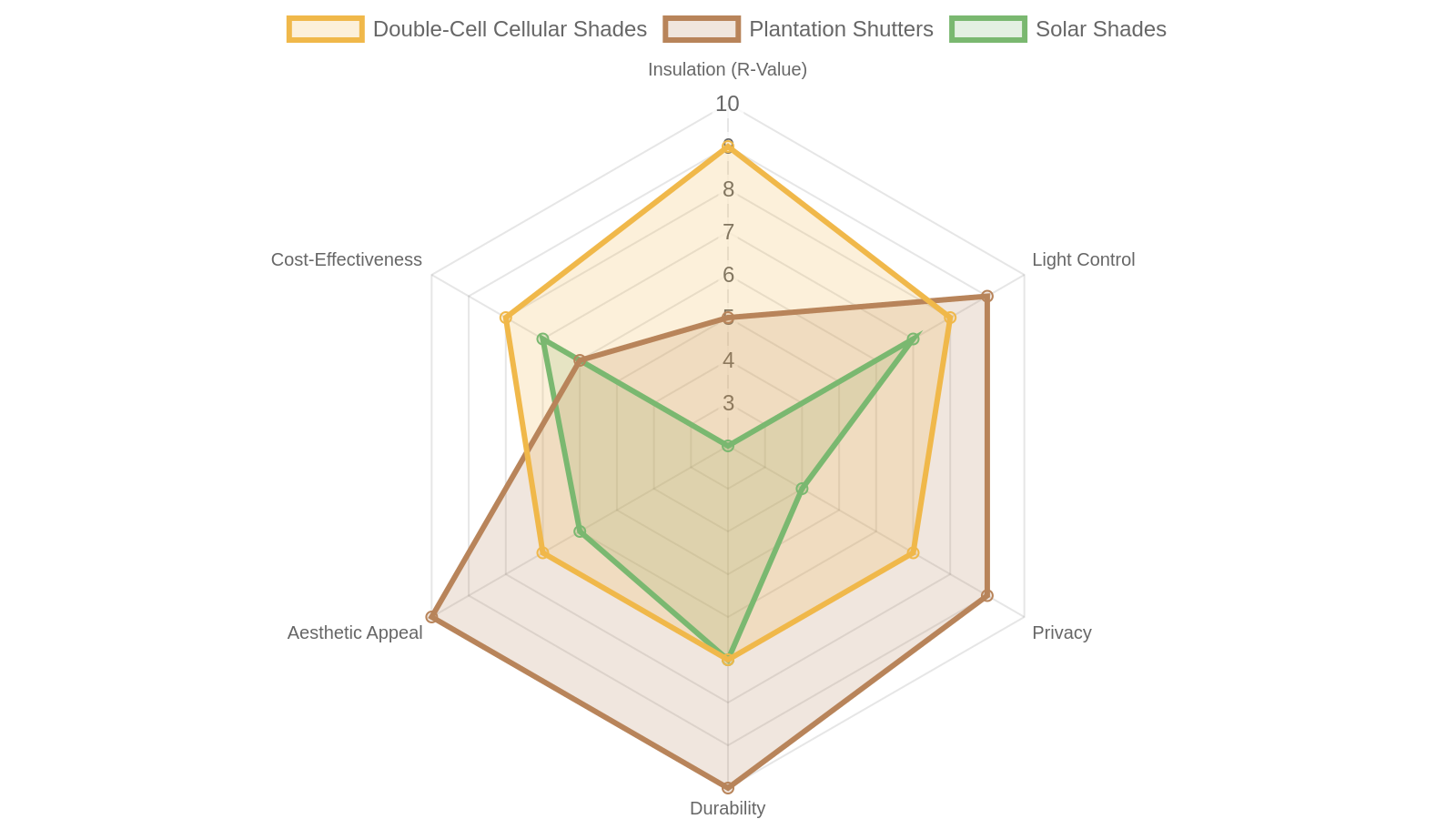
Cellular shades don’t exist in a vacuum. Understanding how they compare to other popular window treatment options helps you make the right choice — or the right combination — for your specific living room needs in Jackson, TN.
Plantation Shutters: Beautiful but Different
Plantation shutters are one of the most popular window treatments in West Tennessee — and for good reason. They’re durable, timeless, and add real resale value to a home. But their energy efficiency works differently than cellular shades. Shutters reduce drafts and block some radiant heat when closed, but their louvers don’t create a sealed air pocket the way cellular cells do. A quality plantation shutter system achieves roughly R-2.5 to R-3.5 — comparable to a single-cell cellular shade, not a double- or triple-cell. For homeowners who love the look of shutters, pairing them with a cellular shade liner on the same window delivers the best of both worlds: the aesthetic of shutters with the insulating power of honeycomb cells. You can explore our custom plantation shutters to see how they might complement your window treatment plan.
Solar Shades: Glare Control vs. Insulation
Solar shades are woven from an open-weave mesh fabric designed to block UV rays and reduce glare while maintaining a view to the outside. They’re excellent at controlling solar heat gain — a 3% openness factor solar shade can block up to 97% of UV radiation — but they offer very little insulating value (typically R-0.5 to R-1.0) because the open weave allows air to pass freely. For a Jackson TN living room where glare on a TV screen is the primary complaint, solar shades are a reasonable choice. For genuine energy savings, cellular shades are the superior option.
Ready to Start Saving? Your Next Step with Blinds Galore in Jackson TN

You now have everything you need to make a confident, informed decision about cellular shades for your living room. The next step is easy — and it costs you nothing. Blinds Galore has been serving West Tennessee homeowners for over eighteen years, and we’d love to bring that experience to your home.
What to Expect from a Free In-Home Consultation
Blinds Galore brings the showroom directly to your Jackson TN home. During your free in-home consultation, one of our experienced team members will measure every window precisely, walk you through fabric and opacity options with real samples in your actual lighting, and provide a clear, no-pressure quote. There’s no obligation, and our 100% satisfaction guarantee means we stand behind every installation we complete.
We serve homeowners throughout the greater Jackson area, including Lexington, Henderson, Milan, and surrounding West Tennessee communities. Whether you’re outfitting a single living room or upgrading an entire home, we tailor every recommendation to your space, your style, and your energy goals.
Resources, Tips, and More on Our Blog
Still doing your research? We publish practical guides, product comparisons, and local home improvement tips regularly. Visit our Blinds Galore blog for more in-depth articles on cellular shades, plantation shutters, custom shades, and everything else related to window treatments in West Tennessee. It’s a great place to explore ideas before your consultation.
When you’re ready to take the next step, call us at (731) 571-5179 or visit our contact page to schedule your free in-home measurement. You can also browse our full range of custom shades to get a sense of the options before we arrive. We look forward to helping you make your Jackson TN living room more comfortable, more beautiful, and more energy-efficient — one perfectly fitted shade at a time.
Frequently Asked Questions
How much do energy-efficient cellular shades cost in Jackson TN?
Custom cellular shades in Jackson TN typically run $80–$150 per window for single-cell, $120–$220 for double-cell, and $180–$320 for triple-cell options. Prices vary based on window size, fabric, and features like motorization or top-down/bottom-up operation. Blinds Galore offers free in-home consultations with no-obligation quotes.
What is the best cellular shade for a hot Tennessee summer?
Double-cell or triple-cell cellular shades with a room-darkening or light-filtering fabric are best for Tennessee summers. They reduce solar heat gain by up to 60% and have R-values of R-4.0 to R-7.0, significantly reducing the load on your air conditioning system during Jackson's hot, humid months.
Do cellular shades really save money on energy bills?
Yes. The U.S. Department of Energy estimates cellular shades can cut window-related heat loss by up to 40% in winter and reduce solar heat gain by up to 60% in summer. For a typical West Tennessee home, that translates to $140–$250 in annual HVAC savings on living room windows alone, with most installations paying for themselves within 4–5 years.
What is the difference between single-cell and double-cell honeycomb shades?
Single-cell shades have one layer of honeycomb air pockets and achieve R-2.5 to R-3.5. Double-cell shades stack two layers, reaching R-4.0 to R-5.5 — roughly 50–60% more insulating power. Double-cell shades cost more but are the recommended choice for most Jackson TN living rooms, especially those with older or single-pane windows.
Can I get cellular shades custom-made to fit non-standard windows in older homes?
Absolutely. Custom cellular shades are cut to your exact window dimensions, including non-standard sizes common in older West Tennessee homes. Professional measuring ensures a tight fit that eliminates the edge gaps found in off-the-shelf shades — gaps that can reduce insulating performance by 20–30%. Blinds Galore provides free professional measuring as part of every in-home consultation.
How long do cellular shades last, and how do I clean them?
Quality custom cellular shades typically last 8 to 12 years, with premium fabrics lasting up to 15 years. Clean them weekly with a soft vacuum brush attachment on low suction, or use compressed air blown through the cells. Avoid soaking or machine-washing, as this can collapse the honeycomb structure and eliminate the insulating air pockets.
You might also like
Best Blackout Shades for Jackson TN Bedrooms: 9 Things to Know
Quick answer: Blackout shades block 99–100% of incoming light, making them the top choice for Jackson,

Best Faux Wood Blinds for Moisture-Prone Bathrooms and Kitchens in Jackson, TN
Quick answer: Faux wood blinds are the single best window treatment choice for moisture-prone bathrooms

Best Motorized Blinds for Large Windows in Jackson, TN: Cost and Control Guide
Quick answer: Motorized blinds are the most practical solution for large windows in Jackson, TN homes,
Faux Wood vs. Real Wood Blinds: Durability and Cost Compared for Jackson, TN Homes
Quick answer: Faux wood blinds typically cost $20–$60 per window less than real wood and outperform
7 Best Motorized Cellular Shades for Large Windows in Jackson, TN
Quick answer: Motorized cellular shades are the top choice for large windows in Jackson, TN homes because

9 Reasons to Choose Blinds Galore for West Tennessee Window Treatments
Quick answer: Blinds Galore is West Tennessee's go-to source for custom blinds, shades, and plantation