

Faux Wood vs. Real Wood Blinds: Your 10-Point Guide for Jackson, TN Kitchens and Bathrooms
Quick answer: For Jackson, TN kitchens and bathrooms, faux wood blinds are almost always the smarter choice. They resist moisture, humidity, and heat — all of which are constant in those two rooms — without warping, cracking, or fading. Real wood blinds look stunning and feel premium, but they're vulnerable to the steam and grease that kitchens and baths produce daily. Faux wood costs 20–40% less, cleans up easily, and lasts just as long in high-humidity spaces. Real wood shines in living rooms and bedrooms where conditions are stable. This guide breaks down every factor so you can choose with confidence.
1. What Exactly Are Faux Wood and Real Wood Blinds?
Before you can choose the right blind for your Jackson, TN kitchen or bathroom, it helps to understand exactly what each product is made of and how those materials behave over time. The differences go deeper than just price — they affect how the blind handles heat, steam, cleaning, and daily wear.
Real Wood Blinds: Natural Beauty, Natural Limitations
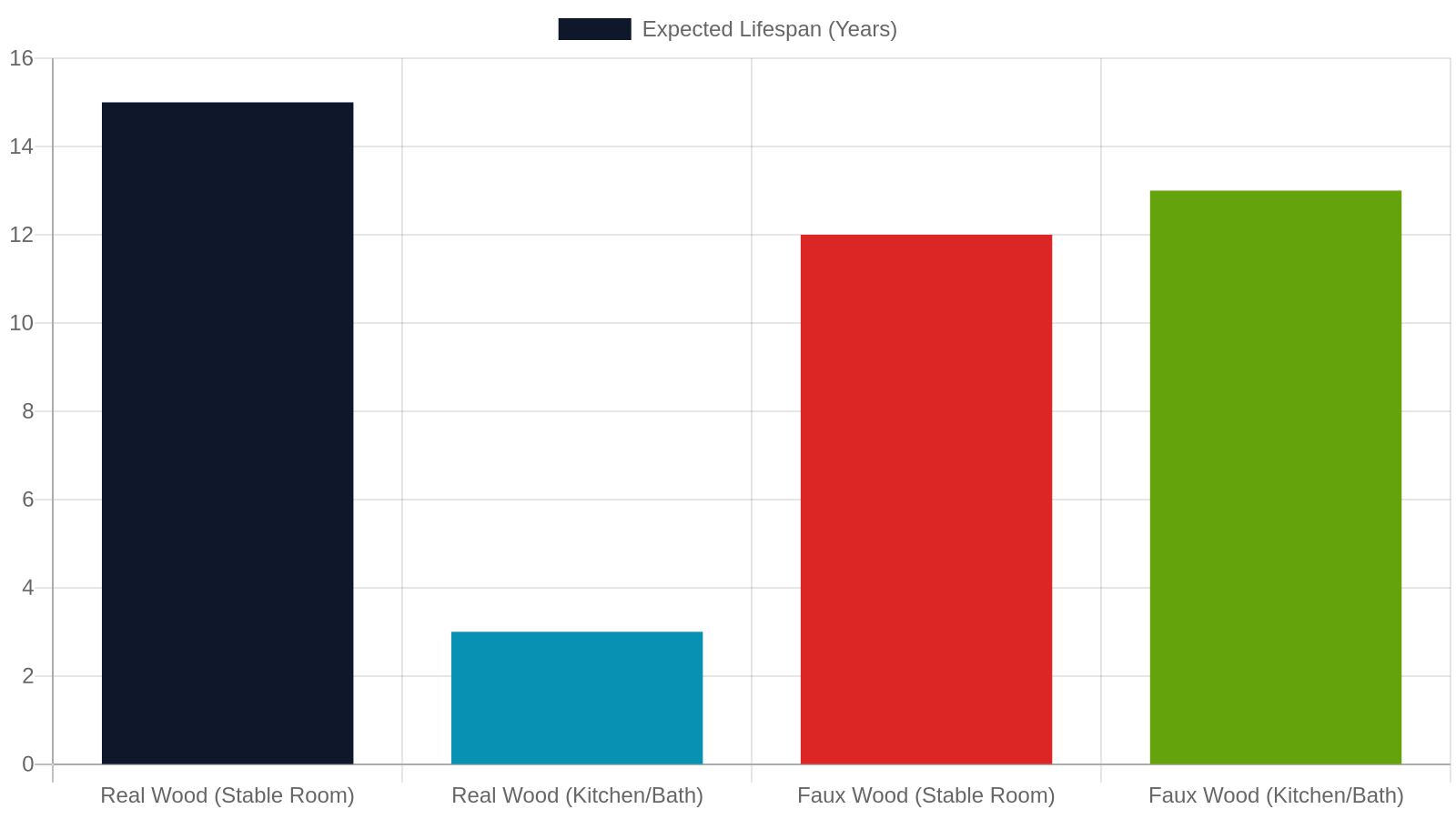
Real wood blinds are crafted from basswood, ramin, or paulownia — lightweight hardwoods that are milled into 2-inch or 2½-inch slats. They’re prized for their warm grain patterns, rich staining options, and the way they add an organic, upscale feel to any room. A quality set of real wood blinds can last 10–15 years in the right environment. The key phrase there is the right environment. Wood is a natural material that expands and contracts with changes in temperature and humidity, which means it needs a stable, dry climate to perform well long-term.
Faux Wood Blinds: The Engineered Alternative
Faux wood blinds — also called composite or PVC blinds — are manufactured from a blend of real wood particles and synthetic polymers, or from solid PVC. They’re engineered to look like real wood while eliminating wood’s biggest weaknesses. Modern faux wood blinds have come a long way from the plasticky look of early versions. Today’s products feature realistic wood-grain textures, dozens of paint and stain finishes, and the same 2-inch and 2½-inch slat profiles as their natural counterparts. They’re heavier than real wood but significantly more resistant to warping, cracking, and discoloration in humid or greasy environments — making them a natural fit for kitchens and bathrooms across West Tennessee.
2. Moisture Resistance: The Most Important Factor in Kitchens and Bathrooms

If there’s one deciding factor for window treatments in kitchens and bathrooms, it’s moisture resistance. These two rooms generate more humidity, steam, and condensation than any other space in a home — and that environment is genuinely hostile to natural wood products.
How Humidity Damages Real Wood Blinds
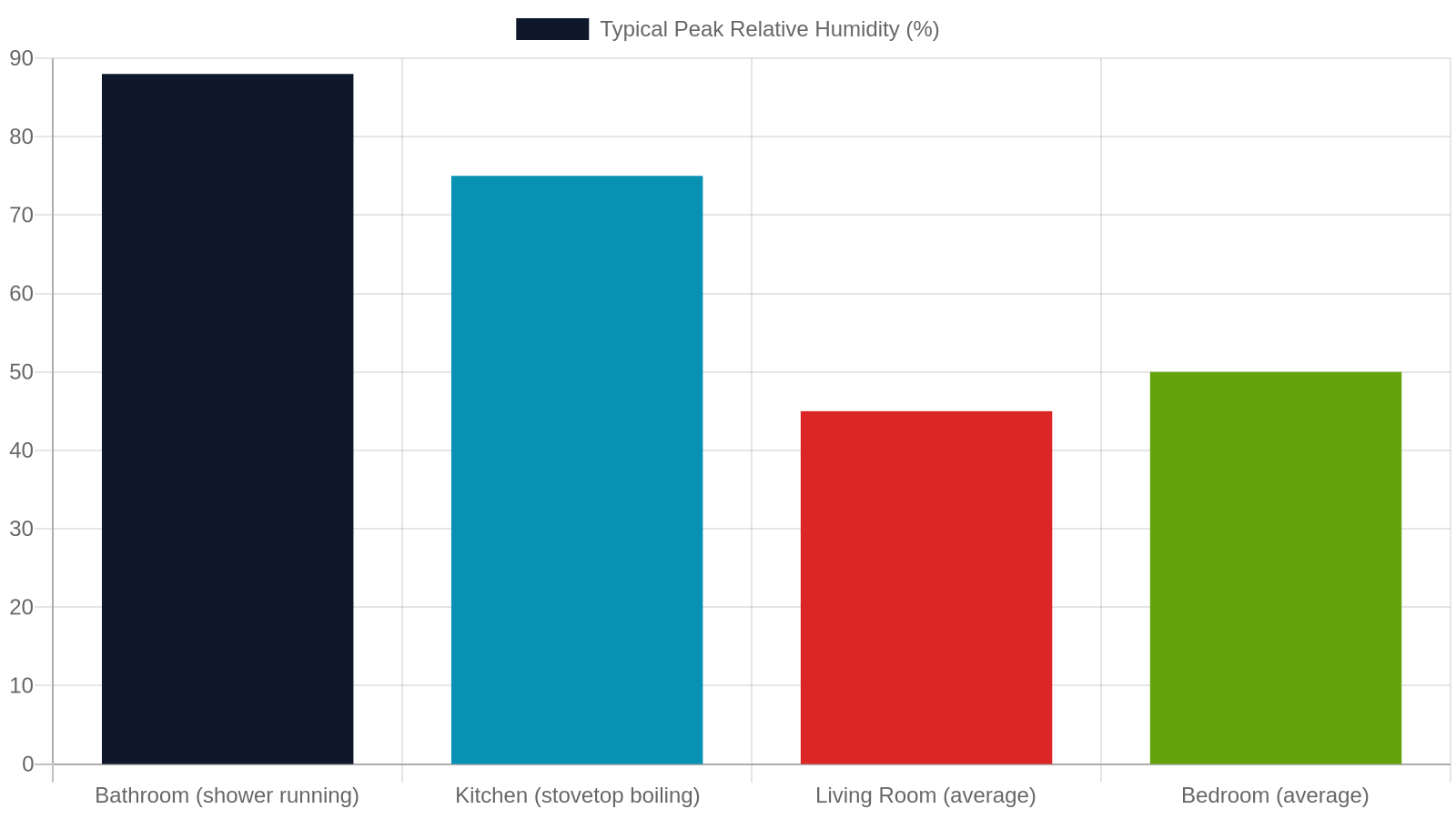
Wood is hygroscopic — it absorbs and releases moisture from the surrounding air. In a bathroom where humidity regularly spikes to 70–90% during a shower, or a kitchen where steam rises from boiling pots, real wood slats can begin to warp, bow, or cup within 12–24 months. Once a slat warps, it no longer tilts uniformly with the rest of the blind, creating gaps that let in light and look unkempt. Warped slats can’t be unwarped — the blind typically needs full replacement. In Jackson, TN’s humid summers (average July humidity: ~72%), even rooms without direct steam exposure can stress real wood blinds over time.
Why Faux Wood Thrives in High-Humidity Spaces
Faux wood blinds are non-hygroscopic — they don’t absorb moisture. PVC-core and composite slats maintain their shape whether humidity is 20% or 95%. They won’t warp, swell, or crack when steam rolls off a stovetop or a hot shower. This is the single biggest reason window treatment professionals consistently recommend faux wood for kitchens and bathrooms. Many faux wood products are also rated for moisture-prone environments by their manufacturers, giving homeowners added peace of mind. For bathrooms in particular — especially those with a tub or walk-in shower — faux wood isn’t just the better option, it’s essentially the only sensible one.
3. Cost Comparison: What You'll Actually Pay in West Tennessee
Budget matters, and the good news is that the more durable option for kitchens and bathrooms also happens to be the more affordable one. Here’s a realistic breakdown of what custom blinds cost in the West Tennessee market.
Real Wood Blind Pricing
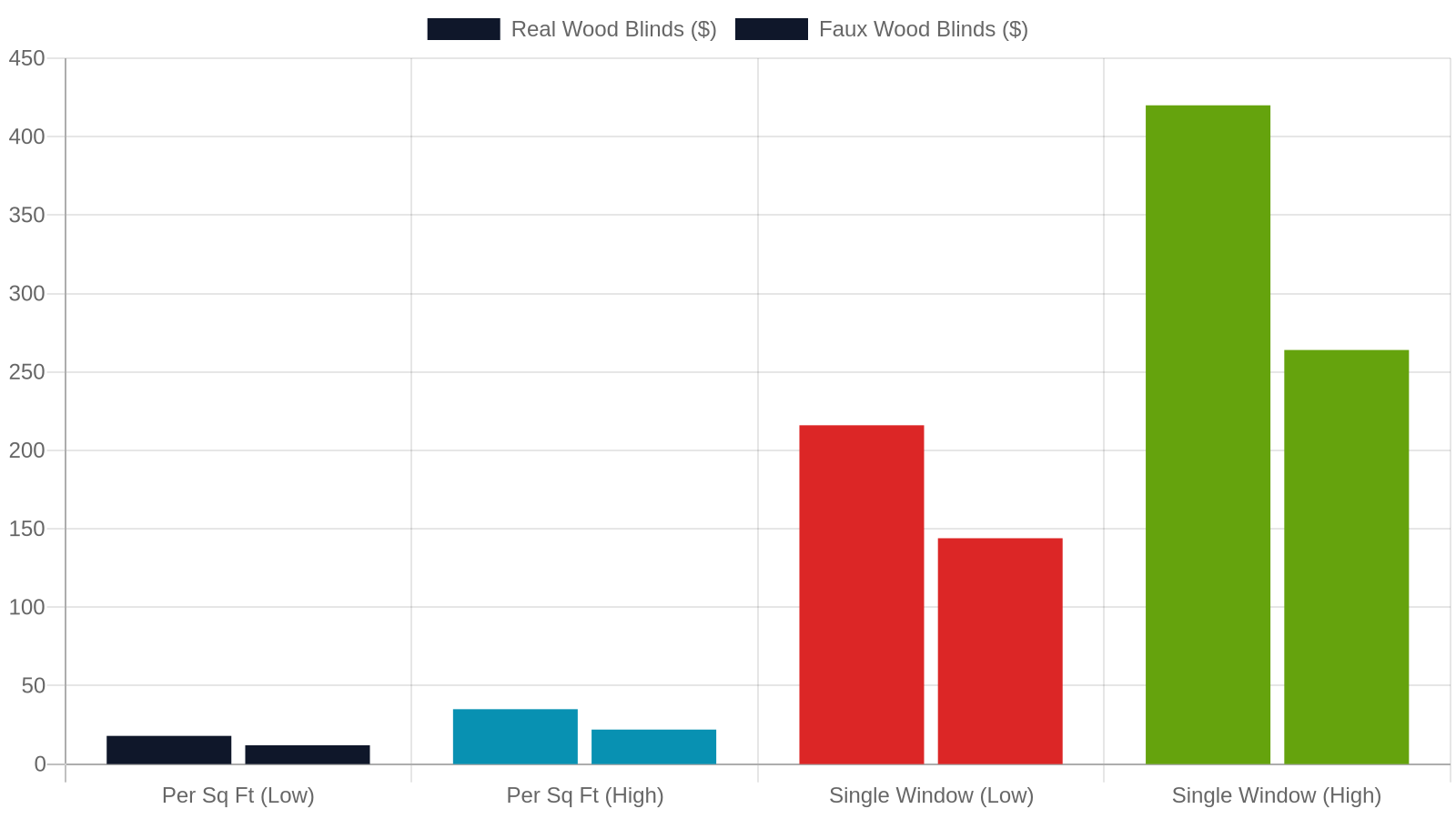
Custom real wood blinds typically run $18–$35 per square foot installed, depending on slat width, wood species, stain or paint finish, and hardware. For a standard kitchen window measuring 36×48 inches (12 sq ft), expect to pay roughly $216–$420 per window. A full kitchen with three windows could run $650–$1,260. Premium basswood with a custom stain and decorative tape can push costs even higher. These prices reflect custom-measured, professionally installed blinds — not the off-the-shelf box-store versions that rarely fit or perform as well.
Faux Wood Blind Pricing
Custom faux wood blinds are typically 20–40% less expensive than comparable real wood blinds. Expect to pay roughly $12–$22 per square foot installed for a quality custom faux wood product. That same 36×48-inch kitchen window would cost approximately $144–$264 — a savings of $72–$156 per window. Across a full kitchen and two bathrooms, a homeowner in Jackson or nearby Lexington could save $400–$900 by choosing faux wood without sacrificing appearance or performance. Given that faux wood also outlasts real wood in those specific rooms, the value proposition is hard to argue with.
4. Durability and Lifespan: Which Blind Goes the Distance?
Durability isn’t just about how tough a blind looks in the showroom — it’s about how it performs five, ten, and fifteen years from now in the actual conditions of your home. For kitchens and bathrooms, the durability story strongly favors faux wood.
Real Wood Lifespan in Stable vs. Humid Rooms
In a living room, dining room, or bedroom — anywhere with stable humidity and no direct steam exposure — real wood blinds can comfortably last 10–20 years with normal care. The wood ages gracefully, and minor scratches can often be touched up with a matching stain pen. However, place those same blinds in a bathroom or kitchen, and the lifespan drops dramatically. Many homeowners report noticeable warping within 1–3 years in high-humidity rooms. Some manufacturers explicitly void warranties on real wood blinds installed in bathrooms, acknowledging that the environment is simply incompatible with the material.
Faux Wood Lifespan in High-Use Rooms
Faux wood blinds in kitchens and bathrooms routinely last 10–15 years without warping, fading, or structural failure — even with daily steam, grease splatter, and cleaning. The synthetic core doesn’t degrade the way natural wood does under repeated moisture cycles. Most reputable faux wood products carry manufacturer warranties of 3–5 years, with some premium lines offering limited lifetime warranties. In terms of cost-per-year of use, faux wood wins decisively in moisture-prone rooms. A $200 faux wood blind lasting 12 years costs about $16.67/year; a $350 real wood blind lasting 3 years in a bathroom costs $116.67/year.
5. Cleaning and Maintenance: Keeping Up with Kitchen Grease and Bathroom Soap Scum
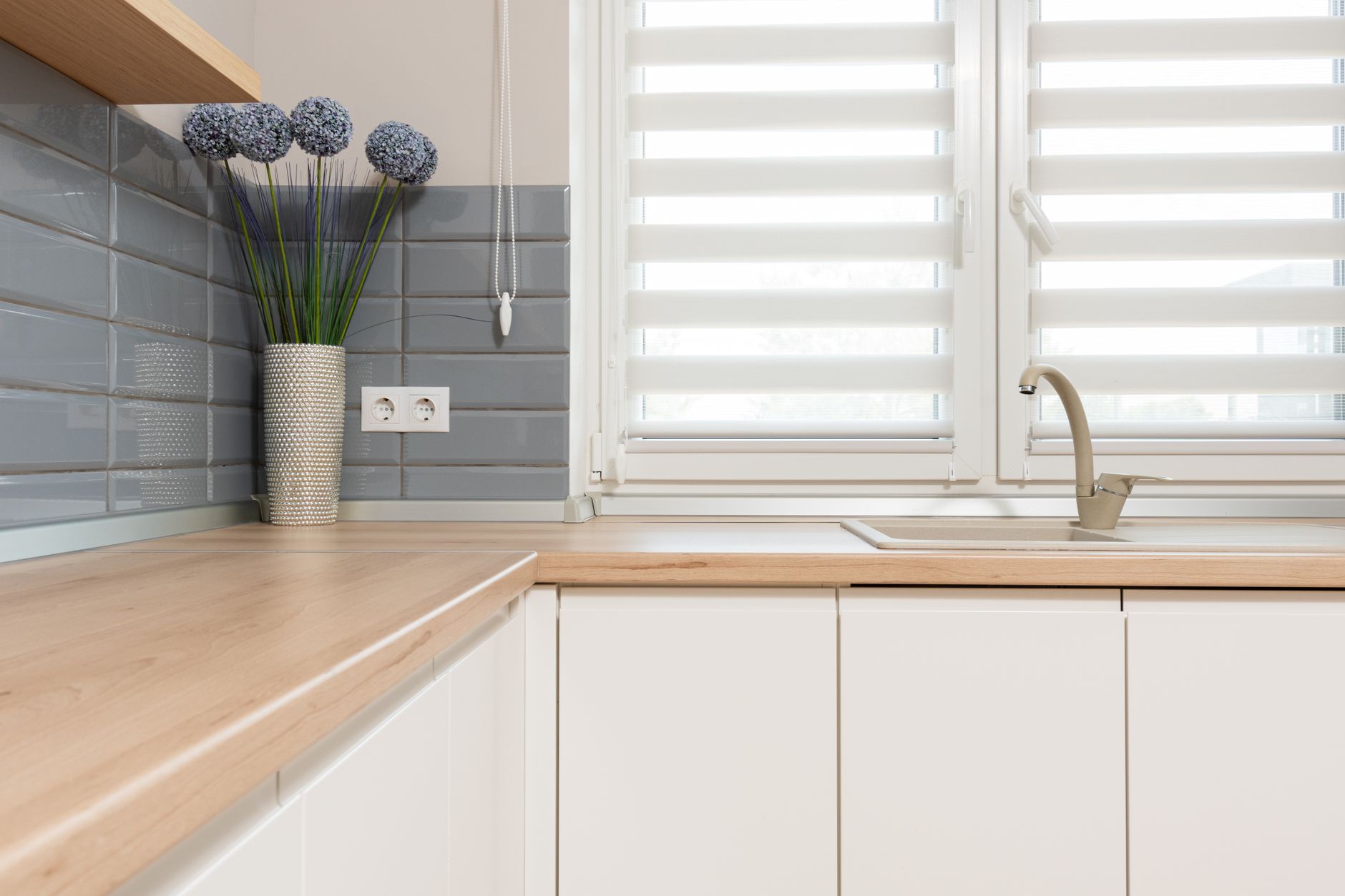
Kitchens and bathrooms are the two messiest rooms in a home — grease, steam, soap scum, and hard water deposits are constant facts of life. Your window blinds need to be easy to clean, or they’ll look dingy within a year no matter how nice they were when installed.
Cleaning Real Wood Blinds Safely
Real wood blinds require gentle, dry cleaning methods. Dust with a microfiber cloth or feather duster, always wiping along the slat rather than across it to avoid scratching the finish. For light soil, a barely damp cloth can be used — but excess moisture must be wiped away immediately and the blind should be tilted open to air-dry. Never submerge real wood blinds or use spray cleaners directly on the slats. In a kitchen, where grease and cooking residue build up on surfaces near the stove, this limitation is significant. Grease-cutting cleaners that contain water or alcohol can strip the finish off real wood slats over time.
Cleaning Faux Wood Blinds — Much Simpler
Faux wood blinds can be cleaned with a damp cloth, mild dish soap, or an all-purpose spray cleaner without any risk of damage. For a deep clean, you can even remove the blinds and rinse them in a bathtub or with a garden hose — something completely off-limits with real wood. This makes faux wood blinds dramatically easier to maintain in kitchens, where grease buildup is a real issue, and in bathrooms, where soap scum and hard water deposits accumulate on surfaces near the sink and shower. A quick weekly wipe-down keeps faux wood blinds looking fresh with minimal effort, which is exactly what busy Jackson, TN homeowners need.
6. Aesthetics and Style: Can Faux Wood Really Match the Look of Real Wood?
One of the most common concerns homeowners raise when considering faux wood blinds is whether they’ll look as good as the real thing. It’s a fair question — aesthetics matter, especially in spaces you spend time in every day. The honest answer is nuanced.
The Visual Gap Has Nearly Closed
Ten years ago, it was easy to tell faux wood from real wood at a glance — the PVC versions looked shiny and plastic. Today’s premium faux wood blinds feature embossed wood-grain textures, matte finishes, and warm stain tones that are nearly indistinguishable from real wood to the casual observer. Colors like Chestnut, Mahogany, Rustic Barnwood, and Whitewash Oak are available in faux wood lines that convincingly replicate popular real wood finishes. For kitchens and bathrooms — rooms where guests spend less time scrutinizing window treatments — the visual difference is negligible in practice.
Where Real Wood Still Has the Edge
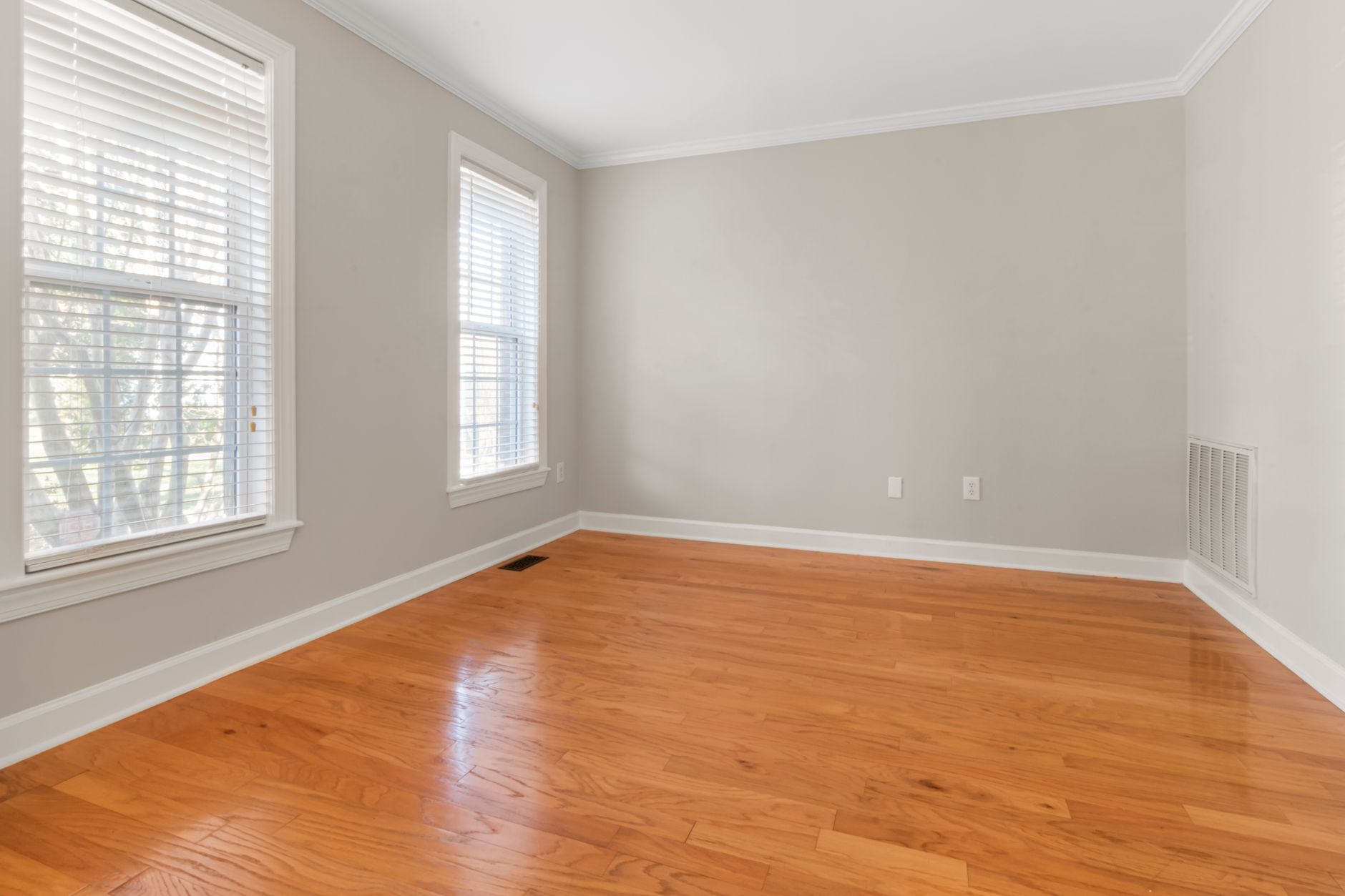
In a formal living room, a home office with built-in cabinetry, or a master bedroom where window treatments are a design focal point, real wood blinds still carry a tactile and visual richness that faux wood can’t fully replicate up close. The natural variation in grain, the warmth of the wood, and the way it pairs with hardwood floors and wood furniture creates a cohesive, high-end look that designers and discerning homeowners genuinely appreciate. If you’re renovating a showpiece room in a Henderson or Milan, TN home and budget isn’t the primary concern, real wood blinds are worth the investment — just keep them out of the kitchen and bath.
7. Light Control and Privacy: How Each Material Performs
Light control and privacy are core functions of any window treatment — and in kitchens and bathrooms, they take on extra importance. You want natural light for cooking and grooming, but you also need privacy from neighbors and passersby.
Slat Width and Light Filtering
Both real wood and faux wood blinds are available in 1-inch, 2-inch, and 2½-inch slat widths. Wider slats (2½ inches) provide a more open, airy view when tilted open and a slightly larger gap between slats — which some homeowners prefer for natural light. Narrower 1-inch slats offer tighter light control and a more tailored look. In terms of the actual light-filtering performance, both materials perform identically when the slats are the same width and the blind is properly fitted. The key is professional measuring — a blind that’s even ¼ inch too narrow will let in light around the edges and compromise privacy.
Privacy in Bathrooms: A Special Consideration
Bathroom windows present a unique challenge: you need maximum privacy while still allowing ventilation and some natural light. Faux wood blinds work well here because they can be tilted to allow airflow while keeping the room private, and they pair beautifully with a top-down/bottom-up option that lets you lower the blind from the top to bring in light from above while keeping the lower portion closed for privacy. This feature is available in both real wood and faux wood, but it’s especially practical in bathrooms. For kitchen windows over a sink that face a neighbor’s yard, the same approach gives you natural light without sacrificing privacy while you’re doing dishes.
Faux Wood vs. Real Wood Blinds: 10-Point Comparison at a Glance
Use this side-by-side comparison to quickly evaluate which blind type is the right fit for your kitchen, bathroom, or other rooms in your West Tennessee home.
8. Energy Efficiency: Do Blinds Actually Help Your Utility Bills?

Energy efficiency is increasingly important to West Tennessee homeowners — both for comfort and for keeping utility bills manageable through Jackson’s hot summers. Window treatments play a real role in your home’s thermal performance.
Insulating Properties of Wood vs. Faux Wood
Real wood is a natural insulator — it has a higher R-value per inch than most synthetic materials. A 2-inch real wood slat provides slightly better thermal insulation than a comparable faux wood slat. However, the practical difference in a window blind application is minimal, because blinds are not airtight. The bigger energy-efficiency gain comes from keeping the blind closed during peak sun hours in summer and overnight in winter. According to the U.S. Department of Energy, cellular shades are the gold standard for window insulation, but any closed blind can reduce heat gain by up to 45% compared to an uncovered window on a sunny day.
West Tennessee's Climate and Your Window Choices
Jackson, TN sits in USDA Hardiness Zone 7b and experiences hot, humid summers (average July high: 91°F) and mild but variable winters. The bigger energy concern for most West Tennessee homeowners is solar heat gain in summer — keeping afternoon sun out of west- and south-facing kitchen windows to reduce air conditioning load. Both faux wood and real wood blinds do this job effectively when closed. For maximum energy efficiency in kitchens and bathrooms, consider pairing blinds with a cellular shade or adding a solar shade layer. Blinds Galore can help you explore layered window treatment options during a free in-home consultation.
9. Installation Considerations: Inside Mount, Outside Mount, and Professional Measuring

Even the best blind will underperform if it’s measured or installed incorrectly. Kitchens and bathrooms often have unique installation challenges — tight spaces, shallow frames, proximity to cabinets — that make professional installation especially valuable.
Why Professional Measuring Matters More Than You Think
Custom blinds are cut to exact dimensions — there’s no adjusting after the fact. A measurement error of even ⅛ to ¼ inch can mean a blind that won’t fit inside the window frame, leaves visible gaps, or can’t be returned because it was cut to your specification. This is why professional measuring is so important, and it’s one of the core services Blinds Galore provides with every free in-home consultation. A trained installer knows how to account for window frame depth (critical for inside mounts), out-of-square frames (common in older Jackson, TN homes), and clearance needed for handles, locks, and cranks.
Inside Mount vs. Outside Mount for Kitchens and Bathrooms
An inside mount positions the blind within the window frame for a clean, built-in look — ideal for kitchens where you want a streamlined appearance that doesn’t interfere with cabinet doors or countertops. It requires a minimum frame depth of about 2¼ inches for faux wood blinds and slightly more for real wood (due to the headrail). An outside mount attaches above and outside the frame, which is useful when the window frame is too shallow, when you want to make the window appear larger, or when you need to cover a window that’s close to a wall or cabinet. In bathrooms with small windows, an outside mount can make the window feel more substantial and provide better coverage around the frame.
10. Special Situations: When to Choose Real Wood Anyway
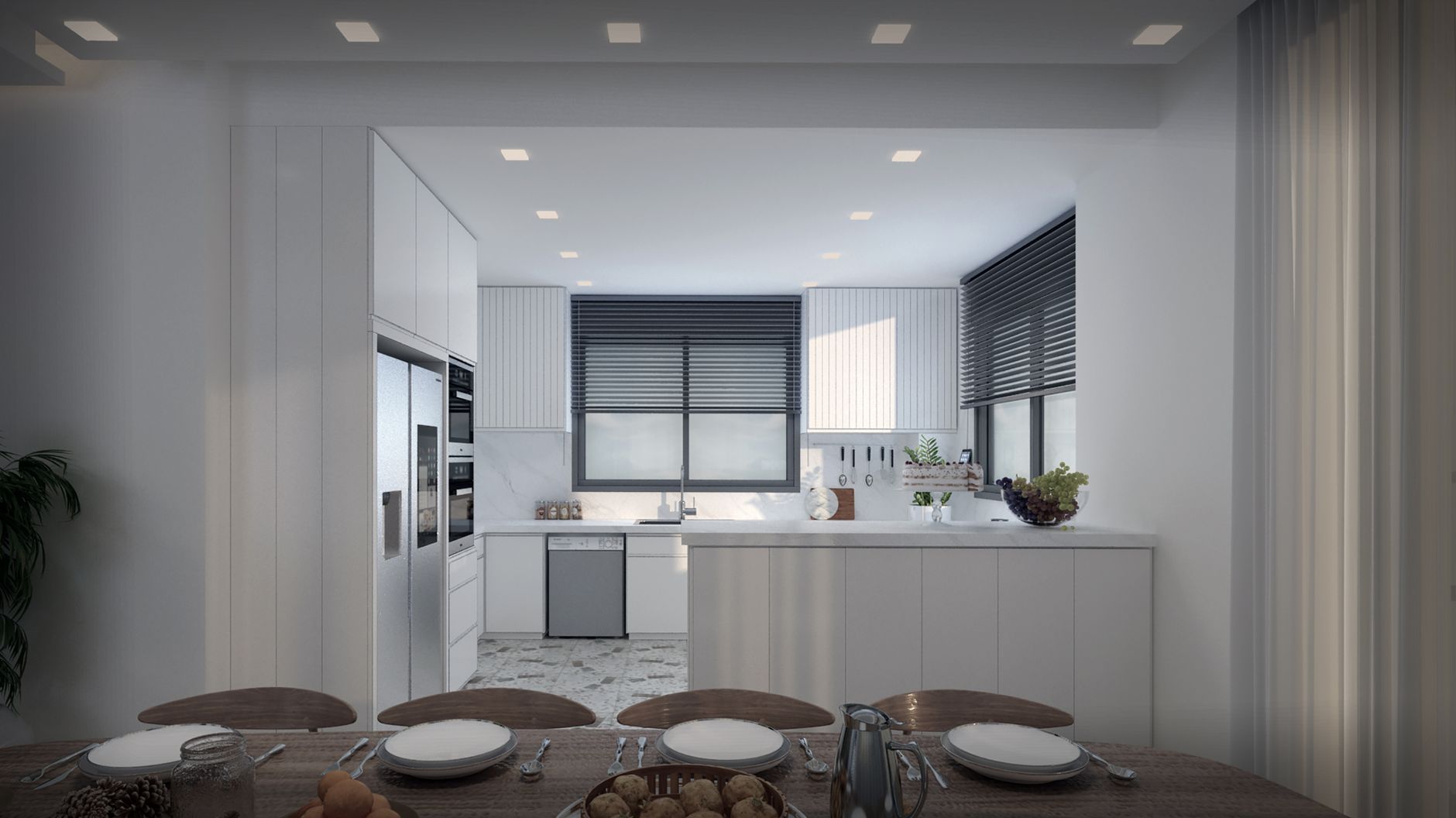
The recommendation to choose faux wood for kitchens and bathrooms isn’t absolute — there are situations where real wood can work well, or where the choice depends on the specific location of the window within the room. Here are the nuanced cases worth considering.
Powder Rooms and Half-Baths
A powder room or half-bath — a bathroom with only a toilet and sink, no shower or tub — is a notably different environment than a full bath. Without a shower or tub, humidity levels stay much closer to the rest of the house. If you have a well-ventilated powder room that you want to look especially elegant, real wood blinds are a reasonable choice. The risk of warping is significantly lower when there’s no steam source in the room. That said, even in a powder room, faux wood remains the safer bet — splashing at the sink and the occasional spill can still introduce moisture, and the cost savings of faux wood are just as real regardless of room size.
Kitchen Windows Far from the Stove
Not every kitchen window is directly above the stove or sink. A kitchen window on a far wall — say, a breakfast nook window or a window in an open-concept kitchen that flows into a dining area — may experience far less steam and grease than a window directly over the range. In these lower-exposure positions, real wood blinds can perform well for many years. If you have your heart set on the look and feel of real wood in your kitchen, consider using faux wood for windows near the stove and sink and real wood for windows in lower-humidity zones of the same room. A professional consultation can help you map out the best approach for your specific layout.
Ready to Upgrade Your Jackson, TN Kitchen and Bathroom Windows?

You’ve done the research — now it’s time to see these options in person, in your own home, with an expert by your side. Blinds Galore has been helping Jackson, TN homeowners make confident window treatment decisions for over 18 years, and we’d love to help you find the perfect fit for your kitchen and bathrooms.
What to Expect from a Free In-Home Consultation
Blinds Galore brings the showroom directly to your home — no driving to a store, no guessing how samples will look in your actual light. During your free in-home consultation, a window treatment specialist will measure every window precisely, bring a full range of faux wood and real wood samples, and walk you through options that fit your style, your room conditions, and your budget. You’ll see exactly how each finish looks against your walls, cabinets, and flooring before you commit to anything. It’s the smartest way to shop for custom window treatments, and it’s available to homeowners throughout Jackson, Lexington, Henderson, Milan, and the surrounding West Tennessee communities.
Our 100% Satisfaction Guarantee
With over 18 years of experience serving West Tennessee homeowners, Blinds Galore stands behind every product and installation with a 100% satisfaction guarantee. If something isn’t right — the fit, the finish, the function — we make it right. That commitment is what keeps our customers coming back and referring their neighbors. Whether you’re outfitting a single bathroom window or replacing every blind in a full kitchen remodel, you’ll get the same careful attention to detail and the same guarantee of quality. Ready to see the difference custom makes? Explore our custom faux wood blind options or call us directly at (731) 571-5179 to schedule your free in-home consultation today.
Frequently Asked Questions
Are faux wood blinds good for bathrooms?
Yes — faux wood blinds are the top recommendation for bathrooms. They resist moisture, humidity, and steam without warping or cracking, which makes them far more durable than real wood in that environment. They're also easy to wipe clean and cost 20–40% less than real wood.
Will real wood blinds warp in a kitchen?
They can, especially near a stove or sink where steam and humidity levels are high. Real wood absorbs moisture and can begin to warp or bow within 1–3 years in a kitchen environment. Many manufacturers actually void warranties on real wood blinds installed in kitchens or bathrooms.
How do I clean faux wood blinds in a kitchen?
Faux wood blinds can be cleaned with a damp cloth and mild dish soap or an all-purpose cleaner. For heavy grease buildup, you can remove them and rinse them in a tub or with a hose. Wipe dry and rehang — it's that simple, which is one of the biggest practical advantages over real wood.
What is the difference between faux wood and composite blinds?
The terms are often used interchangeably. 'Faux wood' is the general consumer term; 'composite' typically refers to blinds made from a blend of real wood particles and synthetic polymer, while 'PVC faux wood' uses a solid vinyl core. Both are moisture-resistant and suitable for kitchens and bathrooms.
How much do custom faux wood blinds cost in Jackson, TN?
Custom faux wood blinds in the Jackson, TN area typically run $12–$22 per square foot installed, depending on slat width, finish, and hardware. A standard kitchen window (36×48 inches) would cost roughly $144–$264. Blinds Galore offers free in-home consultations and precise quotes at no obligation.
Can I use real wood blinds in a powder room?
A powder room (toilet and sink only, no shower or tub) is a lower-humidity environment than a full bath, so real wood blinds carry less risk there. However, faux wood is still the safer and more cost-effective choice, since sink splashing and occasional spills can still introduce moisture over time.
You might also like

7 Best Custom Blinds for Sunrooms in Jackson, TN: Light Control and UV Protection Guide
Quick answer: The best custom blinds for sunrooms in Jackson, TN balance strong UV protection with flexible

How to Install Custom Faux Wood Blinds in Your Jackson, TN Home: a 10-Step Guide
Quick answer: Installing custom faux wood blinds in a Jackson, TN home is a manageable DIY project for

How to Choose the Right Window Treatment Style Using Product Videos
Quick answer: Choosing the right window treatment — blinds, shades, or plantation shutters — comes

7 Best Custom Blinds for Laundry Rooms and Utility Spaces in Jackson, TN
Quick answer: The best custom blinds for laundry rooms and utility spaces in Jackson, TN are moisture-resistant

8 Best Custom Blinds for Kitchens with Large Windows in Jackson, TN
Quick answer: For kitchens with large windows in Jackson, TN, the best custom blinds balance moisture

9 Best Window Treatments for Jackson TN Home Theaters and Media Rooms
Quick answer: For home theaters and media rooms in Jackson, TN, the single best window treatment is a