


Best Cellular Shades For Insulation
If you're sitting in a room that feels too hot by mid-afternoon or too chilly after sunset, even with the system running, your windows are probably part of the problem. That’s common around West Tennessee. We get long, bright summer stretches, then those winter days when glass feels cold enough to change the whole room.
A lot of homeowners start by thinking they need a bigger HVAC fix. Sometimes they really need better window insulation. That’s where cellular shades come in. Among the best cellular shades for insulation, the right honeycomb design can make a room feel steadier, more comfortable, and less expensive to heat and cool.
Why Your Windows Are Costing You Money
A homeowner in Jackson called after trying the usual things. They kept the thermostat steady, changed filters, and still had one bedroom that never felt right. In summer, the west-facing window turned the room warm before dinner. In winter, the same spot felt drafty after dark.
That kind of complaint usually points to the same culprit. The window isn’t just letting in light. It’s also letting indoor comfort slip away. Even a decent-looking window can be weak where the glass, frame, and edges meet.
Comfort loss usually starts at the glass
Homeowners often notice the symptom before they notice the cause. They feel a hot stripe on the floor. They avoid sitting near one chair in January. They keep touching the thermostat because the house feels uneven.
The fix isn't always replacing every window. A well-chosen insulating shade adds another barrier inside the room. It helps the window behave better, especially when the afternoon sun is pounding one side of the house.
If you're trying to understand where energy loss starts, this guide on the importance of window seals gives helpful background on how small edge failures can affect comfort.
Practical rule: If one room feels different from the rest of the house, start by looking at window exposure, fit, and shade coverage before assuming the HVAC equipment is the main issue.
West Tennessee homes often need a two-season solution
Here’s what makes this local. In West Tennessee, you need a window treatment that helps in both directions. Summer heat pushes in. Winter warmth leaks out. The best cellular shades for insulation work as a year-round tool, not just a room-darkening upgrade.
That’s why many homeowners start comparing honeycomb shades instead of basic blinds. Slats can soften light, but they leave plenty of open space. Cellular shades are built to hold still air, and still air is what slows heat transfer.
If you want a broader look at practical upgrades beyond the window itself, this article on ways to improve home insulation is a useful next read.
How Honeycomb Shades Trap Air and Lower Bills
Cellular shades work a lot like a puffy winter jacket. The fabric matters, but the trapped air matters just as much. Those little pockets inside the shade create a buffer between the glass and your room.

Think of the cells like a thermos wall
A thermos doesn’t keep coffee warm because it’s thick and heavy. It works because it slows the movement of heat. Honeycomb shades do something similar on a window.
Each cell traps air. That trapped air helps reduce the flow of heat through the glass area. So when the sun is beating down outside, less heat moves inward. When it’s cold outside, less indoor warmth escapes as quickly.
What R-value means in plain English
R-value is just an insulation score. Higher means better resistance to heat flow. You don’t need to memorize the science. You just need to know that a higher number usually means the window covering is doing more insulating work.
According to insulation charts summarized by cellular shade manufacturers, double-cell blackout cellular shades reach an R-value of 4.0 for the shade alone, and that climbs to 5.0 with a single-pane window and 5.8 with a double-pane window. For comparison, a standard double-pane window alone is 1.8. That’s why double-cell blackout options are often treated as the top tier for insulation among common window coverings, as shown in this R-value comparison for insulating cellular window treatments.
That difference is easier to understand with a simple example. If two rooms have similar windows, and one gets a high-performing double-cell blackout shade with a tight fit, that room has a much better thermal barrier at the glass.
Why double-cell and blackout matter
A single-cell shade has one layer of air pockets. A double-cell shade adds another layer. More trapped air usually means better insulation.
Blackout fabric helps too. It doesn’t just darken the room. It adds another barrier that helps with light and heat control, which matters a lot on sunny windows in places like Jackson, Milan, and Dyersburg.
This short video gives a helpful visual of how that structure works in everyday use.
Why the same shade can feel different from house to house
Two homeowners can buy a similar honeycomb shade and get different results. That usually comes down to window size, sun exposure, fabric choice, and fit.
A shaded north-facing room may feel fine with a simpler setup. A west-facing bonus room that catches late-day sun often needs the strongest insulating build you can reasonably fit and operate.
Good insulation at the window isn’t magic. It’s trapped air, reduced gaps, and the right fabric for the job.
Key Decisions That Impact Your Energy Savings
Once you understand how cellular shades work, the next step is choosing the version that fits your home. Homeowners often get stuck at this point. They hear terms like single cell, blackout, inside mount, and pleat size, and it all starts sounding like showroom vocabulary.
It’s easier if you think in terms of outcomes. Do you want basic insulation, or the strongest barrier you can get? Do you want filtered daylight, or do you need heavy sun blocking? Are you trying to cover the glass neatly, or are you trying to cover every bit of edge space possible?
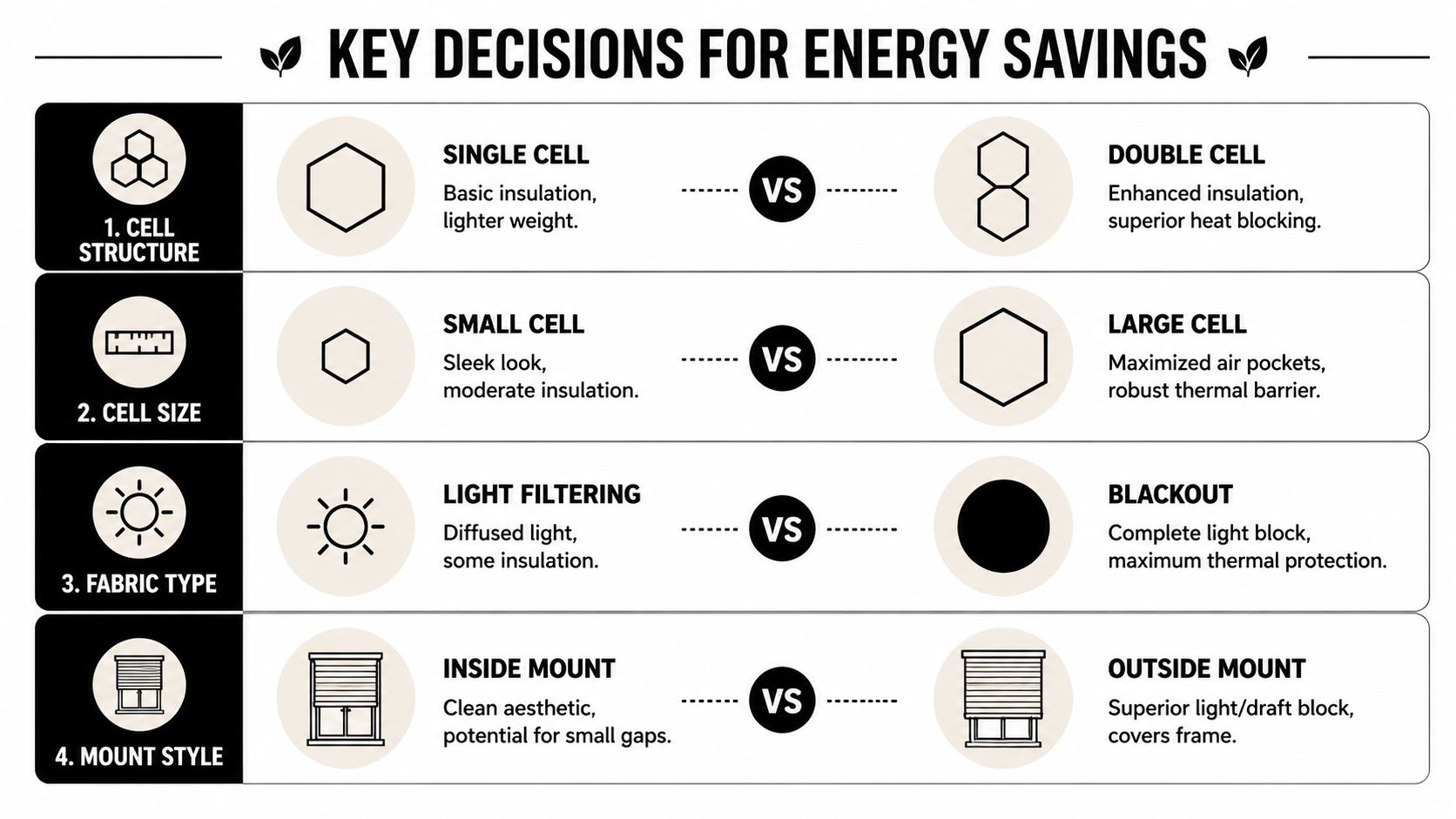
Start with cell structure
If insulation is your top priority, cell count matters first.
- Single-cell shades work well when you want a cleaner profile and solid day-to-day performance without adding as much bulk.
- Double-cell shades are the stronger pick when your room takes harsh afternoon sun or gets cold near the glass in winter.
- Triple-cell options can be worth discussing for especially challenging windows, but they’re usually a more specialized choice based on the room, the depth of the opening, and the overall look you want.
For many West Tennessee homes, the practical sweet spot is double-cell. It balances stronger insulation with a design that still fits most living spaces well.
Then choose the fabric opacity
Opacity changes both light control and thermal behavior.
Light-filtering fabric softens daylight and gives the room a bright, gentle look. It works well in kitchens, living rooms, and spaces where you still want sunshine without the harsh glare.
Room-darkening and blackout fabric do more to shut down aggressive sun and add another layer of separation between the glass and the room. On bedrooms, media rooms, and west-facing rooms, that extra barrier often makes a real comfort difference.
According to energy-efficiency analyses summarized here, well-fitted cellular shades can block up to 60% of incoming solar heat, reducing total solar heat gain through windows to about 20%. The same source notes the U.S. Department of Energy reports that interior cellular shades can save 15% of a household’s annual HVAC energy use compared to basic vinyl blinds. You can review those figures in this summary on cellular shade energy savings.
Mount style changes performance more than people expect
This is where a lot of buying guides stay too shallow. The shade itself matters, but the way it mounts changes how much air sneaks around the sides.
- Inside mount gives you a trim, built-in look. It’s popular because it’s neat and architectural. But if the opening is out of square or the gaps are generous, you can lose some insulating benefit around the edges.
- Outside mount covers more of the frame and can do a better job controlling light seepage and edge drafts. It’s especially helpful when the window opening is shallow, uneven, or just not ideal for a tight inside fit.
If you're also working on the cooling side of the house, these AC energy efficiency tips are worth pairing with a window treatment upgrade.
Pleat size matters, but mostly after the big decisions
People often ask if larger pleats insulate better. In practice, I tell them to decide on cell count, opacity, and fit first. Pleat size affects appearance and how the shade looks in proportion to the window.
Smaller pleats tend to look more fitted on smaller windows. Larger pleats can suit bigger openings and give a stronger visual texture. From an insulation standpoint, the bigger win usually comes from the overall shade construction and installation quality.
A simple comparison table
| Feature | Insulation Level | Best For | Estimated R-Value Boost |
|---|---|---|---|
| Single-cell | Moderate | Mild exposure rooms, balanced budget | Qualitatively lower than double-cell |
| Double-cell | High | Hot west-facing rooms, colder winter windows | Strong boost, especially with blackout fabric |
| Blackout fabric | High | Bedrooms, media rooms, strong sun exposure | Higher-performing option in insulating setups |
| Light-filtering fabric | Moderate | Living spaces needing daylight | Useful, but less aggressive against heat than blackout |
| Inside mount | Depends on fit | Clean built-in appearance | Better when openings are precise |
| Outside mount | Often stronger edge control | Uneven openings, light gaps, draft-prone windows | Can improve practical performance by covering more area |
For a broader side-by-side look at other options, this guide to the best blinds for energy efficiency can help you compare cellular shades with other window treatments.
When homeowners say, "I want the best cellular shades for insulation," what they usually mean is this: "I want the room to feel better without fighting the thermostat."
What National Guides Miss About Durability in Tennessee
A lot of national articles stop at the purchase. They compare fabrics, mention energy savings, and move on. Real life in West Tennessee is different. Your shades still have to perform after months of pollen, dust, field debris, and the occasional cleaning attempt that seemed harmless at the time.
Dust changes the long game
Cellular shades insulate because their internal pockets hold air. When those areas collect dust over time, the shade can still look fine from across the room while performing less cleanly than it did when it was new.
That doesn’t mean honeycomb shades are fragile. It means maintenance matters more than many buying guides admit. In rural and semi-rural areas, especially, dust and fine debris can settle into fabrics and along folds faster than city-based advice suggests.
The durability concern is noted directly in this Hunter Douglas guide to insulating shades and long-term upkeep, which points out that dust accumulation can affect the insulating air pockets over time and that hard water minerals from cleaning can affect certain fabrics.
Hard water can create avoidable wear
This one surprises people. They think, "It’s just fabric, I’ll spot-clean it." But some homes in our area deal with mineral-heavy water, and repeated cleaning with the wrong method can leave marks or affect the material.
That’s why I usually tell homeowners to ask three very plain questions before ordering:
- How do I clean this fabric safely if it gets dusty or spotted?
- Can this material handle occasional maintenance without looking tired too soon?
- Will the shade be touched often by kids, pets, or everyday traffic?
Those questions matter as much as color.
Better materials pay off in fewer headaches
Higher-quality fabrics and well-built operating systems tend to hold their shape better and stay easier to live with. That’s especially important in homes where shades are raised and lowered often, or where the windows are over kitchen sinks, gravel driveways, or rooms that gather dust quickly.
Names like Norman and Graber come up often because homeowners want options that don’t just look good on installation day. They want shades that still move well, still stack neatly, and still clean up reasonably after years of use.
A shade can test well in a chart and still disappoint in a real house if the fabric is hard to maintain.
Why a Perfect Fit is Crucial for Insulation
You can buy an excellent cellular shade and still miss the comfort you wanted if the fit is sloppy. That’s the part homeowners often underestimate. Insulation at the window isn’t just about the fabric. It’s also about the gaps.
If air slips around the sides, top, or bottom too easily, the shade loses part of the job it was supposed to do.
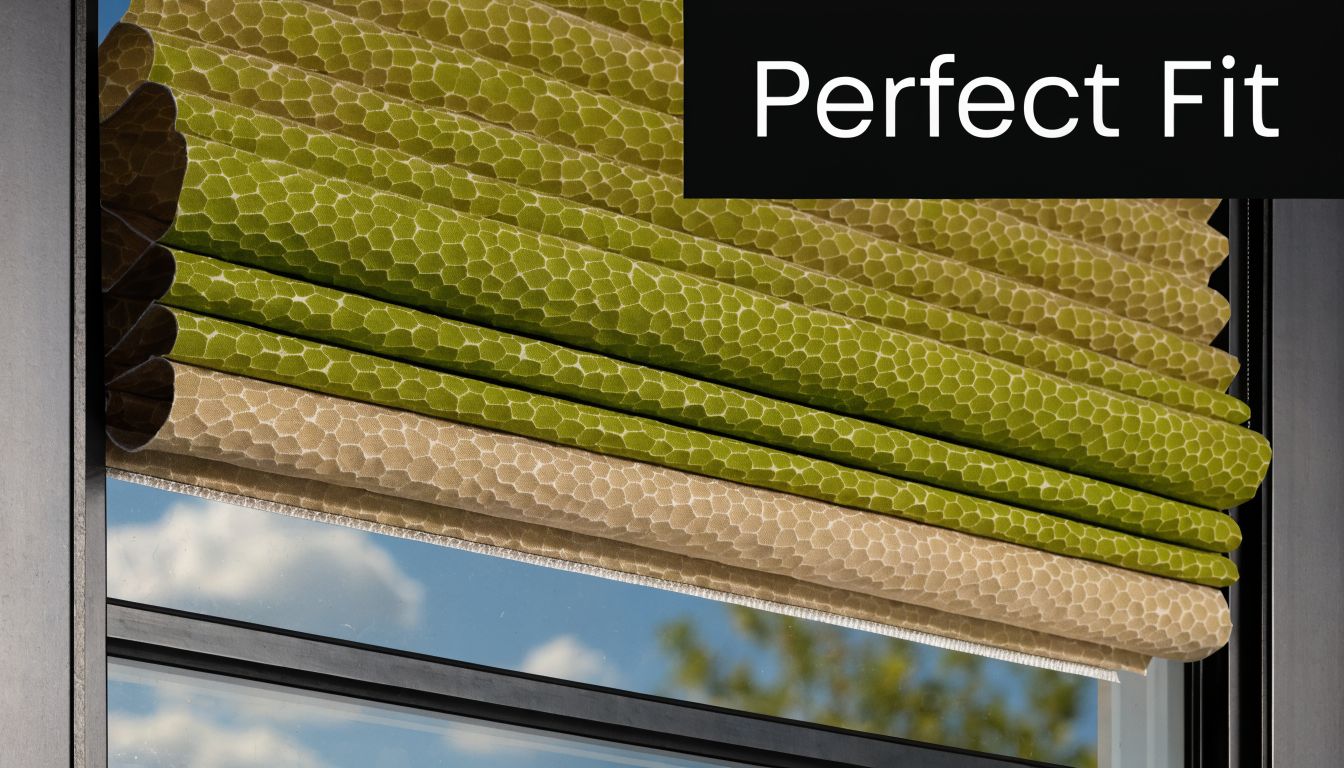
Small gaps create big comfort problems
Think about putting a lid on a cooler but leaving it slightly cracked. The cooler still works, just not nearly as well. Window shades behave the same way.
A shade that’s too narrow leaves side channels of moving air. A shade that sits too far off the wall can let light and heat sneak around the frame. A shade installed on an uneven opening may look acceptable at first glance but underperform every day.
That’s one reason custom sizing matters so much with the best cellular shades for insulation.
Inside mount versus outside mount in real homes
This choice isn’t about right or wrong. It’s about matching the mount to the window.
Inside mount
Inside mount works well when the opening is fairly square and deep enough for the product. It gives a clean, fitted look many homeowners prefer in living rooms and front-facing spaces.
Outside mount
Outside mount becomes the smarter choice when the frame is shallow, the opening is off, or light gaps are already a problem. By overlapping the opening, it can improve practical insulation and privacy.
Specialty situations
Some windows need a more specific conversation. Wide openings, older trim, and windows with handles or cranks can all affect what mount style works best.
If you’re trying to get a sense of how sizing works before bringing in a professional, this guide on how to measure windows for blinds is a good starting point.
Why custom install matters
Custom install stops being a luxury add-on and becomes part of the insulation system. Accurate measurement helps the shade cover what it needs to cover. Careful installation helps it sit where it should sit and operate the way it was designed to operate.
That’s especially important in older West Tennessee homes, where trim and openings aren’t always perfectly uniform. A ready-made shade might be close. Close is not the same as sealed up properly.
Worth remembering: The product gets most of the attention, but the fit is what lets the product do its job.
Your Partner for a More Comfortable and Efficient Home
Most homeowners don’t want to become window treatment experts. They want the back bedroom cooler, the den less drafty, and the whole house to feel more even. They want the shades to fit, work smoothly, and look like they belong there.
That’s why the process matters as much as the product.
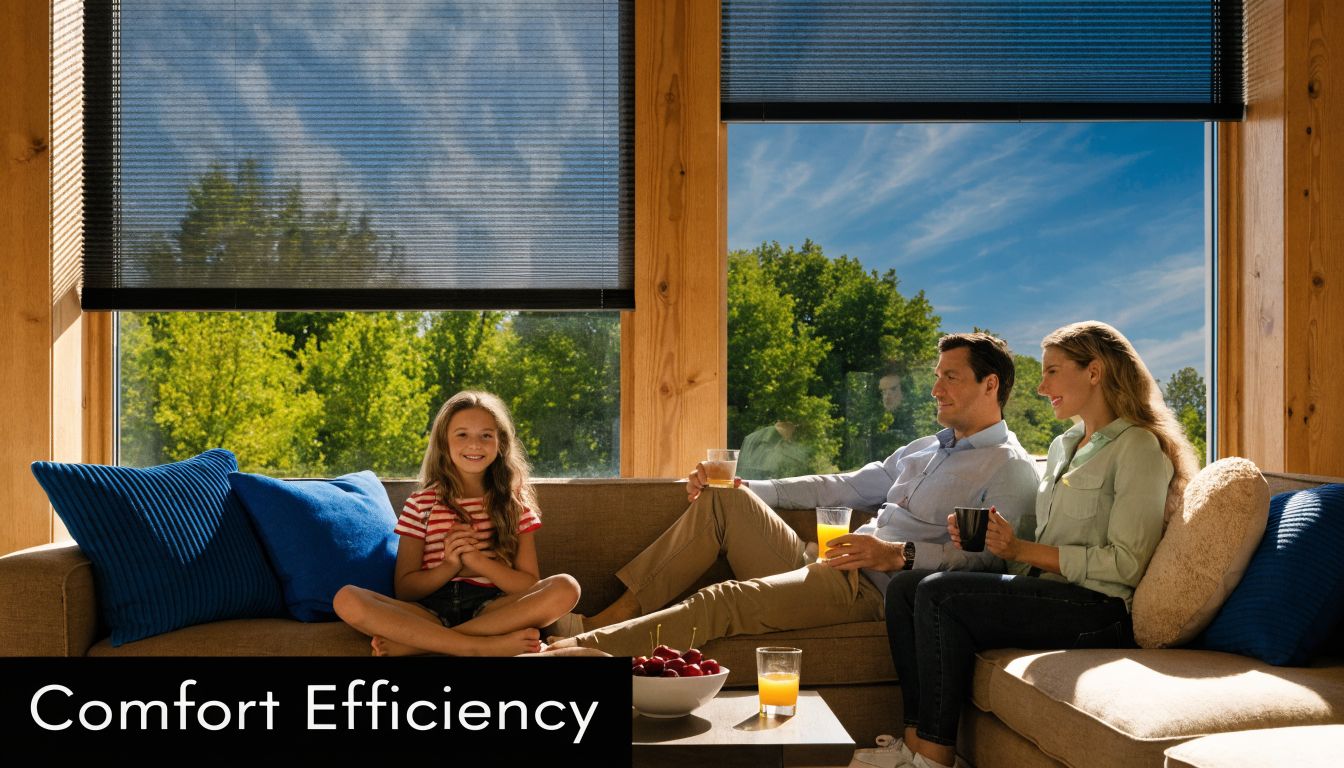
What homeowners usually need help deciding
Some people already know they want blackout double-cell shades. Others just know one room is uncomfortable. A good in-home visit helps sort out the difference between what sounds right online and what fits the window, the light, and the way the room gets used.
That might mean one setup in a bedroom, another in a kitchen, and a different mount style in a room with older trim. It’s rarely one-size-fits-all.
What a local service call should include
A solid consultation should give you:
- Accurate measuring so the shade fits the opening and performs the way it should.
- Product samples in the home so you can see color, opacity, and texture in your own light.
- Practical recommendations based on sun exposure, privacy needs, and how much insulation you want.
- Professional installation so the finished shade sits correctly and operates smoothly.
Blinds Galore serves West Tennessee with custom install, in-home measuring, and a 100% satisfaction approach, and homeowners can call (731) 571-5179 to set up a consultation.
Why local experience helps
A national buying guide won’t know which rooms in your house get hammered by late sun, which windows are slightly out of square, or how much dust that gravel road kicks up in summer. A local window treatment specialist sees those conditions all the time.
That kind of experience helps match product features to lived reality. It keeps the focus where it belongs. More comfort. Better light control. Lower strain on heating and cooling.
Common Questions About Insulating Shades
Are cellular shades really worth it for insulation
If your rooms feel uneven near the windows, cellular shades are often worth serious consideration. Their main advantage is that they add a layer of trapped air between the room and the glass, which is exactly what many homes are missing.
They’re especially useful on windows with strong sun exposure or rooms that feel cold at night.
What are the best cellular shades for insulation
For pure insulation performance, homeowners usually focus on double-cell blackout cellular shades with a tight fit. That combination tends to give the strongest thermal barrier among common window covering options.
But “best” still depends on the room. A bedroom with harsh afternoon sun may need blackout. A living room may do better with light filtering if you want softer daylight.
Do blackout cellular shades make a room too dark
Sometimes, yes. That’s why room use matters. Blackout is great in bedrooms, nurseries, and media rooms. It’s not always the right call for a breakfast nook or family room where you want some daylight during the day.
A lot of homeowners mix opacity levels from room to room instead of using the same fabric everywhere.
Are single-cell shades good enough
They can be. Single-cell shades are often a sensible choice for rooms with milder exposure, a tighter budget, or a lighter visual preference.
If your main goal is stronger insulation on a problem window, double-cell is usually the first option to compare.
Do top-down bottom-up shades still insulate well
Yes, if the product is well made and fitted correctly. That style is popular because it lets in daylight from the top while keeping privacy lower on the window.
It’s a practical choice for street-facing rooms, bathrooms, and spaces where you don’t want to choose between light and privacy.
Are motorized shades better for energy savings
They can help because they’re easier to use consistently. A shade that’s simple to adjust is more likely to be positioned the way you need it during the hottest or brightest parts of the day.
The biggest gain still comes from choosing the right shade and getting a proper fit.
How do you clean cellular shades without damaging them
Use the manufacturer’s care guidance first. In general, gentle dusting is safer than aggressive wet cleaning. That matters in areas where hard water can leave minerals on fabric.
If your home deals with extra dust, ask about fabrics and finishes that are easier to maintain before you buy.
Can cellular shades work on older windows
Yes, and older windows are often where they help the most. But older trim and uneven openings are exactly why measurement and mount style matter.
That’s where a custom approach usually beats an off-the-shelf option.
Should I install them myself or hire it out
If insulation is the main goal, professional measuring and installation are usually the safer route. A shade can look fine and still leave enough edge gap to weaken the result.
For decorative shades, close may be fine. For insulating shades, fit matters more.
If you’re ready to make your home more comfortable through every season, Blinds Galore can help you compare options, measure for a proper fit, and handle custom install from start to finish. Call (731) 571-5179 to schedule an in-home visit and get insulating shades fitted with a 100% satisfaction commitment.
You might also like

Best Plantation Shutter Brands – 2026 Review
If you're looking at your windows right now and thinking the room needs more polish, better privacy,

What Are Plantation Shutters Made Of
You're probably looking at a window right now thinking the same thing a lot of West Tennessee homeowners
Contemporary Roman Shades: Modern Styles for Your Home
You know the feeling. Your old blinds work, but they don't do your room any favors. They look hard,
Sliding Glass Window Treatments for Your West TN Home
That sliding glass door probably does two jobs at once in your home. It opens your living space to the
Vertical Blinds vs Horizontal Blinds: The Definitive Homeowner’s Guide
When you're trying to decide between vertical and horizontal blinds, it really comes down to your
Cordless Blinds vs Corded Blinds A Modern Homeowner’s Guide
When you're weighing the pros and cons of cordless blinds vs corded blinds, the verdict for today's