

7 Best Custom Blinds for Jackson TN Basements: Moisture and Mold Guide
Quick answer: Basement windows in Jackson, TN face a tough combination of high humidity, limited airflow, and West Tennessee's hot summers — a recipe for mold and warped window treatments. The best custom blinds for basements are made from faux wood, aluminum, or moisture-resistant cellular shades. Avoid real wood and fabric-only options in damp spaces. A free in-home consultation from Blinds Galore helps you measure those tricky hopper and egress windows correctly and choose materials rated for high-humidity environments, backed by a 100% satisfaction guarantee.
Why Basement Windows in Jackson, TN Are a Special Challenge
Before choosing any window treatment for your basement, it helps to understand why basements in West Tennessee are so demanding on materials. The combination of ground-level moisture, limited ventilation, and the region’s humid subtropical climate creates conditions that will destroy the wrong blind in a single season. Here’s what you’re up against — and why the solution starts with the right material choice.
West Tennessee Humidity and Your Basement
Jackson, TN sits in a climate zone that averages relative humidity above 70% for much of the year, with summer temperatures routinely topping 90°F. That warm, moist outdoor air seeps into basements through foundation gaps, window wells, and imperfect seals — creating a microclimate that can hover between 60% and 80% relative humidity even in a finished basement. Most standard window treatments are not engineered for those conditions.
- Wood blinds absorb moisture and warp within months.
- Standard fabric shades trap humidity and become a mold breeding ground.
- Vinyl mini-blinds can yellow and become brittle from UV exposure through small basement windows.
Basement Window Types That Complicate Measuring
Basement windows come in shapes that standard off-the-shelf blinds simply don’t fit. The most common types in Jackson-area homes include:
- Hopper windows — hinged at the bottom, they tilt inward, so any blind must mount above the frame or in a way that doesn’t block the swing.
- Egress windows — larger, code-required windows in finished basements that need full light control and privacy.
- Casement windows — side-hinged and often narrower than standard widths, requiring precise inside-mount measurements.
Getting these measurements wrong by even 1/4 inch can mean a blind that won’t close properly or a shade that gaps at the edges — letting in both light and humid air. This is exactly why a professional in-home measurement matters so much in basement applications.
1. Faux Wood Blinds — the Top Pick for Humid Basements
If there is one material that consistently outperforms every other option in high-humidity basement environments, it is faux wood. Custom faux wood blinds deliver the warmth and texture of real hardwood while shrugging off the moisture, mold spores, and temperature swings that destroy natural materials. For most Jackson, TN homeowners finishing or upgrading a basement, this is the first option to seriously consider.
What Makes Faux Wood Different from Real Wood
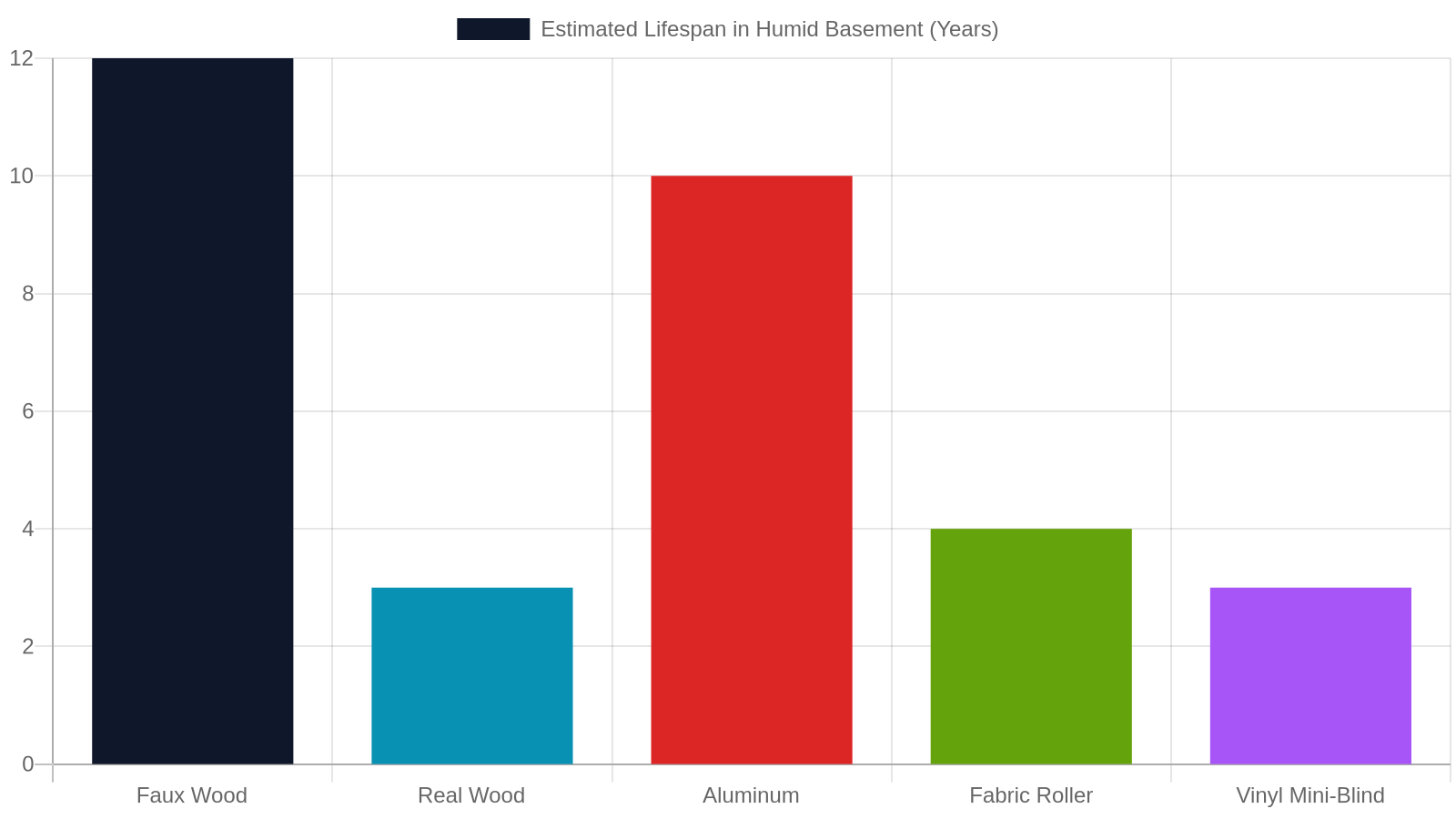
Faux wood blinds are made from a composite of PVC and wood particles (or 100% PVC) that mimics the look of real hardwood without absorbing moisture. Real wood blinds can warp, crack, and grow mold within 6–12 months in a humid basement. Faux wood, by contrast, is rated for environments with sustained humidity up to 85% — well above what most Jackson basements will see.
Key performance specs to look for:
- Slat thickness of 2 inches for maximum light block and insulation
- UV-stabilized finish to resist yellowing near ground-level windows
- Moisture-sealed tilt rod to prevent internal corrosion
Cost and Lifespan in a Basement Environment
Custom faux wood blinds for a typical basement hopper window (approximately 32″ × 14″) run $85–$160 per window installed, depending on slat width and finish. That’s roughly 20–30% more than a basic vinyl mini-blind, but the lifespan difference is dramatic: faux wood in a basement typically lasts 10–15 years versus 2–4 years for standard vinyl. Over a decade, faux wood is the more economical choice by a wide margin.
Blinds Galore carries a full range of custom faux wood blinds for West Tennessee homes, cut precisely to your basement window dimensions with no off-the-shelf guesswork.
2. Aluminum Mini-Blinds — the Budget-Friendly Moisture Fighter
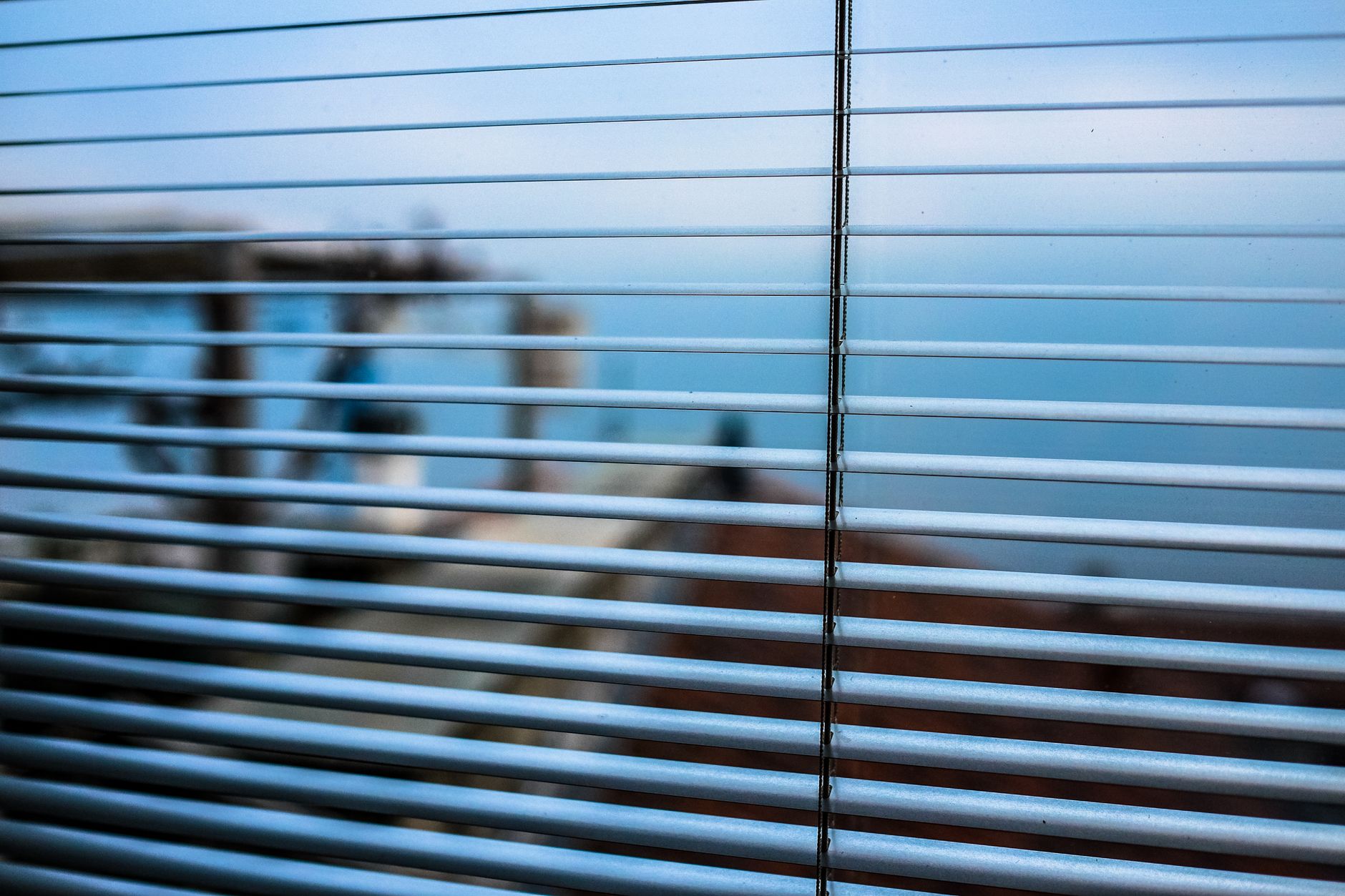
Aluminum mini-blinds have been a basement staple for decades — and for good reason. When properly specified with the right hardware, aluminum is one of the most moisture-resistant materials available at any price point. The key is knowing which aluminum products are built for damp environments and which corner-cut versions will rust and corrode within a year.
Why Aluminum Thrives Where Wood Fails
Aluminum is inherently impervious to moisture. It won’t warp, swell, crack, or support mold growth — making it one of the most reliable materials for basement windows. Modern aluminum mini-blinds come in 1-inch and 2-inch slat widths, with the 2-inch option providing better light control and a cleaner look in finished basement spaces.
Look for blinds with a baked-on enamel finish rather than a simple paint coat. The enamel layer resists humidity-driven oxidation and keeps the blind looking clean for years. Avoid aluminum blinds with steel hardware components — steel headrails and ladders can rust in a damp environment. All-aluminum or aluminum-with-nylon-hardware configurations are the right call.
Limitations to Know Before You Buy
Aluminum blinds have real advantages, but they’re not perfect. The main drawbacks in a basement context include:
- Noise — aluminum slats rattle against each other more than faux wood, which can be noticeable in a basement media room or bedroom.
- Insulation value — aluminum conducts cold, so in winter, aluminum blinds near ground-level windows can feel noticeably cooler to the touch and provide less thermal resistance than cellular shades.
- Aesthetics — aluminum has a utilitarian look that works in utility rooms and workshops but may feel too industrial for a finished living space.
For unfinished basements, laundry rooms, and storage areas, aluminum is often the smartest and most cost-effective choice at $40–$90 per custom window.
3. Moisture-Resistant Cellular Shades for Basement Insulation
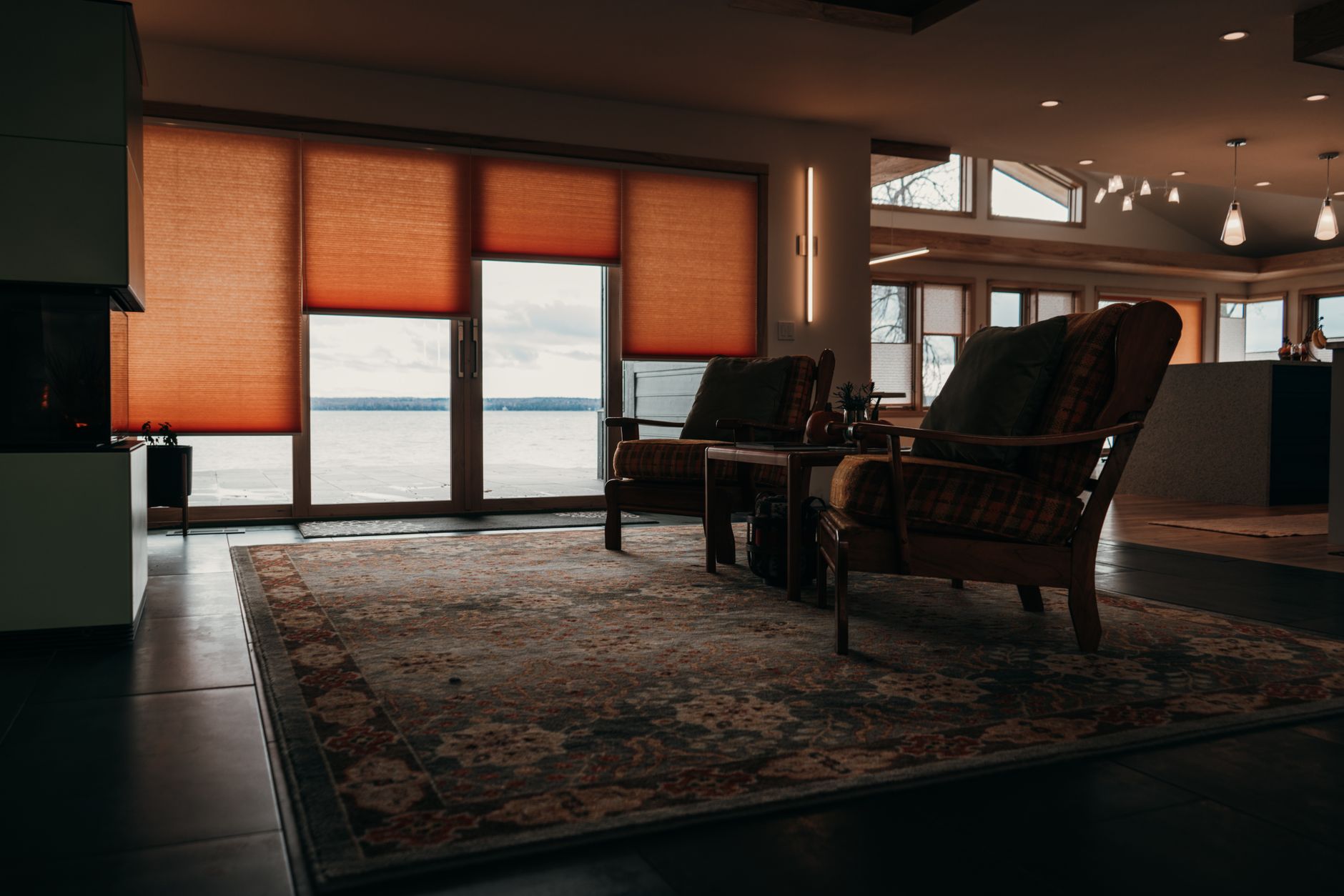
Cellular shades bring an energy-efficiency dimension to basement window treatments that no other product in this guide can match. If your finished basement serves as a bedroom, home office, or entertainment space, the insulating properties of a properly rated cellular shade can meaningfully reduce your heating and cooling costs — while also addressing moisture concerns when the right fabric is specified.
How Cellular Shades Improve Basement Energy Efficiency
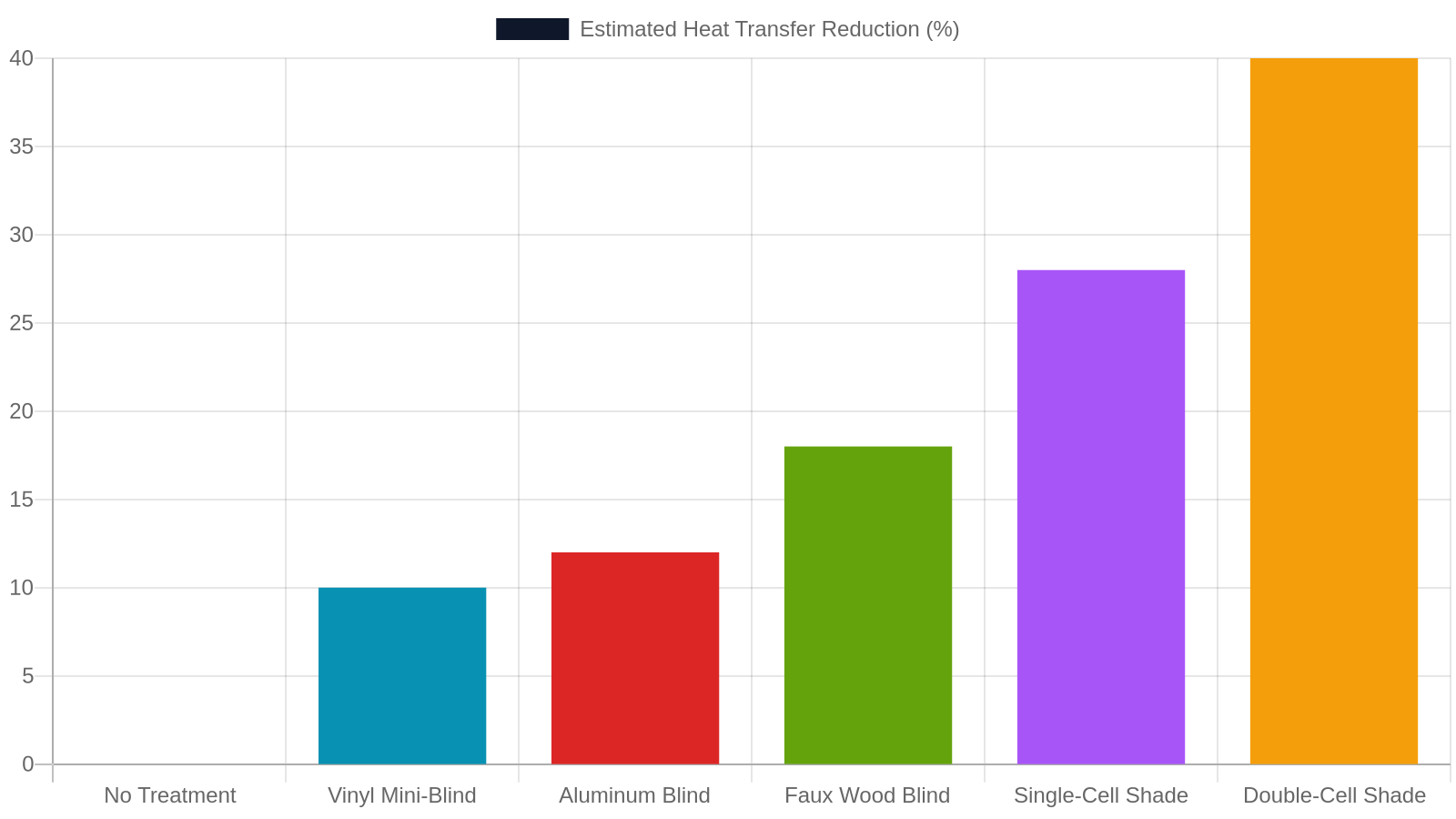
Cellular (honeycomb) shades trap air inside their hexagonal cells, creating a thermal buffer between the cold concrete wall and your living space. In a Jackson, TN basement, this matters in both summer and winter. During summer, ground-level windows can allow radiant heat to enter; in winter, those same windows are a significant source of heat loss. A double-cell cellular shade can reduce heat transfer through a window by up to 40% compared to an uncovered window, according to the U.S. Department of Energy.
For basements, choose cellular shades with a moisture-resistant fabric treatment — not all cellular shades carry this rating, so ask specifically when ordering.
Blackout vs. Light-Filtering Cellular for Basements
Basement bedrooms and media rooms typically benefit most from blackout cellular shades, which block 99%+ of incoming light and provide the best privacy from ground-level sightlines. Light-filtering cellular shades work well in basement home offices or hobby rooms where some natural light is welcome but direct glare needs softening.
- Blackout cellular: best for bedrooms, home theaters, and sleeping areas
- Light-filtering cellular: best for offices, playrooms, and multi-purpose rooms
- Top-down/bottom-up cellular: ideal for egress windows where you want privacy at eye level but natural light from above
Custom cellular shades for basement windows typically run $110–$220 per window installed, with blackout options at the higher end of that range.
4. Roller Shades with Moisture-Resistant Fabric Coatings
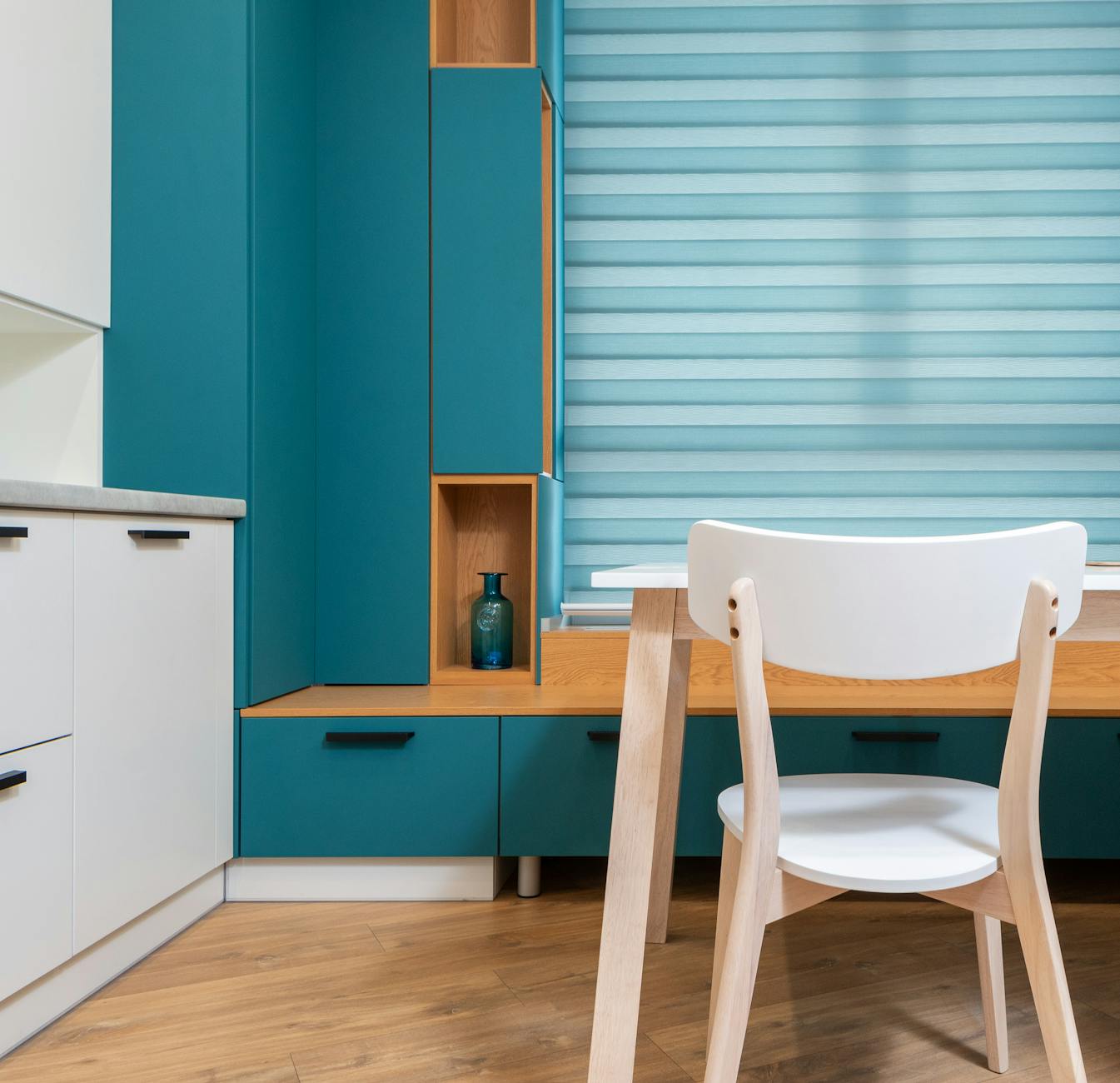
Roller shades offer a clean, minimalist look that works beautifully in modern finished basements — but only when the fabric is correctly specified for moisture. The right roller shade in a basement is nearly invisible when raised, keeps the space feeling open, and provides excellent light control when lowered. The wrong roller shade becomes a mold-covered eyesore within a single humid West Tennessee summer.
What 'Moisture-Resistant' Actually Means on a Shade Label
Not all roller shades are created equal, and the term ‘moisture-resistant’ on a product label can mean very different things. At minimum, look for shades with a vinyl-coated or PVC-laminated fabric — these have a sealed surface that prevents moisture from penetrating the weave and feeding mold. Uncoated woven fabrics, even those marketed as ‘washable,’ are not appropriate for sustained basement humidity.
The best moisture-resistant roller shade fabrics carry a mold and mildew inhibitor treatment (often listed as an antimicrobial finish) and are rated for environments up to 80% relative humidity. When in doubt, ask your window treatment consultant for the manufacturer’s humidity rating — a reputable supplier will have that data readily available.
Solar Roller Shades for Basement Privacy and Light Control
Solar roller shades are a popular choice for above-grade basement windows that face a yard or walkway. The woven vinyl mesh blocks 85–99% of UV rays while maintaining an outward view during the day, giving you privacy from passersby without making the basement feel like a cave. The openness factor (OF) rating tells you how much light passes through:
- 1% openness: near-blackout, maximum privacy
- 3% openness: low light, good privacy
- 5% openness: moderate light, some view-through
- 10% openness: bright, open feel with minimal privacy
For a basement bedroom or bathroom window at ground level, a 1–3% openness solar shade is typically the right call. Installed cost for custom solar roller shades runs approximately $95–$175 per window.
5. Vinyl Shutters — Maximum Durability for Basement Spaces
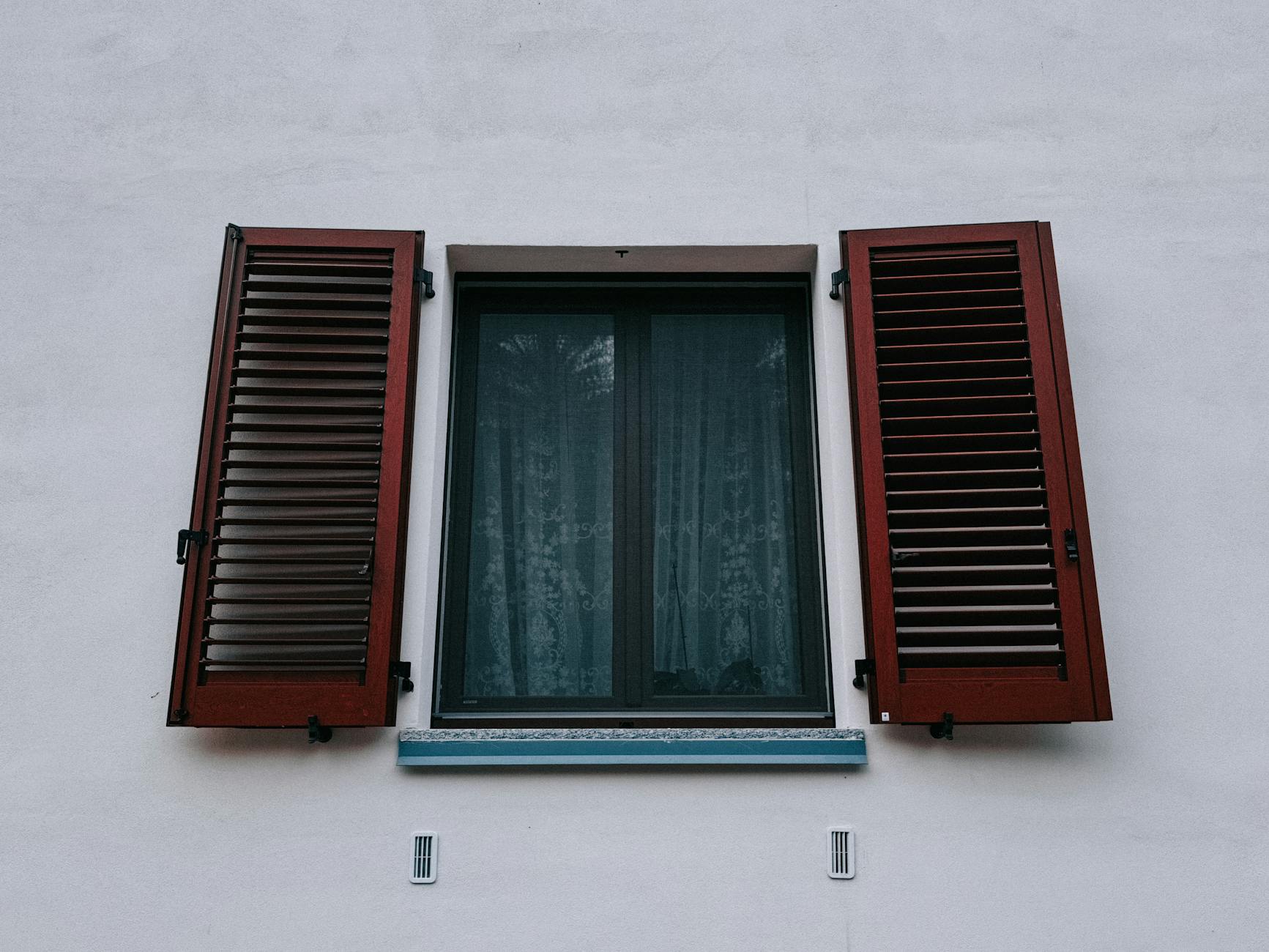
For homeowners who want a finished, architectural look in their basement — not just functional light control — vinyl and composite plantation shutters are the premium option. They bring the same timeless style you’d expect in a living room or master bedroom, but engineered to handle the damp, variable conditions of a below-grade space without complaint.
Why Vinyl Shutters Outperform Wood Shutters Underground
Plantation shutters are one of the most elegant window treatments available — but in a basement, material selection is critical. Real wood shutters will warp in sustained humidity, causing louvers to stick, frames to bow, and paint to peel. Vinyl and composite shutters, by contrast, are completely impervious to moisture. They won’t warp, crack, swell, or support mold growth regardless of how humid your basement becomes.
Composite shutters — made from a wood-polymer blend with a vinyl exterior — offer the best of both worlds: the structural rigidity of wood with the moisture resistance of vinyl. They’re available in 2.5-inch and 3.5-inch louver sizes, with the larger louver providing a more open, airy feel that counteracts the closed-in nature of many basement rooms.
Shutters as a Long-Term Investment in Basement Finishing
Custom vinyl or composite shutters for basement windows represent the highest upfront investment in this guide — typically $200–$400 per window installed — but they also carry the longest lifespan. A quality composite shutter in a basement environment should last 20–25 years with minimal maintenance beyond an occasional wipe-down.
For homeowners investing in a full basement finish or remodel, shutters add perceived square footage value and a finished, architectural look that appraisers and buyers notice. If you’re finishing a basement in Jackson, Henderson, or Lexington and want to maximize resale value, shutters on egress windows are worth serious consideration. Explore our custom-built shutter options to see styles suited for every room in your home, including below-grade spaces.
6. What to Absolutely Avoid in a Basement Window Treatment
One of the most common and costly mistakes Jackson, TN homeowners make when finishing a basement is installing the same window treatments they’d use upstairs — without accounting for the dramatically different moisture environment below grade. Here’s a clear look at what to avoid and why the consequences go beyond just replacing a blind.
Materials That Will Fail in Humid Conditions
Knowing what not to install is just as important as knowing what to choose. These materials consistently underperform in basement environments and should be avoided:
- Real wood blinds: absorb moisture, warp within 6–12 months, and can harbor mold inside the slat hollow cores.
- Bamboo or woven wood shades: natural fibers are highly susceptible to mold and mildew; beautiful in a living room, disastrous in a basement.
- Standard fabric Roman shades: uncoated fabric traps moisture and becomes a mold surface; the folds create hidden pockets where spores accumulate.
- Uncoated linen or cotton roller shades: natural fibers wick moisture and stain easily in a basement environment.
- Cheap vinyl mini-blinds with steel hardware: the steel tilt rods, ladders, and headrail components rust and stain the surrounding wall within one or two winters.
The Hidden Cost of the Wrong Choice
Choosing the wrong window treatment for a basement isn’t just an aesthetic problem — it’s a health and maintenance issue. Mold on window treatments can spread to surrounding drywall, insulation, and framing. The EPA estimates that mold remediation in a finished basement costs between $500 and $6,000 depending on the extent of the spread. A window treatment that costs $30 less than the right option but triggers a mold problem can end up costing thousands in remediation.
The safest approach is to invest in moisture-rated materials from the start, ensure adequate ventilation in the basement space, and have your window treatments professionally installed so there are no gaps where condensation can accumulate behind the blind.
Basement Blind Materials at a Glance: 6-Point Comparison
Use this side-by-side comparison to quickly evaluate which window treatment material best fits your Jackson, TN basement's needs, budget, and style goals.
7. Mold Prevention Beyond the Blind: a Whole-Basement Approach
The best window treatment in the world can’t compensate for a basement that’s fundamentally too wet. Mold prevention in a below-grade space is a system — and your window treatments are one important component of that system, not the whole solution. Here’s how to set up the rest of the environment so your new blinds or shades can do their job effectively for years to come.
Ventilation and Dehumidification Work With Your Window Treatments
Even the most moisture-resistant blind will struggle if the basement itself is a humidity trap. The most effective mold prevention strategy pairs the right window treatment with active humidity control:
- Dehumidifier sizing: A basement up to 1,500 sq ft in a moderately damp climate like West Tennessee typically needs a 50-pint dehumidifier running continuously in summer months. Aim to keep basement relative humidity below 60% year-round.
- Window well covers: Plastic dome covers over exterior window wells prevent rainwater from pooling against the window frame — a major source of moisture infiltration.
- Exhaust fans: If your basement has a bathroom, laundry, or kitchen area, a properly sized exhaust fan (at least 50 CFM for bathrooms) removes moisture at the source.
Cleaning and Maintenance Schedule for Basement Blinds
Even moisture-resistant blinds need periodic maintenance to prevent surface mold from taking hold. A simple schedule keeps your investment looking great:
- Monthly: wipe faux wood and aluminum slats with a dry microfiber cloth to remove dust and condensation residue.
- Quarterly: clean with a mild solution of 1 tablespoon white vinegar per quart of water — safe for faux wood, aluminum, and vinyl-coated fabrics. Avoid soaking fabric shades.
- Annually: inspect the headrail, cords, and mounting hardware for any signs of rust or corrosion. Replace cord locks or tilt mechanisms at the first sign of stiffness.
- Immediately: if you see any black or green spotting on a shade or blind, treat with a diluted bleach solution (1:10 bleach to water) on hard surfaces, or replace fabric components.
Professional Measuring: Why Basement Windows Demand It

You can choose the perfect moisture-resistant material and still end up with a blind that doesn’t work — if the measurements are wrong. Basement windows are the most difficult windows in any home to measure correctly, and the consequences of an error (a blind that won’t close, a shade that lets in light at the edges, or a shutter that hits the crank hardware) are frustrating and expensive. Professional measuring isn’t a luxury for basement installations; it’s a necessity.
The Unique Geometry of Below-Grade Windows
Basement windows are rarely standard sizes. Older homes in Jackson and surrounding communities like Milan and Henderson frequently have windows that were custom-framed during original construction, meaning off-the-shelf blinds won’t fit. Common measurement challenges include:
- Deep window wells that require extended brackets or a specific mount depth to clear the crank handle on casement windows.
- Out-of-square frames — concrete and masonry settle over decades, and a basement window that measures 30 inches wide at the top may be 29.5 inches at the bottom. A custom blind accounts for this; a stock blind doesn’t.
- Hopper window clearance — a blind mounted inside the frame of a hopper window will be hit every time the window is opened, destroying the headrail within months.
What Happens During a Blinds Galore In-Home Consultation
When a Blinds Galore consultant visits your Jackson, TN home, they bring a full showroom of samples and the expertise to measure every window correctly — including those tricky basement openings. The process typically takes 60–90 minutes for a whole-home visit and includes:
- Precise measurement of each window opening at multiple points to catch any out-of-square conditions.
- Assessment of mount type (inside mount vs. outside mount) based on frame depth and window hardware.
- Material recommendations based on the specific humidity level and use of each room.
- Side-by-side sample comparison so you can see exactly how each option looks in your actual lighting conditions.
There’s no pressure and no obligation — just honest, expert guidance backed by 18 years of West Tennessee experience and a 100% satisfaction guarantee. Call (731) 571-5179 to schedule your free consultation today.
Ready to Transform Your Jackson, TN Basement Windows?
You’ve done the research. You know which materials hold up in West Tennessee’s humid climate, which window types need special attention, and what to avoid. Now it’s time to take the next step — and the easiest one is a free conversation with a local expert who can look at your actual windows, in your actual basement, and give you a precise recommendation and quote.
Start With a Free In-Home Consultation
Blinds Galore has been helping homeowners across Jackson, Lexington, Henderson, Milan, and the greater West Tennessee area find the right window treatments for every room in their home — including the challenging ones below grade. Our consultants understand the local climate, the typical window configurations in West Tennessee homes, and the materials that hold up year after year in humid basement environments.
Getting started is simple: call us at (731) 571-5179 to schedule your free in-home consultation. We’ll bring the showroom to you, measure every basement window precisely, and walk you through every moisture-resistant option that fits your style, budget, and functional needs — all backed by our 100% satisfaction guarantee.
Keep Learning About Custom Window Treatments
If you’re still in the research phase, we’ve got you covered. Our window treatment resource blog is packed with guides on materials, installation tips, energy efficiency, and style inspiration for every room in your home — including more deep dives into basement-specific challenges. You can also explore our full range of custom shades to see moisture-resistant cellular, roller, and solar options in detail before your consultation.
Whether you’re finishing a new basement, upgrading a rental property, or simply replacing blinds that didn’t survive last summer’s humidity, Blinds Galore is your local expert. We’re proud to serve Jackson and West Tennessee homeowners with the same neighborly care and attention to detail we’ve brought to every job for over 18 years. Let’s get your basement looking — and feeling — exactly right.
Frequently Asked Questions
What are the best blinds for a basement with high humidity in Jackson TN?
Faux wood blinds and aluminum mini-blinds are the top choices for high-humidity basements in Jackson, TN. Both materials are impervious to moisture and won't warp, crack, or support mold growth. Moisture-resistant cellular shades are a strong third option if energy efficiency is a priority.
Can you put real wood blinds in a basement?
No — real wood blinds are not recommended for basements. Wood absorbs moisture and will warp, crack, and develop mold within 6–12 months in a typical basement environment. Always choose faux wood, aluminum, or vinyl-based materials for below-grade window treatments.
How do I prevent mold on basement window blinds?
Choose moisture-resistant materials (faux wood, aluminum, or vinyl-coated fabrics), keep basement humidity below 60% with a dehumidifier, and wipe down blinds monthly with a dry microfiber cloth. A quarterly cleaning with diluted white vinegar solution helps prevent surface mold from taking hold.
Do basement windows need special blinds?
Yes. Basement windows face unique challenges including high humidity, limited ventilation, non-standard sizes (hopper and egress windows), and ground-level privacy concerns. Standard off-the-shelf blinds often don't fit correctly and aren't rated for the moisture levels found in most basements.
How much do custom basement blinds cost in West Tennessee?
Custom basement blinds in West Tennessee typically range from $40–$90 per window for aluminum, $85–$160 for faux wood, $110–$220 for cellular shades, and $200–$400 for composite shutters. Prices include professional installation and precise custom cutting to your window dimensions.
Does Blinds Galore offer free measuring for basement windows in Jackson TN?
Yes. Blinds Galore offers free in-home consultations that include professional measuring for all window types, including tricky basement hopper and egress windows. Call (731) 571-5179 to schedule your visit. All work is backed by a 100% satisfaction guarantee.
You might also like
Best Faux Wood Blinds for Jackson TN Kitchens: Your 8-Point Moisture and Cleaning Guide
Quick answer: Faux wood blinds are the top choice for Jackson, TN kitchens because they combine the rich
7 Best Custom Blinds for Jackson TN Mudrooms: Durability and Easy-Clean Fabrics Guide
Quick answer: For Jackson, TN mudrooms — where mud, humidity, and daily foot traffic are facts of life
7 Best Custom Blinds for Jackson TN Laundry Rooms: Moisture and Durability Guide
Quick answer: For Jackson, TN laundry rooms — where humidity, steam, and splashing water are everyday

How to Compare Blind Styles Using Product Videos Before Your Jackson TN Consultation
Quick answer: Before your free in-home consultation with Blinds Galore in Jackson, TN, watching product
7 Best Custom Blinds for Sunrooms in Jackson, TN: Light Control and UV Protection Guide
Quick answer: The best custom blinds for sunrooms in Jackson, TN balance strong UV protection with flexible

How to Install Custom Faux Wood Blinds in Your Jackson, TN Home: a 10-Step Guide
Quick answer: Installing custom faux wood blinds in a Jackson, TN home is a manageable DIY project for