


Best Faux Wood Blinds for Jackson TN Kitchens: Your 8-Point Moisture and Cleaning Guide
Quick answer: Faux wood blinds are the top choice for Jackson, TN kitchens because they combine the rich look of real wood with full moisture and humidity resistance — critical in a Southern kitchen where steam, grease, and condensation are daily realities. Quality PVC or composite faux wood slats won't warp, crack, or discolor like real wood, and they wipe clean in seconds. For best results, choose 2-inch slats, a moisture-rated finish, and have them professionally measured and installed. Blinds Galore offers free in-home consultations across West Tennessee to help you find the perfect fit.
1. Why Kitchens in Jackson, TN Demand Moisture-Resistant Window Treatments

Before choosing any window treatment for your kitchen, it pays to understand exactly what that environment throws at it every single day. Jackson, TN kitchens face a double challenge: the region’s naturally high outdoor humidity combined with the intense moisture generated inside a working kitchen. Choosing the wrong material means warped slats, peeling finishes, and mold risk within just a few years.
West Tennessee Humidity Is No Joke
Jackson, TN sits in a humid subtropical climate zone, where average summer humidity regularly tops 70–80% and indoor kitchens can spike even higher when you’re boiling pasta or running the dishwasher. That persistent moisture is the enemy of real wood blinds, which can warp, swell, and crack within a single season when exposed to repeated humidity cycles.
Faux wood blinds — made from PVC or a wood-composite blend — are engineered specifically to handle these conditions. Their non-porous surface doesn’t absorb moisture, so they hold their shape and color year after year, even above a steaming sink or next to a dishwasher vent.
Grease, Steam, and Splatter: The Kitchen Trifecta
Beyond humidity, kitchens produce airborne grease particles from sautéing and frying, steam from boiling and baking, and the occasional splatter from the stovetop. These elements coat window treatments over time, creating a sticky film that traps dust and odors. Fabric shades and real wood blinds absorb these residues deeply, making thorough cleaning nearly impossible without professional laundering.
Faux wood slats, by contrast, have a smooth, sealed surface that resists grease adhesion. A quick wipe with a damp microfiber cloth removes the vast majority of buildup in under two minutes — a major advantage for busy West Tennessee households.
2. What Are Faux Wood Blinds, Exactly? (A Clear Definition)
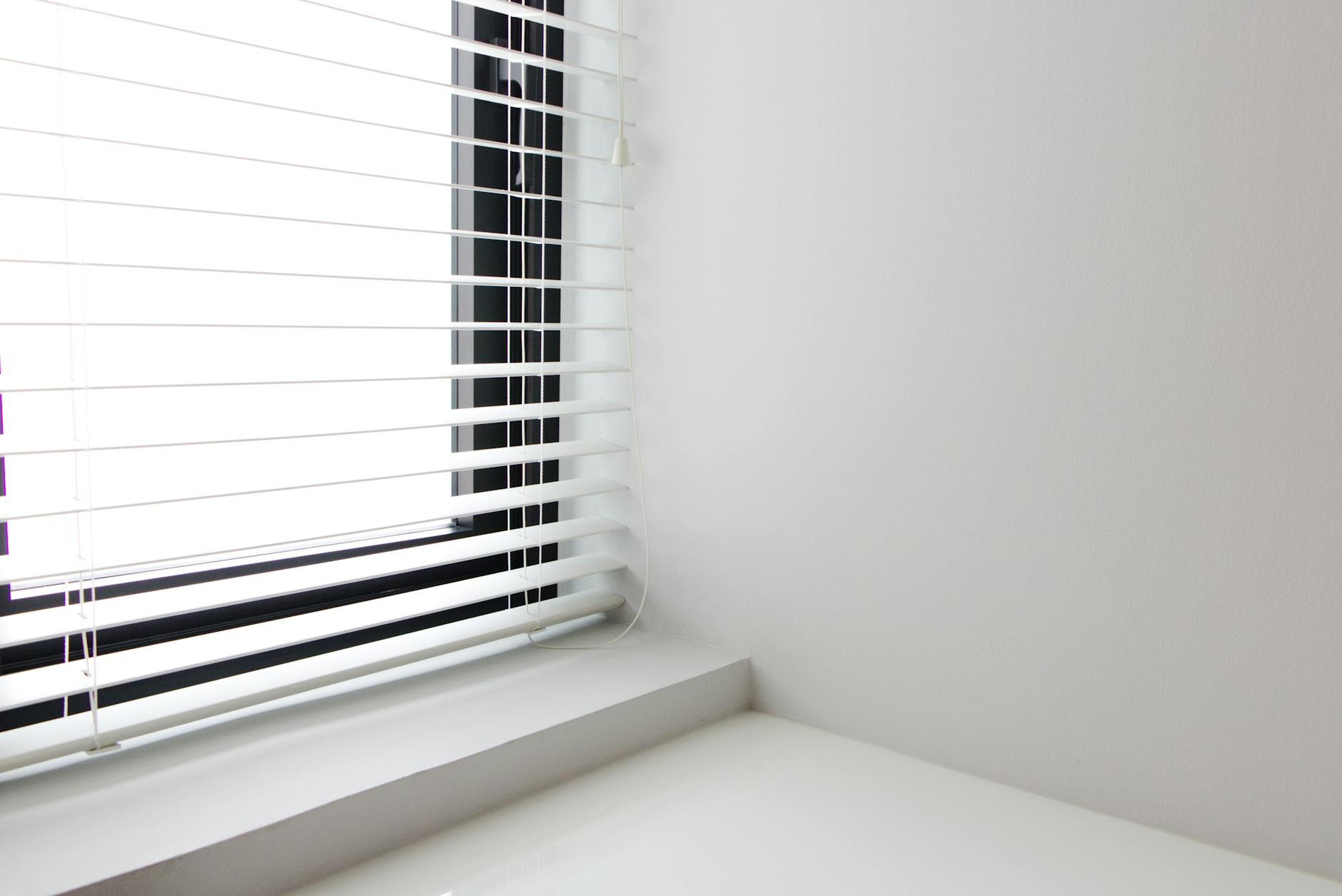
If you’ve been shopping for kitchen window treatments in Jackson or surrounding communities like Lexington and Henderson, you’ve probably seen the term “faux wood blinds” everywhere — but what does it actually mean? Understanding the material science behind these products helps you make a smarter buying decision and set realistic expectations for performance and longevity.
PVC vs. Wood-Composite: The Two Main Types
The term “faux wood blinds” covers two distinct materials, and the difference matters for kitchens:
- 100% PVC faux wood blinds: Made entirely from polyvinyl chloride. These are the most moisture-resistant option available — fully waterproof, lightweight, and typically the most affordable. Ideal for kitchens, bathrooms, and laundry rooms. Slat widths commonly range from 1 inch to 2.5 inches.
- Wood-composite faux wood blinds: A blend of real wood fibers and PVC or polymer. Heavier and often more realistic-looking than pure PVC, with a texture that more closely mimics genuine hardwood grain. Still highly moisture-resistant, though not fully waterproof like 100% PVC. Better suited for kitchens with moderate (rather than extreme) humidity exposure.
For most Jackson, TN kitchens, 100% PVC is the recommended starting point due to its superior moisture performance and ease of cleaning.
How Faux Wood Differs from Real Wood Blinds
Real wood blinds are beautiful, but they’re essentially a liability in a kitchen environment. Here’s a quick breakdown of the key differences:
- Moisture response: Real wood absorbs moisture and can warp or crack; faux wood repels it.
- Weight: Real wood is heavier, especially in wider widths; faux wood is lighter and easier to operate.
- Cost: Real wood typically runs 20–40% more than comparable faux wood blinds.
- Maintenance: Real wood requires occasional conditioning with wood-safe products; faux wood needs only a damp cloth.
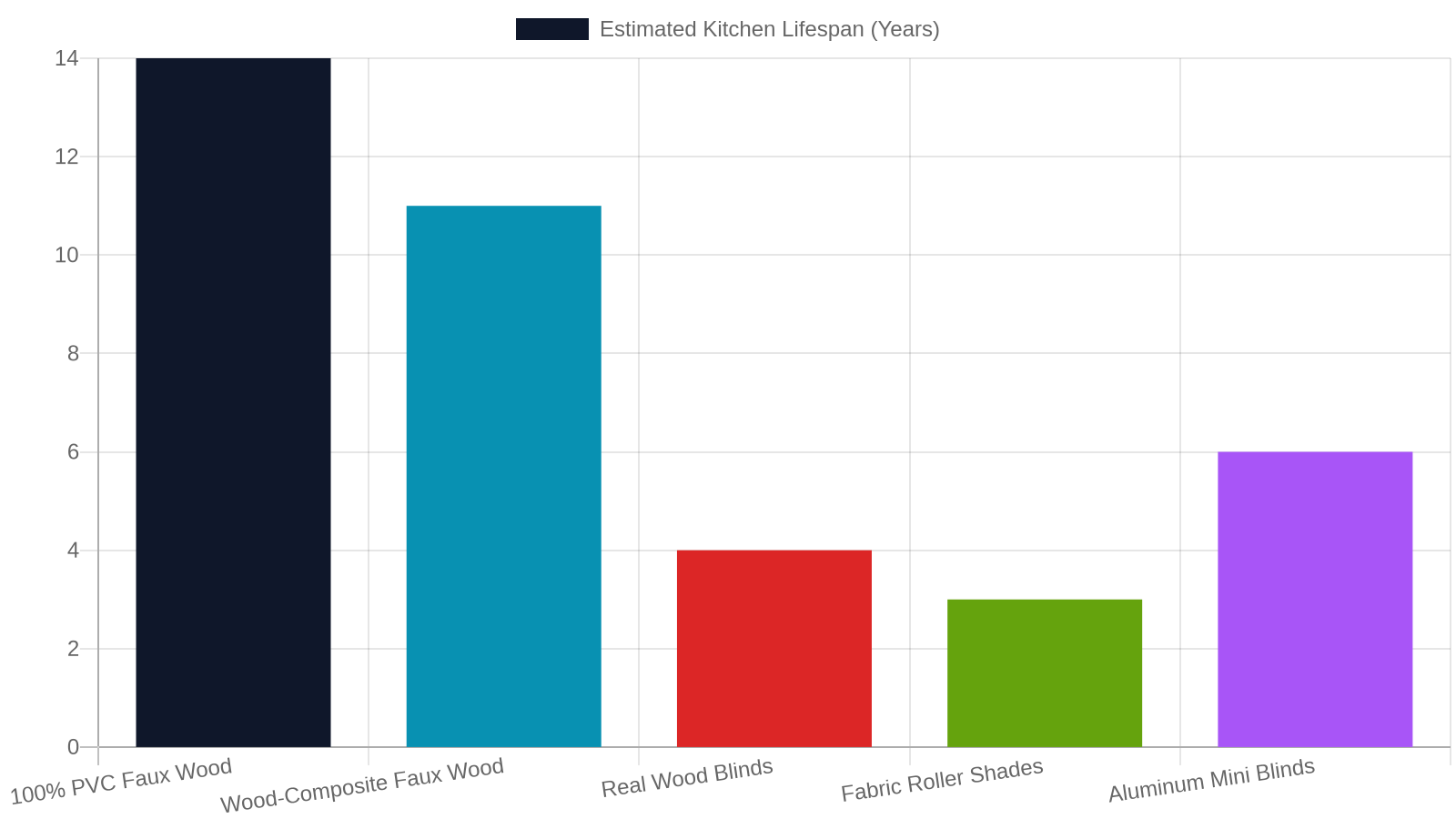
- Longevity in kitchens: Real wood may last 3–5 years in a high-humidity kitchen before showing damage; quality faux wood can last 10–15 years or more in the same environment.
3. The Moisture Resistance Rating System You Should Know

When a manufacturer claims their faux wood blinds are “moisture resistant,” that phrase can mean very different things depending on the product tier. Understanding the practical differences between moisture-resistant and fully waterproof construction — and knowing which components to scrutinize — will save you from a costly replacement down the road.
What to Look for on Product Specs
Not all faux wood blinds are created equal when it comes to moisture resistance. When evaluating products, look for these specific indicators on the spec sheet or product listing:
- “100% Waterproof” or “Fully Moisture-Resistant”: The gold standard for kitchens and bathrooms. This designation means the slats, ladder tapes, and headrail components are all treated or constructed to resist water penetration.
- “Moisture-Resistant” (without “waterproof”): Suitable for moderate humidity but may not hold up to direct water contact or prolonged steam exposure. Fine for a kitchen with good ventilation; less ideal above a sink.
- UV-Resistant Finish: Important for south- or west-facing kitchen windows in Tennessee, where afternoon sun can fade and degrade slat surfaces over time. Look for a UV-inhibitor coating rated for at least 500 hours of simulated sunlight exposure.
Headrail and Hardware: The Often-Overlooked Weak Points
Even if the slats themselves are 100% PVC, a poorly constructed headrail or metal hardware components can rust or corrode in a steamy kitchen environment. When evaluating faux wood blinds for your Jackson, TN kitchen, confirm that:
- The headrail is made from aluminum or powder-coated steel — not bare steel, which can rust.
- Tilt mechanisms and lift cords are rated for humid environments.
- Bottom rails are hollow PVC or aluminum, not wood-core composites that can absorb moisture from below (especially near a sink).
A professional installer from a local company like Blinds Galore will inspect these details during your free in-home consultation and steer you toward products that perform in real West Tennessee kitchens — not just in a showroom.
4. Choosing the Right Slat Size for Your Kitchen Windows
Slat width is one of the most practical decisions you’ll make when selecting faux wood blinds for your kitchen, yet it’s often treated as a purely aesthetic choice. In reality, slat size directly affects how much light enters your kitchen, how easy the blinds are to clean, and how well they perform in high-moisture zones like above the sink or near the stove.
The 2-Inch Slat: Why It's the Kitchen Sweet Spot
Faux wood blinds come in three standard slat widths: 1 inch, 2 inch, and 2.5 inch. For most kitchen windows in Jackson-area homes, the 2-inch slat hits the ideal balance:
- Light control: 2-inch slats tilt to block direct sun effectively while still allowing diffused natural light — important for kitchens where you want brightness without glare on countertops.
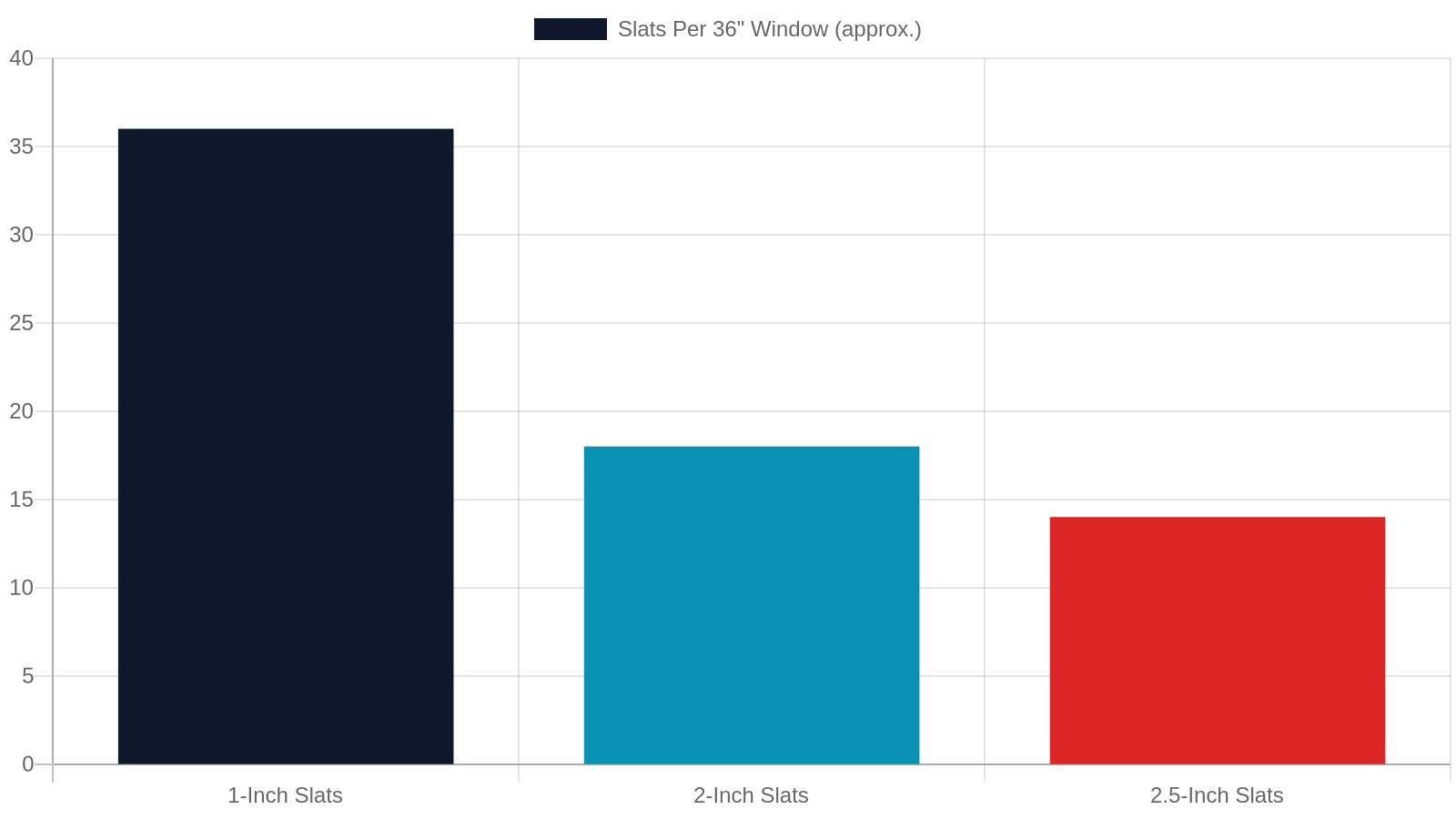
- Cleaning ease: Wider slats mean fewer individual pieces to wipe down. A standard 36-inch-wide window has roughly 30% fewer slats at 2 inches versus 1 inch, cutting cleaning time proportionally.
- Visual proportion: 2-inch slats look appropriately scaled in standard 8- to 9-foot ceiling kitchens. The 2.5-inch option works well in kitchens with taller windows or higher ceilings (10 feet and above).
Above-Sink Windows: Special Sizing Considerations
The window above a kitchen sink is the most moisture-exposed location in any home. If your Jackson, TN kitchen has a window directly over the sink — a very common layout in West Tennessee ranch-style and craftsman homes — consider these sizing tips:
- Choose an inside mount installation to minimize the gap between the blind and the window frame, reducing steam infiltration into the headrail.
- Opt for 2-inch PVC slats rather than composite for this specific window, even if you use composite elsewhere in the kitchen.
- Consider a moisture-rated cordless lift mechanism for safety and durability — cords can absorb grease and grime over time and are a safety concern in homes with young children.
5. Color and Finish Options That Work Best in Southern Kitchens
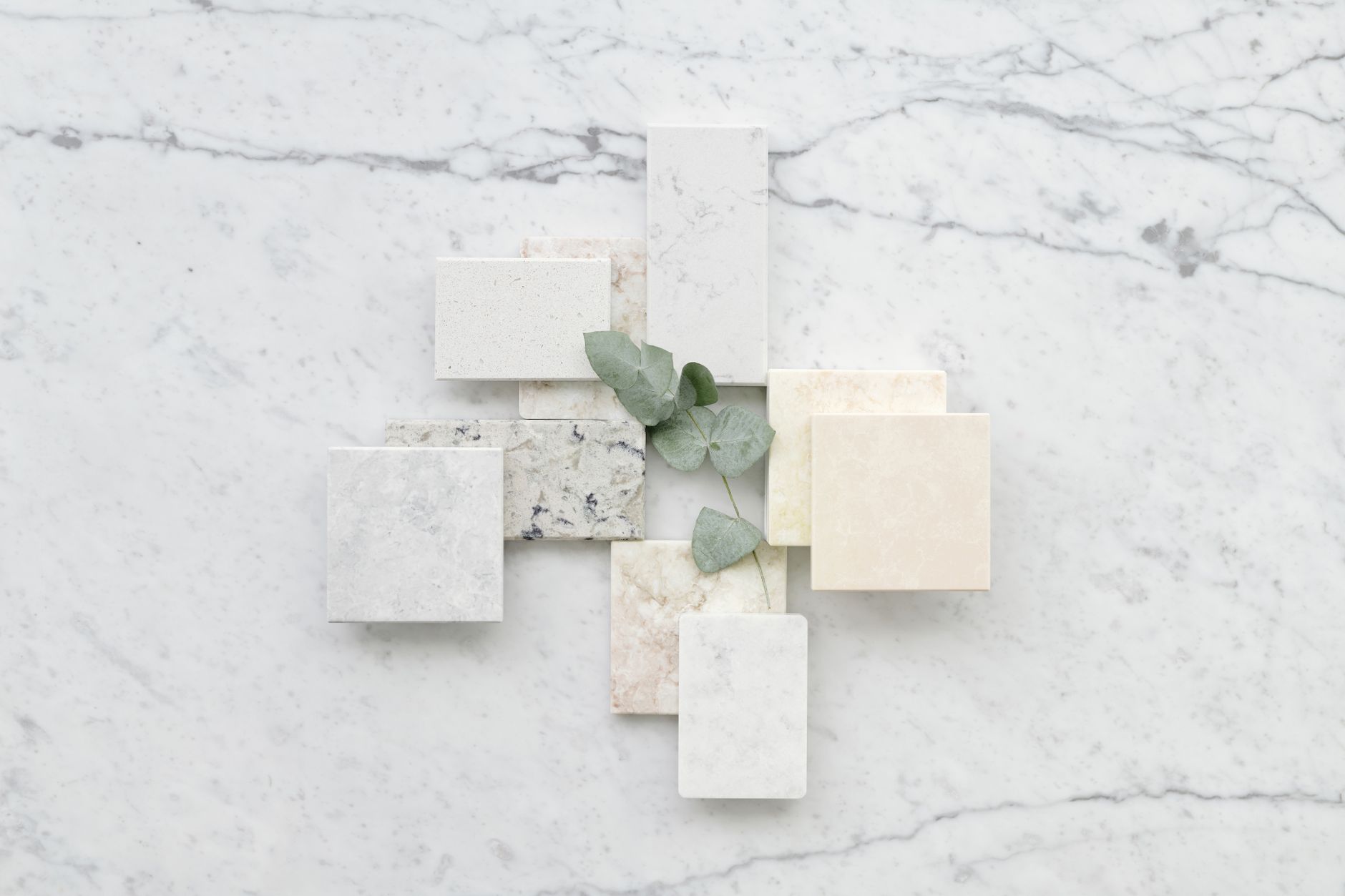
One of the most enjoyable parts of choosing faux wood blinds is selecting a finish that ties your kitchen together. Modern faux wood blinds are available in dozens of colors and wood-grain textures, from bright white to deep espresso — and the right choice depends on both your kitchen’s design style and how much maintenance you’re willing to do.
Light vs. Dark Finishes: Practical Trade-Offs
Color choice in a kitchen isn’t just about matching your cabinetry — it has real practical implications:
- White and off-white finishes are the most popular choice for Jackson kitchens. They reflect light, making smaller kitchens feel larger, and they pair with virtually any cabinet color. The downside: grease and food splatter show more visibly, requiring more frequent cleaning.
- Medium wood tones (faux oak, faux cherry, faux walnut) hide everyday kitchen grime better than white and add warmth to the space. They’re an excellent choice if your kitchen gets heavy daily cooking use.
- Dark finishes (espresso, dark walnut) are striking but show dust prominently — a consideration in kitchens where flour, cornmeal, or other light-colored ingredients are used regularly.
Matching Faux Wood Blinds to Popular West Tennessee Kitchen Styles
West Tennessee homes tend to favor a few distinct kitchen aesthetics, and faux wood blind finishes can be matched accordingly:
- Farmhouse / Shaker style: Bright white or antique white faux wood with simple cloth tapes in a neutral linen color. This look is extremely popular in new construction around Jackson, Milan, and Henderson.
- Traditional Southern: Faux cherry or faux oak tones that echo the warmth of hardwood floors and stained cabinetry common in older West Tennessee homes.
- Modern / Contemporary: Crisp white or light gray faux wood with a matte finish and no decorative tapes — clean lines, minimal visual noise.
- Craftsman: Faux walnut or medium brown tones that complement the natural wood accents typical of craftsman-style homes throughout the Jackson area.
6. The Complete Easy-Cleaning Guide for Faux Wood Kitchen Blinds
One of the biggest selling points of faux wood blinds for kitchens is their ease of maintenance — but “easy to clean” still requires the right technique. Using the wrong products or methods can dull the finish, leave streaks, or even damage the slats over time. Here’s a practical, step-by-step cleaning guide built for real West Tennessee kitchens.
Weekly Maintenance: 5 Minutes or Less
Consistent light cleaning prevents grease and dust from bonding to the slat surface, making deep cleans much less frequent. Here’s a simple weekly routine:
- Close the blinds fully in one direction (slats tilted downward).
- Wipe each slat from left to right with a dry microfiber cloth or a clean feather duster. This removes loose dust before it can mix with kitchen grease.
- Tilt the slats the opposite direction and repeat.
- For any visible grease spots, dampen the microfiber cloth with warm water and a drop of dish soap and wipe the affected slats.
- Dry with a second clean cloth to prevent water spots.
Total time for a standard 36-inch kitchen window: approximately 3–5 minutes.
Monthly Deep Clean: Removing Grease Buildup
Even with weekly dusting, kitchen blinds accumulate a thin grease film over time. A monthly deep clean keeps them looking fresh:
- In-place method: Mix a solution of 1 tablespoon white vinegar + 1 tablespoon dish soap in 2 cups warm water. Wearing a cotton glove, dip your gloved fingers in the solution and run them along each slat individually. Rinse with a clean damp cloth and dry immediately.
- Bathtub soak method (for removable blinds): Remove the blind from the headrail, lay it flat in a bathtub filled with warm soapy water, and let it soak for 10–15 minutes. Rinse thoroughly and hang to air dry completely before reinstalling. Note: Only use this method with 100% PVC blinds — wood-composite blinds should not be fully submerged.
What to Avoid: Cleaning Mistakes That Damage Faux Wood
Faux wood blinds are durable, but a few common cleaning mistakes can shorten their lifespan or damage their finish:
- Avoid abrasive scrubbers (steel wool, rough sponges) — these scratch the surface coating and create microscopic grooves that trap more grease.
- Avoid bleach-based cleaners on colored or wood-tone finishes — bleach can strip pigment and leave permanent discoloration.
- Avoid steam cleaners directly on the headrail or cord mechanisms — while the slats can handle steam, the internal hardware may not.
- Never use furniture polish or wood conditioners on faux wood — these products are designed for porous wood surfaces and can leave a greasy residue that attracts more dust.
7. Energy Efficiency Benefits: Keeping Your Kitchen Comfortable Year-Round
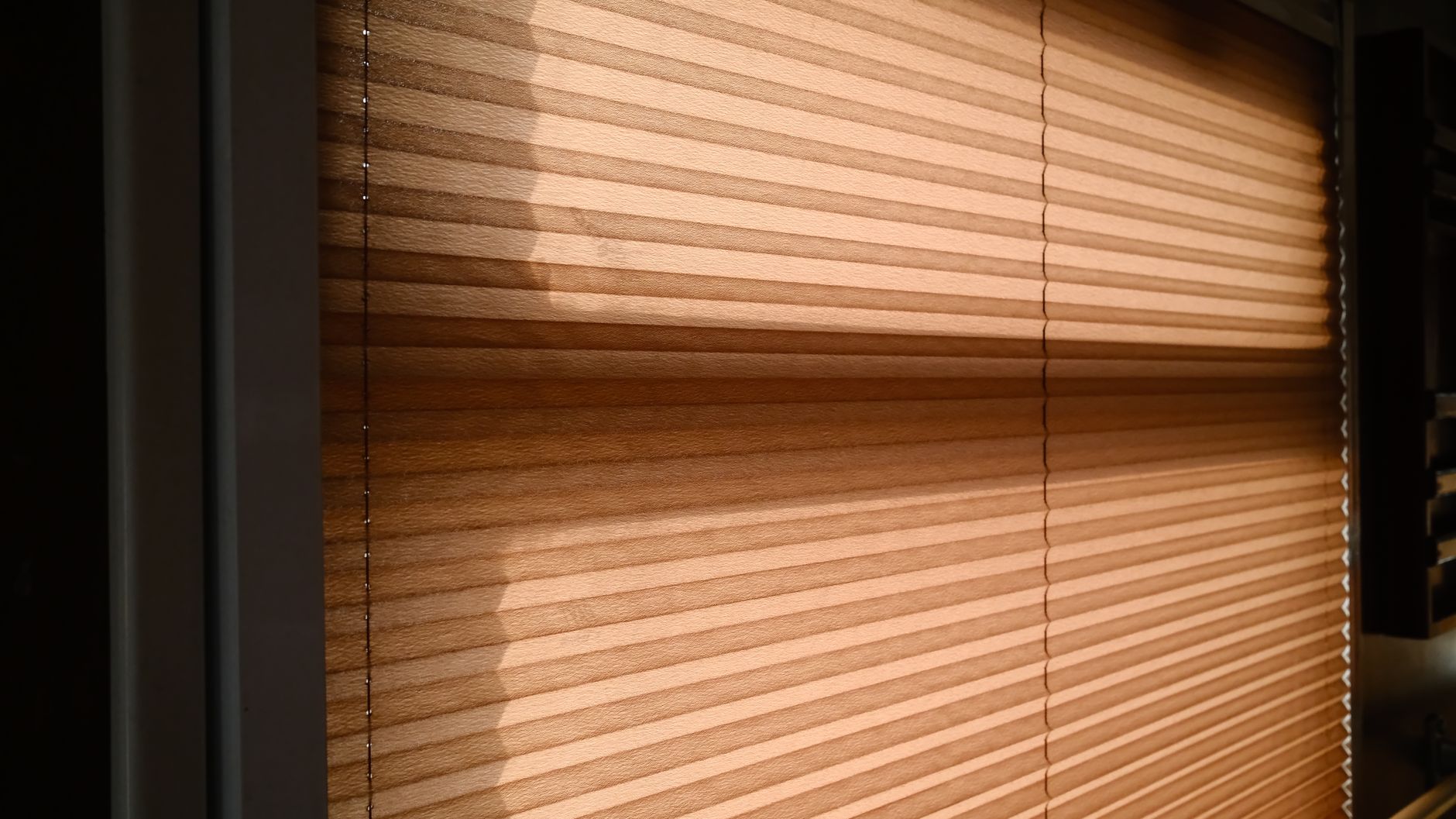
Beyond moisture resistance and easy cleaning, faux wood blinds offer a practical energy efficiency benefit that’s especially relevant for Jackson, TN homeowners dealing with both sweltering summers and chilly winters. The way you position your slats can meaningfully affect how much heat enters or escapes through your kitchen windows — and that has a direct impact on your utility bills.
How Faux Wood Blinds Reduce Heat Gain in Summer
Tennessee summers are brutal, and kitchen windows — especially those facing south or west — can turn your cooking space into an oven by mid-afternoon. Closed faux wood blinds with fully tilted slats can block up to 45% of solar heat gain through a standard single-pane window, according to the U.S. Department of Energy’s window treatment research. That’s meaningful relief for both your comfort and your cooling bill.
For maximum summer performance, look for faux wood blinds with a light-colored interior-facing surface (typically white or off-white), which reflects heat back toward the window rather than absorbing it into the room.
Winter Insulation: Slat Position Matters
In winter, the same blinds can help retain heat when positioned correctly. Closing the slats with the curved side facing the room (slats angled upward from the interior perspective) creates a slight dead-air pocket between the slat and the glass that acts as a basic insulating layer. While faux wood blinds don’t match the insulation value of cellular shades, they still provide a measurable improvement over uncovered windows — particularly important in older Jackson, TN homes with single-pane windows.
Energy-conscious homeowners in West Tennessee often pair faux wood kitchen blinds with a cellular shade in an adjacent dining room or living area for a layered approach to energy management across the home.
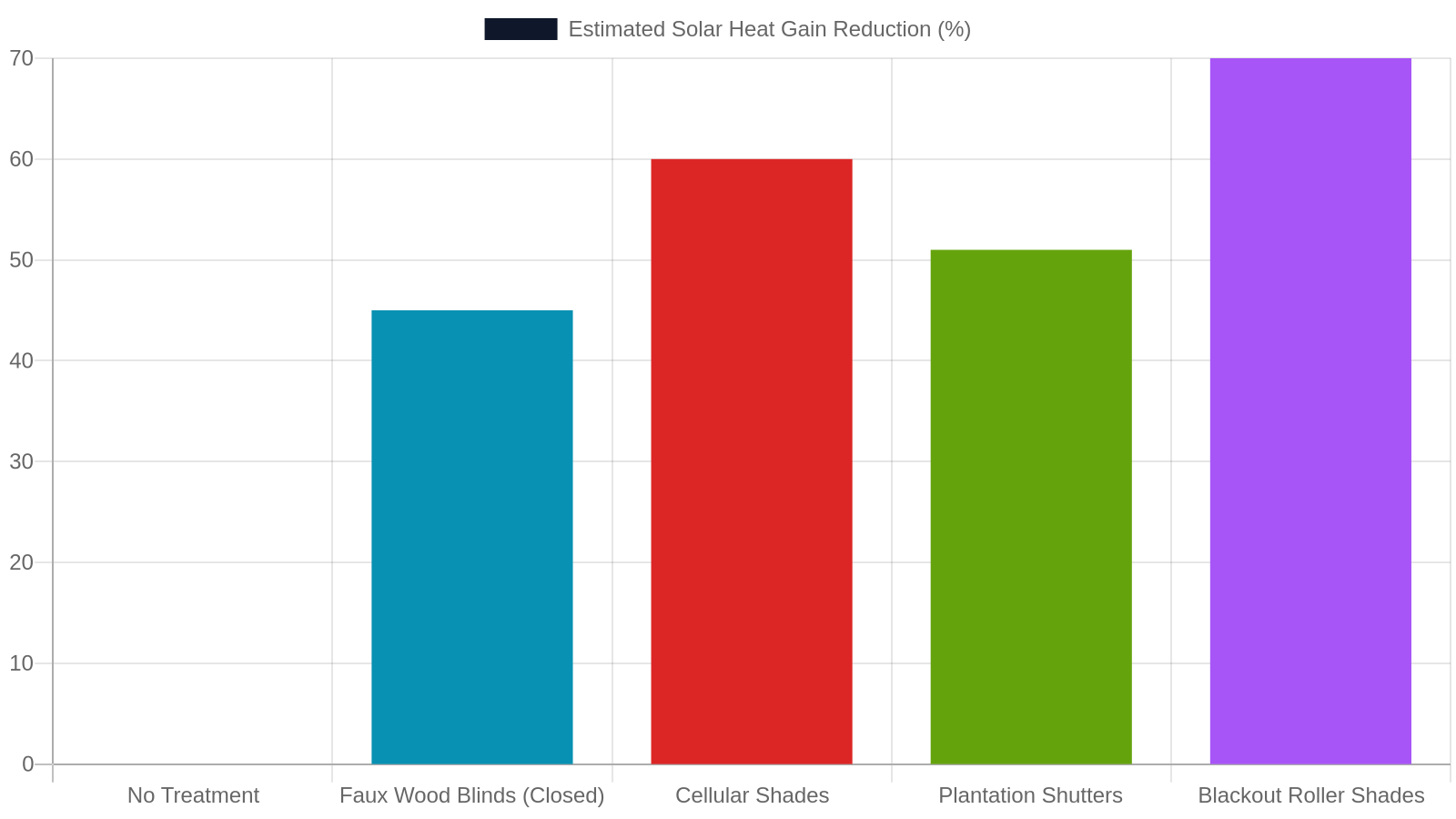
Faux Wood Blinds vs. Other Kitchen Window Treatments: 6-Point Comparison
Use this side-by-side comparison to evaluate faux wood blinds against the most common kitchen window treatment alternatives across the factors that matter most in a working kitchen.
8. Installation Options: Inside Mount vs. Outside Mount for Kitchen Windows
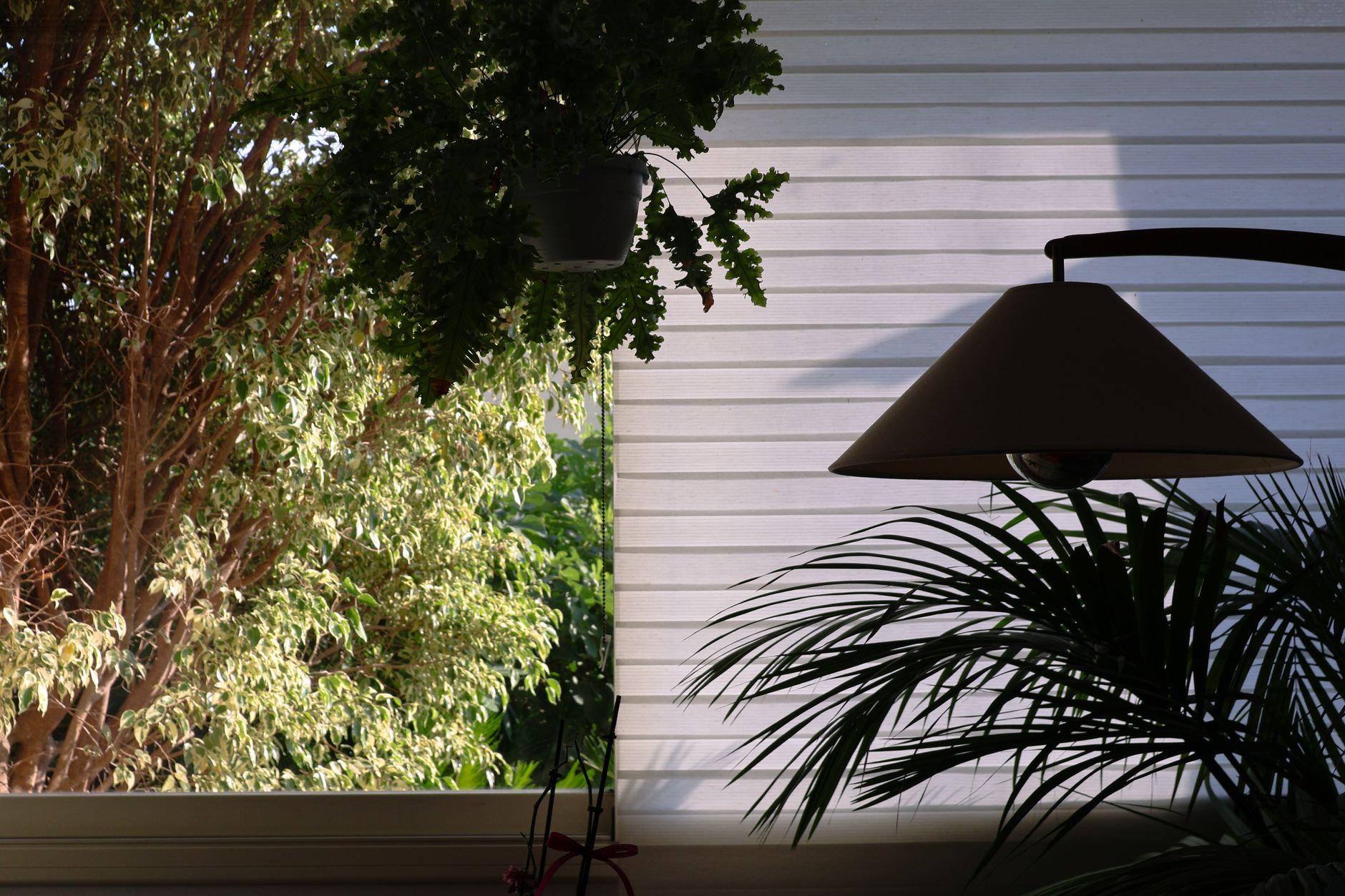
How your faux wood blinds are mounted affects both their appearance and their practical performance in a kitchen environment. Professional installation — rather than a DIY approach — ensures accurate measurements and the right mounting method for your specific window configuration. Here’s what you need to know about the two main options.
Inside Mount: Clean, Built-In Look
An inside mount installs the blind headrail inside the window frame recess. This is the most popular choice for kitchens because:
- It creates a clean, architectural look that doesn’t interrupt the visual line of the window frame or surrounding cabinetry.
- It allows the window trim to remain fully visible, which is important in homes with decorative molding.
- It keeps the blind closer to the glass, reducing steam and condensation exposure to the headrail hardware.
For an inside mount to work properly, your window recess must be at least 2.5 inches deep — a measurement your installer will confirm during the in-home consultation. Most standard kitchen windows in Jackson-area homes meet this requirement easily.
Outside Mount: Coverage and Flexibility
An outside mount attaches the headrail to the wall or window frame above the recess. This option is preferred when:
- The window recess is too shallow for an inside mount (less than 2.5 inches).
- You want to visually enlarge a small kitchen window by extending the blind 2–3 inches beyond the frame on each side.
- You need to cover a window that has an irregular or damaged frame.
Outside mounts are also useful when you want the blind to stack higher than the window opening — allowing full, unobstructed glass exposure when the blind is raised, which maximizes natural light in kitchens that feel dark or cramped.
9. How Faux Wood Blinds Compare to Other Kitchen Window Treatment Options
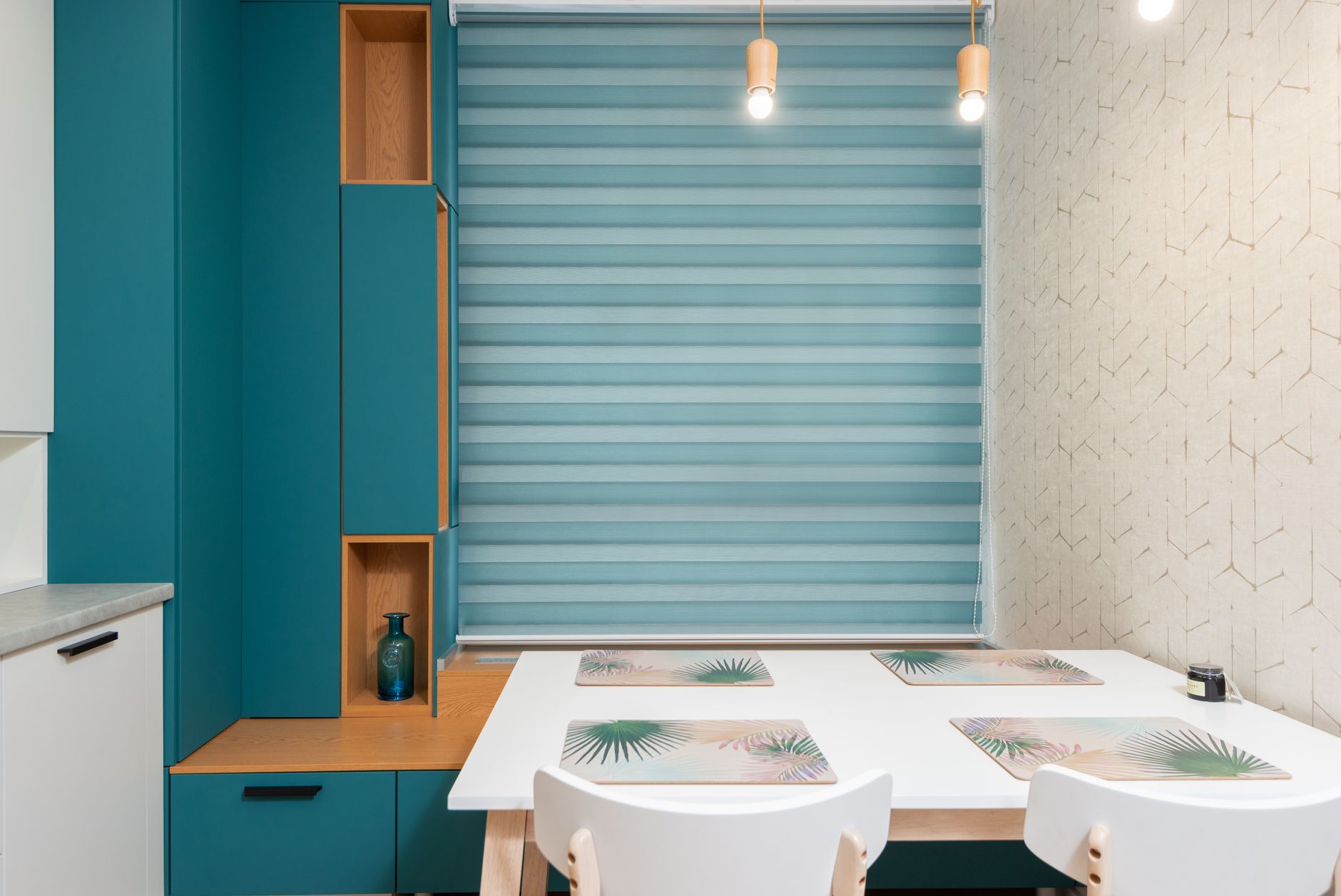
Faux wood blinds aren’t the only option for kitchen windows, and the best choice depends on your budget, aesthetic preferences, and how intensively your kitchen is used. Here’s how faux wood stacks up against the main alternatives so you can make a fully informed decision.
When Plantation Shutters Might Be a Better Fit
Plantation shutters are the premium alternative to faux wood blinds and share many of the same moisture-resistance benefits when made from composite or PVC materials. They offer superior light control, a more substantial look, and can add measurable resale value to a home. The trade-off is cost: custom plantation shutters typically run 2–3 times the price of faux wood blinds for the same window.
For homeowners in Jackson, TN who are renovating a kitchen as part of a larger home improvement project and want a truly permanent, high-end solution, plantation shutters are worth the investment. Blinds Galore offers both options — our team can walk you through the comparison during a free in-home consultation so you can decide what makes sense for your budget and goals. You can also explore our custom-built shutter options to see the full range of styles available.
Why Fabric Shades Fall Short in Kitchens
Fabric roller shades and Roman shades are beautiful in living rooms and bedrooms, but they’re a poor choice for kitchens for several reasons:
- Grease absorption: Fabric is highly porous and absorbs airborne grease particles, leading to permanent staining within months in a cooking-heavy kitchen.
- Mold risk: Fabric retains moisture, creating an ideal environment for mold and mildew growth — a health concern and a cleaning nightmare.
- Cleaning difficulty: Most fabric shades cannot be wiped clean and require professional laundering or replacement when heavily soiled.
If you love the soft look of fabric treatments, consider using them in the adjacent dining area and reserving faux wood blinds for the kitchen itself — a combination that many Jackson homeowners find strikes the perfect balance.
10. Professional Measuring: Why Exact Fit Matters More in Kitchens

Custom faux wood blinds are only as good as the measurements behind them. Even the highest-quality PVC blind will underperform if it’s the wrong size for your window — and in a kitchen environment, a poor fit creates both aesthetic and practical problems. Professional measuring is one of the most valuable services Blinds Galore provides, and it’s included at no charge with every in-home consultation.
The Cost of Getting It Wrong
A blind that’s even 1/4 inch too wide won’t fit inside a window recess. One that’s 1/4 inch too narrow will leave light gaps on the sides that defeat the purpose of the treatment. In a kitchen, those gaps also mean steam and condensation can reach the headrail hardware more easily, accelerating corrosion.
DIY measuring errors are extremely common — industry estimates suggest that approximately 1 in 5 self-measured blind orders requires a return or reorder due to sizing mistakes. That means wasted time, shipping costs, and weeks without a window treatment while you wait for a replacement.
What a Professional Measuring Visit Includes
When Blinds Galore visits your Jackson, TN home for a free in-home consultation, our measuring process covers:
- Exact width and height measurements of each window opening, taken at three points (top, middle, bottom for width; left, center, right for height) to account for any irregularities in older window frames.
- Recess depth check to confirm inside-mount viability.
- Assessment of window frame condition — warped or damaged frames may require outside mounting or additional hardware.
- Light gap evaluation — we check for gaps around the frame that might need to be addressed for optimal light control.
- Product recommendations tailored to the specific conditions of each window (sun exposure, proximity to sink or stove, etc.).
This level of detail simply isn’t possible with a tape measure and a web form — it requires an experienced eye in your actual space.
Ready to Upgrade Your Jackson, TN Kitchen Windows?
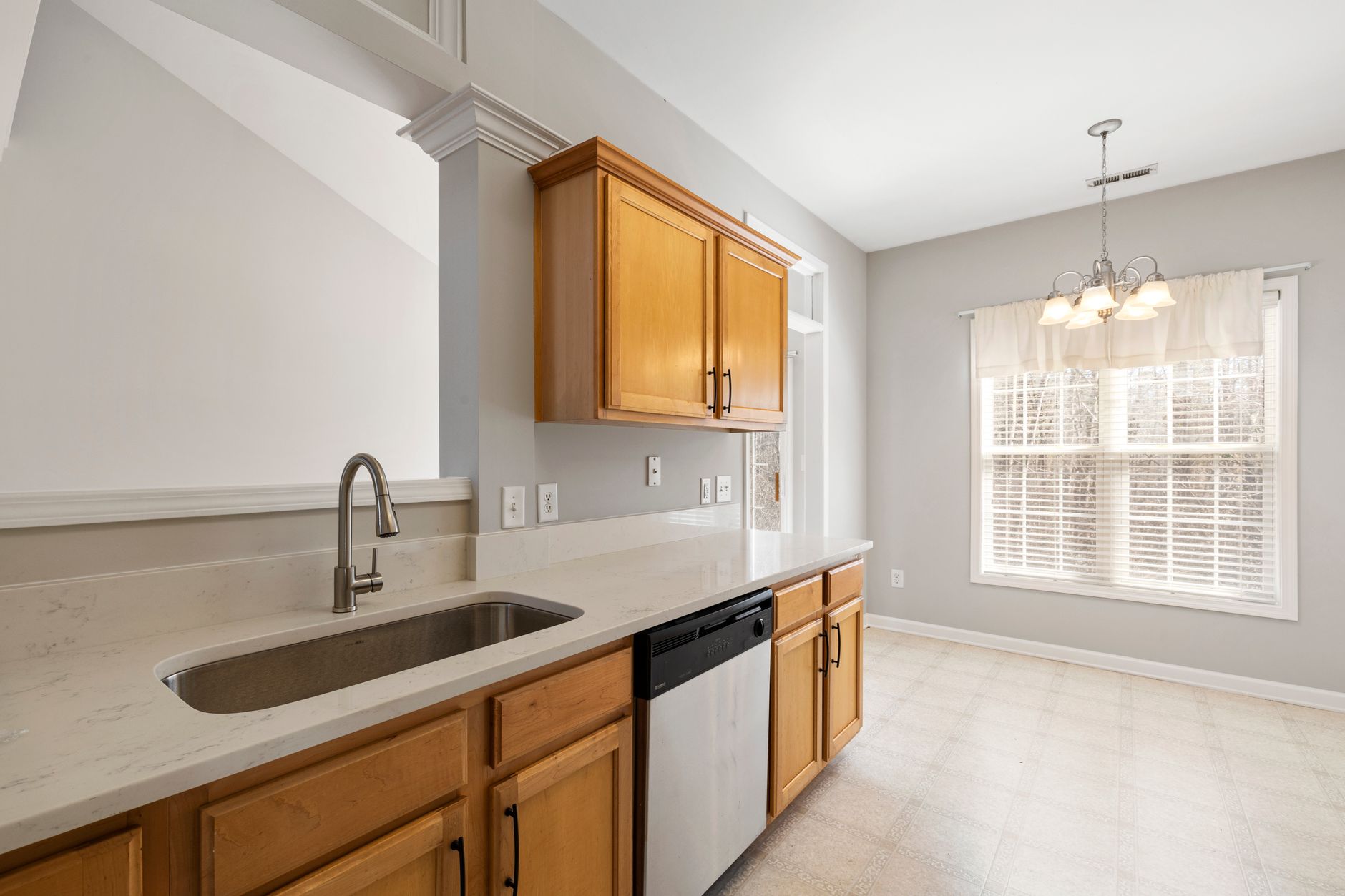
You’ve done the research — now it’s time to see what the right faux wood blinds can do for your kitchen. Whether you’re in Jackson, Lexington, Henderson, Milan, or anywhere across West Tennessee, Blinds Galore makes the process simple, personal, and completely risk-free with our free in-home consultation service and satisfaction guarantee.
What to Expect from Your Free In-Home Consultation
Blinds Galore brings the showroom directly to your home — no driving across Jackson, no guessing how a sample will look against your actual cabinetry and lighting. During your free in-home consultation, our team will:
- Bring physical samples of faux wood blind finishes, slat widths, and hardware options so you can see and feel them in your own kitchen.
- Take precise measurements of every window you want to treat.
- Walk you through pricing transparently, with no hidden fees or surprise charges.
- Answer any questions about installation timelines, warranty coverage, and our 100% satisfaction guarantee.
We serve homeowners across Jackson, Lexington, Henderson, Milan, and the surrounding West Tennessee communities. Call us today at (731) 571-5179 to schedule your free visit — we’d love to help you find the perfect fit for your kitchen.
Your Next Step: Explore Custom Faux Wood Blind Options
If you’re ready to move forward — or just want to learn more before committing to a consultation — we invite you to upgrade to custom faux wood blinds with Blinds Galore in West TN and see the full range of styles, finishes, and configurations we offer. You can also browse our custom shades collection if you’re considering a layered window treatment approach for other rooms in your home.
With over 18 years of experience serving West Tennessee homeowners and a 100% satisfaction guarantee on every installation, Blinds Galore is the trusted local choice for kitchen window treatments that look great, perform in real conditions, and last for years. We look forward to hearing from you.
Frequently Asked Questions
Are faux wood blinds really waterproof enough for a kitchen?
100% PVC faux wood blinds are fully waterproof and handle kitchen steam, splatter, and humidity without warping, cracking, or discoloring. Wood-composite faux wood blinds are moisture-resistant but not fully waterproof — they're fine for most kitchens but should be avoided directly above a sink in very high-steam environments.
How do I clean greasy kitchen blinds without damaging them?
For routine cleaning, wipe slats with a dry microfiber cloth weekly. For grease buildup, use a solution of 1 tablespoon white vinegar and 1 tablespoon dish soap in 2 cups warm water, applied with a cotton glove. Avoid abrasive scrubbers, bleach, and furniture polish, which can damage the surface finish.
What is the best slat size for kitchen faux wood blinds?
A 2-inch slat is the most popular and practical choice for kitchen windows. It provides good light control, is easier to clean than 1-inch slats (fewer individual pieces), and looks proportionally correct in standard 8- to 9-foot ceiling kitchens. Use 2.5-inch slats for larger windows or higher ceilings.
How much do custom faux wood blinds cost in Jackson, TN?
Custom faux wood blind pricing varies by window size, slat width, finish, and mounting hardware. As a general range, expect to pay between $80 and $250 per window for professionally measured and installed custom faux wood blinds. Contact Blinds Galore at (731) 571-5179 for a free in-home consultation and accurate quote for your specific windows.
Can faux wood blinds help lower my energy bills in Tennessee?
Yes. Closed faux wood blinds can reduce solar heat gain through a window by up to 45%, according to U.S. Department of Energy guidelines. In Tennessee's hot summers, this can meaningfully reduce air conditioning load, especially for south- and west-facing kitchen windows that receive intense afternoon sun.
Do I need professional installation for faux wood kitchen blinds?
Professional installation is strongly recommended for custom faux wood blinds. Accurate measuring is critical — even a 1/4-inch error can cause fit problems. A professional installer also ensures the correct mounting method for your window type, proper hardware selection, and a level, secure installation that performs correctly and looks its best.
You might also like
7 Best Custom Blinds for Jackson TN Mudrooms: Durability and Easy-Clean Fabrics Guide
Quick answer: For Jackson, TN mudrooms — where mud, humidity, and daily foot traffic are facts of life
7 Best Custom Blinds for Jackson TN Basements: Moisture and Mold Guide
Quick answer: Basement windows in Jackson, TN face a tough combination of high humidity, limited airflow,

7 Best Custom Blinds for Jackson TN Laundry Rooms: Moisture and Durability Guide
Quick answer: For Jackson, TN laundry rooms — where humidity, steam, and splashing water are everyday

How to Compare Blind Styles Using Product Videos Before Your Jackson TN Consultation
Quick answer: Before your free in-home consultation with Blinds Galore in Jackson, TN, watching product

7 Best Custom Blinds for Sunrooms in Jackson, TN: Light Control and UV Protection Guide
Quick answer: The best custom blinds for sunrooms in Jackson, TN balance strong UV protection with flexible

How to Install Custom Faux Wood Blinds in Your Jackson, TN Home: a 10-Step Guide
Quick answer: Installing custom faux wood blinds in a Jackson, TN home is a manageable DIY project for