

7 Best Custom Blinds for Jackson TN Laundry Rooms: Moisture and Durability Guide
Quick answer: For Jackson, TN laundry rooms — where humidity, steam, and splashing water are everyday realities — the best custom blinds are made from moisture-resistant materials like faux wood, aluminum, or PVC-based cellular shades. These options resist warping, mold, and fading far better than real wood or fabric alternatives. Faux wood blinds are the top all-around pick: they mimic the look of real wood, wipe clean in seconds, and cost 30–50% less. Pair them with a moisture-rated cellular shade for added insulation. Blinds Galore offers free in-home consultations across West Tennessee to help you choose the right fit.
Why Laundry Rooms Demand Special Window Treatment Attention
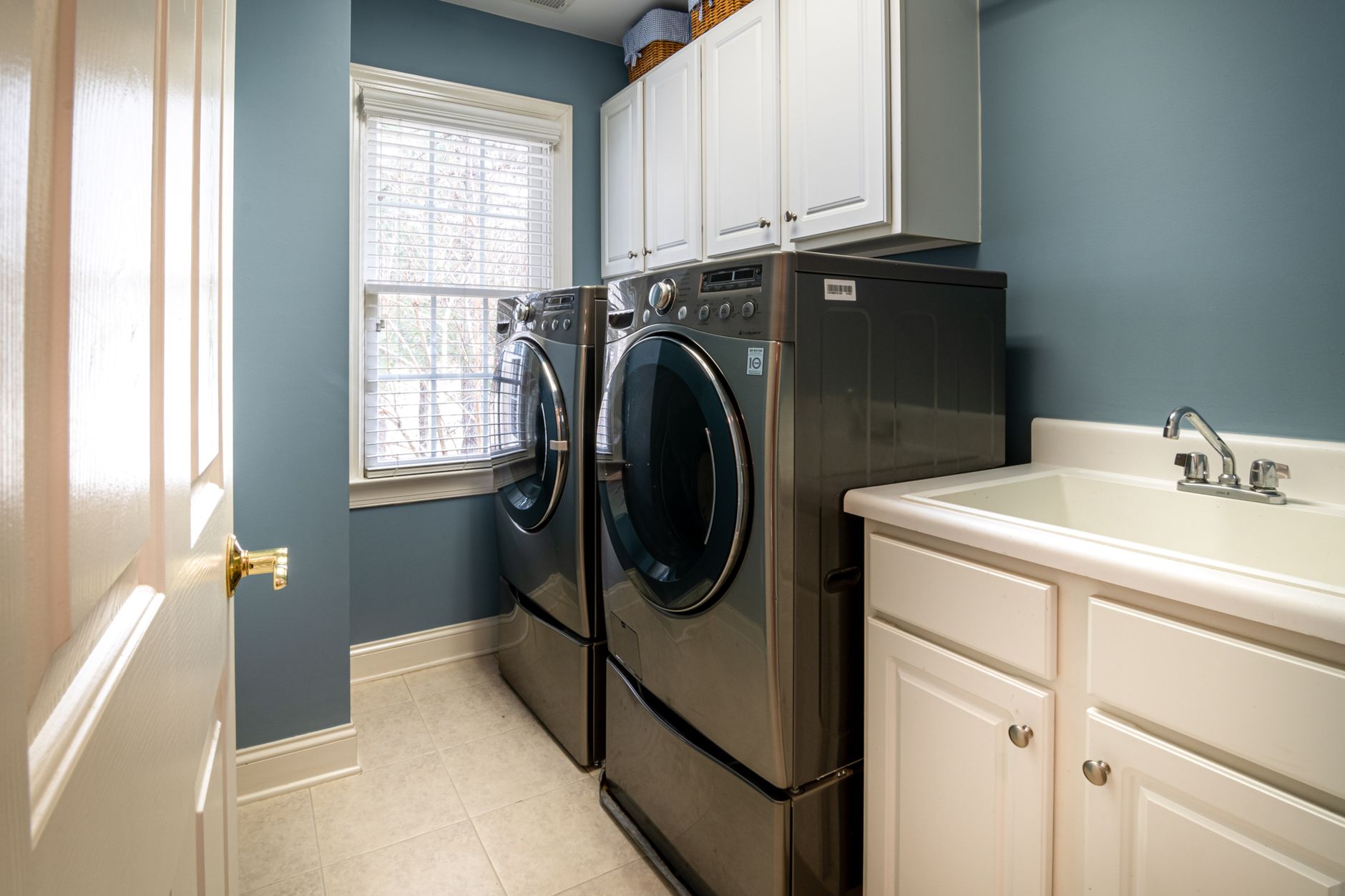
Before picking a color or style, it pays to understand exactly what your laundry room window covering is up against. Jackson, TN homeowners deal with a climate that already tests window treatments outdoors — and the laundry room adds an entirely separate set of indoor stressors. Getting the material choice right from the start saves you money, frustration, and a repeat installation call.
The Moisture Problem: Steam, Splashing, and Humidity Cycles
A typical residential laundry room can spike to 70–90% relative humidity during a single wash-and-dry cycle. In Jackson, TN — where summer outdoor humidity already hovers around 70% — that indoor moisture load compounds quickly. Windows in laundry rooms are especially vulnerable because they sit near the heat source of a dryer exhaust and the steam output of a washer drum.
- Real wood blinds absorb moisture and warp within 12–18 months in high-humidity rooms.
- Standard fabric shades develop mildew spots and musty odors within one season.
- Cheap vinyl mini-blinds yellow and become brittle from repeated heat-and-cool cycles.
Choosing the wrong window covering means replacing it far sooner than you planned — and spending money twice.
Light, Privacy, and Ventilation: The Three-Way Balancing Act
Laundry rooms also have unique functional demands beyond just resisting moisture. You need natural light to spot stains on clothing, privacy because laundry rooms are often at ground level or face a neighbor, and ventilation control so you can crack a window without losing all privacy. The ideal window treatment lets you adjust slat angles or raise a shade partially — giving you all three at once. This is one reason slatted blinds consistently outperform roller shades in laundry-specific applications.
1. Faux Wood Blinds — the Gold Standard for Laundry Rooms
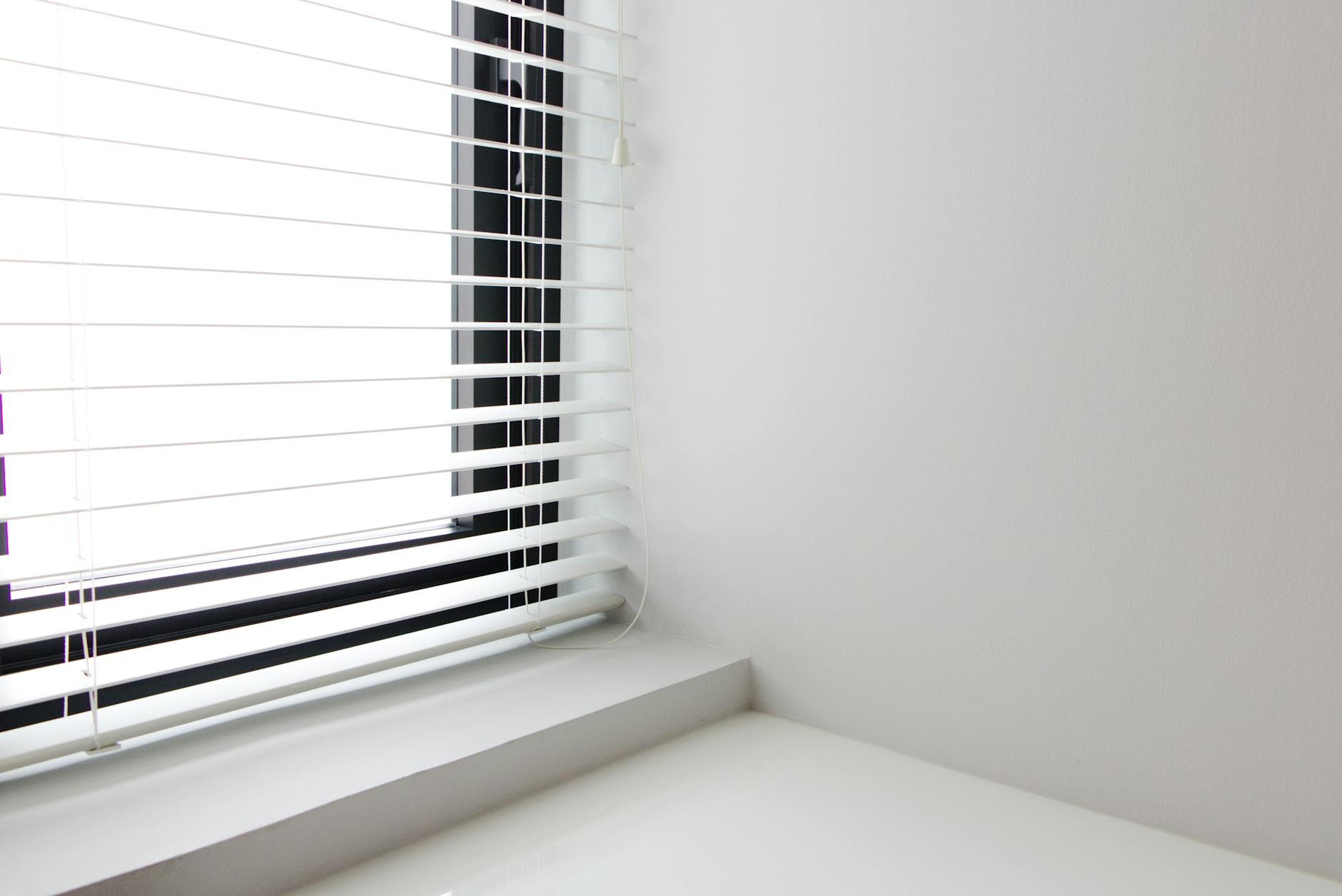
If you only read one section of this guide, make it this one. Faux wood blinds are the single most recommended window treatment for laundry rooms by interior designers, contractors, and window covering specialists alike — and for good reason. They deliver the warm, classic look of real wood while shrugging off everything a laundry room can throw at them.
What Makes Faux Wood Different From Real Wood
Faux wood blinds are manufactured from a composite of PVC and wood fiber — or sometimes 100% PVC — engineered specifically to handle what real wood cannot. The core is dimensionally stable, meaning it does not expand or contract when humidity swings from 30% to 90%. The surface is UV-stabilized so it resists yellowing even near a sunny south-facing window.
- Slat thickness: 2-inch slats are standard; 2.5-inch slats give a more substantial, plantation-style look.
- Weight: Faux wood is heavier than aluminum but lighter than solid wood — important for larger laundry room windows.
- Wipe-clean surface: A damp cloth removes lint, detergent dust, and dryer sheet residue in seconds.
Cost and Lifespan Compared to Real Wood
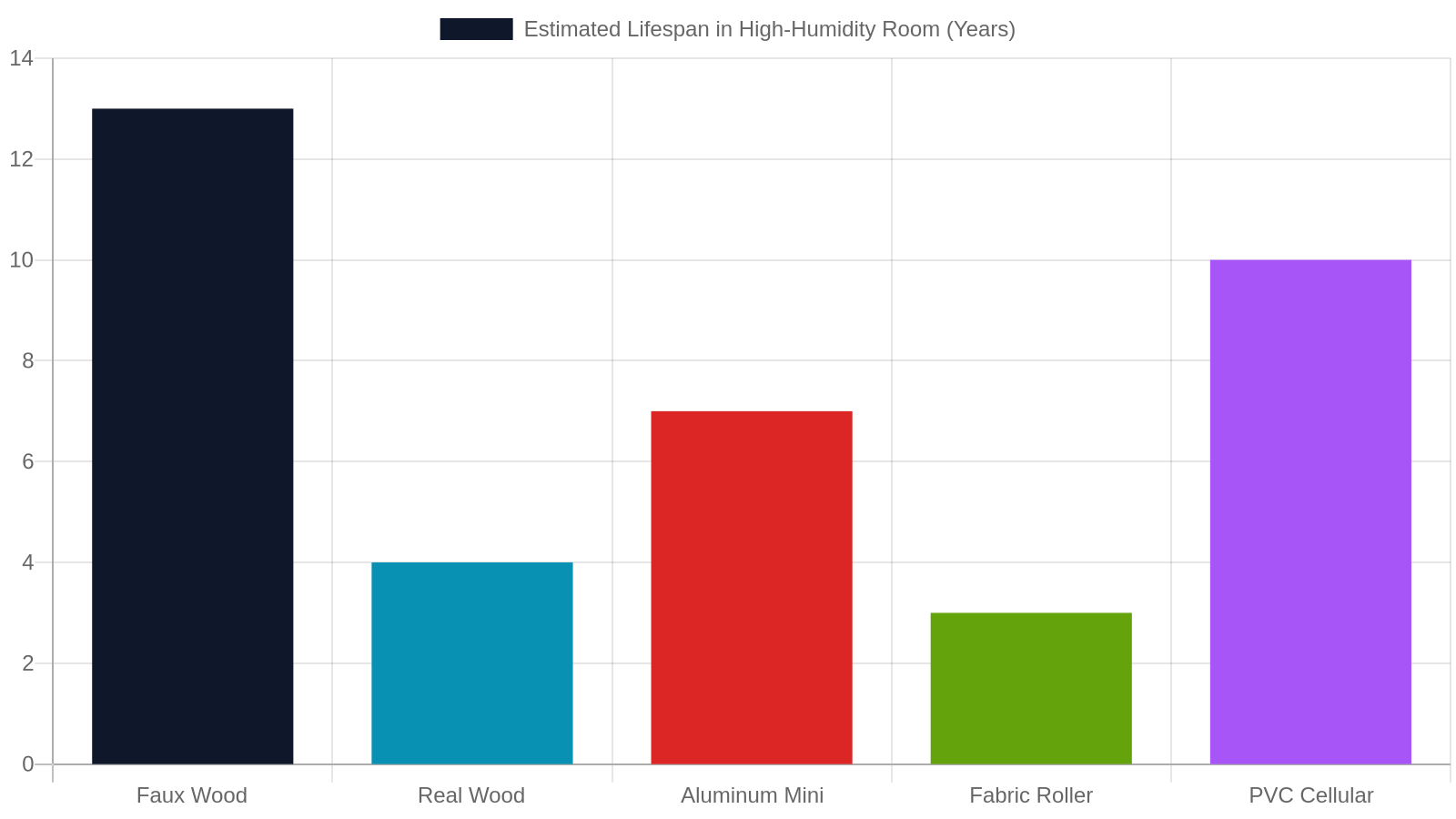
Custom faux wood blinds from a professional supplier typically run $35–$75 per window for standard laundry room sizes (24–36 inches wide), compared to $80–$150 for real wood blinds of the same size. More importantly, faux wood in a high-humidity room lasts 10–15 years versus 3–5 years for real wood before warping or cracking becomes visible. Over a 15-year period, that’s potentially two or three real-wood replacements versus one faux-wood installation — a significant cost difference for Jackson homeowners on a budget.
Blinds Galore carries a full line of custom faux wood blinds for West Tennessee homes, measured and installed to fit your exact window dimensions.
2. Aluminum Mini Blinds — the Budget-Friendly Moisture Fighter

Aluminum mini blinds have been a laundry room staple for decades — and they’ve earned that reputation honestly. While they lack the visual warmth of faux wood, they offer unmatched moisture resistance at an entry-level price point, making them a smart choice for rental properties, utility laundry rooms, and homeowners who prioritize function over form.
Why Aluminum Shrugs Off Moisture
Aluminum is inherently non-porous, which means it cannot absorb water, swell, or develop mold on its surface. Standard aluminum mini blinds use 1-inch or 2-inch anodized slats that resist corrosion even when exposed to detergent-laden steam repeatedly. They are also among the lightest window coverings available, making them easy to raise and lower one-handed when you’re carrying a laundry basket.
- Anodized finish: Adds a micro-thin oxide layer that prevents surface oxidation — look for this spec when shopping.
- Cord or cordless: Cordless aluminum blinds are safer and easier to clean since there’s no cord to trap lint.
- Color options: White, silver, and champagne are the most popular for laundry rooms because they reflect light into typically windowless spaces.
The Trade-Off: Aesthetics and Noise
The honest downside of aluminum mini blinds is that they look utilitarian. In a dedicated laundry room that nobody except family sees, that’s perfectly fine. But if your laundry room opens to a mudroom or hallway, the industrial look may feel out of place. Aluminum slats also rattle noticeably in a breeze — a minor annoyance if you like to open the window while doing laundry. For pure function at the lowest price point ($15–$40 per window for custom-fit aluminum), they’re hard to beat.
3. Moisture-Resistant Cellular Shades — Best for Insulation
If your laundry room window faces west or south — common in many Jackson, TN ranch-style and split-level homes — heat gain is as big a problem as moisture. Moisture-resistant cellular shades address both issues simultaneously, acting as a thermal barrier while still filtering light softly into the space. They’re the top pick for homeowners who want energy savings alongside durability.
How Cellular Shades Work in a Laundry Room Context
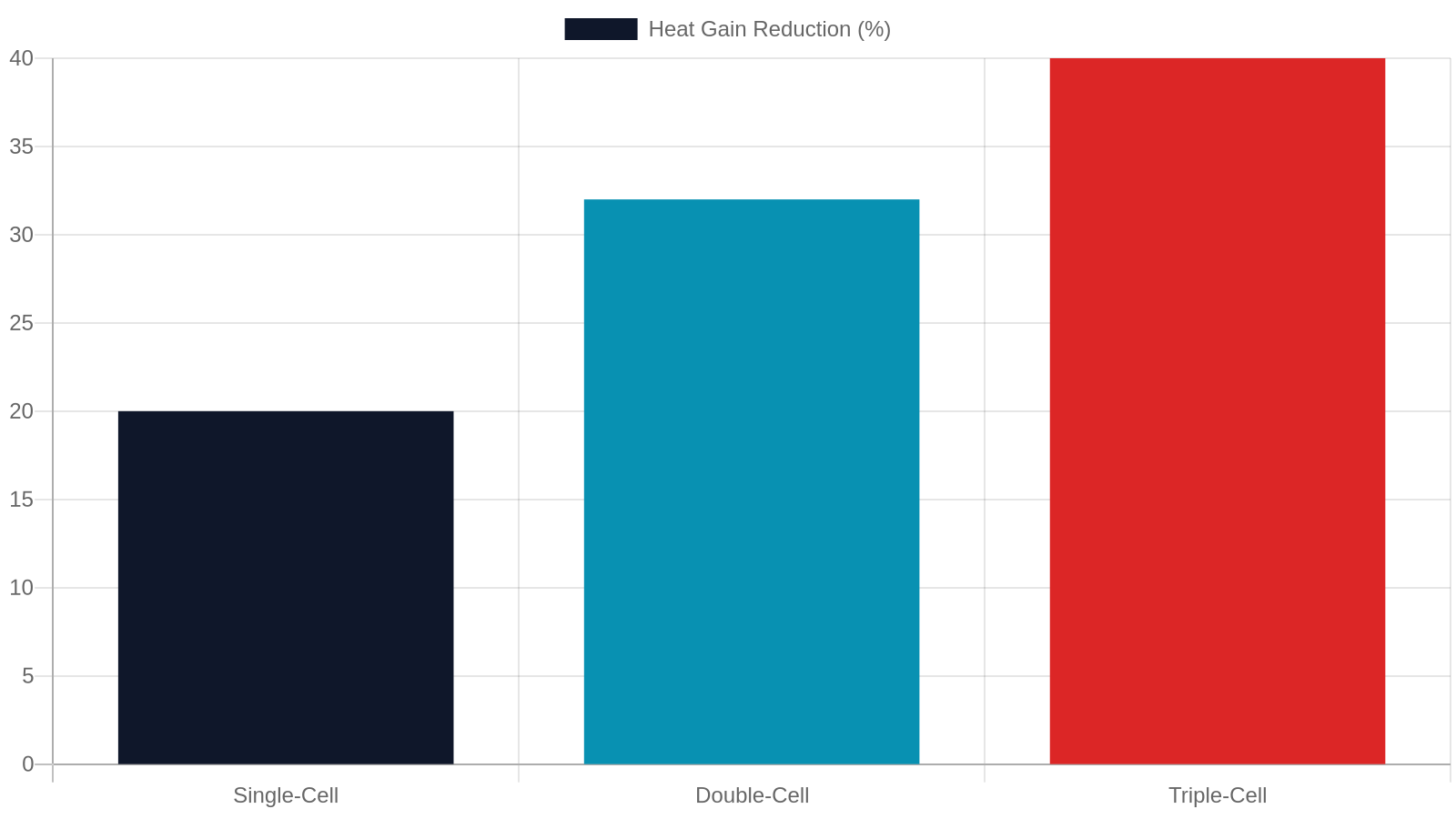
Cellular shades (also called honeycomb shades) trap air inside their hexagonal cells, creating a thermal buffer between the window glass and the room. In a laundry room, this matters because dryers generate significant heat — and in a Jackson, TN summer, that heat compounds with outdoor temperatures that routinely hit 90–95°F. A cellular shade can reduce heat gain through a window by up to 40%, keeping the laundry room cooler and reducing the load on your HVAC system.
- Single-cell: Good light filtering and basic insulation — best for mild climates.
- Double-cell: Better insulation, recommended for rooms with direct sun exposure.
- Triple-cell: Maximum insulation, ideal for west-facing laundry room windows in West Tennessee summers.
Choosing a Moisture-Rated Fabric
Not all cellular shades are laundry-room safe. Standard fabric cellular shades will absorb moisture and develop mildew. Look specifically for shades labeled “moisture-resistant,” “humidity-rated,” or made from polyester-based fabrics rather than natural fibers. These are treated with an antimicrobial coating that inhibits mold and mildew growth. Wipe them down monthly with a barely damp cloth — never saturate the fabric — and they’ll maintain their appearance for 8–12 years.
4. PVC Roller Shades — Sleek, Simple, and Fully Waterproof
For homeowners who want zero maintenance and maximum water resistance, PVC roller shades are the answer. They sacrifice some of the warmth and texture of faux wood or cellular shades in exchange for a nearly indestructible surface that laughs at steam, splashing, and humidity. In laundry rooms that see heavy daily use, that trade-off is often worth it.
The Case for a Fully Waterproof Window Covering
PVC roller shades are the only window covering on this list that is genuinely 100% waterproof — not just moisture-resistant. The fabric is a solid vinyl sheet that water simply beads off of. This makes them the ideal choice for laundry rooms that also double as utility sinks or mudrooms where splashing is a real possibility. They’re also the easiest to clean: a quick wipe with a damp sponge removes detergent residue, lint, and even light staining.
- Light control: Available in blackout, light-filtering, and solar (semi-transparent) versions.
- Motorized options: Motorized PVC rollers are increasingly popular in laundry rooms — no cord to tangle in the washer lid.
- Custom sizing: Critical in laundry rooms with non-standard window dimensions, which are common in older Jackson-area homes.
Aesthetic Limitations and How to Work Around Them
PVC roller shades have a clean, modern look that works beautifully in contemporary homes but can feel stark in traditional or farmhouse-style interiors. One popular workaround is to pair a PVC roller shade with a decorative fabric valance above it — the valance adds warmth and style while the roller does the functional heavy lifting. Custom valances are available through Blinds Galore and can be matched to your laundry room’s color palette. Expect to pay $45–$90 per window for a custom PVC roller shade in standard laundry room sizes.
5. Composite Plantation Shutters — the Premium Long-Term Investment
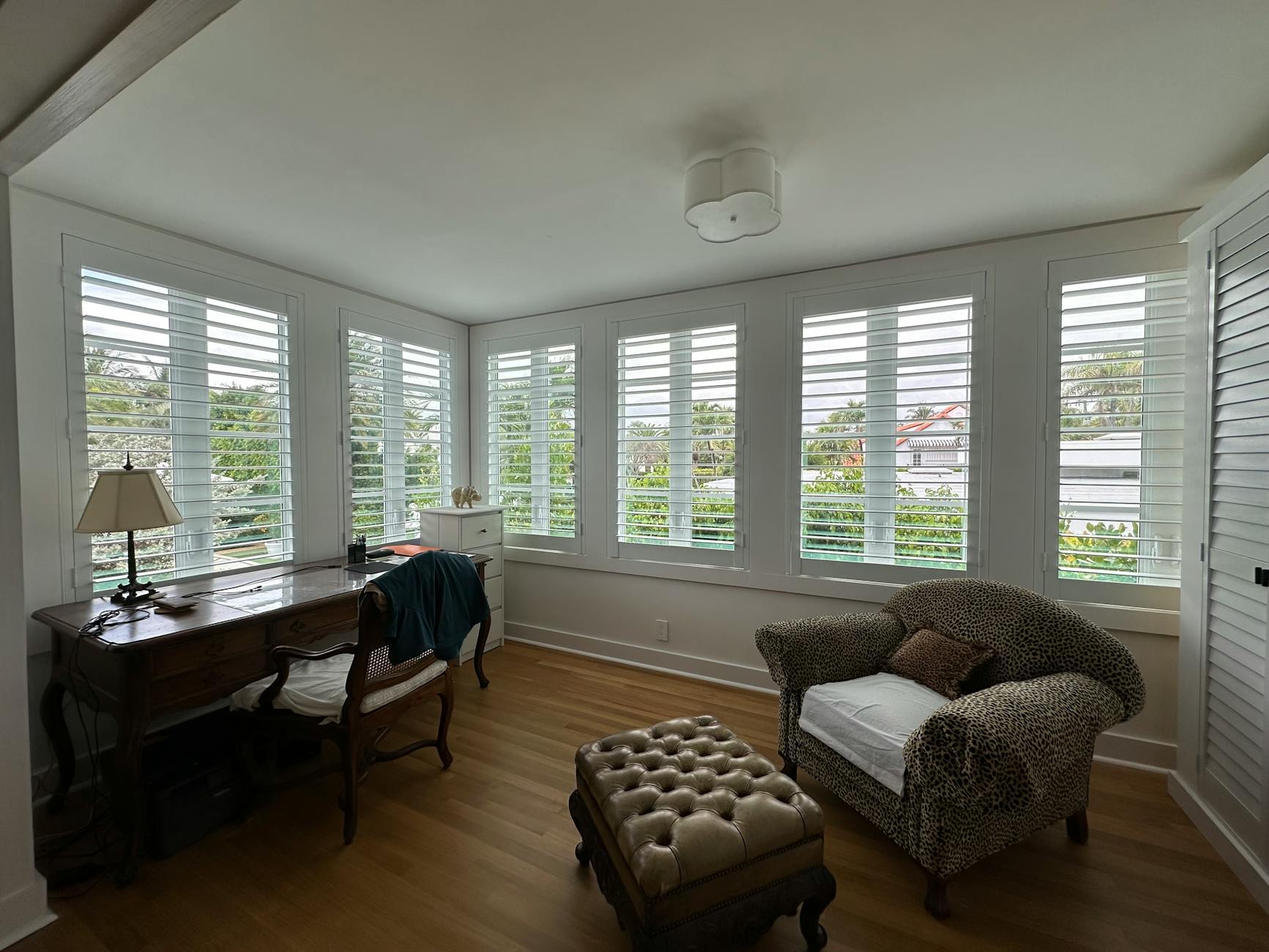
Plantation shutters in a laundry room might sound like overkill — but composite shutters are increasingly popular among Jackson, TN homeowners who want a window treatment they’ll never have to replace. They’re also the only option that functions as a structural part of the window frame, adding a finished architectural look that no blind or shade can replicate.
Why Composite Beats Real Wood in Wet Rooms
Plantation shutters are the most structurally substantial window covering option — and when made from composite (PVC-reinforced polymer) rather than real wood, they become one of the most durable choices for a laundry room. Composite shutters are built around a hollow aluminum or steel core wrapped in a moisture-proof polymer shell. This construction means they will not warp, crack, or peel even in rooms that cycle between high humidity and dry heat daily.
- Louvre sizes: 3.5-inch and 4.5-inch louvres are standard; larger louvres let in more light and are easier to clean.
- Paint finish: Factory-applied paint bonds to the polymer surface and resists chipping far better than painted wood.
- Lifespan: Composite plantation shutters routinely last 20–25 years with minimal maintenance — the longest lifespan of any option in this guide.
Cost Considerations and Return on Investment
Composite plantation shutters are the most expensive option on this list, typically running $200–$400 per window for custom-fit installation in a laundry room. However, when you factor in their 20–25 year lifespan and the fact that they add measurable resale value to a home, the cost-per-year is competitive with cheaper alternatives that need replacing every 3–5 years. For Jackson, TN homeowners planning to stay in their homes long-term, shutters are a compelling investment. Explore our custom-built shutters for West Tennessee homes to see the full range of composite options available.
6. What to Avoid: Materials That Fail Fast in Laundry Rooms
Knowing what not to buy is just as valuable as knowing what to buy. Several popular window treatment materials that perform beautifully elsewhere in the home are genuinely poor choices for laundry rooms. Understanding why helps you avoid the frustration of a window covering that looks great in the store and fails within a year of installation.
Real Wood Blinds: Beautiful but Vulnerable
Real wood blinds are among the most popular window treatments in West Tennessee homes — and they’re a wonderful choice in living rooms, bedrooms, and dining rooms. But in a laundry room, they’re a costly mistake. Wood is hygroscopic, meaning it absorbs and releases moisture constantly. In a laundry room environment, this causes slats to bow, warp, and split within 12–24 months. The finish cracks, the tilt mechanism stiffens, and the cords fray from repeated exposure to steam. Save real wood for rooms where humidity stays below 50%.
Natural Fabric Shades: Roman, Bamboo, and Woven Wood
Roman shades, bamboo shades, and woven wood shades are trending in home décor — and they look stunning in kitchens and living rooms. In a laundry room, however, natural fibers are a mildew magnet. Bamboo and woven grass materials develop dark mold spots within a single humid season in West Tennessee’s climate. Roman shades made from linen or cotton absorb detergent-laden steam and develop permanent odors and staining. If you love the texture of natural materials, consider a faux-bamboo PVC alternative — it mimics the look without the moisture vulnerability.
Cheap Vinyl Mini Blinds: The False Economy
The $8 vinyl mini blinds from a big-box store seem like a smart budget move for a utility room — until they yellow within six months and become brittle enough to crack when you try to adjust them. Low-grade PVC degrades rapidly when exposed to UV light and heat cycling, which is exactly what a dryer vent near a window produces. Investing in custom-fit, quality-grade aluminum or faux wood from a professional supplier costs more upfront but eliminates the annual replacement cycle that cheap vinyl creates.
Laundry Room Blind Options at a Glance: 5-Point Comparison
Use this table to quickly compare the five best moisture-resistant window treatment options for Jackson, TN laundry rooms across the criteria that matter most.
7. Measuring and Fitting Custom Blinds in Laundry Room Windows
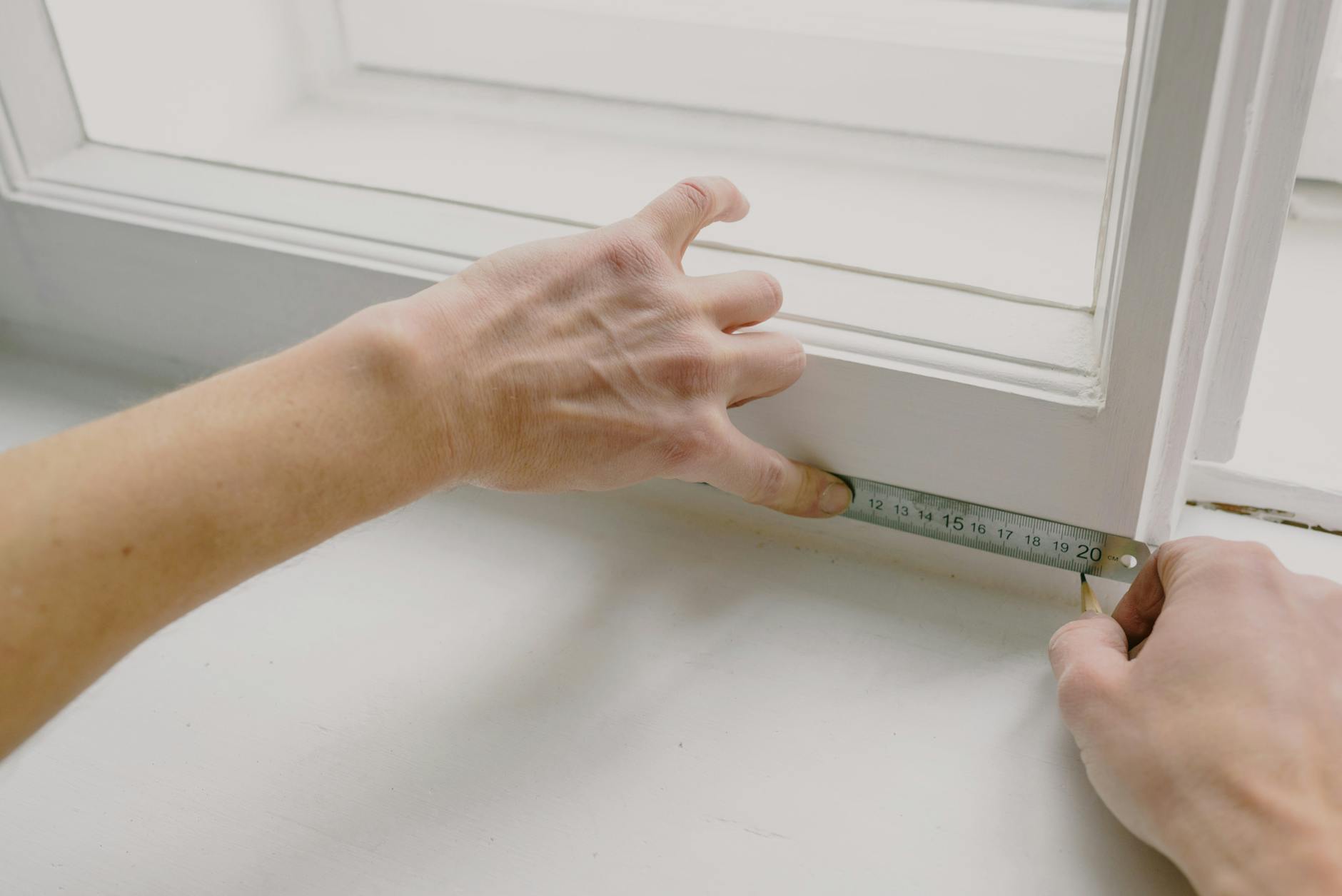
Even the best moisture-resistant blind will underperform if it’s measured or installed incorrectly. Laundry room windows present specific challenges — they’re often smaller than standard, sometimes oddly shaped, and frequently located near plumbing or appliances that limit how a mounting bracket can be positioned. Getting the fit right from the start is critical.
Inside Mount vs. Outside Mount: Which Is Right for Your Window?
The first measurement decision is whether your blind will mount inside the window recess (inside mount) or over the wall surrounding the window (outside mount). Inside mounts give a cleaner, more built-in look and are preferred when the window recess is at least 2.5 inches deep. Outside mounts are better when the recess is shallow, when you want to make a small window look larger, or when the window trim is decorative and you don’t want to cover it. In older Jackson-area homes built before 1980, window recesses are often shallower than modern standards — making outside mounts more common than you’d expect.
Why Professional Measuring Matters More Than You Think
A laundry room window that’s off by even 1/8 of an inch can mean a blind that won’t close fully — leaving a gap that lets in light and reduces privacy. Custom blinds are cut to exact specifications and cannot be returned once manufactured. Professional measuring by an experienced installer catches issues like out-of-square frames (common in homes that have settled), window trim that protrudes into the recess, and hardware conflicts with the window crank or lock mechanism. Blinds Galore provides free professional measuring as part of every in-home consultation — there’s no charge and no obligation to buy.
Maintenance Tips to Maximize Blind Lifespan in a Laundry Room
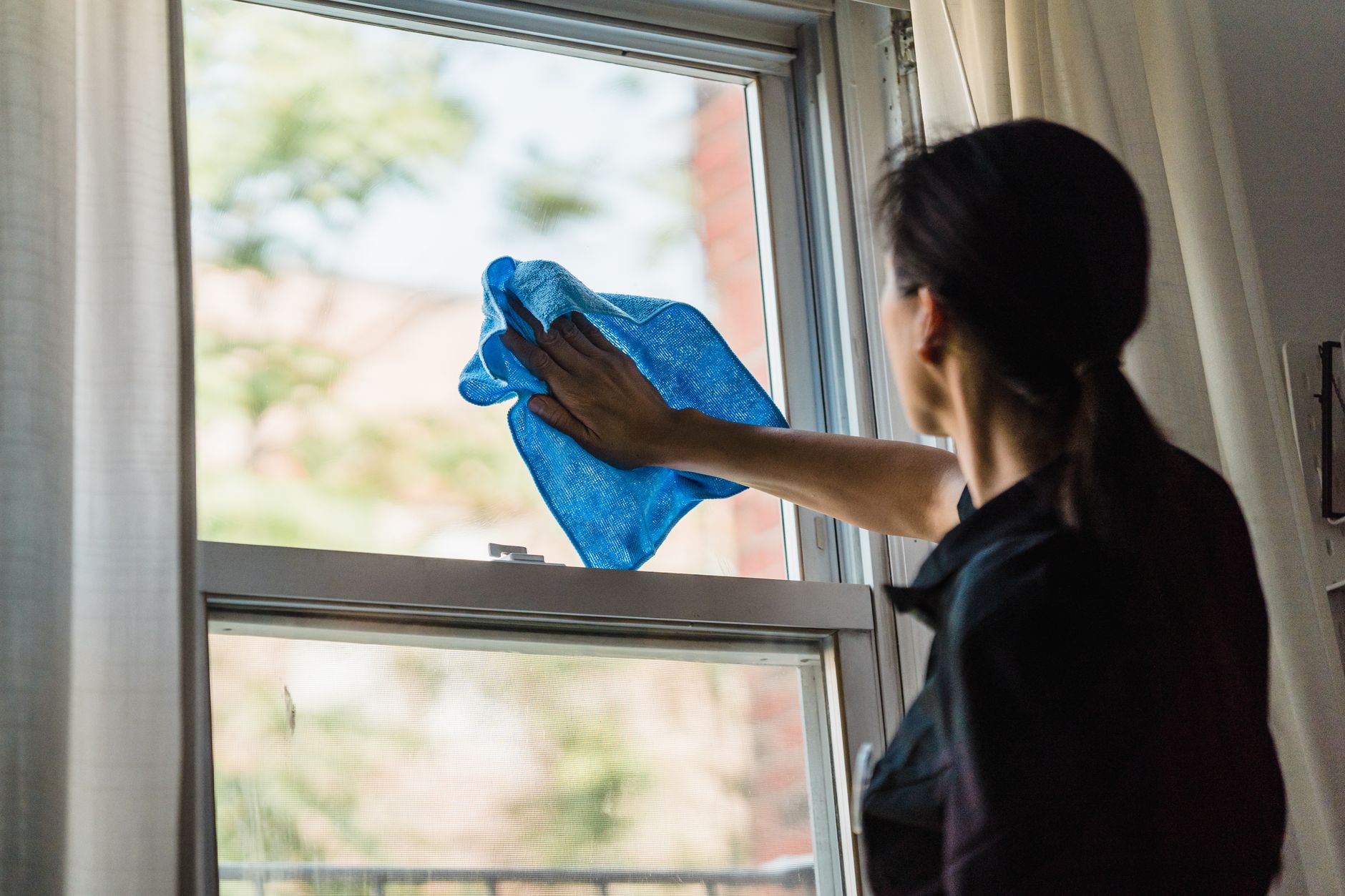
Even the most durable moisture-resistant blind benefits from consistent, simple maintenance. A few minutes of care each month can add years to the life of your window treatment — and keep it looking fresh in a room that takes a daily beating from steam, lint, and detergent residue.
Monthly Cleaning Routines by Material Type
Different materials require different cleaning approaches — and using the wrong method can shorten the life of even a high-quality blind.
- Faux wood blinds: Wipe slats with a dry microfiber cloth weekly. Monthly, use a barely damp cloth with mild dish soap. Never submerge in water — the cord mechanism can rust.
- Aluminum mini blinds: Dust weekly. Every 3 months, remove and wipe each slat with a damp cloth and mild cleaner. Dry immediately to prevent water spots.
- PVC roller shades: Wipe down the entire shade surface with a damp sponge monthly. Spot-clean detergent splashes immediately to prevent staining.
- Cellular shades: Use a hair dryer on the cool setting to blow dust out of the cells monthly. Spot-clean only with a barely damp cloth — never saturate.
- Composite shutters: Wipe louvres with a damp cloth quarterly. The polymer surface resists staining and requires minimal maintenance.
Ventilation: The Single Biggest Factor in Blind Longevity
No matter which blind material you choose, the single most effective thing you can do to extend its lifespan is improve laundry room ventilation. Run the exhaust fan during and for 15 minutes after every wash cycle. If your laundry room lacks a dedicated exhaust fan, crack the window slightly — but tilt the blind slats upward so steam doesn’t condense directly on them. Keeping ambient humidity below 60% during cycles dramatically reduces the stress on any window covering material, regardless of how moisture-resistant it is.
Energy Efficiency Bonus: How the Right Laundry Room Blind Cuts Utility Bills
Choosing the right laundry room blind isn’t just about moisture resistance — it’s also an opportunity to reduce your home’s energy consumption. In West Tennessee’s hot summers and occasionally cold winters, the right window treatment adds meaningful insulation value to a room that’s already working hard thermally.
Heat Gain and Cooling Costs in West Tennessee Summers
Jackson, TN averages 39 days per year above 90°F, and laundry rooms — often located on the south or west side of a home — can become the hottest room in the house during summer afternoons. A window without a proper covering can add 10–25°F to a room’s temperature through direct solar gain. When your dryer is simultaneously generating heat, that room becomes genuinely uncomfortable and forces your HVAC system to work harder. The right blind or shade can cut solar heat gain by 20–40%, meaningfully reducing cooling costs during peak summer months.
Which Options Offer the Best Energy Performance?
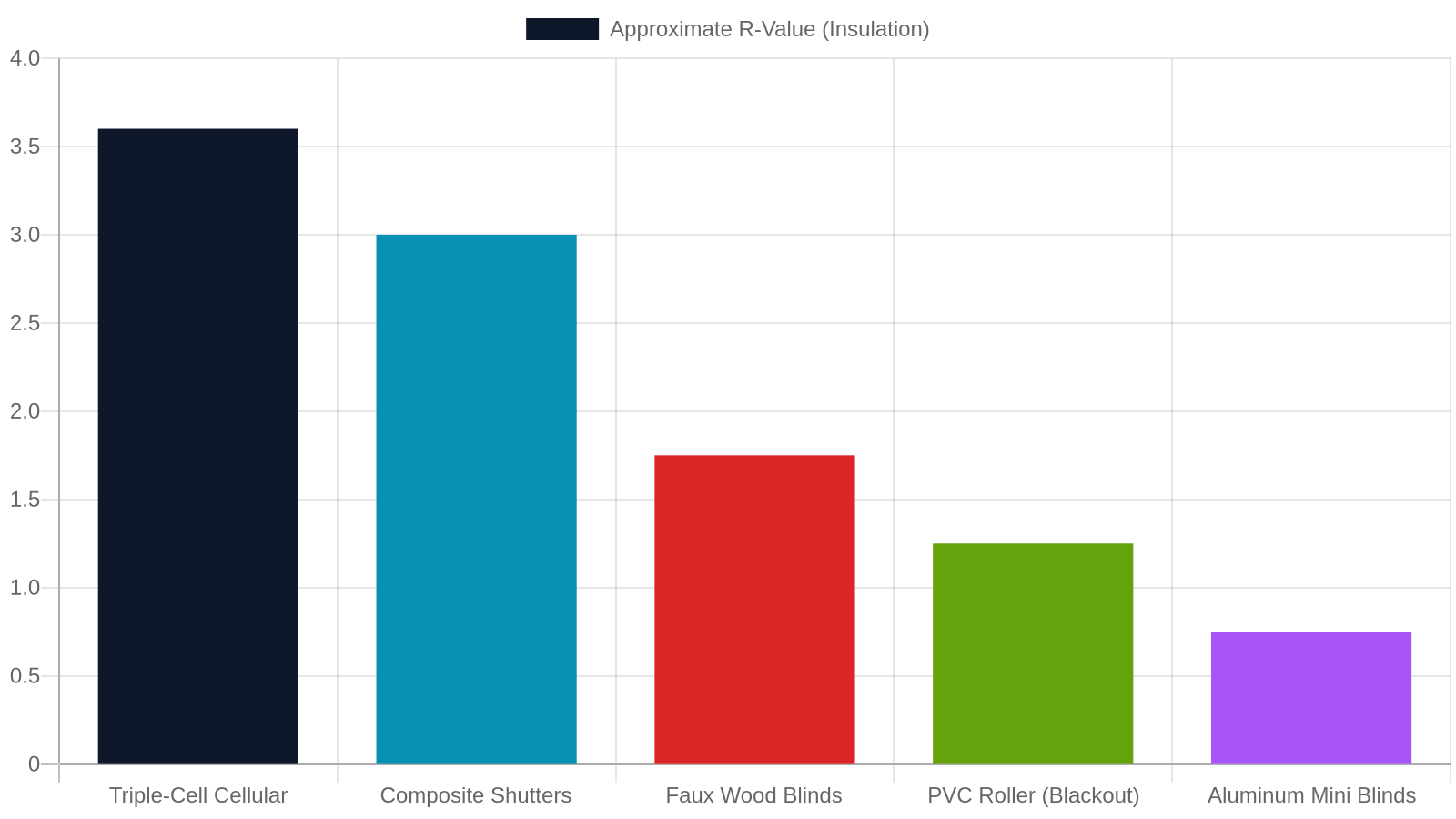
Ranked by energy performance in a laundry room context:
- Triple-cell moisture-resistant cellular shades — highest insulation value (R-value ~3.0–4.2)
- Composite plantation shutters — excellent when louvres are closed (R-value ~2.5–3.5)
- Faux wood blinds with close-fit slats — moderate insulation when fully closed (R-value ~1.5–2.0)
- PVC roller shades (blackout) — good solar blocking, lower insulation (R-value ~1.0–1.5)
- Aluminum mini blinds — minimal insulation, primarily useful for solar reflection (R-value ~0.5–1.0)
For homeowners in Lexington, Henderson, Milan, and the broader West Tennessee area, pairing a moisture-resistant cellular shade with a faux wood blind gives you both insulation and aesthetic flexibility in one layered treatment.
Ready to Transform Your Jackson, TN Laundry Room? Here's Your Next Move

You’ve done the research — now it’s time to make it real. The best laundry room blind for your Jackson, TN home depends on your specific window dimensions, your budget, your style preferences, and how much daily moisture your laundry room generates. The good news is you don’t have to figure that out alone.
What to Expect From a Free In-Home Consultation
Blinds Galore brings the showroom directly to your home — no driving to a store, no guessing how a sample will look against your wall color. During a free in-home consultation, a specialist will:
- Measure every window precisely, accounting for frame depth, trim, and hardware conflicts.
- Bring physical samples of faux wood, aluminum, cellular, PVC roller, and composite shutter options so you can see and feel the materials in your actual light.
- Recommend the right moisture-resistance rating for your specific laundry room’s ventilation situation.
- Provide a transparent, itemized quote with no hidden fees.
Every purchase is backed by Blinds Galore’s 100% satisfaction guarantee — if something isn’t right after installation, they make it right.
Serving Jackson, Lexington, Henderson, Milan, and All of West Tennessee
Whether you’re in Jackson proper, out in Lexington, over in Henderson, or up in Milan, Blinds Galore serves the entire West Tennessee region with the same neighborly service and expert craftsmanship. With over 18 years of experience fitting custom window treatments in West Tennessee homes, the team has seen every window size, shape, and laundry room configuration imaginable — and they know exactly which solution will hold up longest in your specific home.
Ready to get started? Visit Blinds Galore online to learn more about the full range of custom window treatments available, or call (731) 571-5179 today to schedule your free in-home consultation. You can also reach out through the contact page and a specialist will get back to you promptly. There’s no pressure, no obligation — just honest advice from your neighbors in West Tennessee.
Frequently Asked Questions
What are the best blinds for a laundry room with high humidity?
Faux wood blinds are the top recommendation for high-humidity laundry rooms because their PVC-composite core resists warping, mold, and cracking even when humidity spikes to 80–90%. Aluminum mini blinds and PVC roller shades are also excellent choices. Avoid real wood blinds and natural fabric shades, which absorb moisture and deteriorate quickly.
Can you put real wood blinds in a laundry room?
No — real wood blinds are not recommended for laundry rooms. Wood is hygroscopic and absorbs moisture from steam and humidity cycles, causing slats to warp, crack, and split within 12–24 months in a typical laundry room environment. Choose faux wood or aluminum instead.
How much do custom laundry room blinds cost in Jackson, TN?
Custom laundry room blinds in Jackson, TN typically range from $15–$40 per window for aluminum mini blinds, $35–$75 for faux wood blinds, $45–$120 for PVC roller or cellular shades, and $200–$400 for composite plantation shutters. Prices include professional measuring and installation when purchased through a local specialist like Blinds Galore.
Are cellular shades good for laundry rooms?
Moisture-resistant cellular shades can work well in laundry rooms, particularly for energy efficiency — they can reduce heat gain by up to 40%. However, you must specifically choose shades rated for humidity or made from polyester-based fabrics with antimicrobial coatings. Standard fabric cellular shades will develop mildew in a high-humidity laundry room.
How do I measure my laundry room window for custom blinds?
Measure the width at the top, middle, and bottom of the window opening, and use the narrowest measurement. Measure the height on the left, center, and right, using the longest measurement. For inside mounts, verify the recess is at least 2.5 inches deep. For the most accurate fit, a professional measuring service — like the free in-home consultation offered by Blinds Galore — is strongly recommended.
Do plantation shutters work in laundry rooms?
Yes — composite plantation shutters are an excellent laundry room choice. Unlike real wood shutters, composite shutters have a polymer shell over a metal core that is completely moisture-proof. They last 20–25 years, require minimal maintenance, and add significant aesthetic and resale value to a home. They are the most expensive option but offer the best long-term return on investment.
You might also like

How to Compare Blind Styles Using Product Videos Before Your Jackson TN Consultation
Quick answer: Before your free in-home consultation with Blinds Galore in Jackson, TN, watching product
7 Best Custom Blinds for Sunrooms in Jackson, TN: Light Control and UV Protection Guide
Quick answer: The best custom blinds for sunrooms in Jackson, TN balance strong UV protection with flexible

How to Install Custom Faux Wood Blinds in Your Jackson, TN Home: a 10-Step Guide
Quick answer: Installing custom faux wood blinds in a Jackson, TN home is a manageable DIY project for

How to Choose the Right Window Treatment Style Using Product Videos
Quick answer: Choosing the right window treatment — blinds, shades, or plantation shutters — comes
7 Best Custom Blinds for Laundry Rooms and Utility Spaces in Jackson, TN
Quick answer: The best custom blinds for laundry rooms and utility spaces in Jackson, TN are moisture-resistant

8 Best Custom Blinds for Kitchens with Large Windows in Jackson, TN
Quick answer: For kitchens with large windows in Jackson, TN, the best custom blinds balance moisture