


Insulated Window Shutters Guide for West Tennessee Homes
A lot of West Tennessee homeowners know this feeling. The living room looks fine, but by late afternoon it gets stuffy near the windows. Then winter comes, and that same spot feels chilly enough that people avoid the chair by the glass.
That comfort swing usually shows up on the power bill too. Windows are one of the weakest parts of the building shell, so when a house feels drafty in January and overheated in July, many homeowners start looking harder at what covers the glass, not just the HVAC system.
Insulated window shutters come up often in that search because they do more than decorate a room. They can add a tighter barrier at the window, cut outside noise, and make indoor temperatures feel steadier from one side of the room to the other. If you're still sorting through the options, this guide on how to choose window treatments is also useful for comparing coverings by room, function, and style.
This article walks through insulated window shutters in plain English. You'll see how they work, what materials matter, how plantation and solid styles differ, and what to ask for if you want custom install and 100% satisfaction from the finished result. If you'd rather talk it through with someone local, you can also call (731) 571-5179.
Introduction to insulated window shutters
A Jackson or Memphis homeowner usually notices the problem before seeing it on the bill. The sofa near the window feels warm by late afternoon in August, then that same area feels cold on a January morning. The HVAC system is still running, but the room does not feel even.
Insulated window shutters address that problem by adding a fitted barrier over the glass. A good way to picture it is storm windows on the room side, combined with the light control of interior shutters. The goal is simple. Slow heat flow, reduce air movement around the window, and make the temperature near the glass feel closer to the rest of the room.
That matters in West Tennessee because homeowners deal with both long cooling seasons and real winter cold snaps. Generic national advice often treats shutters as a style choice first. In this region, they are also part of the payback calculation. TVA-served homes often spend more time paying to keep heat out than homeowners in milder summer climates, so any window treatment that improves the weak spots in the building shell deserves a closer look.
What makes a shutter insulated
An insulated shutter differs from a decorative shutter in the same way an insulated cooler differs from a plastic bin. Both cover what's inside. Only one slows heat transfer well.
The features that matter are usually straightforward:
- A square, stable frame that fits the opening closely
- Panels or louvers that close with minimal gaps
- Perimeter sealing to reduce edge air leakage
- Dense or insulating material inside the panel, not just empty space
- A design that limits heat passing through the shutter parts themselves
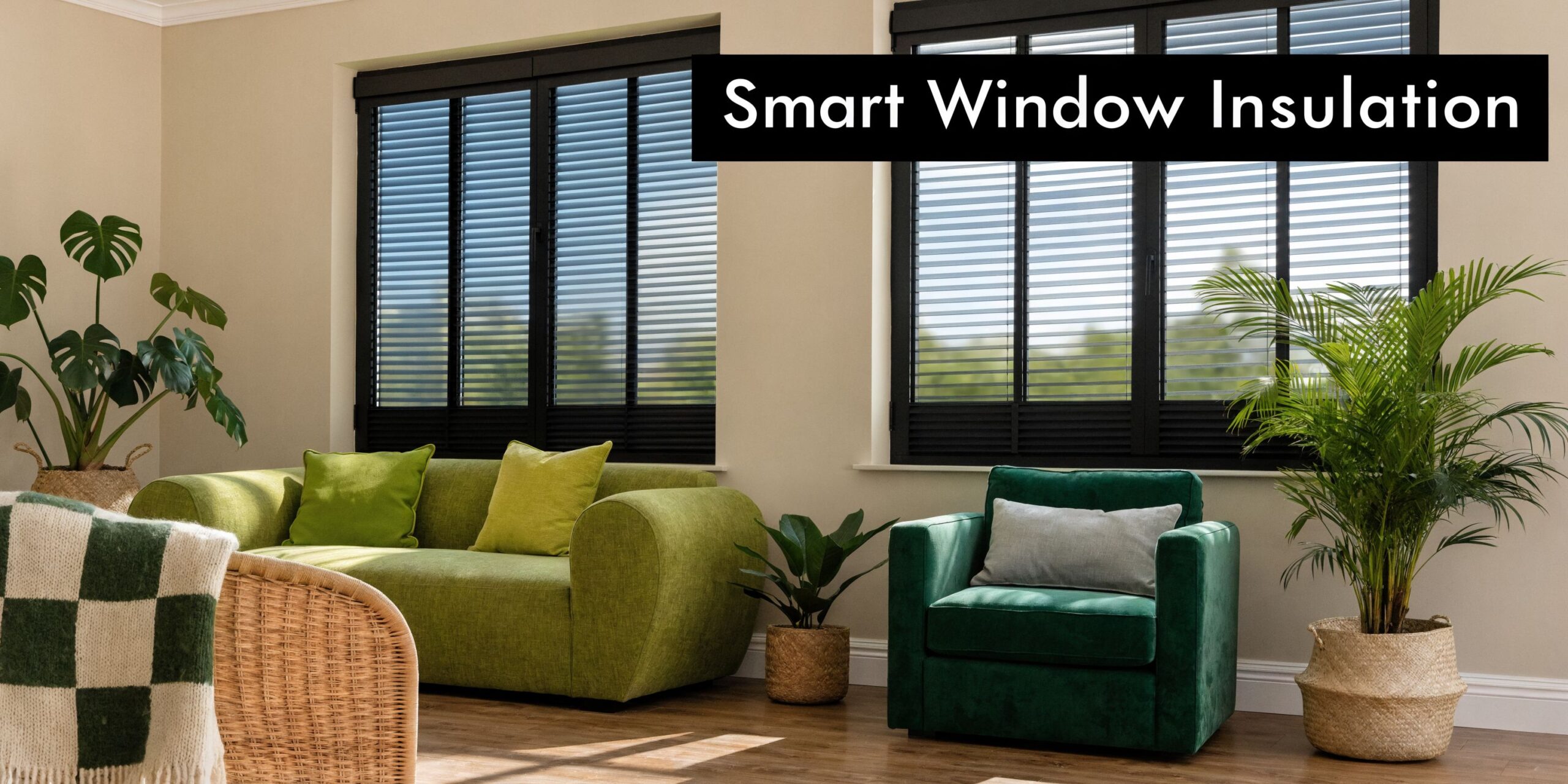
A lot of confusion starts here. Homeowners see "shutter" and assume every version helps with insulation in the same way. It does not. A loose, hollow panel may soften light and improve privacy, but it will not do much to reduce the heat gain that shows up on a West Tennessee summer power bill.
R-value and U-value, in plain English
These two terms sound more technical than they need to be.
- R-value measures resistance to heat flow. Higher means the material slows heat better.
- U-value measures how readily heat passes through an assembly. Lower means less heat gets through.
A simple memory trick helps. R resists. U lets heat through.
For homeowners, the practical takeaway is more useful than the formula. A shutter with better insulating material and tighter edge contact usually matters more than surface appearance alone. If you are still comparing shutters with shades, blinds, and other coverings, this guide on choosing window treatments by room and function can help narrow the options.
Why comfort improves even before the bill changes
People often expect insulation upgrades to show up only as savings. The first difference is usually comfort.
When the inner surface near a window stays closer to room temperature, your body feels less radiant heat in summer and less radiant chill in winter. That is why the chair by the window can start feeling usable again. In many homes, the room also feels quieter because an added interior barrier helps interrupt outdoor noise.
For West Tennessee homeowners, that comfort piece matters to ROI. Payback is not only about kilowatt-hours. It is also about whether a bonus room, sun-facing living room, or front bedroom becomes comfortable enough to use throughout July, August, and the colder weeks of January and February.
Shutter construction and thermal performance
A shutter’s thermal performance starts with its build, much like a cooler depends on more than the plastic you see on the outside. The outer finish affects appearance. The parts you do not see determine how much heat the shutter slows, how well it seals against the window opening, and whether that performance still holds after years of opening, closing, and West Tennessee humidity swings.
What sits inside the shutter
Many insulated shutters use a rigid outer shell paired with an insulating core. The goal is simple. Limit heat flow through the panel and reduce the small air currents that can form inside hollow sections.
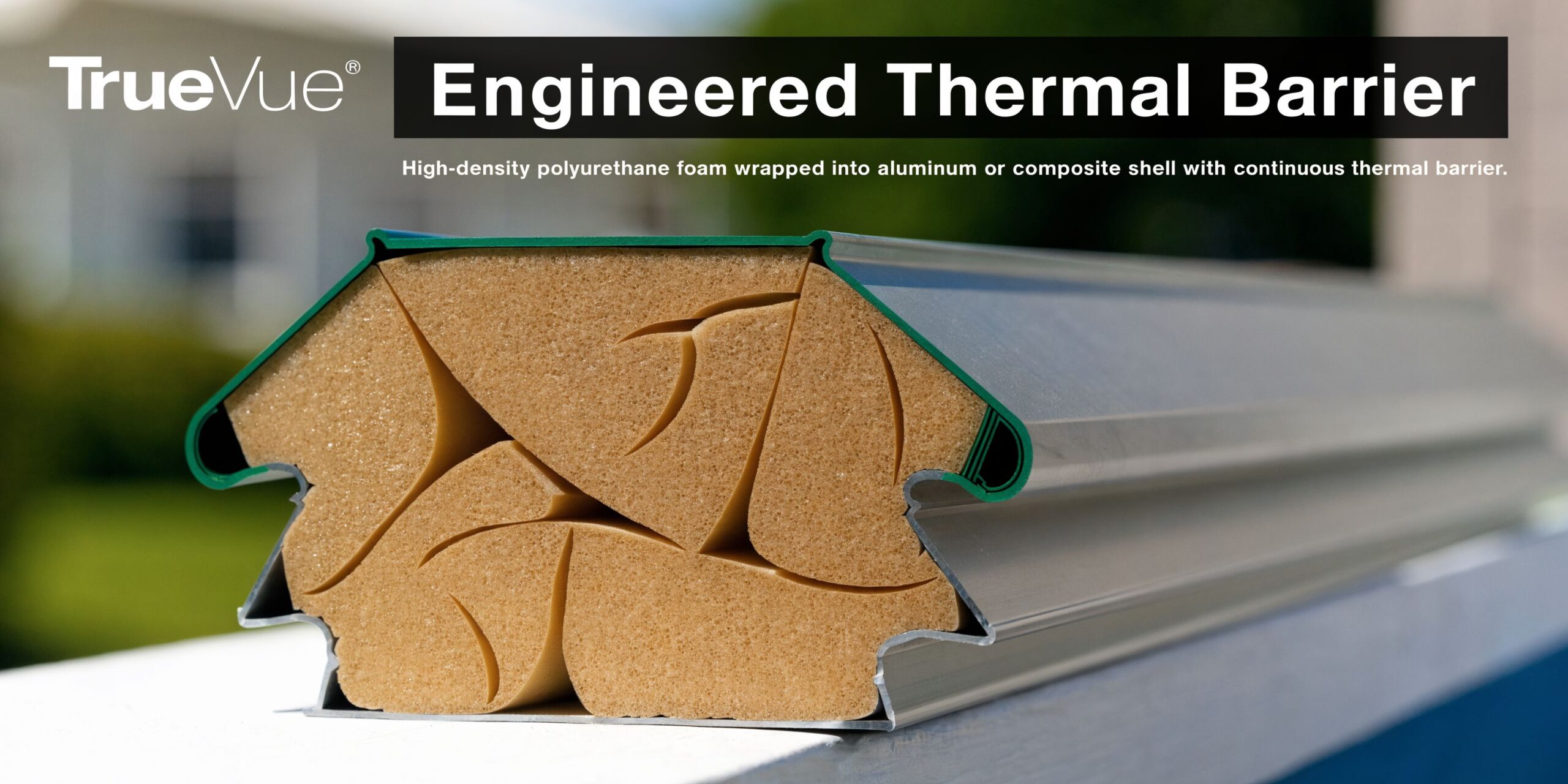
Hollow panels often look substantial in a showroom but insulate less effectively in real use. A foam-filled panel usually does a better job because it interrupts the path heat wants to take from hot glass to cooler indoor air, or the reverse in winter. In practical terms, the panel works more like a filled thermos wall than an empty can.
Material choice also affects long-term shape. A panel that twists, bows, or loosens at the joints can create tiny gaps over time. Those gaps matter in West Tennessee because shutters often cycle between strong summer sun, air-conditioned interiors, and damp shoulder-season weather. Construction that stays square tends to keep its insulating value longer.
Why thermal bridging matters
Heat does not move evenly through every part of a shutter. It follows the easiest route.
That is the idea behind thermal bridging.
If one section of the assembly conducts heat faster than the rest, that section becomes the shortcut. On a shutter, the usual weak points are not always the center panel. More often, they are the frame, the rail joints, or the perimeter where the shutter meets the opening.
Watch for these common trouble spots:
- Frame members with little insulating value that pass heat more readily than the panel
- Loose panel edges that let room air mix with the air near the glass
- Gaps at the top or bottom rails that break the seal line
- Out-of-square installation that keeps the shutter from closing evenly
Installation errors create more performance loss than many homeowners expect. A shutter can use good materials and still leak comfort if the frame is slightly misaligned. That same building-science principle shows up elsewhere in the house. This guide on how to insulate a garage roof for better comfort explains the same heat-flow problem in another part of the building shell.
The frame does real thermal work
Homeowners often focus on the shutter panel because it is the part they touch every day. The frame matters just as much.
A well-fitted frame helps create a controlled air pocket between the shutter and the glass. That trapped layer behaves a bit like the still air inside a double-pane window. If the frame leaves uneven gaps, the pocket becomes less stable, and the insulating effect drops.
A properly installed frame has three jobs:
| Part | What it does | Why it matters |
|---|---|---|
| Frame | Holds the assembly square | Keeps panels closing evenly |
| Seal | Reduces air leakage at edges | Helps maintain a more stable air pocket |
| Anchoring | Keeps alignment over time | Prevents small gaps from developing |
For homeowners comparing material options before they get into panel cores and edge seals, this guide to vinyl shutters vs wood shutter materials helps separate appearance choices from performance questions.
A short visual helps here:
What this means for West Tennessee homeowners
Construction details affect return on investment because our local climate pushes windows hard in both directions. Long cooling seasons around Jackson, Bartlett, and the wider West Tennessee area put a premium on blocking summer solar heat, while winter cold snaps still expose weak spots around glass and frames. TVA electric rates are moderate by national standards, so the best payback usually comes from shutters that improve comfort and reduce HVAC runtime consistently, not from products that sound technical but leave air gaps at the edges.
That is why build quality deserves a closer look than color, louver size, or showroom finish.
Questions worth asking before you buy
Use these questions to get beyond the label:
- What is inside the panel? Hollow, composite, and foam-filled panels behave differently.
- How is the perimeter sealed? Edge contact affects real-world performance as much as the core.
- Will the frame be custom fit to my opening? Narrow, even margins usually perform better than wide or uneven ones.
- How does the material handle seasonal expansion and humidity? Stable construction helps preserve the seal over time.
A shutter insulates as a system. The panel, frame, seal, and installation all have to work together.
Comparing plantation and solid shutters
Most homeowners narrow the choice to two broad looks. Plantation shutters use louvers. Solid shutters use uninterrupted panels.
Both can help with comfort. They just do it in different ways, and they change how the room functions day to day.
How plantation shutters behave
Plantation shutters are often the first style that comes to mind. They have adjustable louvers, a defined frame, and a look that works in a lot of West Tennessee homes, from newer subdivisions to older brick houses.
Their biggest strength is flexibility.
You can:
- tilt the louvers for privacy,
- let in daylight without fully opening the panel,
- close everything up when glare or heat becomes a problem.
That makes plantation shutters a strong fit for living rooms, kitchens, front-facing rooms, and spaces where you don't want to choose between daylight and privacy.
A wood plantation shutter can also offer meaningful insulation. Market analysis cited earlier in this article reports thermal resistance levels for hardwood shutters in the range that many homeowners find substantial for an interior treatment, but the key lifestyle advantage remains control. You get shading and visibility options through the day instead of a single all-or-nothing position.
How solid shutters behave
Solid shutters are simpler in operation and more absolute in effect.
When closed, they create continuous coverage across the window. That tends to appeal to homeowners who want a cleaner panel look, stronger darkening, or a style that suits traditional and historic interiors. They can also feel appropriate in bedrooms, media rooms, and spaces where privacy is the first priority.
The tradeoff is obvious. You don't get louver-level light tuning. It's more open or closed.
If you like to change light levels throughout the day, plantation shutters usually feel easier to live with. If you want stronger closure and a plainer face, solid shutters often make more sense.
Side by side decision points
| Consideration | Plantation shutters | Solid shutters |
|---|---|---|
| Light control | Adjustable through louvers | More binary, open or closed |
| View out | Partial view possible with louvers open | No view when closed |
| Style range | Works with many interiors | Strong in traditional or minimalist settings |
| Cleaning | More slats to dust | Simpler flat surfaces |
| Privacy control | Fine-tuned | Full privacy when shut |
Which rooms suit each type
Plantation shutters usually fit best where daily adjustments matter. Think family rooms, breakfast nooks, home offices, and street-facing windows.
Solid shutters often make more sense in spaces where mood and enclosure matter more than filtered daylight. Bedrooms are the obvious example, but they can also work well in older homes where paneled joinery already appears elsewhere in the trim and millwork.
One more point matters in larger windows. Plantation shutters can keep broad expanses from feeling visually heavy because the louvers break up the panel. Solid shutters can look beautiful on the right opening, but on very wide windows they need careful design so the room doesn't feel closed in.
There's no universal winner here. The right choice depends on how you use the room when the shutters are shut.
Energy savings and comfort benefits
A West Tennessee homeowner usually notices the problem before seeing it on a utility bill. In July, the sofa by the front window feels hot by midafternoon. In January, that same spot can feel chilly even with the heat running. Insulated window shutters help because they slow the heat exchange at the glass, which is often the weakest part of the room's outer shell.
One market analysis, summarizing widely cited energy-efficiency figures, notes that uncovered windows account for about 30% of a home's heating energy loss. The same analysis reports that plantation shutters can reduce heat loss by 51% compared with untreated windows, composite versions can reach up to 60%, and some single-glazed windows see heat-loss reduction up to 64% when shutters create a tighter air barrier. It also compares approximate thermal values, listing bare glass at R-0.75 to R-1, hardwood shutters at R-3 to R-4, premium Polywood® plantation shutters above R-6, cellular shades at R-4.5, and roller blinds at R-1.3 to R-1.8 (market analysis summary).
Those numbers are useful, but comfort is what homeowners feel.
A shutter works like a fitted lid on a drafty opening. The panel adds resistance to heat flow, and the air pocket between shutter and glass acts like a buffer zone. If the shutter fits tightly, the room is less exposed to the cold or heat sitting on the other side of the window.
That usually shows up in a few practical ways:
- Less radiant chill in winter when sitting or sleeping near the window
- Lower solar heat buildup on west- and south-facing rooms during summer afternoons
- Fewer noticeable drafts when the panels close snugly against the frame
- More even temperatures across the room, instead of one hot corner and one cool corner
West Tennessee makes this especially relevant because homeowners pay for both cooling and heating. Summer is long, humid, and bright. Winter is shorter, but cold snaps still expose weak windows fast. Under TVA-served electric rates, savings do not have to be dramatic to matter. If shutters reduce heat gain in August and heat loss on cold mornings in January, they can trim HVAC runtime across both seasons. That year-round benefit often gives insulated shutters a better return here than generic national advice suggests, especially in homes with large west-facing windows, older double-hungs, or bedrooms that get strong late-day sun.
The key is to think about return in two layers. The first layer is energy cost. The second is room usability. A breakfast nook that stays cooler in the afternoon, or a bedroom that no longer feels cold beside the glass, delivers value even before the next power bill arrives.
If you're comparing window upgrades as a whole system, this guide to the best windows for energy efficiency can help you sort out what the glass and frame contribute versus what an interior shutter can improve.
Precise dollar savings still depend on the house. Window size, orientation, glass type, air leakage, thermostat settings, and how often the shutters stay closed all affect the outcome. But the chain of cause and effect is simple. Less heat moves through the window. The HVAC system runs less often or for shorter cycles. Indoor temperatures swing less. Homeowners feel less pressure to push the thermostat lower in summer or higher in winter.
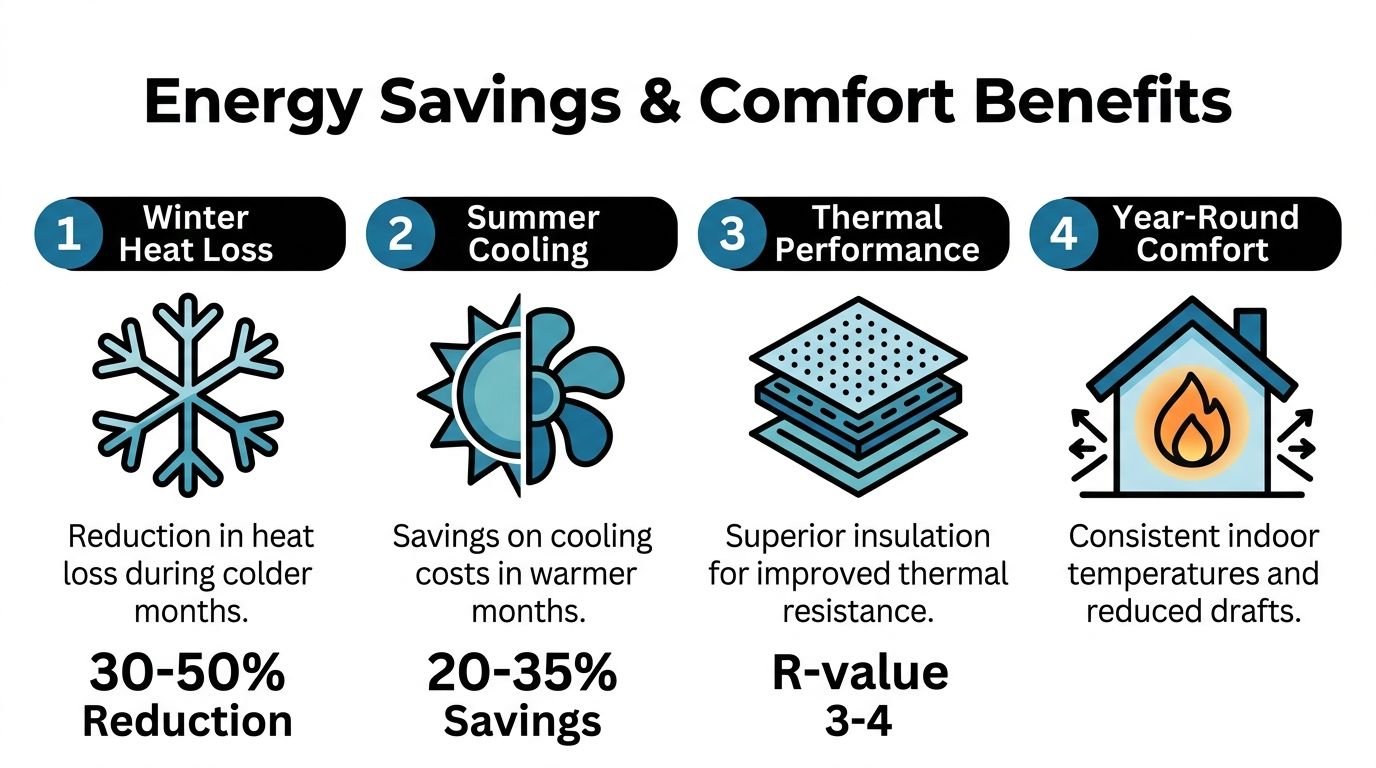
For homeowners weighing shutters against other insulating treatments, this comparison of the best window coverings for insulation gives useful context. It shows where shutters fit, and where shades or drapery may make more sense depending on the window and the room.
Customization installation and ongoing support
A shutter can be built well and still disappoint if it isn't measured and installed correctly. That's especially true with insulated window shutters, because their performance depends on fit.
A gap at the edge can undo much of the benefit homeowners expected from the product.
What happens during the consultation
The first useful step is an in-home visit where someone looks at the actual windows, not a rough estimate over the phone.
That visit should cover a few things:
- Precise measuring of width, height, depth, and any trim or sill constraints
- Material review so you can compare wood, composite, and insulated constructions
- Style matching based on how you use the room, not just what photographs well
- Mount planning for inside mount, outside mount, and clearance issues
Many homeowners realize their windows aren't as standard as they thought during the measurement and planning stage. Small variations in squareness, casing depth, and hardware clearance affect how tightly shutters can close.

Why installation quality affects performance
Thermal performance doesn't come only from the shutter panel. It also comes from the whole assembly at the opening.
Market analysis notes that integrating insulated shutters with window assemblies can double or triple overall thermal resistance, reaching up to 1.76 m²K/W compared with double-glazed units alone in the cited setups (thermal resistance analysis).
That kind of improvement only makes sense if the installer treats the shutter as part of the window assembly rather than room décor. In practical terms, installers need to check:
| Installation detail | Why it matters |
|---|---|
| Frame alignment | Misalignment creates uneven sealing |
| Panel swing and closure | Poor closure allows leakage at corners |
| Perimeter contact | Tight contact supports the air barrier effect |
| Hardware adjustment | Keeps the shutter operating cleanly over time |
What custom install should include
A proper custom install usually means the homeowner isn't left guessing about whether the product is square, level, or operating correctly.
The process should include:
- a final measurement confirmation,
- product ordering to the measured opening,
- professional mounting,
- hardware adjustment,
- and a walkthrough after installation.
This is also the most natural point to ask about service after the job. Shutters are long-term products. Homeowners should know who to call if a panel needs adjustment later or if settling changes how a frame closes.
One local option many homeowners consider is Blinds Galore, which offers in-home consultation, professional measuring, custom install, and a 100% satisfaction approach for window covering projects in West Tennessee. The important part is not the name on the invoice. It's whether the provider measures carefully, installs accurately, and stands behind the fit.
A well-installed shutter should look clean on day one and close cleanly a year later. Those are not the same thing unless the measuring and installation were done carefully.
West Tennessee homeowner considerations
West Tennessee is a good test case for insulated window shutters because the climate asks the house to do opposite jobs in different seasons.
Homes in this region deal with average summer highs of 92°F and winter lows of 30°F, according to the planning notes and verified data provided for this topic. That means window performance matters in both July and January. A treatment that only helps with glare won't solve the whole problem.
Where the local value comes from
In this climate, the strongest value case usually comes from rooms that already show symptoms:
- West-facing rooms that overheat in the afternoon
- Older windows that feel cold on winter mornings
- Street-facing bedrooms where both privacy and noise matter
- Large front windows that make the HVAC system work harder
Those rooms tend to give the clearest comfort payoff because the weakness is obvious before any upgrade happens.
The same verified data also notes a 25% increase in specifying insulated shutters for new homes in the Southeast, tied to utility costs rising 15% year over year, based on the cited builder survey source (survey reference). Even though that source discusses the Southeast more broadly, it lines up with what many homeowners in places like Jackson, Dyersburg, and Milan are already asking for. Better comfort from windows that don't swing so wildly with the weather.
A careful view of ROI
A lot of articles overpromise on this topic. They jump from lab performance to guaranteed bill savings and exact payback. That isn't responsible without your home's actual measurements and energy use.
A better way to estimate return is to look at three layers:
Comfort return
If a room becomes usable year-round, that's value even before utility savings are counted.Operational return
If the HVAC system fights the window area less, the home may use less heating and cooling energy over time.Property return
Custom shutters can also change how permanent and finished a room feels, which matters to many homeowners even if they aren't selling.
Questions worth asking locally
When you compare options in West Tennessee, ask for answers tied to your home:
- Which windows are causing the most discomfort now?
- Are my existing windows single-pane, older double-pane, or newer units?
- Will the shutter material hold up in humid interior conditions?
- How tight will the final installed fit be at the perimeter?
A good in-home review can help identify where shutters will have the clearest effect. Sometimes the smartest move isn't every window at once. It's solving the rooms that bother you most first.
Conclusion and next steps
Insulated window shutters do more than finish a room. They help control heat flow, soften outside noise, and make the space near your windows feel more stable through the year.
The biggest takeaways are straightforward. Construction matters. Fit matters. Installation matters. Plantation and solid shutters solve slightly different problems, and the right choice depends on how you use the room, not just which style you like in a photo.
For West Tennessee homes, that matters because the climate pushes windows in both directions. Summer heat and winter chill both expose weak glass areas fast. A well-built, well-fitted shutter can help turn those problem spots into comfortable parts of the home again.
If you want help comparing materials, planning a custom install, or getting a clearer sense of what will work in your house, call (731) 571-5179. Ask about in-home measuring, style options, and the 100% satisfaction approach so you know exactly what to expect before anything is ordered.
If you're ready to explore insulated window shutters for your home, contact Blinds Galore to schedule an in-home consultation, review custom install options, and get help choosing a solution built around comfort, fit, and long-term satisfaction.
You might also like
What Is Roller Shades: Types, Fabrics & Installation
Morning sun can turn a comfortable bedroom into a bright alarm clock. At night, the same window can feel

Best Blinds for Energy Efficiency: A Tennessee Guide
When your living room feels too hot by midafternoon in July, or one chair by the window stays chilly

Best Blinds for Rental Property: A Landlord’s Guide
You know the turnover drill. A tenant moves out, you unlock the door, and the first thing you notice
Get a Perfect Fit: How to Measure for Plantation Shutters
You’re probably staring at a window right now, trying to decide whether plantation shutters will look

Affordable Blinds Near Me | Get a Free Quote Today
The search starts the same way. You notice the late afternoon glare in the living room, the bedroom feels

Automatic Hurricane Shutters: West TN Buyer’s Guide
A lot of West Tennessee homeowners know this feeling. The sky turns greenish, the weather app starts