

Automatic Hurricane Shutters: West TN Buyer’s Guide
A lot of West Tennessee homeowners know this feeling. The sky turns greenish, the weather app starts buzzing, and you are trying to decide what to do first. Move the patio furniture. Check the flashlight batteries. Call the kids inside. Then comes the question nobody enjoys: how are you going to protect the windows if the storm gets worse?
For years, people relied on plywood, loose storm panels, or a lot of hope. That approach can still work in some situations, but it often means heavy lifting, a last-minute scramble, and the kind of stress that makes a storm feel even bigger.
Automatic hurricane shutters change that experience. Instead of wrestling with boards or trying to secure openings while the wind is picking up, you can protect the house with a switch, a remote, or an automated system that closes on its own. For homeowners in Jackson and across West Tennessee, that matters not only for hurricane remnants, but also for severe thunderstorms, straight-line winds, and tornado conditions that can hit hard and fast.
This guide is written in plain English for people who want to understand what they are buying before they spend money. It covers how automatic hurricane shutters work, what types are available, how installation affects performance, what maintenance looks like over time, and how to think about cost without getting lost in sales talk.
If you want a system that is custom install ready, built for daily convenience, and supported by a team that stands behind 100% satisfaction, help is available at (731) 571-5179.
The End of Storm-Prep Panic An Introduction
A neighbor in West Tennessee might not think about shutters every day. Homeowners often think about them when the forecast turns serious.
You see the warning on TV. Wind is expected overnight. There may be hail. Maybe the storm line is rotating. The house suddenly feels more exposed than it did an hour earlier. If you have ever tried to move heavy panels from the garage in that moment, you know the problem. Protection that is hard to deploy often gets delayed.
That is why automatic hurricane shutters appeal to so many homeowners. They reduce the two biggest problems with storm prep: time pressure and physical effort.
What peace of mind looks like in real life
With a manual setup, a homeowner has to find the materials, carry them outside, line them up correctly, and secure each opening. That can be exhausting in dry daylight. It gets worse in rain, darkness, or rising wind.
With an automatic system, the routine is much calmer:
- You press a button: The shutters lower into place over windows and doors.
- You protect multiple openings quickly: This matters on larger homes or homes with hard-to-reach windows.
- You stay inside when weather turns rough: That alone is a major benefit for many families.
Practical takeaway: The best storm protection is the protection you can use quickly, correctly, and without needing perfect timing.
Why this matters in West Tennessee
We are not on the Gulf Coast, but that does not mean windows are safe from violent weather. West Tennessee deals with strong thunderstorm lines, tornado threats, and the occasional tropical system that weakens inland but brings damaging wind.
That local reality changes the conversation. Automatic hurricane shutters are not just a coastal product. They can also make sense here because they help protect the most vulnerable parts of a home when severe weather hits with little warning.
Some homeowners first look at shutters for storm defense and later realize they also like the added privacy, shade control, and security. Others start with the idea of convenience. They do not want to drag out plywood ever again.
Both reasons are valid. What matters most is that the system gives you a more reliable, less stressful way to prepare.
How Automatic Hurricane Shutters Work
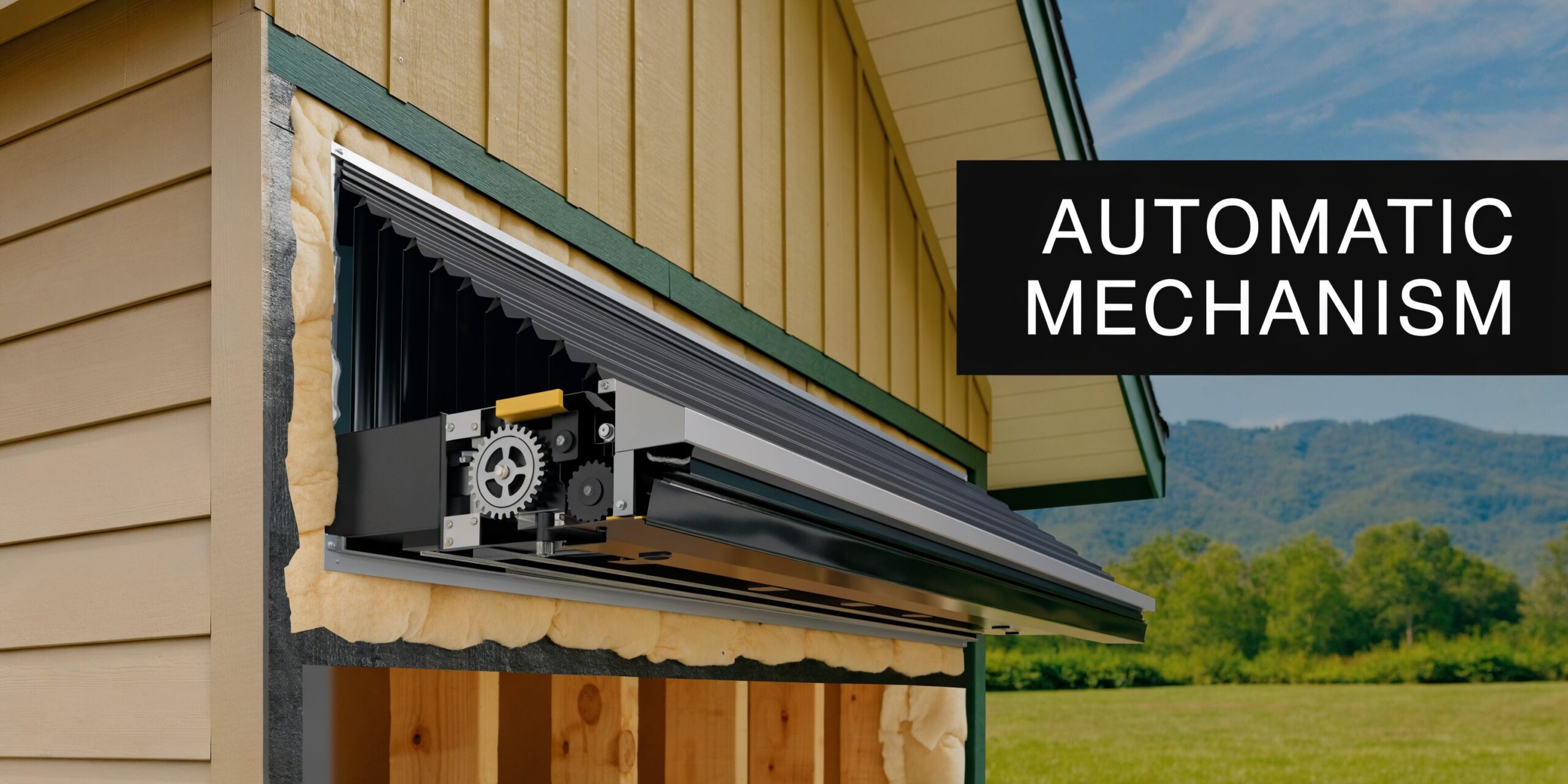
Automatic hurricane shutters work through a simple chain of parts that all have to do their job at the right moment. You give the command. The motor turns. The shutter curtain travels down guided by side tracks, then covers the glass and locks into its closed position.
That sounds straightforward, but reliability is a key factor here, especially in West Tennessee. Our storms often arrive fast, with straight-line wind, hail, power flickers, and tornado warnings that do not give you much time to fuss with equipment. A shutter system only helps if it closes smoothly after sitting idle for weeks or months.
The main parts you should know
You do not need engineering drawings. You do need to know which pieces affect day-to-day dependability.
- Motor: Powers the shutter up and down.
- Curtain or slats: Form the barrier over the window or door.
- Guide tracks: Keep the curtain aligned so it does not bind or wander.
- Housing box: Holds the rolled-up curtain above the opening.
- Controls: Usually a wall switch, remote, app, or smart-home connection.
A good way to picture it is a garage door system shrunk down for your windows. If the tracks are off, the motor strains. If the controls fail, the shutter may be useless when the sky turns ugly. If the housing allows debris or moisture to build up, small problems can turn into service calls later.
What makes a shutter automatic
“Automatic” means the shutter can deploy without you going outside to lift panels, set bolts, or fasten hardware by hand. You press a switch, tap a remote, or use an app, and the system does the rest.
Power backup matters just as much as the motor itself. Storms in West Tennessee bring outages at the exact time you want protection in place. Some systems include battery backup, manual override, or other fallback options so the shutters can still close if utility power drops. That is one reason homeowners often start by comparing the details of motorized roller hurricane shutters instead of stopping at appearance alone.
How the closing sequence works in real life
Say a severe thunderstorm warning hits while you are getting kids settled for the evening. You do not want to drag out ladders or step onto a wet patio. You hit the control, the shutters lower one by one, and the tracks keep each curtain traveling in a straight line until the opening is covered.
That speed is helpful, but consistency is what gives people peace of mind. A shutter should close today, next season, and after a long stretch of normal weather. In non-coastal areas, homeowners sometimes assume maintenance is less important because there is no salt air. Dirt, leaf debris, wasp nests, pollen, moisture, and occasional ice can still interfere with moving parts here.
Neighbor-to-neighbor advice: Ask how the system works during a power outage, how it is tested, and what parts typically need service after a few storm seasons. Those answers tell you more than a glossy brochure.
Exploring the Types and Materials of Automated Shutters
Not all automatic hurricane shutters look or function the same. The best choice depends on your openings, your budget, and how you plan to use them outside storm season.
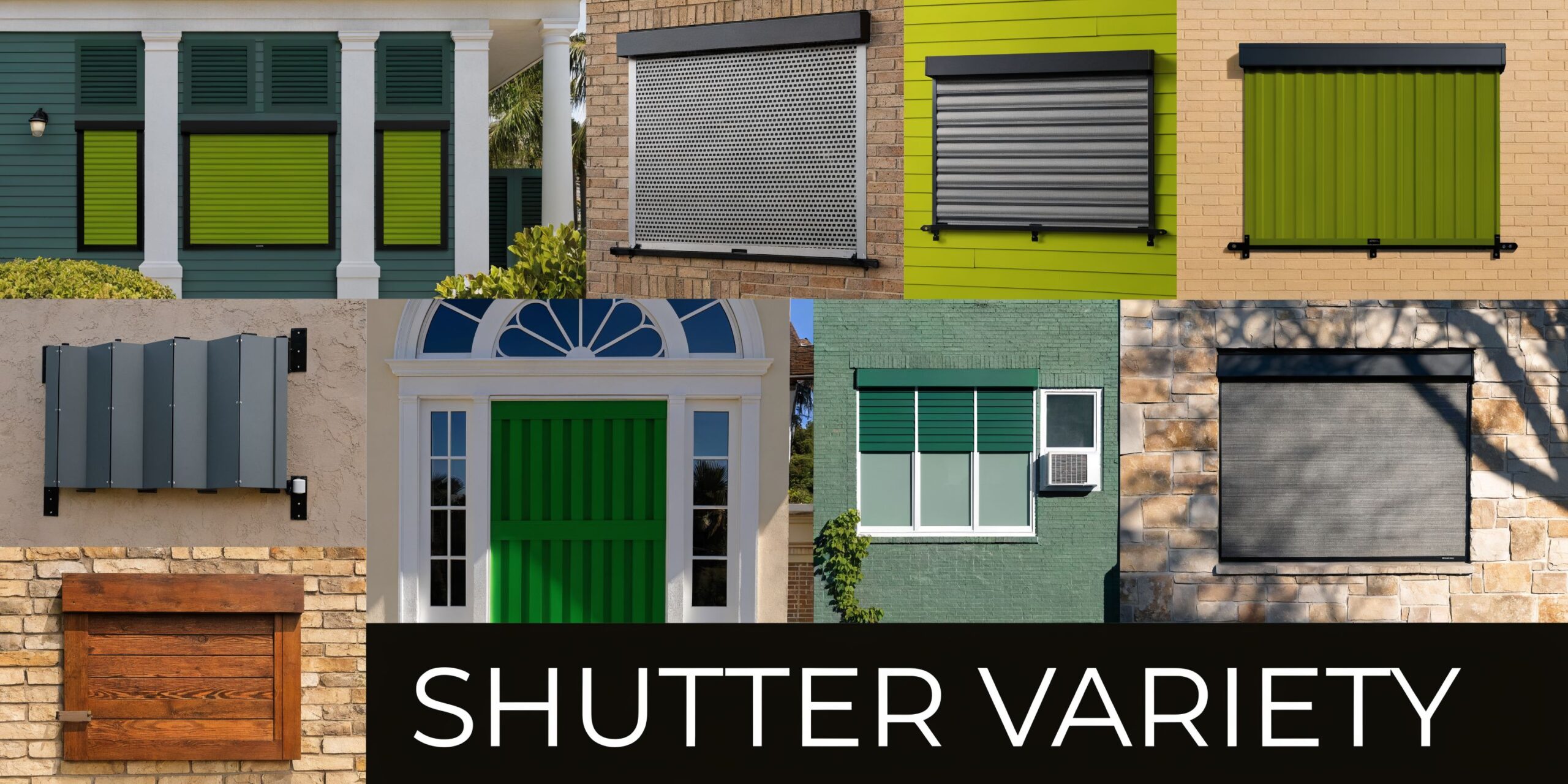
The two styles homeowners ask about most often are roll-down shutters and accordion shutters. The materials come down to aluminum and, in some designs, polycarbonate.
Roll-down shutters
Roll-down shutters are the style many people picture first. The curtain rolls into a housing above the opening and drops vertically when activated.
They became a major step forward from older methods. According to this history of hurricane shutters, roll-down hurricane shutters were introduced in the 1980s and became a preferred option because of convenience and durability. That same source notes they can be engineered to withstand winds up to 200 mph.
For homeowners, the practical benefits are easy to understand:
- Clean appearance: When open, much of the system stays tucked away.
- Fast deployment: Good for storm alerts that change quickly.
- Year-round usefulness: They can help with shade, privacy, and security.
If you want a deeper look at this style, this guide on roller hurricane shutters is a useful next read.
Accordion shutters
Accordion shutters slide horizontally along tracks and stack at the sides when open. They are often made from aluminum or polycarbonate.
Their strengths are different from roll-downs:
- They stay attached to the home: No hauling panels from storage.
- They work well on wide openings: Good for porches, large windows, or patio spans.
- They offer visible readiness: Some homeowners like seeing the system in place year-round.
The tradeoff is appearance. Some people do not mind the side stacks. Others prefer the cleaner look of a roll-down housing.
Aluminum and polycarbonate
Material choice matters because it affects strength, light, appearance, and upkeep.
Aluminum is popular because it balances durability with weight. It is a strong everyday choice for most storm-rated shutter systems.
Polycarbonate can be useful when a homeowner wants some light transmission or a different look. It can make sense in certain accordion applications, though many buyers still prefer aluminum for its familiar storm-protection profile.
Consider this simple comparison:
| Material | Best known for | Possible tradeoff |
|—|—|
| Aluminum | Strength, durability, broad availability | More solid and opaque appearance |
| Polycarbonate | Can allow some ambient light in some designs | May not match every aesthetic preference |
A short visual can help you compare configurations and movement styles before you talk with an installer.
Which type fits West Tennessee homes
For many West Tennessee homeowners, the decision comes down to how often they expect to use the shutters and how much they value appearance versus simplicity.
Roll-down shutters appeal to buyers who want an unobtrusive look and push-button convenience. Accordion shutters often appeal to homeowners who want a permanent, ready-to-close system with straightforward mechanics.
Neither is automatically right for every house. Window size, trim details, porch layout, and whether you want everyday privacy or sun control all play a role.
Automatic vs Manual Shutters A Clear Comparison
Most homeowners narrow the decision to this question: should I pay more for automation, or stick with a manual option?
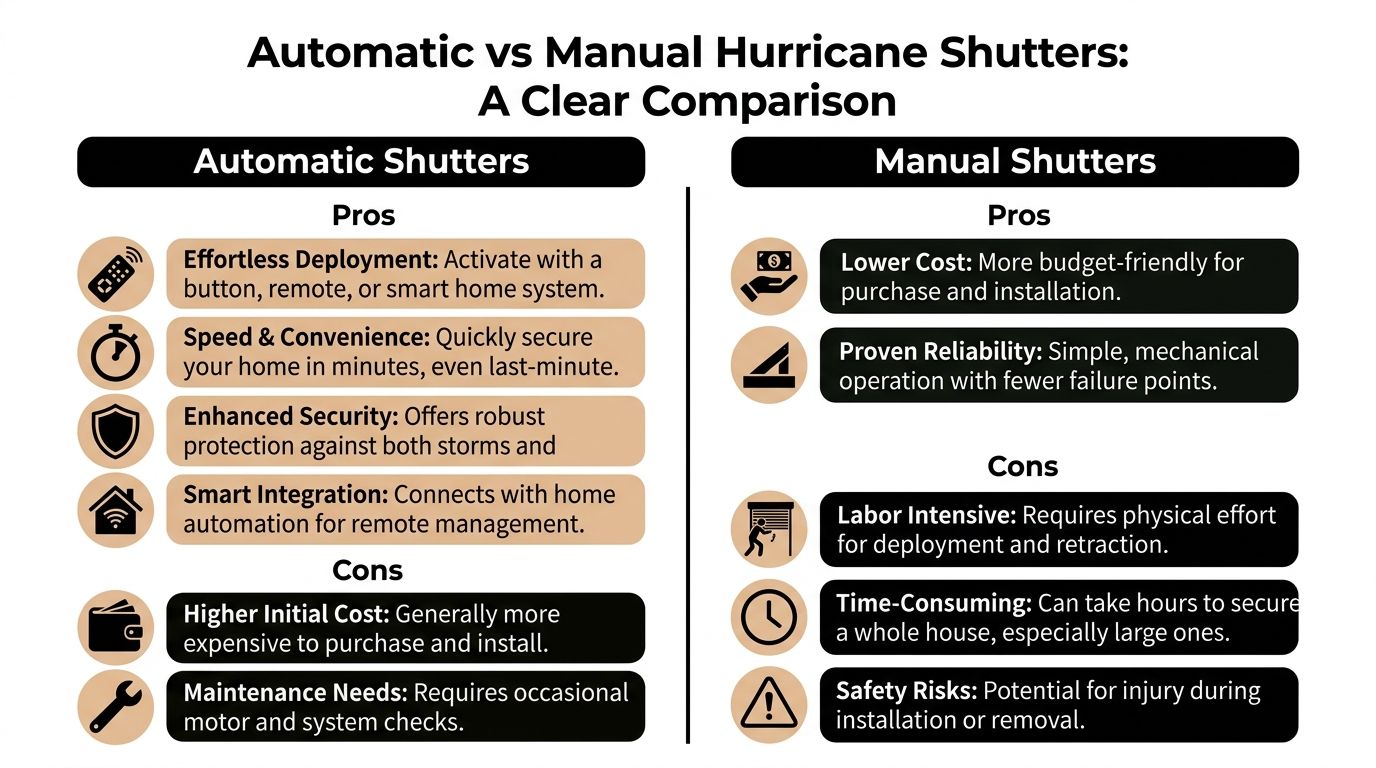
The answer depends on how you value speed, safety, labor, and long-term use. Manual shutters can still serve a purpose, especially for buyers focused on lower upfront cost. But the day a storm is closing in, the differences become obvious fast.
Side-by-side comparison
| Feature | Automatic Shutters (Roll-Down/Accordion) | Manual Shutters (Panels/Plywood) |
|---|---|---|
| Deployment | Controlled by switch, remote, or automation | Requires hands-on setup |
| Speed | Fast across multiple openings | Slower, especially on larger homes |
| Physical effort | Low | High |
| Storm-time safety | Can often be operated from indoors | Usually requires going outside |
| Storage | System stays with the house | Panels or plywood need storage space |
| Everyday use | Useful for privacy, shade, and security | Usually storm-only |
| Upfront cost | Higher | Lower |
| Ongoing convenience | Strong | Limited |
The cost question homeowners ask first
There is no reason to dodge the price issue. According to Naples Shutter’s overview of motorized roll-down hurricane shutters, electric roll-down shutters average $38 to $65 per sq. ft. installed. That same source says they are engineered to withstand 200 mph winds.
That price range is one reason some homeowners start by comparing them to panels. Manual systems cost less at the beginning. But lower purchase price does not always mean better value over time.
Why convenience is more than convenience
Automatic shutters are not just easier. They solve storm-prep problems.
If a warning comes at night, if one homeowner is older, if a family member has mobility limits, or if the weather is already turning dangerous, manual systems can become hard to use exactly when they matter most.
The protection side also matters. The same Naples source notes that after Hurricane Andrew, 64% of homes with unprotected windows suffered breakage. That is a powerful reminder that vulnerable glass can become the weak point of the entire home envelope.
Key point: The best system is not the cheapest one on paper. It is the one you can count on when the warning arrives at the worst possible time.
When manual shutters still make sense
A fair comparison means admitting manual shutters still have a place.
They may work for homeowners who:
- Need the lowest possible upfront cost
- Have only a few openings to protect
- Do not mind physical setup
- Can deploy protection well before weather arrives
For many others, automatic hurricane shutters win because they reduce risk during the most stressful part of the storm cycle. You do not need to be young, strong, home at the right moment, and willing to work outside in ugly weather. That changes the whole ownership experience.
Installation Requirements and West Tennessee Building Codes
A storm shutter is only as good as its installation. That is especially true in West Tennessee, where wind can hit from odd angles and severe storms often create sudden pressure changes around the house.
Homeowners sometimes focus on the shutter curtain itself and overlook what determines performance: how the system is anchored, aligned, and fitted to the structure.
Why design pressure matters
One technical phrase shows up often in this category: design pressure. It sounds complicated, but the idea is simple. It measures how much force the shutter system can resist.
According to Southwest Solutions’ hurricane shutter specifications, high-performance automatic rolling shutters achieve design pressures of 80 positive and 90 negative PSF, and some systems are proven to withstand winds up to 192 mph.
Positive pressure is wind pushing against the shutter.
Negative pressure is the suction effect that tries to pull the shutter away from the house.
For West Tennessee homes, that second part is easy to underestimate. Straight-line winds and tornadic conditions do not just blow at a window. They can also create violent suction around corners, eaves, and exposed openings. A well-installed system has to resist both forces.
Why custom fit matters more than brochure claims
A brochure can list strong ratings. That does not mean every installation on every home will perform the same way.
Performance depends on:
- Exact measurements
- Proper fasteners for the wall material
- Track alignment
- Secure attachment into sound structure
- Correct handling of trim, brick, siding, and opening depth
That is why off-the-shelf thinking can be risky. Homes in Jackson, Milan, Humboldt, Lexington, and surrounding communities vary a lot in exterior materials and window layouts. A custom install approach is the safer route because it matches the product to the opening rather than forcing the opening to fit the product.
For a broader look at budgeting and project factors, homeowners often review resources about the cost of installing shutters.
Professional installation protects more than the product
There is another point homeowners sometimes miss. Professional installation protects more than the shutter itself. It also helps protect:
- The wall around the opening
- The warranty
- The way the shutter moves over time
- The system’s ability to close fully when needed
Local advice: If a shutter binds, rattles, leaves gaps, or was mounted out of square, the problem usually starts with installation, not the idea of shutters itself.
That is why it pays to work with someone who measures carefully, understands local construction styles, and treats the install as a structural job, not a decorative add-on.
The True Cost and Long-Term ROI of Automatic Shutters
Homeowners often ask the wrong first question. They ask, “How much do automatic hurricane shutters cost?” A better question is, “What do I get for that money over the life of the system?”
That shift matters because shutters are not a one-purpose purchase. You are not only buying storm protection. You are also buying daily function, less hassle, and a stronger barrier around the home.

Upfront cost versus life-of-home value
Automatic shutters cost more than simpler manual products. That part is true. But buyers find the long-term value easier to understand when they break it into categories instead of looking at one invoice total.
Here is the practical ROI lens:
- Damage prevention: Protection for windows and glass doors during high-wind events.
- Daily energy help: Exterior shading can reduce heat gain during hot months.
- Security value: Closed shutters can add another layer between your home and an intruder.
- Convenience value: Fast operation matters when time is short.
- Resale appeal: Some buyers see installed storm protection as a meaningful upgrade.
The year-round value many homeowners overlook
In coastal markets, shutters are discussed only as storm gear. In West Tennessee, it can be smarter to think of them as a year-round exterior window system.
On hot summer afternoons, shutters can block sun before it heats the glass. For shift workers or media rooms, they can darken a space more effectively than many interior treatments alone. For homeowners who travel, they can provide an extra sense of security and privacy.
Those benefits do not come from a weather emergency. They show up in normal daily living.
A better way to judge return
A simple ROI checklist can help:
| Value area | What to ask yourself |
|---|---|
| Storm readiness | Can I secure the house quickly without lifting or climbing? |
| Everyday comfort | Will I use these for shade, privacy, or room darkening? |
| Home protection | Am I protecting expensive windows and interior finishes? |
| Long-term ownership | Do I want a reusable system instead of temporary materials? |
The right answer is personal. A homeowner with many large windows, frequent travel, or limited time for storm prep may see strong value quickly. Someone with only a few small openings may judge it differently.
Peace of mind is part of the return
Not every benefit belongs in a spreadsheet.
If you have ever stood in the garage during a warning, deciding whether you still have time to haul out boards, you understand this point. Automatic hurricane shutters can remove a lot of storm-night uncertainty. That peace of mind is hard to price, but homeowners feel it every time the forecast turns rough.
Proper Maintenance to Ensure Lasting Protection
This is the part most articles skip. They explain installation, show a nice photo, and move on. But if you want automatic hurricane shutters to stay reliable for years, maintenance cannot be an afterthought.
That matters even more in non-coastal places like West Tennessee. People sometimes assume less salt exposure means maintenance does not matter much. It matters. Dirt, pollen, leaves, insects, moisture, and simple wear can all affect performance.
Why upkeep matters financially
A maintenance habit is cheaper than a repair visit. According to a 2025 IBHS study referenced here, 28% of motorized shutter failures stem from neglected maintenance, and average repair costs hit $450 per unit.
That is a useful reminder. Many shutter problems do not start with a dramatic part failure. They start small. Tracks get dirty. A battery weakens. A remote loses sync. A moving part starts dragging.
A simple maintenance checklist
You do not need to turn this into a monthly hobby. You do need a basic routine.
At the start of storm season
- Run every shutter fully: Open and close each unit to make sure travel is smooth.
- Listen for changes: Grinding, hesitation, or uneven movement deserves attention.
- Check the tracks: Remove leaves, dust, cobwebs, and visible debris.
- Inspect slats and edges: Look for bending, warping, or anything out of alignment.
A few times during the year
- Wipe the exposed surfaces: Dirt buildup can affect operation over time.
- Test the controls: Wall switches, remotes, and app controls should all respond correctly.
- Check backup power features: If your system has a battery-powered function, confirm it still works.
- Look at the housing area: Make sure nothing has nested, jammed, or collected there.
After a major storm event
- Inspect before reopening fully: Look for dents or lodged debris.
- Cycle the system once weather clears: Confirm that everything still moves evenly.
- Call for service early if something feels off: Small problems are easier to correct than damaged motors or panels.
Helpful habit: Put shutter testing on the same calendar as smoke alarm checks or HVAC filter changes. People remember maintenance better when it is tied to an existing routine.
Common problems homeowners notice first
A few issues come up again and again:
- The remote does nothing: Start with batteries, then check whether the unit has lost pairing or power.
- The shutter moves slowly: Look for debris in the tracks or signs of strain in the motor.
- One side looks uneven: Stop using it and have the alignment inspected before damage gets worse.
- The system works on wall control but not app control: The issue may be with connectivity rather than the shutter itself.
Reliability comes from service, not luck
A well-made shutter system can serve for many years. But reliability comes from three things working together: proper installation, realistic use, and steady upkeep.
That is especially important for homeowners who want the reassurance of 100% satisfaction from the company standing behind the work. Products matter. Long-term support matters as much.
Choosing Your Local Expert in West Tennessee
By the time a homeowner is ready to buy, the product is only half the decision. The installer matters just as much.
A good local partner should understand more than catalog options. They should understand West Tennessee homes, local weather patterns, and the practical difference between a shutter that looks good in a quote and one that performs well when the sky turns ugly.
What to look for in a local installer
The best companies usually have a few things in common:
- In-home consultation: They measure the openings accurately instead of guessing from rough numbers.
- Custom install capability: They fit the product to the structure, not the other way around.
- Clear communication: They explain operation, service, and warranty support in plain English.
- Long-term service mindset: They help after installation, not just before the check clears.
A local company should also be comfortable discussing how shutters fit alongside other window solutions. Homeowners comparing options often look at nearby providers and product categories through resources like blinds and shutters near me in West Tennessee.
Why local knowledge changes the outcome
A national seller may know the product. A local expert knows the product and the houses.
That includes understanding older brick homes, newer builds with wider glass, detached shops, lake-area exposure, and the kinds of storm concerns that are common from Jackson to surrounding towns. That knowledge shapes measuring, mounting, finish recommendations, and service after the install.
If you want the process to feel straightforward, ask direct questions. Who measures? Who installs? Who handles problems later? Is the work custom install, or does the company try to force standard sizes onto non-standard openings?
Those answers tell you a lot.
Frequently Asked Questions About Automatic Shutters
Are automatic hurricane shutters only for coastal homes
No. Coastal areas may drive a lot of the product development, but homeowners in West Tennessee can benefit from shutters because severe thunderstorms, straight-line winds, and tornado risks can threaten windows and doors.
Will they work if the power goes out
Many systems are designed with backup options. Some use battery-powered motors, and some can include additional automation features. Ask specifically how the system operates during an outage before you buy.
Do automatic shutters look bulky
They do not always look bulky. Some roll-down systems have a cleaner, more tucked-away appearance than people expect. The final look depends on the size of the opening, the housing design, and how the system is integrated into the home exterior.
Are they hard to maintain
They are not typically hard to maintain, but they do need attention. Tracks should stay clear, controls should be tested, and any unusual movement should be checked early. Most reliability problems grow out of ignored maintenance, not normal use.
Can they help with more than storms
Yes. Many homeowners use them for privacy, light control, shade, and added security. That year-round usefulness is one reason the investment can make sense beyond storm season.
What should I ask before getting a quote
Ask these first:
- Is this a custom install for my exact openings
- How does the system work during a power outage
- Who handles service later if something goes wrong
- What maintenance should I plan for
- What does your satisfaction promise include
If you are ready to talk through automatic hurricane shutters with a local team, contact Blinds Galore for a free in-home consultation. They offer custom install service, back their work with 100% satisfaction, and help homeowners across West Tennessee find practical protection that fits their homes and daily lives. Call (731) 571-5179 to get started.
You might also like

Best Plantation Shutter Brands – 2026 Review
If you're looking at your windows right now and thinking the room needs more polish, better privacy,

What Are Plantation Shutters Made Of
You're probably looking at a window right now thinking the same thing a lot of West Tennessee homeowners

Contemporary Roman Shades: Modern Styles for Your Home
You know the feeling. Your old blinds work, but they don't do your room any favors. They look hard,

Sliding Glass Window Treatments for Your West TN Home
That sliding glass door probably does two jobs at once in your home. It opens your living space to the

Vertical Blinds vs Horizontal Blinds: The Definitive Homeowner’s Guide
When you're trying to decide between vertical and horizontal blinds, it really comes down to your

Cordless Blinds vs Corded Blinds A Modern Homeowner’s Guide
When you're weighing the pros and cons of cordless blinds vs corded blinds, the verdict for today's