

7 Best Faux Wood Blinds for Humid Bathrooms in Jackson, TN Homes
Quick answer: Faux wood blinds are the single best window treatment for humid bathrooms in Jackson, TN homes. Unlike real wood, high-quality PVC and composite faux wood blinds resist warping, cracking, and mold even in rooms where humidity regularly spikes above 70%. Look for 100% PVC slats at least 2 inches wide, UV-resistant finishes, and moisture-proof hardware. Custom sizing ensures a precise fit that keeps privacy intact while still allowing ventilation. Blinds Galore serves Jackson, Lexington, Henderson, and Milan with free in-home consultations and professional installation.
Why Humid Bathrooms Destroy Regular Blinds (and What to Use Instead)
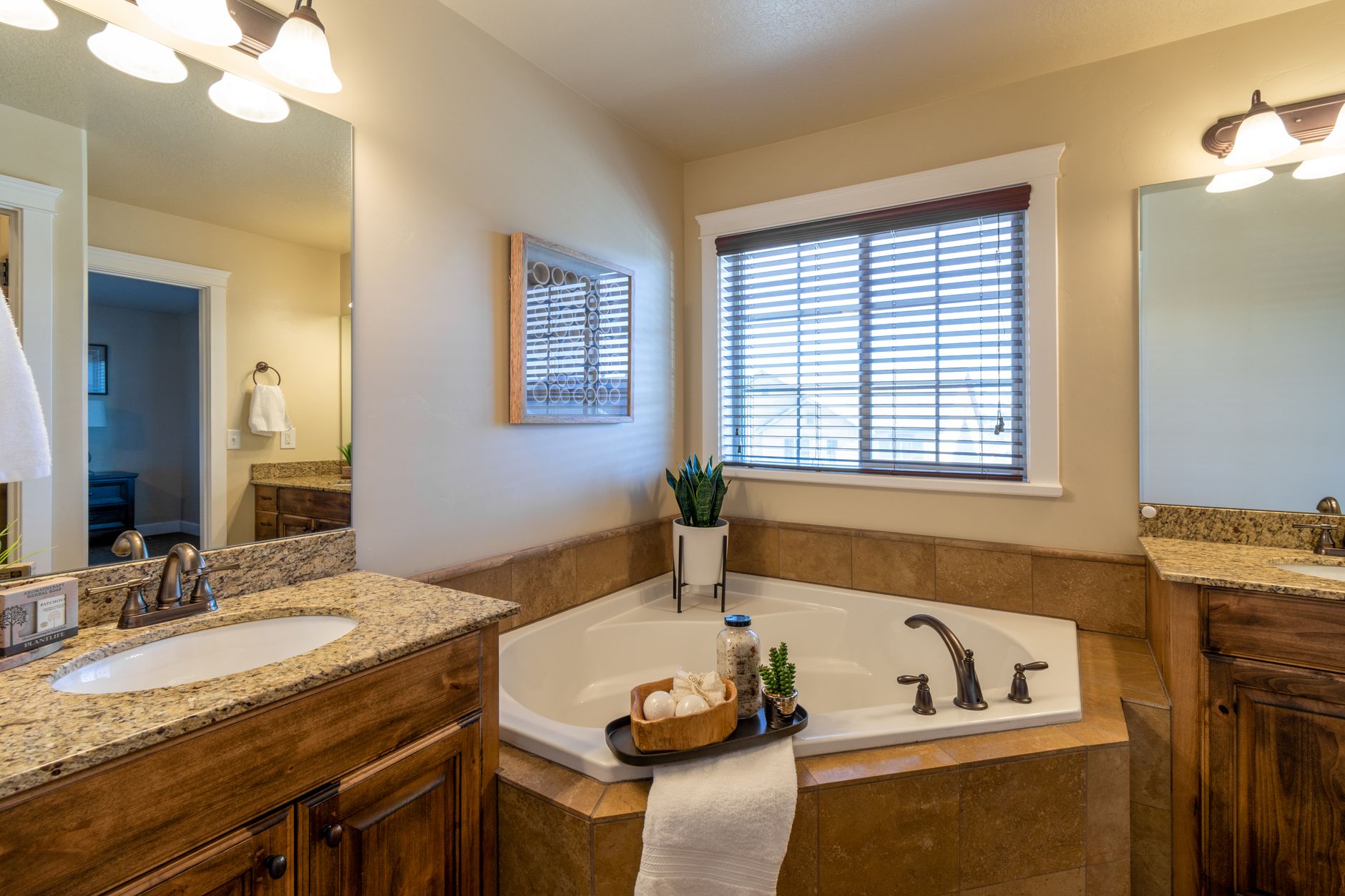
Before diving into the best faux wood blind options for your Jackson, TN bathroom, it helps to understand exactly why standard window treatments fail in wet environments — and why faux wood is the clear solution recommended by window treatment professionals across West Tennessee.
The Humidity Problem in West Tennessee Bathrooms
West Tennessee summers are no joke. Jackson, TN regularly sees relative humidity levels between 65% and 85% from May through September, and your bathroom can spike even higher — sometimes exceeding 90% humidity during a hot shower. That kind of moisture is a death sentence for real wood blinds, fabric shades without moisture treatment, and even some aluminum mini-blinds that corrode at the hardware joints.
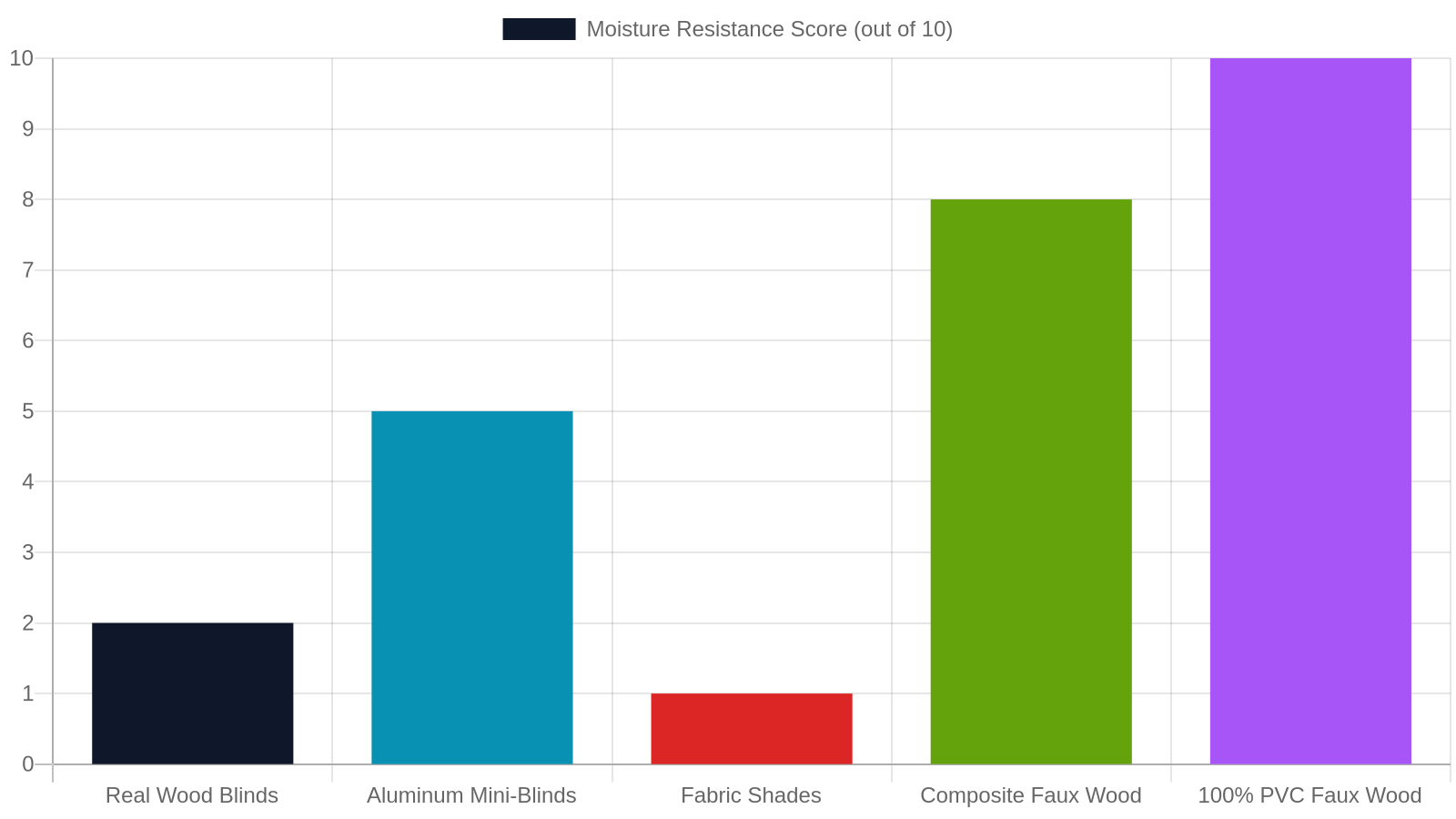
Real wood blinds can begin to warp within six to twelve months in a high-humidity bathroom. Slats bow, tilt rods jam, and finishes bubble and peel. Fabric Roman shades absorb moisture and become breeding grounds for mildew. Aluminum blinds corrode and stain the surrounding trim.
Why Faux Wood Wins the Moisture Battle
Faux wood blinds — made from PVC (polyvinyl chloride) or a composite of wood fiber and PVC — were engineered specifically to handle what real wood cannot. The cellular structure of PVC does not absorb water, meaning slats stay straight, finishes stay intact, and hardware stays functional even after years of daily steam exposure.
- 100% PVC slats offer the highest moisture resistance and are ideal for bathrooms with no natural ventilation.
- Wood-composite slats blend real wood fiber with PVC for a slightly warmer look, suitable for bathrooms with a window or exhaust fan.
- Both options are easy to wipe clean with a damp cloth — no special products needed.
1. 100% PVC Faux Wood Blinds — the Gold Standard for Bathrooms
Not all faux wood blinds are created equal. The first and most important distinction is whether the slat is made from 100% PVC or a wood-composite blend. For bathrooms specifically, 100% PVC is the professional recommendation — here’s a detailed look at why.
What Makes 100% PVC the Top Pick
When moisture resistance is the primary concern, 100% PVC faux wood blinds are the undisputed champion. Every component — slats, ladders, and tilt rod — is manufactured from non-porous polyvinyl chloride that simply cannot absorb water. There is no wood fiber in the core to swell, no paper wrapping to bubble, and no finish to peel.
These blinds are also UV-stabilized, which matters in Jackson, TN where south- and west-facing bathroom windows receive intense afternoon sun. UV stabilization prevents the white or off-white finish from yellowing over time, keeping your bathroom looking fresh for 10 to 15 years with minimal maintenance.
Slat Width Options and Privacy Considerations
For bathrooms, slat width matters more than most homeowners realize. The two most common widths are 2-inch and 2.5-inch slats:
- 2-inch slats provide tighter closure, better privacy, and a more traditional look — ideal for smaller bathroom windows.
- 2.5-inch slats offer a broader, more contemporary appearance and slightly better light control when fully closed, making them popular in master bathrooms with larger windows.
For privacy glass or frosted windows, either width works well. For clear glass bathroom windows — common in older Jackson-area homes — the 2.5-inch slat with a room-darkening liner option provides the most complete privacy coverage.
2. Wood-Composite Faux Wood Blinds — Warmth With Moisture Protection
For homeowners who love the look of real wood but need moisture protection, wood-composite faux wood blinds offer a compelling middle ground. Understanding their composition helps you decide whether they’re the right fit for your specific bathroom environment.
The Composition Advantage
Wood-composite faux wood blinds combine real wood fiber (typically 30–50%) with PVC resin to create a slat that looks and feels closer to genuine hardwood while still offering meaningful moisture resistance. The wood fiber gives the slat a slightly warmer tone and a more authentic grain texture that pure PVC can’t fully replicate.
These blinds are an excellent choice for master bathrooms with exhaust fans or windows that are regularly opened, where peak humidity is managed and doesn’t linger. They are not recommended for bathrooms with no ventilation or for shower windows that receive direct water spray.
Finish and Color Options for Jackson, TN Interiors
One of the biggest advantages of wood-composite faux wood blinds is the wider range of stained wood finishes available — something 100% PVC struggles to replicate convincingly. Popular finishes for West Tennessee homes include:
- Chestnut and walnut stains — pair beautifully with the warm oak and hickory cabinetry common in Jackson-area new builds.
- White and off-white painted finishes — the most popular choice for bathrooms, matching white trim and vanities.
- Grey wash finishes — trending in modern farmhouse and transitional bathroom designs throughout the region.
Custom color matching is available through Blinds Galore’s in-home consultation process, ensuring your blinds coordinate perfectly with existing trim and cabinetry.
3. Cordless Faux Wood Blinds — Safer, Cleaner, and Easier to Operate
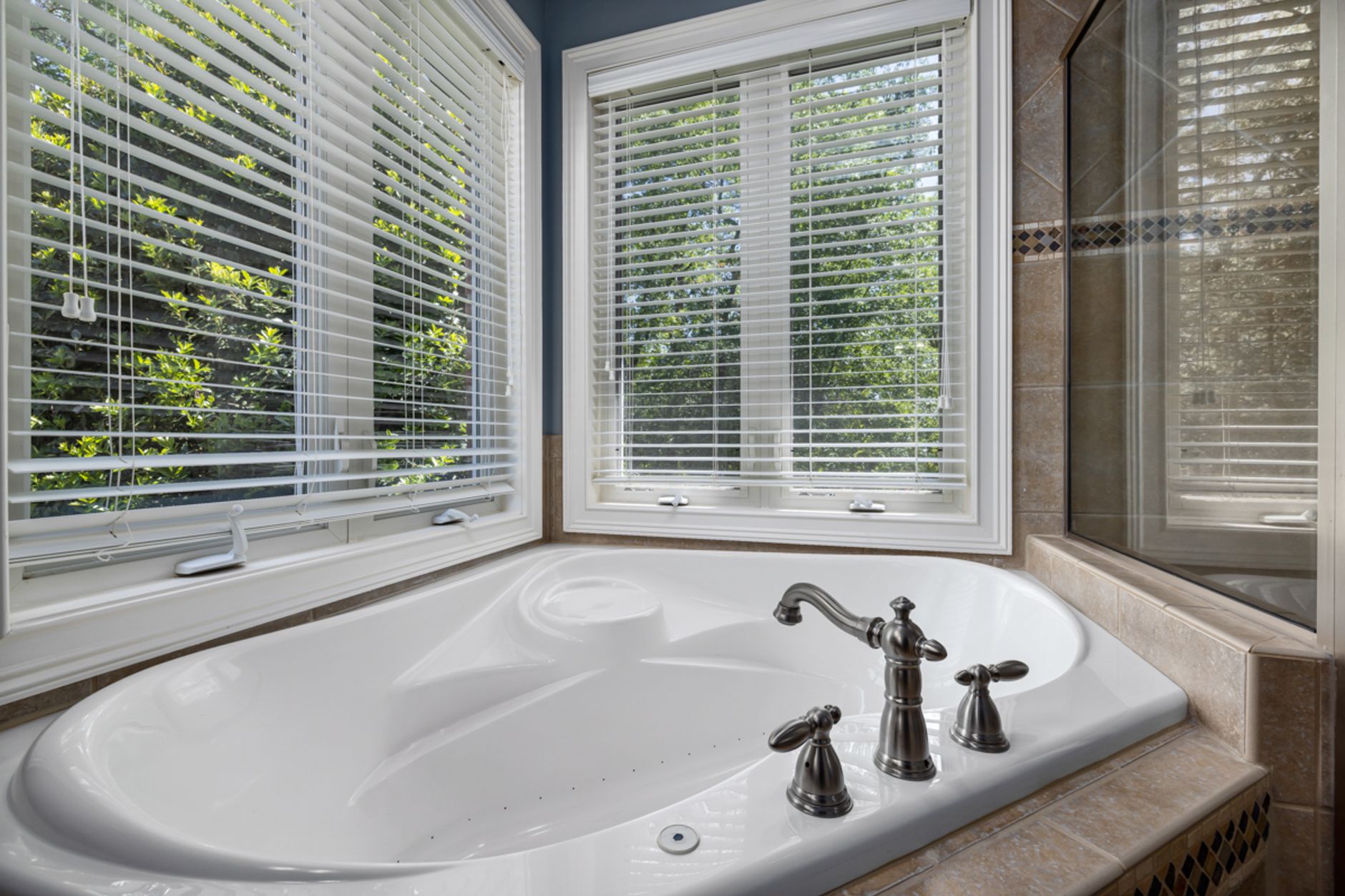
The operating mechanism of your bathroom blinds matters almost as much as the material. Cordless faux wood blinds have become the professional standard recommendation for bathrooms across West Tennessee — and for good reason.
Why Cordless Is the Right Choice for Bathrooms
Corded blinds in a humid bathroom environment face two problems: cord degradation from moisture and the accumulation of soap scum and mildew on hanging cords. In bathrooms, cords are also a safety concern — the U.S. Consumer Product Safety Commission (CPSC) has issued guidelines recommending cordless or inaccessible-cord designs in any room accessible to children.
Cordless faux wood blinds use a spring-tension lift mechanism built into the headrail. You simply push the bottom rail up or pull it down to adjust the height. There are no dangling cords to collect moisture, mildew, or soap residue — a significant hygiene advantage in a bathroom setting.
Ease of Cleaning With Cordless Designs
Cleaning cordless faux wood blinds in a bathroom takes under five minutes. Because there are no cords to work around, you can wipe each slat from end to end with a damp microfiber cloth or use a blind-cleaning duster that cleans multiple slats simultaneously. For deeper cleaning, 100% PVC cordless blinds can be removed and rinsed in the shower or bathtub — something impossible with fabric or real wood treatments.
Most cordless faux wood blinds from quality manufacturers are rated for 50,000+ lift cycles, meaning the spring mechanism will outlast the typical homeowner’s desire to redecorate. This makes them a genuinely long-term investment for Jackson, TN homeowners.
4. Moisture-Resistant Hardware — the Detail Most Homeowners Overlook
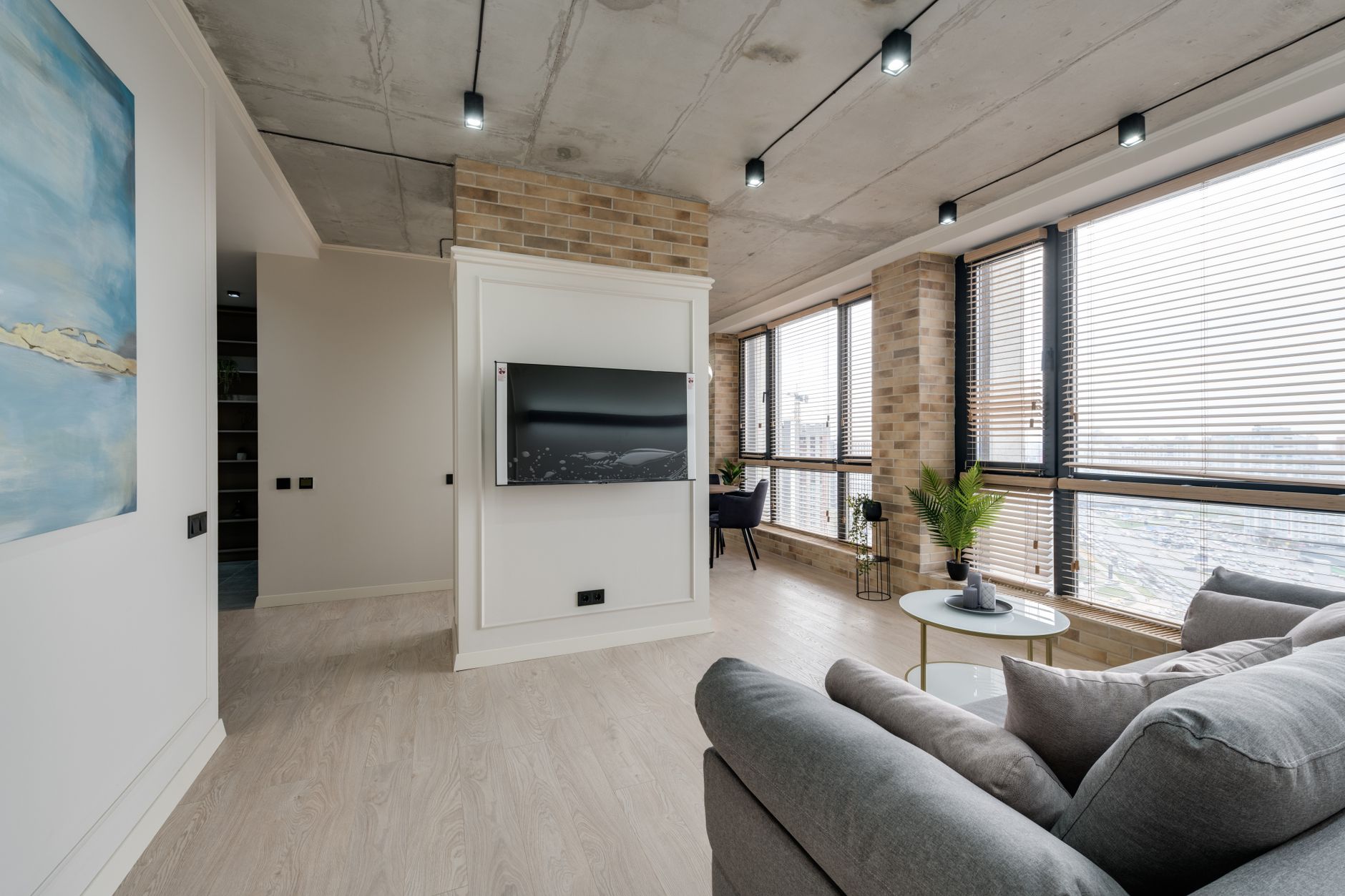
Slat material gets most of the attention when shopping for bathroom blinds, but the hardware holding everything together is equally critical. Inferior hardware is the number-one reason otherwise good faux wood blinds fail prematurely in humid environments.
What Happens When Hardware Fails
Even the best PVC slats will underperform if the headrail, brackets, and tilt rod hardware aren’t moisture-rated. Standard steel hardware — used in many budget blinds — will begin to rust within 12 to 18 months in a bathroom environment. Rust stains transfer to slats and surrounding window trim, and corroded tilt rods make the blinds difficult or impossible to operate.
Quality faux wood blinds designed for wet areas use galvanized steel, aluminum, or fully plastic hardware throughout. Look for headrails labeled as ‘moisture-resistant’ or ‘wet-area rated’ when shopping. Blinds Galore’s product line for bathrooms uses hardware specifically selected for West Tennessee’s humid climate conditions.
Mounting Options for Bathroom Windows
Bathroom windows present unique mounting challenges. Many Jackson-area homes have shallow window frames — sometimes less than 2 inches deep — due to older construction standards. Faux wood blinds can be mounted in two ways:
- Inside mount: Blinds fit within the window frame for a clean, recessed look. Requires a minimum frame depth of 1.75 inches for most headrail profiles.
- Outside mount: Brackets attach to the wall or trim above the window, allowing the blind to cover the full window opening and even extend beyond it for maximum light blockage and privacy.
A professional measurement — like the free measuring service offered by Blinds Galore — ensures you get the right mount type and exact dimensions the first time, avoiding costly remeasuring or returns.
5. UV-Resistant Finishes — Protecting Your Investment From Jackson's Sun
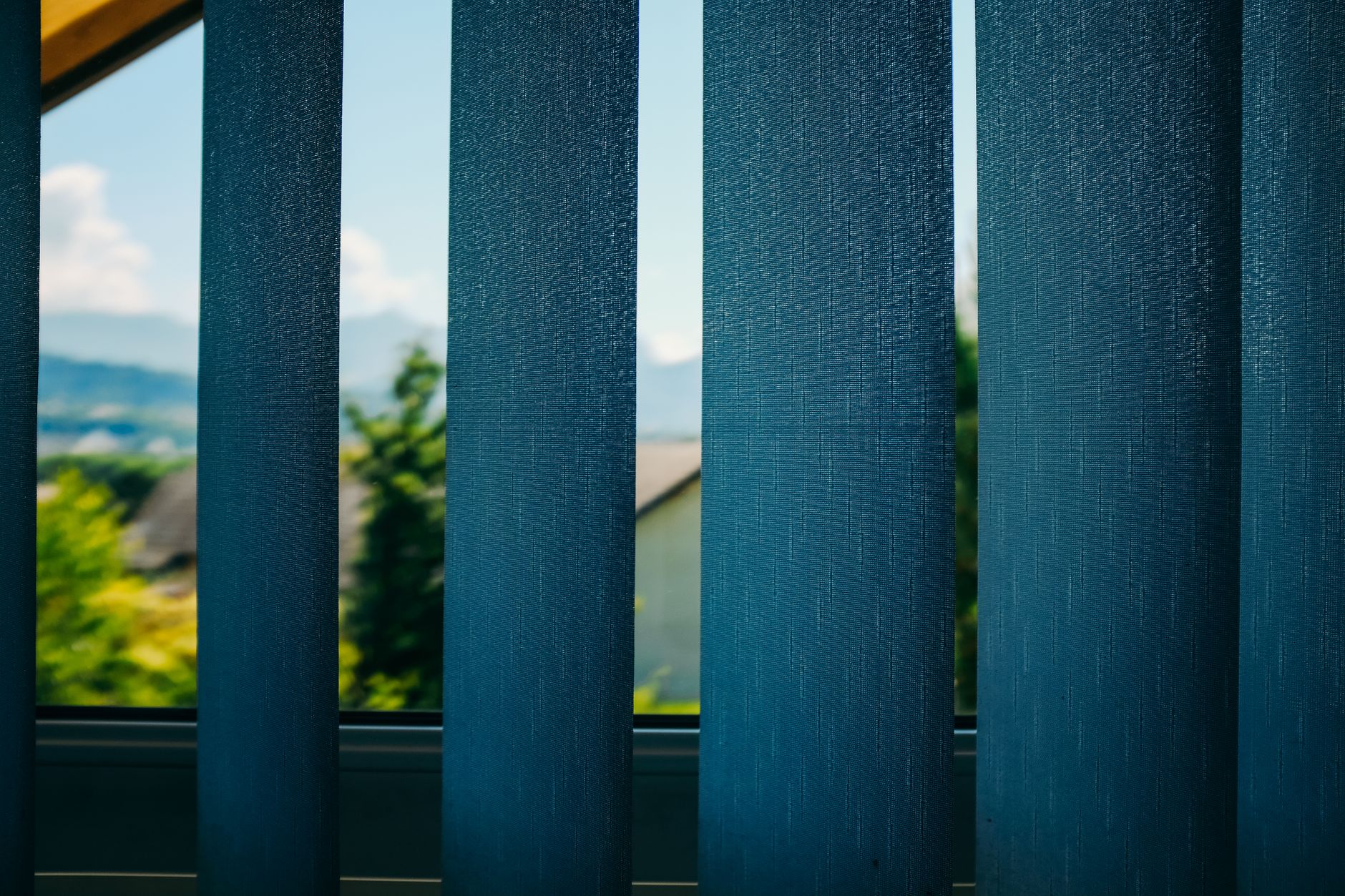
Humidity isn’t the only environmental challenge for bathroom blinds in Jackson, TN. The combination of moisture and intense Southern sun creates a one-two punch that only UV-resistant faux wood blinds can handle over the long term.
The UV Challenge in West Tennessee
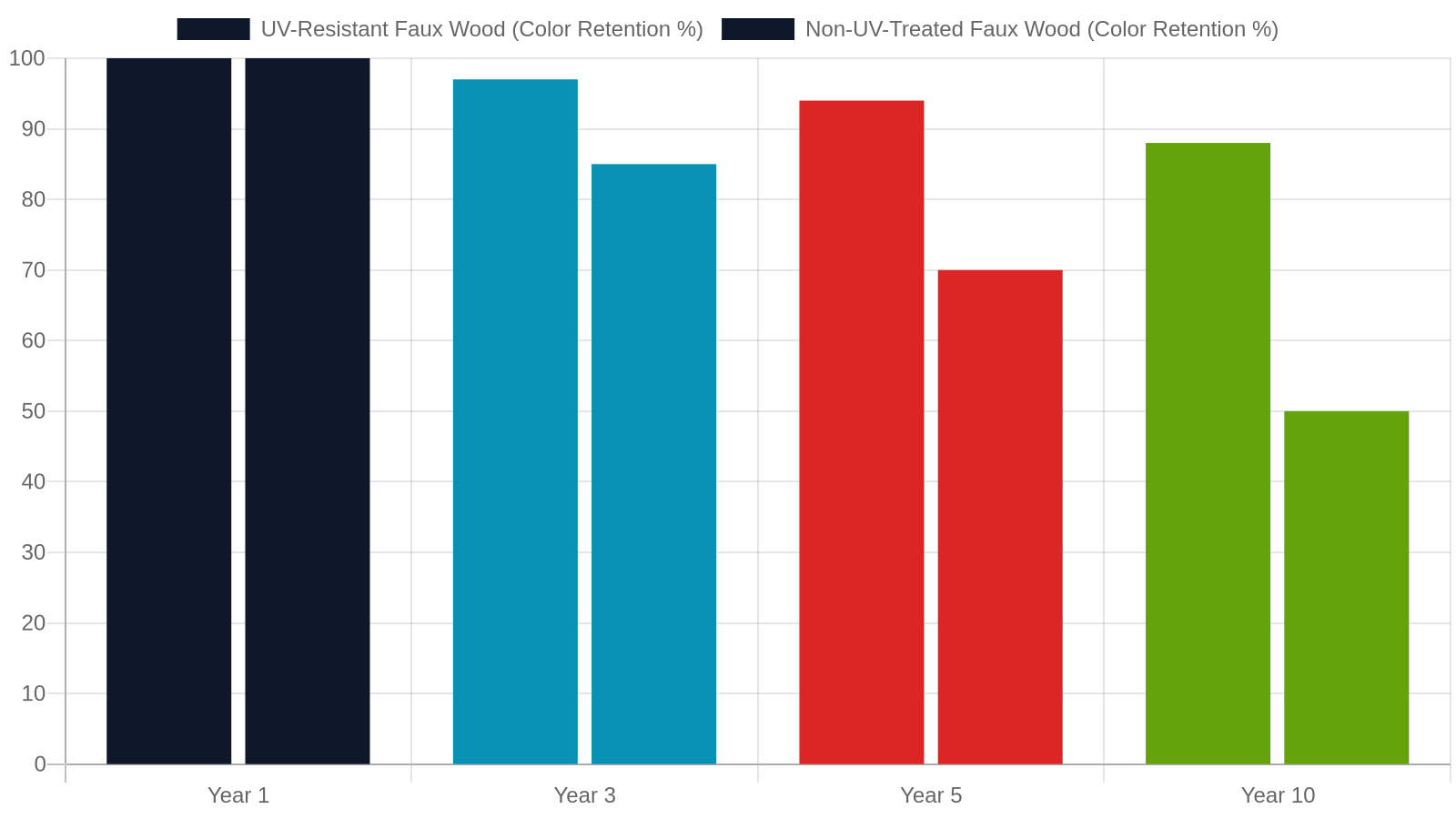
Jackson, TN averages approximately 213 sunny days per year — significantly above the national average of 205. South- and west-facing bathroom windows receive the most intense UV exposure, and without UV stabilization, even white PVC faux wood blinds can develop a yellowish or chalky appearance within two to three years.
UV-resistant finishes work by incorporating UV absorbers and light stabilizers directly into the PVC compound during manufacturing — not applied as a surface coating that can wear off. This means the protection is built into the material itself and lasts the lifetime of the blind. When comparing products, ask specifically whether UV stabilization is integral to the compound or a surface treatment.
Color Stability and Long-Term Appearance
UV resistance also matters for colored and stained faux wood finishes. Darker stains — like espresso, mahogany, and walnut — are more prone to UV fading than white or off-white painted finishes. For bathrooms with significant sun exposure, consider:
- Choosing lighter finishes (white, ivory, light grey) that show less fading over time.
- Selecting products with a minimum 5-year color warranty from the manufacturer.
- Adding a UV-filtering window film to the glass itself, which reduces UV load on both the blinds and the bathroom interior.
Blinds Galore’s in-home consultants assess your window’s sun exposure during the free consultation visit and recommend finishes rated for your specific conditions.
6. Custom Sizing — Why Off-the-Shelf Blinds Fail Bathroom Windows
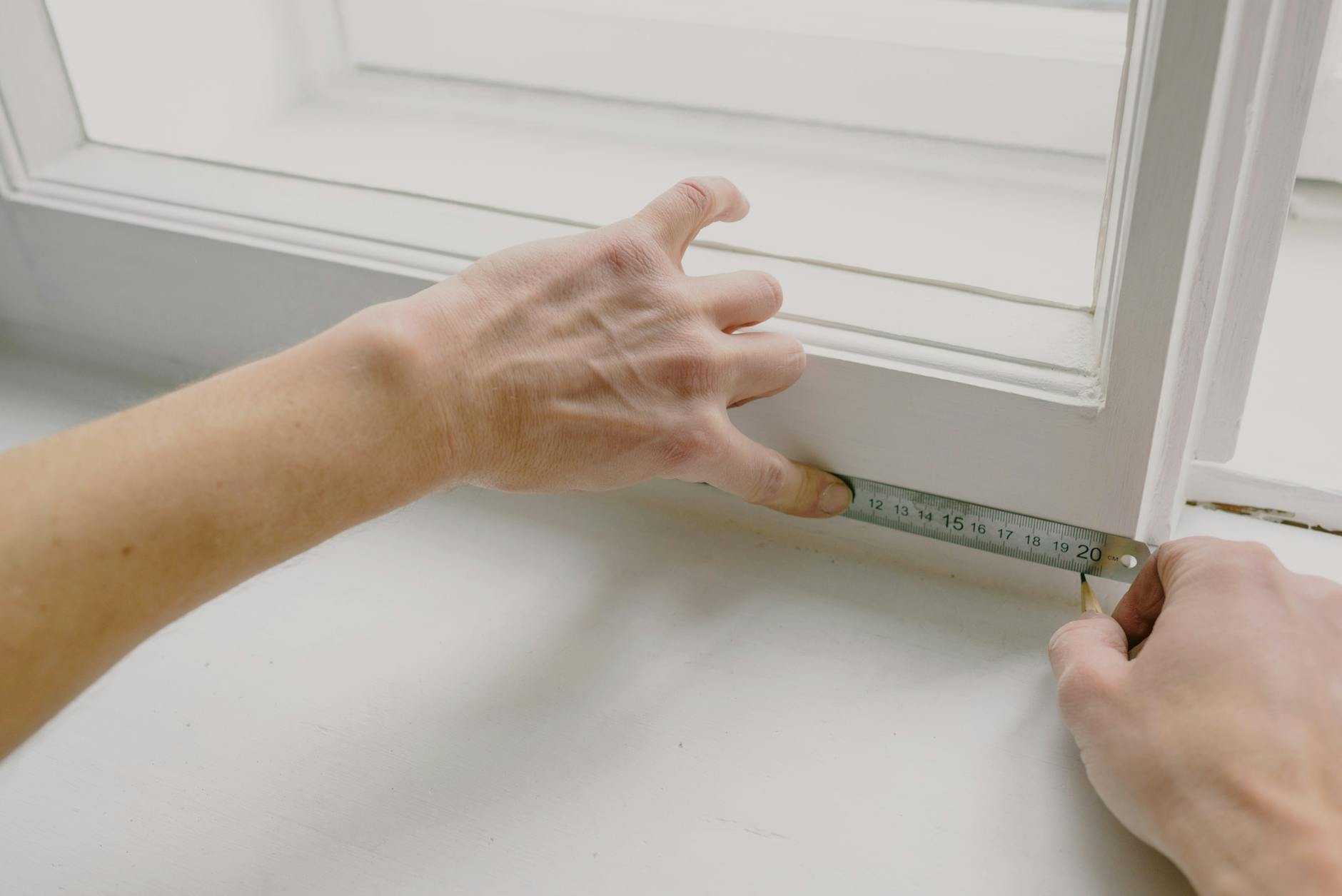
One of the most common mistakes Jackson, TN homeowners make is purchasing standard-size faux wood blinds from a home improvement store and discovering they don’t fit properly. Custom sizing isn’t a luxury — in a bathroom, it’s a necessity for both privacy and performance.
The Problem With Standard Sizes
Big-box store faux wood blinds come in standard increments — typically every inch or half-inch — and are sold with the assumption that you’ll trim them down or live with gaps. In a bathroom, gaps are a serious problem. Even a 1/4-inch gap between the blind and the window frame allows light to bleed through at angles that compromise privacy, especially at night when interior lighting makes silhouettes visible from outside.
Older homes in Jackson, TN — particularly those built before 1990 — frequently have non-standard window dimensions due to settling, previous renovations, or original custom framing. A window that measures 28.5 inches wide simply doesn’t have a good off-the-shelf solution. Custom-sized faux wood blinds are the only way to achieve a precise, professional fit.
The Custom Measurement Process
Custom faux wood blinds are manufactured to your exact window dimensions, typically to 1/8-inch precision. The measurement process involves:
- Measuring width at the top, middle, and bottom of the window opening (windows are rarely perfectly square).
- Measuring height on the left, center, and right sides.
- Determining the deduction — the amount subtracted from the measured width for an inside-mount blind to ensure smooth operation without binding.
This is precisely why Blinds Galore offers free professional measuring as part of every in-home consultation. Getting the measurement right the first time saves the cost and frustration of reordering. Our consultants serve Jackson, Lexington, Henderson, Milan, and surrounding West Tennessee communities.
7. Top Color and Finish Choices for West Tennessee Bathroom Styles
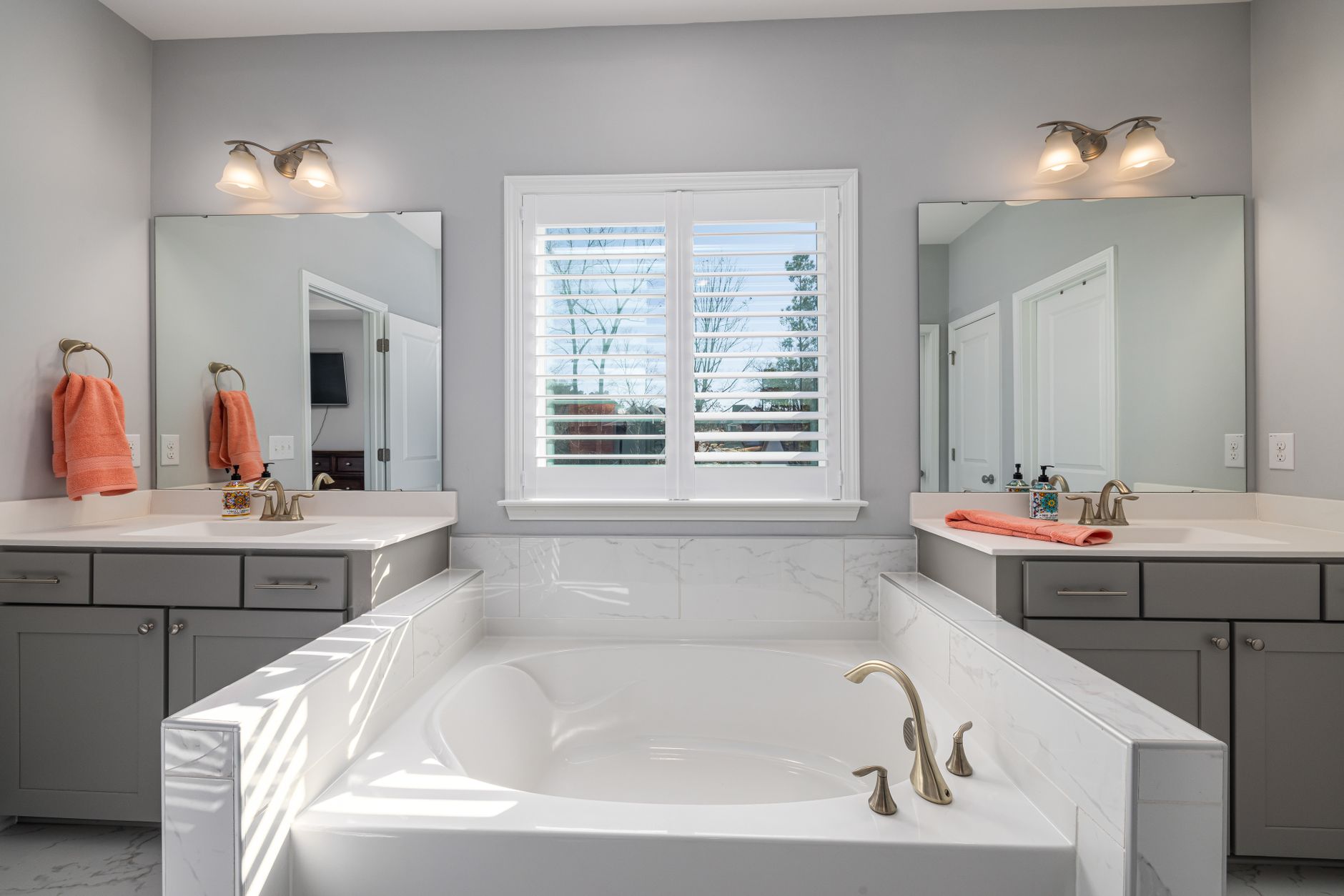
The right color and finish choice ties your bathroom’s window treatment into the overall design of the space. Here’s a guide to the most popular faux wood blind finishes for West Tennessee bathroom styles, from traditional to contemporary.
White and Off-White — the Timeless Bathroom Standard
Bright white and soft white (also called ‘alabaster’ or ‘ivory’) remain the most popular faux wood blind finishes for bathrooms across West Tennessee — and for good reason. White blinds reflect light, making small bathrooms feel larger and brighter. They coordinate with virtually every tile color, vanity finish, and paint color. And because they’re available in 100% PVC, they offer the highest moisture and UV resistance of any option.
For bathrooms with warm-toned tile or cabinetry (cream, beige, tan), an off-white or ivory finish prevents the stark contrast that bright white can create. For cool-toned bathrooms (grey, blue, white subway tile), bright white is the cleaner choice.
Grey, Greige, and Stained Finishes for Modern Bathrooms
Modern and transitional bathrooms in Jackson-area new construction frequently feature grey or greige (grey-beige) color palettes, and faux wood blind manufacturers have responded with an expanded range of neutral finishes:
- Light grey and silver grey — pairs beautifully with chrome fixtures and grey subway tile.
- Greige and warm taupe — the most versatile neutral, working with both warm and cool bathroom palettes.
- Driftwood and weathered grey stains — popular in coastal-inspired and farmhouse-style bathrooms.
For stained finishes in bathrooms, always confirm the product uses wood-composite slats with a sealed, moisture-resistant finish rather than a raw wood-fiber surface that can absorb humidity at the cut edges.
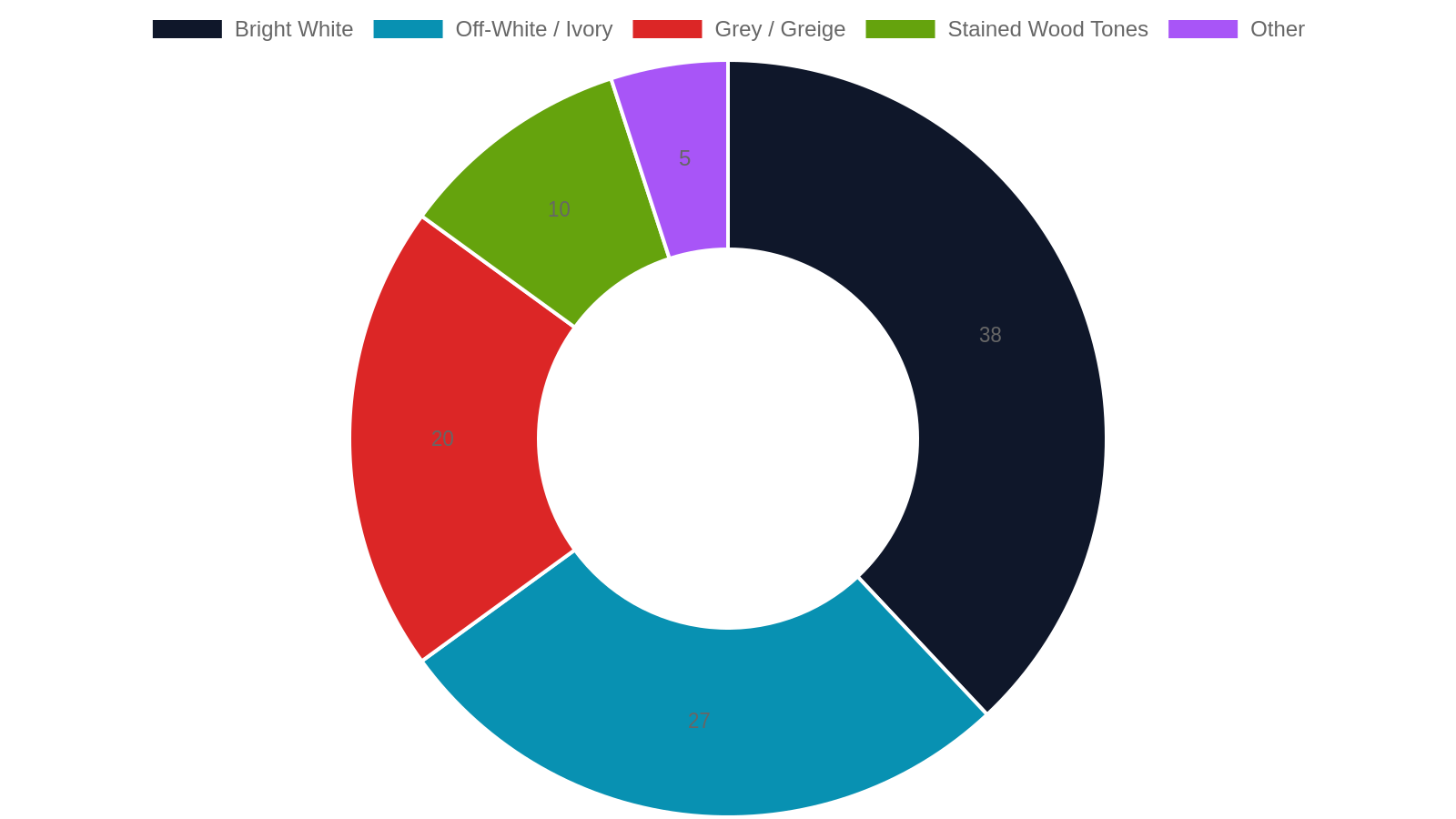
Faux Wood Blind Types at a Glance — Bathroom Performance Comparison
Use this table to quickly compare the most important features of each faux wood blind type for bathroom applications in Jackson, TN homes.
Installation Best Practices for Bathroom Faux Wood Blinds

Even the best faux wood blinds will underperform if installed incorrectly. Bathroom installations have specific requirements that differ from living room or bedroom installations — here’s what the professionals at Blinds Galore follow on every job.
Preparing the Window Area Before Installation
Proper installation starts before the blind is even unboxed. In a bathroom, the window frame and surrounding trim should be clean, dry, and free of mold or mildew before brackets are mounted. Any existing moisture damage to the trim should be repaired and sealed — mounting brackets into damaged wood can cause them to pull loose over time.
For tile surrounds (common in shower-adjacent windows), use tile-rated anchors and screws rather than standard drywall anchors. Tile anchors distribute the load across a wider surface area and resist the vibration that can loosen standard anchors over time.
Ensuring Proper Clearance and Operation
After installation, verify three things before considering the job complete:
- Clearance check: The blind should raise and lower smoothly without rubbing on the window frame, sill, or any hardware. Even minor friction causes premature wear on the lift mechanism.
- Tilt check: Slats should open and close fully in both directions without binding. If the blind is slightly wider than the opening, slats can bow and fail to close completely.
- Level check: Use a small level to confirm the headrail is perfectly horizontal. An unlevel headrail causes the blind to hang crookedly and creates gaps along one side.
Professional installation — included with every Blinds Galore purchase — eliminates these concerns entirely. Our installers have completed hundreds of bathroom blind installations across Jackson, Lexington, and Henderson.
Maintenance and Cleaning — Keeping Bathroom Blinds Looking New
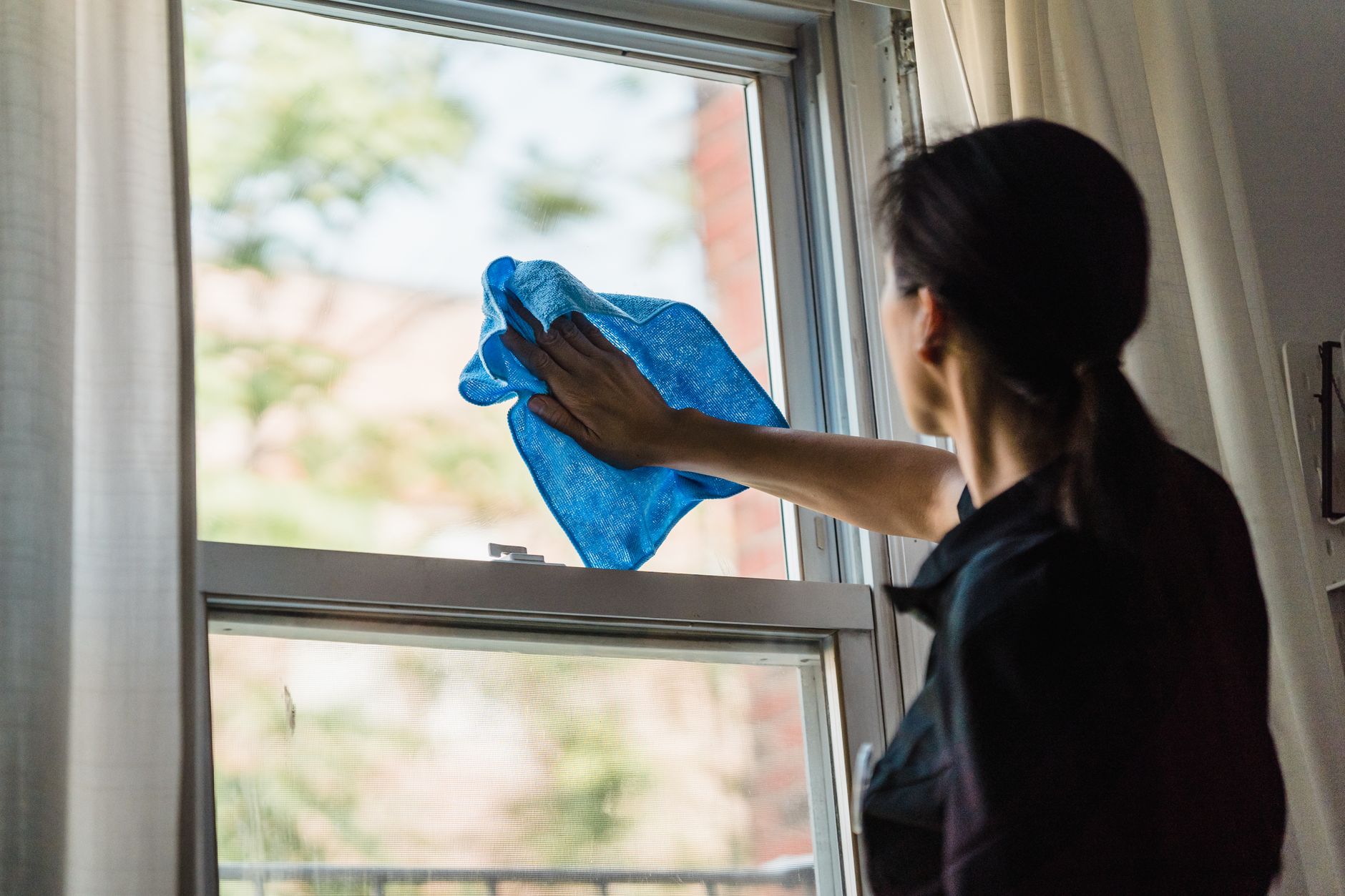
Faux wood blinds are among the lowest-maintenance window treatments available — but ‘low maintenance’ doesn’t mean ‘no maintenance.’ A simple routine keeps your bathroom blinds looking showroom-fresh for years, even in Jackson, TN’s humid climate.
Weekly and Monthly Cleaning Routines
One of the biggest advantages of faux wood blinds over fabric alternatives is how simple they are to maintain. A weekly dusting with a microfiber duster takes less than two minutes and prevents soap film and dust from bonding to the slat surface. For monthly deeper cleaning:
- Close the slats fully in one direction and wipe with a damp microfiber cloth dampened with warm water and a drop of dish soap.
- Flip the slats and repeat on the other side.
- Dry with a clean cloth to prevent water spots — especially important in areas with hard water, which is common in parts of West Tennessee.
Dealing With Mold and Mildew If It Appears
Even moisture-resistant faux wood blinds can develop surface mold if a bathroom has chronically poor ventilation and humidity stays above 80% for extended periods. If you notice dark spots on slats or the headrail:
- Mix a solution of 1 part white vinegar to 3 parts water and apply with a soft cloth.
- Allow to sit for 5 minutes, then wipe clean and dry thoroughly.
- For stubborn mold, a diluted bleach solution (1 tablespoon bleach per quart of water) is safe for 100% PVC slats — test on a hidden area first.
Addressing the ventilation issue — adding or upgrading an exhaust fan — is the long-term solution. Blinds Galore consultants often flag ventilation concerns during in-home visits as part of our commitment to helping your window treatments last.
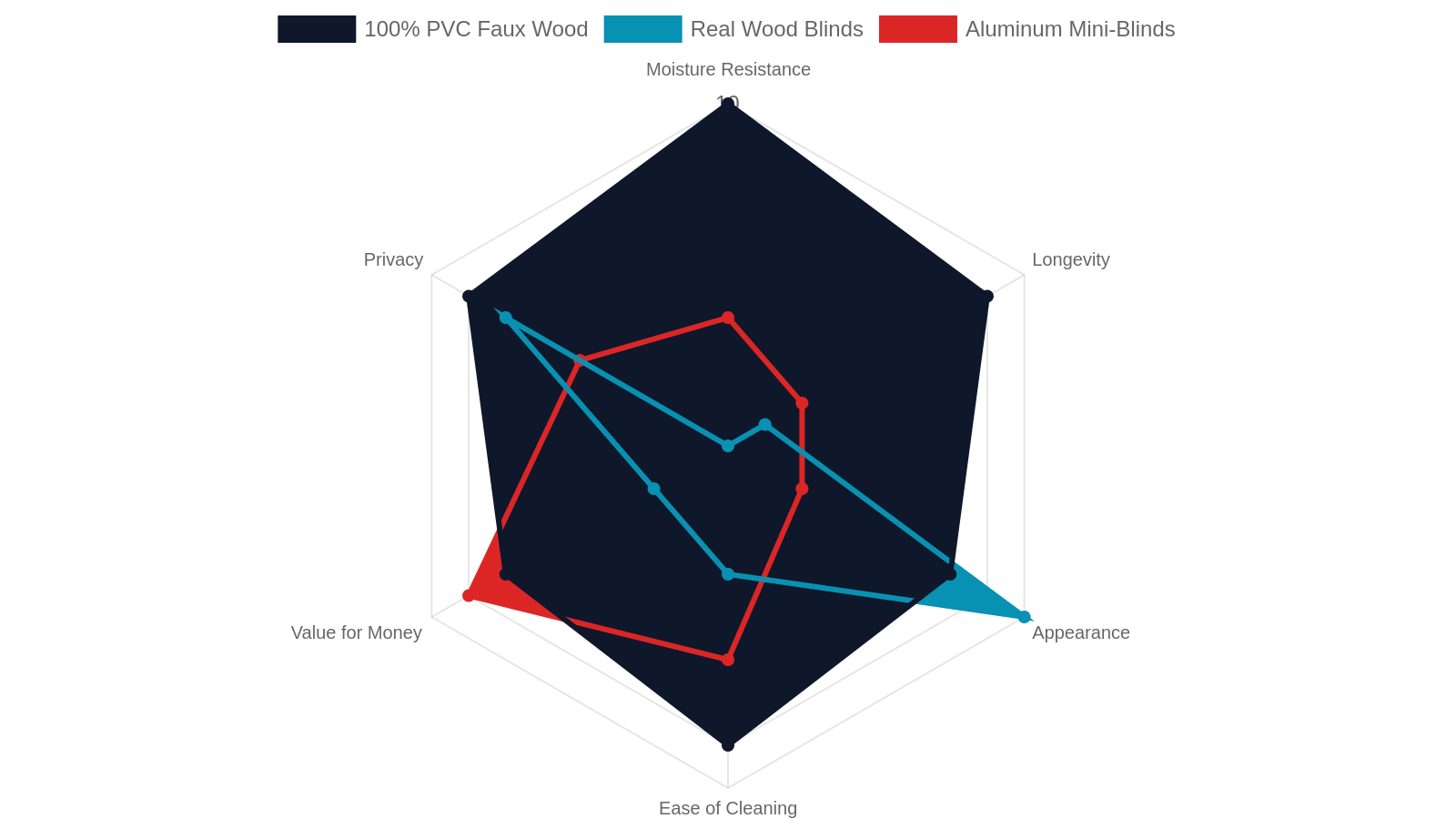
Faux Wood vs. Real Wood vs. Aluminum — Which Is Right for Your Bathroom?
To make the best decision for your Jackson, TN bathroom, it helps to see faux wood blinds directly compared to the alternatives. Here’s an honest assessment of each option across the factors that matter most in a bathroom environment.
Real Wood Blinds in Bathrooms — a Costly Mistake
Real wood blinds are beautiful in living rooms and bedrooms, but they are not recommended for bathrooms by any major manufacturer. Warranties on real wood blinds explicitly exclude moisture damage, meaning you’re on your own when the slats warp — and they will warp. The average lifespan of real wood blinds in a high-humidity bathroom is 12 to 24 months before visible warping begins. Replacement costs typically run $80 to $250 per window for custom sizes, making real wood a genuinely expensive mistake over a 10-year period.
Aluminum Mini-Blinds — Affordable but Problematic
Aluminum mini-blinds are inexpensive (often $15 to $40 for standard sizes) and technically moisture-resistant at the slat level. However, the steel hardware used in most budget aluminum blinds corrodes rapidly in humid conditions. The thin 1-inch aluminum slats also bend easily and are nearly impossible to straighten once bent — a common frustration in busy family bathrooms. They also rattle in air conditioning drafts and provide minimal insulation value.
For rental properties or short-term applications, aluminum mini-blinds may be acceptable. For owner-occupied homes in Jackson, TN where appearance and longevity matter, faux wood blinds deliver significantly better value over a 5- to 10-year horizon despite a higher upfront cost.
Ready to Upgrade Your Bathroom Windows? Start With a Free Consultation
You’ve done the research — now it’s time to take the next step. Blinds Galore has helped hundreds of Jackson, TN homeowners find the perfect faux wood blinds for their bathrooms, and the process is easier than you might think. Here’s how to get started with zero pressure and zero guesswork.
What to Expect From a Blinds Galore In-Home Visit
Blinds Galore brings the showroom directly to your home — no driving across Jackson, no guessing at colors under fluorescent store lighting. During your free in-home consultation, a window treatment specialist will:
- Assess your bathroom’s humidity levels, ventilation, and sun exposure to recommend the right product.
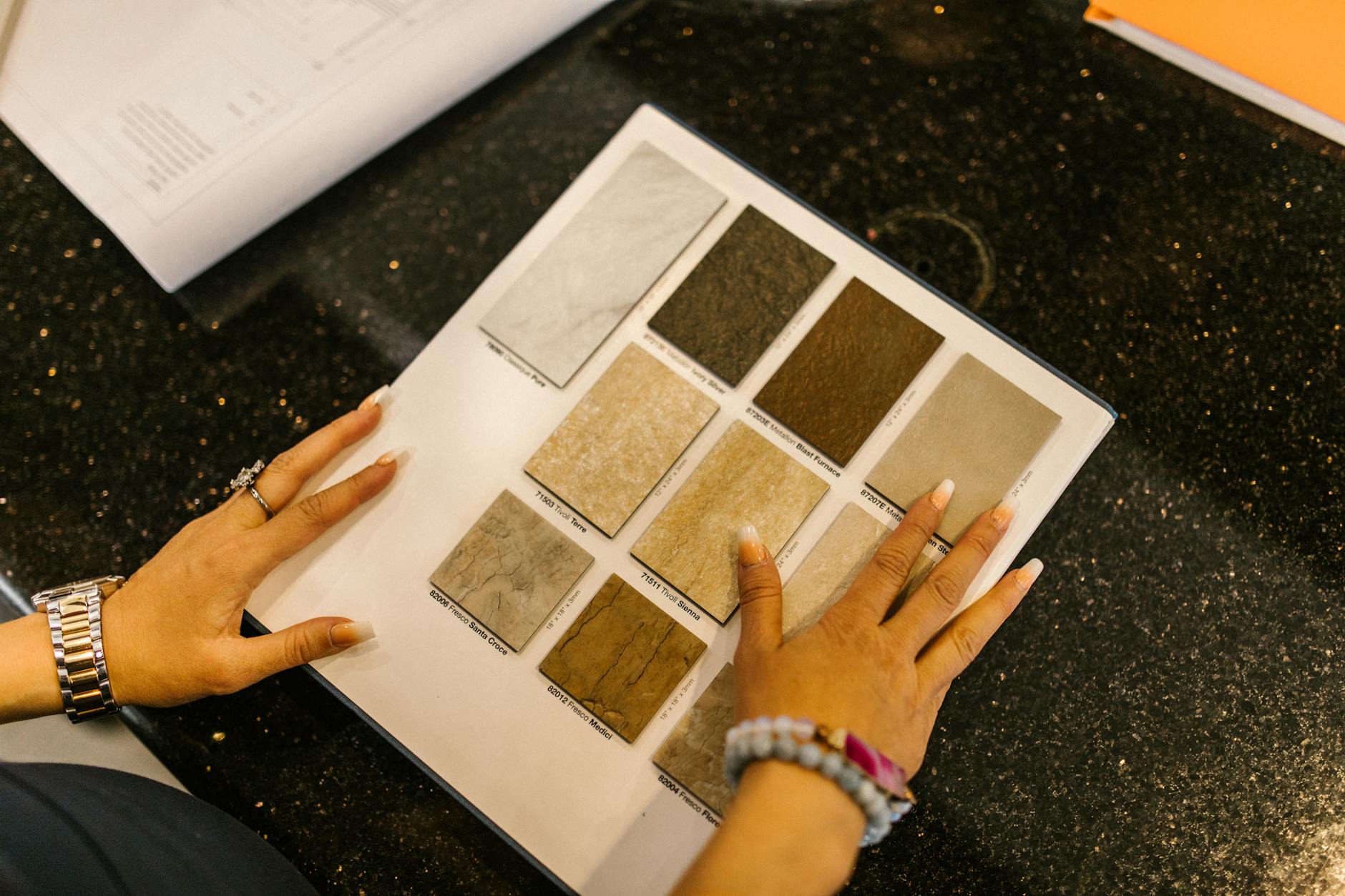
- Show you physical samples of faux wood blind finishes in your actual bathroom lighting.
- Take professional measurements of every window — to 1/8-inch precision.
- Provide a no-obligation written quote before you commit to anything.
We serve Jackson, Lexington, Henderson, Milan, and the surrounding West Tennessee region. Most consultations take 45 to 60 minutes and can be scheduled at a time that works for your family.
Our Guarantee and Next Steps
Every faux wood blind installation by Blinds Galore is backed by our 100% satisfaction guarantee. If something isn’t right, we make it right — period. With over 18 years of experience serving West Tennessee homeowners, we’ve seen every bathroom window challenge imaginable, and we know how to solve them.
Ready to stop dealing with warped, moldy, or ill-fitting bathroom blinds? Upgrade to custom faux wood blinds with Blinds Galore and experience the difference that professional measuring, quality materials, and expert installation make. Call us today at (731) 571-5179 or request your free in-home consultation online — we’d love to help your Jackson, TN home look its best from the inside out.
Frequently Asked Questions
Are faux wood blinds really waterproof for bathrooms?
100% PVC faux wood blinds are effectively waterproof at the slat level — the non-porous PVC material does not absorb water. Hardware quality varies by manufacturer, so look for moisture-rated or galvanized hardware. Wood-composite faux wood blinds are moisture-resistant but not fully waterproof and are best suited for bathrooms with good ventilation.
How long do faux wood blinds last in a humid bathroom?
High-quality 100% PVC faux wood blinds with moisture-rated hardware typically last 10 to 15 years in a bathroom environment with normal use and basic cleaning. Wood-composite faux wood blinds last 7 to 12 years in ventilated bathrooms. Real wood blinds typically show warping within 12 to 24 months in the same conditions.
Can I install faux wood blinds in a shower window?
Yes, but only 100% PVC faux wood blinds should be used in windows that receive direct water spray from a shower. Wood-composite and real wood options are not suitable for direct water contact. Ensure the hardware is fully moisture-rated and mount the blind outside the direct spray zone when possible.
What is the best color for faux wood blinds in a small bathroom?
Bright white or soft white (ivory) faux wood blinds are the best choice for small bathrooms because they reflect light and make the space feel larger and more open. They also coordinate with virtually any tile, paint, or vanity color. Grey and greige finishes are popular for modern bathrooms with cool-toned palettes.
Do I need custom-sized faux wood blinds for my bathroom, or will standard sizes work?
Custom sizing is strongly recommended for bathrooms because privacy depends on a precise fit with no gaps. Standard sizes from big-box stores are manufactured in fixed increments and rarely match bathroom window dimensions exactly, especially in older Jackson, TN homes. Custom blinds are made to 1/8-inch precision for a perfect fit.
How do I clean faux wood blinds in a bathroom?
Weekly dusting with a microfiber duster prevents buildup. For monthly deeper cleaning, wipe slats with a damp cloth and a drop of dish soap, then dry with a clean cloth. 100% PVC faux wood blinds can be removed and rinsed in the bathtub for a thorough cleaning. For mold spots, a diluted white vinegar solution (1 part vinegar to 3 parts water) works well on PVC slats.
You might also like
7 Best Custom Blinds for Sunrooms in Jackson, TN: Light Control and UV Protection Guide
Quick answer: The best custom blinds for sunrooms in Jackson, TN balance strong UV protection with flexible

How to Install Custom Faux Wood Blinds in Your Jackson, TN Home: a 10-Step Guide
Quick answer: Installing custom faux wood blinds in a Jackson, TN home is a manageable DIY project for

How to Choose the Right Window Treatment Style Using Product Videos
Quick answer: Choosing the right window treatment — blinds, shades, or plantation shutters — comes

7 Best Custom Blinds for Laundry Rooms and Utility Spaces in Jackson, TN
Quick answer: The best custom blinds for laundry rooms and utility spaces in Jackson, TN are moisture-resistant

8 Best Custom Blinds for Kitchens with Large Windows in Jackson, TN
Quick answer: For kitchens with large windows in Jackson, TN, the best custom blinds balance moisture

9 Best Window Treatments for Jackson TN Home Theaters and Media Rooms
Quick answer: For home theaters and media rooms in Jackson, TN, the single best window treatment is a