

9 Best Energy-Efficient Window Treatments to Lower Heating Costs in Jackson, TN
Quick answer: The best energy-efficient window treatments for Jackson, TN homes include cellular (honeycomb) shades, plantation shutters, solar shades, faux wood blinds, and insulating Roman shades. Cellular shades offer the highest R-value among fabric options — up to R-6 — while plantation shutters provide rigid insulation and year-round light control. West Tennessee winters are mild but heating costs still add up; the right window covering can reduce heat loss through glass by 25–51%. A free in-home consultation from Blinds Galore helps you match the right treatment to each room, window size, and budget.
Why Window Treatments Matter for Heating Costs in Jackson, TN

Before diving into specific products, it helps to understand why windows are such a significant source of heat loss — and why the right window treatment is one of the smartest, most affordable upgrades available to Jackson, TN homeowners. The physics are straightforward: glass conducts heat far more readily than insulated walls, and most homes have a lot of it.
How Much Heat Is Lost Through Windows?
Windows are one of the biggest weak points in a home’s thermal envelope. According to the U.S. Department of Energy, heat gain and loss through windows account for 25–30% of residential heating and cooling energy use. In a typical Jackson, TN home with single- or double-pane windows, that translates directly to inflated utility bills every January and February.
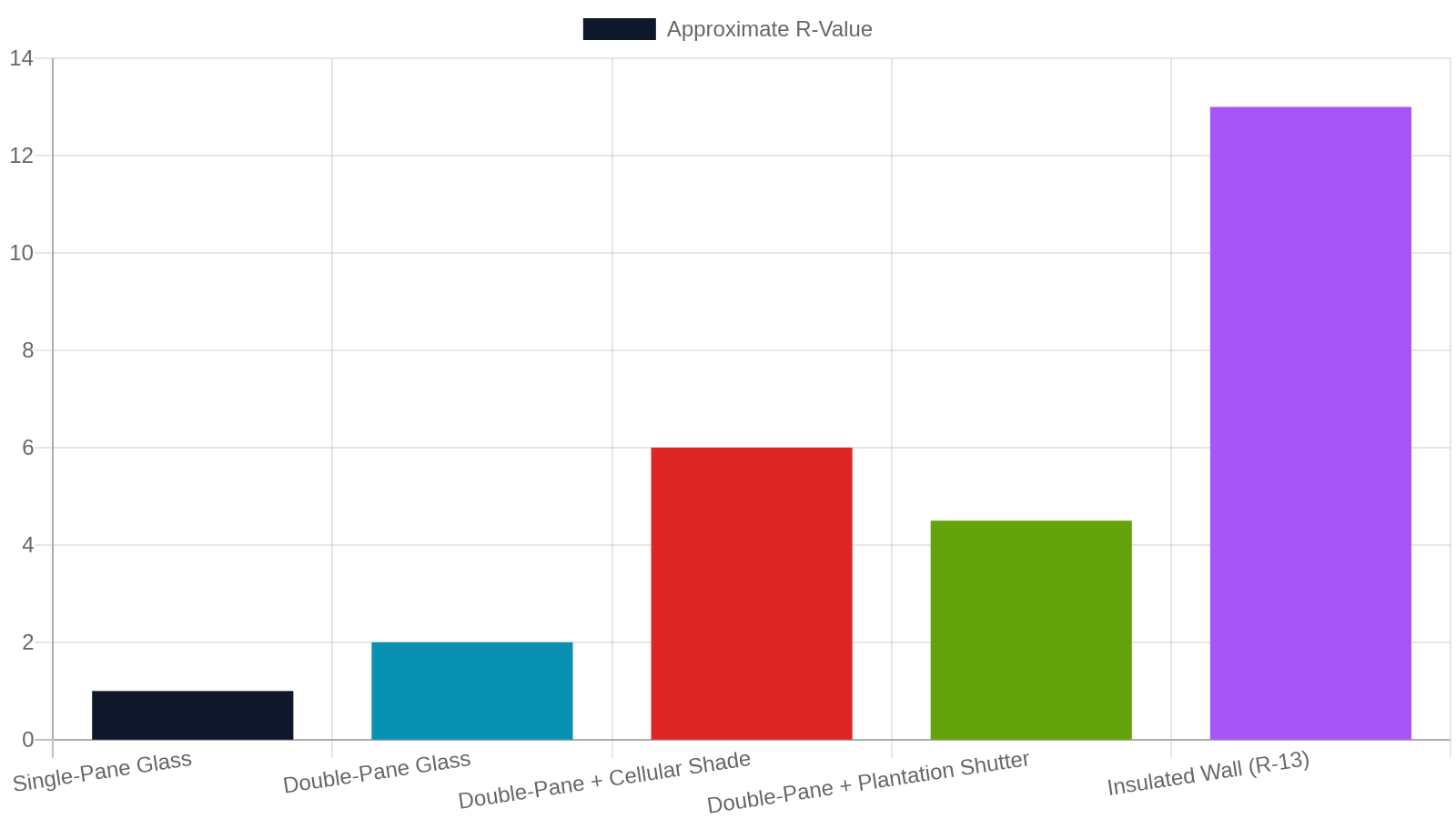
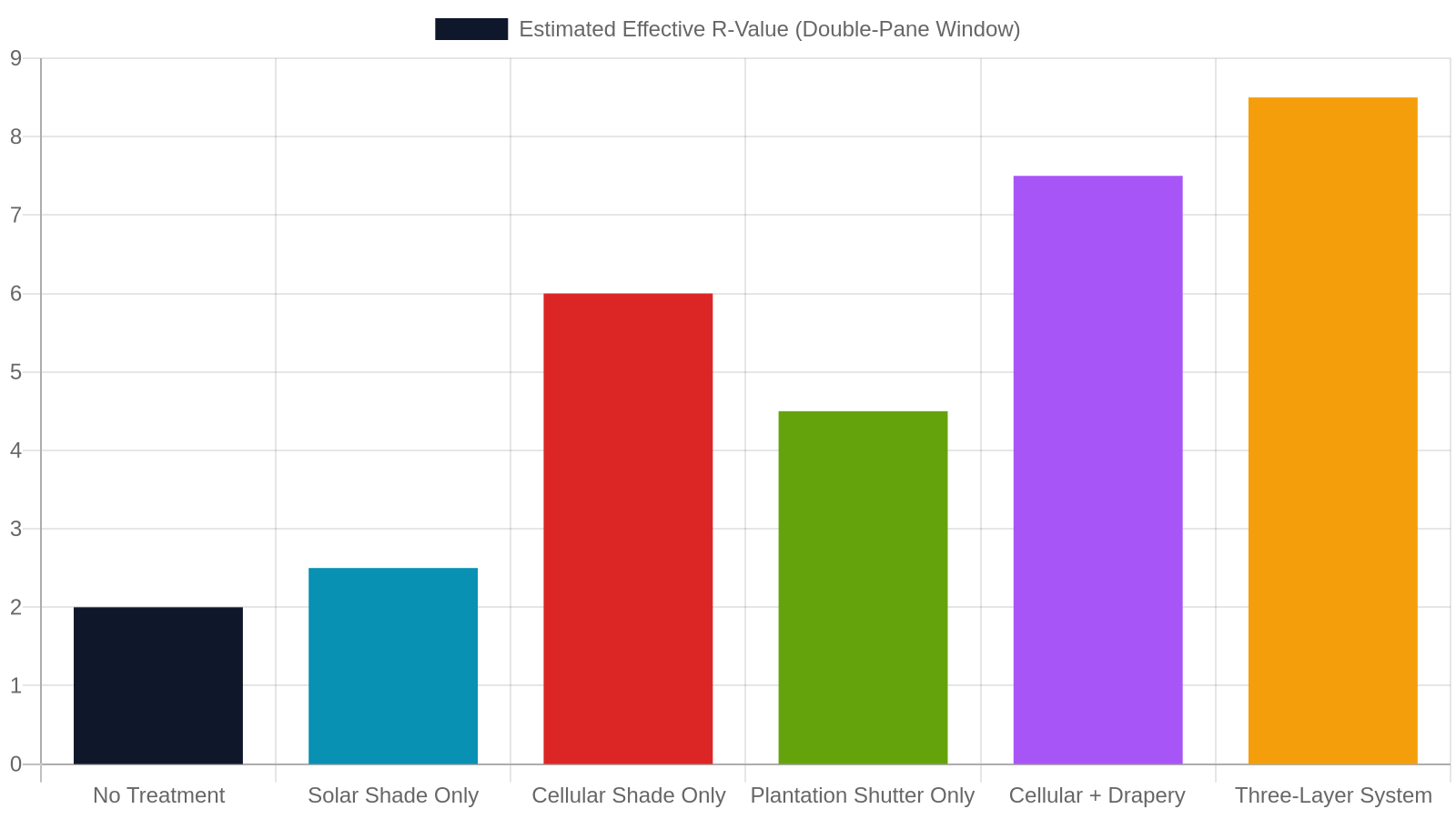
Even double-pane glass has an R-value of only about R-2, compared to an insulated wall at R-13 or higher. Adding an energy-efficient window treatment can more than double the effective R-value of that glass surface — without replacing the windows themselves.
West Tennessee's Climate and Your Window Choices
Jackson, TN sits in USDA Hardiness Zone 7b, with average January lows around 29°F and summer highs pushing past 95°F. That means your window treatments need to work in both directions — keeping cold out in winter and blocking radiant heat gain in summer.
Communities like Lexington, Henderson, and Milan share the same climate challenges. A well-chosen window covering is one of the most cost-effective upgrades a West Tennessee homeowner can make, often paying for itself within 3–5 years through energy savings alone.
1. Cellular (Honeycomb) Shades — The Gold Standard for Insulation
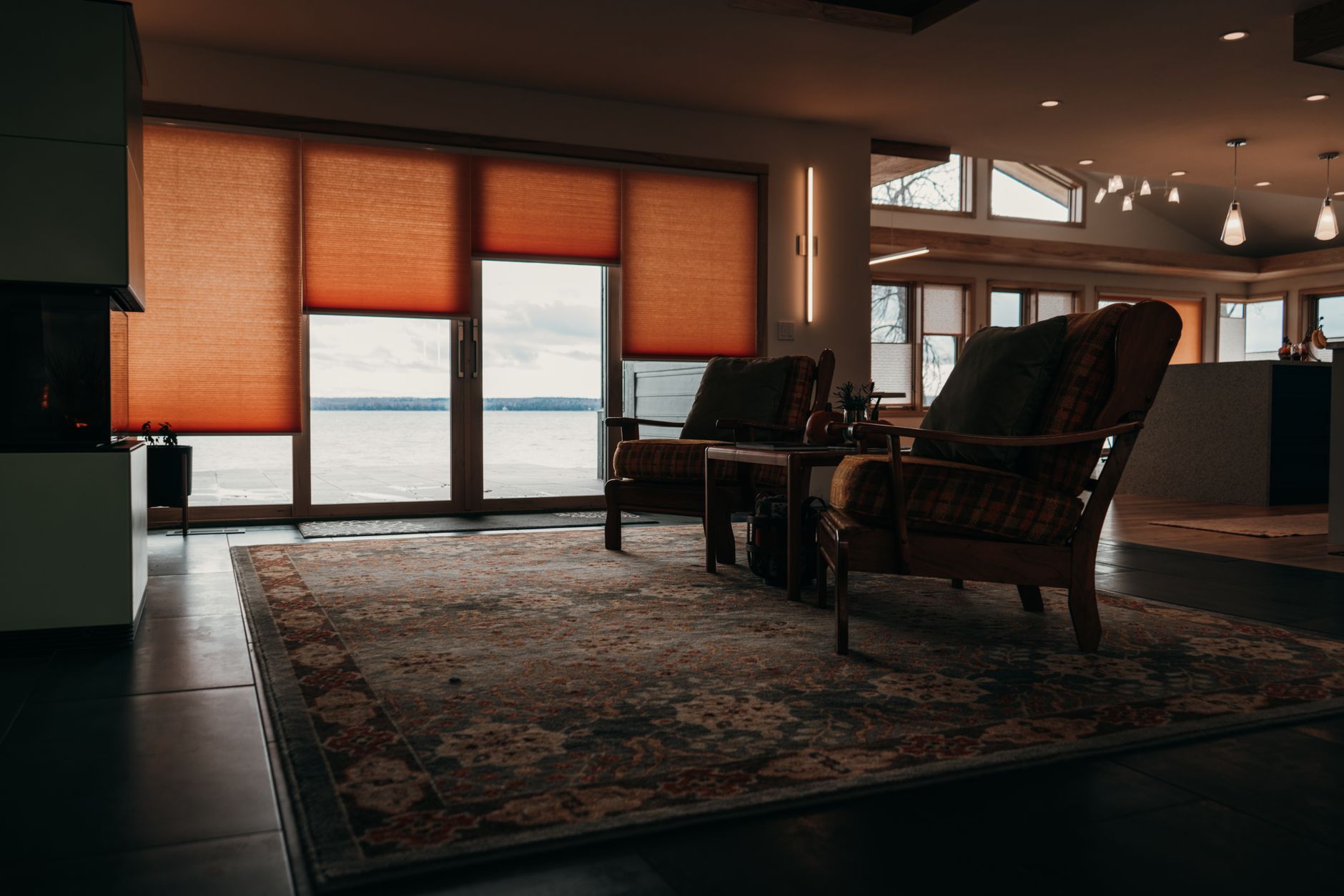
If you’re looking for a single product that delivers the most measurable improvement in window insulation, cellular shades are the answer. Designed from the ground up to minimize heat transfer, they outperform virtually every other fabric shade option in independent energy testing — and they look great doing it.
How the Honeycomb Structure Traps Heat
Cellular shades — also called honeycomb shades — are engineered specifically for insulation. Their namesake hexagonal cells trap pockets of still air between the window glass and the room interior, creating a thermal barrier that significantly slows heat transfer. Single-cell shades achieve roughly R-3 to R-4, while double-cell designs reach R-4.5 to R-6, and triple-cell options push even higher.
This makes them the highest-performing fabric window treatment available for energy efficiency. The U.S. Department of Energy specifically recommends cellular shades as a top strategy for reducing window heat loss.
Choosing the Right Cell Size and Opacity
Cellular shades come in three cell sizes — 3/8 inch, 9/16 inch, and 3/4 inch — and in light-filtering or blackout opacity. For bedrooms in Jackson, TN homes, blackout double-cell shades offer the best combination of privacy, sleep quality, and insulation. For living areas, light-filtering options let in soft natural light while still providing meaningful thermal performance.
They’re available in cordless and motorized configurations, making them a safe choice for homes with children or pets. Custom-fitted cellular shades — measured precisely to your window dimensions — perform significantly better than off-the-shelf alternatives because they eliminate gaps where cold air can infiltrate.
2. Plantation Shutters — Rigid Insulation with Timeless Style
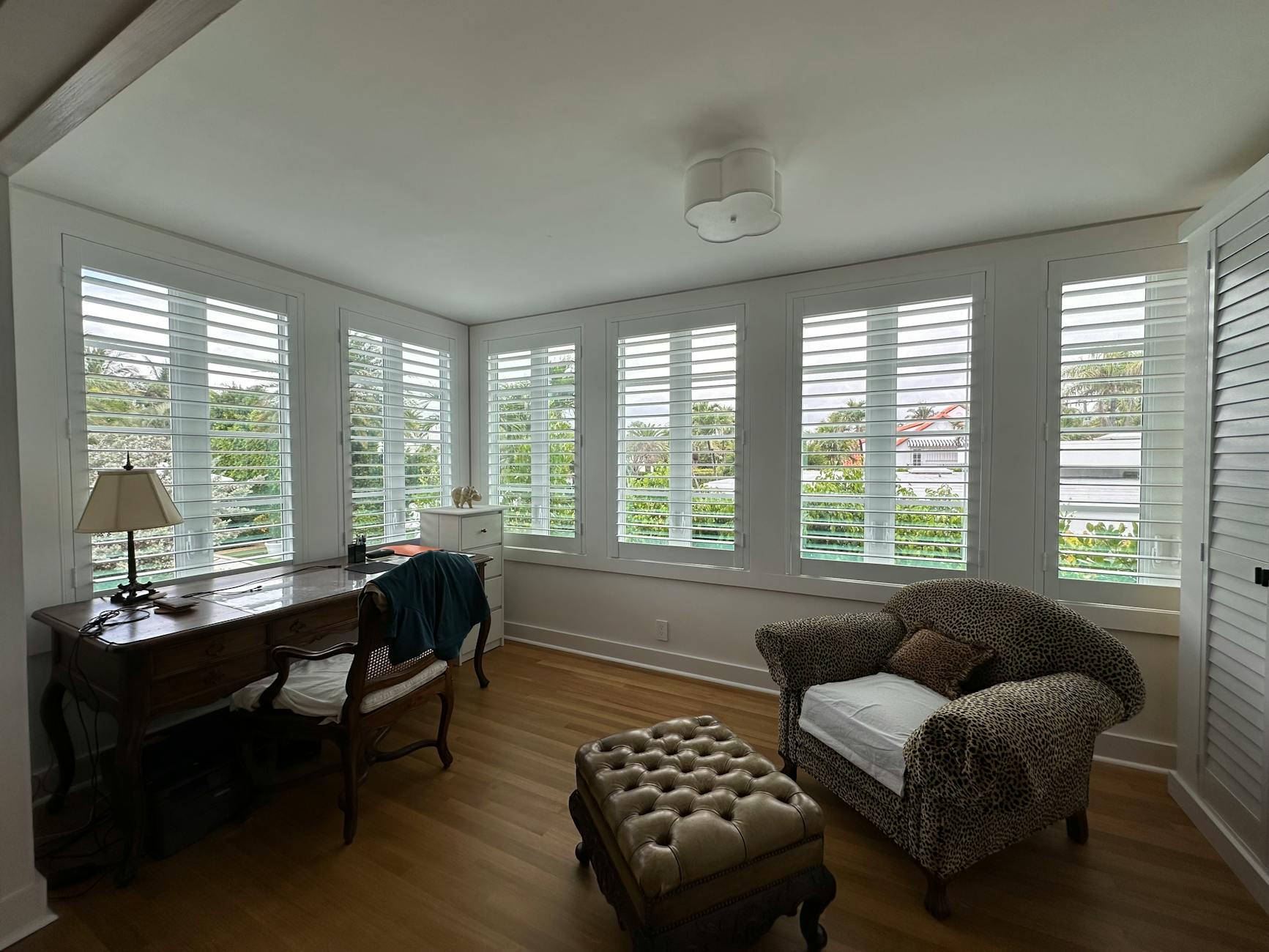
Plantation shutters are the window treatment most likely to be mistaken for architectural millwork — and that’s exactly the point. They frame a window beautifully while providing genuine insulation, light control, and privacy. For many Jackson, TN homeowners, shutters are the last window treatment they’ll ever need to buy.
Why Solid Shutters Outperform Fabric in Some Scenarios
Plantation shutters are made from solid wood, composite, or faux wood materials that form a rigid barrier across the window frame. When the louvers are closed, they block drafts, reduce convective air currents near the glass, and add meaningful insulation. A well-fitted plantation shutter can achieve an effective R-value of R-3 to R-4.5 depending on material and construction.
Unlike fabric shades, shutters are dimensionally stable — they don’t sag, warp, or lose their fit over time. For Jackson, TN homeowners who want a permanent, built-in look that adds resale value, plantation shutters are a compelling investment.
Faux Wood vs. Real Wood Shutters for Energy Performance
Real wood shutters are beautiful but can expand and contract with West Tennessee’s humidity swings. Faux wood (composite) shutters are dimensionally stable, moisture-resistant, and typically less expensive — making them the preferred choice for bathrooms, kitchens, and high-humidity spaces. For living rooms and bedrooms, real wood offers a premium aesthetic with comparable insulation performance.
Both types are custom-built to fit your exact window dimensions, ensuring a tight fit that minimizes air infiltration around the edges. Explore our custom-built shutters to see the full range of styles, stains, and finishes available for Jackson-area homes.
3. Solar Shades — Block Heat Gain Without Losing the View
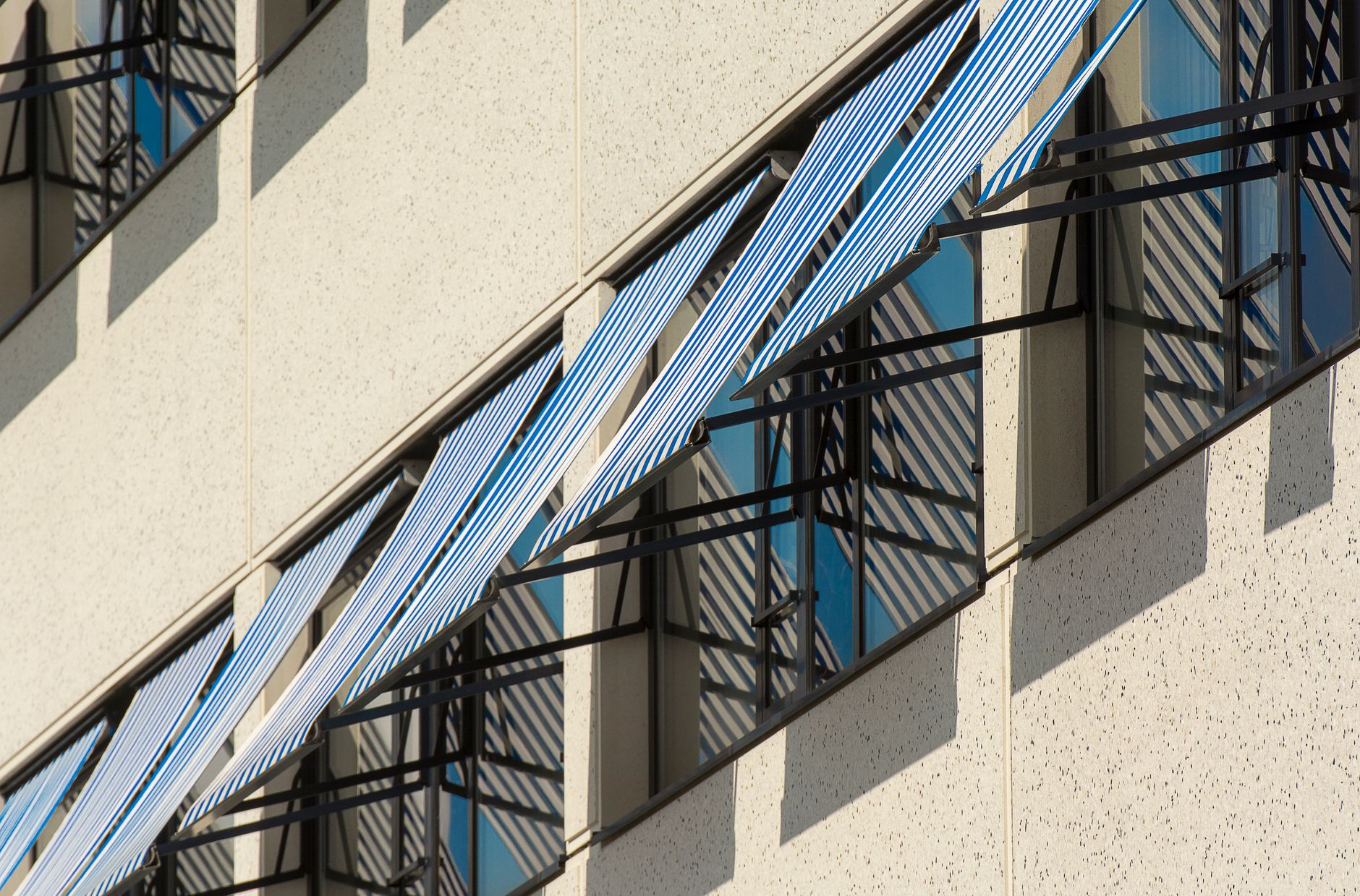
Solar shades are the specialists of the window treatment world — engineered to manage the sun’s energy rather than simply block it. They’re particularly valuable for Jackson, TN homes with large south- or west-facing windows where glare and heat gain are ongoing concerns.
Understanding Openness Factor
Solar shades are woven from a specialized mesh fabric designed to block UV radiation and reduce solar heat gain while preserving your outward view. The key spec to understand is openness factor — the percentage of the fabric that is open weave. A 1% openness factor blocks about 99% of UV rays and provides significant glare reduction; a 10% factor is more transparent but still cuts UV by 90%.
For south- and west-facing windows in Jackson, TN — where afternoon sun can dramatically raise room temperatures — solar shades are one of the most effective tools for reducing cooling costs in summer and preventing solar heat gain on sunny winter days when you’d rather keep the heat inside.
Solar Shades in Winter: Do They Help?
In winter, solar shades work differently than cellular shades. They don’t trap air or add significant R-value, but they do reduce radiant heat loss by reflecting some interior warmth back into the room. On sunny winter days, a lighter-openness solar shade can actually allow passive solar gain — letting the sun’s warmth in — while still cutting drafts from cold glass surfaces.
The best strategy for year-round performance is to pair solar shades with a secondary treatment like a cellular shade or drapery panel, creating a layered system that handles both solar gain in summer and insulation in winter.
4. Faux Wood Blinds — Durable, Moisture-Resistant, and Surprisingly Efficient
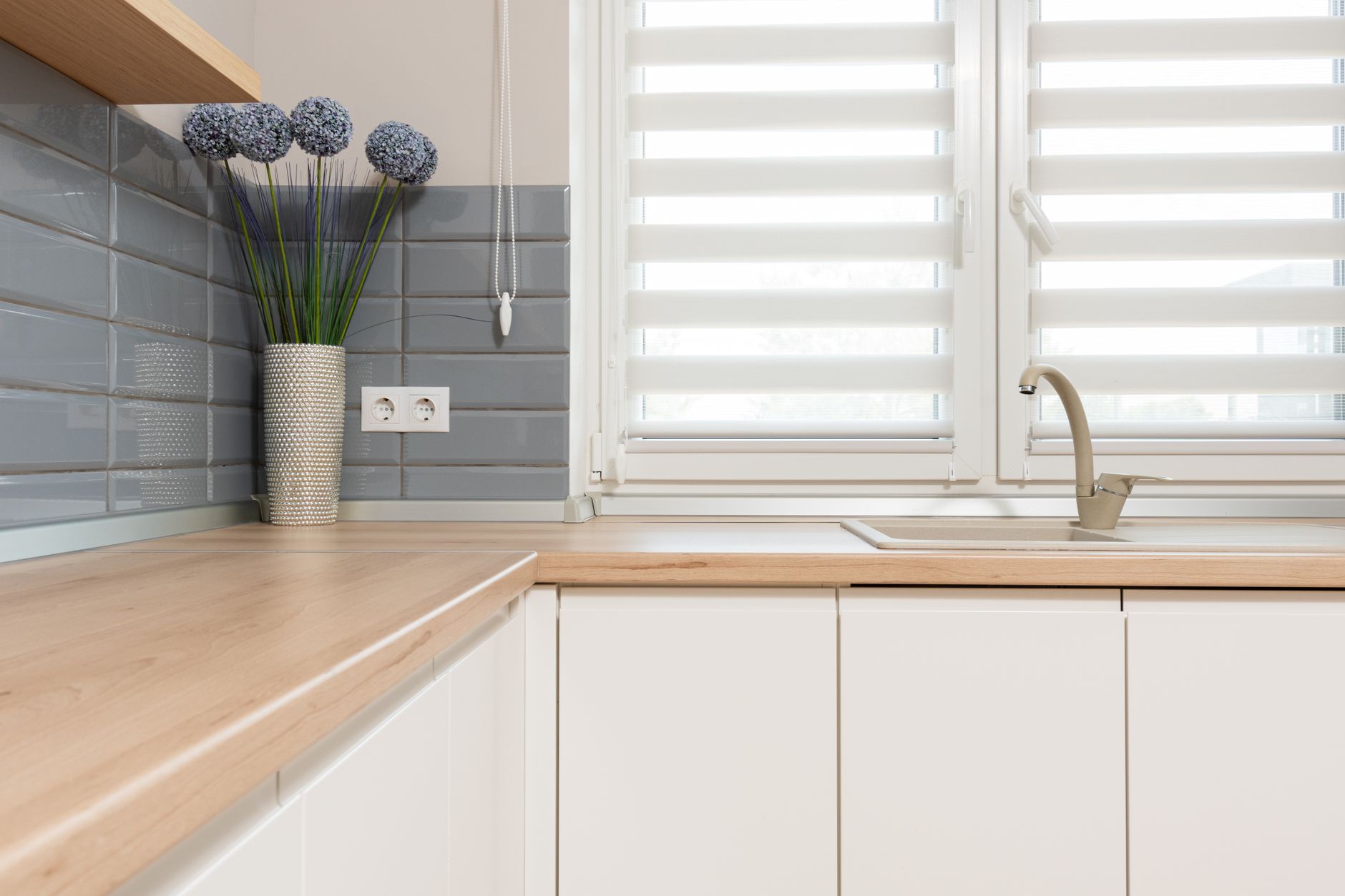
Faux wood blinds are the workhorses of the window treatment world — tough, affordable, and more energy-efficient than most homeowners realize. They’re a smart choice for any room where moisture, humidity, or heavy use would damage softer materials.
How Faux Wood Blinds Reduce Heat Loss
Faux wood blinds are made from PVC or a wood-composite material that resists warping, cracking, and moisture — making them ideal for kitchens, bathrooms, and laundry rooms where real wood would fail. When the slats are closed tightly, faux wood blinds create a layered barrier that slows convective air movement near the glass surface.
While their R-value doesn’t match cellular shades, closed faux wood slats can reduce window heat loss by 15–25% compared to an uncovered window. For rental properties and high-traffic areas in Jackson and surrounding communities like Milan and Lexington, faux wood blinds offer an excellent balance of durability, energy performance, and low maintenance cost.
Sizing and Fit for Maximum Efficiency
The energy performance of any blind depends heavily on fit. Inside-mount blinds that are precisely measured to the window opening minimize the gaps through which cold air can infiltrate. Custom-measured faux wood blinds outperform stock sizes significantly because they eliminate the side gaps that allow convective drafts.
Blinds Galore’s professional measuring service ensures every set of faux wood blinds is cut to the exact dimensions of your windows — no guessing, no gaps. Learn more about our custom faux wood blinds and why they’re a popular choice across West Tennessee.
5. Roman Shades with Insulating Lining — Soft Style, Hard-Working Insulation
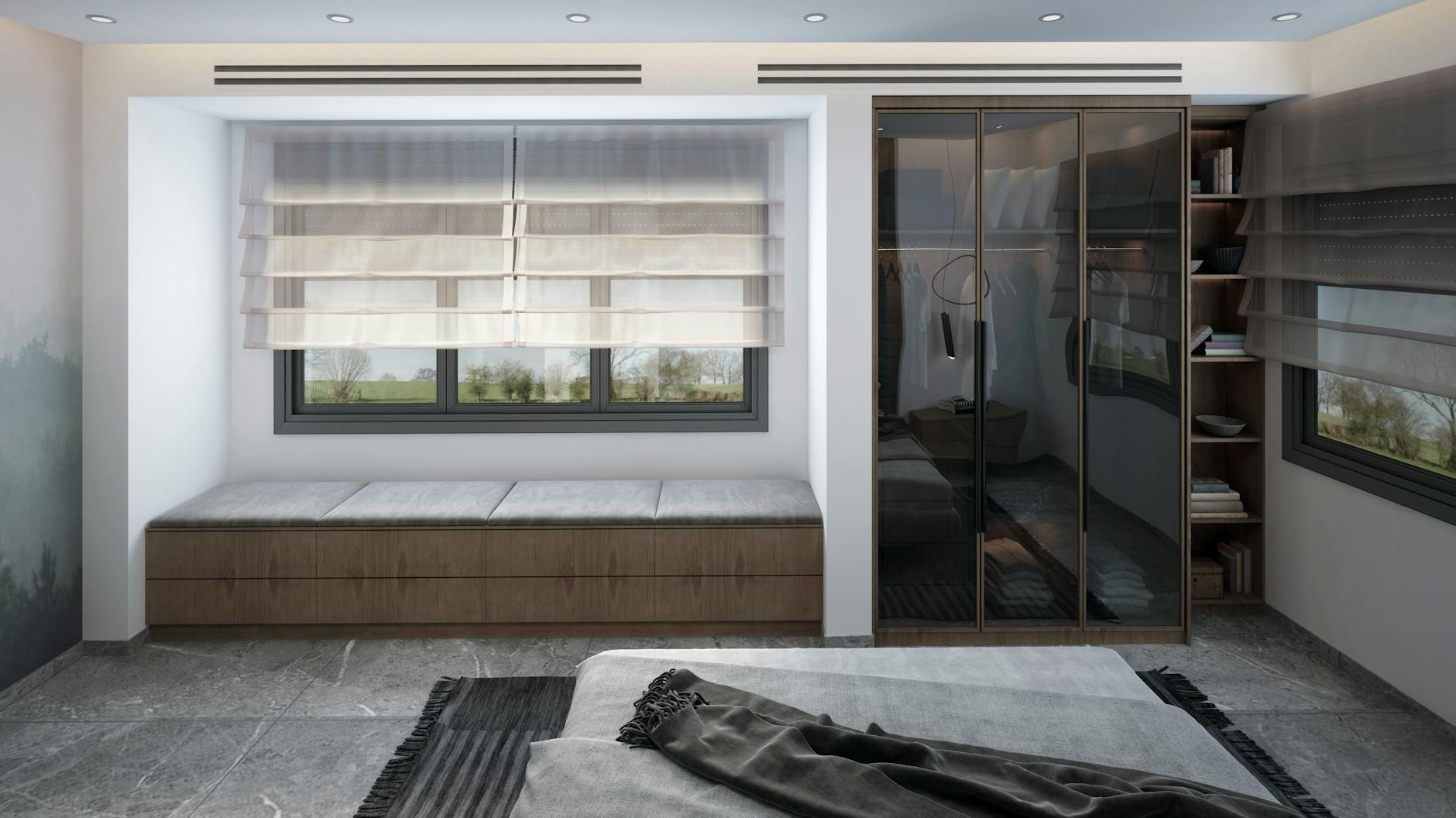
Roman shades occupy a unique position in the window treatment market — they’re among the most design-forward options available, yet with the right lining, they deliver genuine thermal performance. For homeowners who refuse to sacrifice style for function, a custom thermally lined Roman shade is the answer.
The Role of Thermal and Blackout Linings
A standard Roman shade is a decorative fabric panel — attractive, but not inherently energy-efficient. The transformation happens when you add a thermal lining or blackout lining to the back of the fabric. Thermal linings are typically made from acrylic foam or multiple layers of tightly woven fabric that reflect radiant heat back into the room.
A lined Roman shade can reduce window heat loss by up to 33% compared to an unlined version. Blackout linings add a secondary benefit — they block 99%+ of light, making them ideal for bedrooms and media rooms where sleep quality and screen visibility matter.
Pairing Roman Shades with Other Treatments
Roman shades shine brightest as part of a layered window treatment system. Pair a thermally lined Roman shade with a sheer curtain panel for daytime privacy and a decorative drapery panel for added insulation at night. This three-layer approach — sheer, Roman shade, drapery — can achieve an effective R-value comparable to a cellular shade while offering far more design flexibility.
For Jackson, TN homeowners who want their windows to be a design statement as well as an energy asset, custom Roman shades in locally inspired fabrics and textures are a beautiful solution. Our custom shades page showcases the full range of fabric, lining, and style options available.
6. Insulating Drapery Panels — The Oldest Energy-Saving Trick in the Book
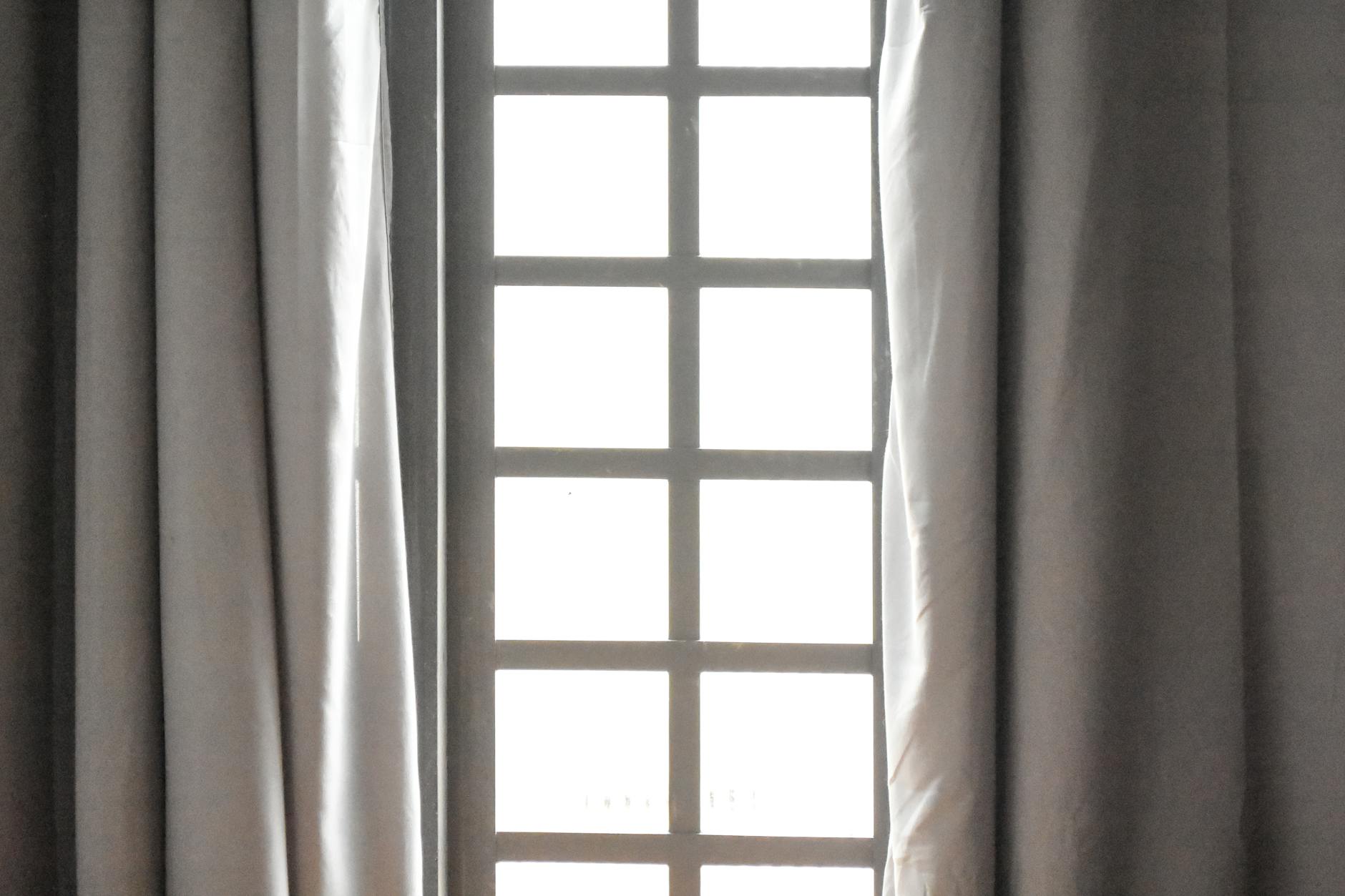
Don’t underestimate the humble drapery panel. When properly sized, lined, and installed, floor-length curtains are one of the most effective — and most affordable — ways to reduce window heat loss in any room of your Jackson, TN home.
What Makes a Drapery Panel Energy-Efficient?
Heavy, floor-length drapery panels have been used to insulate windows for centuries — and modern versions are more effective than ever. The key factors are fabric weight, lining, and installation method. Heavyweight fabrics like velvet, wool, or tightly woven polyester block more radiant heat than lightweight sheers. A thermal or blackout lining adds another layer of resistance.
Critically, drapery panels must be installed correctly to perform well. They should hang from ceiling height to the floor, overlap the window frame by at least 6 inches on each side, and ideally be anchored at the bottom with a hem weight or tie-back system to prevent cold air from flowing behind the panel.
Drapery as a Complement, Not a Replacement
Drapery panels work best as a complement to a primary window treatment — a cellular shade or blind — rather than as a standalone solution. During the day, you can raise the drapery to let in passive solar warmth through a light-filtering shade. At night, closing heavy drapery over the shade creates a double barrier that can reduce window heat loss by 25–40% compared to an uncovered window.
In Jackson, TN’s older housing stock — where single-pane windows are still common — this layered approach can make a dramatic difference in comfort and heating bills without the cost of full window replacement.
9 Energy-Efficient Window Treatments at a Glance
Use this comparison to quickly identify which window treatment best fits your energy goals, budget, and room type.
7. Motorized and Smart Window Treatments — Automate Your Energy Savings
Technology has transformed window treatments from passive accessories into active energy management tools. Motorized and smart window treatments represent the cutting edge of energy efficiency — and they’re more accessible and affordable than ever for West Tennessee homeowners.
How Automation Maximizes Energy Performance
The most energy-efficient window treatment in the world only works when it’s actually deployed. Studies show that manually operated shades and blinds are frequently left open during cold nights or closed during peak solar gain hours — eliminating much of their potential benefit. Motorized window treatments solve this problem by automating the open/close cycle based on time of day, temperature, or sunlight sensors.
A smart motorized system can be programmed to close all shades automatically at sunset (reducing overnight heat loss) and open south-facing shades during peak winter sun hours (maximizing passive solar gain). Over a full heating season, this kind of optimized scheduling can reduce heating costs by an additional 10–15% beyond what the treatment achieves on its own.
Integration with Smart Home Systems
Modern motorized window treatments integrate with Amazon Alexa, Google Home, Apple HomeKit, and dedicated home automation platforms like Lutron and Somfy. Voice commands, smartphone apps, and automated schedules put energy management at your fingertips — or remove it from your to-do list entirely.
For Jackson, TN homeowners who travel frequently, motorized shades also provide a security benefit — they can simulate occupancy by operating on a randomized schedule. For property managers overseeing multiple units in Henderson or Milan, centralized control of window treatments across an entire building is a genuine operational advantage.
8. Layering Window Treatments for Maximum Insulation
If you want to squeeze every possible BTU of savings out of your windows, layering is the strategy. No single window treatment — no matter how well-engineered — can match the combined performance of two or three complementary products working together.
The Three-Layer System Explained
Interior designers and energy consultants agree: layered window treatments outperform any single product. The classic three-layer system consists of a sheer or solar shade closest to the glass (for daytime privacy and UV control), a cellular or Roman shade in the middle (for primary insulation), and a drapery panel on the outside (for nighttime insulation and design impact).
Each layer adds incremental R-value and addresses a different energy challenge. The sheer manages daytime solar gain; the insulating shade provides the thermal barrier; the drapery seals the edges and adds mass. Together, a well-executed three-layer system can achieve an effective R-value of R-7 to R-9 on a standard double-pane window — approaching the performance of an insulated wall.
Practical Layering Tips for Jackson, TN Homes
Layering doesn’t have to mean complicated or expensive. Start with the most impactful single treatment — a cellular shade or plantation shutter — and add layers over time as budget allows. Focus first on the rooms where you spend the most time and the windows that face north (greatest heat loss) or west (greatest afternoon heat gain in summer).
In older Jackson, TN homes with large, drafty windows, even adding a single thermal-lined drapery panel over an existing blind can produce a noticeable improvement in comfort. Our team at Blinds Galore can walk you through layering strategies during a free in-home consultation — we’ll assess every window in your home and prioritize the upgrades with the greatest impact on your heating bills.
9. Professional Measuring and Installation — Why It Matters for Energy Efficiency

Even the most technologically advanced window treatment performs only as well as its installation. Custom measuring and professional installation aren’t luxuries — they’re essential components of achieving the energy savings that motivated your purchase in the first place.
The Gap Problem: Why Off-the-Shelf Blinds Underperform
The single most common reason energy-efficient window treatments fail to deliver their rated performance is poor fit. Stock blinds and shades purchased from big-box stores are manufactured in fixed increments — 1/2 inch, 1 inch, or larger — and almost never match your actual window dimensions exactly. Even a 1/4-inch gap on each side of a cellular shade allows convective air currents to bypass the insulating cells entirely, dramatically reducing real-world performance.
Professional measuring eliminates this problem. A trained installer measures each window to the nearest 1/8 inch, accounts for out-of-square frames (common in older Jackson, TN homes), and specifies the exact deduction needed for a perfect inside-mount fit. The result is a treatment that actually performs as advertised.
Blinds Galore's Free In-Home Consultation Process
Blinds Galore brings the showroom directly to your Jackson, TN home — no driving to a store, no guessing about how a color or texture will look in your actual light. During a free in-home consultation, our team measures every window, discusses your energy goals, budget, and style preferences, and presents custom recommendations tailored to your specific home.
We handle professional installation so every treatment hangs level, operates smoothly, and fits precisely. With our 100% satisfaction guarantee, you can invest in energy-efficient window treatments with complete confidence. Call us at (731) 571-5179 to schedule your free consultation — we serve Jackson, Lexington, Henderson, Milan, and communities throughout West Tennessee.
Ready to Lower Your Heating Bills? Your Next Step in Jackson, TN
You’ve done the research — now it’s time to take action. Reducing your heating costs with energy-efficient window treatments is one of the smartest home improvement investments you can make in Jackson, TN. The right treatment pays for itself, improves your comfort, and adds lasting value to your home.
Start with a Free In-Home Consultation
The best window treatment for your home depends on factors that can’t be assessed from a product page — your window orientation, existing glass type, room usage, budget, and personal style all play a role. That’s why Blinds Galore’s free in-home consultation is the ideal starting point for any Jackson, TN homeowner serious about reducing heating costs.
Our experienced team has been helping West Tennessee families find the right window treatments for over 18 years. We’ll measure every window, explain your options in plain language, and help you prioritize the upgrades that will have the greatest impact on your comfort and energy bills. Call (731) 571-5179 today to schedule your free consultation — there’s no obligation and no pressure.
Keep Learning: Resources from Blinds Galore
If you’d like to keep researching before you call, we publish regular guides, tips, and inspiration for West Tennessee homeowners on the Blinds Galore blog. You’ll find articles covering everything from room-by-room window treatment recommendations to care and maintenance guides for blinds, shades, and shutters.
You can also visit our main website to explore our full product lineup, watch product videos, and learn more about what makes Blinds Galore the trusted choice for custom window treatments across Jackson, Lexington, Henderson, Milan, and all of West Tennessee. We back every installation with a 100% satisfaction guarantee — because your comfort is our business.
Frequently Asked Questions
What is the most energy-efficient window treatment for cold winters in Jackson, TN?
Double-cell cellular (honeycomb) shades offer the highest R-value of any fabric window treatment — up to R-6 — making them the top choice for insulating windows during West Tennessee winters. Plantation shutters are a close second, providing a rigid barrier that significantly reduces drafts and heat loss.
How much can energy-efficient window treatments reduce my heating bill?
The U.S. Department of Energy estimates that properly installed energy-efficient window treatments can reduce heat loss through windows by 25–51%, depending on the product and installation quality. For a typical Jackson, TN home where windows account for 25–30% of heating energy use, that can translate to meaningful savings on monthly utility bills.
Are plantation shutters worth the cost for energy savings?
Yes, for most homeowners. Plantation shutters are a permanent, built-in window treatment with an effective R-value of R-3 to R-4.5. They reduce drafts, add resale value, and last decades with minimal maintenance — making the higher upfront cost worthwhile compared to treatments that need replacing every 5–10 years.
Do solar shades help with heating costs in winter?
Solar shades are primarily designed to manage solar heat gain in summer and reduce UV damage year-round. In winter, they provide modest insulation benefits and can allow passive solar gain on sunny days. For maximum winter heating savings, pair solar shades with a cellular shade or drapery panel.
How do I get custom window treatments measured and installed in Jackson, TN?
Blinds Galore offers free in-home consultations throughout Jackson, TN and surrounding communities including Lexington, Henderson, and Milan. Call (731) 571-5179 to schedule — a professional will measure every window, recommend the best treatments for your energy goals and budget, and handle installation with a 100% satisfaction guarantee.
What is the R-value of a typical window, and how do window treatments improve it?
A standard double-pane window has an R-value of approximately R-2, compared to an insulated wall at R-13 or higher. Adding a double-cell cellular shade can raise the effective R-value to R-6 or more. Layering multiple treatments — such as a cellular shade plus drapery panels — can push the effective R-value to R-7 or R-9.
You might also like
9 Ways Cellular Shades Cut Energy Costs in Jackson, TN Homes
Quick answer: Cellular shades — also called honeycomb shades — are the most energy-efficient window
Best Window Treatments for Energy Savings in Jackson, TN Homes
Quick answer: In West Tennessee's hot, humid summers and chilly winters, the right window treatments