

Best Blinds for Energy Efficiency: A Tennessee Guide
When your living room feels too hot by midafternoon in July, or one chair by the window stays chilly all winter, your window coverings stop being just a decorating choice. In West Tennessee, they become part of how your house handles weather.
That matters more than many homeowners realize. The right treatment can help tame bright sun, reduce drafts, and make rooms feel more even from one side to the other. The wrong one might look nice and still leave your HVAC system working harder than it should.
If you're shopping for the best blinds for energy efficiency, the answer isn't just “pick the thickest product.” It depends on how the treatment is built, how tightly it fits, what direction the window faces, and how it's installed. Those details make a real difference in Jackson, Milan, Dyersburg, Humboldt, Lexington, and across the region where summers are hot, humidity hangs around, and winter cold snaps still show up.
Taming Tennessee Weather From the Inside Out
West Tennessee homes deal with two very different problems.
In summer, sunlight pours through glass and warms up floors, sofas, and interior walls. Then your AC has to keep chasing that heat. In winter, the problem flips. You feel cool air near the window, even when the thermostat says the house should be comfortable.
The reason is simple. Windows are one of the weakest points in the building envelope. The U.S. Department of Energy says a significant portion of a home's heating energy is lost through windows, and during cooling season, much of the sunlight on standard double-pane windows enters as heat. Properly installed cellular shades can reduce heat loss by 40% or more (Vineyard Blinds).
That’s why window treatments deserve more respect than they typically receive.
What homeowners often notice first
Homeowners do not start with technical terms. They start with problems like these:
- Hot spots near windows: One end of the room feels warmer than the rest.
- Winter drafts: You reach for a blanket in a room that should feel comfortable.
- Glare on screens: Afternoon light makes it hard to work or relax.
- Higher utility bills: Heating and cooling feel expensive even when the HVAC system is running normally.
A well-chosen blind, shade, or shutter helps with all four. It creates another barrier between the room and the glass.
Practical rule: If a room feels uncomfortable near the window, the solution often starts at the window.
Comfort first, savings second
Most homeowners ask about bills first, and that’s fair. But comfort is the benefit you notice fastest.
A good insulating treatment can make a bedroom feel steadier overnight. It can make a west-facing den usable in late afternoon. It can help a rental, office, or family room feel less exposed to outside temperature swings.
This is the primary objective. Lower utility use matters, but day-to-day comfort is what makes the investment feel worthwhile.
The Science of Saving How Window Treatments Work
A window can lose comfort in three different ways at once. Heat can pass through the glass and frame. Air can slip around the edges. Sun can pour radiant heat into the room, especially during a West Tennessee summer afternoon.
Energy-efficient window treatments help by slowing each of those paths. That is why two products that look similar from across the room can perform very differently once July or January shows up.

R-value in plain language
R-value measures how strongly a material resists heat flow. Higher numbers mean better insulation.
A simple way to read that at home is this: a higher R-value usually means the room changes temperature more slowly near the window. In winter, that can mean fewer chilly spots by the glass. In summer, it can mean less heat pushing indoors from outside.
Some shades insulate better because they hold still air inside their structure. That trapped air works like the air space in a cooler. It slows heat transfer instead of letting warmth move freely through the window area.
For West Tennessee homeowners, the practical question is not "What is the R-value?" It is "Will this room stay more even, and will my HVAC run less often?" That is the better way to connect the number to your utility bill.
U-factor is the opposite measurement
If R-value measures resistance, U-factor measures heat transfer. Lower is better.
Homeowners rarely ask for U-factor by name, but it shows up in manufacturer specs and energy ratings. A lower U-factor usually points to a window treatment and window combination that lets less heat move through the opening.
The plain-English takeaway is short:
- High R-value: stronger insulation
- Low U-factor: less heat getting through
- Close, professional fit: better real-world performance
A strong product can still underperform if gaps around the sides let air move freely. That point is especially important on older homes in our area, where trim, frames, and window depth are not always perfectly uniform.
SHGC is often the summer problem
Solar Heat Gain Coefficient, or SHGC, measures how much of the sun's heat comes through the window system.
That number becomes more important on west-facing and south-facing windows, where afternoon sun can make one room feel like a different house. You may set the thermostat to 72, but a bonus room with direct sun can still feel several degrees warmer because the glass keeps collecting heat.
Lower SHGC performance helps cut that solar load. In practical terms, it can reduce the "oven window" effect that shows up in late summer across West Tennessee. If you want a clear example of how sun control also protects interiors, our guide to UV protection window treatments explains that connection.
One window treatment can solve several problems
The best energy-saving products usually handle more than one job at a time.
They slow heat loss on cold nights
Bedrooms and living rooms feel less drafty near the glass.They reduce solar heat during bright parts of the day
That helps keep sun-heavy rooms more usable in summer.They limit air movement around the window opening
Accurate measuring and installation make a noticeable difference here.
This is why product selection should match the room, not just the style of the house. A shaded nursery has different needs than a west-facing den with a wall of glass. Homes with oversized openings also need special planning, and this guide to the best blinds for large windows shows how scale changes the decision.
Why showroom comparisons get confusing
Window treatments often solve different parts of the energy problem. A solar shade may do a good job cutting glare and sun exposure. A cellular shade may provide stronger insulation. A shutter may balance light control, durability, and a tighter architectural fit.
Looking at color and fabric first can send homeowners in the wrong direction. I usually tell West Tennessee clients to start with the room's biggest complaint. Too hot in the afternoon. Too cool by morning. Too much glare on the TV. Once that problem is clear, the right treatment usually becomes much easier to choose.
Professional consultation helps here because performance depends on more than the label. Window direction, glass size, mounting style, and installation quality all affect what you feel day to day. A good fit does not just look cleaner. It helps the product do the job you are paying it to do.
Comparing Top Energy Efficient Window Treatments
By the time West Tennessee homeowners reach this point, the question usually changes. It is no longer, "Do window treatments help?" It becomes, "Which one solves my room's problem without creating a new one?"
That is the right question.
A west-facing bonus room in Jackson has different needs than a shaded bedroom in Medina. One may need stronger solar control for long, hot afternoons. Another may need better insulation against chilly winter glass. Each product category solves a different problem, and the best choice depends on what you feel in that room day after day.
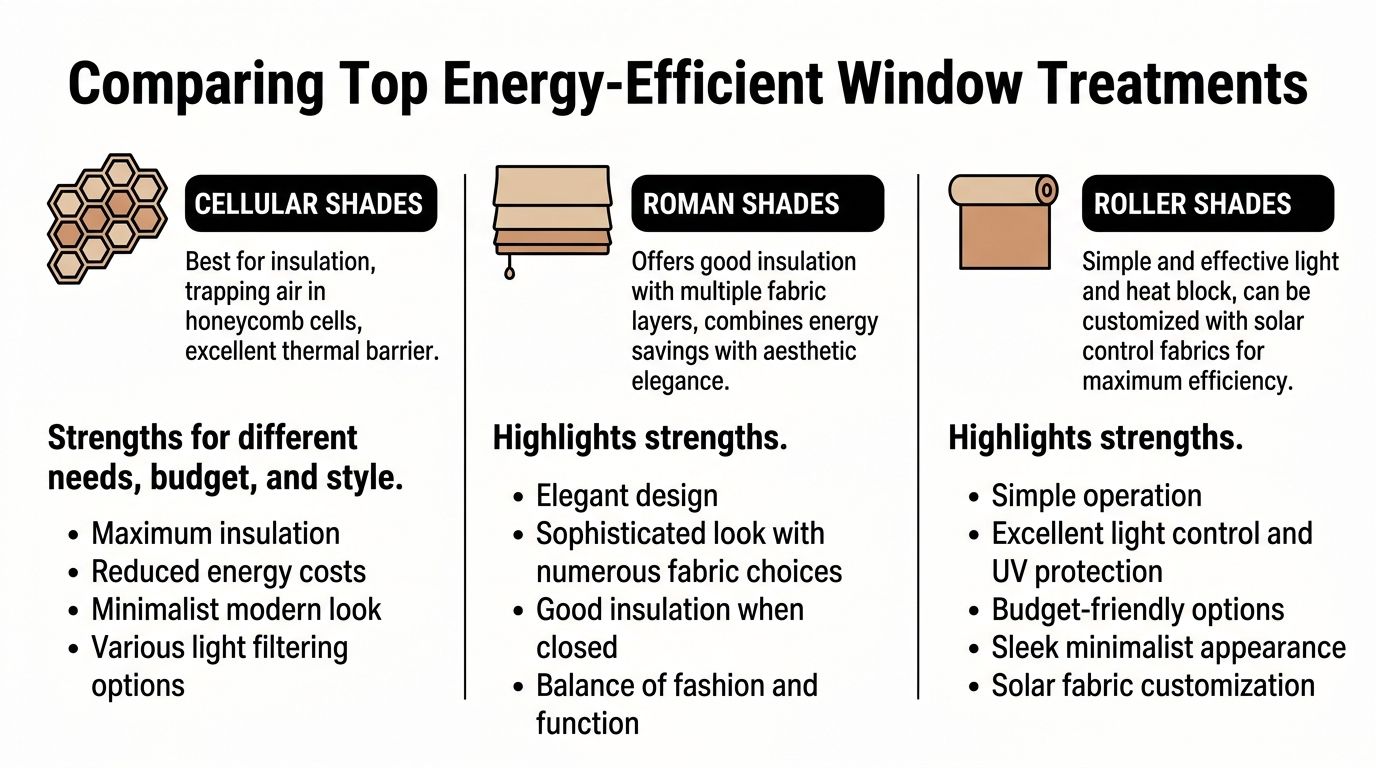
Cellular shades and honeycomb shades
If lower utility bills and steadier indoor temperatures are the goal, cellular shades usually lead the conversation.
Their pockets of air work like small insulation chambers. In plain terms, they slow down the heat trying to move through the window. In summer, that can mean less afternoon heat buildup. In winter, it can mean the room feels less cold near the glass first thing in the morning.
Why they make sense in West Tennessee
- Hot summer afternoons: They help reduce heat gain on sun-heavy windows.
- Cool winter mornings: They add a layer between your living space and cold glass.
- Whole-home flexibility: They fit bedrooms, living rooms, home offices, and many newer interiors.
Trade-offs to keep in mind
- The look is softer than wood or composite blinds.
- Some homeowners want a more structured, architectural style.
- Good performance depends on careful measuring and tight installation.
If your priority is insulation first, this guide to the best window coverings for insulation gives a closer look at how these options compare.
Plantation shutters as the all-rounder
Plantation shutters are a strong choice for homeowners who want energy help, light control, and a finished look that feels built into the house.
I often describe shutters as a hard-shell option. Instead of soft fabric creating the barrier, you have solid panels and louvers that help manage light and add another layer at the window. For many West Tennessee homes, that balance matters. You get better temperature control than a basic blind, but you also get a style that suits traditional brick homes, farmhouses, and updated Southern interiors.
Vinyl plantation shutters are especially practical in humid spaces such as kitchens, bathrooms, and laundry rooms.
Best fit for shutters
Shutters are the ideal choice for homeowners seeking:
- A classic look: They become part of the room's architecture.
- Adjustable light control: Louvers let you fine-tune brightness and privacy.
- Durability: They hold up well in busy family spaces and moisture-prone rooms.
The trade-off is usually cost. Shutters often require a bigger upfront investment, so they make the most sense where appearance, long-term use, and year-round comfort all matter.
Reflective blinds for summer sun
Reflective blinds help most in rooms where summer glare is the main complaint.
Their slats can bounce sunlight away and reduce harsh brightness on TVs, computer screens, and hard floors. In a bright kitchen or home office, that can make the room easier to use during peak afternoon sun. They are less effective at holding heat in during winter because the slats leave more space for air movement.
For homeowners in West Tennessee, that makes reflective blinds more of a solar-control tool than a full insulation solution.
Roller and solar shades for a clean look
Roller and solar shades are often the practical answer for large expanses of glass, sliding doors, and modern rooms where preserving the view matters.
These shades act more like light managers than insulators. The fabric you choose does most of the work. A more open weave keeps your view but allows more light and heat through. A tighter weave increases glare control and privacy, but it can darken the room more than some homeowners expect.
That trade-off matters on big openings. If the room gets blasted by late-day sun, solar shades can make it more comfortable without making the space feel closed off. If the room feels drafty in winter, another category may serve you better. For oversized openings, this article on best blinds for large windows gives a useful design-focused perspective on scale, function, and control.
Faux-wood blinds and wood-look options
Faux-wood blinds are popular for a simple reason. They fit a lot of homes and a lot of budgets.
They offer familiar lines, decent light control, and good moisture resistance. That makes them a practical pick for family rooms, bathrooms, and rental properties. From an energy standpoint, they sit in the middle. They can help manage sunlight, but they usually do not insulate as well as a tightly fitted cellular shade or shutter.
They are often the right answer for homeowners who want a traditional look and solid everyday function, without paying for the highest insulating option.
A quick comparison table
| Treatment | Main strength | Best use case | Main trade-off |
|---|---|---|---|
| Cellular shades | Insulation and solar control | Bedrooms, living rooms, sun-exposed windows | Softer look may not fit every style |
| Plantation shutters | Balance of insulation, light control, and permanence | Whole-home upgrades, classic interiors | Higher investment than many blinds |
| Reflective blinds | Summer heat and glare control | Offices, kitchens, bright rooms | Less insulating in winter |
| Roller or solar shades | Clean look and sunlight management | Large windows, modern spaces | Usually less insulating than top cellular options |
| Faux-wood blinds | Traditional style and practical durability | Family spaces, rentals, everyday use | Not the top performer for insulation |
The simplest way to choose is to match the product to the room's main complaint. If the room feels hot, focus on solar control. If it feels cold near the glass, focus on insulation. If it does both, a custom consultation helps you avoid paying for the wrong feature and guides you toward a solution that fits your windows correctly.
Achieve Maximum Savings with Smart Strategy
A high-performing window treatment can still disappoint if the strategy is wrong.
I see this in West Tennessee homes every year. A family invests in an insulating shade, then wonders why the bonus room still feels warm at 4 p.m. in July or chilly near the glass on a January morning. The usual problem is not the product alone. It is the fit, the mounting choice, and how the treatment is used through the day.
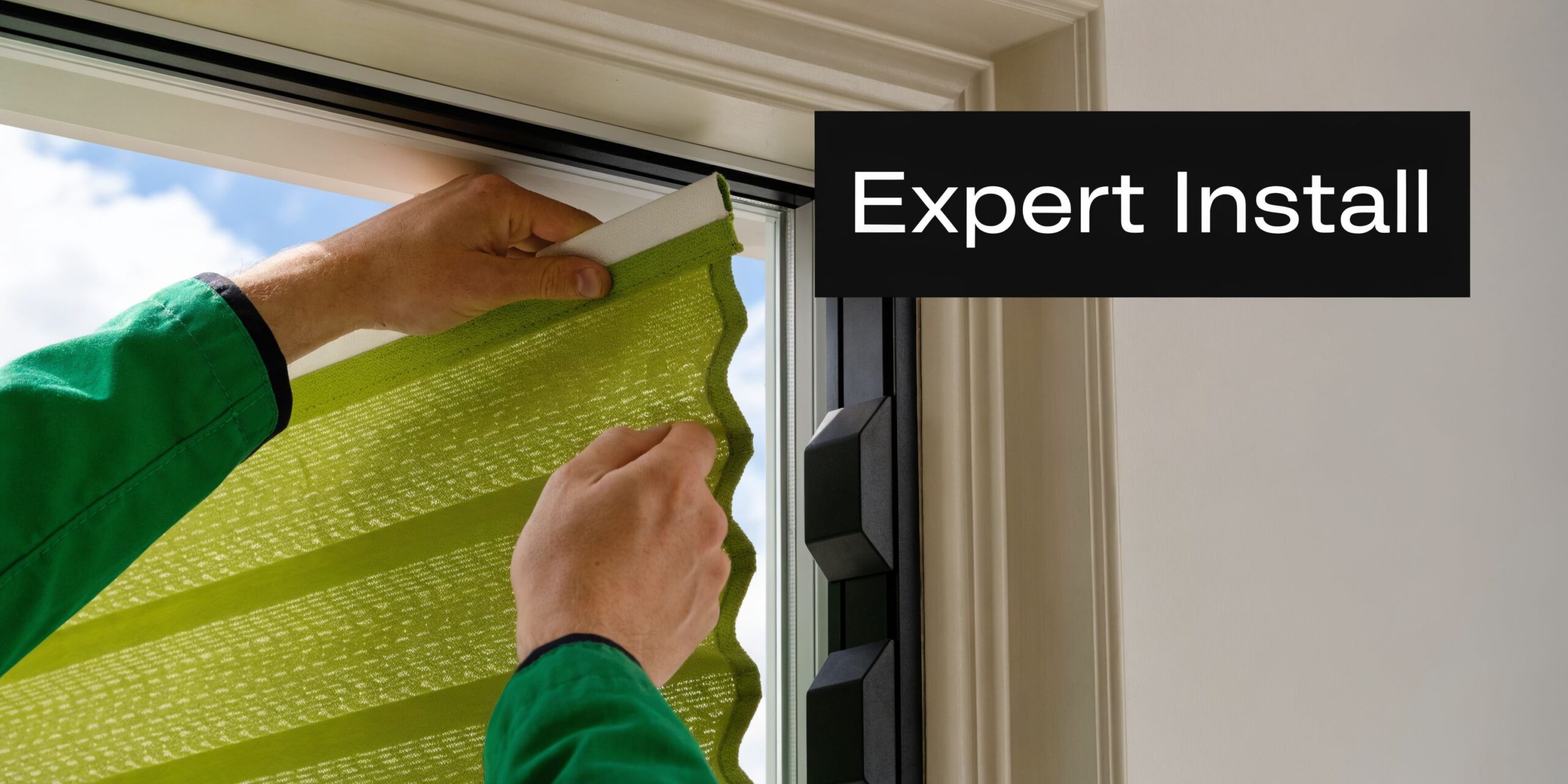
Why custom install matters
Window treatments work a lot like weatherstripping. The closer and more precise the fit, the better they help hold conditioned air where you paid for it.
Small gaps around the sides or top let heat pass more easily than many homeowners expect. In summer, that can mean more solar heat slipping into sun-heavy rooms. In winter, it can mean that cold-window feeling sticks around even when the furnace is running.
A custom install helps in a few practical ways:
- Tighter coverage: Less open space for heat transfer around the edges.
- Better day-to-day use: Shades and blinds raise, lower, and tilt the way they should.
- Cleaner finished look: The window looks intentional and complete.
- Stronger energy performance: Insulating features do their job better when the product is measured for the actual opening.
That last point matters most if your goal is lower utility bills.
Inside mount or outside mount
This choice confuses plenty of homeowners, and for good reason. Both options can be right.
An inside mount fits within the window frame. It gives a trim, built-in look that many people love. But depending on the product and frame depth, it can leave a little more room at the edges.
An outside mount extends past the glass and frame. That extra coverage can block more light, reduce edge gaps, and help create a stronger barrier against summer heat and winter chill. For a west-facing room in Jackson or a drafty older home in the surrounding area, that can make a noticeable comfort difference.
The best option depends on your trim, sill depth, window shape, and what bothers you most. If your main complaint is glare, the answer may differ from a room where the issue is cold air by the glass.
Use your treatments with the seasons
Good products help. Good habits help too.
In West Tennessee, summer sun is often the bigger battle, especially on south and west exposures. Close those window treatments before the room heats up, not after. Once sunlight has already warmed the floor, sofa, and walls, your AC has to work harder to pull that heat back out.
Winter takes a different approach. On bright days, you may want to let some sunlight in where it adds natural warmth. Then close the treatment later in the afternoon or at night to help hold that heat indoors.
A simple room-by-room plan works well:
South and west windows
Close coverings earlier in warm months to cut afternoon heat and glare.North windows
Focus on reducing that cooler feel near the glass, since direct sun is usually less intense.Bedrooms
Prioritize overnight comfort, privacy, and steadier temperatures for sleeping.Living areas
Balance daylight with temperature control, especially in rooms used most often.
For the bigger picture, this guide to insulation strategies for energy efficient homes is a useful companion read. For room-by-room ideas on summer heat, see our article on how to block heat from windows.
The main goal is simple. Choose the right product, install it the right way, and use it at the right time. That is how West Tennessee homeowners get real comfort gains instead of just a nice-looking window covering.
If you want help deciding between inside mount, outside mount, or the best fit for your sun exposure, a professional consultation can save you from paying for the wrong setup. A local installer can measure the window, explain the trade-offs clearly, and stand behind the finished result.
Cost Savings and Incentives for Your Home
This is the question behind all the others. Will better window treatments pay off?
The honest answer is that they help, but the exact return depends on the house. Window size, glass type, room orientation, existing HVAC performance, and how the treatment is used all affect the outcome.
Why generic savings claims can mislead
Some national marketing claims sound precise, but they don’t know your house.
One source notes that while many claims suggest significant annual savings from cellular shades, the true return depends heavily on climate zone, window-to-wall ratio, and existing HVAC efficiency, and that a custom consultation is needed for a specific home in West Tennessee’s humid subtropical climate (Blindsgalore energy efficient guide).
That’s an important reality check.
A single-story ranch with older windows may respond differently than a newer two-story home with shaded glass and efficient HVAC equipment. A west-facing room with lots of glass may see more noticeable comfort improvement than a room under deep porch cover.
Think in tiers, not one-size-fits-all pricing
Window treatments fall into broad investment levels:
- Practical tier: Faux-wood blinds and simpler shade options.
- Mid-range tier: Better fabrics, upgraded controls, and stronger customization.
- Premium tier: Advanced cellular systems, shutters, specialty shapes, and motorization.
The right choice depends on how long you plan to stay, how much direct sun the room gets, and whether your top priority is budget, comfort, appearance, or a mix of all three.
Don’t forget possible incentives
Programs change, so it’s smart to check current federal or utility information before you buy.
Even when no incentive applies, many homeowners still move forward because they want the comfort, privacy, and finished look now, not just a spreadsheet result later.
If you want a true cost-benefit answer, the room has to be measured, the windows have to be evaluated, and the product has to match the climate problem you’re trying to solve.
Your West Tennessee Expert Blinds Galore
You feel this part of the project the minute real life enters the room. The den stays hot every July afternoon. The bedroom feels chilly near the windows in January. Two rooms in the same house can need two different answers, and that is why local guidance helps.
Blinds Galore serves the greater Jackson area and surrounding West Tennessee communities with in-home consultation, professional measuring, product selection, and custom installation. For homeowners here, that means looking at how each window behaves in our hot, humid summers and our cooler winter nights, then choosing a treatment that fits that job. The goal is a proper fit, practical recommendations, and work backed by a 100% satisfaction guarantee.

What local guidance changes
A good consultation answers the questions that affect comfort and utility bills, not just appearance.
For example, a west-facing living room in West Tennessee often needs stronger glare and heat control for long summer afternoons. A nursery on the shaded side of the house may need better insulation at the glass to feel more even in winter. R-value numbers matter, but homeowners usually notice the result in simpler ways. Rooms feel less drafty. Sun glare eases up. The HVAC system does not have to work as hard to keep up.
A local expert can help sort out questions like:
- Which rooms need more insulation
- Which windows need glare control more than insulation
- Whether shutters, cellular shades, or another option fits the home
- Whether inside mount or outside mount makes more sense
- How to balance efficiency with appearance and daily use
Earlier in this article, we noted that some blinds can cut a meaningful amount of solar heat when they are fully closed and angled well. In practice, that makes them useful in certain bright rooms, but not automatically the best answer for every window. The right choice depends on sun exposure, window depth, how tight the fit can be, and how you use the room.
Why professional measuring is worth it
Window treatments work a lot like weatherstripping on a door. Small gaps can weaken the result.
A shade that is slightly off in width or mounted in the wrong position may still look fine at first glance, but it can leave light gaps, reduce privacy, and let more heat move around the edges. That matters more with energy-focused products, because fit is part of performance, not just appearance.
Professional measuring and installation help prevent those small misses. They also help confirm that the product you choose can do what you expect it to do in that specific room.
If you want to talk through your home’s windows with someone local, call (731) 571-5179.
Frequently Asked Questions About Energy Efficiency
Are cellular shades really the top choice for insulation
In many homes, yes.
Advanced cellular shades with a honeycomb-within-a-honeycomb design, such as Hunter Douglas Duette Architella, can reduce winter heat loss by 40% or more, reduce summer solar heat gain by up to 60%, and offer insulation values up to R-5 when tightly fitted (Hunter Douglas energy efficiency).
That doesn’t mean they’re automatically right for every room. It means they’re often the strongest starting point when insulation is the main goal.
Do light colors help with energy efficiency
They can, especially when sunlight is a major issue.
Lighter or more reflective surfaces tend to make better use of daylight and can support heat management in bright rooms. But color alone doesn’t outperform construction. A well-built insulating shade in the right mount matters more than color by itself.
Are shutters better than blinds
Sometimes. It depends on the problem you’re solving.
Shutters are chosen when homeowners want a more permanent look, strong light control, and good insulation. Blinds can still be practical and effective, especially in rooms where adjustability, familiarity, or budget are priorities.
Is motorization worth considering
For some homes, definitely.
Motorization can help people use their window treatments more consistently. That matters because energy performance improves when coverings are closed at the right times of day. It’s especially useful on tall windows, wide openings, and hard-to-reach areas.
Can I layer treatments for better results
Yes, layering can be a smart move.
Homeowners sometimes pair an insulating base treatment with a decorative or light-filtering layer. That can help with appearance, privacy, and room darkening while also improving comfort. The exact combination depends on the window and the room’s use.
Do I need different products in different rooms
Often, yes.
A bedroom, a west-facing living room, and a bathroom do not usually have the same needs. One may need insulation and darkness. Another may need glare control and privacy. Another may need moisture resistance.
That’s why whole-house decisions work best when they’re not treated like one-size-fits-all.
Can off-the-shelf blinds still help
They can help somewhat, but they leave more gaps and offer fewer choices in fit and control.
If energy efficiency is a main reason for the purchase, custom sizing makes more sense. Better fit supports better performance.
What’s the simplest way to choose the best blinds for energy efficiency
Start with three questions:
- Is the room too hot, too cold, or both
- Is the main issue sunlight, insulation, or privacy
- Do you want the treatment to disappear visually or act like part of the architecture
Those answers narrow the field quickly.
If you want help choosing the right window treatment for your home, contact Blinds Galore for a local consultation. We’ll help you compare options, measure for a proper fit, and plan a custom install that supports comfort, energy efficiency, and your style goals. Call (731) 571-5179 to get started with a solution backed by 100% satisfaction.
You might also like

Best Blinds for Rental Property: A Landlord’s Guide
You know the turnover drill. A tenant moves out, you unlock the door, and the first thing you notice
Get a Perfect Fit: How to Measure for Plantation Shutters
You’re probably staring at a window right now, trying to decide whether plantation shutters will look

Affordable Blinds Near Me | Get a Free Quote Today
The search starts the same way. You notice the late afternoon glare in the living room, the bedroom feels

Automatic Hurricane Shutters: West TN Buyer’s Guide
A lot of West Tennessee homeowners know this feeling. The sky turns greenish, the weather app starts

Your Guide to Automatic Storm Shutters
Imagine this: a storm warning flashes across your screen. Instead of a mad dash for plywood and tools,

The Guide to Bottom Up Window Blinds
Have you ever found yourself wanting to let some natural light into your living room, but not at the