

9 Energy-Efficient Window Treatments That Cut Utility Bills for Jackson TN Offices
Quick answer: Energy-efficient window treatments — including solar shades, cellular shades, faux wood blinds, and plantation shutters — can reduce a commercial office's heating and cooling costs by 15% to 30% annually. In Jackson, TN, where summer temperatures regularly exceed 95°F and humidity is high, the right window coverings block solar heat gain, reduce HVAC load, and cut glare without sacrificing natural light. Blinds Galore offers free in-home consultations and custom installation for West Tennessee businesses ready to lower their utility bills.
Why Window Treatments Are a Smart Energy Investment for Jackson TN Offices
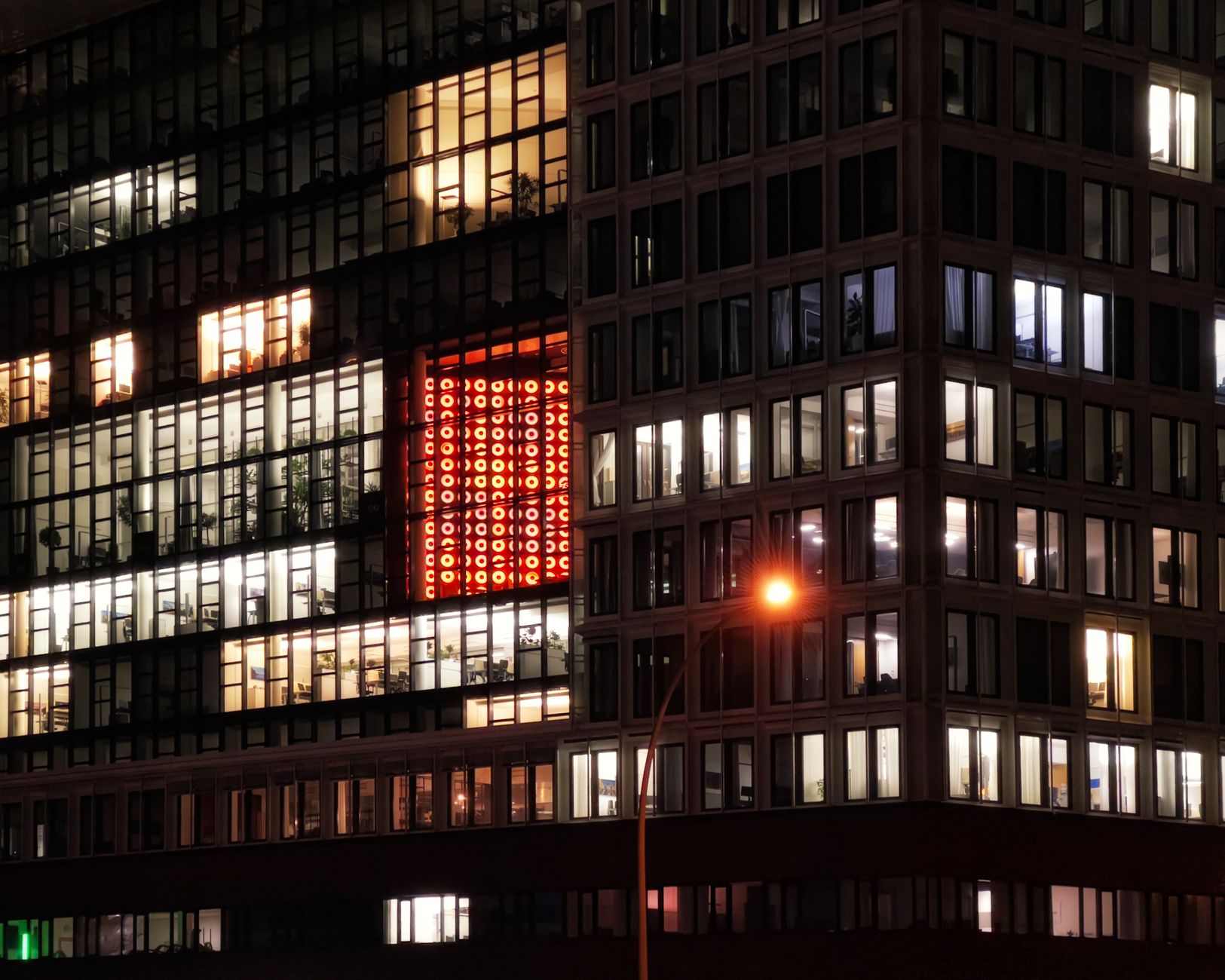
Before diving into specific product types, it helps to understand why windows are such a significant source of energy loss in commercial spaces — and why the right window treatment is one of the highest-ROI upgrades a Jackson, TN business can make. Commercial buildings often feature large expanses of glass for aesthetics and natural light, but that same glass is a thermal liability without the right covering.
The West Tennessee Climate Challenge
Jackson, TN sits in a humid subtropical climate zone (ASHRAE Climate Zone 3A), meaning offices face brutal summer heat — average July highs of 92°F — combined with high humidity that makes cooling systems work overtime. Winters bring cold snaps that push heating costs up from November through February. Without proper window coverings, single- and double-pane glass acts like a radiator in summer and a heat sink in winter, forcing HVAC systems to compensate constantly.
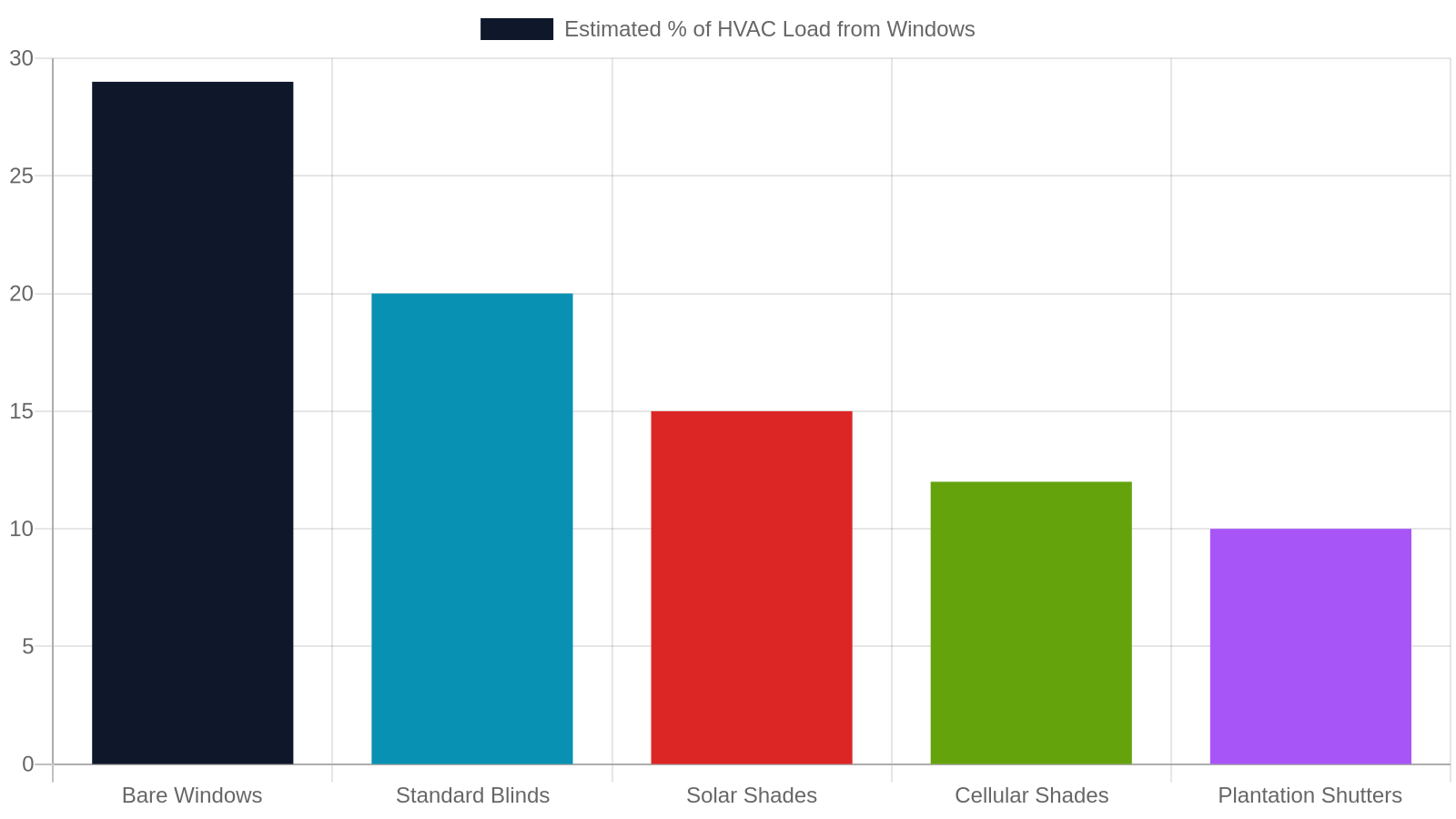
The U.S. Department of Energy estimates that bare windows account for 25–30% of a building’s heating and cooling energy use. For a mid-size Jackson office paying $1,200/month in utilities, that’s potentially $300–$360 wasted every single month through unprotected glass.
The Business Case: ROI Beyond the Thermostat
Energy-efficient window treatments aren’t just about comfort — they’re a measurable capital improvement. Quality commercial window coverings typically pay for themselves within 2–4 years through utility savings alone, and they come with additional benefits:
- Extended HVAC lifespan — less runtime means fewer service calls and longer equipment life
- Improved employee productivity — reduced glare cuts eye strain, which studies link to a 10–15% drop in screen-based errors
- Furniture and flooring protection — UV-blocking treatments prevent fading that can cost thousands in replacement
- Professional curb appeal — uniform window treatments signal a polished, well-managed business to clients and visitors
1. Solar Shades — the Workhorse of Commercial Energy Savings
Solar shades are the most popular choice for commercial offices across West Tennessee — and for good reason. They’re purpose-built to intercept solar radiation before it converts to heat inside the building, making them especially effective in Jackson’s sun-drenched spring and summer months. Available in dozens of fabric colors and openness levels, solar shades can be precisely matched to each window’s orientation and the office’s aesthetic.
How Solar Shades Block Heat Without Blocking Views
Solar shades are woven from fiberglass or polyester mesh in varying openness factors — typically 1%, 3%, 5%, or 10%. A 1% openness fabric blocks nearly all direct solar radiation while still allowing a view of the outside; a 10% fabric lets in more light but provides less heat control. For south- and west-facing office windows in Jackson — the directions that take the hardest summer sun — a 3% or 5% openness fabric is the sweet spot: meaningful glare reduction, preserved sightlines, and significant solar heat gain coefficient (SHGC) reduction.
Solar shades can reduce solar heat gain by up to 80%, according to the Attachments Energy Rating Council (AERC). That directly translates to a lighter load on your rooftop HVAC unit during Jackson’s long, hot summers.
Motorization and Building Automation Integration
Modern solar shades are available with motorized roller mechanisms that integrate with building automation systems (BAS) or simple smart-home hubs. Scheduled programming — raising shades at dawn, lowering them at peak solar hours (10 a.m.–3 p.m.), and raising them again at dusk — can automate energy savings without any employee action required. For multi-office suites or open floor plans with dozens of windows, motorized solar shades managed from a single tablet or app are a practical, scalable solution.
Motorized systems add roughly $80–$150 per shade to the installed cost but typically accelerate payback by maximizing energy savings year-round.
2. Cellular (Honeycomb) Shades — Maximum Insulation for Year-Round Savings
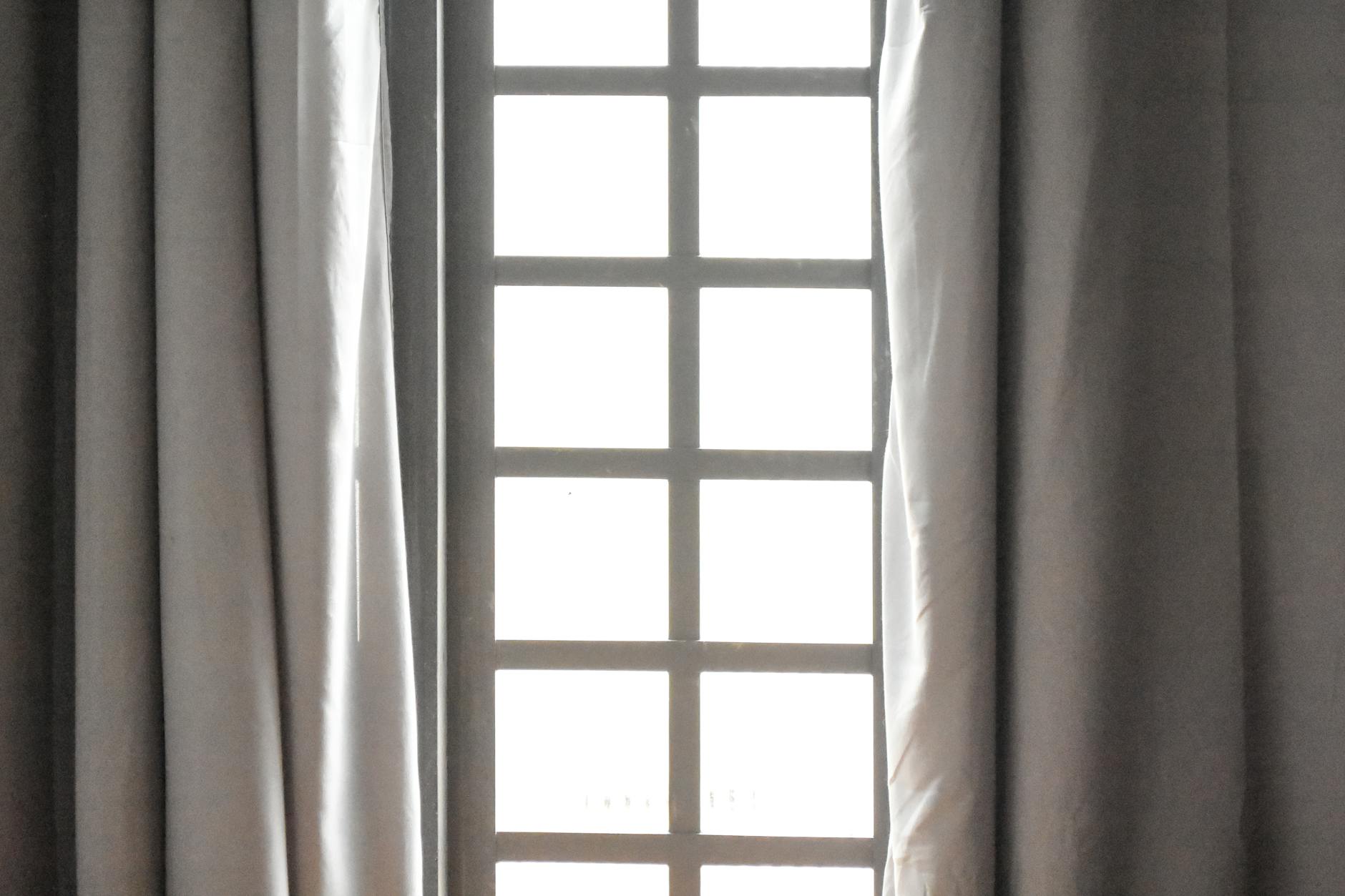
While solar shades excel at blocking summer heat gain, cellular shades shine as all-season insulators. They’re particularly valuable for Jackson offices that face significant heating costs in December and January, or for buildings with older windows that lack low-E coatings. Their soft, fabric appearance also suits professional environments like law offices, medical suites, and financial advisory firms where a polished look matters.
Single, Double, and Triple Cell: What the Difference Means for Your Bills
Cellular shades get their name from the honeycomb-shaped air pockets woven into the fabric. These pockets trap air and create an insulating barrier between the glass and the room. The more cell layers, the higher the insulating value:
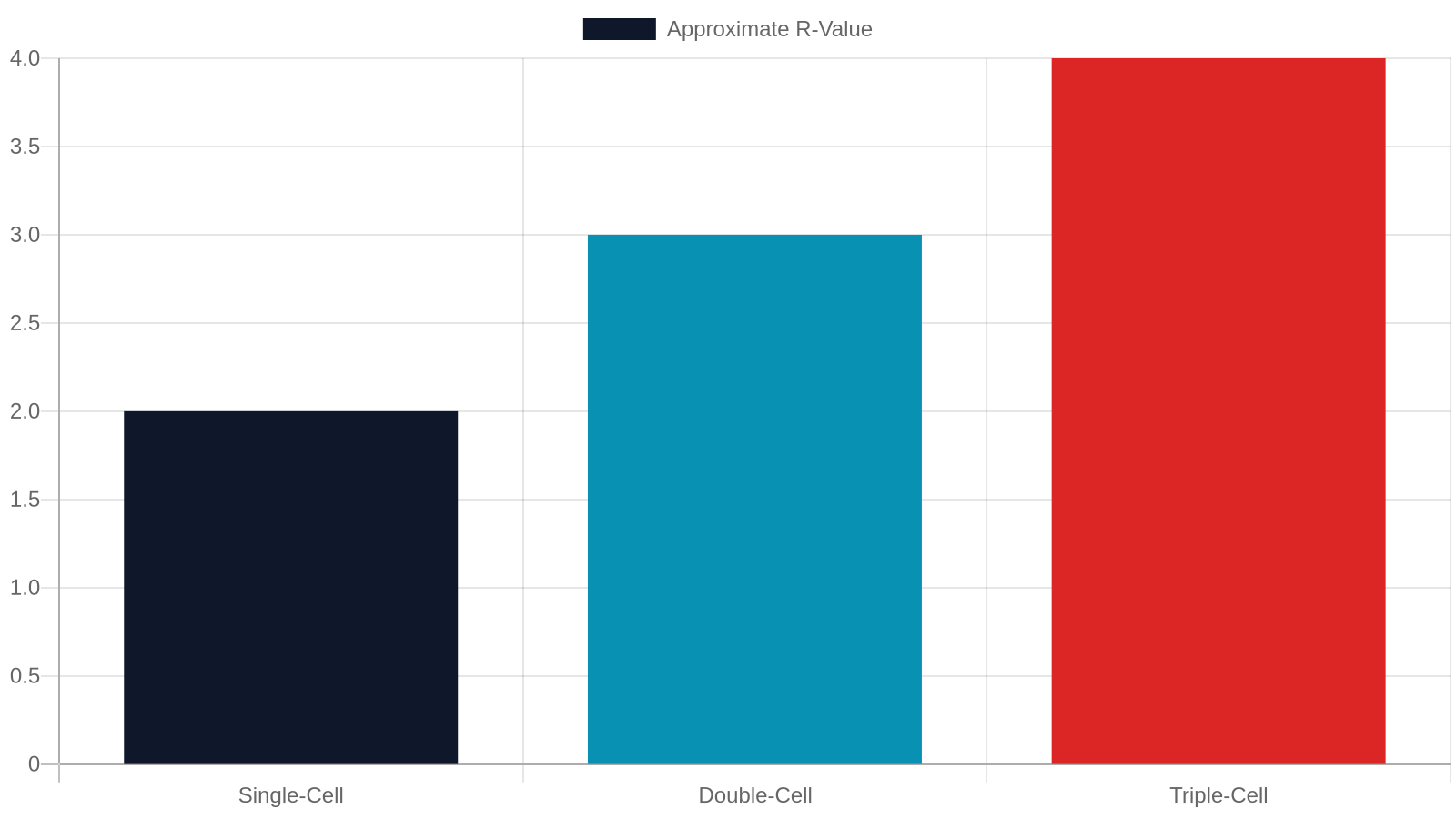
- Single-cell: R-value of approximately 2.0 — good for mild climates or interior partitions
- Double-cell: R-value of approximately 3.0 — the most common commercial choice, balancing cost and performance
- Triple-cell: R-value of approximately 4.0 — best for offices with older, single-pane windows or significant winter heating costs
For Jackson offices dealing with both summer heat and winter cold, double-cell cellular shades are typically the best value, cutting heating costs by up to 20% compared to bare windows according to the Window Covering Manufacturers Association (WCMA).
Top-Down/Bottom-Up Options for Privacy and Light Control
One of the most practical features of cellular shades for offices is the top-down/bottom-up (TDBU) configuration. This allows staff to lower the top portion of the shade to block direct sun from the ceiling line while keeping the bottom raised for privacy from street level — a common need for ground-floor offices in downtown Jackson or along Highway 45. TDBU cellular shades cost roughly 15–25% more than standard bottom-up versions but offer a level of light control that’s hard to match with any other product.
3. Faux Wood Blinds — Durable, Moisture-Resistant, and Energy-Smart
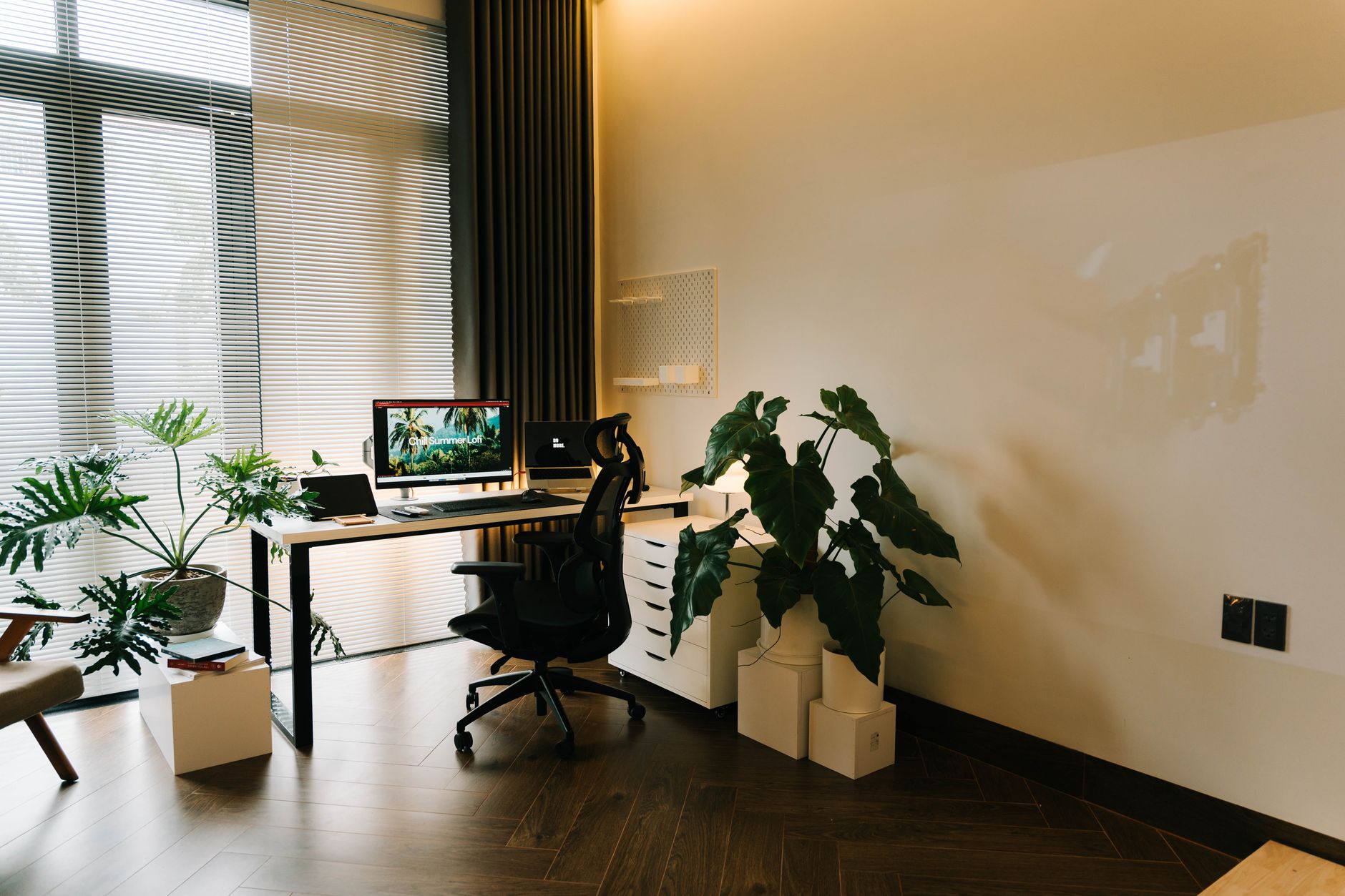
Not every commercial office needs the premium performance of solar or cellular shades. For businesses prioritizing durability, easy maintenance, and a clean professional look at a reasonable price, faux wood blinds are a proven workhorse. They’re especially popular in Jackson’s medical offices, real estate agencies, and light-industrial office suites where practicality trumps luxury. Blinds Galore carries a wide range of custom faux wood blind options sized precisely to your commercial windows — no gaps, no light leaks, no off-the-shelf compromises.
Why Faux Wood Outperforms Real Wood in Commercial Settings
Real wood blinds warp, crack, and fade in high-humidity environments — a real concern in West Tennessee where summer relative humidity regularly exceeds 70%. Faux wood blinds, made from PVC or a wood-polymer composite, resist moisture completely while delivering the warm, professional look of real wood at a lower price point. For offices in Jackson, Milan, or Henderson that need window treatments in break rooms, restrooms, or any space with variable humidity, faux wood is the clear choice.
From an energy standpoint, faux wood blinds with 2-inch slats provide meaningful light control: fully closed, they block up to 99% of incoming light and create a modest insulating air gap between the slat stack and the glass. They’re not as thermally efficient as cellular shades, but they’re significantly better than bare windows and far more durable in commercial use.
Cost and Lifespan Advantages for Property Managers
For property managers and landlords upgrading commercial rental spaces, faux wood blinds offer an attractive combination of low upfront cost ($25–$80 per window installed) and long service life — typically 10–15 years with normal use. They’re easy to wipe clean, resist staining, and don’t require professional maintenance. When a tenant causes damage, individual slats can often be replaced without buying an entirely new blind. These practical advantages make faux wood blinds one of the most popular choices for multi-tenant office parks and strip-mall suites throughout the Jackson area.
4. Plantation Shutters — the Premium Long-Term Energy Solution
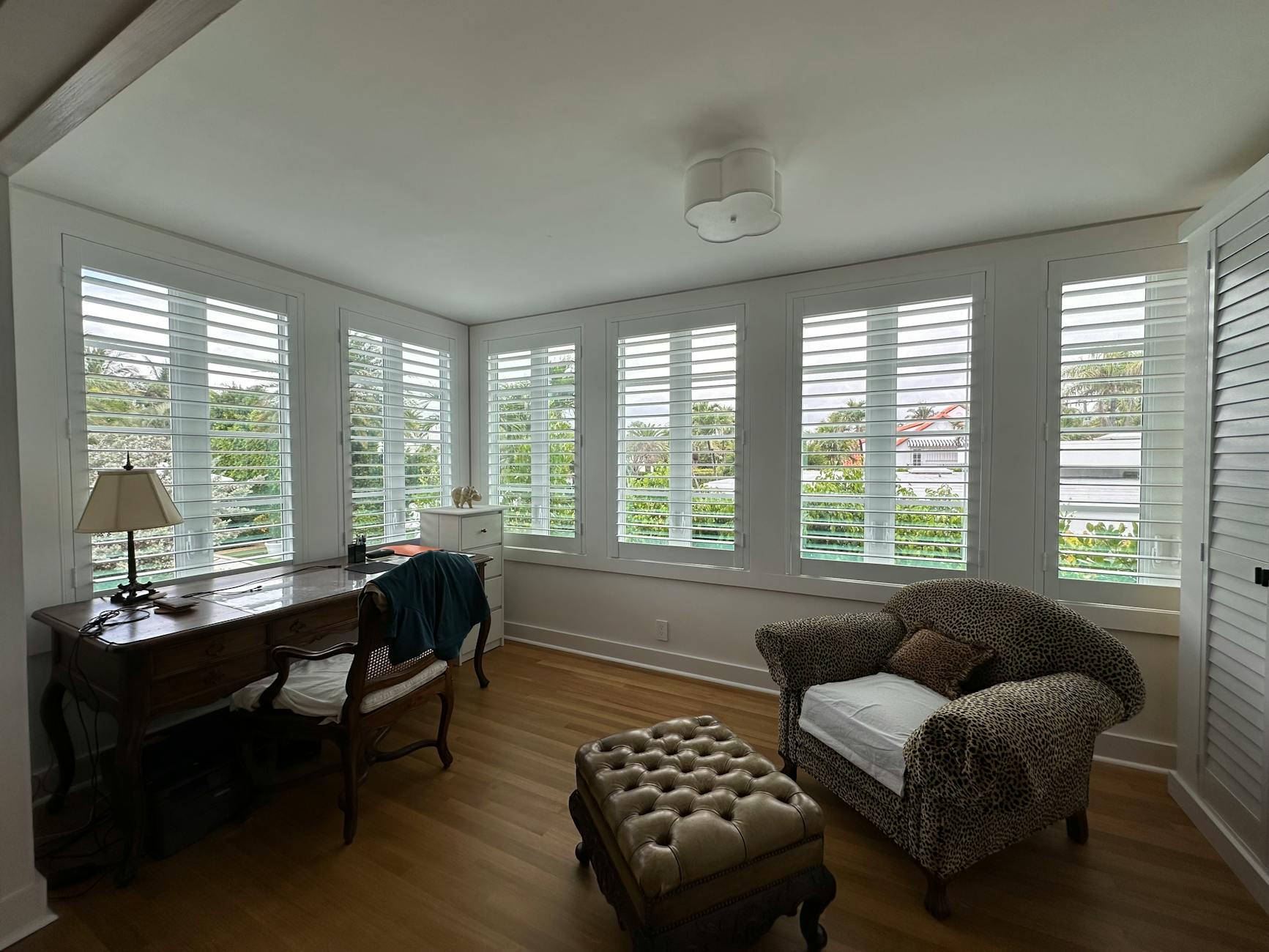
If your Jackson business is looking for the highest-performing, longest-lasting window treatment available, plantation shutters are in a category of their own. Unlike fabric shades or blinds, shutters are a permanent architectural feature — custom-built to fit your exact window dimensions and finished to complement your interior. They’re increasingly popular in professional offices, medical practices, and upscale retail spaces throughout West Tennessee.
How Shutters Create a True Thermal Barrier
Plantation shutters are the only window treatment that creates a structural thermal barrier rather than just a fabric or slat layer. Custom-built frames fit the window opening precisely, eliminating the air gaps around the edges that allow heat to infiltrate. The louvers — typically 3.5-inch or 4.5-inch — can be tilted to direct airflow and light precisely, and the solid panels can be closed completely to achieve near-total insulation. Independent testing has shown plantation shutters can improve a window’s effective insulating value by 30–45% compared to bare glass.
For executive offices, conference rooms, or client-facing spaces in Jackson where aesthetics are as important as performance, shutters deliver a timeless, high-end look that never goes out of style.
Lifespan and Total Cost of Ownership
Plantation shutters have a significantly higher upfront cost than other window treatments — typically $200–$450 per window installed for quality composite or hardwood shutters. However, their lifespan of 20–30 years means the per-year cost is often comparable to or lower than replacing cheaper blinds every 5–8 years. They also add measurable value to a commercial property, which matters if you own the building. For businesses in Lexington, Henderson, or anywhere in West Tennessee planning a long-term occupancy, shutters are a sound capital investment. Explore our custom-built shutter options to see styles and finishes suited to professional spaces.
5. Roller Shades with Blackout or Light-Filtering Fabrics
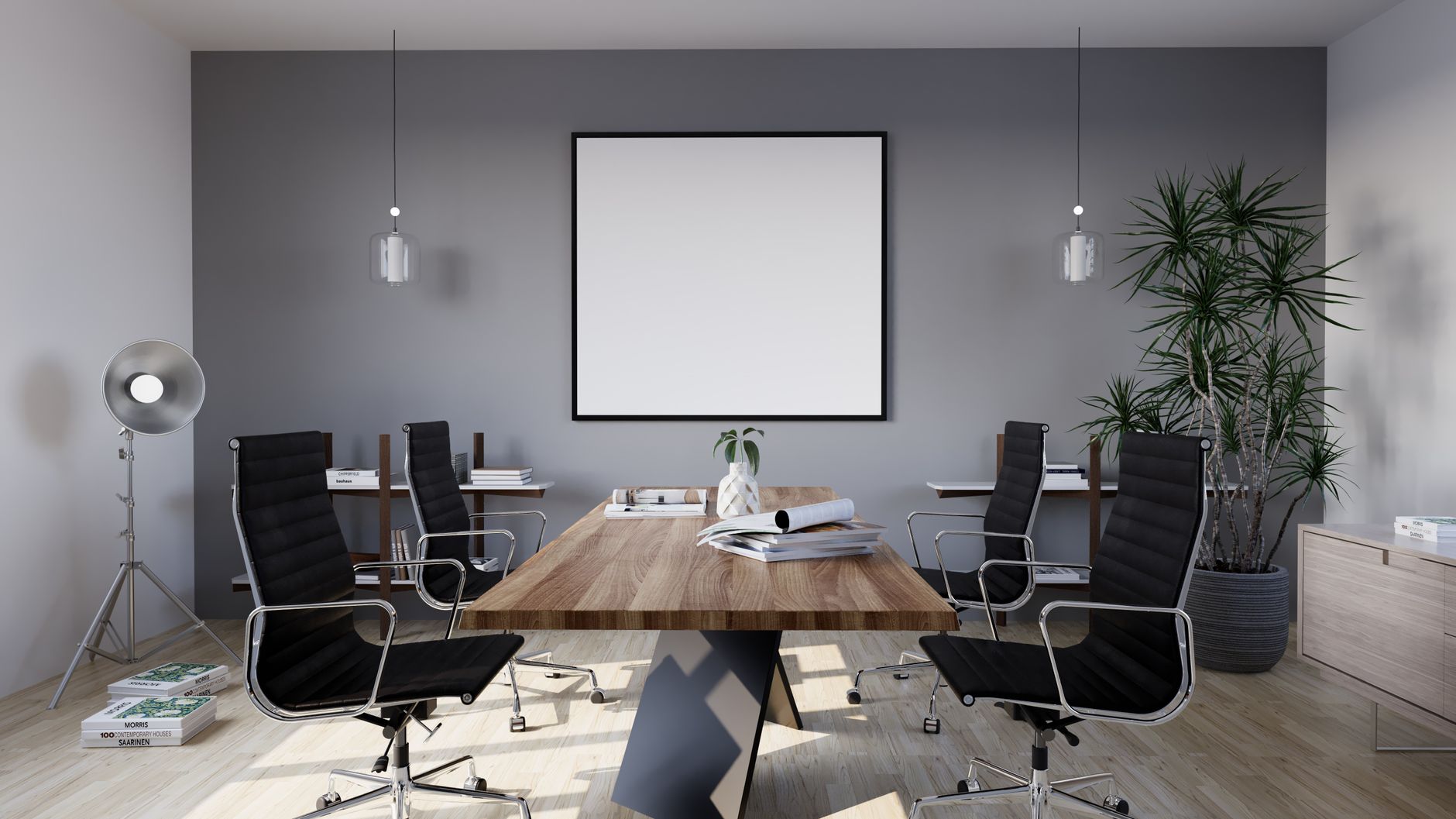
Roller shades occupy the sweet spot between affordability and performance. Available in an enormous range of fabrics — from sheer light-filtering weaves to fully opaque blackout materials — they can be specified precisely for each room’s function. A Jackson office with a mix of open workstations, private offices, and a conference room can use different roller shade fabrics in each zone, all with a consistent exterior appearance that looks intentional and professional from the street.
Blackout Roller Shades for Conference Rooms and Presentation Spaces
Conference rooms, training centers, and any space used for video presentations need blackout capability — the ability to eliminate glare on screens and projectors completely. Blackout roller shades with side-channel tracks (also called cassette systems) achieve 99%+ light blockage by sealing the edges of the shade against the window frame, preventing light bleed. This eliminates the need for heavy curtains or room-darkening paint, keeping the space looking modern and professional.
From an energy standpoint, blackout roller shades also provide meaningful insulation when fully lowered, reducing solar heat gain in unoccupied conference rooms during peak afternoon hours — a simple passive strategy that can shave measurable dollars off a monthly utility bill.
Light-Filtering Fabrics for Open Office Areas
For open-plan work areas, light-filtering roller shades in white or light gray fabrics diffuse harsh direct sunlight into soft, even ambient light — the ideal condition for computer work. Studies from the Lighting Research Center found that diffused natural light improves worker alertness and reduces reliance on overhead artificial lighting by up to 25%, cutting electricity costs from lighting as well as cooling. Light-filtering roller shades are among the most affordable commercial window treatments, typically running $45–$120 per window installed for standard sizes.
6. Motorized and Smart Window Treatments for Maximum Efficiency
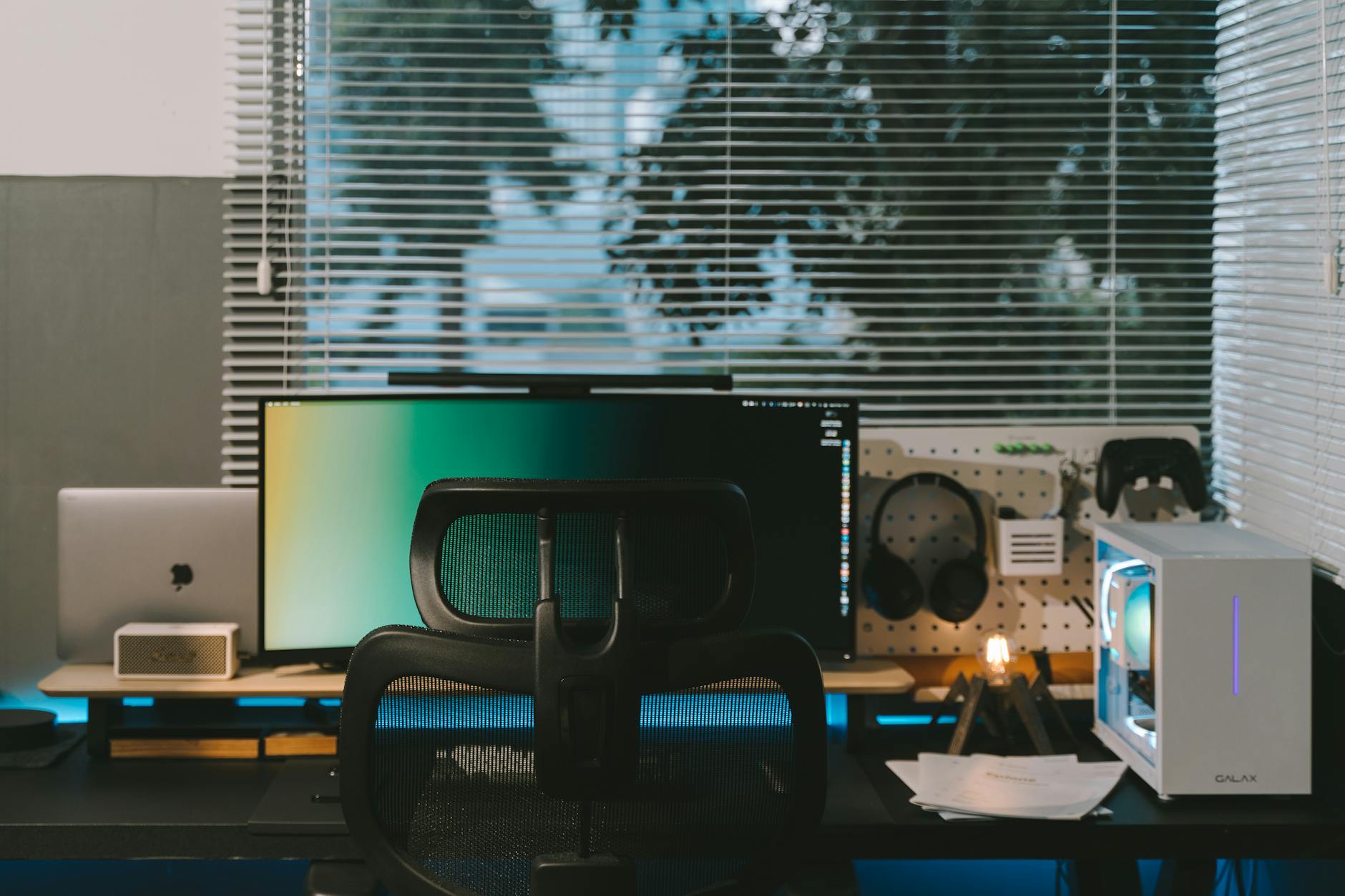
Manual window treatments are only as effective as the people operating them. Motorized and smart window treatment systems remove the human variable entirely, ensuring shades are always in the optimal position for energy efficiency — whether the office is full, empty, or somewhere in between. For larger commercial spaces in Jackson with dozens of windows, motorization also eliminates the physical effort of adjusting individual shades, which employees in busy offices rarely do consistently.
Scheduled Automation: Set It and Save
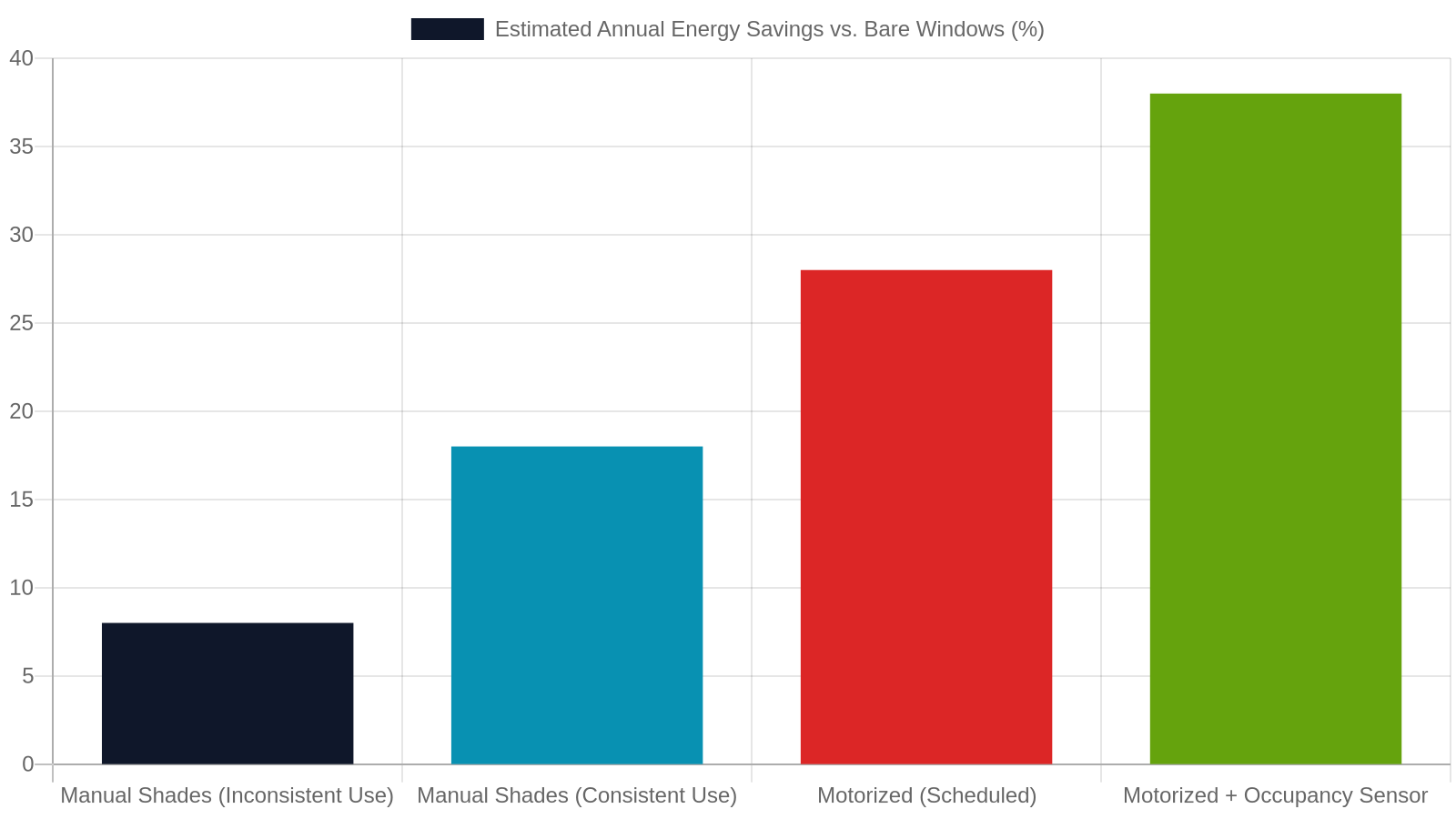
The single biggest driver of energy waste in commercial offices is human inconsistency — shades left up during peak sun hours, blinds never adjusted through the seasons, windows uncovered over long holiday weekends. Motorized window treatments solve this with scheduled automation. A programmed system can lower solar shades every weekday at 10 a.m. when the sun hits the south facade, raise them at 4 p.m. when direct sun passes, and close everything at 6 p.m. when the building empties. Over a year, this consistent behavior can reduce solar heat gain by 20–35% more than manually operated shades that depend on staff remembering to adjust them.
Integration with Thermostats and Occupancy Sensors
Advanced motorized systems from brands like Lutron and Somfy integrate with smart thermostats (Ecobee, Nest, Honeywell) and occupancy sensors. When a room is unoccupied, the system can automatically lower shades and raise the thermostat setpoint simultaneously — a combination that can reduce energy use in that zone by up to 40% during unoccupied hours. For Jackson offices with multiple private offices or conference rooms that sit empty for hours at a time, this integration pays for itself quickly. The upfront cost for a motorized system with smart integration runs approximately $150–$350 per window, including the motor, controller, and installation.
Energy-Efficient Window Treatments for Commercial Offices: Side-by-Side Comparison
Use this table to quickly compare the most popular commercial window treatment options across the factors that matter most to Jackson TN business owners — energy performance, cost, durability, and best use case.
7. Layered Window Treatment Strategies for Maximum Performance
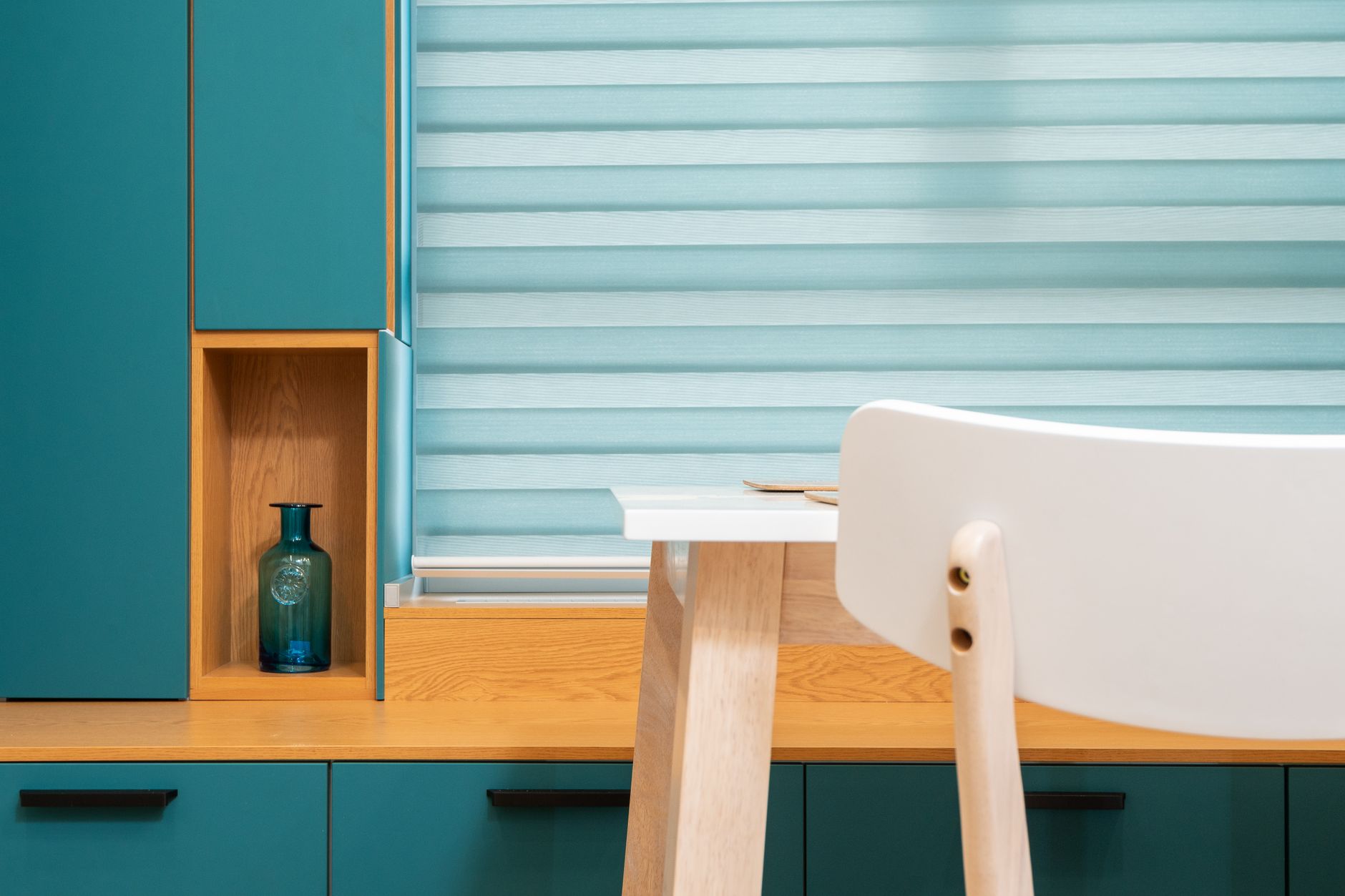
No single window treatment is perfect for every situation. The most energy-efficient commercial offices in Jackson and West Tennessee often use layered or zoned approaches — different products on different windows, or multiple treatments on the same window, each serving a distinct purpose. Understanding how to combine products is where professional expertise really pays off, and it’s exactly the kind of tailored recommendation a Blinds Galore consultant provides during a free in-home (or in-office) consultation.
Combining Solar Shades with Blackout Rollers
One of the most effective commercial window treatment strategies is the dual-shade system: a solar shade on the outer roller for daytime glare and heat control, paired with a blackout roller on an inner cassette for after-hours privacy or presentation use. Both shades operate independently on a double-bracket system and can be motorized together. This approach gives a single window the full spectrum of light control — from open and bright to fully dark — without any compromise. Dual systems typically cost $120–$250 per window installed, depending on fabric selection and motorization.
Pairing Shutters with Sheer Curtains for Executive Spaces
In executive offices or client reception areas where aesthetics are paramount, plantation shutters paired with sheer drapery panels create a layered look that’s both beautiful and functional. The shutters handle the heavy lifting of insulation and light control; the sheers soften the overall appearance and add a sense of warmth and luxury. This combination is popular in law firms, financial advisors, and medical practices across West Tennessee that want their space to feel welcoming and upscale. The sheer panels add minimal insulating value but significantly improve the room’s acoustic comfort by absorbing sound — a bonus in busy office environments.
8. Measuring ROI: What Jackson TN Offices Actually Save

Numbers matter when you’re making a business case for a capital improvement. Let’s put concrete figures around what energy-efficient window treatments can realistically deliver for a commercial office in Jackson, TN — because the ROI is more compelling than most business owners expect.
A Real-World Savings Scenario for a Mid-Size Jackson Office
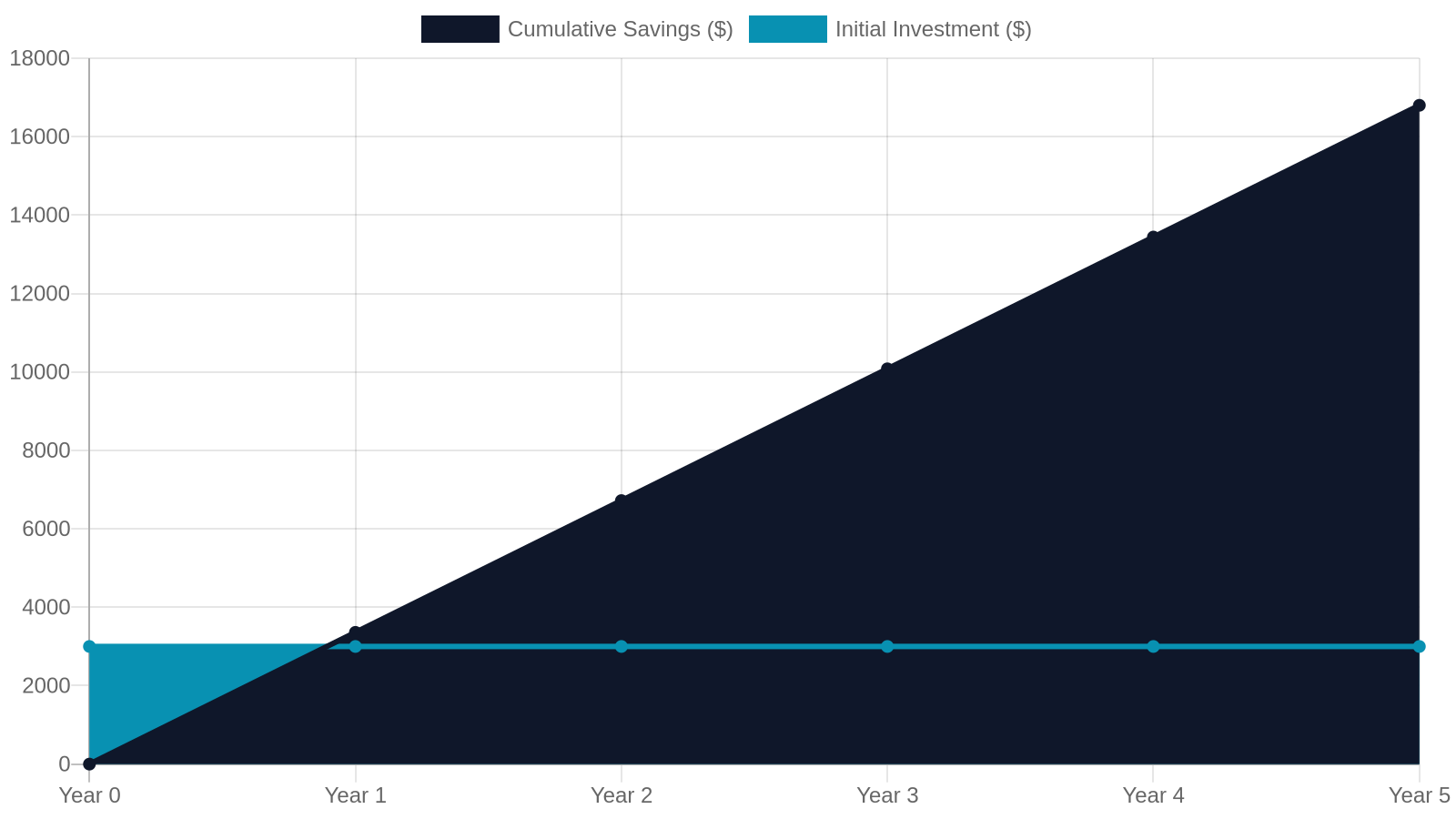
Consider a 3,000 sq. ft. office suite in Jackson with 20 windows, currently bare or fitted with old, ineffective mini-blinds. The business pays an average of $1,400/month in utilities ($16,800/year). Research from the Lawrence Berkeley National Laboratory suggests that properly specified window treatments in a climate like Jackson’s can reduce total building energy use by 15–25%. At 20% savings, that’s $280/month or $3,360/year back in the business’s pocket.
If the business invests in double-cell cellular shades and solar shades across all 20 windows at an average installed cost of $150/window ($3,000 total), the payback period is under 11 months. After that, every month is pure savings — plus reduced HVAC maintenance costs and a more comfortable workspace.
Additional Financial Incentives to Know About
Beyond direct utility savings, Jackson commercial property owners should be aware of potential financial incentives:
- TVA EnergyRight program: Tennessee Valley Authority offers rebates and financing for qualifying energy efficiency improvements, which may include window treatments as part of a broader building upgrade
- Section 179 tax deduction: Commercial window treatments installed as a business improvement may qualify for immediate expensing under IRS Section 179, rather than multi-year depreciation — consult your tax advisor
- Utility company rebates: Jackson Energy Authority and other local utilities periodically offer rebates for energy efficiency upgrades; check current offerings before purchasing
9. Choosing the Right Product for Each Office Zone
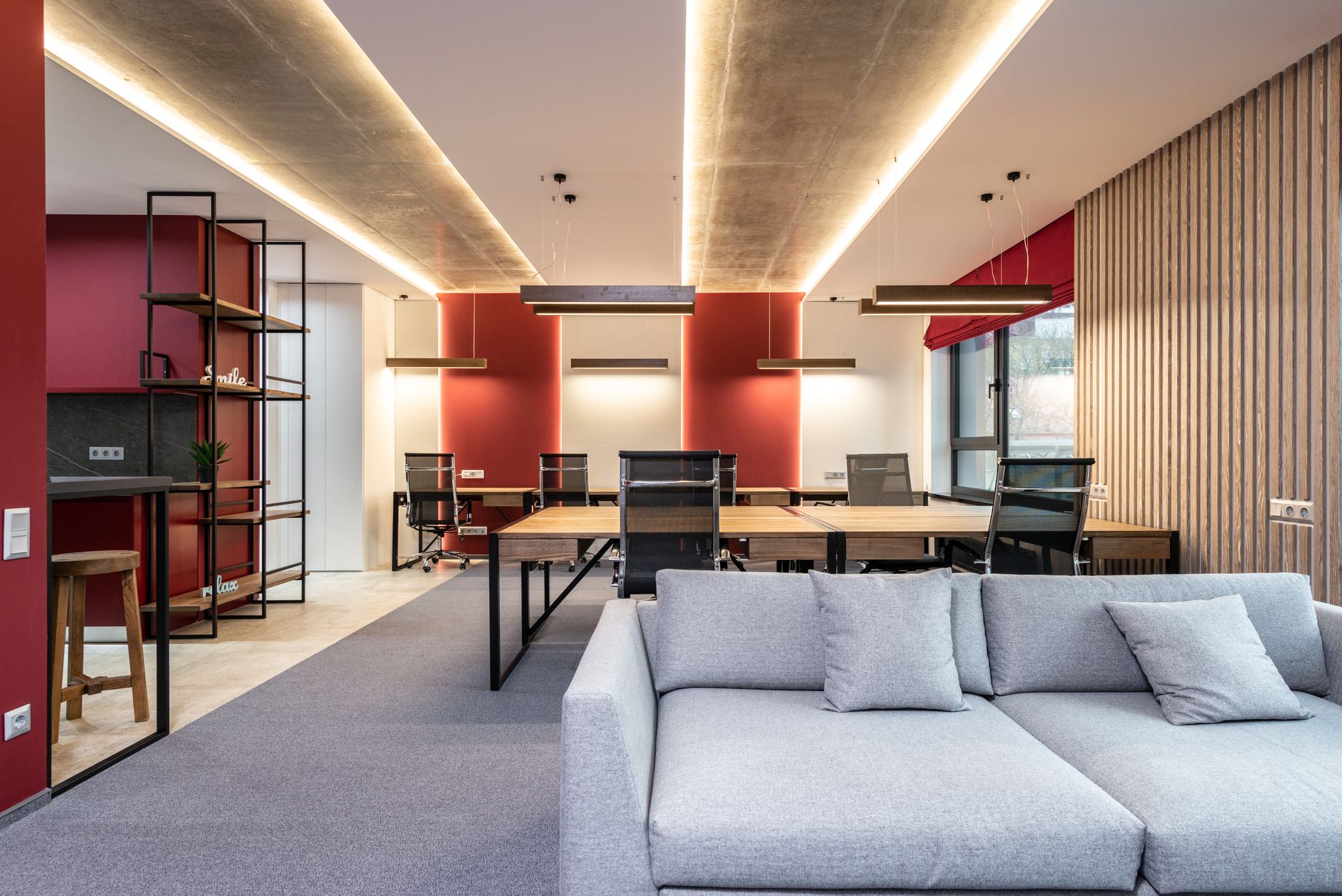
One of the most common mistakes businesses make when purchasing window treatments is applying a one-size-fits-all solution across an entire office. A product that’s perfect for a south-facing conference room may be completely wrong for a north-facing private office. Matching the right treatment to each zone is what separates a truly energy-efficient installation from one that just looks good on the surface.
Matching Window Treatment to Room Function
Not every room in a commercial office has the same window treatment needs. Here’s a quick reference for the most common office zones:
- Open workstations: Light-filtering solar shades (3–5% openness) — reduce glare on monitors while maintaining a bright, energetic atmosphere
- Private offices: Cellular shades (double-cell) or faux wood blinds — provide privacy and insulation with easy individual adjustment
- Conference rooms: Dual-roller system (solar + blackout) or motorized blackout shades — full flexibility from bright to dark on demand
- Reception/lobby: Plantation shutters or layered sheer + solar shade — maximum aesthetic impact for client-facing areas
- Break rooms/restrooms: Faux wood blinds — moisture-resistant, easy to clean, durable under heavy use
Orientation Matters: North, South, East, and West Windows
Window orientation dramatically affects which treatment performs best:
- South-facing windows receive the most direct sun year-round — prioritize low SHGC solar shades or shutters
- West-facing windows get brutal late-afternoon summer sun — motorized solar shades that lower automatically at 2–3 p.m. are ideal
- East-facing windows catch morning sun — light-filtering shades that diffuse early glare without blocking the pleasant morning light
- North-facing windows receive no direct sun — cellular shades for insulation are the priority here, especially in winter
A Blinds Galore consultant will assess every window’s orientation during your free in-office consultation and recommend the optimal product and fabric for each exposure.
Ready to Lower Your Office Utility Bills? Start with a Free Consultation
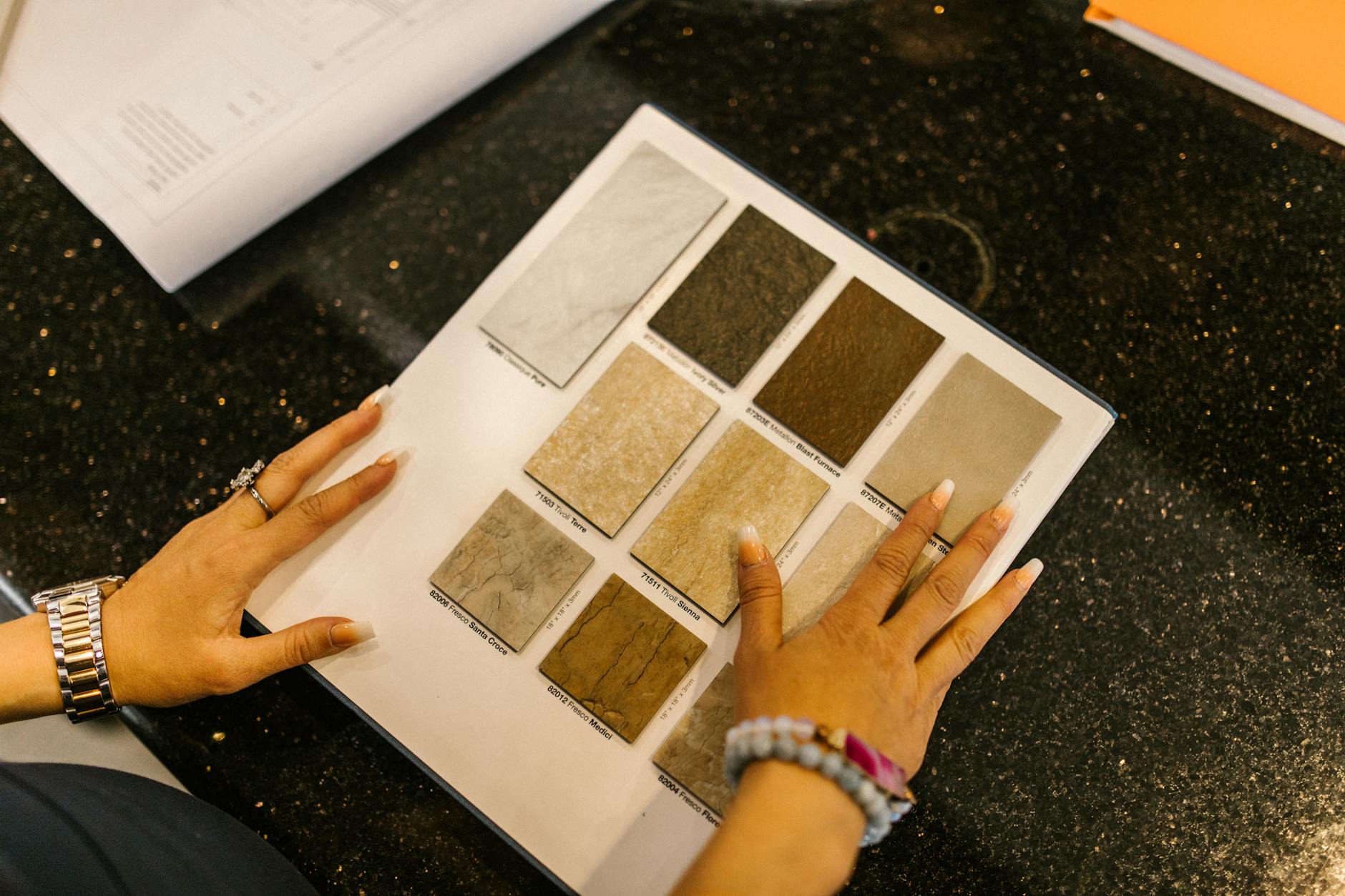
You’ve seen the data, the product options, and the ROI math. The next step is simple: let a Blinds Galore specialist walk through your Jackson, TN office and show you exactly which energy-efficient window treatments will deliver the biggest impact for your specific space, budget, and goals. There’s no cost, no obligation, and no guesswork — just expert advice backed by 18 years of West Tennessee experience and a 100% satisfaction guarantee.
What to Expect from a Blinds Galore Commercial Consultation
Blinds Galore has served businesses across Jackson, Lexington, Henderson, Milan, and the broader West Tennessee region for over 18 years. A commercial consultation is straightforward and completely free:
- Schedule — call (731) 571-5179 or reach out online to set a time that works around your business hours
- On-site assessment — a Blinds Galore specialist visits your office, measures every window precisely, assesses orientation and light conditions, and reviews your energy goals
- Custom recommendation — you receive a tailored product recommendation for each zone, with transparent pricing and no pressure
- Professional installation — our team installs every treatment to exact specifications, ensuring a perfect fit with no gaps, no light leaks, and no DIY headaches
- 100% satisfaction guarantee — if anything isn’t right, we make it right, period
Stay Informed: More Resources for West Tennessee Business Owners
Energy efficiency is an ongoing conversation, not a one-time purchase. As products evolve, utility rates change, and your office needs shift, staying informed helps you make the best decisions. The Blinds Galore blog is regularly updated with practical guides, product comparisons, and energy-saving tips written specifically for West Tennessee homeowners and business owners. Bookmark it as your go-to resource for window treatment advice you can actually use.
Ready to take the first step? Visit our contact page or call (731) 571-5179 today to schedule your free commercial consultation. Businesses across Jackson and West Tennessee have trusted Blinds Galore to deliver custom window treatments that look great, perform better, and pay for themselves — and yours can too.
Frequently Asked Questions
How much can energy-efficient window treatments actually save a commercial office in Jackson TN?
Properly specified window treatments can reduce a commercial office's heating and cooling costs by 15–25% annually. For a Jackson office paying $1,400/month in utilities, that's roughly $210–$350 in monthly savings — enough to pay off a quality installation in under a year.
What is the best window treatment for reducing heat in a west-facing office window?
Solar shades with a 3–5% openness factor are the top choice for west-facing windows, which take the hardest afternoon sun. Motorized solar shades that automatically lower at 2–3 p.m. deliver the greatest energy savings by blocking peak solar heat gain without any manual effort.
Are plantation shutters worth the cost for a commercial office?
Yes, for businesses planning a long-term occupancy or who own their building. Plantation shutters cost more upfront ($200–$450 per window installed) but last 20–30 years, improve insulation by up to 45%, and add property value. Their per-year cost is often comparable to replacing cheaper blinds every 5–8 years.
Do motorized window treatments really save energy, or are they just a luxury?
Motorized treatments deliver measurably more energy savings than manual ones because they eliminate inconsistent human use. Automated systems with occupancy sensors can reduce energy use in unoccupied rooms by up to 40%, making them a practical investment for offices with multiple private rooms or conference spaces.
Does Blinds Galore serve commercial offices outside of Jackson TN?
Yes. Blinds Galore serves the greater West Tennessee region, including Lexington, Henderson, Milan, and surrounding communities. Call (731) 571-5179 to confirm service availability for your location and schedule a free commercial consultation.
What window treatment is easiest to maintain in a busy office environment?
Faux wood blinds are the easiest to maintain — they wipe clean with a damp cloth, resist moisture and humidity, and individual slats can be replaced if damaged. Solar roller shades are also low-maintenance and can be spot-cleaned easily. Both are popular choices for high-traffic commercial spaces.
You might also like

Best Custom Blinds for Commercial Offices and Retail Stores in Jackson, TN
Quick answer: For commercial offices and retail stores in Jackson, TN, the best custom blinds depend
9 Best Custom Window Treatments for Jackson TN Office and Commercial Spaces
Quick answer: The best custom window treatments for Jackson TN offices and commercial spaces include
9 Best Custom Shades for Office and Commercial Spaces in Jackson TN
Quick answer: The best custom shades for offices and commercial spaces in Jackson, TN include solar roller