

7 Best Custom Blinds for Sunrooms and Screened Porches in Jackson, TN
Quick answer: The best custom blinds for sunrooms and screened porches in Jackson, TN balance UV protection, moisture resistance, and style. Top choices include solar shades, faux wood blinds, cellular shades, roller shades, plantation shutters, vertical blinds, and woven wood shades. Each option handles West Tennessee's heat and humidity differently. For a sunroom or screened porch, prioritize materials rated for high UV exposure and moisture, and work with a local expert — like Blinds Galore — who can measure and install the right fit for your specific space.
Why Sunrooms and Screened Porches Need Specialized Window Treatments
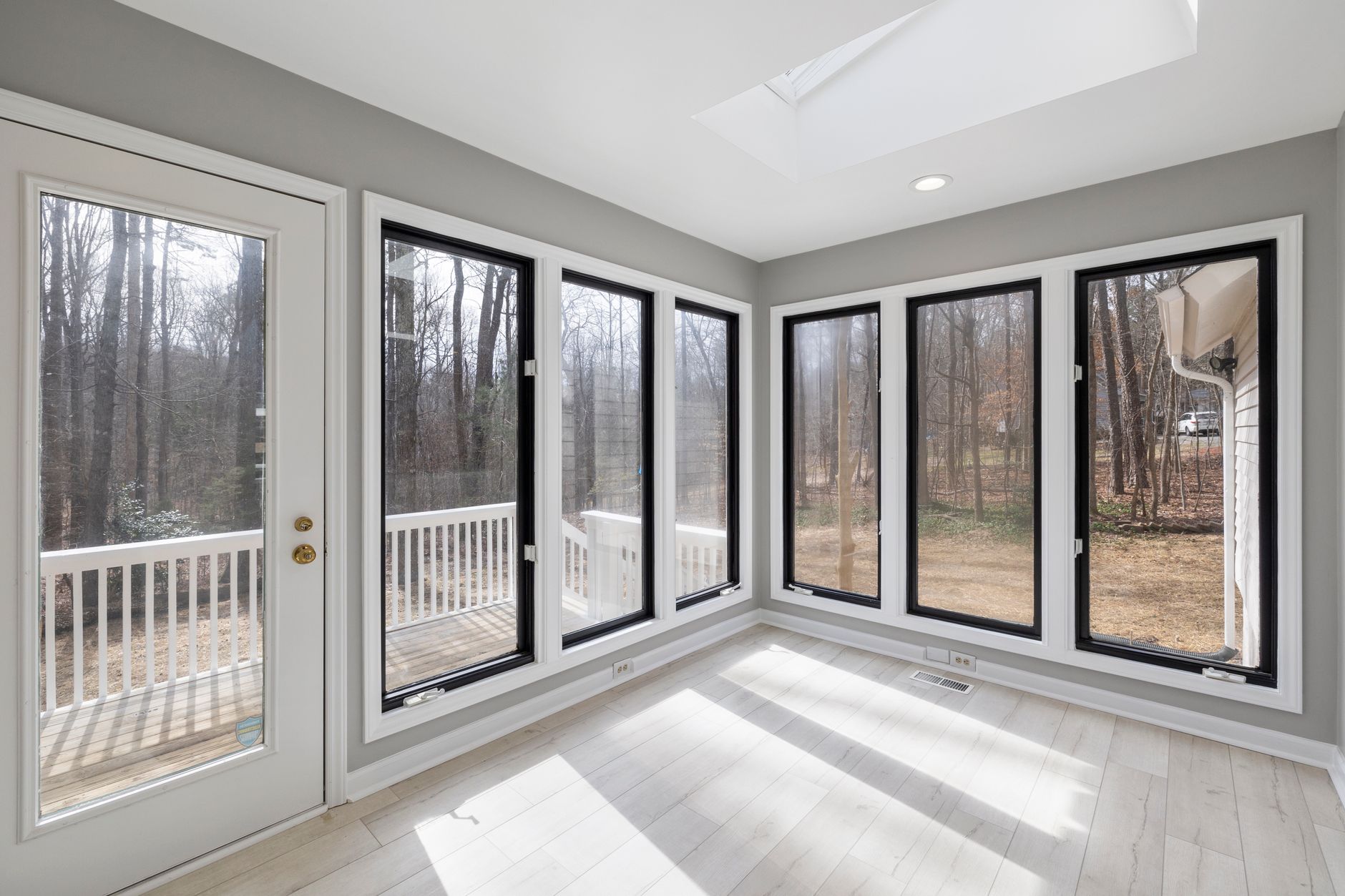
Before choosing any window treatment for your sunroom or screened porch, it helps to understand exactly what conditions those coverings will face. Sunrooms and porches present a unique set of challenges that standard interior blinds simply aren’t built to handle — especially in West Tennessee’s hot, humid climate. Getting this decision right from the start saves you money, protects your investment, and keeps your space comfortable year-round.
The West Tennessee Climate Challenge
Jackson, TN summers are no joke. Average July highs hover around 92°F, and the region regularly sees UV index readings above 9 — classified as “Very High” by the EPA. That intense sun exposure is brutal on standard window coverings not designed for it. Fabrics fade, PVC warps, and cheap slats crack within a single season when they’re hit with direct southern exposure day after day.
Screened porches add another layer of complexity: they’re partially open to the elements, which means humidity, pollen, and occasional rain splash can reach your window treatments. You need materials engineered to handle both heat and moisture without deteriorating.
How Sunrooms Differ from Standard Interior Rooms
A sunroom or three-season room typically has 50–75% more glass surface area than a comparable interior room. That means more light, more heat gain, and more UV radiation hitting your furnishings. Standard fabric blinds rated for interior use can lose up to 40% of their color integrity within two years of direct sun exposure — a costly mistake when you’ve invested in quality furniture and flooring.
- Heat gain: Untreated sunroom windows can raise indoor temperatures by 10–15°F on a summer afternoon.
- Glare: Reflective surfaces make sunrooms uncomfortable without proper light filtering.
- Privacy: Street-facing sunrooms often need daytime privacy without losing natural light.
1. Solar Shades — the Gold Standard for Sunroom Light Control
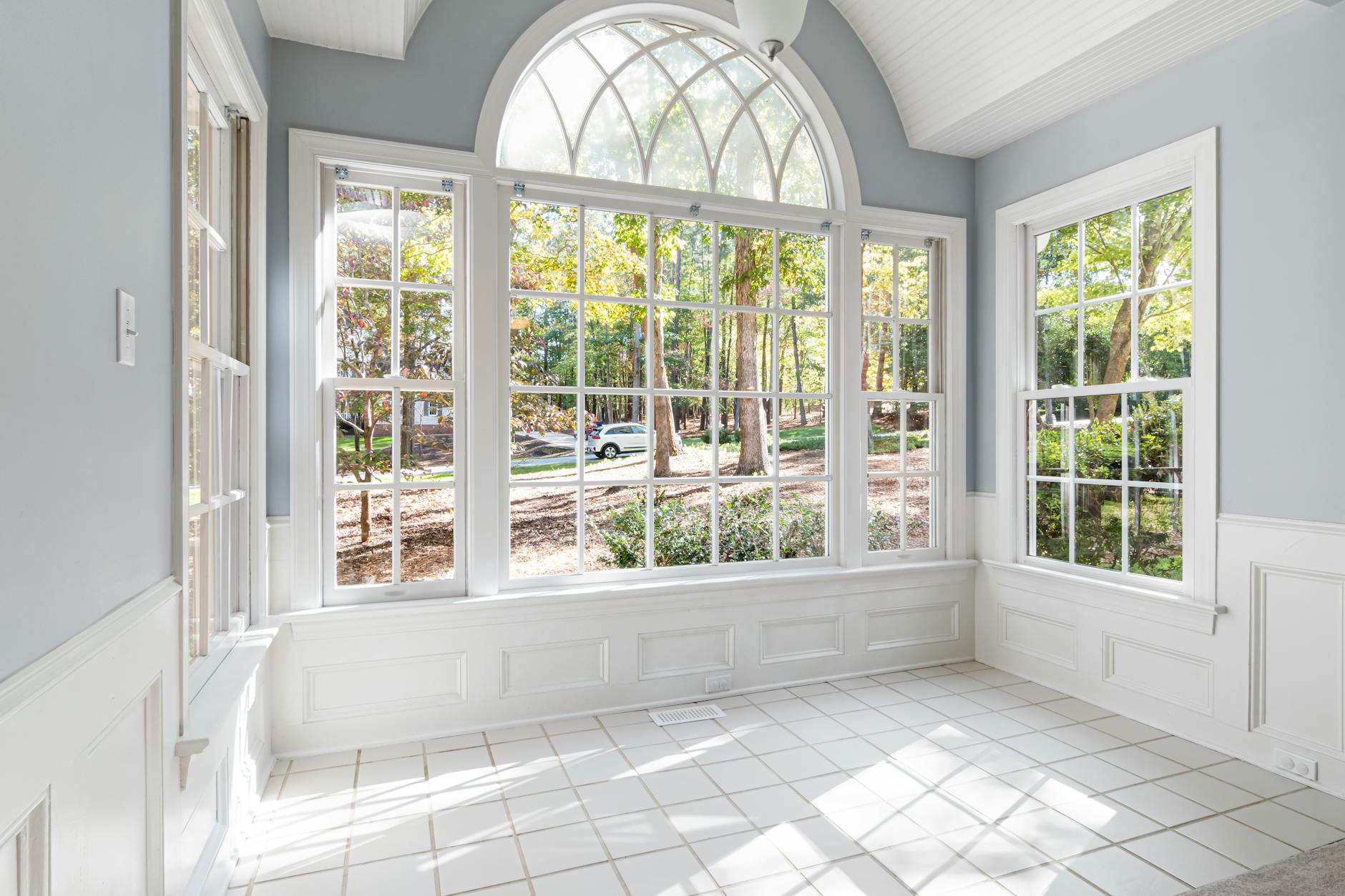
If you ask any experienced window treatment specialist in West Tennessee what they most often recommend for sunrooms, solar shades are almost always at the top of the list. They were literally engineered for high-sun environments, and their combination of UV protection, view preservation, and moisture resistance makes them the most versatile option for both sunrooms and screened porches in the Jackson area.
How Solar Shades Work
Solar shades are woven from a specially engineered mesh fabric — typically fiberglass or polyester coated with PVC — that blocks UV rays while preserving your outward view. The “openness factor” (OF) rating tells you how much light passes through: a 1% OF fabric blocks roughly 99% of UV rays and offers strong privacy, while a 10% OF fabric lets in more light with a more open feel.
For Jackson, TN sunrooms with south- or west-facing exposures, most window treatment professionals recommend a 3–5% openness factor — enough to reduce glare and protect furnishings while still letting you enjoy the view of your backyard or garden.
Moisture and Durability Performance
Solar shade fabrics are inherently moisture-resistant because the PVC coating repels water rather than absorbing it. This makes them an excellent choice for screened porches where humidity and occasional rain splash are a reality. Most quality solar shade fabrics carry a UV block rating of 94–99% and are rated for both interior and exterior use.
- Lifespan: 7–12 years with normal use in high-sun environments
- Cleaning: Wipe down with a damp cloth; most fabrics resist mold and mildew
- Cost range: $80–$250 per window for custom-measured solar shades in Jackson, TN
Motorized solar shades are increasingly popular for sunrooms with hard-to-reach windows — a single remote or smart-home integration controls the entire room.
2. Faux Wood Blinds — Moisture-Proof Classic Style
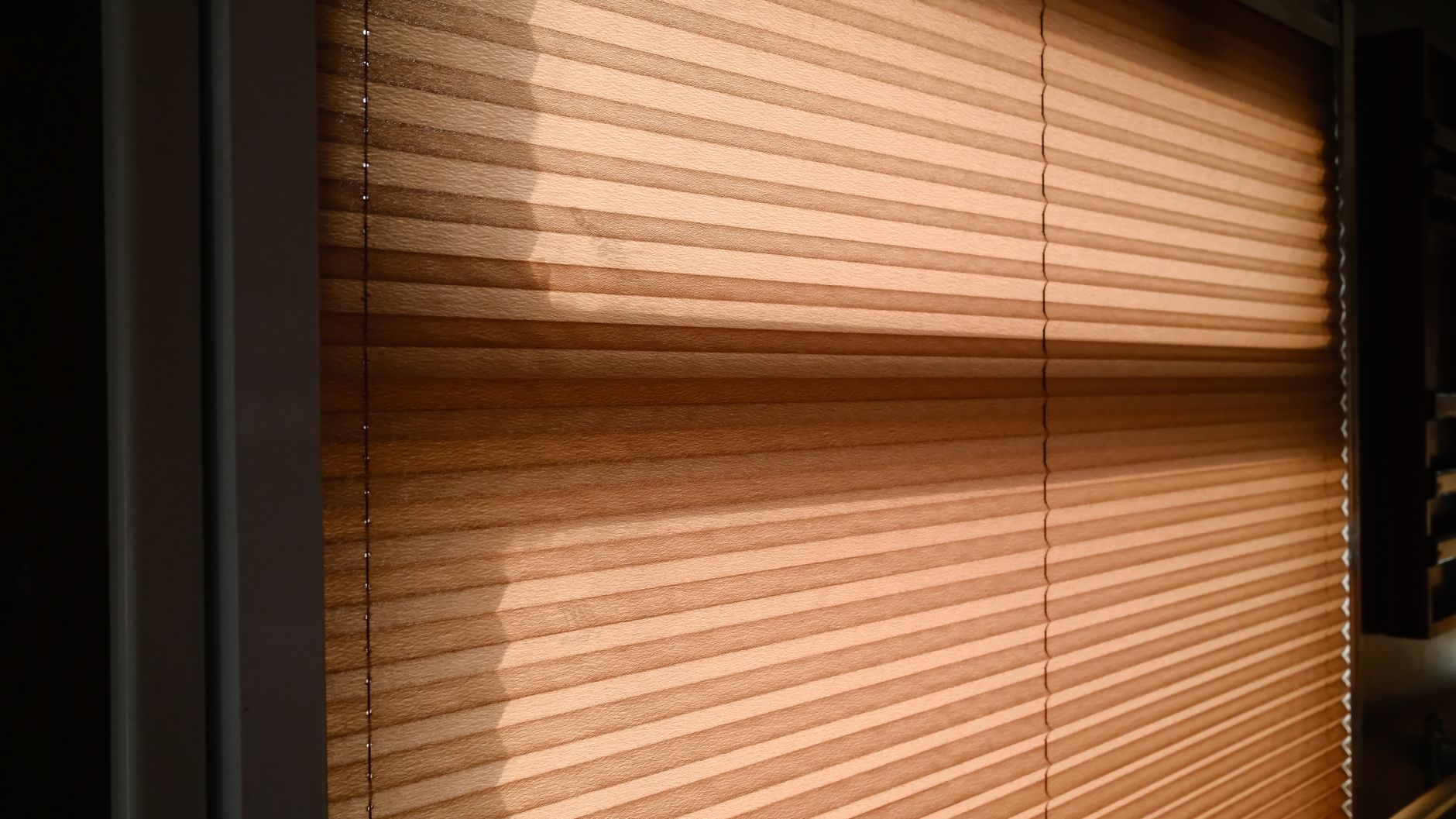
Faux wood blinds are one of the most popular choices among Jackson-area homeowners upgrading their sunrooms — and for good reason. They deliver the warm, traditional look of real wood at a lower price point, with dramatically better performance in the moisture-rich conditions that sunrooms and screened porches create. If your sunroom has a classic or transitional interior style, faux wood blinds are almost certainly on your shortlist.
Why Faux Wood Outperforms Real Wood in Humid Spaces
Real wood blinds are beautiful, but they’re a poor choice for sunrooms and screened porches. Wood absorbs moisture, which causes warping, cracking, and mold growth — sometimes within a single humid Tennessee summer. Faux wood blinds are manufactured from composite PVC or a wood-polymer blend that looks virtually identical to real wood but is completely impervious to moisture.
In independent testing, faux wood blinds maintained their shape and finish after 1,000 hours of humidity chamber exposure (simulating roughly 3–4 years of real-world use in a humid climate), while real wood blinds showed measurable warping after just 200 hours.
Style and Customization Options
Modern faux wood blinds come in slat widths of 2 inches or 2.5 inches, with 2.5″ slats being the most popular choice for larger sunroom windows because they provide a bolder, more architectural look. Color options have expanded dramatically — you’ll find everything from crisp white and antique white to warm chestnut and espresso finishes that complement a variety of interior styles.
- Cordless lift systems are the safest and cleanest option for sunrooms
- Routeless slats eliminate light gaps for better privacy
- Custom sizes are available for non-standard window dimensions common in sunroom additions
Blinds Galore carries a full range of custom faux wood blinds for West Tennessee homes — including specialty sizes for wide sunroom windows that standard box-store blinds simply can’t cover.
3. Cellular Shades — Superior Insulation for Year-Round Comfort
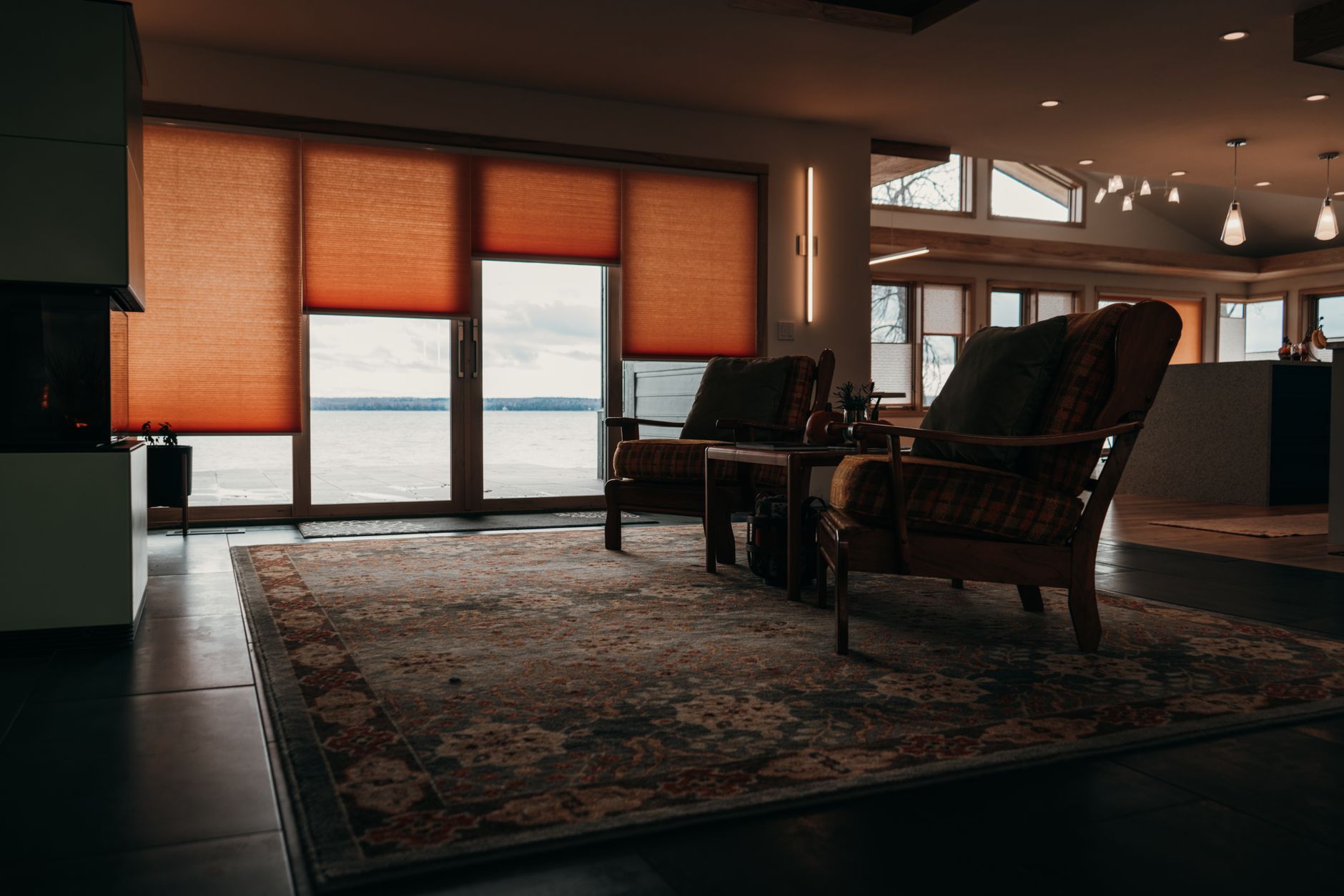
If energy efficiency is a priority — and in West Tennessee’s sweltering summers and occasionally cold winters, it should be — cellular shades deserve serious consideration for your sunroom. They’re the only window covering category specifically engineered to improve a window’s thermal performance, and they do it without sacrificing the clean, tailored look that sunrooms deserve.
How Honeycomb Cells Trap Heat and Cold
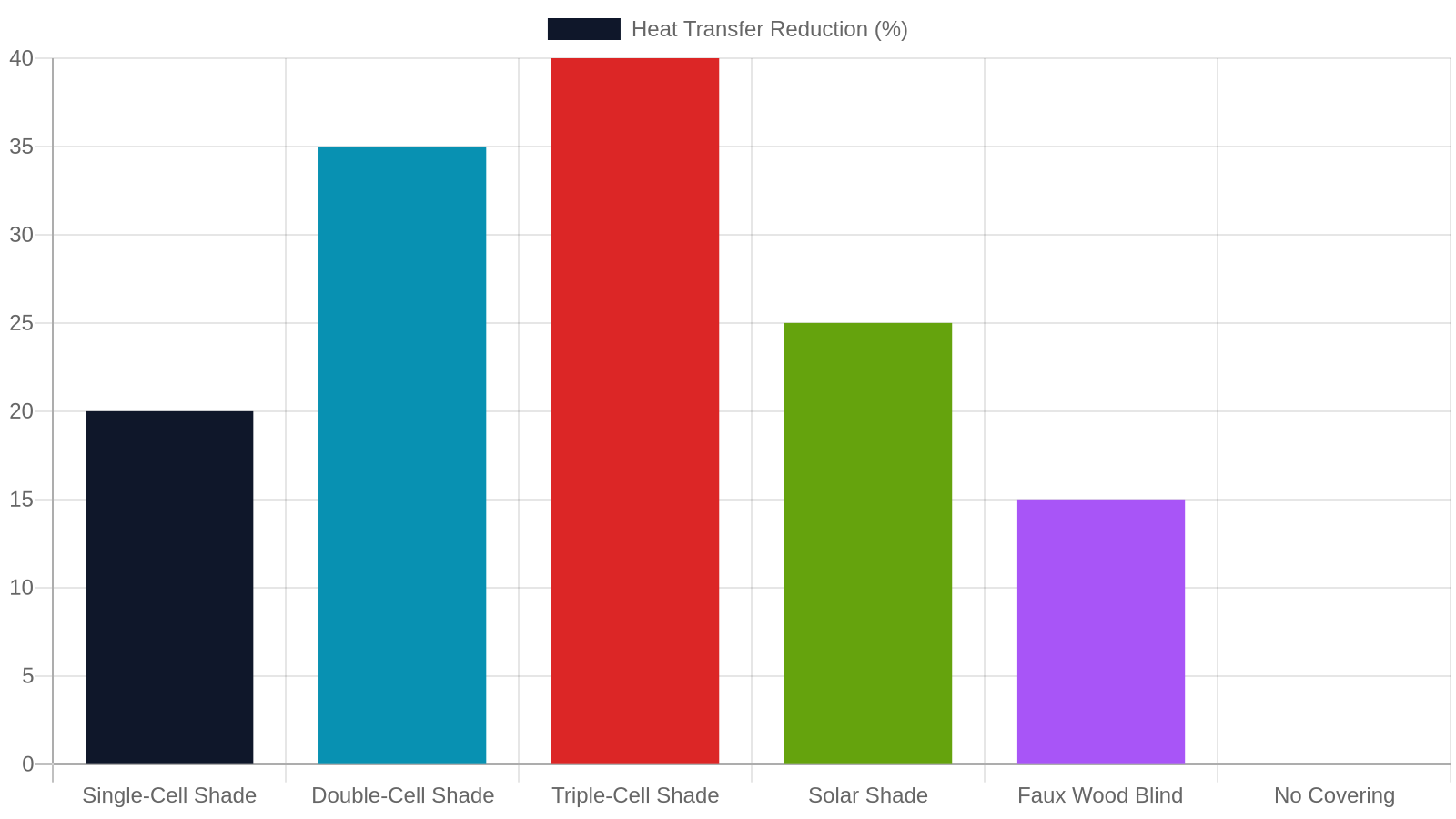
Cellular shades — also called honeycomb shades — get their name from the accordion-like air pockets built into the fabric. These cells act as insulating buffers between the glass and your living space. A single-cell shade provides moderate insulation; a double-cell or triple-cell shade can reduce heat transfer through a window by up to 40% compared to an uncovered window.
For a sunroom in Jackson, TN, that insulation value is significant. In summer, cellular shades help keep the space cooler, reducing the load on your HVAC or mini-split system. In winter, they help retain heat in what is often the coldest room in the house due to all that glass.
Light-Filtering vs. Room-Darkening Options
Cellular shades come in three opacity levels, each suited to a different sunroom use case:
- Sheer/light-filtering: Diffuses sunlight beautifully — ideal for sunrooms used as reading nooks or plant rooms where you want soft, even light without glare
- Semi-opaque: Balances privacy and light — the most popular choice for sunrooms that double as home offices or sitting rooms
- Room-darkening/blackout: Best for sunrooms converted into home theaters or nap rooms
Top-down/bottom-up functionality is especially useful in sunrooms: you can raise the bottom of the shade for privacy while lowering the top to let in natural light from above — a feature that’s hard to achieve with standard blinds.
4. Roller Shades — Clean, Modern, and Easy to Maintain
Roller shades are the minimalist’s answer to sunroom window treatments. Where other options add visual weight and texture, roller shades keep things clean and contemporary — a quality that pairs especially well with modern sunroom additions featuring slim aluminum framing and large expanses of glass. They’re also among the easiest window coverings to clean, which matters in a space that tends to collect dust and pollen from outdoor exposure.
The Case for Simplicity in Sunroom Design
Roller shades have experienced a major resurgence in popularity over the past decade, and it’s easy to see why. Their clean, uncluttered profile suits the open, airy aesthetic that most sunrooms are designed to achieve. When fully raised, a roller shade essentially disappears into a slim headrail — leaving your view completely unobstructed. When lowered, it presents a smooth, flat surface that looks intentional and polished.
For screened porches with a more modern or transitional design aesthetic, roller shades in a neutral linen or warm gray fabric can provide privacy and light control without competing with the architecture or the outdoor view.
Fabric Selection for High-UV Environments
Not all roller shade fabrics are created equal when it comes to sun exposure. For sunrooms and porches, look for fabrics with these specifications:
- Solution-dyed acrylic or polyester: The color is baked into the fiber rather than applied on top, so it resists fading dramatically better than piece-dyed fabrics
- UV stabilizers: Added during manufacturing to slow photodegradation — look for fabrics rated for 1,500+ hours of UV exposure
- Moisture-resistant backing: Prevents mold and mildew on screened porches
Custom roller shades from a local provider like Blinds Galore are measured and cut to your exact window dimensions — critical in sunrooms where windows are often non-standard sizes due to the room’s construction.
5. Plantation Shutters — the Premium Long-Term Investment
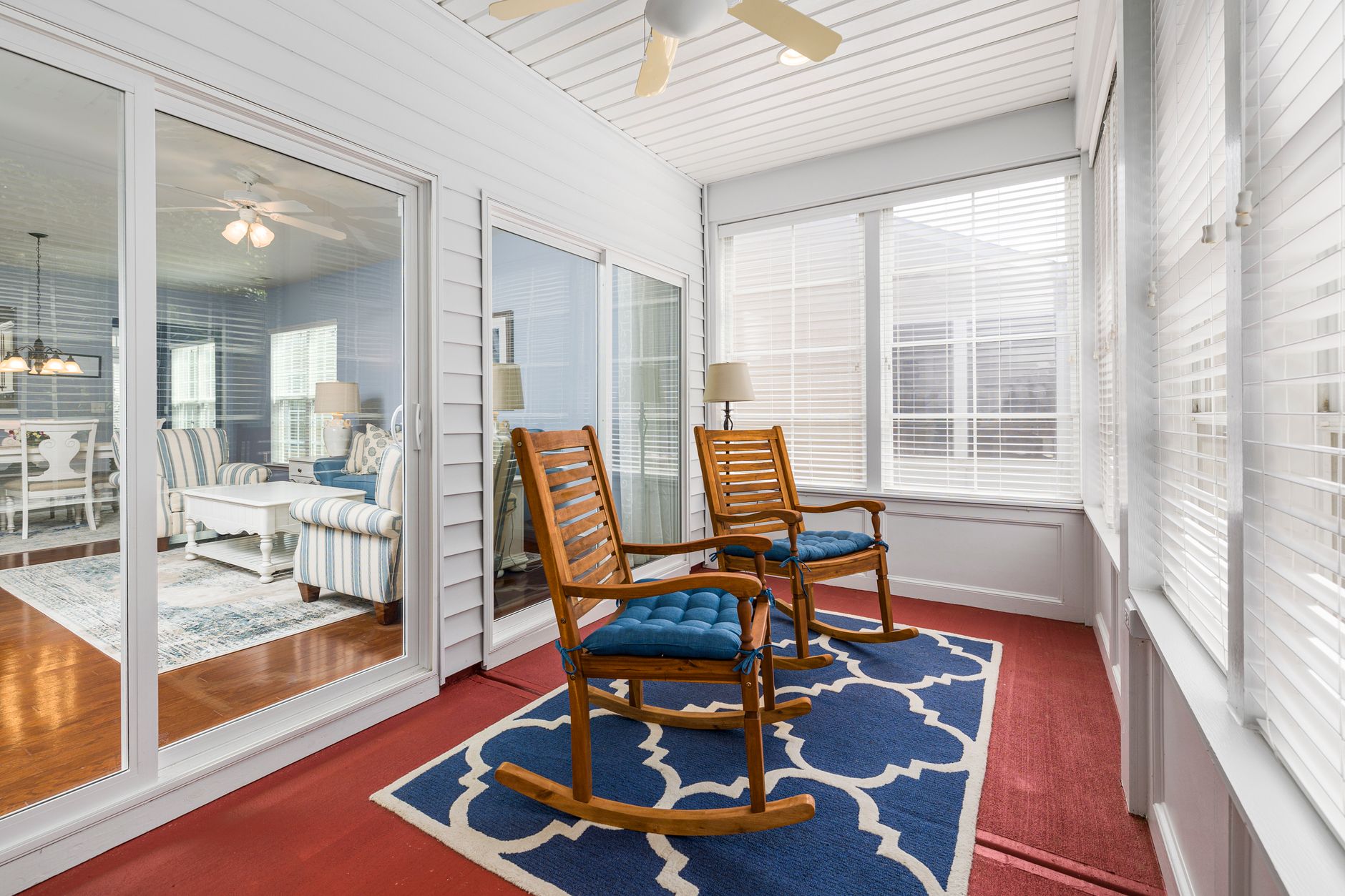
If budget allows, plantation shutters are the single best long-term investment you can make in a sunroom or screened porch. They add architectural value to the space, require virtually no maintenance, and outlast every other window treatment category by a significant margin. In a sunroom — a room that already represents a substantial home improvement investment — it makes sense to protect that space with window treatments built to last.
Why Shutters Are the Most Durable Sunroom Option
Plantation shutters are the only window treatment that is permanently installed as part of the window itself. Unlike blinds or shades that hang from a headrail, shutters are mounted inside the window frame with hinges — making them structurally integrated and far more resistant to the physical stresses of a sunroom environment (temperature swings, humidity cycles, frequent adjustment).
Quality composite or vinyl plantation shutters are completely waterproof, won’t warp or crack in humidity, and are rated for decades of use. Many manufacturers offer lifetime warranties on their shutter frames and louvers — a level of durability that no fabric shade can match.
Louver Size and Light Control
Plantation shutters for sunrooms typically come in louver sizes of 2.5″, 3.5″, or 4.5″. Larger louvers (3.5″ and 4.5″) are the most popular choice for sunrooms because they provide a wider view when open and a more dramatic architectural statement. The 4.5″ louver is particularly well-suited to floor-to-ceiling sunroom windows.
- Tilt the louvers upward to direct light toward the ceiling — reduces glare while brightening the room
- Tilt downward for privacy from street level while maintaining airflow
- Fold panels fully open to expose the entire window on mild days
If you’re considering shutters for your Jackson, TN sunroom, explore our custom-built plantation shutters — each set is measured and built specifically for your windows.
6. Vertical Blinds — the Practical Choice for Sliding Doors and Wide Openings
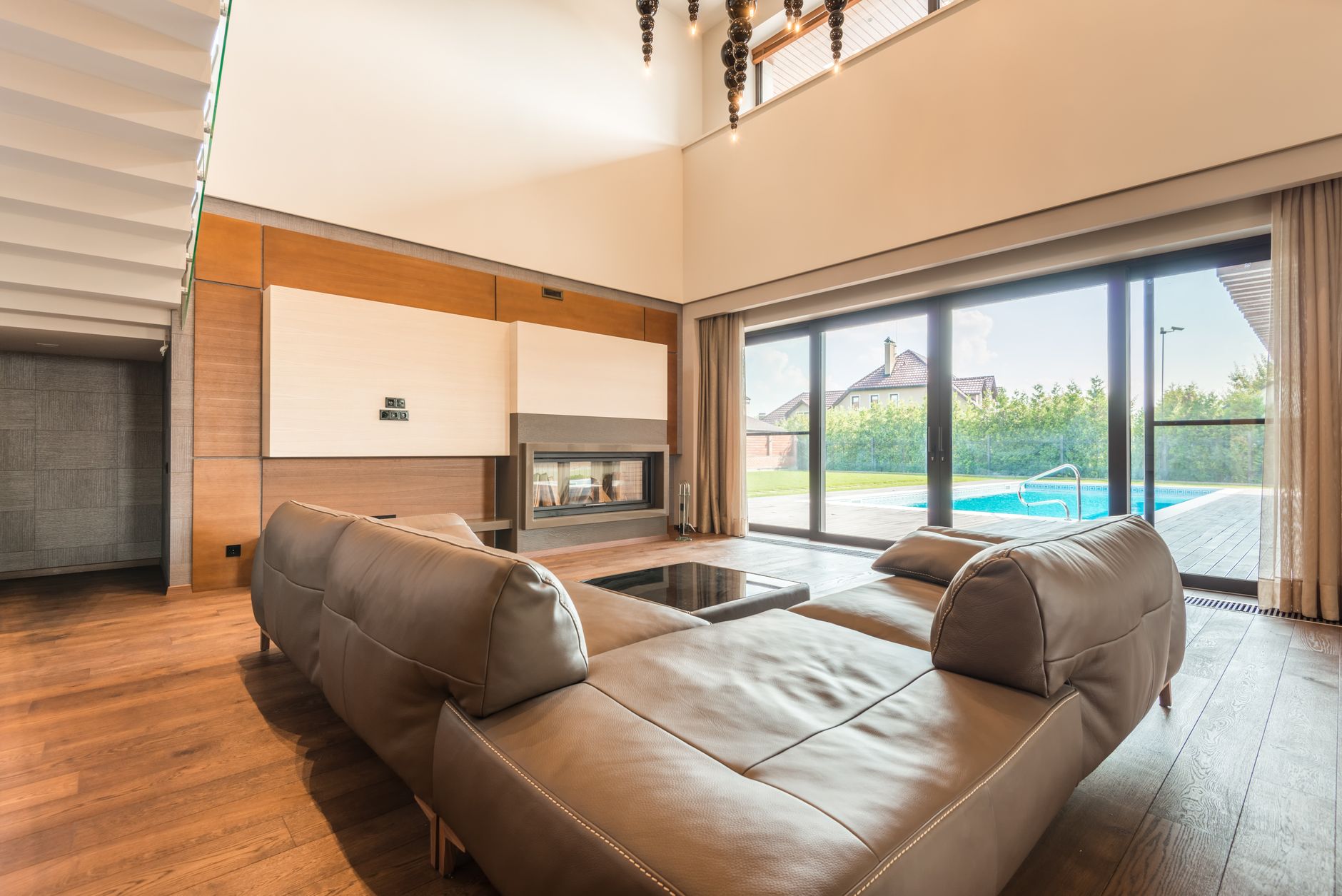
Vertical blinds don’t always get the credit they deserve in sunroom design conversations — they’re often dismissed as an office or commercial product. But for sunrooms and screened porches with sliding doors, wide picture windows, or irregular openings, vertical blinds are frequently the most practical and cost-effective solution. Modern fabric and sheer vane options have also elevated their aesthetic considerably from the utilitarian vinyl versions of the 1990s.
Where Vertical Blinds Shine in Sunroom Design
Many sunrooms and screened porches feature sliding glass doors or wide picture windows that horizontal blinds simply can’t cover effectively. Vertical blinds — with their top-mounted track and hanging fabric or vinyl vanes — are specifically designed for these wide openings. They stack neatly to one side (or split to both sides) when open, and draw across the full width of the opening when closed.
For a sunroom with a 96″ sliding door leading to a deck or backyard, a set of custom vertical blinds can provide full light control and privacy in a way that no horizontal treatment can replicate without a complicated multi-shade installation.
Material Options for Sunroom Verticals
Vertical blind vanes come in several materials, each with different performance characteristics for sunrooms:
- Fabric vanes: Soft, elegant look — choose solution-dyed fabrics for UV resistance; available in light-filtering and room-darkening options
- Vinyl vanes: Completely waterproof and wipe-clean — ideal for screened porches; less expensive but less refined in appearance
- Sheer vanes (Sheer Vertical / Luminette style): Fabric vanes with a sheer panel that filters light beautifully — the most upscale vertical option for sunrooms
Vane widths are typically 3.5″ or 5″, with 5″ vanes providing a more contemporary look and fewer gaps between vanes when closed.
7. Woven Wood Shades — Natural Texture for Casual Porch Spaces
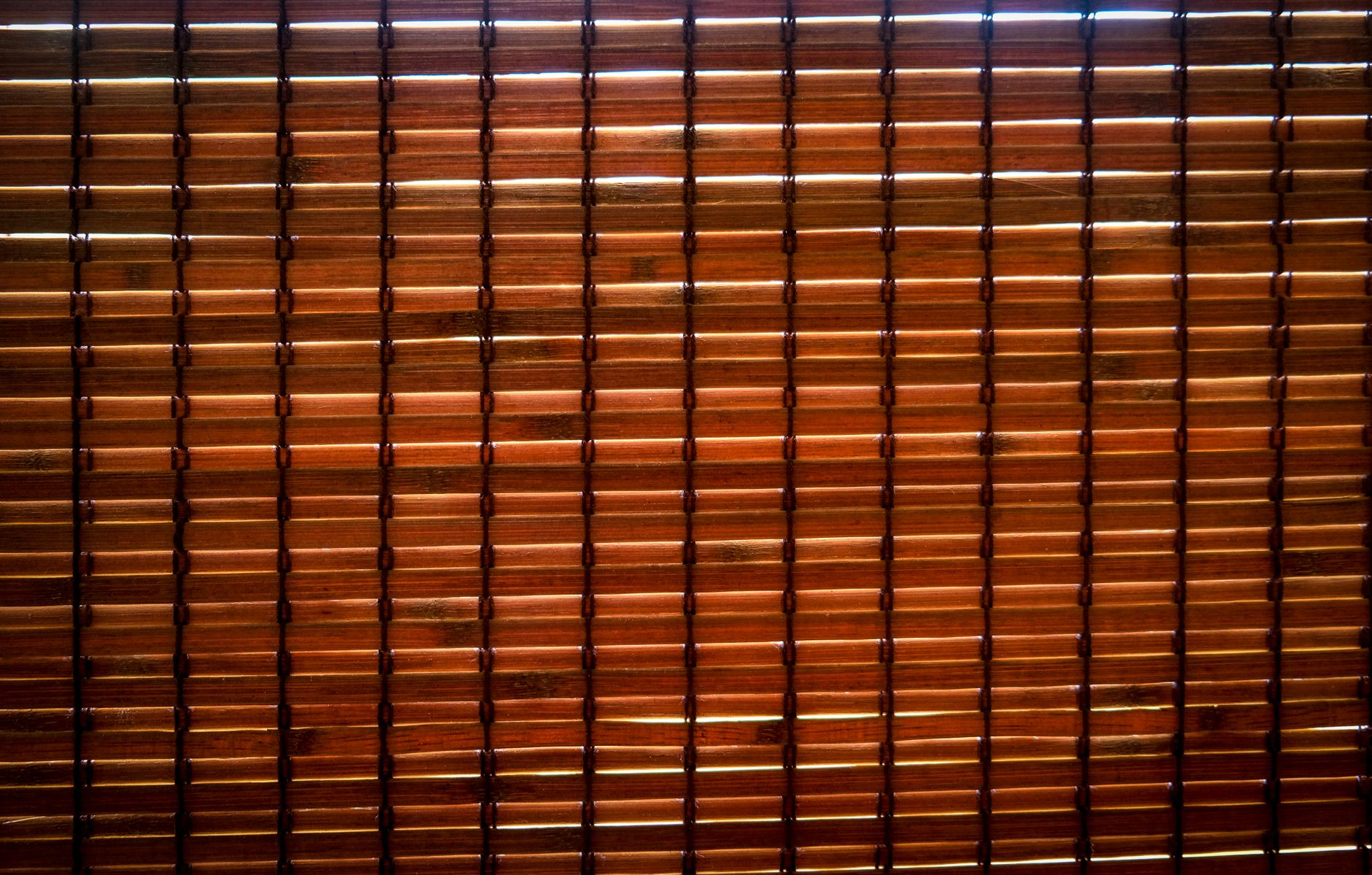
Woven wood shades occupy a unique niche in the sunroom and porch window treatment market: they’re the only option that genuinely looks like it belongs outdoors. For homeowners in communities like Lexington, Henderson, and Milan — where screened porches are a beloved part of home life — woven wood shades can transform a functional porch into a true outdoor living room with a cohesive, intentional design aesthetic.
The Aesthetic Appeal of Natural Materials
Woven wood shades — made from bamboo, jute, rattan, or a blend of natural fibers — bring an organic, relaxed warmth to screened porches and casual sunrooms that no synthetic material can fully replicate. They’re the go-to choice for homeowners who want their porch to feel like an extension of the natural landscape rather than an interior room that happens to have a lot of windows.
In West Tennessee, where screened porches often overlook wooded lots, gardens, or open fields, woven wood shades complement the setting beautifully. The natural variation in color and texture means no two shades look exactly alike — a quality that appeals to homeowners who value authenticity over uniformity.
Important Limitations to Know
Woven wood shades are not the right choice for every sunroom situation. Be aware of these limitations before committing:
- Not waterproof: Natural fibers absorb moisture and can mold or warp if exposed to rain splash — best suited for enclosed sunrooms, not open screened porches
- Light filtering only: Woven wood shades don’t provide blackout capability; light seeps through the weave even when fully lowered
- UV sensitivity: Natural fibers can fade and become brittle with prolonged direct sun exposure — consider a liner for south-facing windows
- Price range: Custom woven wood shades typically run $120–$300 per window depending on size and material
For the right application — an enclosed sunroom with indirect light or a shaded screened porch — woven wood shades are genuinely beautiful and worth the investment.
Sunroom Window Treatment Comparison at a Glance
Use this side-by-side comparison to quickly identify which window treatment best matches your sunroom or screened porch priorities. Ratings are on a scale of 1–5 (5 = best).
Key Factors to Consider Before You Choose

Choosing the right window treatment for your sunroom or screened porch isn’t just about picking a style you like — it’s about matching the product’s technical capabilities to the specific conditions your windows face. Before you make a final decision, work through these key factors to narrow your options and avoid a costly mistake.
Sun Exposure and Orientation
The direction your sunroom or porch faces is one of the most important variables in your window treatment decision. South- and west-facing sunrooms receive the most intense direct sun and need the highest UV protection — solar shades with a 1–3% openness factor, cellular shades, or plantation shutters are the strongest performers here. North-facing sunrooms receive soft, diffused light and can often use lighter fabrics with higher openness factors without the same risk of fading or heat gain.
Open vs. Enclosed Porch Considerations
An enclosed sunroom with glass windows is a fundamentally different environment from a screened porch with open air circulation. For screened porches, moisture resistance is non-negotiable — stick to solar shades, vinyl verticals, faux wood blinds, or plantation shutters with composite frames. For enclosed sunrooms, you have more flexibility and can consider fabric options like cellular shades, woven wood, and roller shades with appropriate UV-resistant fabrics.
- Screened porch priority: moisture resistance first, aesthetics second
- Enclosed sunroom priority: UV protection and insulation first, then style
Budget Planning for Custom Window Treatments
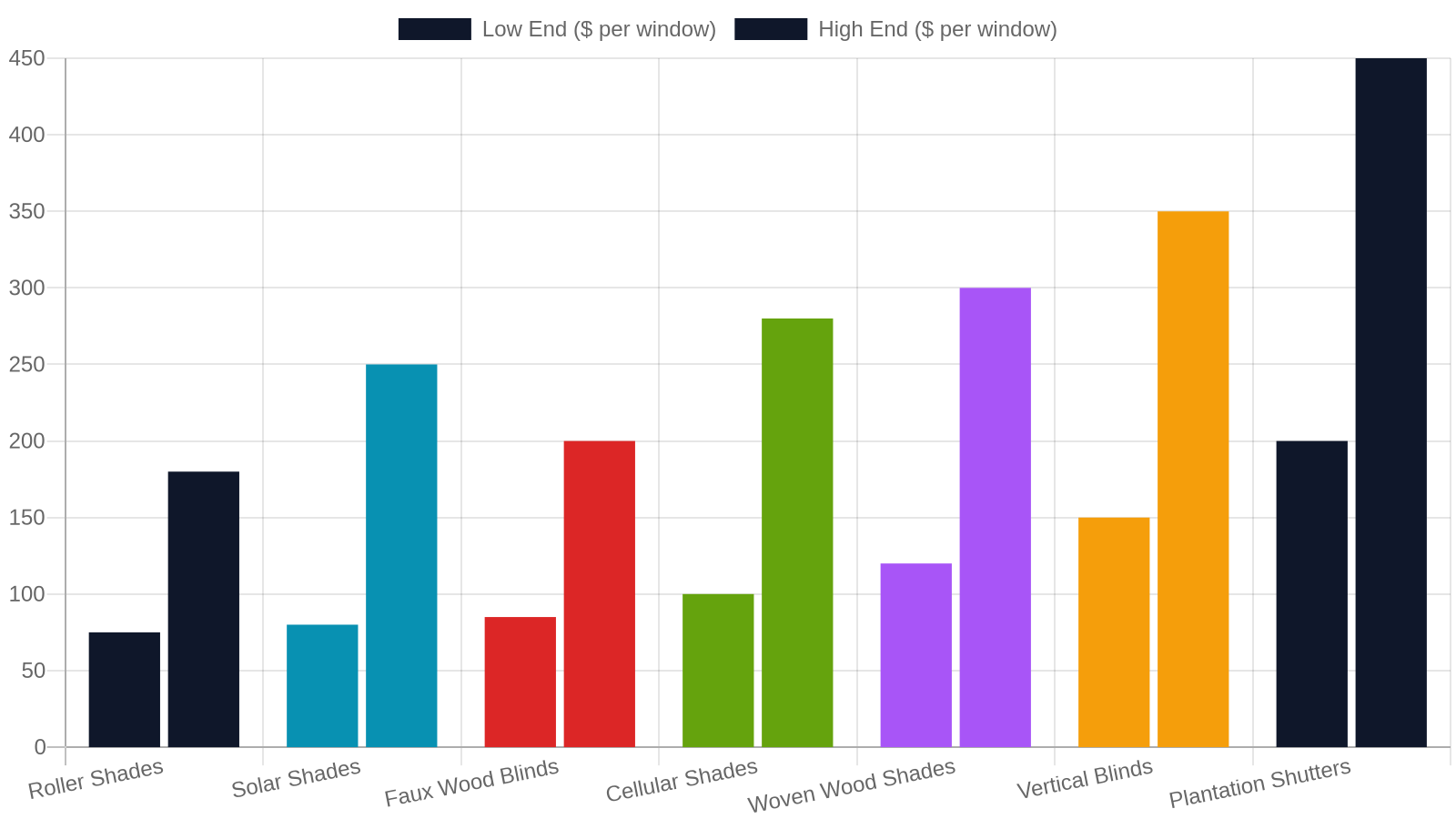
Sunrooms and screened porches often have more windows than any other room in the house — sometimes 8–15 windows or more. That makes budget planning especially important. Here’s a rough per-window cost guide for custom treatments in the Jackson, TN market:
- Roller shades: $75–$180 per window
- Solar shades: $80–$250 per window
- Faux wood blinds: $85–$200 per window
- Cellular shades: $100–$280 per window
- Woven wood shades: $120–$300 per window
- Vertical blinds: $150–$350 per opening
- Plantation shutters: $200–$450 per window
Professional measuring and installation is included when you work with Blinds Galore — there are no hidden fees, and every project comes with a 100% satisfaction guarantee.
Motorization and Smart Home Integration for Sunrooms

If you’re investing in a full sunroom window treatment project, it’s worth seriously considering motorization — especially for hard-to-reach windows or rooms with many shades to manage. The convenience factor alone is compelling, but the energy savings from automated scheduling and the safety benefits for families with children make motorization a genuinely smart upgrade for sunrooms in Jackson and surrounding communities.
Why Motorized Blinds Make Sense for Sunrooms
Sunrooms frequently have windows that are difficult or impossible to reach manually — high transoms, skylights, or windows positioned above built-in seating. Motorization solves this problem elegantly. With a battery-powered or hardwired motor, you can raise and lower your shades with a remote control, wall switch, or smartphone app — no reaching, no tangled cords, no frustration.
Motorized shades are also the safest option for homes with young children or pets, as they eliminate the dangling cord hazard that has led to safety recalls across the industry. The Consumer Product Safety Commission (CPSC) has issued multiple warnings about corded window covering hazards — motorized or cordless options are now the recommended standard.
Smart Home Compatibility
Many motorized shade systems are compatible with popular smart home platforms, including Amazon Alexa, Google Home, and Apple HomeKit. This means you can program your sunroom shades to lower automatically at 2 PM on summer afternoons — the peak heat period — and raise again at sunset, all without lifting a finger.
- Schedule-based automation: Protect furnishings from peak UV hours automatically
- Scene integration: Pair shades with smart lighting for a “movie mode” or “morning light” scene
- Voice control: “Hey Alexa, lower the sunroom shades” — it really is that simple
Motorization adds $100–$250 per shade to the cost but is increasingly viewed as a standard feature rather than a luxury in new sunroom installations.
How the Blinds Galore In-Home Consultation Works
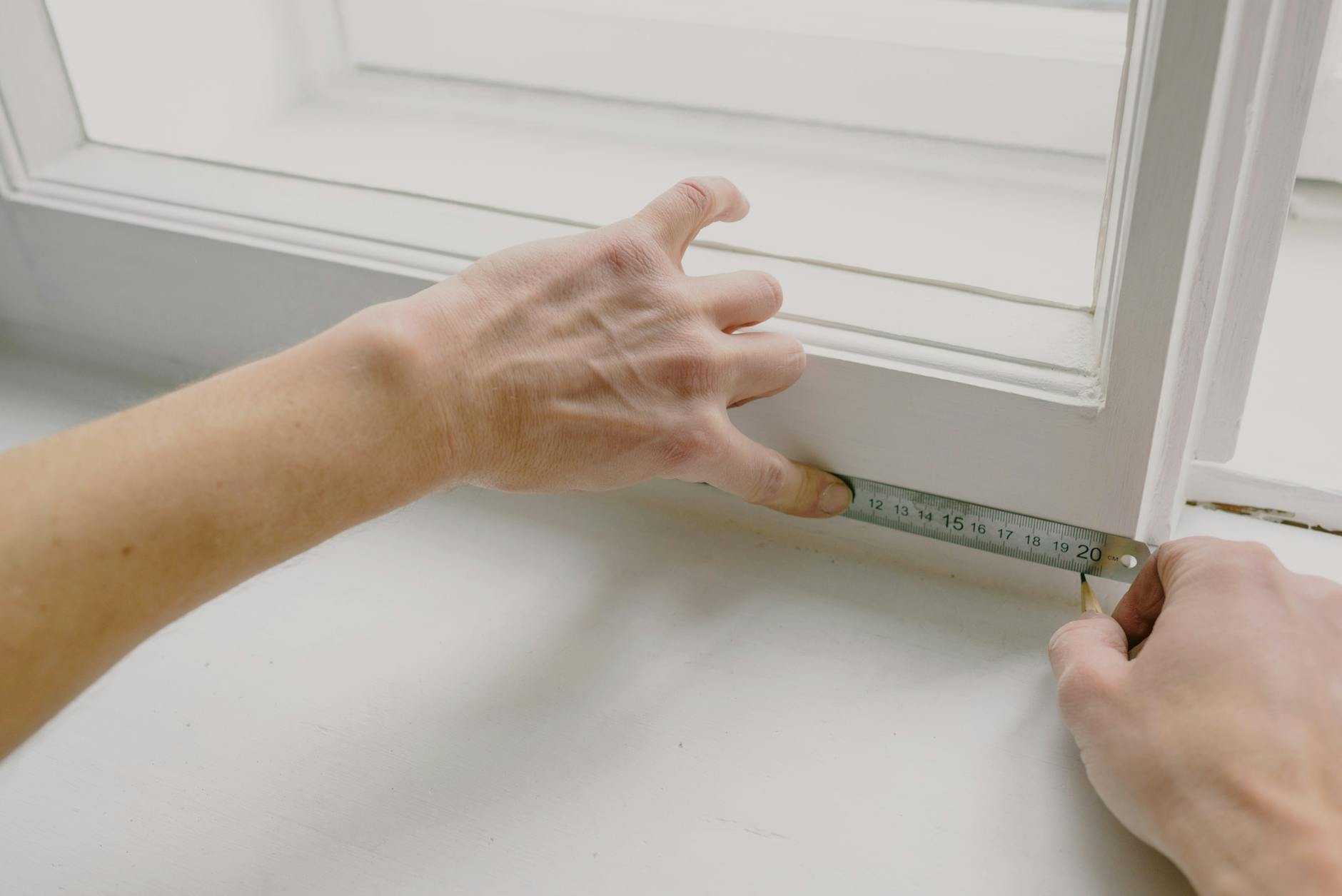
Choosing the right window treatment for your sunroom is only half the equation — proper measuring and installation are equally critical to getting a result you’ll love. Blinds Galore’s three-step process is designed to take all the guesswork and hassle out of the experience, from first conversation to final installation.
Step 1 — Schedule Your Free Consultation
Blinds Galore brings the showroom to your home — no driving across town, no trying to imagine how a sample chip will look at full scale in your actual sunroom. When you call (731) 571-5179, a friendly team member will schedule a convenient time to visit your home in Jackson, Lexington, Henderson, Milan, or the surrounding West Tennessee area.
During the consultation, you’ll see full-size samples in your actual lighting conditions — morning sun, afternoon glare, whatever your sunroom faces. That’s a fundamentally different (and better) experience than choosing from a catalog or a box-store display.
Step 2 — Professional Measuring and Custom Fabrication
Sunroom windows are notorious for being non-standard sizes. Angled walls, curved frames, and custom-built additions often mean that off-the-shelf blinds won’t fit properly — leaving gaps, light leaks, or treatments that look sloppy. Blinds Galore’s professional measuring service ensures every treatment is cut and fabricated to your exact window dimensions.
With over 18 years of experience serving West Tennessee homeowners, the Blinds Galore team has measured and installed treatments in virtually every type of sunroom configuration — from simple three-season additions to elaborate custom-built glass rooms with dozens of windows.
Step 3 — Professional Installation and Satisfaction Guarantee
Once your custom treatments are fabricated, the Blinds Galore team returns to install everything properly — no DIY frustration, no misaligned brackets, no stripped screws. Every installation is backed by a 100% satisfaction guarantee: if something isn’t right, it gets made right.
For more tips, inspiration, and window treatment guides tailored to West Tennessee homes, visit the Blinds Galore blog — a regularly updated resource covering everything from style trends to maintenance advice for local homeowners.
Ready to Transform Your Sunroom or Screened Porch?
You’ve done the research. You know the options, you understand what West Tennessee’s climate demands from a sunroom window treatment, and you have a sense of what style fits your home. The next step is seeing those options in person — in your actual sunroom, in your actual light — and that’s exactly what Blinds Galore’s free in-home consultation is designed to deliver.
Your Next Step Is One Call Away
Whether you’re outfitting a brand-new sunroom addition in Jackson or finally upgrading the worn-out blinds on your screened porch in Lexington or Henderson, Blinds Galore is ready to help. Call (731) 571-5179 today to schedule your free in-home consultation — there’s no obligation, no pressure, and no charge for the visit.
You’ll get expert advice tailored to your specific windows, your home’s style, and your budget. With 18 years of experience and a 100% satisfaction guarantee, you can feel confident that your sunroom will look exactly the way you’ve been imagining it.
Explore More Window Treatment Resources
Not quite ready to call? That’s okay — do a little more research first. The Blinds Galore website is packed with information about every product category, including photo galleries, product videos, and detailed guides. You can also explore our custom shades collection to see the full range of solar, cellular, roller, and woven wood options available for your sunroom project.
West Tennessee homeowners have trusted Blinds Galore for nearly two decades. Let us show you why — one beautiful sunroom at a time.
Frequently Asked Questions
What are the best blinds for a sunroom in Jackson, TN?
Solar shades and plantation shutters are the top choices for most Jackson, TN sunrooms. Solar shades offer excellent UV protection and moisture resistance at a mid-range price, while plantation shutters provide the best long-term durability and add architectural value to the space. The right choice depends on your sun exposure, budget, and whether your sunroom is enclosed or screened.
Can I use regular indoor blinds on a screened porch?
No — standard indoor blinds are not designed for the humidity, temperature swings, and occasional moisture exposure that screened porches experience. You need moisture-resistant options like solar shades, faux wood blinds, vinyl vertical blinds, or composite plantation shutters. Using indoor-rated fabrics or real wood on a screened porch will result in warping, mold, and premature failure.
How much do custom sunroom blinds cost in West Tennessee?
Custom sunroom window treatments in the Jackson, TN area typically range from $75–$180 per window for roller shades up to $200–$450 per window for plantation shutters. The total project cost depends on the number of windows, the treatment type, and whether you add motorization. Blinds Galore provides free in-home consultations with no-obligation quotes.
Are solar shades good for screened porches?
Yes — solar shades are one of the best options for screened porches. Their PVC-coated mesh fabric is moisture-resistant, blocks 94–99% of UV rays, and is durable enough to handle the humidity and temperature fluctuations of an outdoor-adjacent space. A 3–5% openness factor is recommended for most West Tennessee screened porches.
Do plantation shutters work well in sunrooms?
Plantation shutters are an excellent sunroom choice, provided you select composite or vinyl frames rather than real wood. Composite shutters are completely waterproof, won't warp in humidity, and typically carry lifetime warranties. They offer precise light control through adjustable louvers and add significant resale value to the home.
How do I know what size louvers to choose for sunroom shutters?
For sunrooms with large windows, 3.5" or 4.5" louvers are the most popular choices. Larger louvers provide a wider, less obstructed view when open and a more dramatic architectural look. The 4.5" louver works especially well for floor-to-ceiling sunroom windows. A Blinds Galore consultant can show you full-size samples in your home so you can see exactly how each size looks before committing.
You might also like
Faux Wood Blinds vs Cellular Shades: Your 9-Point Guide for West Tennessee Sunrooms
Quick answer: For West Tennessee sunrooms and screened porches, faux wood blinds win on moisture resistance,
7 Best Custom Shades for Jackson TN Bedrooms: Light and Privacy Guide
Quick answer: The best custom shades for Jackson, TN bedrooms balance light control, privacy, and style
How to Measure Windows for Custom Shades: Your 9-Step Guide for Jackson, TN Homes
Quick answer: To measure windows accurately for custom shades in Jackson, TN, you need a steel tape measure,
Plantation Shutters vs. Faux Wood Blinds: Which Adds More Resale Value in Jackson, TN?
Quick answer: For Jackson, TN homeowners weighing resale impact, custom interior plantation shutters
How to Compare Plantation Shutters, Blinds, and Shades Using Product Videos in Jackson, TN
Quick answer: Choosing between plantation shutters, blinds, and shades in Jackson, TN comes down to four
How to Choose Durable Custom Faux Wood Blinds for Jackson TN Kitchen Windows
Quick answer: Custom faux wood blinds are the smartest window treatment choice for Jackson, TN kitchen