

How to Choose Durable Custom Faux Wood Blinds for Jackson TN Kitchen Windows
Quick answer: Custom faux wood blinds are the smartest window treatment choice for Jackson, TN kitchen windows because they resist moisture, warping, and the grease-laden humidity that destroys real wood. When choosing a set, focus on PVC or composite construction rated for high-humidity rooms, slat widths of 2 to 2.5 inches for good light control, a tilt-and-lift mechanism that wipes clean easily, and accurate custom measurements so every window is covered perfectly. A free in-home consultation with a local specialist like Blinds Galore takes the guesswork out of the process entirely.
1. Why Faux Wood Blinds Belong in Every Jackson TN Kitchen

Before diving into specifications and style choices, it helps to understand why faux wood blinds have become the go-to kitchen window treatment for homeowners across West Tennessee. The short answer: kitchens are brutal on window coverings, and faux wood is built to survive that brutality without sacrificing the warm, classic look of real wood.
The West Tennessee Kitchen Environment
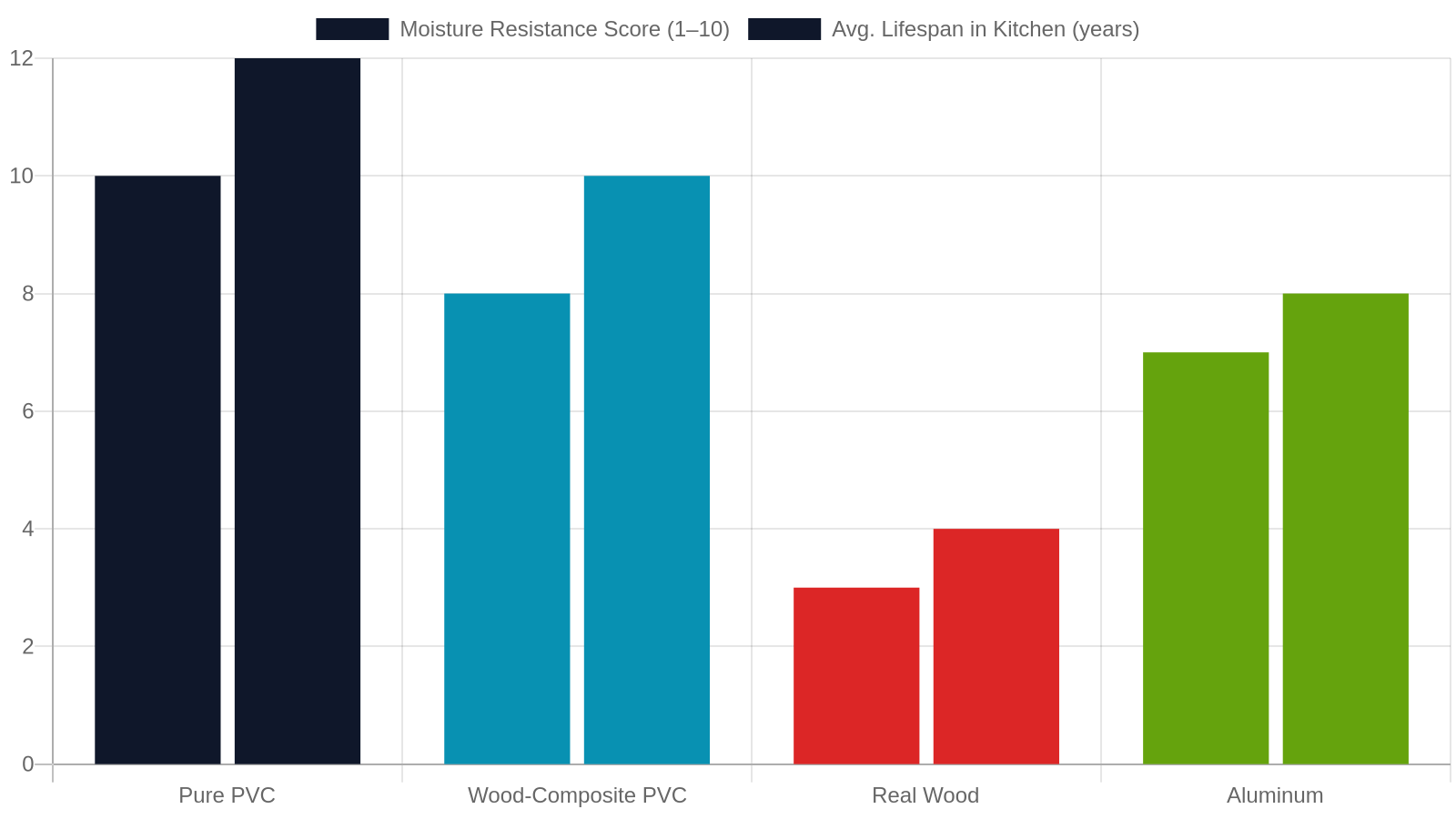
Jackson, TN sits in a region known for hot, humid summers and mild but damp winters. Average summer humidity regularly exceeds 70%, and inside a working kitchen that number climbs even higher — steam from boiling pots, dishwasher exhaust, and cooking grease all combine to create a punishing environment for window treatments. Real wood blinds expand, warp, and crack under these conditions, often within two to three years. Faux wood blinds, manufactured from PVC or a wood-composite core wrapped in PVC, are engineered to hold their shape and color through every season West Tennessee throws at them.
Faux Wood vs. Real Wood: A Durability Reality Check
The comparison is not even close when kitchens are involved. Real wood blinds can cost 30–60% more than comparable faux wood options and will still show warping within a few years in a high-moisture room. Faux wood blinds, by contrast, carry manufacturer warranties of 5 to 10 years on most residential-grade products. They also clean with a damp cloth — no special wood-safe solvents required. For homeowners in Jackson and surrounding communities like Lexington and Milan, that durability translates directly into long-term savings.
2. Understanding Faux Wood Blind Materials and Construction
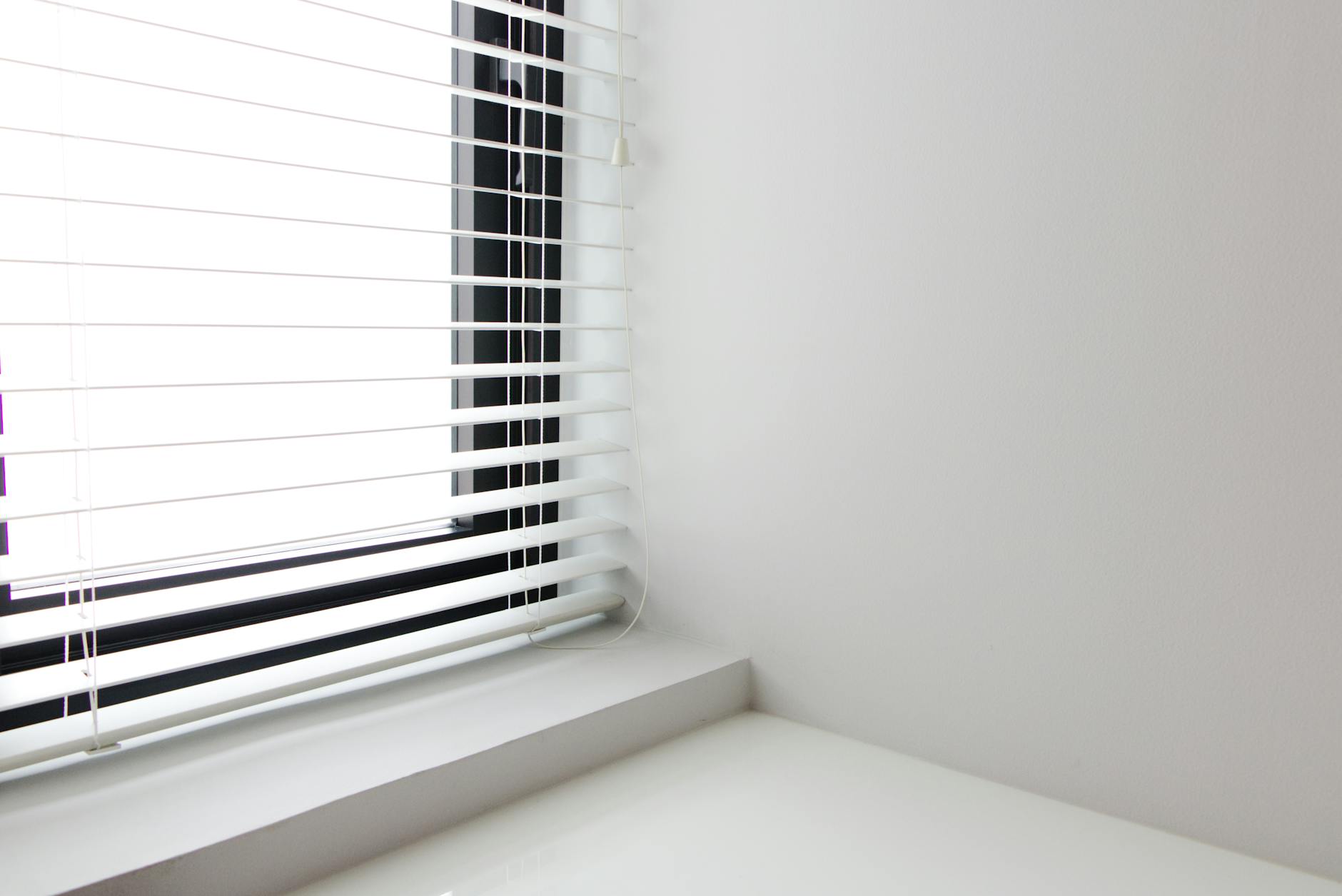
The phrase ‘faux wood’ covers a surprisingly wide range of products. Understanding what goes into the slat — the actual material, its thickness, and how it’s finished — is the single most important factor in predicting how long your kitchen blinds will last and how good they’ll look five years from now.
Pure PVC vs. Wood-Composite Construction
Not all faux wood blinds are created equal. The two main construction types are pure PVC and wood-composite (basswood core with PVC coating). Pure PVC blinds are the most moisture-resistant option — ideal for kitchens directly above a sink or adjacent to a dishwasher. They are slightly heavier than composite options but virtually impervious to humidity. Wood-composite blinds offer a marginally more authentic wood grain texture and are lighter weight, making them easier to raise and lower on larger windows. For most Jackson, TN kitchens, either construction performs well; pure PVC is the safer choice for windows within three feet of a water source.
Weight, Rigidity, and Slat Thickness
Slat thickness typically ranges from 1 mm to 3 mm in residential faux wood blinds. Thicker slats (2.5–3 mm) are more rigid, resist bowing on wide windows, and block light more effectively when closed. Thinner slats are lighter and better suited to narrow windows or casement-style openings. For a standard kitchen window measuring 36 to 48 inches wide, a slat thickness of at least 2 mm is recommended to prevent the center of the blind from sagging over time. Always ask your window treatment specialist to confirm the right thickness for your specific window dimensions.
UV Stabilizers and Color Fastness
Kitchen windows often face east or south, meaning the blinds absorb direct morning or afternoon sun for hours each day. Quality faux wood blinds include UV stabilizers baked into the PVC compound, preventing the yellowing and fading that cheaper products develop within 12–18 months. Look for products that specify UV-inhibitor additives and carry a color-fade warranty of at least 5 years. This detail is especially important for white and off-white finishes, which are the most popular kitchen colors but also the most likely to show discoloration without proper UV protection.
3. Choosing the Right Slat Width for Kitchen Windows
Slat width affects both the aesthetics and the practical performance of your kitchen blinds. The right width depends on your window size, ceiling height, and how much natural light you want to filter versus block. Here’s how to think through the decision.
The 2-Inch Standard and When to Go Wider
Slat width is one of the most visible design decisions you’ll make. The 2-inch slat is the industry standard for residential kitchens — it provides a classic look, excellent light control, and a tidy stack height when the blind is raised. If your kitchen has large picture windows or you want a more contemporary, open feel, 2.5-inch slats create a bolder horizontal line and let in more light per slat when tilted open. The 2.5-inch option also reduces the number of slats in the stack, which means less visual clutter when the blind is fully raised — a nice bonus over a kitchen sink where you want an unobstructed view of the backyard.
Narrow Slats for Small or Divided-Light Windows
Older homes in Jackson and surrounding areas like Henderson often feature smaller, divided-light kitchen windows — two or three panes side by side, each measuring 12 to 18 inches wide. For these windows, a 1-inch slat is proportionally appropriate and gives the window a more delicate, tailored appearance. Narrow slats also allow more precise light control in small windows because each degree of tilt covers a smaller gap. The trade-off is that 1-inch blinds have a taller stack height relative to the window size, which can block the top portion of the glass when raised. A professional measurement consultation will flag this issue before you order.
4. Measuring Kitchen Windows Correctly — Inside vs. Outside Mount
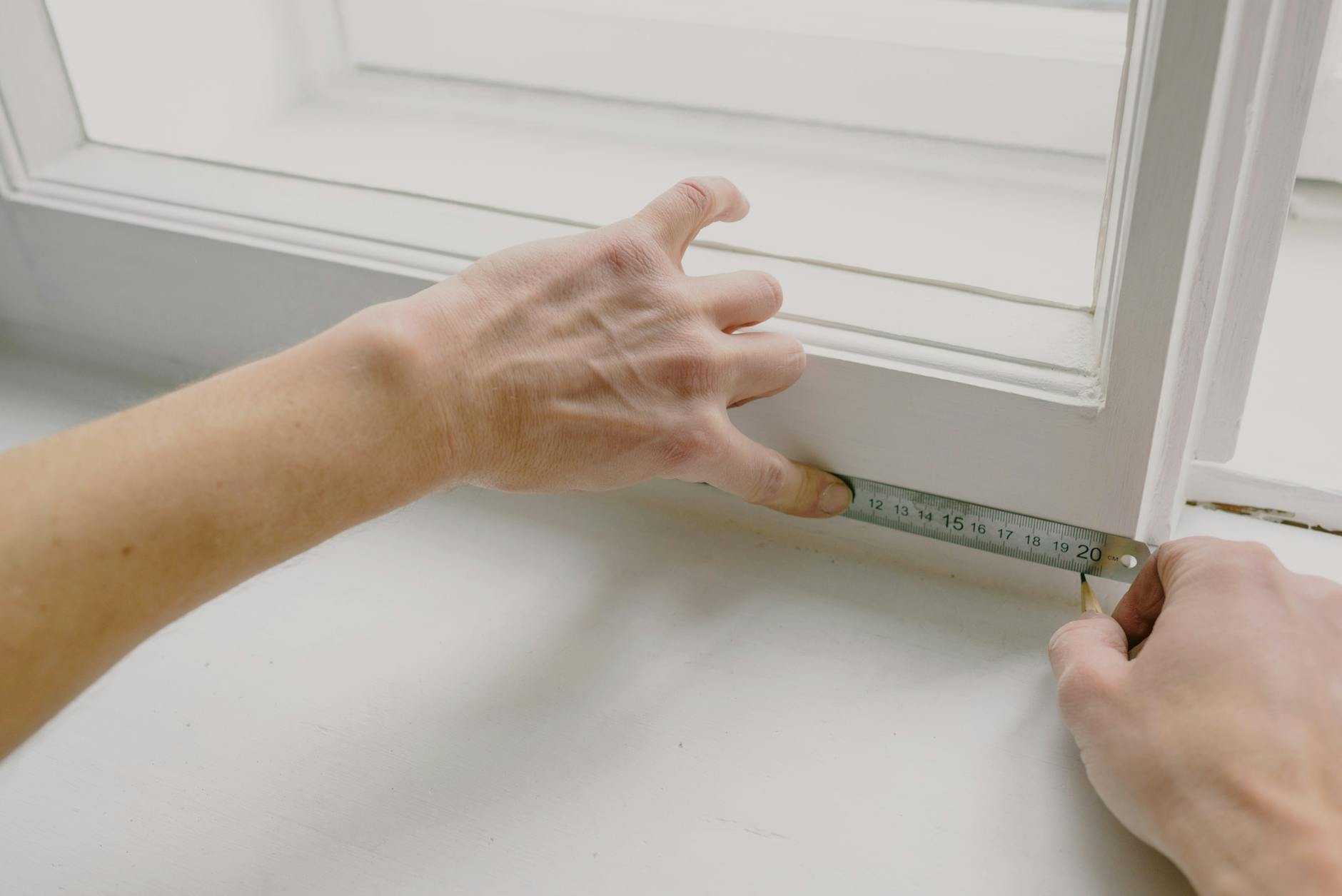
Custom blinds are only as good as the measurements behind them. Even a quarter-inch error can mean a blind that doesn’t close properly, lets in light gaps, or simply looks wrong. Understanding inside versus outside mount — and measuring each correctly — is the foundation of a successful kitchen blind installation.
Inside Mount: Clean, Built-In Look
An inside mount installs the blind within the window frame recess. This is the most popular choice for kitchens because it sits flush with the wall, doesn’t interfere with cabinet doors or countertops below the window, and gives a clean, architectural appearance. To inside-mount correctly, the window frame must have a minimum depth of 1.5 inches — most standard double-hung windows in Jackson-area homes meet this requirement. Measure the width at three points (top, middle, bottom) and use the narrowest measurement. Measure height at three points (left, center, right) and use the longest measurement. A custom blind manufacturer will then deduct a small clearance allowance automatically.
Outside Mount: Maximum Light Block and Coverage
An outside mount attaches the headrail to the wall or window casing above the frame. This approach is ideal when the window frame is too shallow for an inside mount, when you want to make a small window appear larger, or when you need maximum light blockage (extending the blind 2–3 inches beyond the frame on each side eliminates light gaps). For outside mounts, measure the exact area you want the blind to cover — most installers recommend extending 2 inches above the frame and 2 to 3 inches beyond each side. This is one area where having a professional measurer visit your home pays real dividends; a quarter-inch error on an outside mount can leave an unsightly gap or cause the blind to overlap a cabinet door.
Why Professional Measuring Matters in Custom Orders
Custom faux wood blinds are cut to your exact specifications — there is no returning them for a different size. A professional measurer catches issues that homeowners routinely miss: out-of-square frames (common in homes over 20 years old), trim profiles that prevent a flush inside mount, and window depths that require a specific headrail style. Blinds Galore’s free in-home measurement service eliminates these risks entirely. Our team visits your Jackson, TN home, measures every window precisely, and confirms the mount type before a single blind is ordered.
5. Light Control and Privacy Options for Kitchen Windows
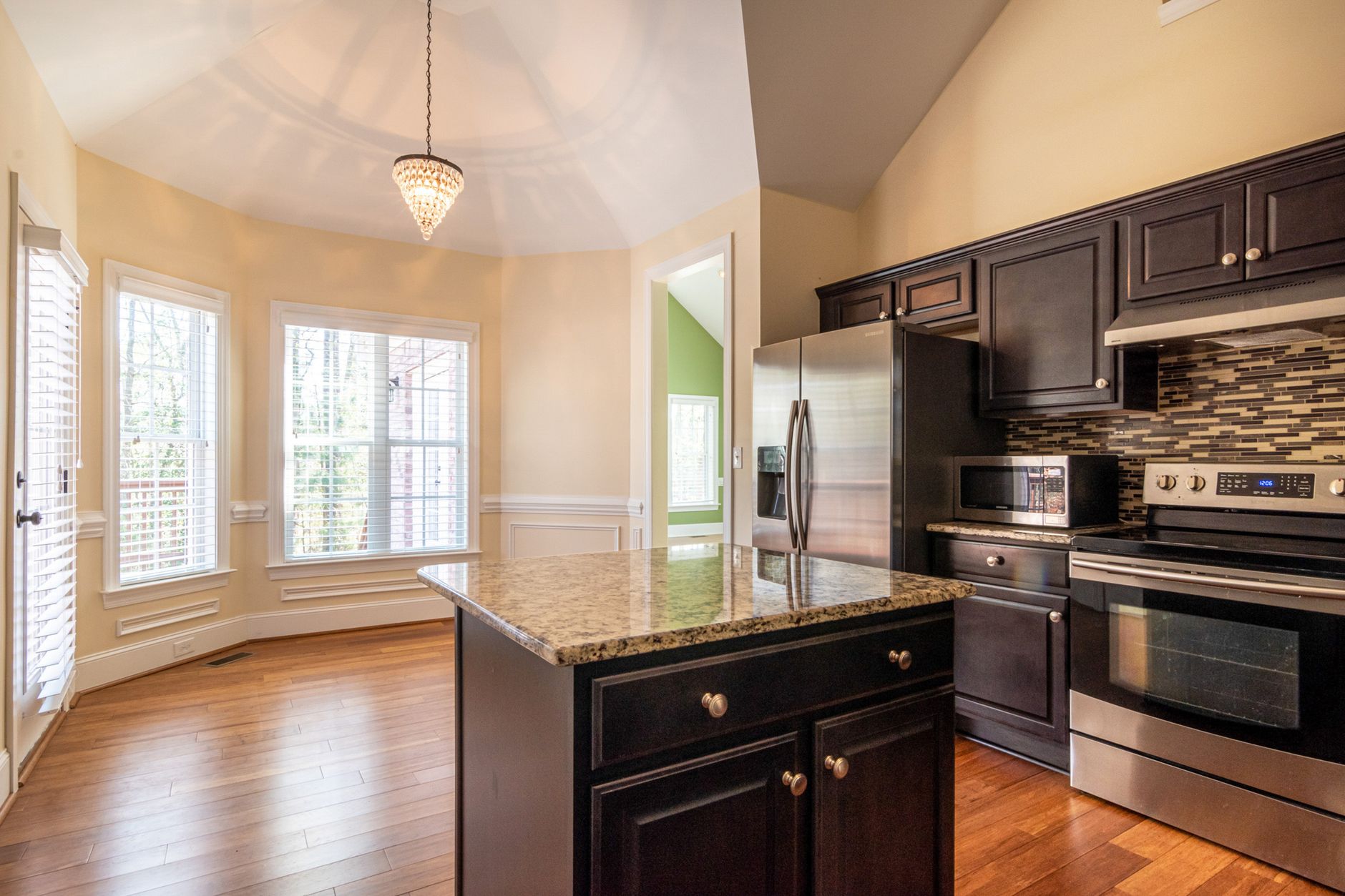
One of the biggest advantages of faux wood blinds over fabric shades is precise, adjustable light control. The slat tilt system lets you dial in exactly how much light enters your kitchen and from what angle — a feature that becomes especially valuable in a room where you need good task lighting at the counter but want to cut glare on the TV or dining table nearby.
Tilt Mechanisms: Cord Tilt vs. Wand Tilt
Faux wood blinds use one of two tilt mechanisms to angle the slats. A cord tilt uses a small cord loop to rotate the slats — it’s the traditional mechanism and is slightly more durable over decades of use. A wand tilt uses a vertical rod that you twist, eliminating a dangling cord near the window. For kitchens, the wand tilt is often preferred because there’s no cord to snag on cabinet hardware or collect grease. Both mechanisms provide the same range of tilt — typically 0° (fully open) to 90° (fully closed) — and the choice is largely personal preference and child-safety considerations.
Routeless Slats for Enhanced Privacy
Standard faux wood blinds have small holes (routes) through each slat where the lift cord passes. These holes allow thin slivers of light and visibility even when the blind is fully closed — usually not an issue in most rooms, but a kitchen window facing a neighbor’s yard may benefit from routeless (or route-free) slats. Routeless blinds route the lift cord along the back edge of each slat instead of through it, eliminating the light gap entirely. The trade-off is a slightly higher price — typically 10–20% more than standard routed blinds — and a marginally taller stack height. For ground-floor kitchen windows on a busy street in Jackson, routeless slats are worth the upgrade.
Top-Down/Bottom-Up Option for Kitchens
A top-down/bottom-up (TDBU) operating system lets you lower the blind from the top of the window while keeping the bottom portion raised — giving you natural light from above while maintaining eye-level privacy. This is an excellent option for kitchen windows that face a sidewalk or neighboring property. TDBU hardware is available on most custom faux wood blind lines and adds approximately $15–$30 per window to the cost. It’s a small premium for a significant gain in everyday usability, especially in open-plan kitchen-dining spaces where you want light without sacrificing privacy during meal times.
6. Color and Finish Selection for West Tennessee Kitchens
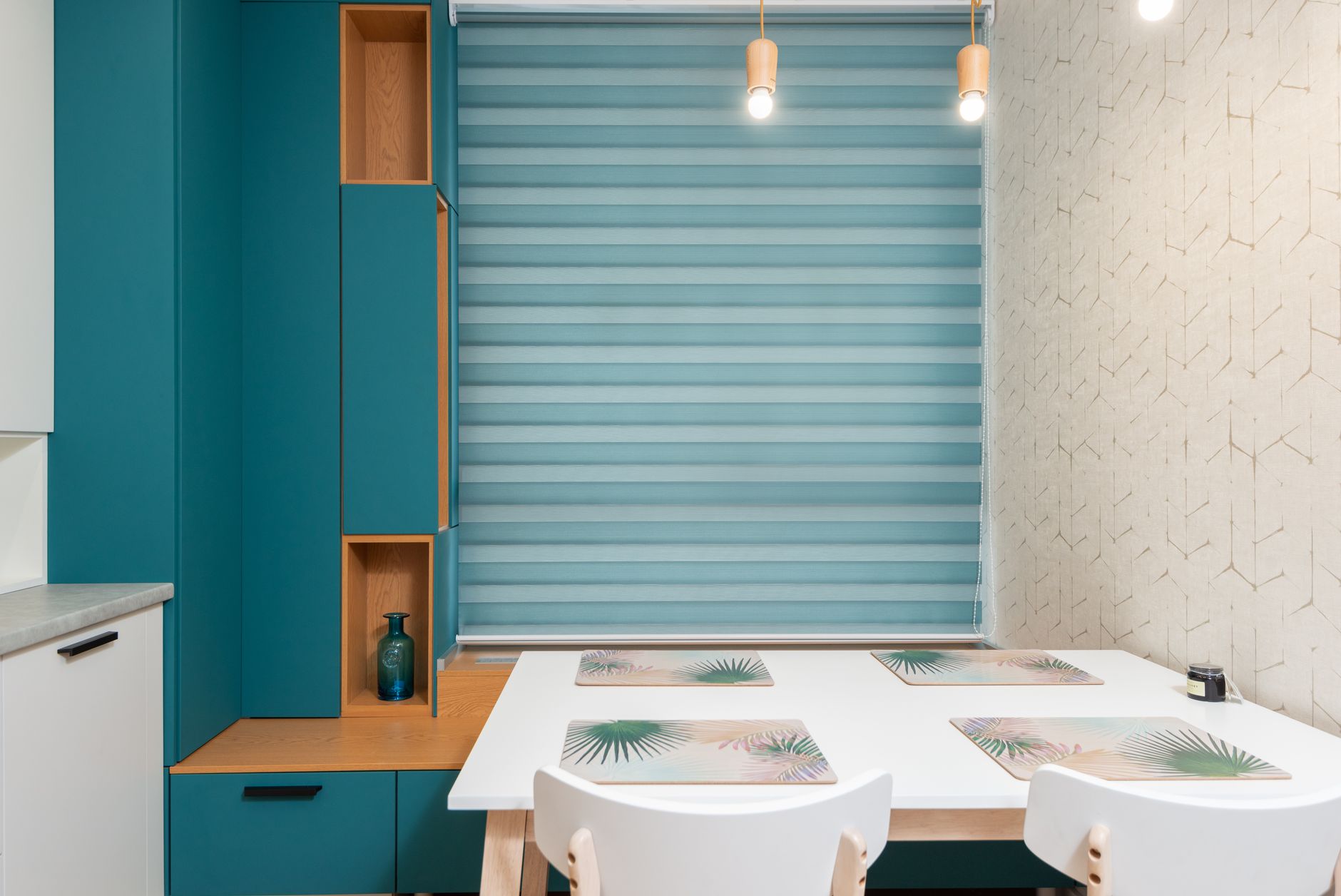
Color is where personal style meets practical function. The right finish for your kitchen blinds depends on your cabinet color, countertop material, flooring, and the direction your windows face. Here’s a straightforward framework for narrowing down your options.
White, Off-White, and Alabaster: The Perennial Favorites
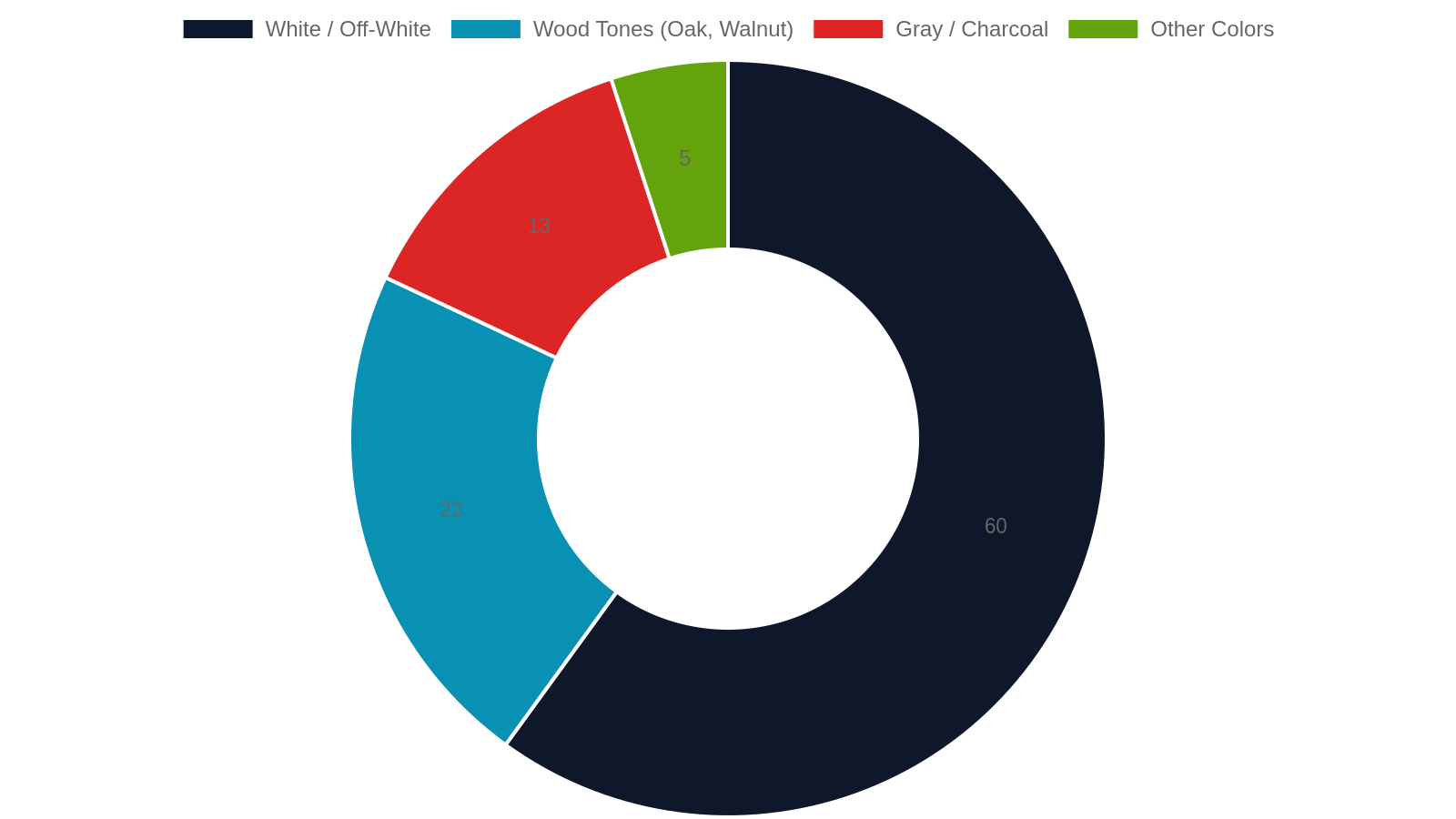
White and off-white finishes account for roughly 60% of all residential faux wood blind sales — and for good reason. They reflect light into the kitchen, pair with virtually any cabinet color, and create a crisp, clean aesthetic that never goes out of style. The subtle difference between bright white, warm white, and alabaster matters more than most homeowners expect: bright white can look stark against warm cream cabinets, while alabaster blends seamlessly. Always request a physical sample and hold it against your cabinet doors in natural light before ordering.
Wood-Tone Finishes for Farmhouse and Traditional Kitchens
West Tennessee homes — particularly the farmhouse and craftsman styles popular in Jackson and the surrounding communities — often feature warm wood cabinetry, shiplap walls, or butcher-block countertops. In these kitchens, a faux wood finish in golden oak, chestnut, or walnut creates a cohesive, layered look that feels intentional rather than matchy-matchy. The key is to choose a blind finish that is one shade lighter or darker than your dominant wood tone rather than an exact match, which can look flat. Modern faux wood manufacturing achieves surprisingly realistic grain embossing that photographs almost identically to real wood.
Gray Tones and Contemporary Finishes
Gray-toned faux wood blinds — ranging from pale silver-gray to deep charcoal — have grown in popularity alongside the modern farmhouse and transitional design trends that have taken hold across West Tennessee over the past decade. Gray blinds work particularly well in kitchens with white shaker cabinets, quartz countertops, or stainless appliances, providing a sophisticated neutral that grounds the space. If your kitchen features black hardware or matte black fixtures, a dark graphite or espresso finish on the blinds creates a striking, intentional contrast that feels very current.
7. Energy Efficiency and Insulation Benefits
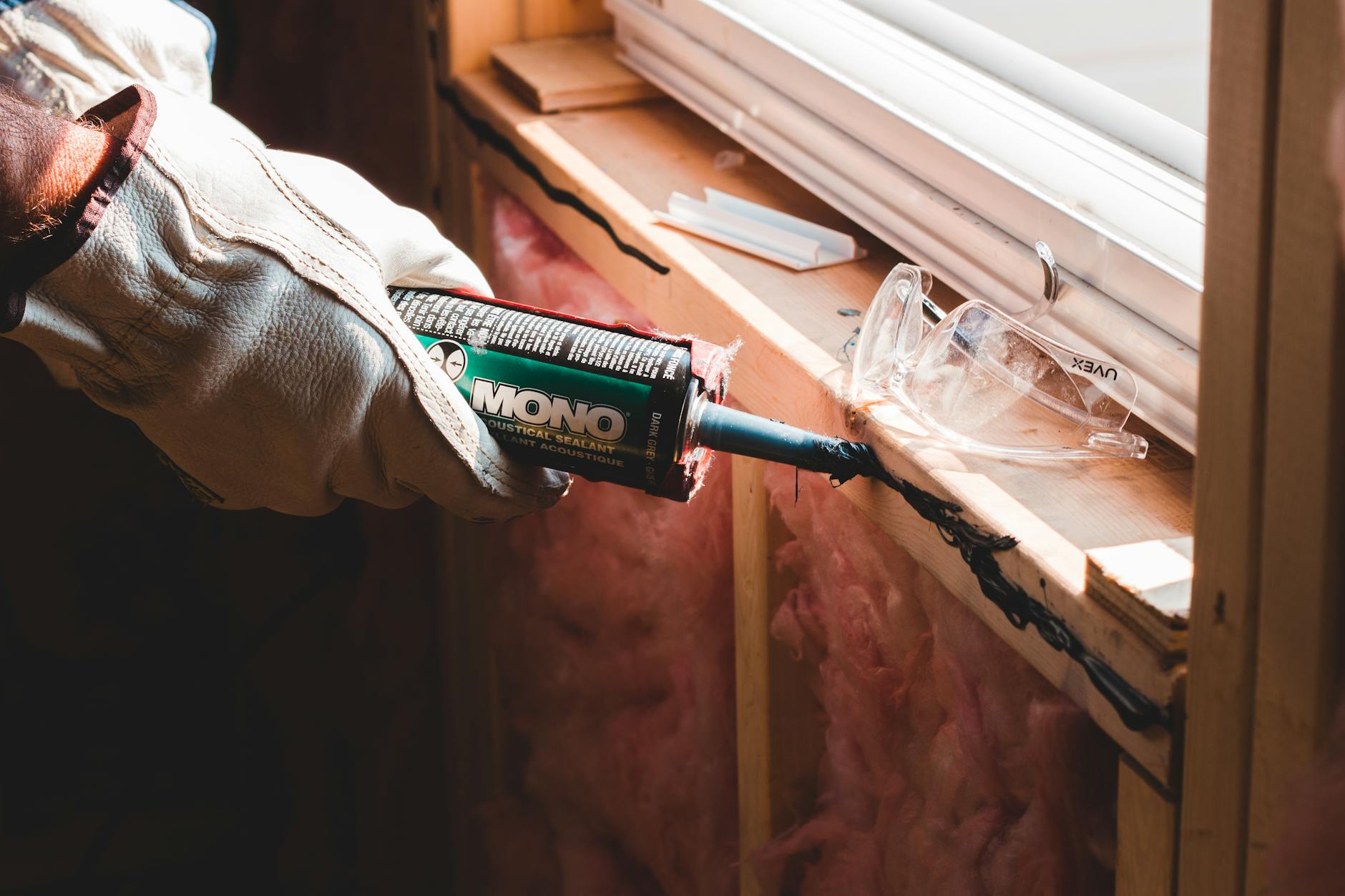
Custom faux wood blinds aren’t just a style upgrade — they’re a functional investment that can meaningfully reduce your energy bills year-round. Here’s what the data says about their insulating performance in a climate like West Tennessee’s.
How Faux Wood Blinds Reduce Cooling Costs in Tennessee Summers
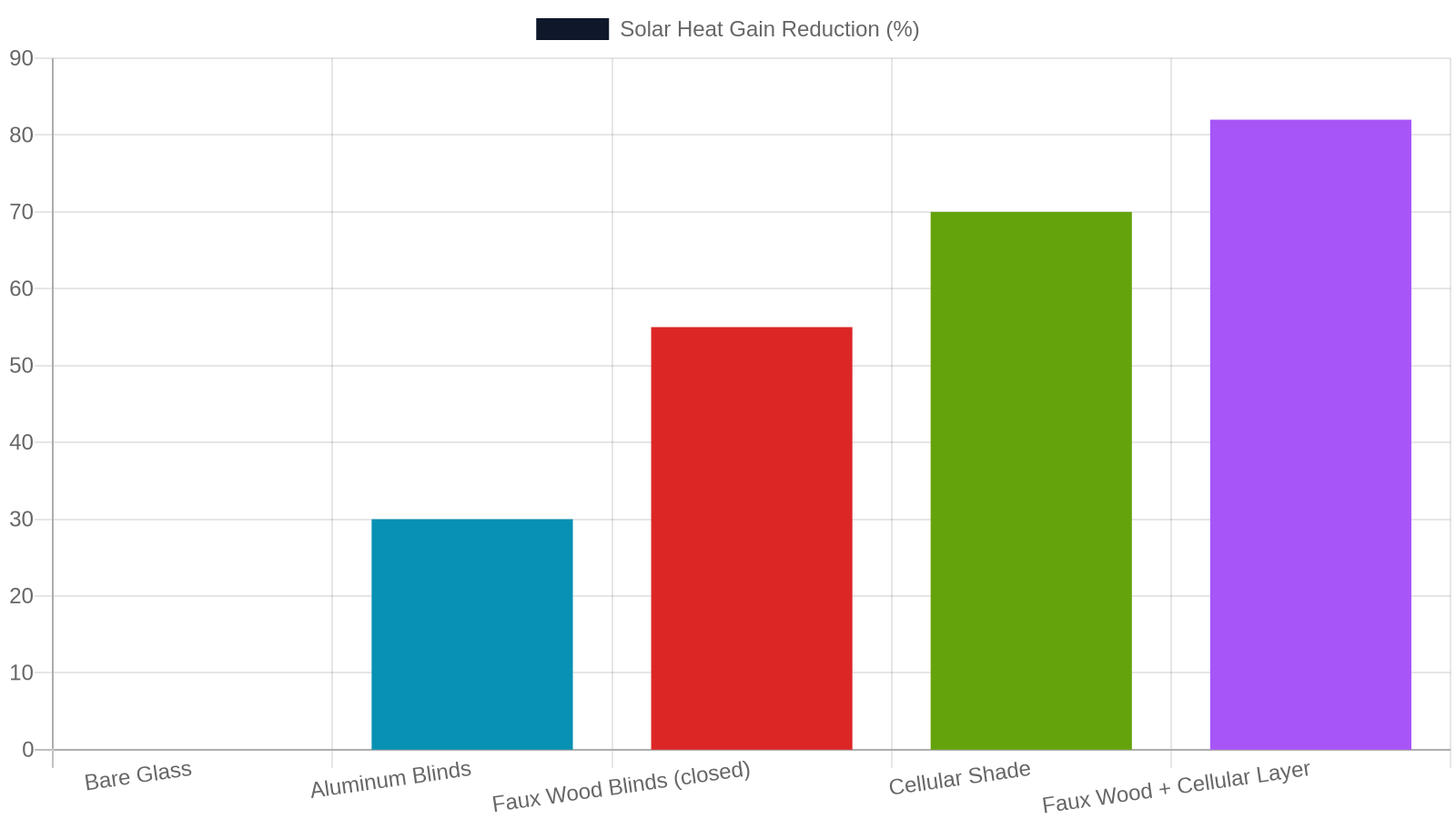
Tennessee summers are intense — Jackson regularly sees temperatures above 90°F from June through September. Kitchen windows that face west or south can allow significant solar heat gain, forcing your air conditioner to work harder. Closed faux wood blinds with fully tilted slats can reduce solar heat gain through a window by 45–65%, according to the U.S. Department of Energy. That’s a meaningful reduction in a room that already generates heat from cooking appliances. Pairing your faux wood blinds with a cellular shade on the same window (a layered treatment) can push heat reduction even higher, though for most kitchens the blinds alone provide sufficient benefit.
Winter Insulation and Draft Reduction
In winter, closed faux wood blinds create a small air pocket between the slats and the glass that acts as a modest insulating layer — similar in principle to a double-pane window’s air gap. While faux wood blinds are not as insulating as cellular shades, they still reduce convective heat loss noticeably compared to bare glass. For older homes in Jackson with single-pane windows — common in neighborhoods built before 1990 — this additional layer of insulation can translate to 5–10% lower heating costs during the colder months. The rigid PVC construction also prevents the drafts that fabric shades can allow around their edges.
8. Cleaning and Maintenance in a Kitchen Environment
One of the most practical reasons homeowners across Jackson, TN choose faux wood blinds for their kitchens is how easy they are to keep clean. Unlike fabric shades that absorb cooking odors and require professional cleaning, faux wood wipes down in minutes. Here’s the simple maintenance routine that will keep your blinds looking new for years.
Weekly Dusting Routine
The number one maintenance task for kitchen faux wood blinds is weekly dusting. Kitchen air carries microscopic grease particles that settle on horizontal surfaces — including blind slats — and bond with dust to form a sticky film. A microfiber duster or dry microfiber cloth wiped across each slat (tilt them flat first) takes less than two minutes per window and prevents buildup from becoming a deep-cleaning project. Work from top to bottom so loosened dust falls away from already-cleaned slats. Doing this weekly means you’ll almost never need to do anything more intensive.
Deep Cleaning Without Damage
When grease buildup does occur — typically every three to six months in an active kitchen — a damp cloth with a few drops of dish soap is all you need. Wipe each slat individually, then follow with a clean damp cloth to remove soap residue, and finish with a dry cloth. Never use abrasive scrubbers, bleach, or solvent-based cleaners on PVC blinds — they can dull the finish and degrade the UV stabilizers. For a thorough annual clean, some homeowners remove the blinds and lay them flat in the bathtub for a gentle soak, though this is rarely necessary with consistent weekly dusting. The ease of cleaning is one of the most underrated advantages of faux wood over fabric shades in a kitchen.
Custom Faux Wood Blind Options at a Glance: Feature Comparison
Use this table to compare the most common faux wood blind configurations for kitchen windows across the key decision factors. Each option is rated on a scale of 1–5 stars for that attribute.
9. Motorization and Smart Home Compatibility

Manual operation is perfectly fine for most kitchen windows, but motorization is worth considering for hard-to-reach windows, households with mobility challenges, or homeowners who simply want the convenience of automated light control. Here’s a practical overview of what’s available and what it costs.
Battery-Powered Motorization for Kitchen Convenience
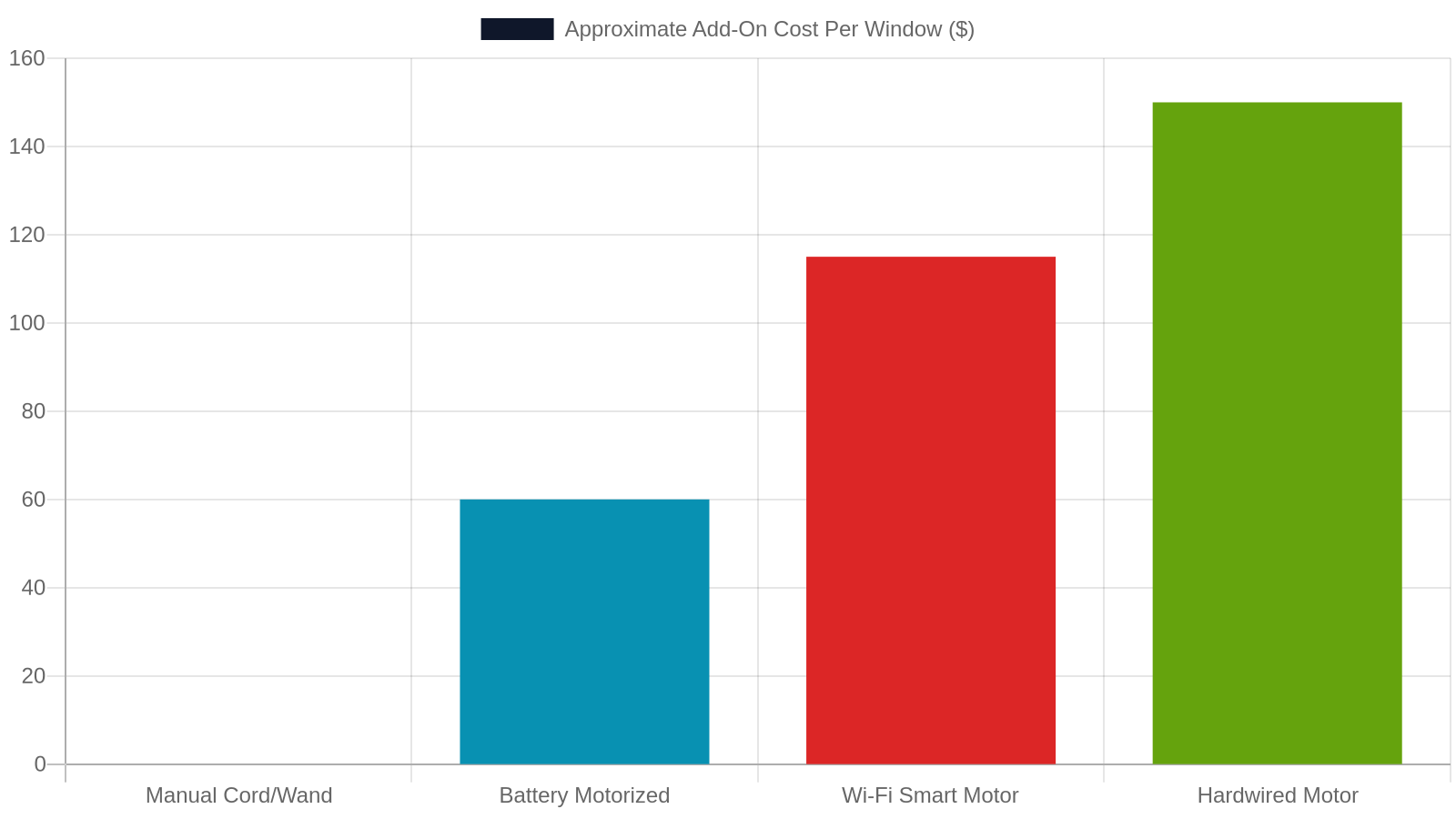
Motorized faux wood blinds have come down dramatically in price over the past five years — battery-powered motorization is now available for as little as $40–$80 per window as an add-on to a custom blind order. In a kitchen, motorization is particularly useful for windows above the sink or range hood that are awkward to reach manually. A simple remote control or wall switch lets you raise, lower, or tilt the blinds without climbing onto the counter. Battery-powered motors typically last 12–24 months on a single set of AA batteries depending on usage frequency, and most include a low-battery indicator light.
Smart Home Integration: Alexa, Google, and App Control
For homeowners who have invested in a smart home ecosystem, Wi-Fi or Zigbee-enabled motorized blinds can integrate with Amazon Alexa, Google Home, Apple HomeKit, and SmartThings. This allows voice commands (‘Alexa, close the kitchen blinds’), scheduled automation (blinds close automatically at 2 PM to block afternoon sun), and integration with smart thermostats for energy optimization. Smart motorization adds $80–$150 per window over a standard manual blind but offers a level of convenience that many homeowners find transforms how they use their kitchen. Hardwired motors are also available for new construction or remodel projects where running a low-voltage wire is feasible.
10. Child Safety and Cordless Options
Child safety is a non-negotiable consideration for any kitchen window treatment. The good news is that modern custom faux wood blinds offer excellent cordless and motorized options that eliminate cord hazards entirely without sacrificing any of the features that make these blinds so practical.
Why Cordless Matters in Family Kitchens
The U.S. Consumer Product Safety Commission (CPSC) has issued repeated warnings about corded window blinds and their risk to young children. Since 2018, all custom blinds sold in the U.S. must meet updated CPSC safety standards, but older corded blinds in the home remain a hazard. For kitchens — a room where children frequently play or sit at a nearby table — a cordless lift mechanism is the safest and most practical choice. Cordless faux wood blinds operate with a simple push-up, pull-down motion on the bottom rail, eliminating all dangling cords. They also look cleaner on the window, with no cord loops to tangle or discolor over time.
Motorized Blinds as the Ultimate Child-Safe Solution
Motorized blinds — discussed in the previous section — are inherently cordless and represent the gold standard for child safety. If you’re upgrading kitchen windows in a home with young children, combining the durability of custom faux wood construction with a battery-powered motor gives you the best of all worlds: moisture resistance, easy cleaning, precise light control, and zero cord hazard. Many parents in Jackson and surrounding communities who initially hesitated at the motorization price point have found that the peace of mind alone makes it worth every dollar.
11. Budgeting for Custom Faux Wood Blinds in Jackson TN

Budget is always a real consideration, and custom faux wood blinds represent a meaningful investment. Here’s a transparent breakdown of what to expect — and why the math almost always favors custom over cheap off-the-shelf alternatives in the long run.
What Custom Faux Wood Blinds Actually Cost
Custom faux wood blinds for a standard kitchen window (approximately 36 × 48 inches) typically range from $75 to $200 per window depending on slat width, construction quality, finish, and any add-ons like routeless slats, TDBU operation, or motorization. A kitchen with three windows would typically run $225 to $600 for the blinds themselves, plus professional installation. These are custom-cut products made to your exact measurements — not the off-the-shelf blinds from a big-box store that require trimming and rarely fit perfectly. The price difference is justified by the fit, finish, and longevity of a truly custom product.
Installation Costs and What's Included
Professional installation in the Jackson, TN area typically adds $25–$50 per window to the total project cost. This includes mounting the headrail, leveling the blind, attaching valances, and confirming smooth operation of all lift and tilt mechanisms. Many homeowners attempt DIY installation to save money, only to discover that an unlevel mount or an improperly seated headrail causes the blind to operate unevenly. Professional installation also protects your warranty — most manufacturers require professional installation for warranty claims to be honored. At Blinds Galore, installation is handled by our own trained team, not subcontracted, so accountability stays with us from measurement to final adjustment.
Value Over Time: The True Cost of Cheap Blinds
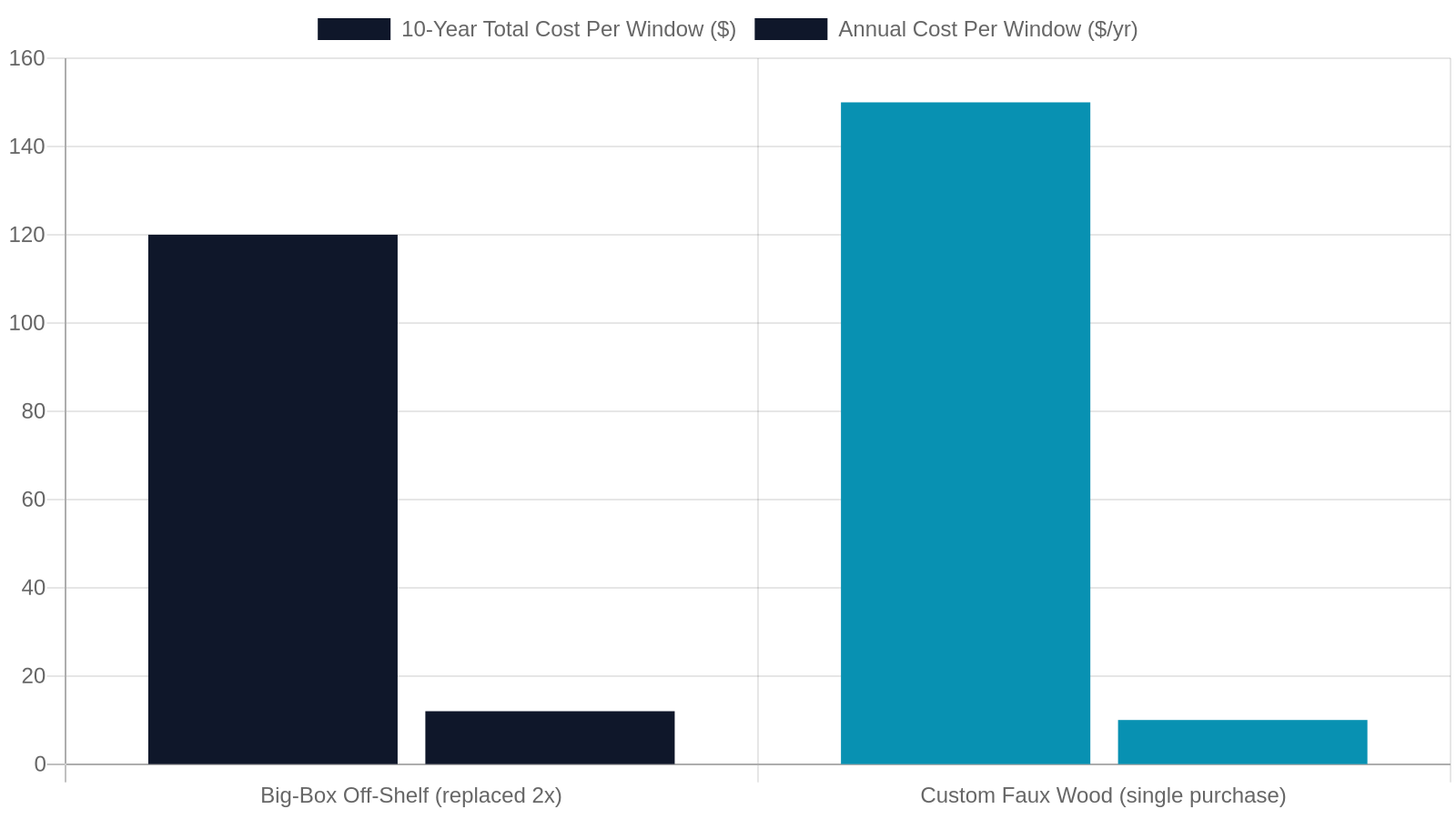
The cheapest off-the-shelf faux wood blinds at a big-box store run $20–$40 per window — tempting on paper. But these products are manufactured to standard sizes, use thinner PVC with minimal UV protection, and carry warranties of 1 year or less. In a kitchen environment, expect to replace them within 3–5 years. A custom blind at $150 per window, lasting 10–15 years, costs $10–$15 per year. The cheap blind, replaced twice in that period, costs $16–$26 per year — plus the time and hassle of re-shopping and re-installing. Custom wins on value every time.
Ready to Upgrade Your Jackson TN Kitchen Windows?
You’ve done the research — now it’s time to put it into action. Choosing the right custom faux wood blinds for your Jackson, TN kitchen doesn’t have to be complicated, especially when you have an experienced local team to guide you through every step. Here’s how to get started with Blinds Galore.
Start with a Free In-Home Consultation
The best way to choose the right faux wood blinds for your kitchen is to have an expert measure your windows, assess your light conditions, and walk you through material and finish options in your actual space — not in a showroom under fluorescent lights. Blinds Galore brings the showroom to you with a free in-home consultation that covers every window in your home. Our team serves Jackson, TN and surrounding communities including Lexington, Henderson, and Milan. There’s no pressure and no obligation — just expert guidance tailored to your kitchen, your style, and your budget. We back every installation with our 100% satisfaction guarantee.
Why Jackson Homeowners Choose Blinds Galore
With over 18 years of experience serving West Tennessee homeowners, Blinds Galore has measured and installed custom window treatments in thousands of local kitchens, living rooms, and bedrooms. We know the specific challenges of the West Tennessee climate — the humidity, the intense summer sun, the older window frames in historic Jackson neighborhoods — and we recommend products that perform in those real-world conditions, not just in a catalog. Explore our custom faux wood blind options and see what’s possible for your West Tennessee home, then give us a call at (731) 571-5179 to schedule your free in-home visit. You’ll have accurate measurements, a clear product recommendation, and a firm quote — all in a single appointment, all at no cost to you.
Frequently Asked Questions
Are faux wood blinds good for kitchen windows?
Yes — faux wood blinds are one of the best choices for kitchen windows because they resist moisture, humidity, and grease far better than real wood or fabric treatments. PVC and wood-composite faux wood blinds won't warp, crack, or absorb cooking odors, and they wipe clean with a damp cloth.
How do I measure kitchen windows for custom faux wood blinds?
For an inside mount, measure the width at three points (top, middle, bottom) and use the narrowest measurement; measure the height at three points and use the longest. For an outside mount, measure the area you want covered and add 2–3 inches on each side. A professional measurer will handle deductions and clearances automatically.
What slat width is best for kitchen windows?
A 2-inch slat is the most popular choice for standard kitchen windows and offers a classic look with excellent light control. For larger picture windows, 2.5-inch slats create a bolder, more contemporary appearance. For small divided-light windows, 1-inch slats are proportionally better suited.
How long do faux wood blinds last in a kitchen?
Quality custom faux wood blinds in a kitchen environment typically last 10–15 years with basic weekly dusting. Pure PVC construction is the most durable option and carries manufacturer warranties of 5–10 years. Cheap off-the-shelf versions may only last 3–5 years under the same conditions.
Can I get custom faux wood blinds in Jackson TN without going to a showroom?
Yes. Blinds Galore offers free in-home consultations throughout Jackson, TN and surrounding West Tennessee communities including Lexington, Henderson, and Milan. A specialist visits your home, measures every window, and presents product options on-site — no showroom trip required.
Are cordless faux wood blinds safer for homes with children?
Yes. Cordless faux wood blinds eliminate the dangling cord loops that pose a strangulation risk to young children, as flagged by the U.S. Consumer Product Safety Commission. Cordless and motorized options are both cord-free and are strongly recommended for any kitchen or room where children spend time.
You might also like

How to Choose the Right Window Treatment Style Using Product Videos
Quick answer: Choosing the right window treatment — blinds, shades, or plantation shutters — comes

7 Best Custom Blinds for Laundry Rooms and Utility Spaces in Jackson, TN
Quick answer: The best custom blinds for laundry rooms and utility spaces in Jackson, TN are moisture-resistant

8 Best Custom Blinds for Kitchens with Large Windows in Jackson, TN
Quick answer: For kitchens with large windows in Jackson, TN, the best custom blinds balance moisture

9 Best Window Treatments for Jackson TN Home Theaters and Media Rooms
Quick answer: For home theaters and media rooms in Jackson, TN, the single best window treatment is a

7 Best Custom Blinds for Sunrooms and Screened Porches in Jackson, TN
Quick answer: The best custom blinds for sunrooms and screened porches in Jackson, TN balance UV protection,

Faux Wood Blinds vs Cellular Shades: Your 9-Point Guide for West Tennessee Sunrooms
Quick answer: For West Tennessee sunrooms and screened porches, faux wood blinds win on moisture resistance,