
Custom Shades for Kitchen Windows: Your 9-Point Guide to Light Control and Durability in Jackson, TN
Quick answer: The best custom shades for kitchen windows in Jackson, TN balance moisture resistance, easy cleaning, and precise light control. Roller shades, solar shades, faux wood blinds, and cellular shades all perform well in kitchens — each with different strengths. Solar shades filter glare while preserving your view, cellular shades add insulation, and moisture-resistant roller shades handle the humidity and grease that kitchens produce. A professional in-home consultation ensures the right fit, fabric, and operating system for your specific kitchen layout and West Tennessee climate.
1. Why Kitchen Windows Demand a Different Kind of Shade
Walk into almost any home in Jackson or the surrounding communities of Lexington, Henderson, or Milan, and you’ll find that the kitchen windows are often the most neglected when it comes to window treatments. Homeowners spend hours choosing the perfect shade for their living room, then hang a basic off-the-shelf mini blind over the kitchen sink and call it done. That’s a mistake — and one that costs money in the long run.
Kitchen windows face a unique combination of moisture, grease, UV exposure, and demanding light-control needs that require a purpose-built solution. Understanding those challenges is the first step toward choosing a custom shade that will look great and last for years.
The Unique Challenges of a Kitchen Environment
Kitchens are the hardest-working rooms in any home, and the windows inside them take a beating. Steam from boiling pots, grease particles from the stovetop, and splatter from the sink all settle on window treatments over time. A shade that works beautifully in a bedroom or living room can warp, stain, or deteriorate quickly above a kitchen sink. That’s why material selection matters so much in this space.
- Humidity spikes from cooking can swell natural wood and cause fabric to mildew.
- Grease and airborne oils cling to textured fabrics, making them nearly impossible to clean.
- UV exposure is often intense in south- or west-facing kitchens, fading colors and degrading materials over 3–5 years if the fabric isn’t rated for sun exposure.
Light Control Needs Are Different in a Kitchen
Unlike a bedroom where you want full blackout, or a living room where you want ambiance, a kitchen needs functional, task-oriented light. You need enough natural light to prep food safely, but you don’t want blinding glare bouncing off stainless appliances at 7 a.m. The ideal kitchen shade lets you dial in exactly how much light enters — and from which direction — without sacrificing your view of the backyard or the street outside.
In Jackson, TN, where summer sun angles are steep and afternoons can be brutally bright, this balance is especially important for west-facing kitchen windows.
2. The 5 Best Shade Types for Kitchen Windows

Not all shades are created equal, and the kitchen is where that difference shows up fastest. The five shade types below each bring something different to the table — from moisture resistance to insulation to view-through clarity. Understanding the strengths of each will help you narrow down the right choice for your specific kitchen layout, window orientation, and lifestyle.
Roller Shades: The Clean, Versatile Workhorse
Roller shades are one of the most popular choices for kitchen windows, and for good reason. A quality moisture-resistant roller shade features a wipeable vinyl or polyester fabric that can be cleaned with a damp cloth — no special products needed. They roll up completely out of the way when you need full light, and deploy in seconds when afternoon glare hits.
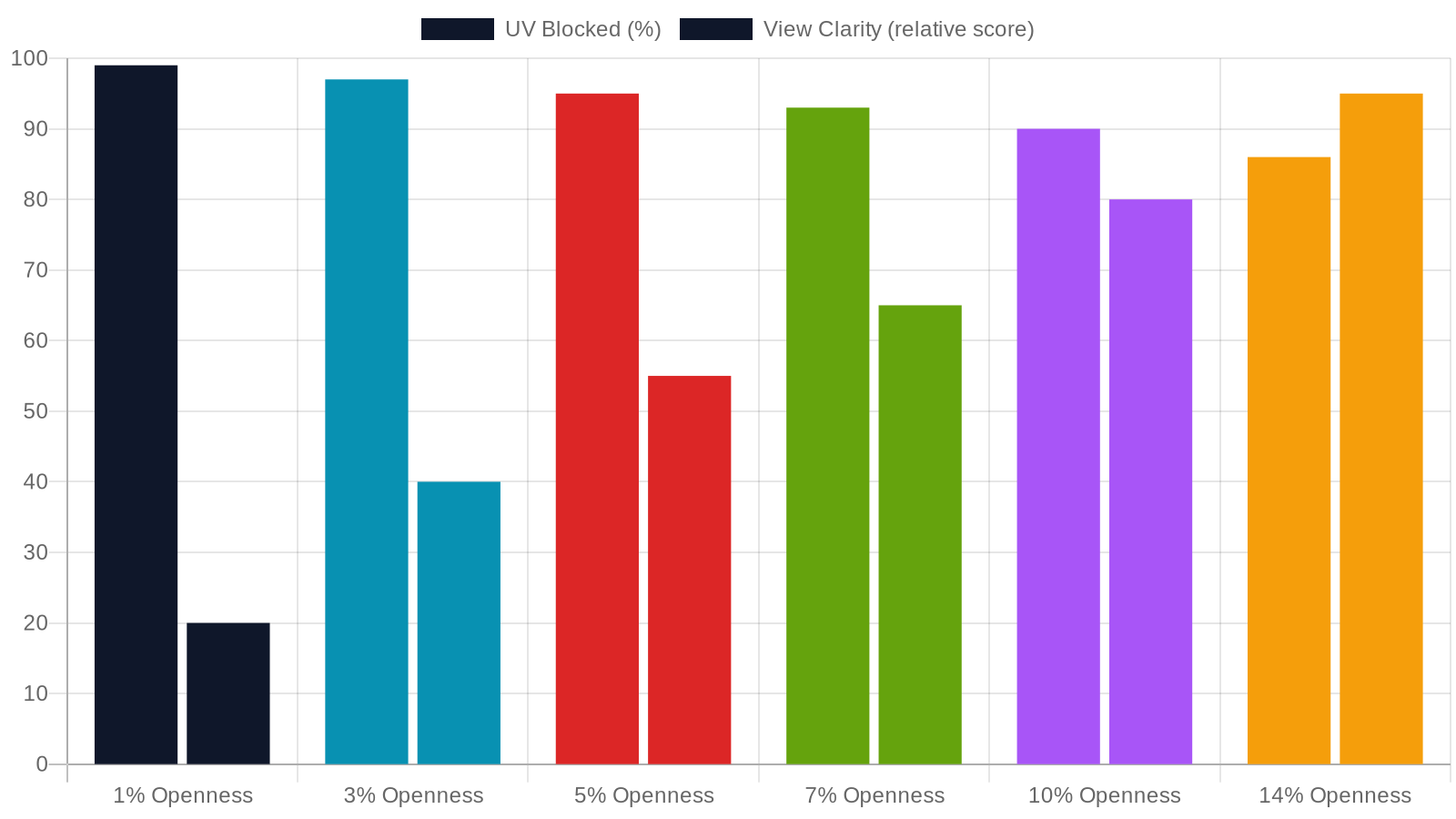
Custom roller shades can be ordered in light-filtering or room-darkening fabrics, with openness factors ranging from 1% (near-blackout) to 14% (open weave that lets in significant light). For most Jackson kitchens, a 3%–5% openness factor strikes the right balance between glare reduction and view preservation.
Solar Shades: View-Through Glare Protection
Solar shades are engineered specifically to block UV rays and reduce glare while keeping your outside view intact. They’re woven from fiberglass or PVC-coated polyester — both of which resist moisture and wipe clean easily. A solar shade with a 3% openness factor blocks roughly 97% of UV rays, protecting your countertops, flooring, and cabinets from sun damage while still letting you see your backyard clearly.
They’re an excellent choice for kitchen windows that face south or west, where afternoon sun is most intense. Pair them with a valance or a decorative top treatment for a polished, finished look.
Cellular Shades, Faux Wood, and Roman Shades
Cellular (honeycomb) shades add a layer of insulation to your kitchen windows — a real benefit in West Tennessee, where summers push energy bills higher. Their honeycomb pockets trap air, reducing heat transfer through the glass. Choose a moisture-resistant single-cell or double-cell option for kitchen use.
Faux wood blinds (PVC composite) mimic the look of real wood but won’t warp, crack, or yellow in humid kitchen environments — and they cost 30–50% less than real wood. Roman shades in a moisture-resistant fabric add softness and color, though they require more careful cleaning and are better suited to kitchen windows away from the sink or stovetop.
3. Understanding Light Control: Openness Factors and Opacity Ratings
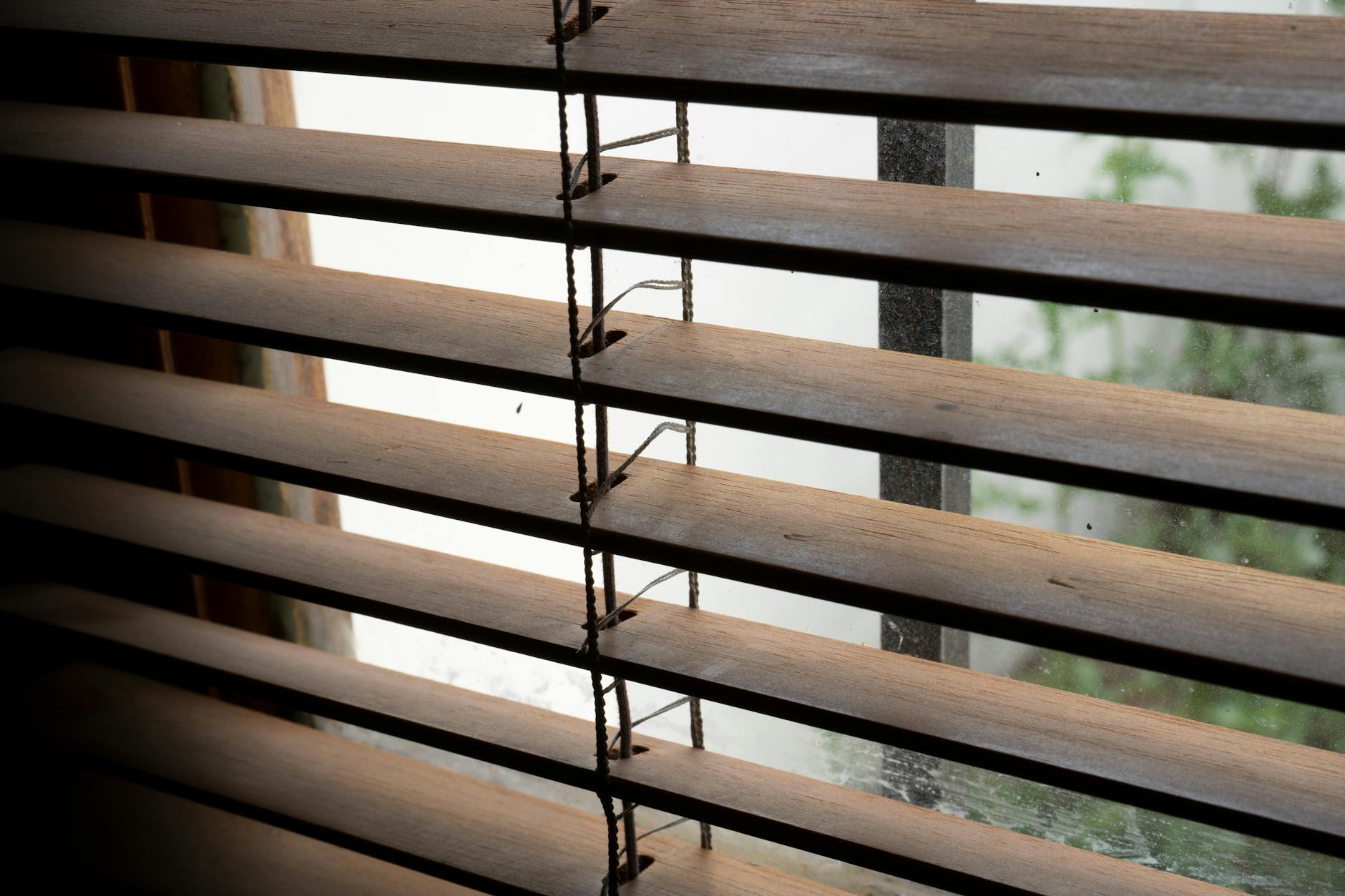
One of the most confusing parts of choosing kitchen shades is decoding the light-control terminology. Terms like ‘openness factor,’ ‘light-filtering,’ and ‘room-darkening’ are often used interchangeably by retailers, but they describe very different products. Getting this right is the difference between a kitchen that feels bright and functional and one that’s either too dark to work in or so glare-filled you’re squinting over your coffee every morning.
What 'Openness Factor' Actually Means
The openness factor (OF) is a percentage that describes how much of a solar or roller shade’s surface area is open weave versus solid material. A 1% OF shade is nearly opaque — it blocks almost all direct light and provides significant privacy. A 10% OF shade has a more open weave, lets in more light, and gives you a clearer view outside, but offers less UV protection and privacy.
- 1%–3% OF: Best for west-facing windows with intense afternoon sun
- 5%–7% OF: Good all-around balance for most Jackson kitchens
- 10%–14% OF: Best for north-facing windows or kitchens where you want maximum natural light
Light-Filtering vs. Room-Darkening vs. Blackout
Beyond solar shades, roller and cellular shades come in three broad opacity categories. Light-filtering fabrics diffuse sunlight into a soft, even glow — perfect for kitchens where you cook in the morning and want pleasant ambient light. Room-darkening fabrics block 95–99% of light, which is overkill for most kitchens but useful if your kitchen doubles as a media or dining space. Blackout fabrics with side channels block virtually all light — rarely needed in a kitchen but available if your layout demands it.
For most homeowners in Jackson, TN, a light-filtering or 3%–5% solar shade is the sweet spot that handles glare without making the kitchen feel dark or cave-like during the day.
4. Durability Deep Dive: Materials That Survive the Kitchen
Durability in a kitchen shade isn’t just about how tough the fabric is — it’s about how the entire system holds up to daily use, humidity, grease, UV exposure, and repeated raising and lowering. A shade that looks great on day one but starts peeling, yellowing, or jamming after two years is a poor investment. Here’s what to look for in materials and mechanisms that will go the distance in a West Tennessee kitchen.
Moisture-Resistant Fabrics and Coatings
The best kitchen shade fabrics are either inherently moisture-resistant or treated with a protective coating. Look for these material types when shopping custom shades:
- PVC-coated polyester: The gold standard for kitchen durability. Fully wipeable, mold-resistant, and colorfast for 10+ years.
- Fiberglass weave: Used in most solar shades. Dimensionally stable (won’t stretch or shrink), moisture-resistant, and UV-stable.
- Vinyl: Extremely easy to clean, waterproof, and very affordable — but can feel less premium than fabric options.
- Moisture-resistant cellular fabric: A treated polyester that resists humidity without sacrificing the insulating honeycomb structure.
Avoid untreated natural fabrics like linen, cotton, or bamboo for windows directly above or near the sink or stove — they absorb grease and moisture and are very difficult to clean effectively.
Operating Systems: Corded, Cordless, and Motorized
The mechanism you use to raise and lower your kitchen shades affects both durability and convenience. Cordless lift systems are the most popular choice for kitchen windows today — they’re child-safe, look clean, and eliminate the tangled cord problem. They do require slightly more force to operate than corded systems, which can matter on wider windows.
Motorized shades are growing in popularity, especially for windows above the sink or in hard-to-reach spots. A motorized roller shade can be raised or lowered with a remote, wall switch, or smartphone app — no reaching over the faucet required. Motorized systems from brands like Somfy start around $150–$250 per window for the motor alone, but the convenience and longevity often justify the investment.
5. Energy Efficiency: How the Right Shade Cuts Your Utility Bills
Most homeowners think about window shades purely in terms of aesthetics and privacy. But the right custom shade for your kitchen windows can meaningfully reduce your monthly energy bills — a benefit that pays back the investment over time. In West Tennessee’s hot, humid summers and occasionally frigid winters, the thermal performance of your window treatments matters more than many people realize.
Solar Heat Gain and West Tennessee Summers
Jackson, TN summers are no joke. Average high temperatures in July regularly exceed 90°F, and the solar heat gain through unshaded kitchen windows can add 10–20°F to your kitchen’s ambient temperature. That forces your HVAC system to work harder, driving up energy costs. According to the U.S. Department of Energy, heat gain and loss through windows accounts for 25–30% of residential heating and cooling energy use.
A properly selected solar shade with a low openness factor can reduce solar heat gain by up to 65–77%, depending on the fabric and frame color. Lighter-colored shade fabrics reflect more heat than dark ones — an important consideration for south- and west-facing kitchen windows in West Tennessee.
Cellular Shades and R-Value: The Insulation Story
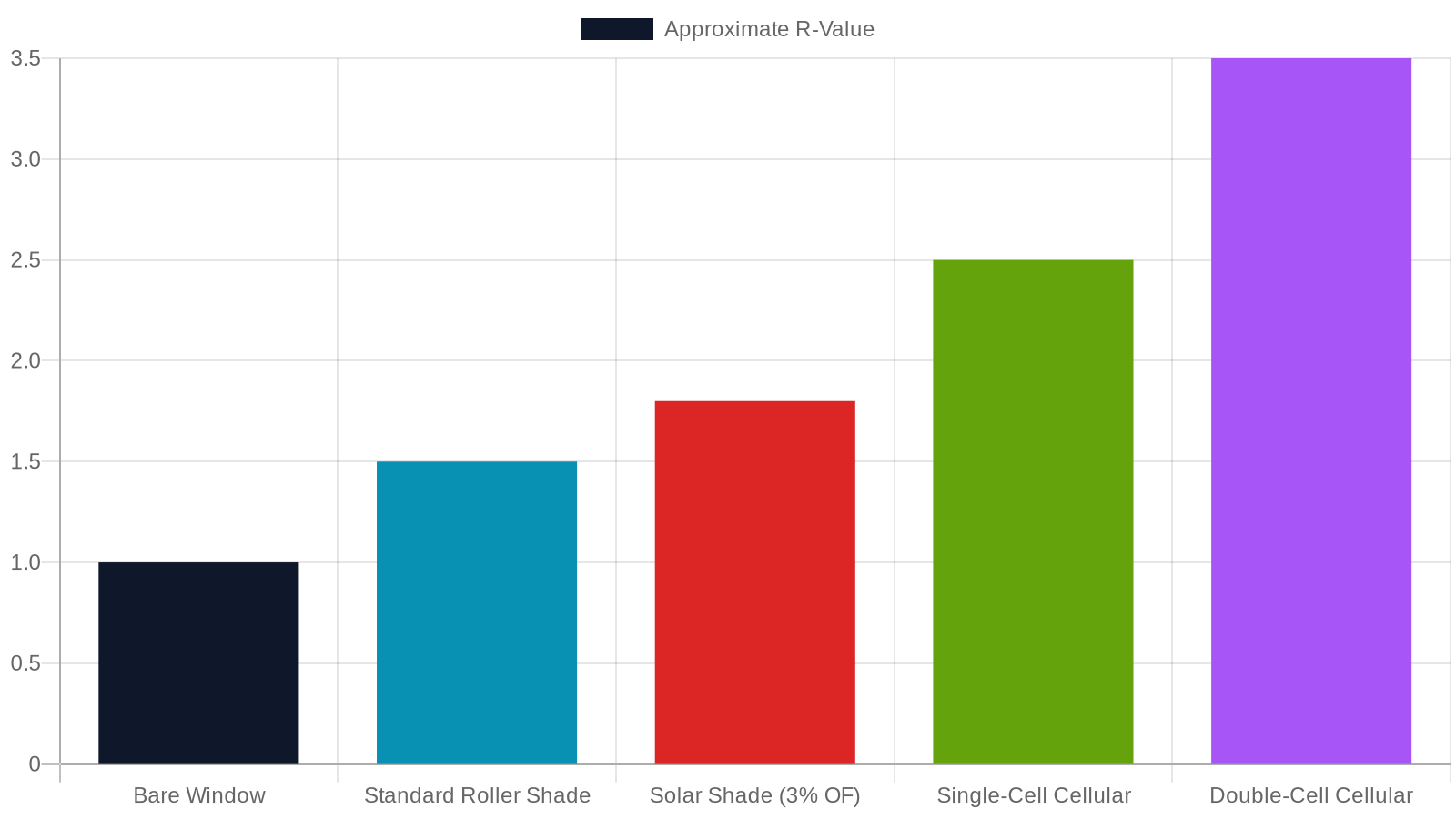
If energy efficiency is your primary goal, cellular (honeycomb) shades are the clear winner. Their air-trapping honeycomb cells create a thermal barrier between the glass and the room. A single-cell shade provides an R-value of approximately 2.0–2.5, while a double-cell shade reaches R-3.0 to R-4.0 — a meaningful improvement over a bare window’s typical R-1 rating.
In practical terms, upgrading to double-cell cellular shades on your kitchen windows can reduce heat loss in winter and heat gain in summer enough to noticeably lower monthly energy bills. Combined with proper weatherstripping, it’s one of the most cost-effective window upgrades available to Jackson homeowners.
6. Measuring Kitchen Windows: Why Precision Matters
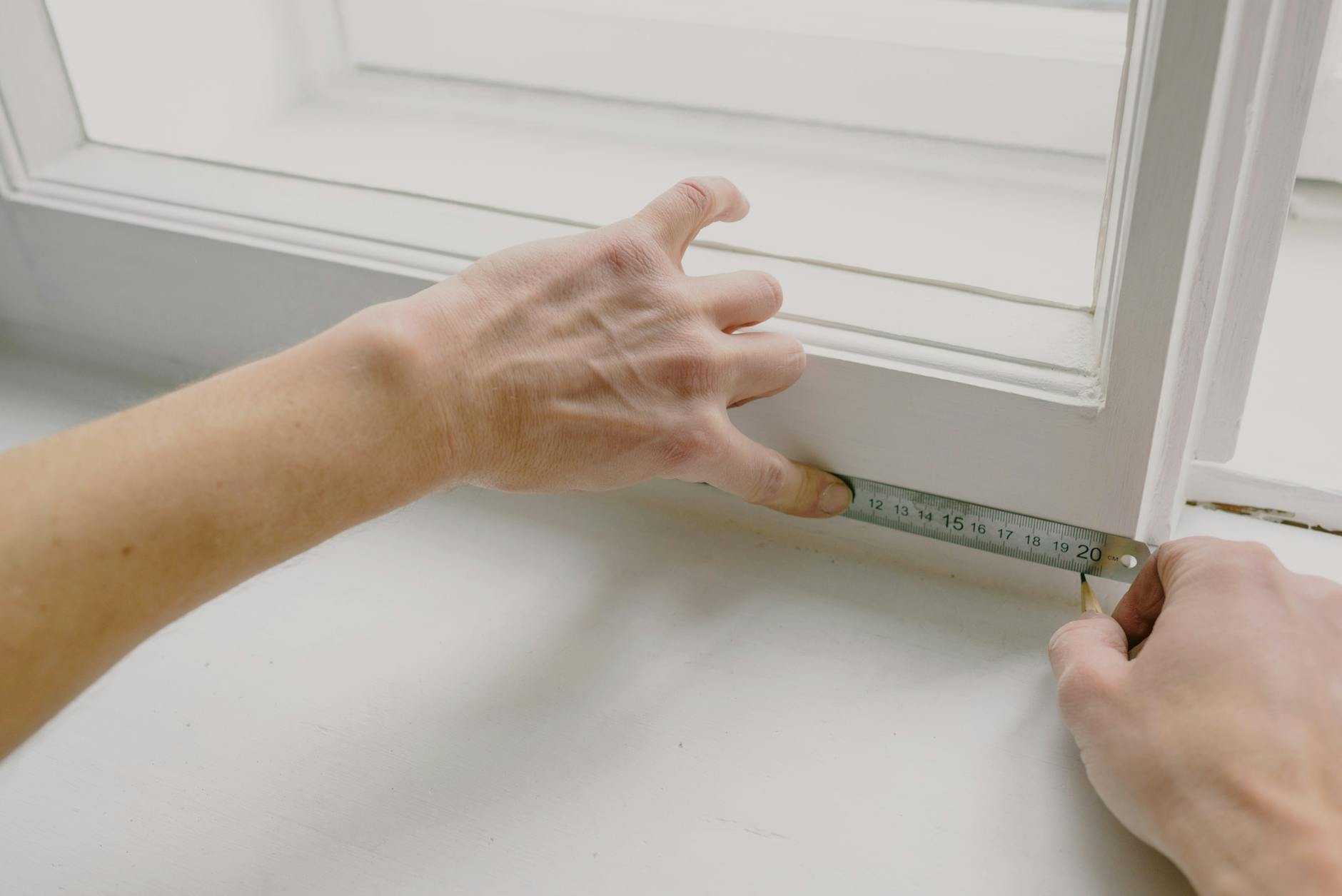
Custom shades are only as good as the measurements behind them. Unlike off-the-shelf shades that come in standard sizes and are trimmed to fit (often imperfectly), custom shades are fabricated to your exact window dimensions. That means getting the measurements right is non-negotiable — and kitchen windows, with their tile surrounds, deep sills, and cabinetry, are often the trickiest windows in the house to measure correctly.
Inside Mount vs. Outside Mount: Which Is Right for Your Kitchen?
Before you can order a custom shade, you need to decide whether it will mount inside the window frame (inside mount) or on the wall or trim surrounding it (outside mount). Each has advantages in a kitchen setting:
- Inside mount: Sleek, built-in look. Requires at least 2–3 inches of window depth for the shade hardware. Exposes the window frame, which can be a design feature if your frames are attractive.
- Outside mount: Covers more of the window opening, blocking more light around the edges. Can make a small window appear larger. Better choice if your window depth is shallow or if you want maximum light blockage.
For kitchen windows above a sink, an outside mount is often preferred because it can extend below the window sill to fully cover the glass, preventing light gaps at the bottom.
Why Professional Measuring Prevents Costly Mistakes
Custom shades are made to your exact measurements — which means a mistake in measuring means a shade that doesn’t fit, and you’ll need to reorder. Even a 1/4-inch error can result in a shade that binds inside the frame or leaves a gap that lets in light and reduces privacy. Kitchen windows are often irregular due to tile surrounds, window sills, or cabinetry that butts up against the frame.
Professional measuring, like the free in-home measurement service offered by Blinds Galore, eliminates this risk entirely. A trained installer takes precise measurements of every window, accounts for any irregularities, and ensures your custom shades will fit perfectly on the first try — saving you the cost and hassle of a remeasure and reorder.
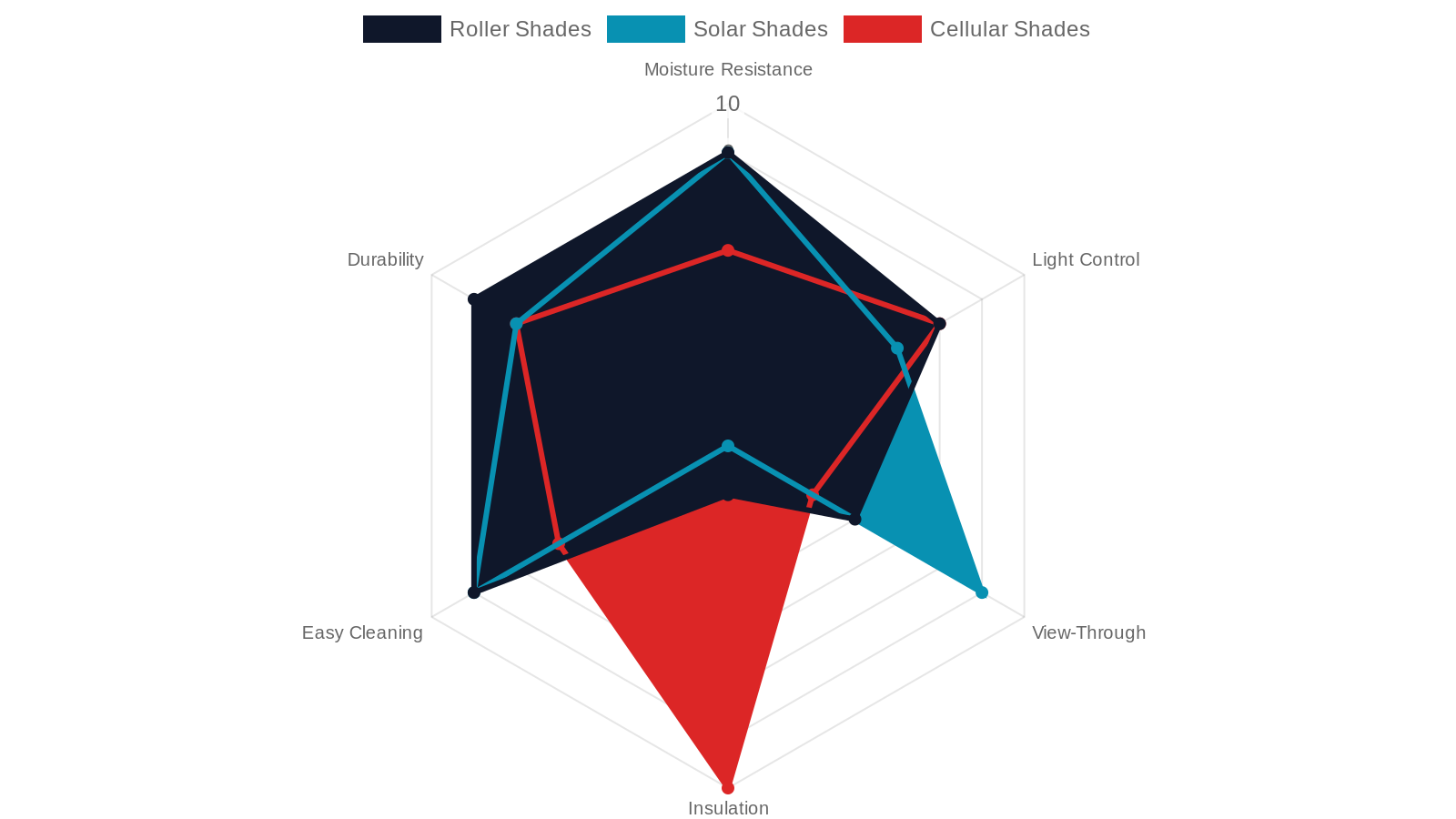
Kitchen Shade Comparison at a Glance
Use this table to quickly compare the five most popular custom shade types for kitchen windows across the attributes that matter most in a cooking environment.
7. Style and Design: Making Your Kitchen Shades Look Intentional
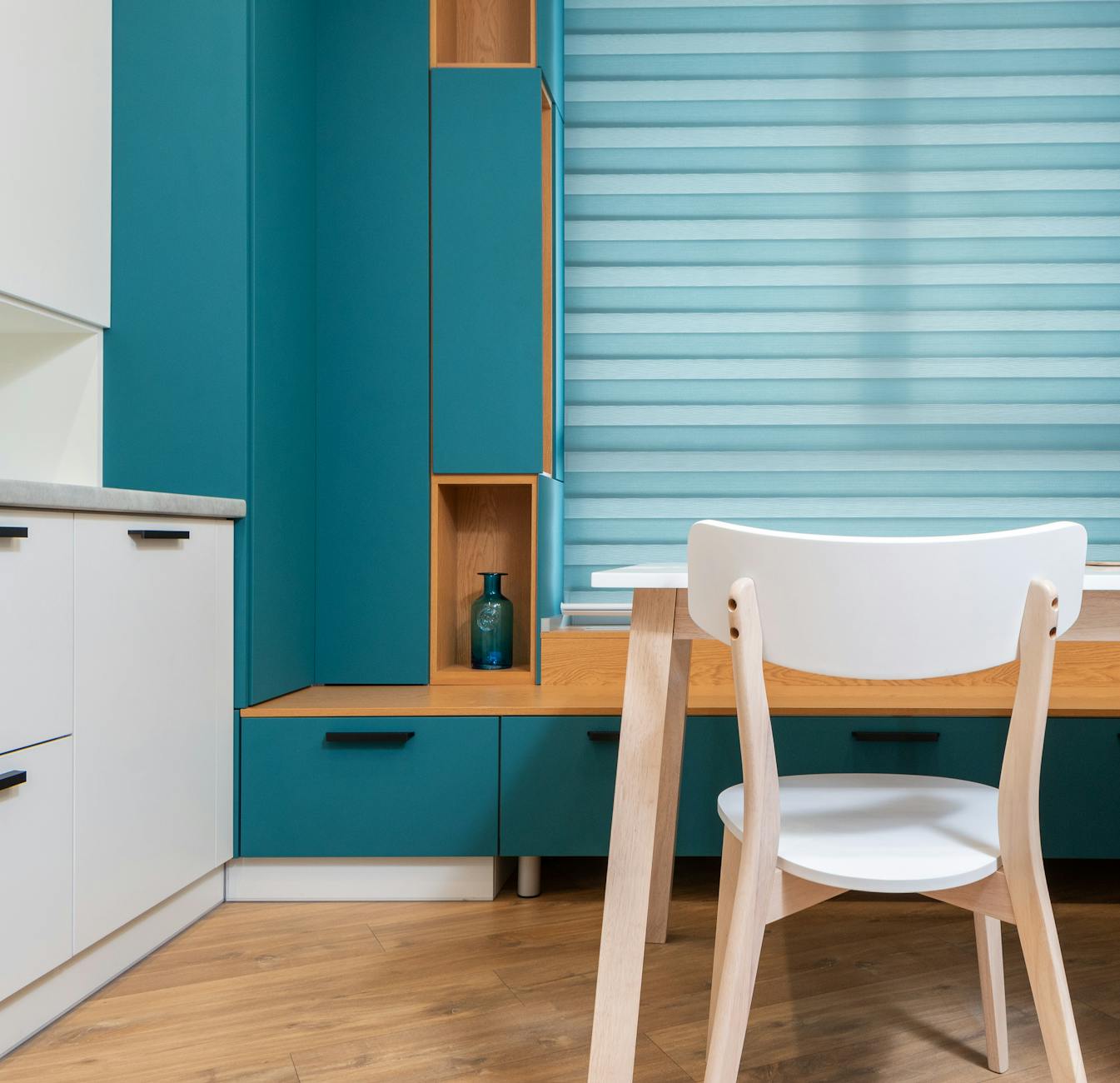
Function is the foundation of a great kitchen shade — but style is what makes you happy to walk into your kitchen every morning. The good news is that custom shades give you far more design flexibility than any off-the-shelf option. From fabric color and texture to operating system and hardware finish, every detail can be tailored to complement your kitchen’s existing aesthetic.
Color and Fabric Choices That Complement Kitchen Aesthetics
Kitchen shades don’t have to be purely functional — they’re a design element that ties your window wall into the rest of the room. A few design principles that work well in kitchens:
- Neutral whites and creams keep the space feeling open and bright, and they work with virtually any cabinet color or countertop material.
- Warm grays and greiges add sophistication without competing with bold cabinet colors like navy, forest green, or black.
- Subtle textures (linen-look polyester, woven solar fabrics) add visual interest without the maintenance challenges of actual textured natural fibers.
- Bold colors can work as an accent if your kitchen palette is otherwise neutral — a sage green or terracotta solar shade can be a beautiful focal point above a farmhouse sink.
Layering Shades With Curtains or Valances
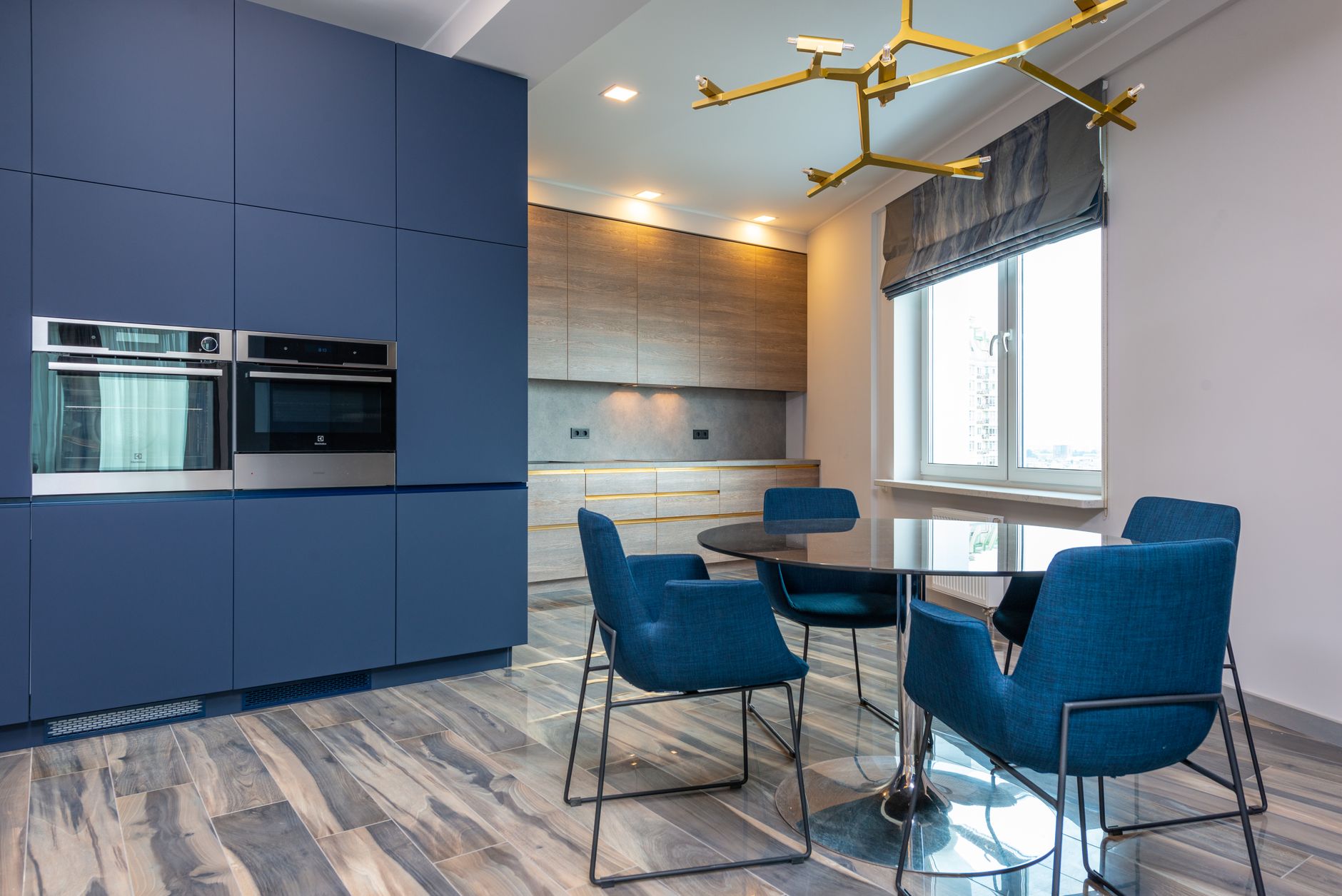
For kitchens where you want both function and softness, layering a custom shade with a lightweight curtain panel or a tailored valance gives you the best of both worlds. The shade handles light control and privacy; the curtain or valance adds warmth and texture. This approach works especially well in traditional or farmhouse-style kitchens common throughout Jackson and West Tennessee.
Keep layered treatments simple in a kitchen — heavy drapes trap grease and are difficult to launder. A simple linen-look valance paired with a clean roller shade is a classic combination that photographs beautifully and cleans easily.
8. Cleaning and Maintenance: Keeping Kitchen Shades Looking New
Even the most durable kitchen shade needs regular maintenance to stay looking its best. The good news is that most moisture-resistant custom shades designed for kitchen use are genuinely easy to clean — a far cry from the fabric draperies your grandmother had to take down and launder twice a year. Here’s what routine care looks like for the most popular kitchen shade types, and a few tips to make your investment last as long as possible.
Routine Cleaning by Shade Type
The ease of cleaning is one of the most important — and most overlooked — factors when choosing kitchen shades. Here’s a quick guide by shade type:
- Solar and roller shades (PVC/polyester): Wipe down with a damp microfiber cloth and mild dish soap. For grease buildup, a diluted solution of white vinegar and water works well. Clean every 4–6 weeks in active kitchens.
- Faux wood blinds: Wipe each slat with a damp cloth or use a blind-cleaning tool. Avoid soaking — even faux wood can warp if water sits in the rail channels.
- Cellular shades: Vacuum with a brush attachment on low suction. Spot-clean with a damp cloth. Avoid immersing in water, as the honeycomb structure can take a long time to dry and may lose shape.
- Roman shades: Spot-clean only for kitchen use. Some fabric Roman shades are dry-clean only — check the care label before purchasing for a kitchen application.
Extending the Life of Your Kitchen Shades
A few simple habits can dramatically extend the life of your kitchen window treatments:
- Run your range hood exhaust fan whenever you cook — it captures grease particles before they reach your shades.
- Raise your shades when cooking at the stovetop to reduce grease and steam exposure.
- Inspect hardware and operating mechanisms annually and tighten any loose brackets or cords.
- Avoid harsh chemical cleaners, which can degrade fabric coatings and fade colors over time.
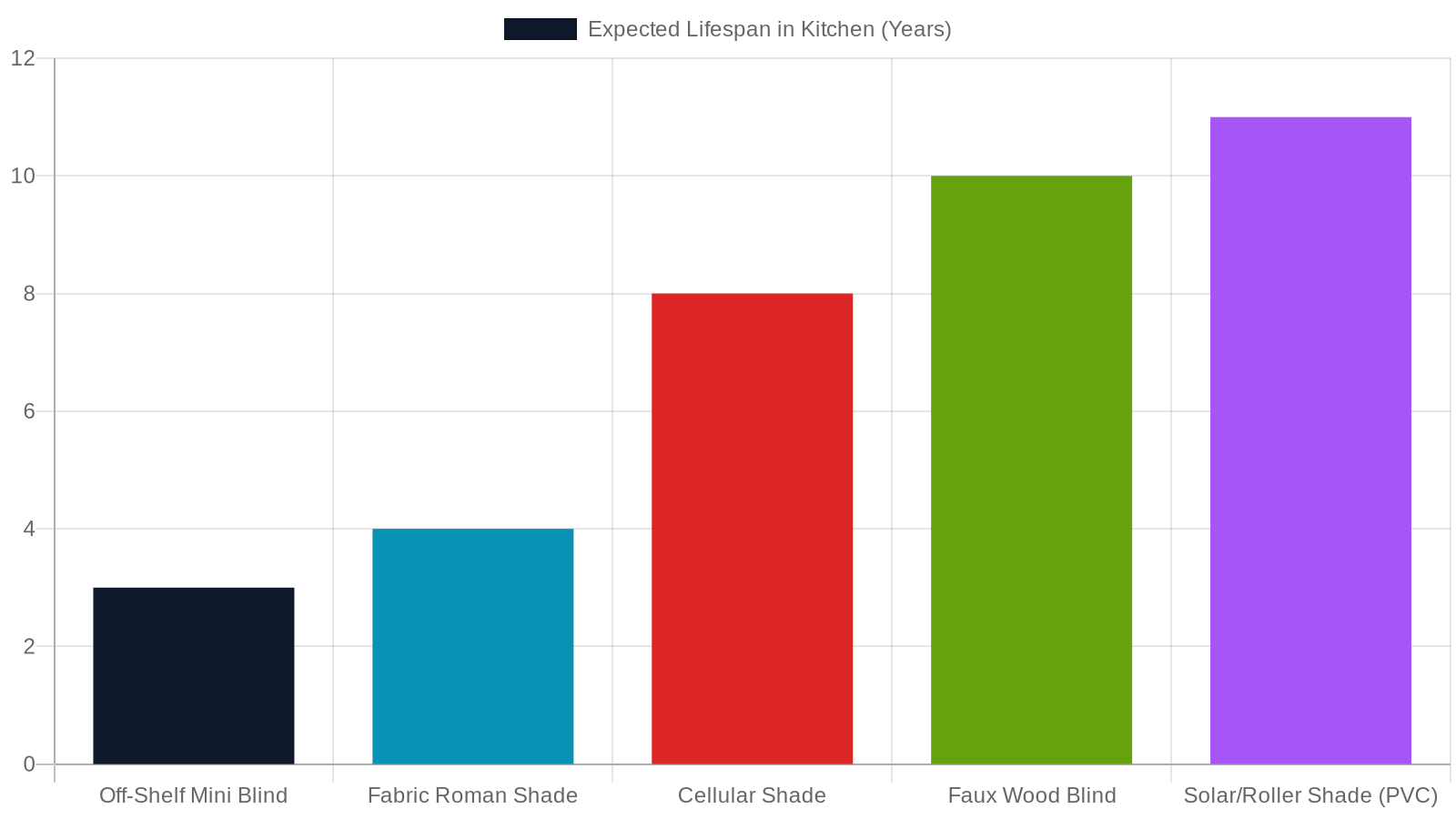
With proper care, a quality custom kitchen shade should last 7–12 years before the fabric or mechanism shows significant wear — compared to 2–4 years for a typical off-the-shelf mini blind in the same environment.
9. Ready to Transform Your Kitchen Windows? Start Here

You’ve done the research — now it’s time to put it into action. Choosing custom shades for your kitchen windows in Jackson, TN doesn’t have to be overwhelming, especially when you have a local expert guiding you through the process. Whether you’re drawn to the sleek simplicity of a solar shade, the insulating power of a cellular shade, or the classic durability of a faux wood blind, the right choice depends on your specific windows, your kitchen’s orientation, and how you use the space every day.
Blinds Galore makes the process easy, affordable, and completely tailored to your home. If you’re also considering window treatments for other rooms, explore our custom plantation shutters — a beautiful, long-lasting option for living rooms and bedrooms throughout West Tennessee. And if you’re curious about the full range of what we offer, visit the Blinds Galore homepage to learn more about our products and services.
What to Expect From a Free In-Home Consultation
Choosing the right custom kitchen shade is much easier when you have an expert in the room with you — literally. During a free in-home consultation with Blinds Galore, a window treatment specialist comes to your home in Jackson or the surrounding West Tennessee communities, measures every window precisely, and walks you through fabric samples, opacity options, and operating systems in your actual kitchen lighting. No guessing how a color will look under fluorescent showroom lights — you see it in your home, with your cabinets, your countertops, and your natural light.
The consultation is completely free, there’s no pressure to buy, and it typically takes 45–60 minutes for a full kitchen. Call (731) 571-5179 to schedule yours today.
Blinds Galore's 100% Satisfaction Guarantee
Blinds Galore has been serving Jackson, TN and West Tennessee for over 18 years, and every custom shade installation comes backed by a 100% satisfaction guarantee. If something isn’t right — the fit, the color, the operation — the team makes it right. That’s the kind of commitment you don’t get from a big-box retailer or an online-only shade company.
Whether you’re updating a single kitchen window above your sink or outfitting an entire new build in Henderson or Milan, Blinds Galore brings the showroom to you and handles every detail from measurement to professional installation. Explore your options and browse our full custom shades collection to see the fabrics, styles, and operating systems available — then call us to bring those samples right to your kitchen.
Frequently Asked Questions
What is the best type of shade for a kitchen window above the sink?
A moisture-resistant roller shade or solar shade with a PVC-coated polyester fabric is the best choice above a kitchen sink. Both wipe clean easily, resist humidity and grease, and can be raised fully out of the way when you need maximum light while doing dishes.
How much do custom kitchen shades cost in Jackson, TN?
Custom kitchen shades in Jackson, TN typically range from $80 to $300 per window depending on the shade type, fabric, size, and operating system. Solar and roller shades tend to be the most affordable, while motorized or double-cell cellular shades are at the higher end. A free in-home consultation with Blinds Galore will give you an exact quote for your specific windows.
Can I put cellular shades in my kitchen?
Yes, but choose a moisture-resistant cellular shade fabric and avoid installing them directly above the sink or stovetop where steam and grease are most concentrated. Double-cell cellular shades offer excellent insulation and are a great choice for kitchen windows that don't face direct cooking exposure.
What openness factor should I choose for kitchen solar shades?
For most kitchens, a 3%–5% openness factor is the best balance between glare reduction and view preservation. If your kitchen faces west or south and gets intense afternoon sun, a 1%–3% openness factor will provide more UV protection. North-facing kitchens can go up to 7%–10% for more natural light.
Do custom shades really save energy compared to standard blinds?
Yes. According to the U.S. Department of Energy, windows account for 25–30% of residential heating and cooling energy use. Custom solar shades can reduce solar heat gain by up to 77%, and double-cell cellular shades provide an R-value of 3.0–4.0 compared to a bare window's R-1 — measurably reducing energy costs in West Tennessee's hot summers.
How long do custom kitchen shades last compared to off-the-shelf blinds?
A quality moisture-resistant custom shade typically lasts 7–12 years in a kitchen environment with proper care, compared to 2–4 years for a standard off-the-shelf mini blind. The difference comes down to material quality, fabric coatings, and the durability of custom operating mechanisms.
You might also like
10 Quick Answers About Custom Blinds and Shades for Your Jackson TN Home
Quick answer: Custom blinds and shades for your Jackson, TN home come in dozens of materials, styles,
7 Reasons Cordless Cellular Shades Are the Safest Choice for Jackson, TN Homes
Quick answer: Cordless cellular shades eliminate the looped cords that pose a strangulation risk to young
Roller Shades vs Cellular Shades: Your 10-Point Guide for Jackson, TN Living Rooms
Quick answer: Roller shades and cellular shades are both excellent choices for Jackson, TN living rooms,

9 Reasons Faux Wood Blinds Are the Best Choice for West Tennessee Home Builders
Quick answer: Faux wood blinds are the smartest window treatment choice for West Tennessee home builders

Schedule Your Free In-Home Blinds Consultation with Jackson TN Experts Today
Quick answer: Scheduling a free in-home blinds consultation with Blinds Galore in Jackson, TN means a

Faux Wood Blinds Cost Guide: 7 Things Jackson, TN Homeowners Should Know
Quick answer: Custom faux wood blinds in Jackson, TN typically cost between $35 and $120 per window for