

What Are Plantation Shutters Made Of
You're probably looking at a window right now thinking the same thing a lot of West Tennessee homeowners think. Plantation shutters would look great here. Then the questions start. Are they wood? Faux wood? Vinyl? What stands up to Jackson humidity, bathroom moisture, summer sun, and day to day family life?
That's the part generic shutter guides usually miss. They'll list materials, but they won't tell you what works in a house that deals with sticky summers, temperature swings, and rooms that don't all need the same solution. Around here, the material matters just as much as the style.
If you've been asking what are plantation shutters made of, the short answer is this. Most plantation shutters are made from solid wood, composite, faux wood, vinyl, or PVC-based materials. The better answer is which one belongs in your living room, kitchen, bathroom, or whole home. That's where the decision gets made.
Choosing Your Forever Shutters A Guide to Materials
A lot of homeowners start with the look. They want the clean lines, the wide louvers, and that finished custom feel plantation shutters bring to a room. Then they get hit with three product samples that all look similar at first glance, but perform very differently once they're installed.
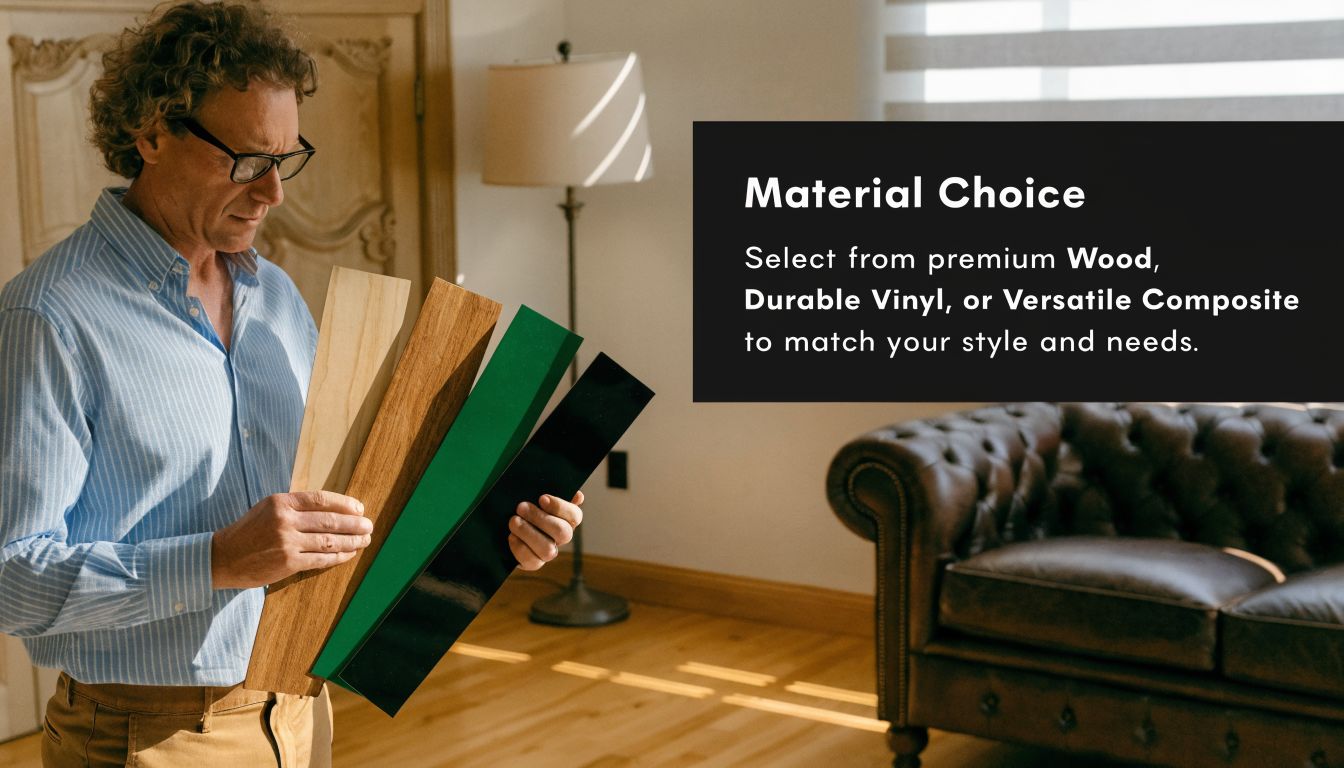
The main material families are easy enough to name:
- Solid wood gives you authentic grain, lighter panels, and the richest stained finish.
- Composite or faux wood gives you a painted-wood look with more resistance to moisture and daily wear.
- Vinyl and PVC give you a waterproof, budget-conscious option for the right spaces.
That sounds simple until you put those choices into a West Tennessee house.
A formal dining room with stable indoor conditions can handle a different shutter than a bathroom that stays damp after every shower. A front living room with afternoon sun needs a different build than a garage window or a laundry room. The best shutter isn't the one with the nicest brochure. It's the one that still looks right and operates smoothly years later.
Practical rule: Pick the material for the room first, then pick the color and louver size.
That's why this decision deserves a little more than a price comparison. Material affects appearance, weight, durability, maintenance, and how confident you'll feel every time you open and close the panels.
The Timeless Appeal of Solid Wood Shutters
Wood is the original plantation shutter material, and for good reason. It looks right in a way no printed grain or molded surface can fully copy. If you want a stained finish that matches flooring, trim, or furniture, solid wood is still the standard.
Historically, plantation shutters started in the late 18th century, and basswood and poplar emerged as preferred woods by the mid-19th century due to their strength-to-weight ratio. By 1930, 85% of shutter installations in Southern markets were solid wood, according to historical material notes on plantation shutter construction.
Why wood still wins on appearance
Wood shutters bring a few things homeowners notice immediately:
- Real grain and texture that give depth under stain or paint
- Lighter panel feel in many premium builds, which matters on larger openings
- Better stain options when you want shutters to coordinate with cabinets, built-ins, or hardwood floors
Basswood and poplar became popular for practical reasons, not just tradition. They're strong without being overly heavy, which helps shutters operate more smoothly.
Where wood asks more from you
Wood also asks for the most care in our part of the state. West Tennessee humidity isn't a small issue. It changes how materials behave over time, especially in rooms with moisture swings.
Here's the plain truth. Wood is beautiful, but it's the highest-consideration option in a humid climate.
| Material trait | Solid wood reality |
|---|---|
| Look | Best for authentic grain and stain |
| Weight | Often lighter than denser synthetic options |
| Moisture tolerance | Least forgiving in humid rooms |
| Best fit | Formal spaces and well-controlled interiors |
Wood shutters make the strongest visual statement. They also punish bad room selection faster than other materials.
If a homeowner wants solid wood in West Tennessee, I'd reserve it for spaces with steady climate control and a clear design reason for choosing it. If the goal is “I want the classic look and I don't want problems,” wood isn't always the safest answer. It's the premium traditional answer, but not the universal one.
The Durable Alternative Composite and Faux Wood Shutters
Composite shutters became popular because they solve the exact problems that frustrate wood owners in humid climates. They're engineered products, usually built from a mix of wood fibers and resins or from dense polyresin formulations, and the better versions are designed to stay stable when heat and moisture would make natural wood swell, move, or twist.
In plain language, this is the category that does the most jobs well.
Composite materials revolutionized shutters in the 1980s by blending wood fibers with resins. Pure wood can warp in over 40% of high-humidity installations, while composites resist warping by 95% and account for 45% of custom orders in West Tennessee's variable climate, according to this plantation shutter buying guide.
What composite shutters are made of
This category covers a few different builds, but the common idea is the same. Manufacturers combine natural and synthetic components to create a dense, stable shutter body that looks like painted wood but behaves better around moisture.
That's why many homeowners hear terms like composite, faux wood, engineered wood, or polyresin shutter and assume they all mean cheap plastic. They don't. Some are entry-level products. Others are premium solid-core shutters made for long-term performance.
A helpful way to think about it is similar to the broader benefits of solid vs engineered wood in building materials. Solid products offer authenticity. Engineered products are built to control movement, improve consistency, and handle demanding conditions better.
Why they fit West Tennessee so well
Composite shutters are often the smartest all-around choice because they balance appearance and durability better than any other category.
- Moisture resistance makes them a strong fit for kitchens, laundry rooms, and busy family spaces.
- Painted-wood appearance works well in traditional homes, newer builds, and remodels.
- Stable operation matters on larger windows where sagging, bowing, or panel movement can get annoying fast.
Some premium lines from manufacturers like Norman and Graber do a very good job of mimicking the depth and presence of painted hardwood. Up close, they feel substantial. They don't give you the same stained-wood beauty as real basswood, but in white and painted finishes, they're often the better practical choice.
If you want shutters for most of the house and don't want to babysit them, composite is usually the material that makes the fewest compromises.
The trade-offs are real
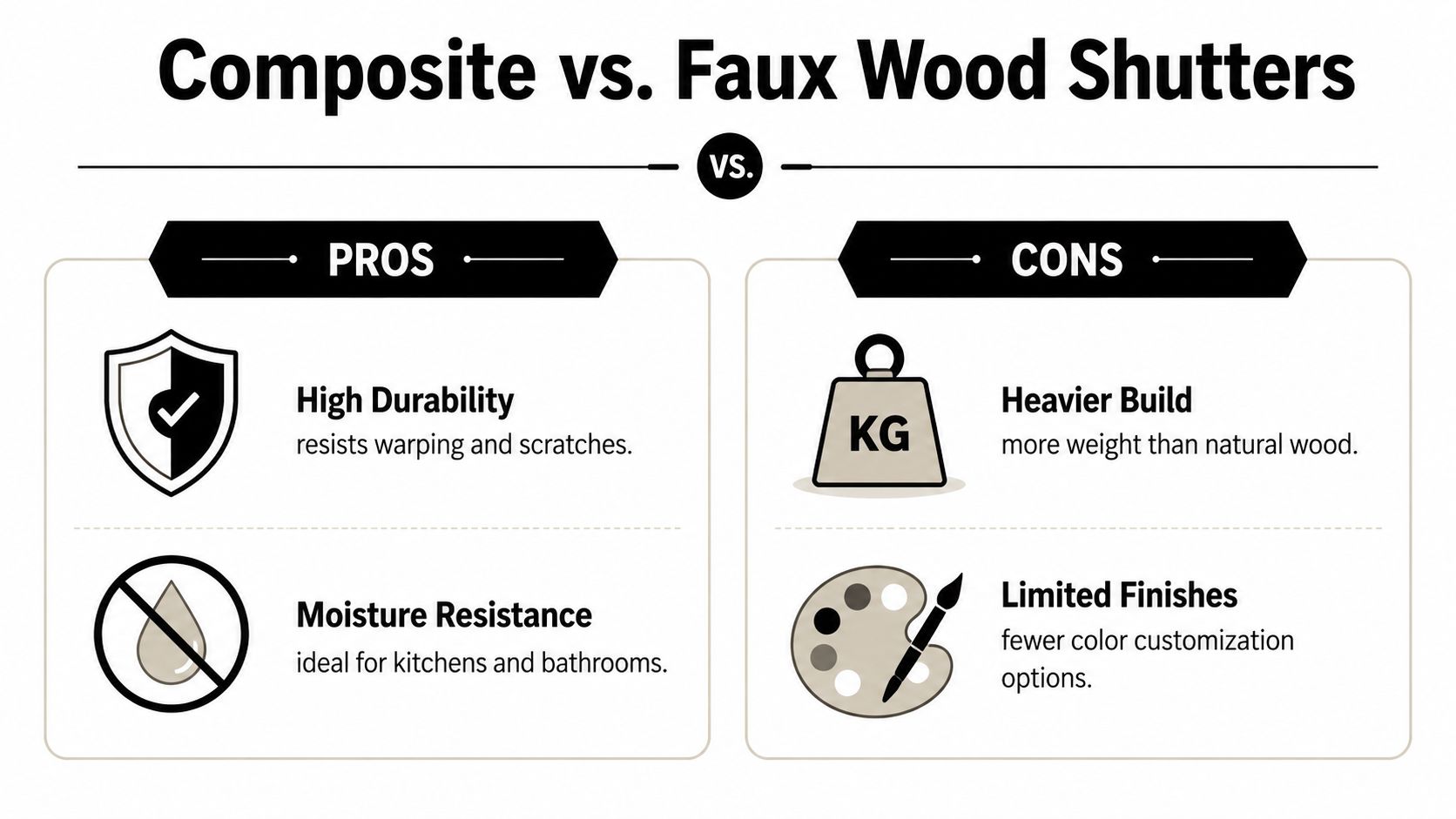
Composite isn't perfect. It can be heavier than natural wood, and finish options are usually more limited if you want custom stains or unusual colors. Some lower-grade faux wood products also look flatter or more artificial than premium offerings.
That's why sample quality matters. Don't judge the whole category by the cheapest panel in the market. There's a big difference between a budget faux wood shutter and a well-built solid-core composite.
Understanding Vinyl and PVC Shutters
Vinyl and PVC shutters sit in a different lane. They're often chosen because they're moisture-friendly and easier on the budget, not because they look the most refined. For the right room, that can make perfect sense.
A lot of confusion comes from people grouping all synthetic shutters together. They're not all built the same. Some vinyl or PVC shutters are lighter and simpler in construction, while higher-grade alternatives use stronger internal support or denser formulations.
Where vinyl and PVC make sense
Vinyl gained traction after the postwar material shift, and in humid regions it became a practical answer for homeowners who needed resistance to moisture. If your goal is a shutter that won't mind splashes, steam, or rough utility-space conditions, vinyl or PVC can be a sensible pick.
These are the situations where I'd seriously consider them:
- Bathrooms and utility areas where waterproof performance matters more than premium furniture-grade appearance
- Rental or secondary spaces where durability and cost control matter most
- Smaller windows where structural limits are less of a concern
For homeowners comparing categories, this guide on vinyl shutters vs wood helps clarify where each material fits.
What to watch before you buy
The trade-offs show up in appearance and structure. Many vinyl shutters don't have the same heft, crisp finish, or custom feel as solid wood or better composites. On wider openings, support matters more, because lighter synthetic builds can struggle if the span gets too ambitious.
That's not unique to shutters. You see the same principle in other remodeling decisions where material choice depends on the setting, not just the label. Even outside window treatments, room conditions change what works. A good example is this discussion of advice for Northern Colorado remodels, where the best material depends on environment, use, and long-term expectations.
Vinyl and PVC are problem-solvers, not showpieces. Use them where their strengths matter, and don't expect them to impersonate premium painted wood at every window.
If someone wants one shutter material for the whole house, vinyl usually isn't my first recommendation. If they need a practical answer for a damp bathroom, a garage window, or another hardworking space, it belongs on the shortlist.
Best Shutter Materials for West Tennessee Homes
West Tennessee changes the conversation. Generic shutter advice doesn't account for the fact that homes in this area deal with average humidity between 70% and 80%, which is exactly why material choice matters more here than it might in a drier market. Region-specific guidance also favors composite shutters such as Polywood-style products because they offer up to 70% better energy efficiency than wood and can reduce HVAC costs by up to 25%, according to this regional shutter article focused on humid climates.
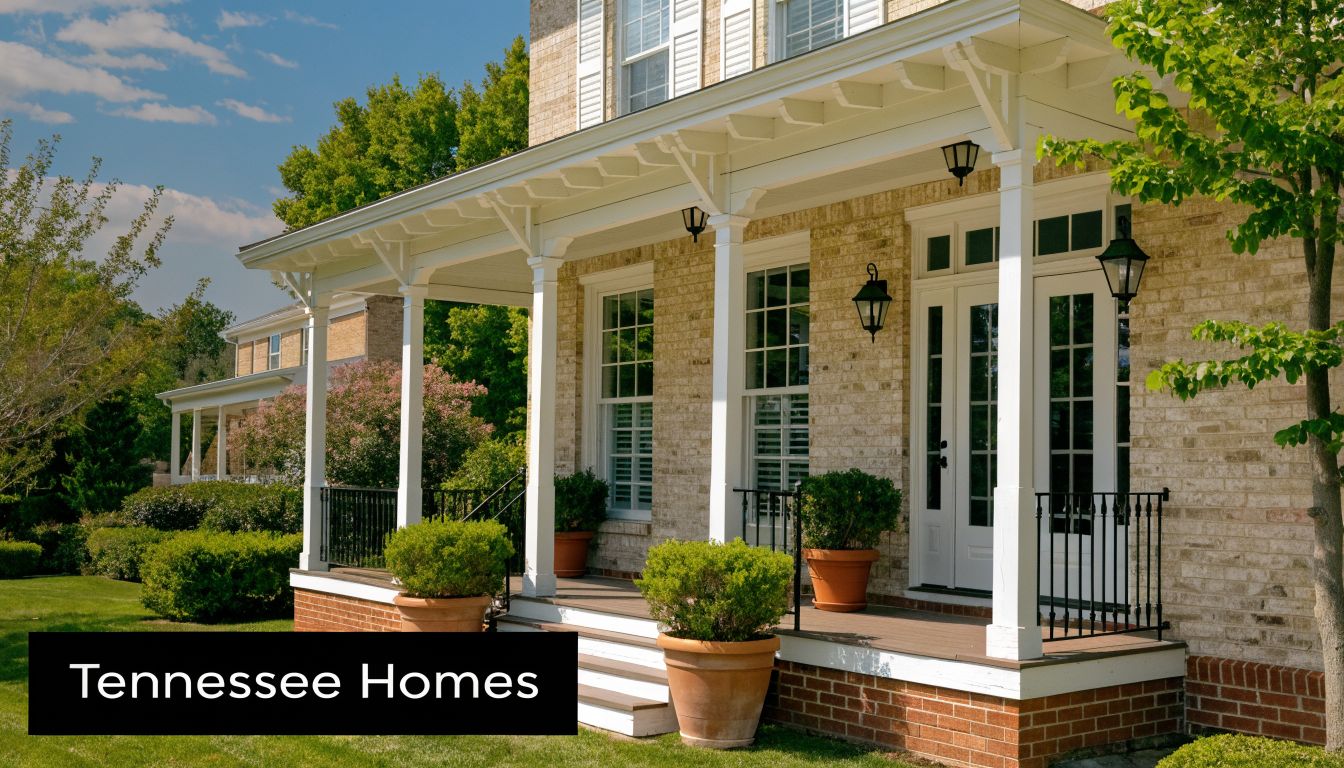
That's why the right answer in Jackson, Dyersburg, Milan, Humboldt, or Savannah usually isn't “wood is best” or “vinyl is cheapest.” It's room-specific.
My room by room recommendation
Here's the straightforward version I'd give a neighbor.
| Room | Best material choice | Why |
|---|---|---|
| Living rooms | Composite or premium faux wood | Strong look, better humidity tolerance, easy upkeep |
| Bedrooms | Composite for most homes, wood for design-driven spaces | Good insulation and stable performance |
| Kitchens | Composite | Handles moisture and daily cleaning better |
| Bathrooms | Vinyl, PVC, or moisture-focused composite | Better fit for repeated humidity exposure |
| Formal offices or dining rooms | Solid wood if authenticity is the priority | Best stained finish and classic detail |
| Garages or utility spaces | Vinyl or PVC | Practical and moisture-friendly |
Why composite usually wins here
For most West Tennessee homes, premium composite shutters are the safest all-around recommendation. They give you the popular look, especially in painted finishes, without asking you to worry about every humidity swing or seasonal change.
That matters in real life. A shutter should still open smoothly in July, still line up right in January, and still look clean after years of sun and indoor humidity. Composite is usually the category that handles that whole list best.
This quick video gives a useful look at how shutter style and material decisions affect the finished result in a real home.
When I'd still choose wood
Wood still has a place. If you have a formal room, steady climate control, and a strong preference for stained shutters or authentic wood grain, it can be the right call. It just needs to be a deliberate design decision, not a default choice based on tradition alone.
Where vinyl belongs
Vinyl and PVC are useful when performance in damp conditions matters more than premium appearance. I wouldn't call them the best fit for every main living space, but I would absolutely use them where moisture exposure is constant and practicality leads the decision.
In West Tennessee, the best shutter material usually isn't the most traditional one. It's the one that matches your room, your humidity level, and how you actually live in the space.
Lifespan Maintenance and Warranty Considerations
A shutter can look great on installation day and still become a disappointment if it's hard to maintain or doesn't stay stable. That's why lifespan and warranty matter just as much as material.
Premium composite shutters made from polyresin blends can carry lifetime warranties against peeling and yellowing, and that performance is tied to their solid-core construction and UV inhibitors. The same product category is noted for showing less than 1% dimensional change after extensive sun exposure tests in this video discussion of premium composite shutter construction.
What maintenance really looks like
For everyday care, plantation shutters are simple if the material matches the room.
- Dust first with a dry cloth, duster, or brush attachment.
- Use mild soap and water on composite and vinyl when needed.
- Avoid soaking wood panels or using harsh cleaners on any shutter finish.
If you want a practical cleaning routine, this guide on how to clean plantation shutters is a good place to start.
Why installation affects lifespan
Even the best shutter material can disappoint if the fit is off. Poor measuring, out-of-square openings, weak mounting, or misaligned panels put stress on the product from day one.
That's why professional measuring and custom installation matter. A strong manufacturer warranty helps, but proper installation protects the investment before a warranty issue ever shows up.
Get Expert Advice and Custom Installation in West Tennessee
The material question is a common sticking point, and understandably, that's normal. Plantation shutters can look similar in a sample book but behave very differently once they're installed in a humid West Tennessee home.
The smartest next step is to stop guessing from photos and compare real samples in your own rooms. That's how you see the difference between solid wood, composite, and vinyl where it counts. In your light, against your trim, with your wall color, and in the rooms that deal with the most moisture.
If you're tempted to measure on your own first, review this guide on how to measure for plantation shutters. It'll show you why shutter measuring is less forgiving than most homeowners expect.
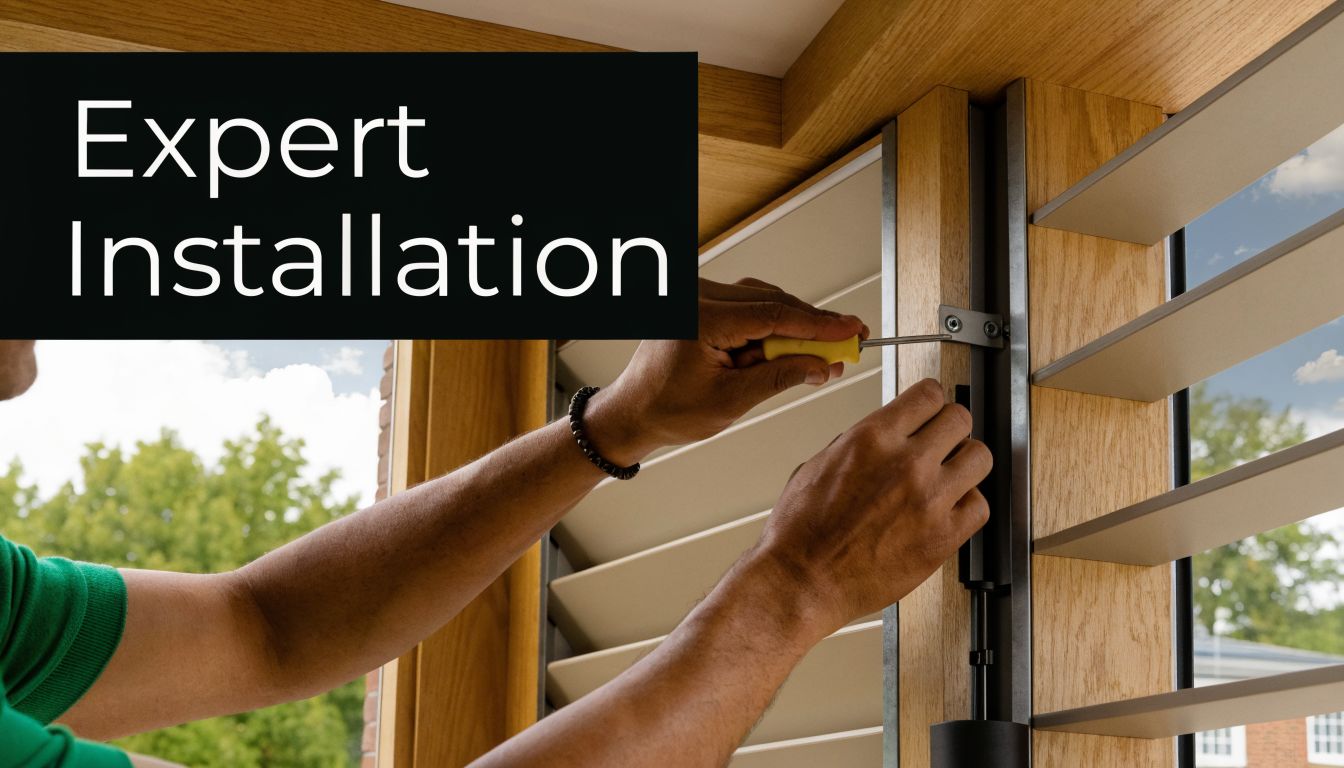
For homeowners in Jackson, Humboldt, Huntingdon, Dyersburg, Milan, and nearby communities, local guidance makes this easier. You can compare the right materials, get a custom install that fits the opening correctly, and avoid buying the wrong shutter for the wrong room.
The goal isn't just to get plantation shutters installed. It's to get the material right the first time so you can enjoy them for years without second-guessing the choice.
If you want help choosing the right shutter material for your West Tennessee home, contact Blinds Galore at (731) 571-5179 for a free in-home consultation. You'll get expert guidance, real samples in your space, custom installation, and a commitment to 100% satifaction from a local team that understands Jackson area homes.
You might also like

Best Plantation Shutter Brands – 2026 Review
If you're looking at your windows right now and thinking the room needs more polish, better privacy,
Contemporary Roman Shades: Modern Styles for Your Home
You know the feeling. Your old blinds work, but they don't do your room any favors. They look hard,
Sliding Glass Window Treatments for Your West TN Home
That sliding glass door probably does two jobs at once in your home. It opens your living space to the
Vertical Blinds vs Horizontal Blinds: The Definitive Homeowner’s Guide
When you're trying to decide between vertical and horizontal blinds, it really comes down to your
Cordless Blinds vs Corded Blinds A Modern Homeowner’s Guide
When you're weighing the pros and cons of cordless blinds vs corded blinds, the verdict for today's
Roller Shades vs Cellular Shades A Complete Comparison
When you're trying to choose between roller shades and cellular shades, it really boils down to