

Vertical Blinds vs Horizontal Blinds: The Definitive Homeowner’s Guide
When you're trying to decide between vertical and horizontal blinds, it really comes down to your window’s shape and how you use it. Think of it this way: Vertical blinds are the go-to solution for wide spaces like sliding glass doors or big picture windows. On the other hand, horizontal blinds are perfect for standard, taller-than-wide windows you typically find in bedrooms and kitchens.
This guide will walk you through the key factors to help you pick the perfect fit for your home.
Your Quick Guide To Choosing The Right Blinds
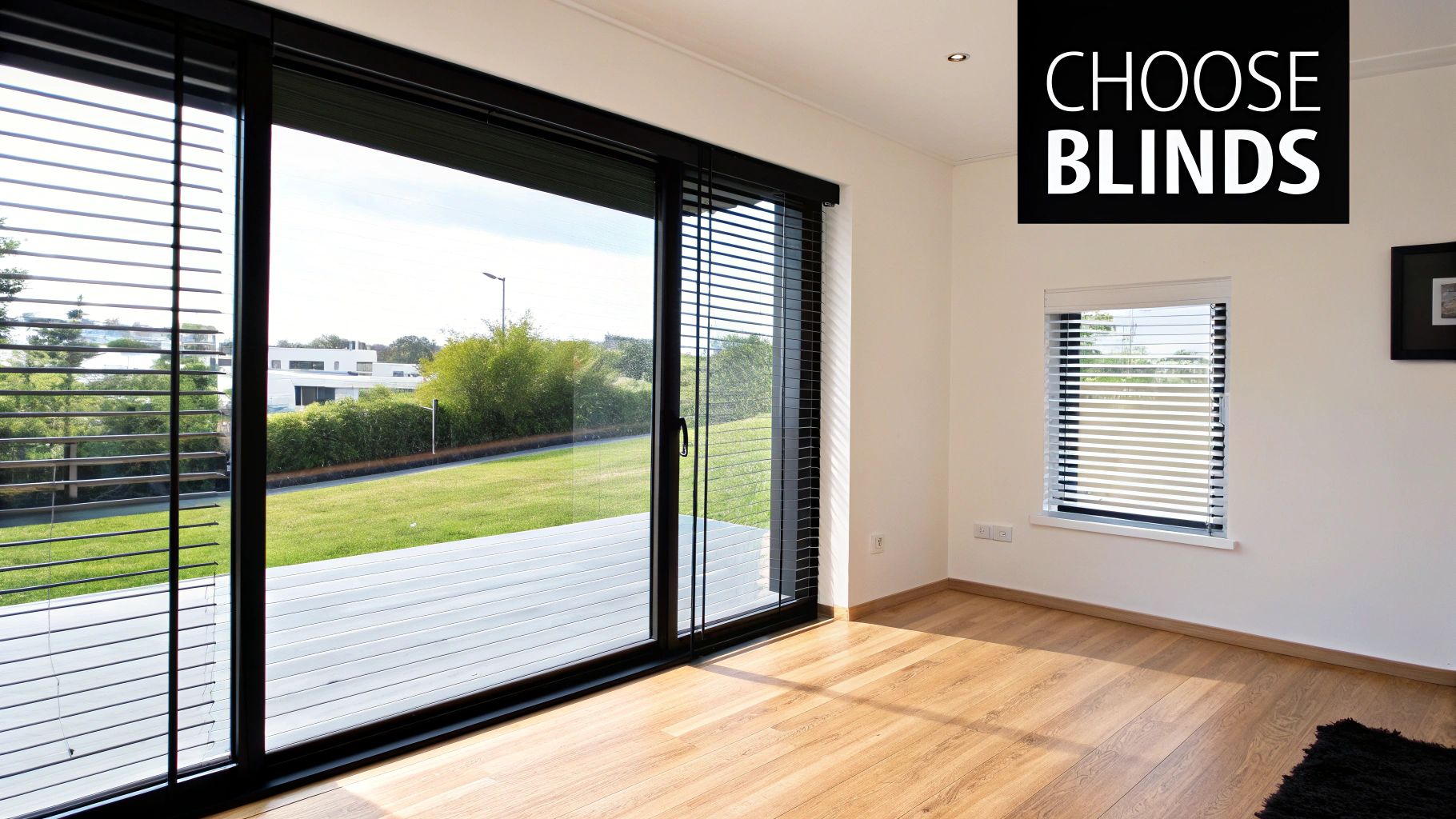
The choice isn't about which style is "better" in general, but which one is the right tool for the job. Horizontal blinds lift up and down, which is ideal for standard windows where you want to tilt the slats to control the light. In contrast, vertical blinds glide from side-to-side, perfectly matching the way a sliding glass door or patio door opens.
Getting this basic operational difference is the first step toward a smart decision that makes your space more stylish and easier to live in.
Key Deciding Factors
To make the best choice for your home, you'll want to think about these key elements:
- Window and Door Type: The size and function of your window or door are the most important things to consider.
- Light Control Needs: Are you looking to redirect sunlight, get a room completely dark, or just cut down on harsh glare?
- Aesthetic Impact: Think about how the direction of the blinds will fit in with your room’s overall design.
The market definitely reflects these different uses. In 2023, vertical blinds and shades made up over 42.3% of the global blinds and shades market share, which shows just how popular they are for covering large glass areas in homes and offices. This trend highlights how practical they are for modern homes. You can read more about the global blinds market trends if you're curious.
Choosing the right orientation isn't just a design choice; it’s a functional one. A blind that works against the natural movement of your window or door will cause daily frustration and premature wear.
For homeowners here in West Tennessee, making the right call is simple. We provide expert guidance to make sure you select the perfect window treatment for your space. Every solution we offer includes our professional custom install service and is backed by our 100% satisfaction guarantee. For some personalized advice, just give us a call at (731) 571-5179.
To help you see the differences at a glance, we've put together a quick comparison table.
Quick Guide Vertical vs Horizontal Blinds
This table provides an at-a-glance summary comparing the ideal applications and key features of vertical and horizontal blinds to help you make a fast, informed choice.
| Feature | Vertical Blinds | Horizontal Blinds |
|---|---|---|
| Best For | Sliding glass doors, patio doors, and large picture windows | Standard windows, double-hung windows, and smaller windows |
| Operation | Glides side-to-side on a track | Lifts up and down with a cord or motor |
| Light Control | Tilts to direct light; stacks tightly for full view | Tilts for precise light redirection and privacy control |
| Aesthetic | Creates a sense of height; offers a clean, modern look | Adds a classic, traditional feel to a room |
| Maintenance | Gathers less dust due to vertical orientation | Horizontal slats can accumulate dust more easily |
Hopefully, this chart makes it clear which option is the front-runner for your specific windows and doors.
Comparing Core Design And Daily Operation
When it comes to choosing the right blinds, understanding how you'll use them every day is the most important piece of the puzzle. The fundamental difference between vertical and horizontal blinds is simple: one moves side-to-side, the other moves up-and-down. This basic mechanical difference dictates everything about where they work best in your home.
Vertical blinds are made of individual vanes that hang down from a headrail. They glide smoothly along a track, opening from the center or stacking to one side. This design is a perfect match for sliding glass doors or large patio doors because it mirrors the way the door itself moves. You can easily part the vanes just enough to step outside without having to open the entire blind.
Horizontal blinds, on the other hand, are built with slats stacked on top of each other. The whole unit lifts up and down using a cord or motor. This makes them incredibly practical for standard windows in places like your bedroom, kitchen, or home office—windows you look through, not walk through. Imagine having to lift a heavy horizontal blind every single time you wanted to let the dog out. It just doesn't make sense.
How You Control Them Matters
Each style’s controls are designed for its specific movement. With vertical blinds, a simple wand or cord lets you slide the vanes across the window and tilt them to adjust the light. It's an intuitive way to manage light coming through a huge pane of glass.
Horizontal blinds also tilt, but their main function is that up-and-down lift. This is where they really shine for standard windows, offering precise control over both light and privacy. It's no surprise they're so popular; the global window blinds market is expected to hit USD 3.71 billion by 2030, with horizontal styles leading the way. You can discover more insights about the window blinds market.
The daily operation of your blinds should feel intuitive, not frustrating. A blind that works against the natural movement of your window or door will cause daily friction and can lead to premature wear on its components.
Getting this choice right from the start is the key to being happy with your window treatments for years to come.
Of course, modern technology has brought some great upgrades to both styles. Many homeowners are now choosing motorization, which lets you control your blinds with a remote or a smart home device. It adds a touch of luxury and is a fantastic safety feature for families with kids and pets.
No matter which control you prefer—from a classic wand to full automation—a flawless custom install is non-negotiable. Proper installation guarantees that all the moving parts work smoothly, without catching, sagging, or getting crooked. Here at Blinds Galore, our professional installation is a core part of our commitment to your 100% satisfaction.
To really get a feel for the difference and see our modern control options up close, give us a call at (731) 571-5179. We'd be happy to schedule a free in-home consultation.
Matching The Right Blind To Your Window Type
When it comes to choosing the right blinds, a good rule of thumb is to match the blind's movement to the way the window or door operates. It’s a simple concept, but it makes all the difference in daily use.
For those wide, expansive openings like sliding glass doors or large picture windows, vertical blinds are the undisputed champion. They glide from side to side, perfectly mirroring the way you use a slider and giving you effortless access. Trying to put a horizontal blind on a sliding door just creates a cumbersome obstacle.
On the other hand, for most standard windows in your home—the ones in bedrooms, living rooms, and offices that are generally taller than they are wide—horizontal blinds are the classic, go-to solution. Their up-and-down motion is intuitive for windows you look through, not walk through, offering fantastic and precise light control.
But what about those trickier, less common window shapes? That's where things get interesting. This simple guide can help you visualize the best starting point for your decision.
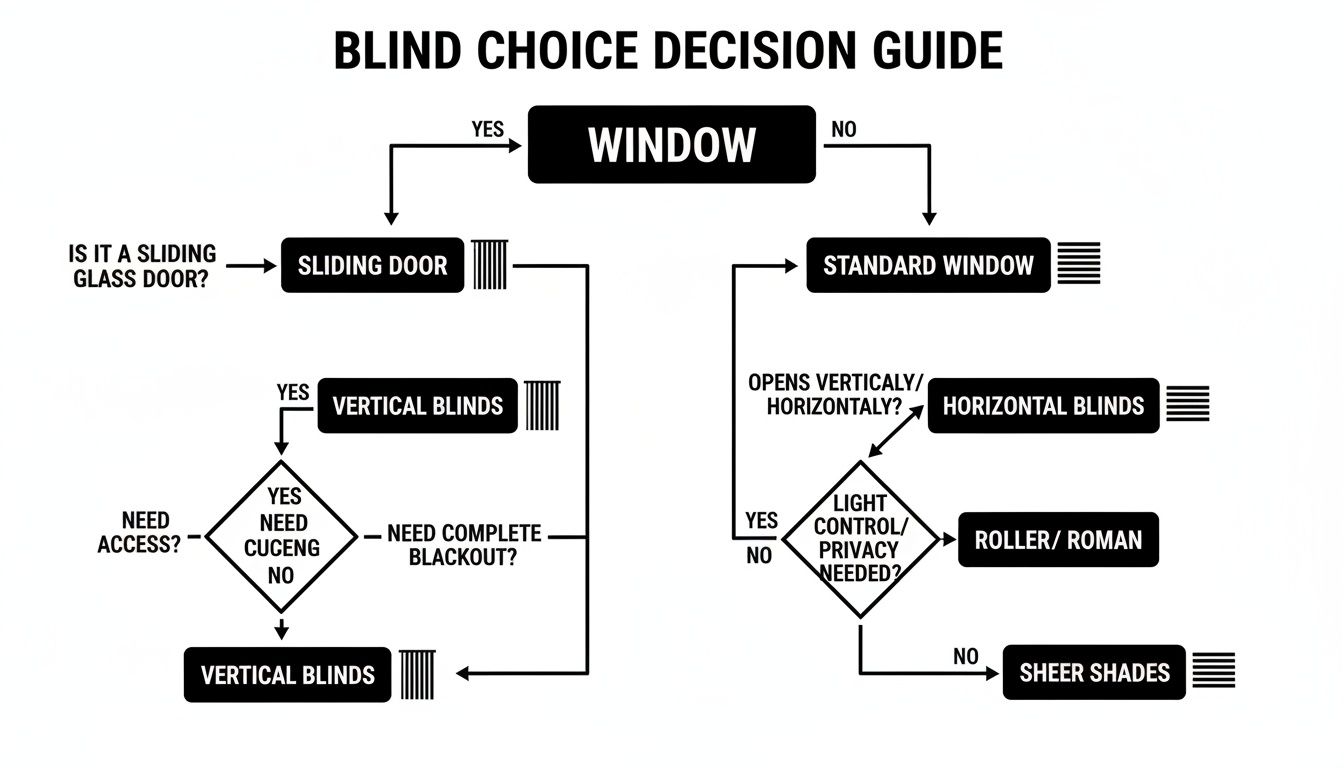
As you can see, it really boils down to whether your window acts more like a door or is a standard, non-pass-through window.
Solutions For Challenging Windows
Not every window is a perfect rectangle. In fact, many homes have beautiful architectural features that need a more thoughtful approach to find the right window treatment.
- Bay and Bow Windows: These angled windows create a lovely nook but can be a headache to cover properly. Horizontal blinds are a fantastic choice here. We install a separate, custom-fitted blind on each individual window panel, which preserves the beautiful dimensionality of the bay while giving you smooth, consistent light management across the whole feature.
- Arched or Angled Windows: These specialty shapes often leave homeowners stumped. While a custom vertical solution can sometimes be fabricated for an angled window, it’s often custom-cut horizontal blinds or even specialized sunburst-style shutters that provide the most elegant and functional fit for arched tops.
- French Doors: While they are doors, their double-swing motion makes them a different challenge than sliders. We can mount individual horizontal blinds directly onto each door, allowing them to swing open and closed without interference. This also maintains a cohesive, classic look, especially if the rest of the room has horizontal blinds.
The biggest mistake I see homeowners make is trying to force a one-size-fits-all solution onto a custom window. The right window treatment should enhance your home's unique features, not fight against them. For these kinds of applications, a professional custom install is absolutely essential.
The Big Picture: Commercial vs. Residential
This functional split between blind types is even reflected in broader market trends. Industry projections show vertical blinds holding their ground in large-scale commercial applications, with the overall blinds market expected to capture a 67.91% share by 2026. This is largely because verticals are so efficient at covering the massive window spans common in office buildings, while horizontals remain the top pick for the nuanced light control needed in homes. You can learn more about the blinds and shades market findings to see the data for yourself.
Ultimately, getting a perfect fit is what truly matters. Our expertise ensures that even the most challenging windows get a beautiful, functional treatment that you'll love for years, all backed by our 100% satisfaction guarantee.
For a perfect fit on any window, give us a call at (731) 571-5179.
Evaluating Light Control, Privacy, And Aesthetics
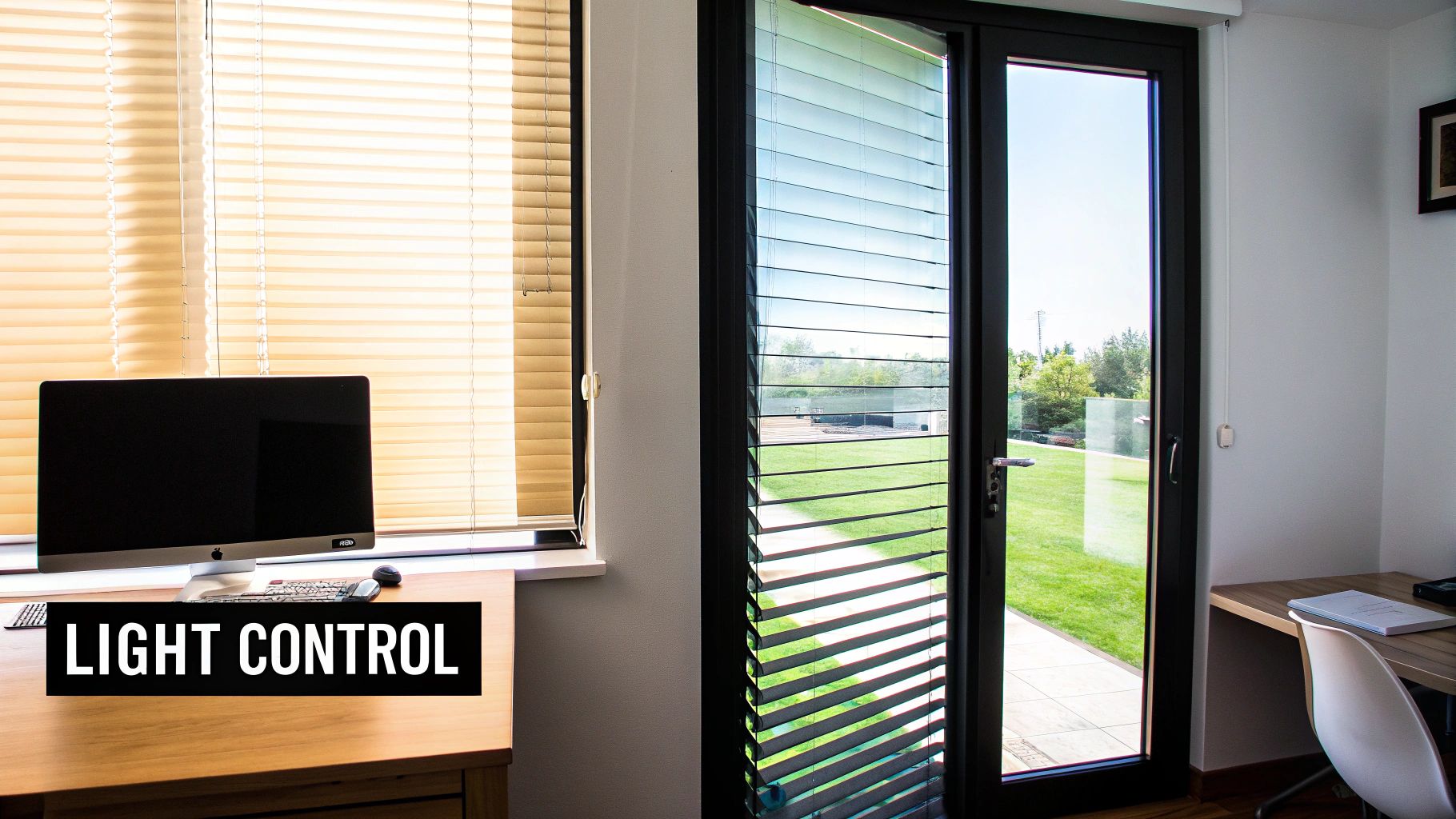
Once you move past the basic function, you’ll find the choice between vertical and horizontal blinds has a huge impact on a room’s atmosphere, privacy, and style. Each one takes a totally different approach to managing sunlight and shaping your interior design, which is why this is such a critical part of the vertical blinds vs horizontal blinds decision.
Horizontal blinds give you incredible, fine-tuned control over light. You can tilt their slats with real precision, redirecting that harsh afternoon sun up toward the ceiling. This fills the room with a soft, ambient glow while killing the glare on your TV or computer screen. That granular control makes them a fantastic choice for home offices or living rooms where you need both light and focus.
On the other hand, vertical blinds are masters of covering large glass surfaces completely. When you close the vanes, they deliver excellent room-darkening and a high degree of privacy. But when you want to open them up, they stack neatly to the side, leaving your view completely unobstructed—a must-have feature for showing off a beautiful patio or backyard.
Balancing Practicality With Interior Design
Let’s be honest: how your blinds look is just as important as how they work. Horizontal blinds, especially those made from real wood or a high-quality faux wood, bring a timeless, classic feel to any room. They fit right in with traditional, rustic, or transitional décor, adding warmth and structure to your windows.
Vertical blinds, however, have a clean, modern vibe. They come in a huge array of materials, from sleek vinyls to soft, fabric options that look almost like drapery, giving you a contemporary look that can make a room feel taller. For big sliding doors or floor-to-ceiling windows, they’re often the only practical choice that looks sleek and proportional instead of busy.
The direction of the slats or vanes does more than just block light; it guides the eye. Horizontal lines can make a room feel wider and more grounded, while vertical lines draw the eye upward, creating a sense of height and space.
Choosing the right blind is all about finding that sweet spot where practical light control meets your personal design vision. One style gives you precise, comfortable light for daily living, while the other offers sweeping views and a modern feel. The best choice really comes down to the specific needs of the window and the room it's in.
Every home here in West Tennessee has its own character, and our job is to find a solution that fits it perfectly. With our expert custom install process, we make sure your new blinds not only fit like a glove but also elevate your home’s style. We stand by our work with a 100% satisfaction guarantee.
Ready to explore materials and see samples in your own home? Give us a call at (731) 571-5179 for a free consultation.
A Practical Look At Maintenance And Durability
Let's get practical for a moment. When you're thinking about the long haul, the vertical blinds vs horizontal blinds debate really comes down to daily upkeep and how well your investment is going to stand up to real life.
Think about it: horizontal blinds are basically a series of little shelves. They’re fantastic at catching light, but they’re also pros at catching airborne dust and pet dander. Vertical blinds, just by hanging downwards, let gravity do most of the heavy lifting. Dust just doesn't have a place to settle.
Keeping Your Blinds Clean
For horizontal blinds, a microfiber duster is going to be your go-to tool for routine touch-ups. When they need a bit more attention, a quick wipe with a damp cloth on each slat will have them looking brand new.
Vertical blinds are even easier. A quick once-over with a duster or your vacuum’s brush attachment is usually all it takes. If you’ve got vinyl vanes, most smudges and fingerprints wipe right off.
The real secret to blinds that last isn't just about cleaning, it's about starting with high-quality material. A well-made product paired with a professional custom install isn't just a temporary fix—it's a lasting solution for your home.
Durability And Repairability
When we talk about what lasts, the material you choose matters more than whether the blinds hang up-and-down or side-to-side. A premium faux wood horizontal blind, for instance, is built to fight off warping and fading, even in steamy bathrooms or busy kitchens. Likewise, our high-quality vinyl vertical vanes can handle the bumps and knocks of a household full of kids and pets.
But here’s where vertical blinds really shine: repairs. If one vane gets bent by an over-eager dog or a curious toddler, you can often just replace that single piece. That’s a whole lot easier on the wallet than having to replace the entire set of blinds.
This simple, practical advantage is a huge reason they’ve remained such a popular choice over the years. Here at Blinds Galore, we only stock products we know are durable, and we stand behind every single job with our 100% satisfaction promise. To feel the quality for yourself, give us a call at (731) 571-5179 today.
Making Your Final Decision On Blinds
So, when it all comes down to it, the **vertical blinds vs horizontal blinds** debate really boils down to four things. You have to think about your window or door type, just how much light control you’re after, the look you want to achieve, and, of course, your budget.While the material you pick—from budget-friendly vinyl to gorgeous, premium wood—is what really sets the price, the real value comes from a perfect, seamless fit. This is where professional installation goes from a "nice-to-have" to a "must-have" if you want your blinds to perform well for years.
The Value Of A Professional Custom Install
It's easy to underestimate the precision it takes to get window treatments installed just right. A weekend DIY project can quickly lead to some common but incredibly frustrating issues that cheapen the look and feel of your brand-new blinds.
These are the problems we see all the time:
- Sagging or Misalignment: Blinds that aren’t perfectly level just look sloppy and never operate smoothly.
- Operational Problems: When the installation is off, mechanisms can stick, catch, or just wear out way too fast.
- Light Gaps: A poor fit means gaps around the edges, which kills both your privacy and your light control.
Our professional custom install service is designed to make sure none of this happens. We make sure every single bracket is secure, every measurement is spot-on, and every blind operates like a dream from day one. It's this careful approach that guarantees your blinds will look fantastic and work flawlessly for the long haul.
The difference between a good window treatment and a great one is the installation. It’s the final step that protects your investment and ensures you get the full benefit of your custom blinds.
This commitment to doing things right is the bedrock of our business. We stand behind every job with our 100% satisfaction guarantee, so you can have complete peace of mind.
Ready for some expert guidance that’s actually tailored to your home? We bring the showroom straight to you. Call us today at (731) 571-5179 to set up a free, no-obligation in-home consultation. We’ll help you make that final decision with confidence and give you a precise quote for your project.
Your Blinds Questions, Answered
When you're weighing your options, a few common questions always seem to pop up. Let's tackle them head-on so you can feel completely confident in your final decision.
Are Vertical Blinds Still In Style?
You bet they are. Forget the clunky, plastic office blinds of the past. Today's vertical blinds have undergone a complete transformation. We’re talking about elegant fabrics, sophisticated textured finishes, and even sheer materials that diffuse light beautifully, almost like drapery. For sliding glass doors and massive picture windows, they remain the cleanest, most functional solution, offering a sleek, modern look that is both practical and timeless.
Which Blind Is Better For Energy Efficiency?
Both styles can definitely help with your energy bills, but their real-world performance comes down to the material you choose and how well they are installed.
- Vertical Blinds: These are fantastic for blocking solar heat on huge glass surfaces like patio doors, which can be a major source of heat gain in the summer.
- Horizontal Blinds: When made from insulating materials like faux wood, they do an excellent job of deflecting both heat and cold on your standard-sized windows.
The real secret to maximizing these benefits is a professional custom install. A precise, tight fit is everything—it minimizes drafts and air leakage around the window frame, making any blind far more effective.
Can I Put Horizontal Blinds On A Sliding Glass Door?
While you technically could, it's just not practical. Imagine a single, wide horizontal blind—it would be incredibly heavy and a huge hassle to lift every single time you wanted to go outside. Splitting it into multiple blinds creates awkward light gaps and makes operation a chore. Vertical blinds are designed specifically for the side-to-side movement of sliding doors, making them the hands-down superior choice for both looks and convenience.
Our team ensures every custom install delivers flawless function, and we back it with our 100% satisfaction guarantee. If you have more specific questions, just give us a call at (731) 571-5179.
Ready to see how the perfect custom solution can transform your windows? For a seamless experience from start to finish, trust the local experts at Blinds Galore. Schedule your free in-home consultation today!
You might also like

Best Plantation Shutter Brands – 2026 Review
If you're looking at your windows right now and thinking the room needs more polish, better privacy,
What Are Plantation Shutters Made Of
You're probably looking at a window right now thinking the same thing a lot of West Tennessee homeowners
Contemporary Roman Shades: Modern Styles for Your Home
You know the feeling. Your old blinds work, but they don't do your room any favors. They look hard,

Sliding Glass Window Treatments for Your West TN Home
That sliding glass door probably does two jobs at once in your home. It opens your living space to the
Cordless Blinds vs Corded Blinds A Modern Homeowner’s Guide
When you're weighing the pros and cons of cordless blinds vs corded blinds, the verdict for today's
Roller Shades vs Cellular Shades A Complete Comparison
When you're trying to choose between roller shades and cellular shades, it really boils down to