
What Is Roller Shades: Types, Fabrics & Installation
Morning sun can turn a comfortable bedroom into a bright alarm clock. At night, the same window can feel a little too exposed when the lights are on inside. Many homeowners run into the same problem and start searching for a clean, simple fix. That’s where roller shades usually enter the conversation.
If you’ve looked online, you’ve probably seen blackout roller shades, solar shades, cordless rollers, and motorized options all grouped together. That can make a basic question harder than it should be. What is roller shades, really? In plain terms, a roller shade is a fabric panel that rolls up around a tube at the top of the window. It’s one of the simplest window covering designs, but the options around fabric, light control, and hardware can get detailed fast.
That detail matters. The right roller shade can soften glare in a living room, darken a bedroom, add privacy to a bathroom, or help manage heat in a sunny West Tennessee home. The wrong one can leave gaps, look undersized, or solve one problem while creating another.
Homeowners usually get stuck on four points:
- Shade type: blackout, light-filtering, or solar
- Fabric choice: smooth vinyl-like finishes, woven looks, or polyester blends
- Operation: chain, cordless, or motorized
- Installation: inside mount, outside mount, and whether custom measuring is worth it
A good way to think about roller shades is this. They’re like a seatbelt for sunlight. You pull them to exactly where you need them, and they stay there without taking over the whole room like heavy drapery can.
Introduction to Roller Shades
A roller shade does one job in a very direct way. It covers the glass with a single sheet of material that rolls up neatly when you want the window open and drops down when you want privacy, glare control, or darkness.
That sounds basic because it is. It’s also why roller shades fit so many homes.
Why homeowners like them
They don’t have slats to tilt or stacked fabric folds to manage. When raised, they disappear into a compact roll. When lowered, they give you one smooth visual surface.
That simplicity works well in spaces where you want the window treatment to stay quiet in the background.
- For bedrooms: they help control early light
- For living rooms: they cut TV glare without adding visual clutter
- For kitchens: they keep a cleaner, flatter profile than many fabric treatments
- For offices: they reduce distractions and make screens easier to see
Where people get confused
The confusion usually starts because roller shades is a broad category, not one single product style. Two shades can both be called roller shades and behave very differently.
One may darken a room almost completely. Another may preserve the outside view while cutting glare. A third may soften light and add privacy during the day.
Practical rule: Start with the problem you want to solve, not the color you want to buy.
If your main issue is harsh afternoon sun, you’ll likely evaluate different fabrics than someone trying to sleep after sunrise. If privacy matters most, the openness and mount style matter just as much as the material itself.
Why they remain a practical choice
Roller shades sit in a useful middle ground. They can look modern without feeling cold, and they can feel soft without looking fussy. They also adapt well to custom install work because the same basic format works across standard windows, large openings, and specialty placements.
That flexibility is a big reason homeowners keep coming back to them. You can make them minimal, decorative, room-darkening, view-preserving, cordless, or motorized without changing the core concept.
Understanding Roller Shades Fundamentals
Roller shades may look modern, but they’ve been around for a long time. Their basic idea has stayed consistent even as the parts have improved.
How roller shades developed
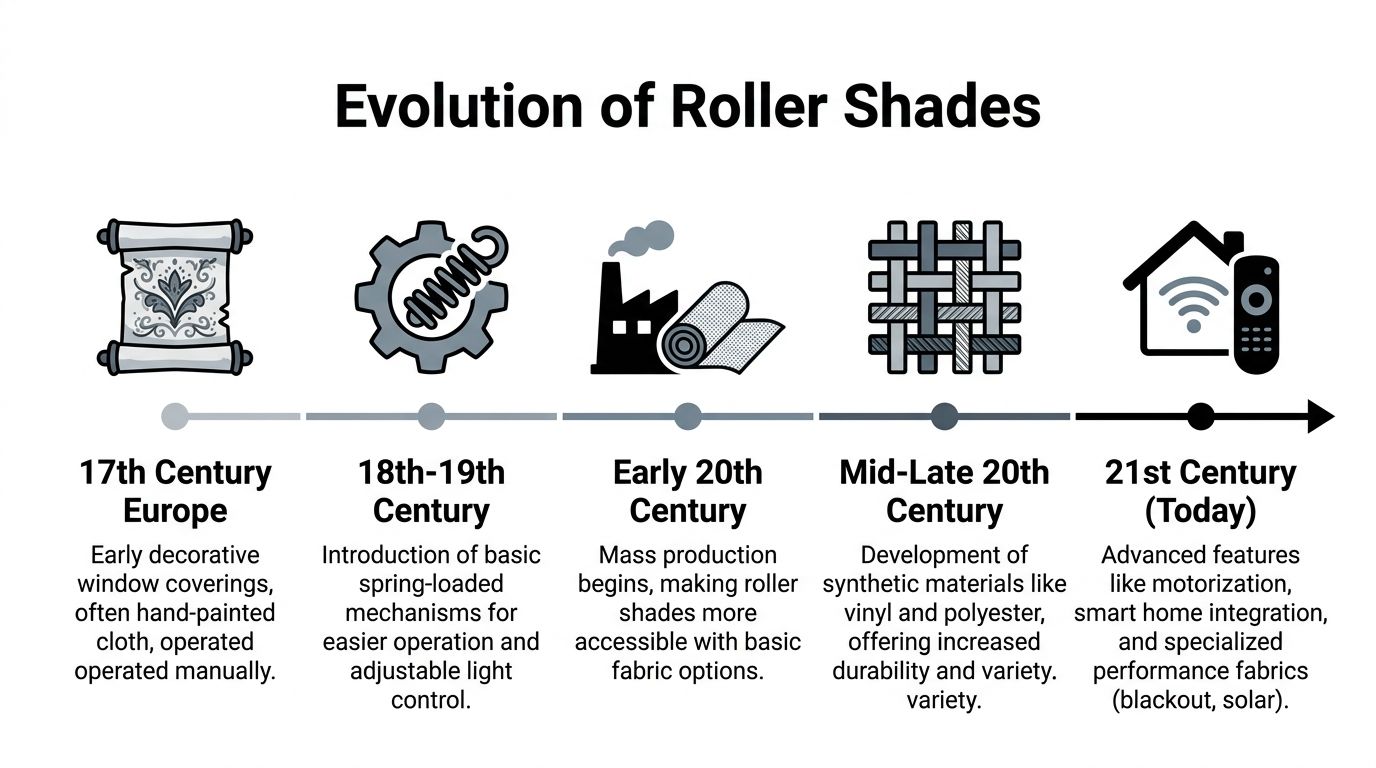
Early shades appeared in Holland in the 17th century and spread to the United States by the 1780s. By 1858, spring-loaded rollers had entered mass production, which made them easier to use and more affordable, according to this history of window roller shades.
That history helps explain why the design still works. People wanted a shade that was compact, practical, and easier to operate than manually rolling and fastening fabric.
The basic parts of a roller shade
A roller shade has just a few fundamental components:
- Shade fabric: the visible material that spans the glass
- Roller tube: the horizontal tube the fabric wraps around
- Bottom hem bar: the weighted edge that helps the shade hang straight
- Brackets: the mounting pieces that attach the shade to the window frame or wall
- Control system: spring, chain, clutch, or motor
A simple way to picture it is a paper towel roll mounted over a window, except the tube is stronger, the fabric is engineered to hang properly, and the controls are designed for repeated use.
Why the mechanics matter
Not all roller shades operate the same way. A spring system stores tension so the shade can rise with a pull. A clutch system uses a chain to raise and lower the fabric more precisely. A motorized system replaces hand operation with a powered drive.
Each option changes how the shade feels day to day. That’s why homeowners comparing styles should also review operation and fit, not just color. If you want a wider overview of how different window coverings compare, this guide on how to choose window treatments can help frame the decision.
A roller shade is simple in concept, but performance depends on how well the fabric, tube, and controls are matched to the window.
Exploring Roller Shade Types
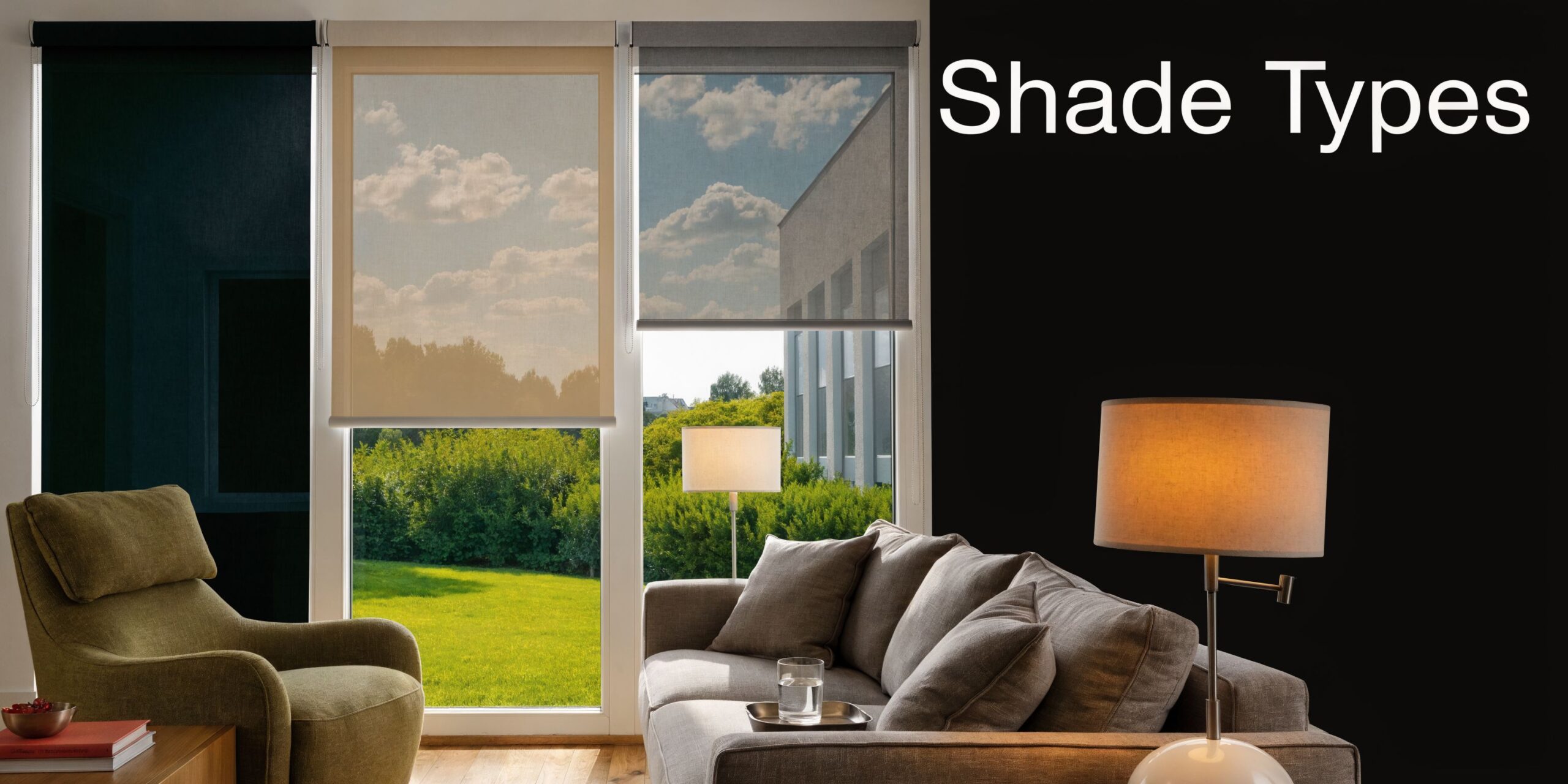
The fastest way to understand roller shades is to separate them by what they do with light. Most homeowners are really choosing among blackout, light-filtering, and solar options.
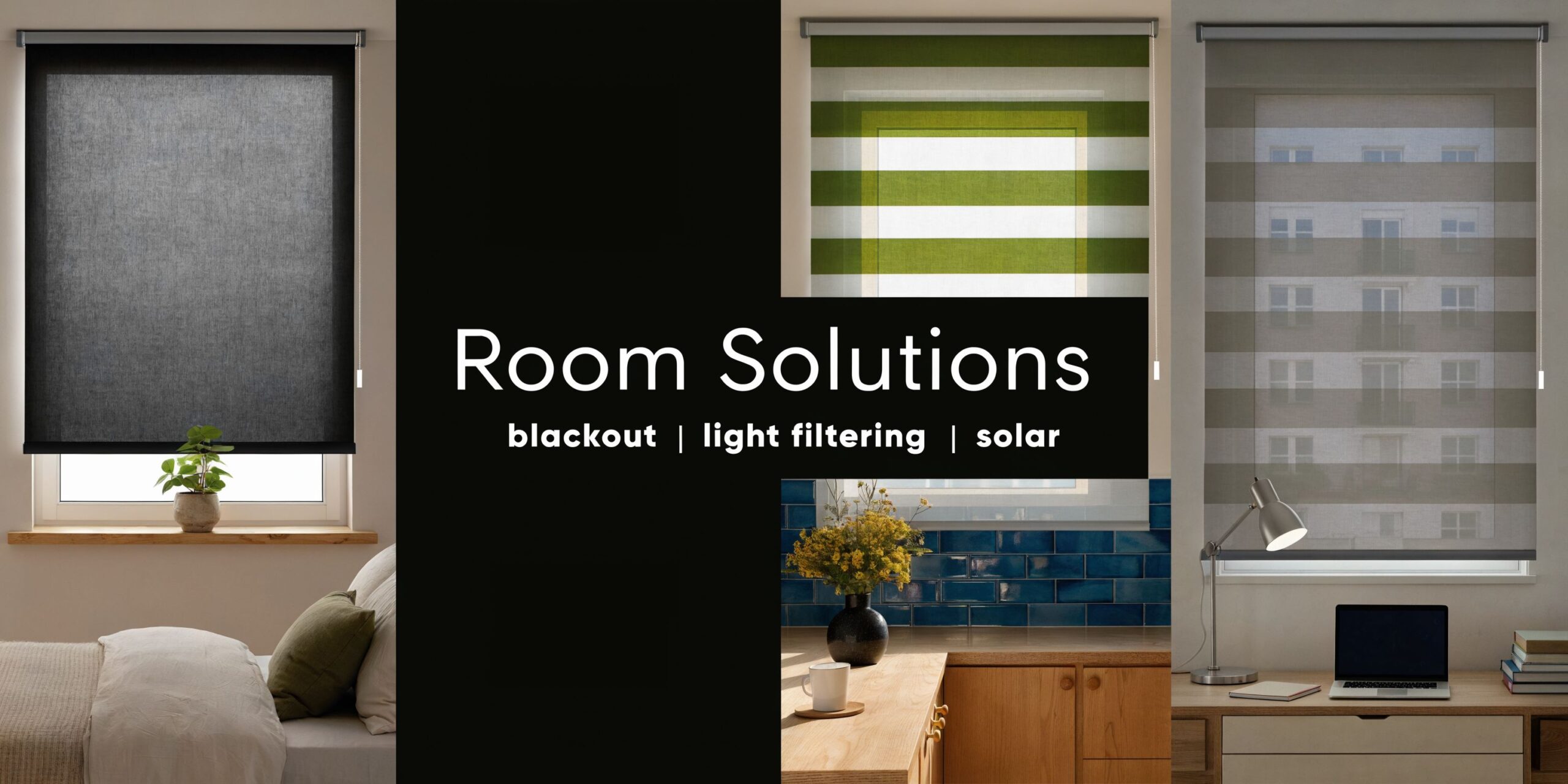
Blackout roller shades
Blackout roller shades are for people who want strong control over brightness. Bedrooms, nurseries, media rooms, and guest rooms are common spots for them.
According to Graber’s roller shade overview, blackout roller fabrics block 99% of light while solar shades serve a different purpose, and that same source notes a growing interest in solar roller hybrids in the South because of energy cost concerns. You can see that comparison in Graber’s guide to roller shades and performance differences.
The trade-off is important. Blackout fabrics help darken the space, but they can also trap heat in the fabric.
That doesn’t make them a bad choice. It just means they solve a different problem than a view-through solar fabric.
Best fit for blackout shades
- Bedrooms: especially east-facing rooms
- Media spaces: where screen glare ruins the picture
- Shift-worker sleep rooms: when daytime darkness matters
Light-filtering roller shades
Light-filtering roller shades are the middle path. They don’t aim for full darkness, and they don’t preserve a crisp outdoor view the way solar shades do.
Instead, they soften incoming light. Think of them as the lamp-shade version of a window treatment. The room still feels bright, but the light feels less sharp.
Homeowners often choose this type for:
- Living rooms: where natural light still matters
- Dining rooms: where you want warmth, not glare
- Front rooms: where privacy and daylight need balance
These shades are often the easiest to live with if your needs change through the day. They reduce harshness without making the room feel closed off.
Solar shades
Solar shades look similar to roller shades because they use the same basic rolling format, but the fabric behaves differently. The weave is designed to cut glare, block UV, and preserve more of the outward view.
That’s why they’re such a strong option for sunny areas. Graber notes that solar shades block up to 97% of UV rays and reduce heat gain by 45% to 65% without darkening rooms. The same source also states that 2025 southern US solar roller hybrid sales rose 28% due to energy cost concerns, and because that is future-dated in the provided data, it should be read as a projected market indicator rather than a present-tense fact.
A quick side by side comparison
| Shade type | Main goal | Best rooms | Trade-off |
|---|---|---|---|
| Blackout | Strong room darkening | Bedrooms, media rooms | Can trap heat |
| Light-filtering | Softens daylight | Living rooms, dining rooms | Won’t provide full darkness |
| Solar | Glare and UV control with view retention | Offices, sunlit living spaces | Less nighttime privacy than denser fabrics |
The West Tennessee angle
For West Tennessee summers, solar fabrics deserve a close look. If your home gets strong afternoon sun and you still want to keep your view, they often make more sense than a traditional blackout shade in common areas.
If your issue is sleeping past sunrise, blackout is usually the better answer. If your issue is a bright den that feels washed out by 3 p.m., solar may fit better.
Choosing Fabrics and Openness Levels for Roller Shades
Fabric determines how a roller shade looks, how it hangs, and how much light it lets through. Two shades with the same color can perform very differently because the weave, coating, and density aren’t the same.
How fabrics changed over time
Roller shade materials started with simple cloth and even hand-painted decorative scenes in the early 19th century. Over time, manufacturing expanded into canvas, linen, vinyl, and advanced polyester blends. By 2019, roller shades had become a top-selling shade type because of larger-format printing and durability improvements, based on this overview of the evolution of roller shade materials and design.
That shift matters for homeowners because modern roller shades don’t force you to choose between function and style. You can get a clean practical shade, a textured woven look, or a printed fabric that acts more like part of the room design.
Common fabric categories
Polyester blends
These are common in today’s market because they balance durability, color consistency, and design flexibility. They often work well when you want a smoother finish and broad style options.
Vinyl-like and coated fabrics
These usually feel more utility-driven. They can be a practical fit in spaces where wipeability matters, though the visual look can be more structured and less textile-like.
Woven and textured fabrics
These give roller shades a softer appearance. If you want the room to feel warm rather than sleek, texture can make a big difference.
What openness means
Openness refers to how tightly or loosely the fabric is woven. It affects privacy, glare, and view.
Here's a simpler way to consider it:
- Lower openness: less view through the shade, stronger privacy, more light control
- Higher openness: more view through the shade, more daylight, less privacy at night
The verified technical data also notes that fabrics can be available in 0% to 15% openness factors for specific performance applications in architectural settings, as covered in the specification referenced earlier. In everyday residential terms, that means some fabrics are nearly closed and others are intentionally more screen-like.
If you can still make out shape and movement through the fabric, nighttime privacy may be less than you expect once indoor lights turn on.
Matching fabric to room use
A fabric should match the room first and style second.
- Bedroom: denser fabric with stronger privacy
- Kitchen: easy-care material with a flatter profile
- Home office: glare control without making the room gloomy
- Bathroom: moisture-conscious selection and careful placement
In humid areas, homeowners often prefer materials that feel stable and easy to wipe down rather than highly delicate decorative textiles.
Operation Methods and Mounting Hardware
A roller shade can have beautiful fabric and still feel wrong if the controls don’t suit the window. Operation affects convenience, safety, and how polished the final install looks.
Cordless spring systems
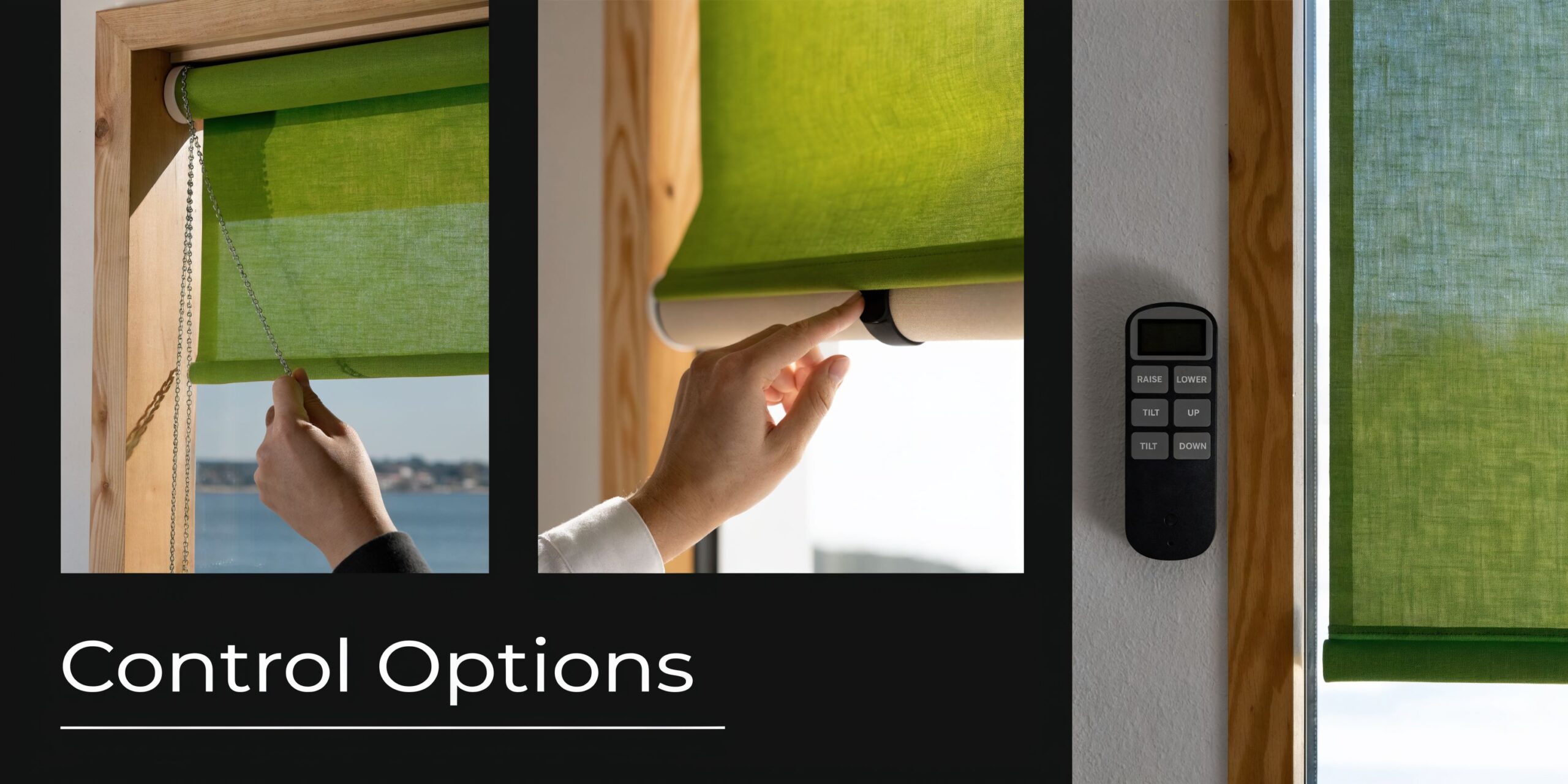
Cordless spring shades are straightforward. You pull the shade down, and the internal spring helps it rise back up.
They’re often chosen for a cleaner look because there’s no visible chain hanging at the side. They also reduce cord clutter, which many homeowners prefer in family spaces.
The catch is feel. Some cordless shades are smooth and easy to guide. Others can feel more sensitive to handling, especially if the window is large or the shade is used heavily.
Chain and clutch systems
A clutch-operated shade uses a side chain to move the fabric up and down with more control. If cordless feels like opening a folding step stool by hand, a clutch system feels more like using a hand crank with a steady rhythm.
That precision is useful on taller or wider windows. It also gives users more control over stopping points.
Motorized shades
Motorized roller shades are the most convenient option for hard-to-reach windows, large openings, and rooms where you adjust shades often. They’re also popular in homes that want a cleaner wall line without visible chains.
Technical specifications from Roll-A-Shade note that roller shades use extruded aluminum tubes from 1.125 to 3 inches in diameter, and motorized shades need at least 2.55-inch tubes for stability. The same document notes that properly designed systems can use low-noise motors, and that side channels with wool pile inserts eliminate 99% of light gaps in blackout applications. Those details come from this architectural specification for roller shade hardware and blackout systems.
That’s the part homeowners often don’t see in photos. A shade isn’t just fabric. The tube size, bracket strength, and edge treatment all affect how well it performs.
Mounting styles that change the outcome
Inside mount
This places the shade inside the window frame. It gives a trim, built-in look and works well when the frame has enough depth and the window opening is square.
Outside mount
This places the shade above or beyond the frame. It can improve coverage and visually enlarge the window. It’s also useful when the frame is shallow or uneven.
Fascia and side channels
A fascia is a cover that hides the roller assembly. It’s the equivalent of putting trim over exposed hardware. It makes the shade look more finished.
Side channels guide the fabric along the edges and help reduce light leakage. They matter most when darkness is the goal.
The cleanest-looking shade on paper can still underperform if the hardware is undersized or the mount style doesn’t fit the window.
Energy Efficiency and Privacy Benefits
Many homeowners initially shop for roller shades because of light. Then they realize the bigger improvement may be comfort.
A bare window lets in brightness, glare, and visual exposure all at once. A well-chosen roller shade helps manage all three.
Privacy changes through the day
Privacy isn’t one single condition. It shifts with outdoor light, indoor light, and the fabric you choose.
Three common examples make that easier to see:
- Morning kitchen light: you may want daylight but not a direct view in from the street
- Afternoon living room glare: you want to reduce brightness on screens without closing the room off
- Nighttime front window privacy: once interior lights are on, some lighter fabrics become more transparent than homeowners expect
This is why denser fabrics or outside-mount designs often make sense for rooms facing neighbors or roads.
Energy comfort in practical terms
Energy efficiency with roller shades is less about magic savings and more about reducing discomfort at the window. Solar-oriented fabrics can help in bright, sun-exposed spaces. Blackout systems with tighter edge control can help rooms feel more sealed and visually contained.
The right choice depends on your goal:
| Goal | Shade approach |
|---|---|
| Reduce glare | Solar or light-filtering fabric |
| Increase privacy | Lower openness or blackout fabric |
| Darken a room | Blackout fabric with careful edge treatment |
| Improve comfort near sunny windows | Solar fabrics or well-fitted outside mounts |
For a broader look at heat control strategies, this article on best blinds for energy efficiency is useful because it compares window treatment approaches by how they handle comfort and sun exposure.
Why fit matters as much as fabric
A good fabric can still disappoint if light pours in around the edges. That’s why homeowners should think beyond material samples.
A custom fit improves privacy because the shade covers the opening more intentionally. It also improves appearance because the bottom bar hangs cleaner and the top hardware aligns better with the window.
Some homeowners blame the fabric when the actual issue is the gap around the fabric.
Using Roller Shades Across Different Rooms
Roller shades don’t belong only in modern living rooms. They work because they adapt to what each room asks for.
Living room and den
In a living room, roller shades often solve a split problem. The family wants daylight during the day, but no one wants glare washing out the TV or making every seat near the window too bright.
A light-filtering or solar-style roller can handle that well. The room still feels open, but it feels calmer.
This is also where style matters most. A smooth neutral shade can keep the windows quiet, while a textured fabric can add softness without the bulk of drapes.
If you’re also thinking about broader upgrades that make your home feel luxurious, window treatments usually play a bigger role than homeowners expect because they shape how polished the glass area feels from both inside and outside.
Bedroom and nursery
Bedrooms usually call for stronger control. People notice light first thing in the morning, and that’s exactly when a weak shade becomes obvious.
A blackout roller shade is often the direct answer here. Pairing the right mount style with the right fabric matters just as much as the fabric itself if you’re trying to keep dawn light from slipping in at the edges.
Kitchen and breakfast area
Kitchens need practical shades. Grease, moisture, and frequent use make overly delicate treatments a poor fit.
Roller shades work well because they stay compact and out of the way. In a breakfast nook with strong sun, a glare-reducing fabric can make the table much more comfortable without turning the room dim.
A short visual example helps here:
Bathroom and laundry spaces
Bathrooms need privacy first. They also need materials that make sense in a damp environment.
Homeowners often do better with a simple, cleanable roller shade than with layered fabric treatments in these spaces. The flatter profile also helps in smaller rooms where every inch feels visible.
Home office and bonus room
A home office has a unique problem. Full darkness can make the room feel closed in, but too much open glass can make screens hard to read.
That’s where solar or moderate light-filtering rollers shine. They can take the edge off bright windows while keeping enough daylight for the room to stay productive.
For skylights or very tall windows in bonus rooms, motorized operation often makes daily use much more realistic.
Installation Maintenance and Cost Overview
A roller shade project usually goes well or poorly before the shade ever arrives. Most problems start with measuring, mounting assumptions, or choosing a fabric based only on appearance.
Measuring before you buy
Inside mount and outside mount require different thinking.
For an inside mount, the key question is whether the opening is square and deep enough to hold the brackets and shade without crowding the trim. Homeowners often love the look of inside mount, but older homes can have window frames that aren’t perfectly even.
For an outside mount, the key issue is coverage. You want the shade to extend enough to give the visual and functional effect you expect.
A detailed guide to how to measure windows for blinds helps homeowners avoid the most common fit mistakes before ordering.
DIY or professional install
Some roller shades are simple enough for a confident DIY homeowner. If the windows are standard, the mounting surface is straightforward, and the shades are small, self-install may go smoothly.
Custom work is different.
DIY makes sense when
- The window is ordinary: no unusual depth, trim, or obstruction
- The shade is lightweight: easier to level and secure
- You’re comfortable drilling and aligning brackets: even a small tilt can look obvious
Professional install makes sense when
- The windows are large or numerous: consistency matters across the room
- You want blackout performance: edge gaps become more noticeable
- You’re choosing motorized shades: hardware alignment matters more
- The home has specialty windows: bay windows, French doors, or skylights need planning
A custom install also reduces the risk of ordering the wrong mount type or ending up with shades that technically fit but don’t look finished.
What affects cost
Precise price ranges aren’t provided in the verified data, so it’s better to think in terms of cost drivers.
The final cost usually rises with:
- Fabric upgrade level: printed, textured, blackout, and specialty performance materials can cost more
- Operation choice: motorization usually adds complexity
- Window size: larger shades require more substantial hardware
- Mounting details: fascia, side channels, and special bracket needs add to the project
- Installation scope: one room is different from a whole-home job
A plain light-filtering roller shade for a simple window will usually be less involved than a motorized blackout setup with side channels.
A basic maintenance routine
Roller shades are one of the easier window treatments to maintain, but they still benefit from regular care.
Weekly or as needed
- Dust lightly: use a soft cloth, microfiber duster, or gentle vacuum brush attachment
- Check the bottom bar: make sure it hangs straight and hasn’t been bumped out of alignment
Monthly
- Inspect brackets: look for loosening around screws or trim
- Operate fully: raise and lower the shade to make sure the roll stays even
For spots and marks
- Use mild cleaning methods: a lightly damp cloth is usually safer than aggressive scrubbing
- Test first: some fabrics tolerate moisture differently than others
Roller shades last longer when homeowners treat them like fabric over hardware, not like a surface that can take harsh cleaners.
Common problems and what they usually mean
| Problem | Likely cause |
|---|---|
| Shade rolls unevenly | Bracket alignment or fabric tracking issue |
| Light gaps feel excessive | Mount style or width choice may be the issue |
| Shade feels hard to raise | Control mechanism may need adjustment or service |
| Bottom bar looks crooked | Installation level or handling issue |
When the issue affects fit, darkness, or motor performance, a service call is usually better than repeated trial-and-error fixes.
Local service and custom fit in West Tennessee
For homeowners in Jackson and surrounding West Tennessee communities, local service matters because windows in real homes aren’t always textbook-perfect. A free in-home consultation allows someone to check frame depth, trim conditions, light exposure, and operation preferences before the order is placed.
Blinds Galore offers in-home consultations, professional measuring, and custom install for window coverings in the region. That kind of service is useful when you want samples in the room itself and want someone to verify mount choices before anything is ordered.
The biggest advantage of professional measuring isn’t convenience alone. It’s avoiding the small mistakes that become permanent once the brackets are drilled and the shades are cut.
The author’s brief also called for two things that matter to homeowners making a final decision: 100% satisfaction and a direct phone number. If you want help comparing fabrics, checking whether blackout or solar makes more sense for your windows, or scheduling measuring, call (731) 571-5179.
If you want a straightforward recommendation, a local in-home consultation, and help with professional measuring and custom install, contact Blinds Galore. Their team serves West Tennessee homeowners who want roller shades fitted correctly, installed cleanly, and backed by 100% satisfaction. Call (731) 571-5179 to schedule a visit.
You might also like

Best Plantation Shutter Brands – 2026 Review
If you're looking at your windows right now and thinking the room needs more polish, better privacy,

What Are Plantation Shutters Made Of
You're probably looking at a window right now thinking the same thing a lot of West Tennessee homeowners
Contemporary Roman Shades: Modern Styles for Your Home
You know the feeling. Your old blinds work, but they don't do your room any favors. They look hard,
Sliding Glass Window Treatments for Your West TN Home
That sliding glass door probably does two jobs at once in your home. It opens your living space to the
Vertical Blinds vs Horizontal Blinds: The Definitive Homeowner’s Guide
When you're trying to decide between vertical and horizontal blinds, it really comes down to your
Cordless Blinds vs Corded Blinds A Modern Homeowner’s Guide
When you're weighing the pros and cons of cordless blinds vs corded blinds, the verdict for today's