

How to Improve Home Insulation and Cut Energy Bills
Improving your home's insulation isn't just one single fix. It’s about creating a complete thermal barrier by sealing air leaks, beefing up your attic insulation to the right R-value, and addressing windows and doors. A whole-home approach like this is the only real way to slash those energy bills and make your house comfortable all year long.
The Real Cost of Poor Insulation in West Tennessee
It’s a sneaky problem, hiding right in plain sight. Most homes across West Tennessee, from Jackson down to Dyersburg, are quietly leaking money every single day because of bad insulation. This isn’t just some random issue; it's a huge challenge for homeowners everywhere.
Believe it or not, a staggering over 90% of US homes are under-insulated by today’s standards. That statistic points to a massive gap in home energy efficiency. For a lot of people, the problem literally starts right over their heads—about 20% of a home's heating and cooling energy escapes through a poorly insulated attic.
Why It Matters in Our Climate
Our local climate is tough on houses. The sweltering, humid summers and surprisingly cold winters make our HVAC systems work overtime, constantly fighting to keep up. When your home doesn’t have the right insulation, it’s like trying to keep a cooler cold with the lid left wide open.
In the summer, the sun pounds on your roof, turning the attic into a giant oven that radiates all that heat down into your living space. Come winter, the expensive warm air you're paying for simply rises and vanishes through the same weak spots. That constant energy loss shows up directly on your utility bills, month after month.
Poor insulation does more than just hit your wallet; it ruins your comfort. It’s the real reason some rooms are always too hot or cold, why you feel those nagging drafts, and why your air conditioner seems to run 24/7 without ever getting the job done.
A Smart Financial Investment
You shouldn’t think of how to improve home insulation as just another expense. It’s one of the smartest financial moves you can make, an investment that pays for itself over time through serious energy savings. When you create a complete thermal envelope, you take the strain off your heating and cooling system, which can help it last longer and cut down on repair costs.
A true whole-home solution brings a few key pieces together:
- Attic Insulation: This is your main defense against summer heat gain and winter heat loss.
- Wall Insulation: Stops heat from moving through your walls and keeps the conditioned air where it belongs.
- Air Sealing: Finding and closing all the little gaps and cracks that cause drafts and let energy escape.
- Efficient Windows & Doors: The final piece of the puzzle. You can make them even more effective with the right window treatments. You can learn more about how certain window treatments provide UV protection and add insulation in our related guide.
The goal here is to transform a leaky, inefficient house into a tight, well-protected home. This is where getting it done professionally makes all the difference. With our custom install process and a promise of your 100% satisfaction, we make sure every part of the system is working perfectly for you.
If you're ready to stop throwing money away on energy bills and finally get the consistent comfort you deserve, give us a call at (731) 571-5179 to talk about a real solution for your West Tennessee home.
Conducting Your Own Home Insulation Assessment
Before you can fix your home's insulation problems, you have to play detective for a day. Finding the exact spots where your home is losing energy is the only way to come up with a real solution. The good news is, this hands-on check-up doesn't require fancy equipment—just a little time and a sharp eye.
This is all about turning that feeling of frustration over high energy bills into a clear, prioritized to-do list. A good visual inspection is where every successful insulation project begins, so let's walk through where to look first.
Starting Your Inspection in the Attic
Heat rises. It's a simple fact of physics, and it’s why your attic is almost always the biggest culprit for energy loss in the winter and heat gain in the summer. It's the absolute best place to begin. Just grab a flashlight and a tape measure, then head up and look for these classic signs of trouble:
- Uneven Insulation: Is the insulation spread evenly across the whole attic floor? You’re looking for low spots, completely bare patches, or areas where it looks squashed down.
- Visible Joists: If you can easily see the tops of the wooden joists on the attic floor, that’s a huge red flag. It’s a near guarantee that you don't have enough insulation to meet today's standards.
- Moisture Damage: Look for insulation that feels damp or is matted down. Check for dark, discolored stains on the wood sheathing above. Moisture kills insulation's effectiveness and can lead to mold and rot.
- Blocked Vents: Make sure your soffit vents (usually along the lower edges of the roof) aren't covered by insulation. Good airflow is critical for controlling your attic's temperature and humidity.
A simple ruler or tape measure is your most important tool up here. Stick it down into the insulation in a few different places to measure its depth. If you’re seeing anything less than 10-14 inches of fiberglass or cellulose, you're almost certainly losing a ton of energy.
Moving to Your Basement and Crawl Space
Next, it's time to head down to the lowest level of your house. While maybe not as dramatic as the heat pouring out of your attic, poorly sealed basements and crawl spaces are a primary source of chilly floors and uncomfortable drafts.
Your main target down here is the rim joist—that's the wooden band that sits right on top of your home's concrete foundation. This spot is notoriously under-insulated and leaky. Check for slivers of daylight, feel for drafts, or look for cobwebs, which are a dead giveaway for air movement.
The diagram below really shows how that money drain starts with these small, unsealed gaps and under-insulated spaces.
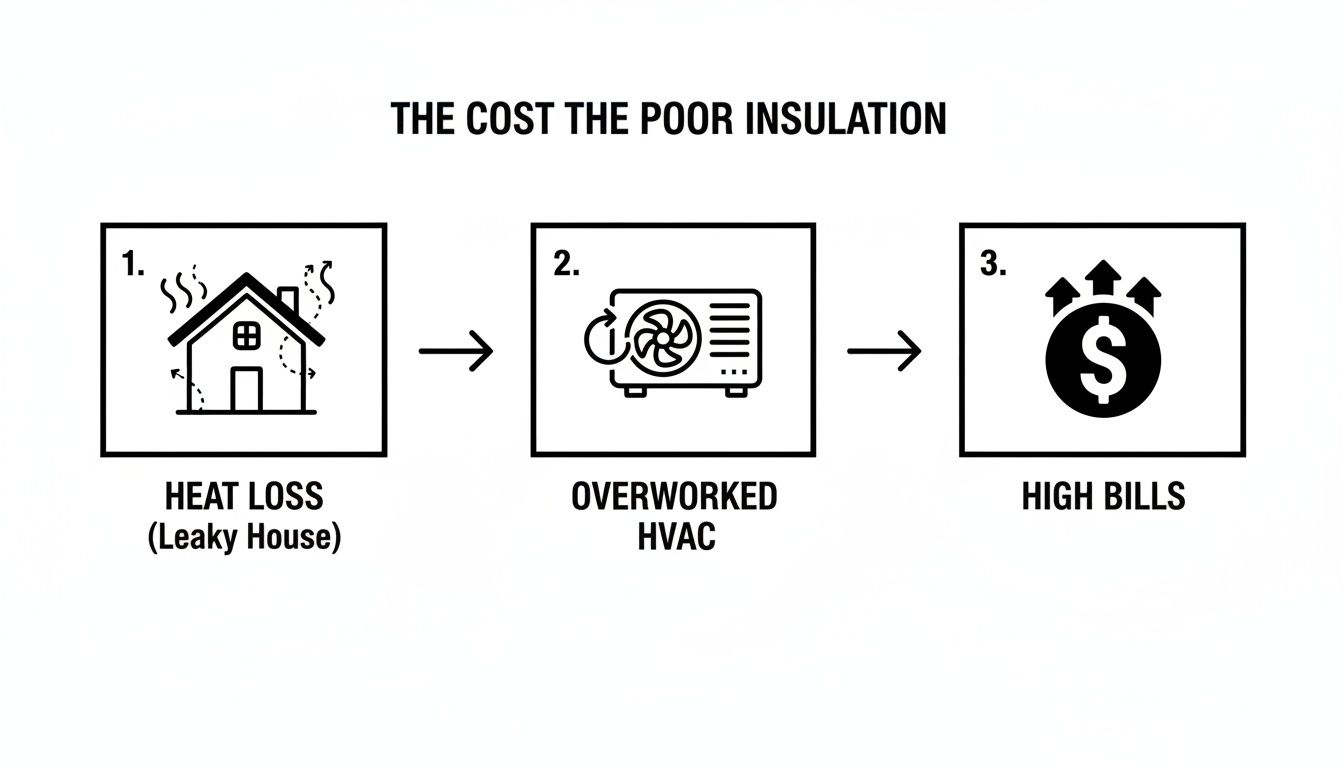
It’s a domino effect. Small leaks and thin insulation force your HVAC system to run constantly, which directly inflates your monthly power bill.
Pinpointing Hidden Air Leaks
Air leaks are the sneakiest energy thieves in your home. All those tiny gaps can add up to the same energy loss as leaving a window open 24/7. Luckily, you can hunt them down with a very simple trick.
The Incense Stick Test
Pick a cool, windy day. Turn off your furnace or AC and any fans in the house to stop the air from moving around. Then, light an incense stick and hold it near the common problem spots. If you see the smoke trail flutter, get sucked away, or blow sideways, you’ve found an air leak.
Be sure to check these spots on your exterior walls:
- The trim around windows and doors
- Electrical outlets and light switches
- Where pipes go into the wall under sinks or behind toilets
- Recessed can lights in the ceiling
- The fireplace damper
After you've done this walk-through, you'll have a much better idea of your home's weak points. This isn't just a list of problems—it’s your battle plan. Now you can figure out which jobs to tackle first for the biggest impact on your comfort and your wallet.
For a professional evaluation and guaranteed results with a custom install and our 100% satisfaction promise, give us a call at (731) 571-5179.
Choosing the Right Insulation and R-Value for Our Climate
Once you've figured out where your home is losing energy, the next step is picking your materials. Let's be honest, walking into the insulation aisle can feel like a pop quiz you didn't study for. You've got rolls of pink fiberglass, bags of fluffy cellulose, and spray foam canisters all vying for your attention.
The secret to learning how to improve home insulation is that there’s no single "best" option. It's all about matching the right material to the job at hand, especially with our wild West Tennessee weather. It really comes down to your home's layout, your budget, and whether you're a do-it-yourselfer or prefer to call in a pro.
What is R-Value, Anyway?
Before you can pick a material, you have to understand R-value. Just think of it as a jacket's thickness. The higher the R-value, the better it "resists" heat from passing through.
For us, a high R-value is your best friend during our scorching summers, keeping that oppressive heat outside where it belongs. In the winter, it works the other way, holding onto the warm air you’re paying good money to heat.
The Department of Energy has some clear guidelines for our area (Climate Zone 4):
- Attics: R-38 to R-60
- Walls (2×4 construction): R-13 to R-15
- Floors & Crawl Spaces: R-19 to R-25
My advice? Always aim for the higher end of these ranges if you can, especially in the attic. That's where you'll see the biggest payoff in both comfort and lower energy bills.
The Most Common Types of Insulation
Every material has its own strengths and weaknesses. Here's a quick rundown of the big three you'll likely be choosing from.
| Insulation Type | Best For… | The Good | The Not-So-Good |
|---|---|---|---|
| Fiberglass Batts | Easy-to-reach attics, open walls, floors | Affordable, easy to find, DIY-friendly | Itchy to work with, loses R-value if squished |
| Blown-In Cellulose | Existing walls, topping off attic insulation | Fills every nook and cranny, made from recycled paper | Needs a special blower machine, can settle over time |
| Spray Foam | Sealing air leaks, rim joists, new builds | Highest R-value per inch, creates a total air seal | The most expensive option, requires a pro to install |
So, if your attic is wide open and easy to get around in, laying down fiberglass batts is a totally doable weekend project. But if you're trying to beef up the insulation in your existing walls without a major renovation, blown-in cellulose is the way to go, since it can be installed through a few small holes.
The push for more comfortable and efficient homes isn't just a local thing. The global market for building insulation was valued at a massive USD 32.68 billion in 2026, showing just how important this is to homeowners everywhere. This demand is sparking new innovations in the field. You can dive deeper into these trends in building insulation on ResearchandMarkets.com.
Choosing the right insulation is a big decision, and sometimes a professional eye can spot things you might miss. Our team can come out, take a look at your home's unique needs, and help you find the best path forward. For a consultation that guarantees a perfect custom install and your 100% satisfaction, give us a call at (731) 571-5179. We’re here to make sure your investment pays off for years to come.
Mastering Air Sealing Before You Insulate
Let me share a secret that every seasoned pro knows: adding a thick layer of new insulation without first sealing air leaks is like putting on a heavy winter coat but leaving the zipper wide open. It’s an honest mistake, but it's one that completely undermines the whole point.
This single step is the most critical part of the entire project, yet it’s the one most homeowners miss when they’re figuring out how to improve home insulation. Before you spend a single dollar on rolls of fiberglass or spray foam, you have to stop the air from moving in and out of your house uncontrollably. Sealing up those drafts is what allows your insulation to actually do its job.
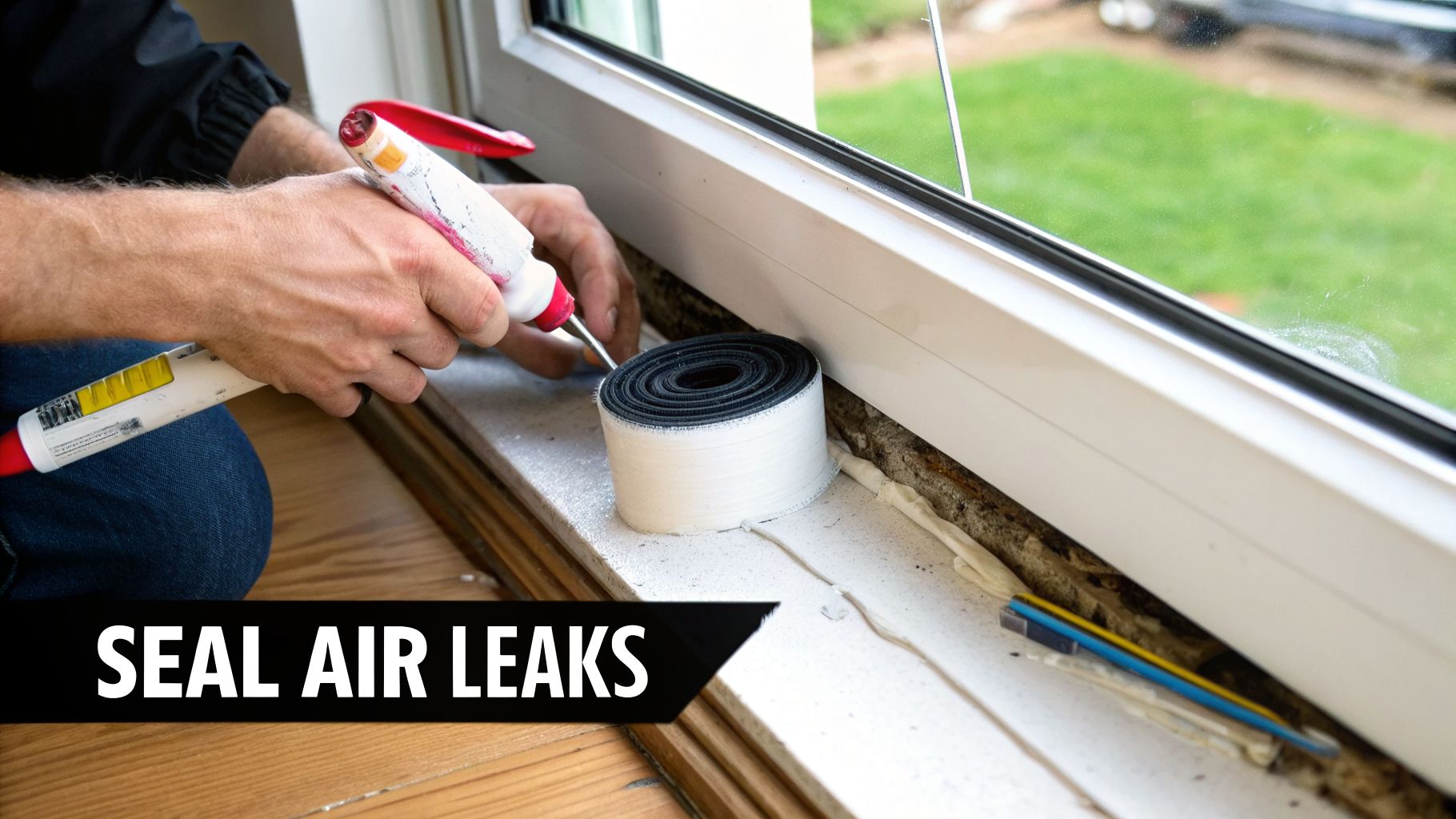
It’s a hands-on process, but it’s what turns a drafty, uncomfortable house into a sealed, cozy home. Your efforts here will pay you back in both comfort and lower energy bills.
Your Air Sealing Toolkit
The good news is that you don't need a truck full of expensive equipment to start tackling air leaks. For most of these jobs, a few basics from the hardware store will get you well on your way.
- Caulk & Caulk Gun: This is your best friend for sealing small, stationary cracks and gaps, like those around your window and door trim.
- Weatherstripping: Use this to create a tight seal on the moving parts of your home, like the edges of doors and window sashes.
- Spray Foam Sealant: This is for the bigger gaps. It's perfect for sealing around plumbing pipes, vents, and in the attic or basement.
- Foam Gaskets: These are inexpensive and incredibly effective. They're designed to stop drafts coming in through electrical outlets and light switches on your exterior walls.
Getting these simple items together beforehand will make the entire job go much faster. A quick tip: always opt for a high-quality, paintable caulk for a clean, professional finish on your interior trim.
Think of it this way: all those tiny, unsealed gaps throughout your home can collectively be the equivalent of leaving a window wide open all year round. No amount of insulation can overcome that level of constant air exchange.
A Practical Guide to Sealing Common Leaks
Now that you've got your tools, it's time to hunt down the usual suspects. Here’s where to focus your attention to get the biggest bang for your buck.
Windows and Doors
These are almost always major sources of drafts. Start by running a thin, steady bead of caulk around the exterior trim where it meets the siding, and do the same for the interior trim where it meets the drywall. For the doors and windows themselves, apply some adhesive-backed foam or vinyl weatherstripping to create a solid seal when they’re closed.
Electrical Outlets and Switches
People rarely think of these, but they can be surprisingly drafty. The fix is easy. Just unscrew the faceplate, fit a pre-cut foam gasket over the outlet box, and screw the plate right back on. It’s a five-minute task that really adds up.
Ductwork
Here’s a big one. Even a perfectly insulated house will feel uncomfortable if your heated and cooled air is leaking out of the ductwork in the attic or crawlspace. A great way to fix this is by applying mastic sealant on your ductwork. This flexible coating creates an airtight seal, ensuring the conditioned air actually makes it into your rooms.
The Professional Touch for Guaranteed Results
While many of these tasks are perfectly suited for a weekend warrior, getting a home truly airtight often benefits from a professional eye. A pro can bring in specialized tools, like a blower door, to find every hidden leak and make sure the job is done right, maximizing your energy savings.
For a project that requires a flawless custom install, calling in an expert is your best bet. We stand by the quality of professional work because it delivers real, measurable results. It’s the same commitment we apply to all our installations to ensure your 100% satisfaction.
If you have questions about sealing up your home or want to talk about a complete solution, give us a call at (731) 571-5179.
Your Final Layer of Defense: Windows and Doors
You’ve done the hard work. You’ve beefed up the attic insulation and hunted down every last drafty crack. But if you’re still feeling that West Tennessee heat creep in, there’s a good chance your windows and doors are the culprits. They can act like giant holes in your home's thermal shield, letting all your hard-earned cool air escape.
In fact, up to 30% of a home's heating and cooling energy is lost right through its windows and doors. That’s a huge number.
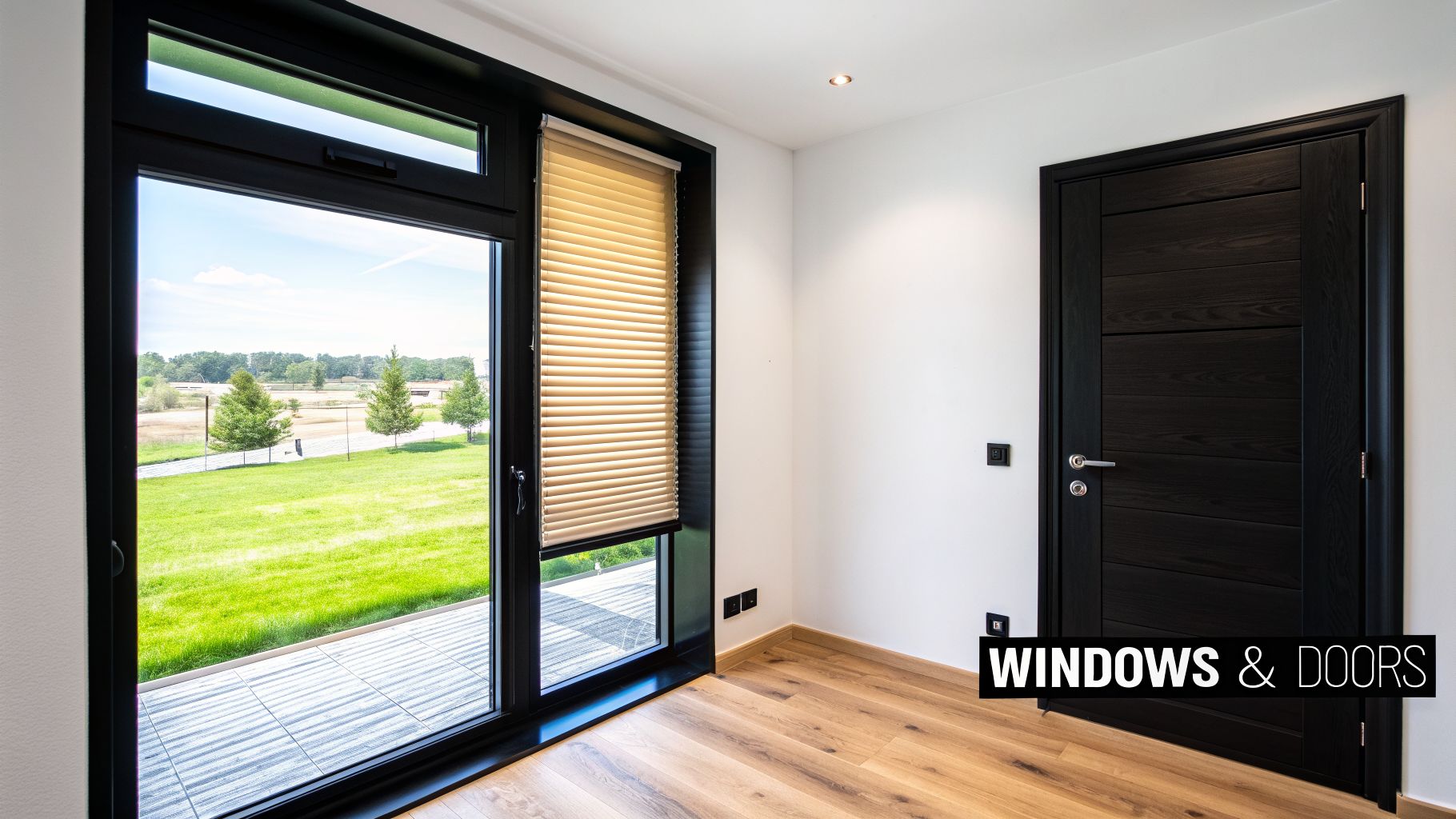
This is where high-performance window treatments change the game and complete the picture of how to improve home insulation. Think of them as the final, crucial layer of defense that turns these vulnerable spots into energy-saving powerhouses.
What Makes a Window Treatment an Insulator?
Not all blinds or shades are created equal when it comes to saving energy. The best ones are specifically designed to trap a layer of air, slowing down the transfer of heat. It's the same principle behind a double-paned window—it’s the air pocket between the panes that does the real work.
Here’s a quick rundown of the heavy hitters:
- Cellular (Honeycomb) Shades: These are the undisputed champions of window insulation. Their unique, honeycomb-shaped pockets are brilliant at trapping air, creating a real barrier against the elements. They keep the summer sun out and your furnace’s warmth in during the winter.
- Plantation Shutters: When you want a solid, elegant barrier, nothing beats custom-fit plantation shutters. Closing the louvers creates a tight, nearly impermeable shield that dramatically cuts down on both heat gain and loss.
- Layered Draperies: Looking for a powerful one-two punch? Try combining heavy, thermal-lined drapes with another treatment like a cellular shade. The layers work together to trap even more air, maximizing your insulating power and adding a touch of style.
A common mistake I see all the time is buying an off-the-shelf product that's a "close enough" fit. Those gaps around the edges will let air flow freely, completely undermining the insulating benefit. True energy efficiency comes from a perfect, custom fit—period.
For homeowners in Jackson, Milan, and right across West Tennessee, our entire process is built around delivering maximum efficiency. It all starts with a free in-home consultation and precision measurements to guarantee that perfect, gap-free fit.
Comparing Insulating Window Treatments
Choosing the right window treatment is about balancing your insulation needs with your goals for style, privacy, and light control. This table breaks down some of our most popular options to help you decide.
| Window Treatment | Primary Benefit | Insulation Level | Best For |
|---|---|---|---|
| Cellular Shades | Unbeatable energy efficiency | High | Bedrooms and living rooms where temperature control is key. |
| Plantation Shutters | Timeless style and light control | Moderate to High | Enhancing curb appeal and adding architectural detail. |
| Layered Draperies | Style versatility and sound dampening | Moderate to High | Creating a luxurious feel while boosting insulation. |
| Roller/Solar Shades | UV protection and glare reduction | Low to Moderate | Protecting furniture and floors from sun damage. |
Each of these options brings something different to the table. If your main concern is blocking out that intense summer sun, you can learn more about how to block heat from windows in our other detailed guide.
Why a Custom Installation Is Non-Negotiable
You can buy the best insulating shades in the world, but their potential is unlocked—or lost—during installation. A professional custom install is the only way to ensure there are no gaps for air to sneak past the treatment. That tight seal is what creates real, noticeable energy savings.
This is especially true for products like plantation shutters and cellular shades, where even a tiny quarter-inch gap can compromise their performance. Our team takes meticulous measurements and handles the entire installation, making sure every window covering we provide works exactly as it’s designed to. We’re so confident in our work that we back it with a 100% satisfaction guarantee.
When you’re ready to add this final, money-saving layer of defense to your home, just give us a call at (731) 571-5179 to set up your consultation. For those considering a full overhaul, you might also look into upgrading to high-performance windows and composite doors to truly maximize your home's heat retention.
Answering Your Top Home Insulation Questions
As you look into how to improve home insulation, some questions are bound to pop up. We get them all the time from homeowners across West Tennessee. To help you move forward with confidence, we've put together some straight-to-the-point answers.
How Much Money Can I Realistically Save?
While every home is unique, the U.S. Environmental Protection Agency estimates that homeowners can trim their heating and cooling bills by an average of 15% by air sealing and properly insulating. In our climate, that can easily put hundreds of dollars back in your wallet each year.
The real magic happens when you layer your approach. When you combine a well-insulated attic with high-performance window treatments—like our custom-fit cellular shades or plantation shutters—you create a complete thermal shield. This strategy hits every weak spot, maximizing your savings and comfort no matter the weather.
Should I Insulate My Attic Myself or Hire a Professional?
This really comes down to the job's complexity and your own comfort level. If you're just laying a few more fiberglass batts on an easy-to-reach attic floor, you can probably tackle that on a weekend.
But for bigger jobs, calling a professional is almost always the smarter, safer bet. This includes things like:
- Using specialized equipment for blown-in insulation.
- Performing detailed air sealing in tricky corners and gaps.
- Removing and disposing of old or damaged insulation.
- Working in tight spaces where it's tough to move around safely.
At Blinds Galore, we’re big believers in professional work for guaranteed results. It's why we offer a custom install on our window treatments—it ensures a flawless fit and your 100% satisfaction. An insulation pro brings that same level of expertise and the right tools to get it right the first time.
What Is the Most Important Area of My House to Insulate First?
Your attic. Hands down, the attic is the number one priority for almost every single home. Basic physics is at play here: heat rises. In the winter, all that expensive warm air you're generating makes a beeline for the roof and vanishes.
In the summer, the sun turns your attic into an oven, radiating that heat down into your living space and making your AC unit work overtime. Experts say that up to 20% of a home's energy loss happens right through the attic. Starting there gives you the biggest and fastest return on your investment.
"For almost every home, the attic is the single biggest opportunity for insulation improvement. Addressing it first provides the most significant impact on energy bills and overall home comfort, making it the clear starting point for any insulation project."
Do I Need a Permit to Add Insulation in Tennessee?
For the most part, no. You typically don't need a permit just to add more insulation to an existing space, like topping off your attic. That's usually considered routine maintenance.
A permit might be necessary, however, if the insulation is part of a larger remodel that involves opening up walls or changing the home's structure. It's always smart to check with your local building department, whether you're in Jackson or another West Tennessee town. A good professional will already be familiar with all the local requirements. For more on how window treatments add another layer of insulation, check out our guide comparing blinds vs. shutters.
Ready to transform your home’s comfort and efficiency with the perfect finishing touch? At Blinds Galore, we specialize in beautiful, high-performance window treatments that complete your insulation strategy. Call us at (731) 571-5179 for a free in-home consultation and discover the difference a custom installation and our 100% satisfaction guarantee can make. Visit us online at https://blindswesttn.com.
You might also like

Best Plantation Shutter Brands – 2026 Review
If you're looking at your windows right now and thinking the room needs more polish, better privacy,

What Are Plantation Shutters Made Of
You're probably looking at a window right now thinking the same thing a lot of West Tennessee homeowners

Contemporary Roman Shades: Modern Styles for Your Home
You know the feeling. Your old blinds work, but they don't do your room any favors. They look hard,

Sliding Glass Window Treatments for Your West TN Home
That sliding glass door probably does two jobs at once in your home. It opens your living space to the

Vertical Blinds vs Horizontal Blinds: The Definitive Homeowner’s Guide
When you're trying to decide between vertical and horizontal blinds, it really comes down to your

Cordless Blinds vs Corded Blinds A Modern Homeowner’s Guide
When you're weighing the pros and cons of cordless blinds vs corded blinds, the verdict for today's