Best Custom Shades for Jackson TN Nurseries: Safety and Light Control Guide
Quick answer: The best custom shades for a Jackson, TN nursery combine cordless or motorized operation for child safety, blackout or room-darkening fabric for healthy sleep, and light-filtering options for daytime naps. Top choices include cordless cellular shades, motorized roller shades, and layered shade systems. Look for WCMA-certified cordless designs, UL-listed motorization, and fabrics with a light-blocking lining. Blinds Galore offers free in-home consultations across Jackson, Lexington, Henderson, and Milan to help you choose the right fit.
Why Nursery Window Treatments Deserve Special Attention
Choosing window treatments for a nursery is not the same as picking shades for a living room or bedroom. Two factors elevate the stakes considerably: child safety and precise light control. Get either one wrong and you’re either dealing with a safety hazard or a baby who won’t sleep past sunrise. This guide walks Jackson, TN parents through every consideration — from fabric opacity ratings to motorization standards — so you can make a confident, informed decision.
The Sleep-Light Connection in Infant Development
Newborns and infants sleep between 14 and 17 hours per day, according to the National Sleep Foundation. Their circadian rhythms are still developing, which means external light cues have an outsized impact on sleep quality. A nursery window that lets in even a small amount of early-morning light can shorten a nap by 30–45 minutes — a big deal for exhausted parents in Jackson, TN.
The right window covering creates a consistent sleep environment regardless of the time of day or season. West Tennessee summers bring long daylight hours well past 8 p.m., making blackout capability especially valuable for bedtime routines.
Safety Hazards Specific to Nursery Windows
Window covering cords are among the top hidden household hazards for children under age 6. The Consumer Product Safety Commission (CPSC) reports that cord strangulation incidents have been documented with both inner and outer cords on traditional blinds. Since 2018, the Window Covering Manufacturers Association (WCMA) has required all stock products to be cordless or have inaccessible cords — but older installed products and some custom imports may not meet this standard.
In a nursery specifically, the risk window is wide: babies become mobile earlier than parents expect, and a crib placed near a window creates easy access to dangling cords. Choosing WCMA-certified cordless or motorized shades eliminates this risk at the source.
1. Understanding Light Control Levels: From Sheer to Blackout
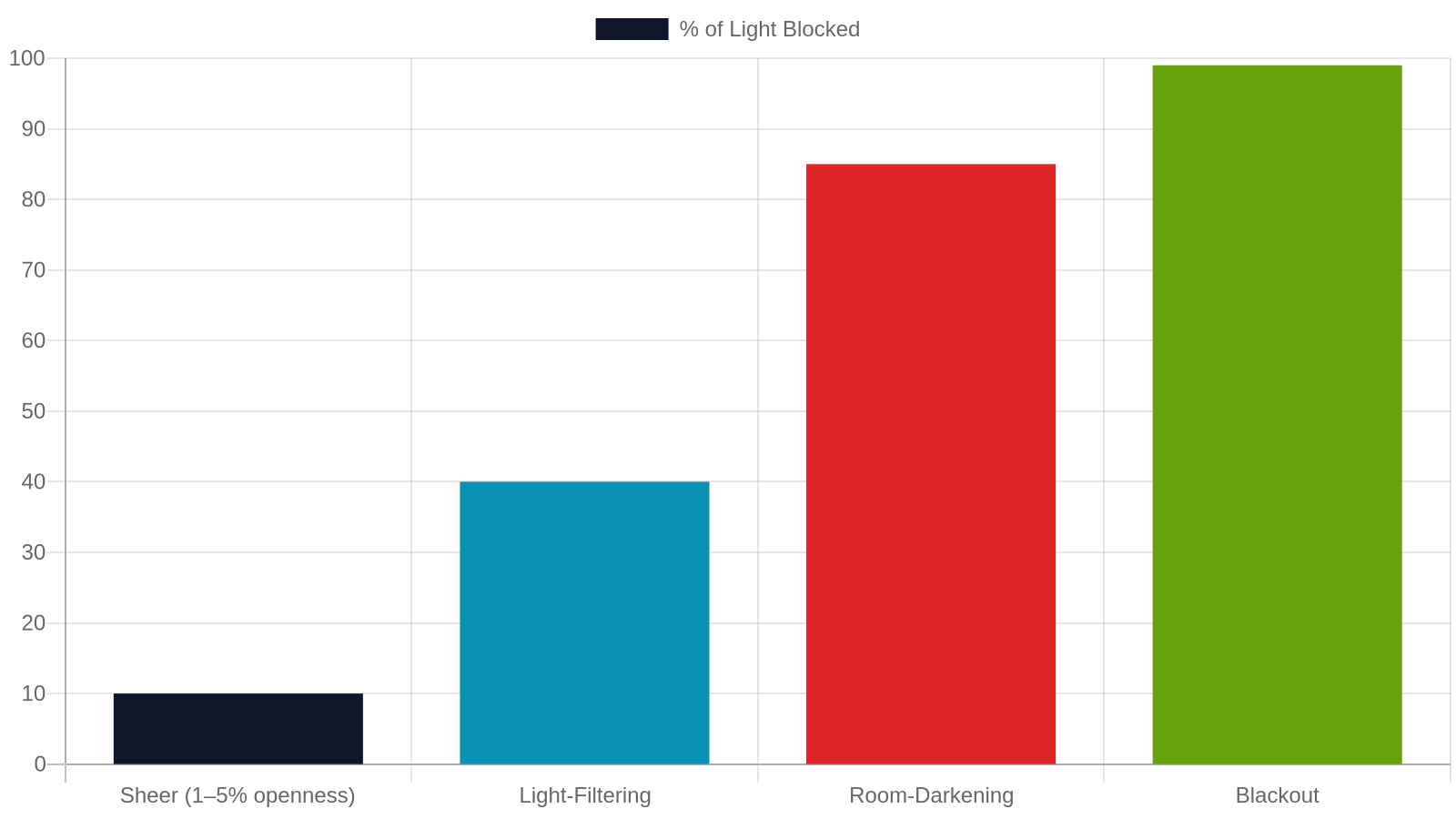
Not all shades are created equal when it comes to blocking light. The industry uses a spectrum from sheer to blackout, and each level has a legitimate place in a nursery — sometimes in the same window. Understanding these categories helps you match the right product to your baby’s sleep schedule and your room’s orientation.
Light-Filtering Fabrics (0–30% Light Block)
Light-filtering shades allow diffused natural light into the room while reducing glare and UV exposure. They’re ideal for daytime play areas where you want a bright, cheerful environment without harsh direct sun. Openness factors typically range from 1% to 10% — the lower the number, the less light passes through. A 3% openness fabric is a popular choice for nurseries that double as play spaces during the day.
These shades do not provide meaningful darkness for sleep, so they work best when layered with a room-darkening liner or paired with a blackout shade on a dual-shade track.
Room-Darkening Fabrics (70–95% Light Block)
Room-darkening shades block the majority of incoming light but allow a small amount of ambient glow around the edges and through the fabric weave. They’re a practical middle ground: dark enough for most nap situations, but not so opaque that the room feels like a cave at 10 a.m. Light blockage in this category typically falls between 70% and 95%, depending on the fabric and liner combination.
For Jackson, TN homes with east- or west-facing nursery windows — where morning and afternoon sun angles are most intense — room-darkening shades with a white blackout liner represent an excellent value upgrade.
Blackout Fabrics (99–100% Light Block)
True blackout shades use a triple-weave or foam-backed fabric that blocks 99–100% of visible light. When combined with a side-channel track system that seals light gaps at the window frame edges, they can achieve near-total darkness even at noon in July. Pediatric sleep specialists widely recommend blackout conditions for infants under 12 months to support melatonin production.
The trade-off is aesthetics — blackout fabrics tend to be heavier and available in fewer decorative patterns. However, modern roller and cellular blackout options have expanded significantly, with dozens of neutral and accent colors now available through custom fabricators.
2. Cordless and Motorized Options: The Non-Negotiable Safety Standard
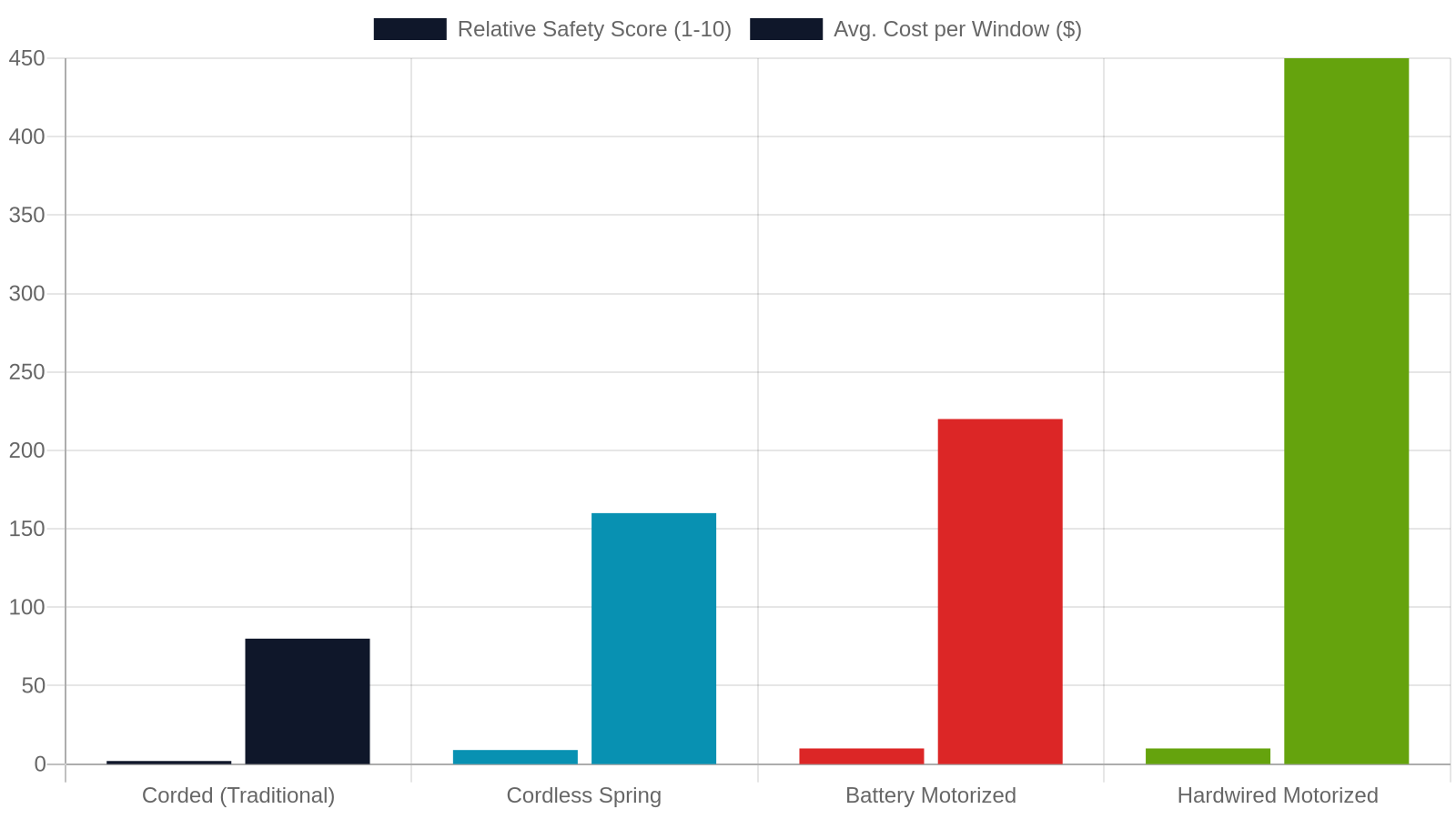
If there is one absolute rule for nursery window treatments, it is this: no accessible cords. Every major pediatric safety organization — including the American Academy of Pediatrics (AAP) and the CPSC — recommends cordless or motorized window coverings in any room where children sleep or play. Here’s what your options look like in practice.
Cordless Lift Systems: How They Work
Cordless shades use an internal spring-tension mechanism that allows the shade to be raised or lowered by simply pushing or pulling the bottom rail. There are no external cords — nothing to dangle, tangle, or create a loop hazard. Most cordless systems operate smoothly with one hand, making middle-of-the-night adjustments quiet and effortless.
The WCMA’s Best for Kids™ certification program identifies cordless products that have passed independent safety testing. When shopping for nursery shades in Jackson, TN, look for this certification mark or confirm with your window treatment specialist that the product meets current ANSI/WCMA A100.1 standards.
Motorized Shades: Smart, Safe, and Surprisingly Affordable
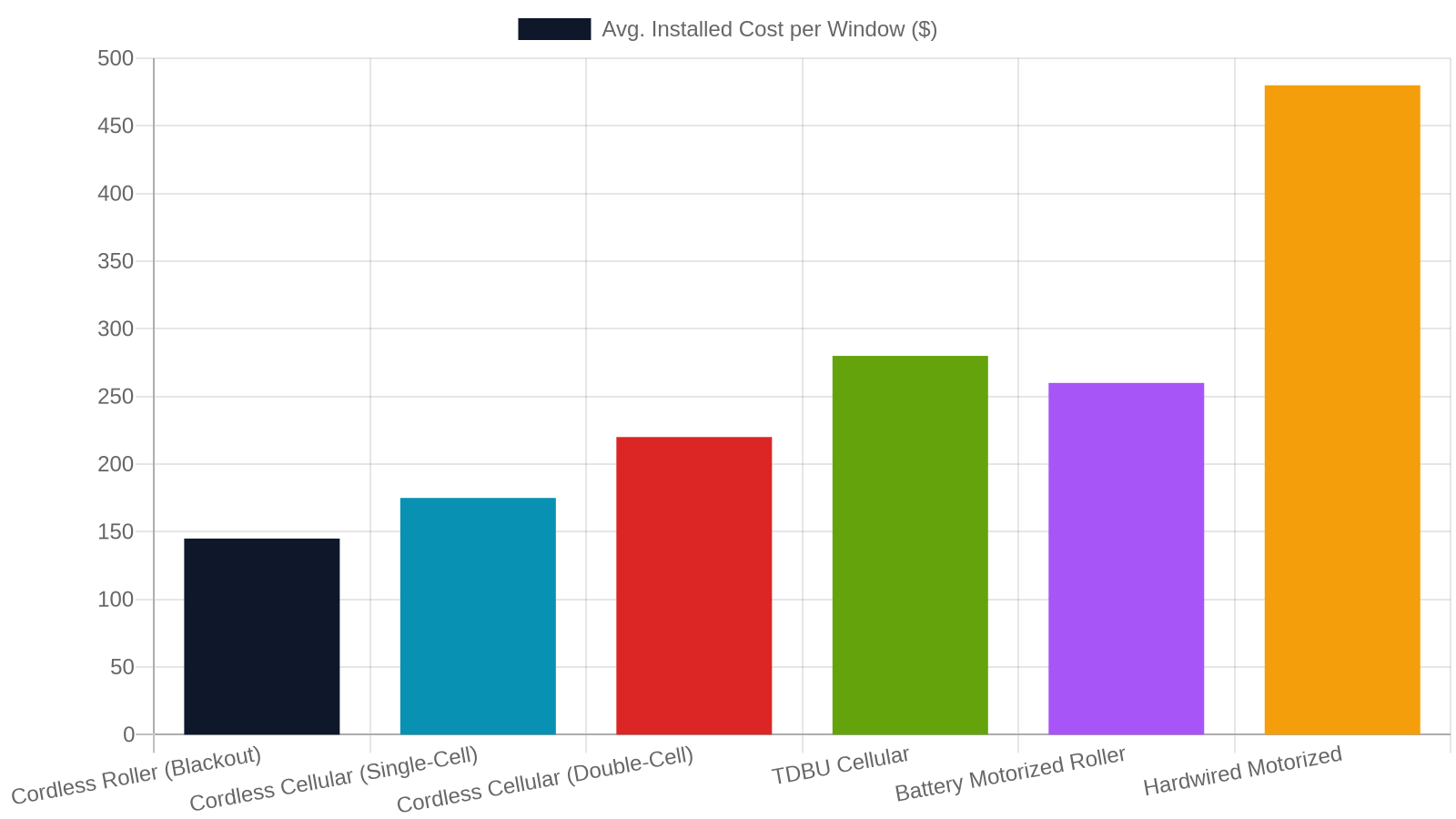
Motorized shades eliminate cords entirely and add the convenience of remote, app, or voice control. Prices have dropped considerably — battery-powered motorized roller shades now start around $150–$250 per window for custom sizes, with hardwired systems ranging from $300–$600 installed. For a nursery, the investment pays off in convenience: you can raise or lower shades without entering the room and disturbing a sleeping baby.
Look for UL-listed motors and RF (radio frequency) remotes rather than IR (infrared), which require line-of-sight. Smart home integration with Amazon Alexa, Google Home, or Apple HomeKit is available on premium motorized systems and allows scheduling — for example, automatically lowering shades at 7 p.m. every evening.
What to Avoid: Cord Risks in Older and Budget Products
Looped cords, continuous-loop lift systems, and inner lift cords that become exposed when the shade is raised are all documented strangulation hazards. The CPSC estimates that one child per month is treated in emergency rooms for cord-related window covering injuries in the United States. Older shades installed before 2018 may not meet current standards even if they appear functional.
If you’re moving into a Jackson, TN home with existing window treatments in the nursery, have them inspected before use. A professional from Blinds Galore can assess whether existing products are safe or recommend an affordable replacement that meets today’s standards.
3. Cellular Shades: The Top All-Around Pick for Nurseries
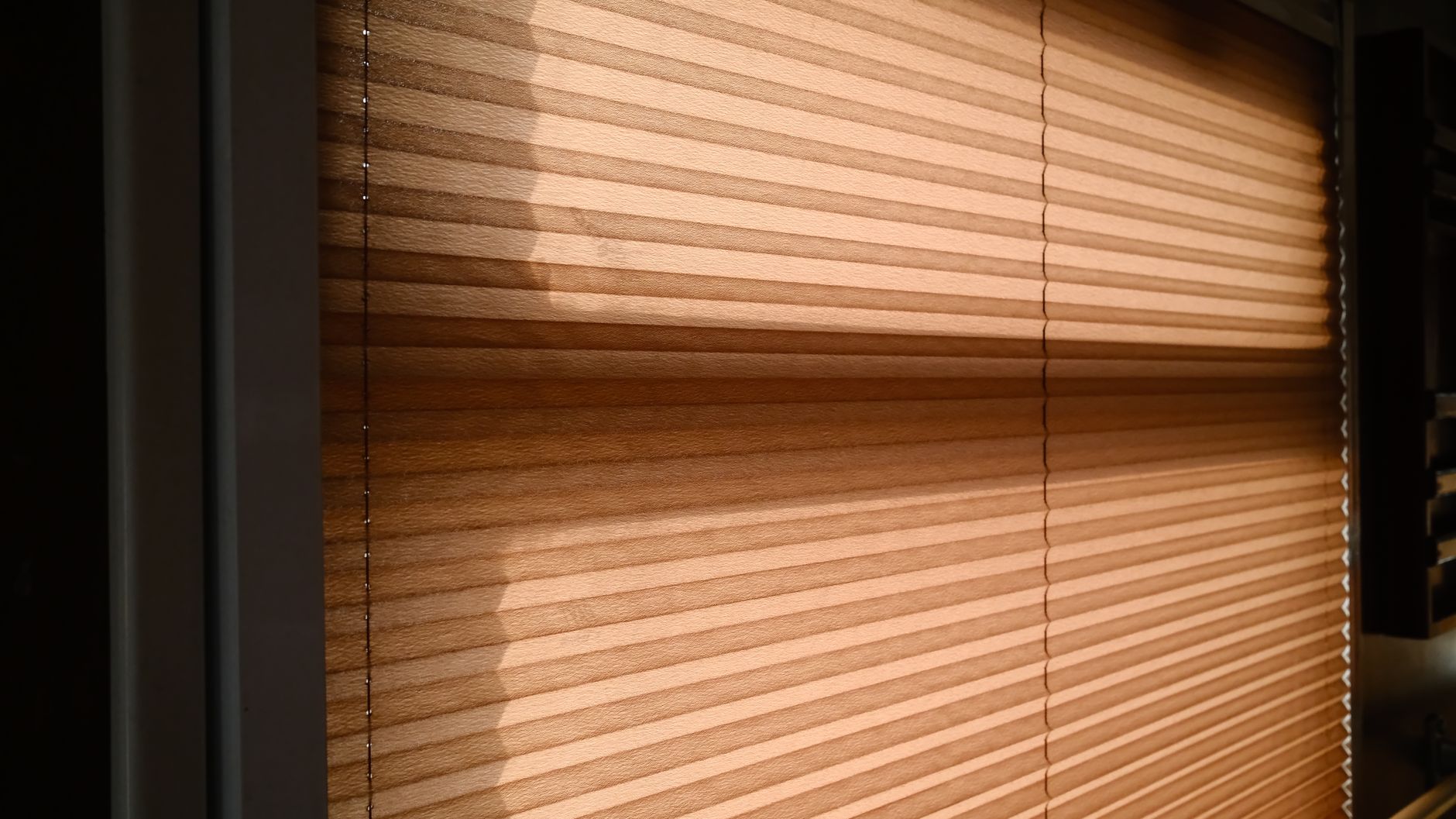
When nursery parents ask Blinds Galore’s consultants for a single best recommendation, cellular shades come up again and again — and for good reason. They combine superior insulation, excellent light control options, child-safe cordless operation, and noise reduction in one versatile product. Here’s what makes them stand out.
Single-Cell vs. Double-Cell: Which Insulates Better?
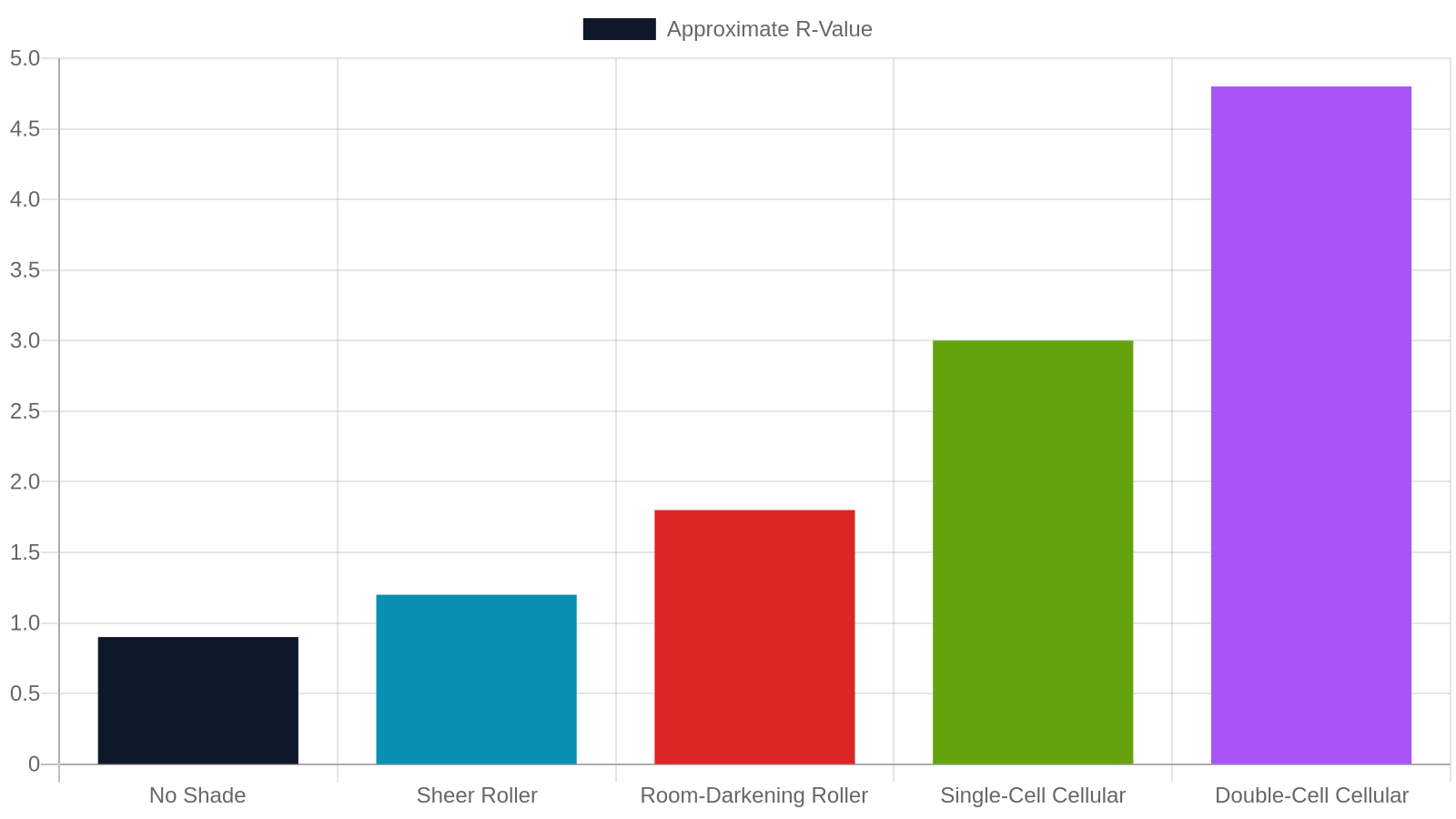
Cellular (honeycomb) shades are constructed from rows of hollow cells that trap air and create an insulating barrier between the window glass and the room. Single-cell shades have one layer of cells and provide moderate insulation — R-values typically around 2.0–3.0. Double-cell shades stack two layers of cells and can reach R-values of 4.0–5.0, a meaningful improvement in West Tennessee’s mixed climate where summers are hot and humid and winters can dip below freezing.
For a nursery, double-cell blackout cellular shades are the gold standard: they insulate the room, block light completely, muffle outside noise, and are available in cordless and motorized configurations.
Top-Down/Bottom-Up: A Nursery Game-Changer
Top-down/bottom-up (TDBU) cellular shades can be opened from the top or the bottom independently. This means you can lower the top portion to let in natural light near the ceiling — maintaining privacy and blocking direct sun at crib level — while keeping the bottom portion raised. It’s an elegant solution for nurseries where you want some daylight during feeding time without exposing the crib to glare.
TDBU cellular shades are available in cordless configurations and are fully compatible with blackout fabrics. They typically cost 20–35% more than standard single-direction cellular shades, but the added versatility is widely considered worth the premium in nursery applications.
4. Roller Shades: Sleek, Affordable, and Highly Customizable
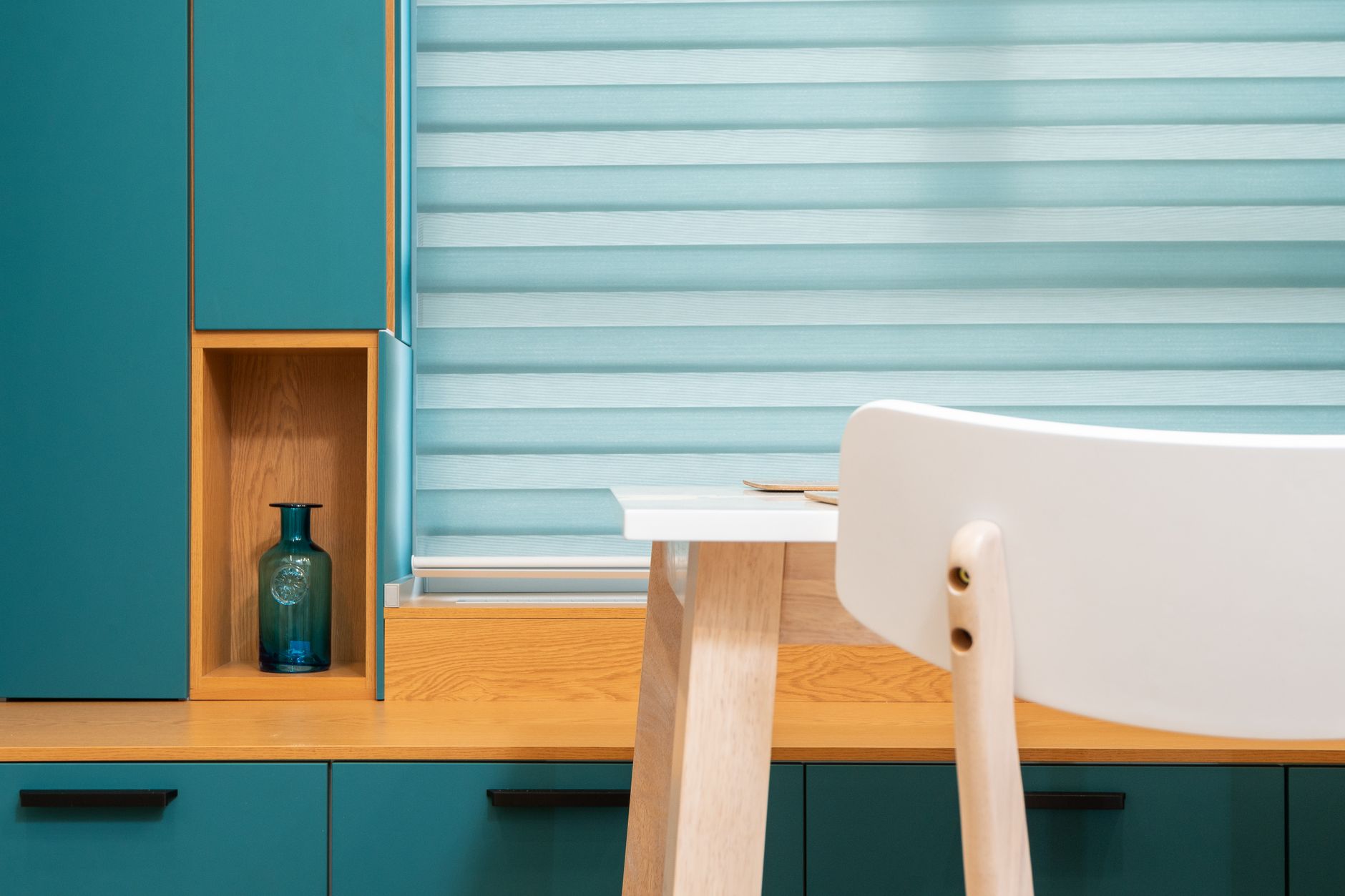
Roller shades have surged in popularity over the past decade because they offer a clean, modern look at an accessible price point. For Jackson, TN nurseries, they’re a particularly strong choice when paired with the right accessories to close light gaps and eliminate cord hazards.
Fabric Choices and Opacity for Roller Shades
Roller shades consist of a single piece of fabric that rolls up around a tube mounted at the top of the window. Their simplicity makes them one of the most affordable custom shade options — custom blackout roller shades for a standard nursery window (36″ × 48″) typically run $120–$200 installed, depending on fabric and motorization. They’re available in every opacity level from 1% openness sheers to 100% blackout.
For nurseries, specify a blackout liner bonded to the back of the fabric. This liner is white on the exterior (to reflect heat and maintain a uniform exterior appearance) and black on the interior to maximize light blocking. Many parents choose a decorative pattern on the room-facing side — animals, geometric prints, soft botanicals — while the liner does the functional work on the back.
Cassette Headrails and Side Channels for Light Gaps
Standard roller shades leave small light gaps at the sides and top of the window, which can allow enough light to disturb a sleeping infant. Two upgrades address this: a cassette headrail (a box that encloses the rolled fabric and eliminates the top gap) and side-channel tracks (slim aluminum channels mounted to the window frame that the shade fabric slides into, sealing the edges). Together, these accessories can increase light blockage from approximately 90% to 99%+.
Side channels add roughly $40–$80 per window to the project cost but are strongly recommended for any nursery window where true blackout conditions are the goal. Ask your Blinds Galore consultant whether your window frame dimensions accommodate side-channel installation.
5. Roman Shades and Woven Woods: Style With Caveats
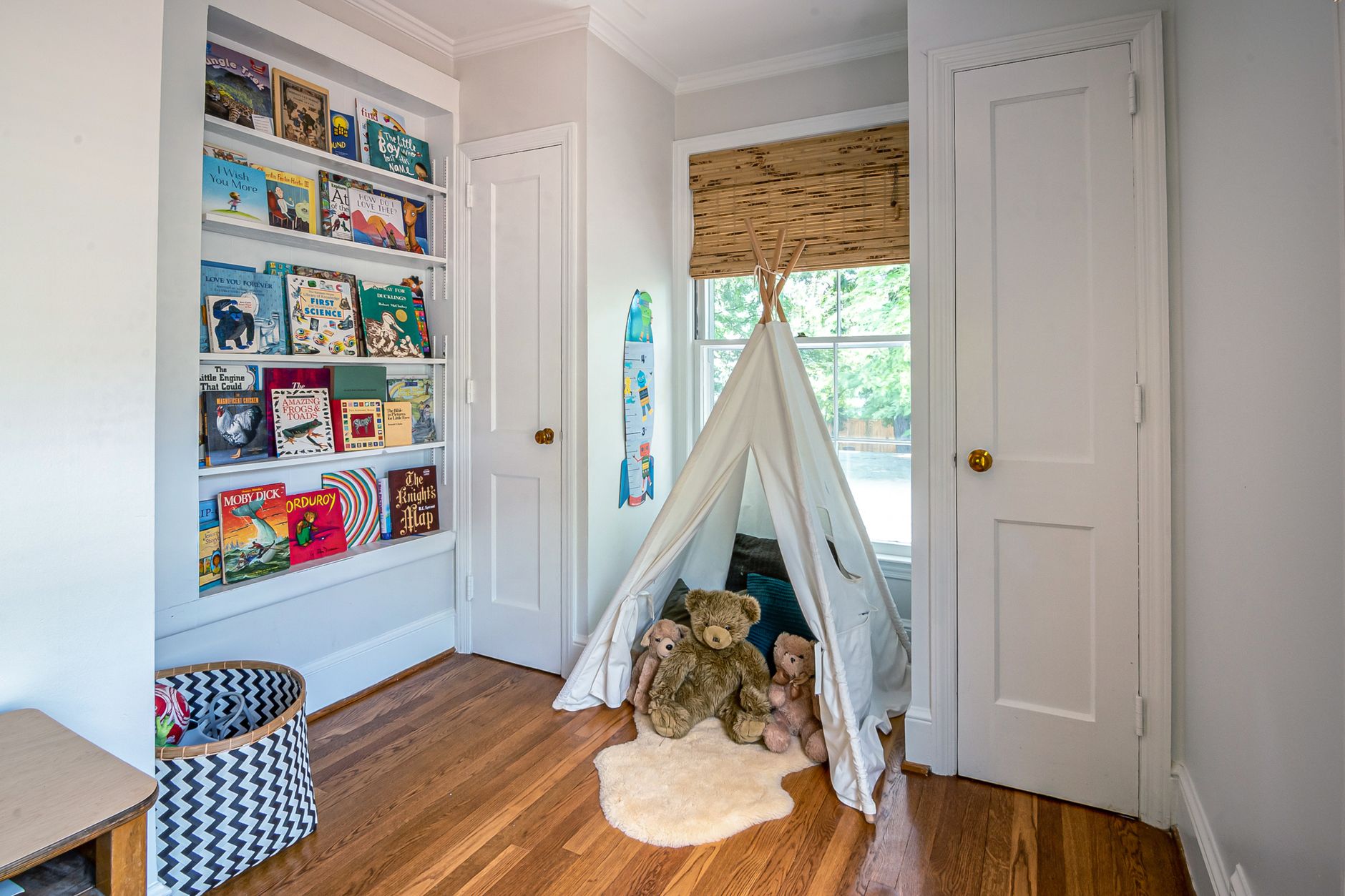
Roman shades and woven wood shades bring warmth, texture, and design personality to a nursery — qualities that matter to parents who want the room to feel special, not just functional. Both can be made safe for nursery use, but each comes with trade-offs that are worth understanding before you commit.
Roman Shades in a Nursery: What to Know
Roman shades fold into horizontal pleats when raised, creating a tailored, elegant look that suits nurseries with a classic or transitional design aesthetic. They’re available in cordless and motorized lift systems, making them compatible with nursery safety standards. However, there are two important considerations: fabric weight and light control.
Roman shades are typically made from medium-weight decorative fabrics that are not inherently blackout. Adding a blackout liner is possible but adds bulk and can affect the way the shade folds. For parents prioritizing maximum light block, cellular or roller shades are more effective. For parents who want a specific fabric pattern or texture and are willing to layer with a blackout roller shade behind it, Romans are a beautiful option.
Woven Wood and Bamboo Shades: Natural Aesthetic, Limited Blackout
Woven wood shades made from bamboo, jute, or grasses have a warm, organic look that’s popular in Scandinavian and boho nursery designs. They filter light beautifully but allow significant light transmission through the natural gaps in the weave — typically blocking only 40–60% of incoming light even with a liner. They are best used as a decorative layer over a blackout cellular or roller shade.
Woven woods are available in cordless lift systems and are a safe choice from a cord-hazard perspective. Their main limitation in a nursery is purely functional: if your baby needs true darkness to sleep well, woven woods alone won’t get you there. Used as part of a layered system, however, they add warmth and texture that no synthetic fabric can replicate.
6. Layered Shade Systems: The Best of Both Worlds
For parents who want maximum flexibility — bright and airy during playtime, pitch-dark for naps and bedtime — a layered shade system delivers what no single product can. Layering is also the most design-forward approach, allowing you to combine textures and opacities for a nursery that looks as good as it functions.
Dual Shade Tracks: Sheer by Day, Blackout by Night
A dual-shade system mounts two shades on the same window — typically a sheer or light-filtering shade on the front track and a blackout shade on the rear track. Each shade operates independently, giving you full control over light levels throughout the day. During morning playtime, run only the sheer for soft, diffused light. At nap time, deploy the blackout shade for darkness. At night, use both together for maximum insulation and light block.
Dual-shade systems are available in both cordless and motorized configurations. Motorized dual systems can be programmed to operate on a schedule, automatically transitioning between sheer and blackout modes based on your baby’s sleep routine — a genuine quality-of-life upgrade for sleep-deprived parents in Jackson, TN.
Sheer Shades (Zebra/Transitional): A Versatile Middle Option
Sheer shades — also called zebra shades or transitional shades — alternate between opaque and sheer fabric bands. By aligning the bands, you can achieve a light-filtering effect; by offsetting them, you can create a room-darkening effect. They don’t reach true blackout levels (typically maxing out around 70–80% light block), but they offer more versatility in a single shade than any other single-product option.
For nurseries where the primary goal is daytime nap support rather than overnight sleep (because the room gets dark naturally at night), a cordless zebra shade in a room-darkening configuration may be all you need — and at a lower price point than a dual-shade system.
7. Energy Efficiency and Temperature Control in West Tennessee Nurseries
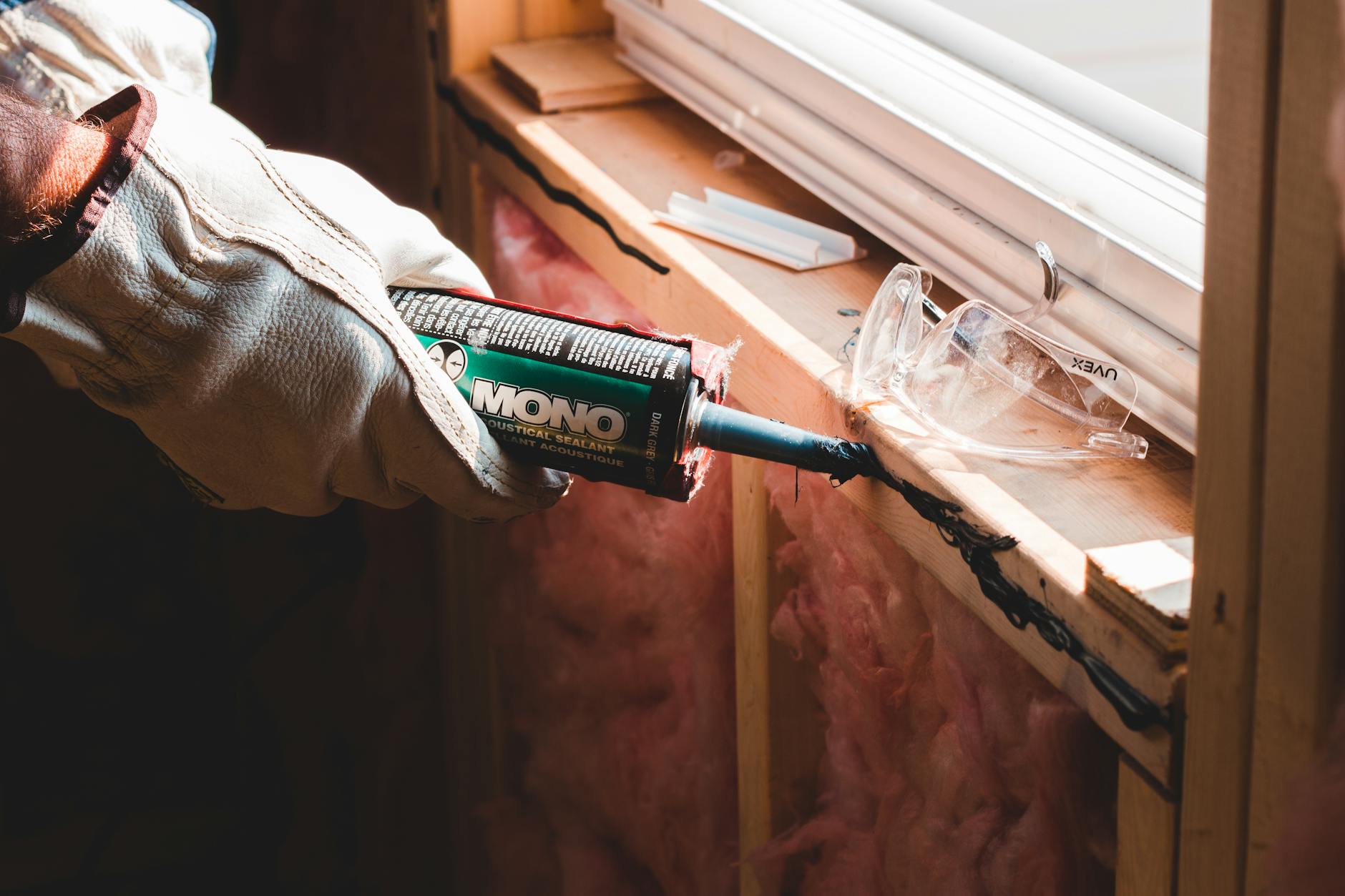
Energy efficiency might not be the first thing on your mind when shopping for nursery shades, but in West Tennessee’s climate it’s a practical concern that directly affects your baby’s comfort and your monthly utility bill. The right shade can do double duty — blocking light and keeping the room at the right temperature.
Why Nursery Temperature Matters More Than You Think
The American Academy of Pediatrics recommends keeping a nursery between 68°F and 72°F for safe infant sleep. In Jackson, TN, where summer temperatures regularly exceed 95°F and humidity is high, windows are a primary source of heat gain. A single unshaded south-facing window can raise a small nursery’s temperature by 5–8°F on a summer afternoon, forcing the HVAC system to work harder and potentially disrupting the baby’s sleep environment.
Cellular shades with double-cell construction and a blackout liner are the most effective window treatment for temperature control, with R-values up to 5.0. Roller shades with reflective white liners also help by bouncing solar energy back out through the glass before it can heat the room.
Noise Reduction: An Underrated Nursery Benefit
West Tennessee communities like Jackson, Milan, and Henderson can have varying levels of exterior noise — traffic, lawn equipment, neighborhood activity. Cellular shades provide modest but meaningful sound attenuation due to their hollow-cell construction, reducing outside noise by an estimated 3–5 decibels compared to uncovered windows. While that’s not dramatic, it can smooth over the sharp sounds that startle light sleepers.
For nurseries on busy streets, pairing cellular shades with heavy drape panels adds another layer of acoustic dampening. The combination of cellular shade plus lined drape can reduce exterior noise by 8–12 decibels — enough to make a real difference in sleep quality.
Nursery Shade Comparison: 6 Options Ranked by Key Criteria
Use this side-by-side comparison to quickly identify which shade type best matches your nursery's priorities — whether that's maximum light block, child safety, budget, or design flexibility.
8. Measuring and Installing Nursery Shades: Inside vs. Outside Mount
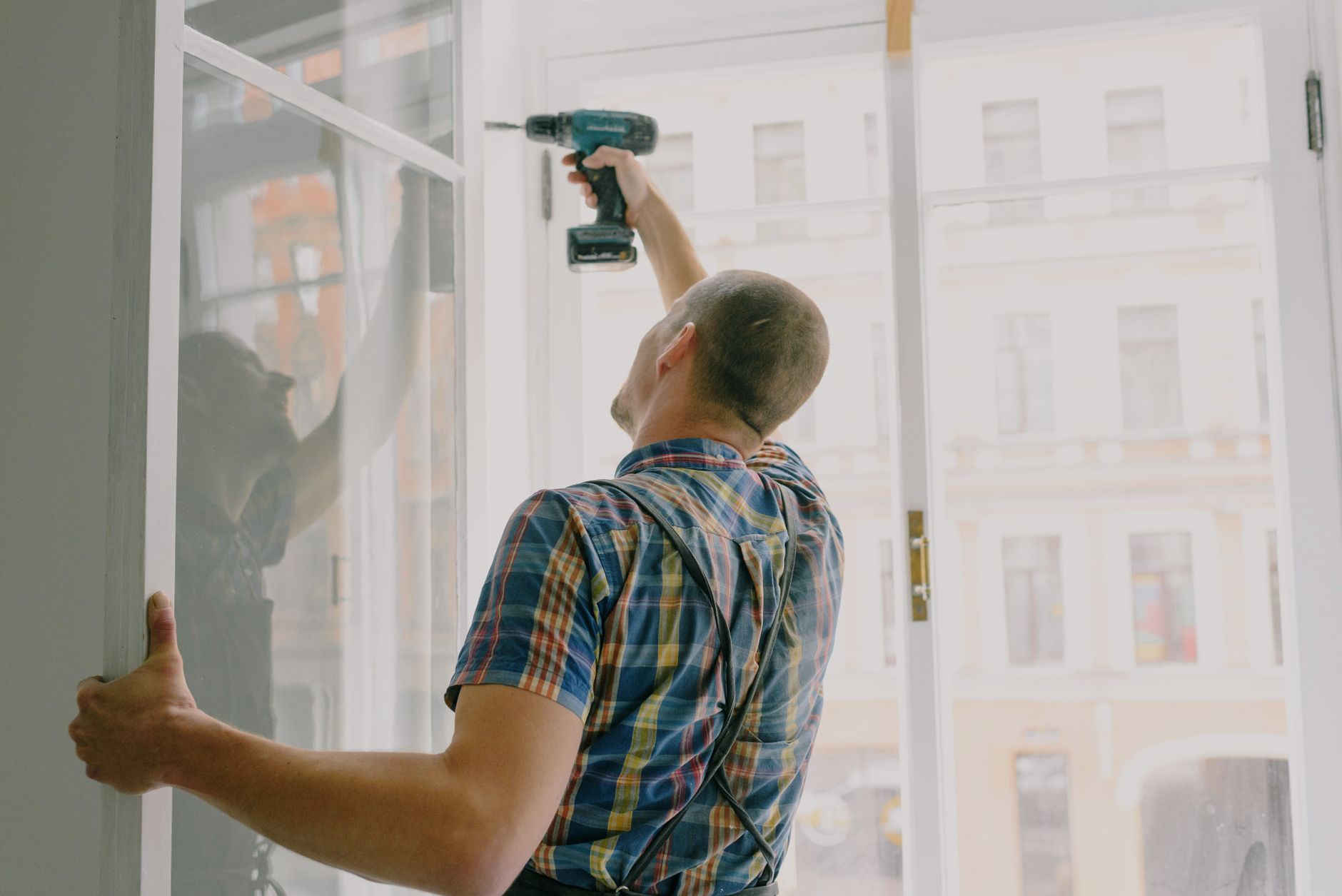
Even the best shade fabric won’t perform well if the shade is measured or mounted incorrectly. For nurseries, where light gaps can mean the difference between a two-hour nap and a 45-minute one, installation precision matters more than in any other room. Here’s what you need to know about the two primary mounting approaches.
Inside Mount: Clean Look, Precise Fit Required
An inside-mount shade sits within the window frame recess, creating a clean, built-in appearance. It’s the preferred aesthetic choice for most nurseries, but it requires a minimum window depth — typically 2.5 inches for a standard roller or cellular shade, and up to 3.5 inches for motorized systems with larger headrails. Inside mounts also require precise measurement: even a 1/8-inch error can cause binding or light gaps.
Professional measuring — included free with every Blinds Galore consultation — eliminates this risk entirely. Our consultants measure each window individually, accounting for any out-of-square frames common in older Jackson, TN homes.
Outside Mount: Maximum Light Block, More Coverage
An outside-mount shade attaches to the wall or window trim above and outside the frame. It can be sized to extend 2–4 inches beyond the window on each side, significantly reducing light bleed at the edges. For nurseries where true blackout is the priority, outside mounting with a shade that extends generously beyond the frame is often the most effective approach.
Outside mounts also work on windows with shallow frames that can’t accommodate an inside mount. The trade-off is a slightly less built-in appearance, though this is easily offset by choosing a fabric and color that complements the wall and trim. Many nursery parents in the Lexington and Henderson areas prefer outside mounts for their superior light-blocking performance.
9. Budget Planning: What Custom Nursery Shades Cost in Jackson, TN
Custom shades are more affordable than many Jackson, TN homeowners expect — especially when you factor in the professional measuring and installation that comes standard with a Blinds Galore consultation. Here’s a realistic breakdown of what to budget for a nursery project.
Entry-Level to Mid-Range: $100–$300 per Window
Most custom cordless cellular and roller shades for a standard nursery window (approximately 30″–36″ wide × 48″–60″ tall) fall in the $100–$300 per window range, installed. This includes professional measuring, the custom-fabricated shade, and installation by a trained technician. At this price point you can get excellent blackout performance, cordless operation, and a wide selection of fabrics and colors.
A typical Jackson, TN nursery with two windows would run $200–$600 total for quality custom cordless shades — a modest investment compared to the cost of nursery furniture and decor, and one that directly affects your baby’s sleep quality for years.
Premium Options: $300–$700+ per Window
Motorized shades, dual-shade systems, top-down/bottom-up cellular shades, and premium designer fabrics push costs into the $300–$700+ per window range. Hardwired motorized systems with smart home integration represent the top of the market. For parents who plan to use the room as a nursery for several years and value the convenience of app-controlled or scheduled shade operation, the premium is often justified.
Keep in mind that custom shades are a long-term investment — quality products from reputable fabricators carry warranties of 3–5 years on components and often longer on fabric. Blinds Galore backs every installation with a 100% satisfaction guarantee, so you’re not taking a risk on quality.
10. Choosing Colors and Patterns for a Nursery That Grows With Your Child
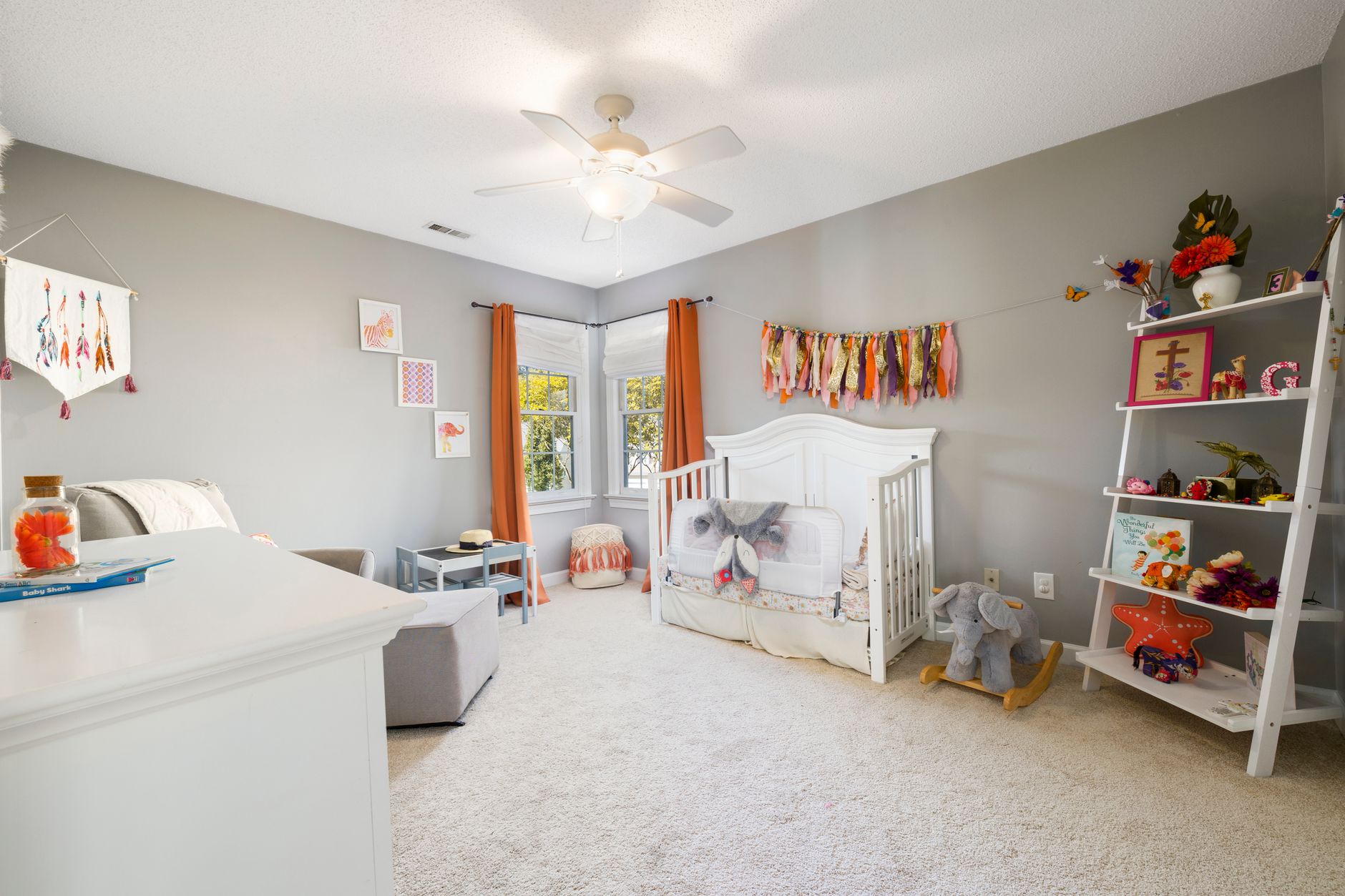
The functional decisions — blackout vs. room-darkening, cordless vs. motorized — are the most important ones for a nursery. But aesthetics matter too, especially since you’ll be spending a lot of time in that room. Here’s how to choose colors and patterns that serve your baby now and your growing child later.
Neutral Foundations vs. Theme-Specific Patterns
Nursery design trends cycle quickly, but window treatments are a semi-permanent installation. A shade in a neutral linen, warm white, or soft sage will remain appropriate as your child grows from infant to toddler to school-age, while a shade printed with cartoon characters may feel dated by age three. If you want personality in the nursery, consider putting it in the bedding, wall art, and accessories — all easily swapped — and keeping the window treatments timeless.
That said, custom shades are available in hundreds of patterns, and many parents in Jackson, TN choose a subtle geometric or nature-inspired print that adds character without committing to a specific theme. The key is choosing a pattern at the right scale: small repeating patterns tend to age better than large, bold graphics in a nursery setting.
Fabric Safety: VOCs, Certifications, and What to Ask For
Infants spend more time in their nursery than in any other room, and they breathe at a lower height where off-gassing from synthetic materials can be more concentrated. Look for shades made from fabrics certified to OEKO-TEX Standard 100, which verifies that the fabric has been tested for harmful substances including formaldehyde, heavy metals, and pesticide residues. Greenguard Gold certification is another strong indicator of low chemical emissions.
Ask your Blinds Galore consultant specifically about OEKO-TEX or Greenguard certified fabric options for nursery projects. Many of our most popular cellular and roller shade fabrics carry these certifications, giving Jackson, TN parents peace of mind about what’s hanging in their baby’s room.
Ready to Create the Perfect Sleep Environment? Start With a Free Consultation
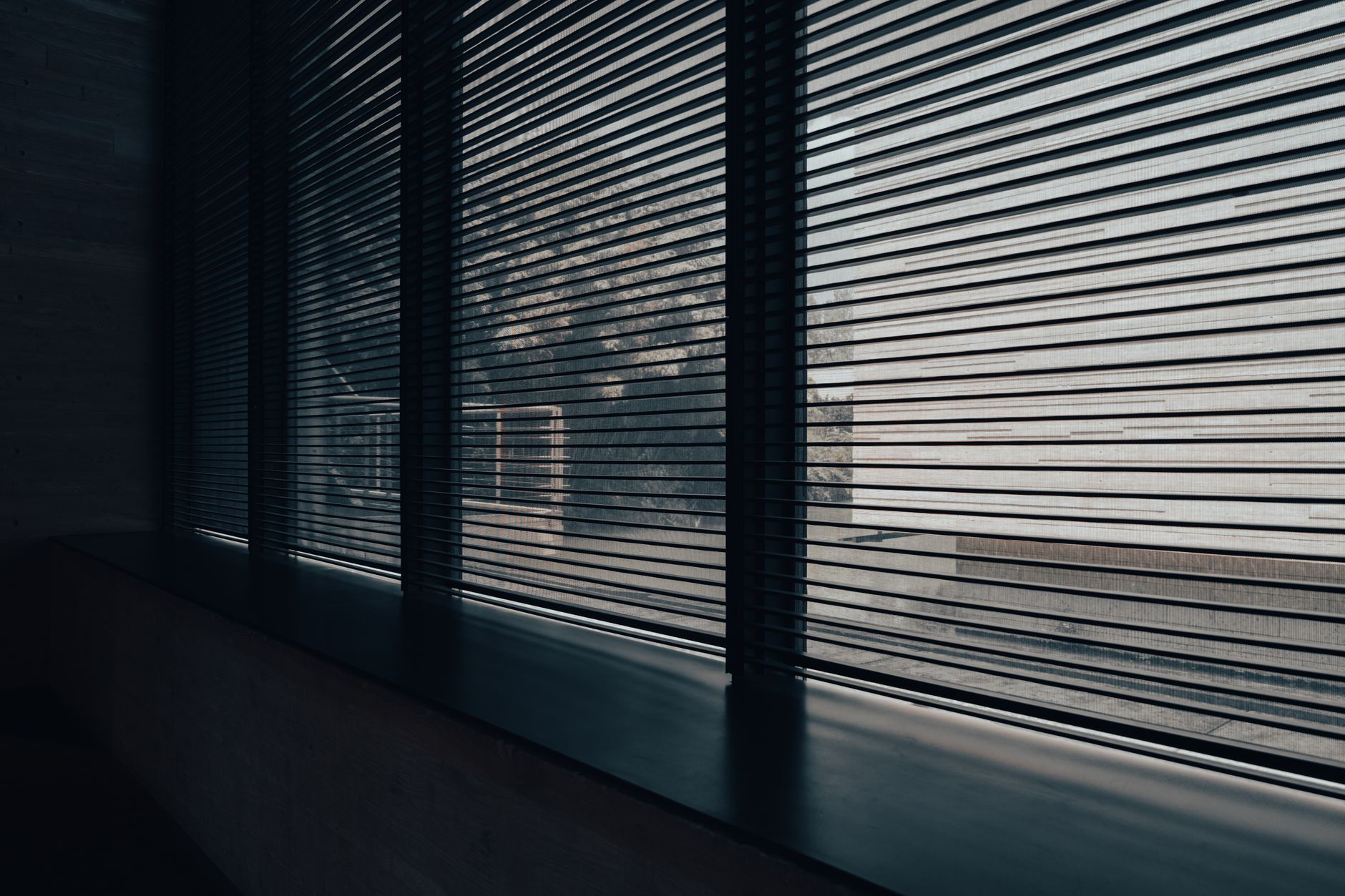
Your baby’s nursery deserves window treatments that are safe, effective, and built to last. Whether you’re leaning toward cordless cellular shades for maximum insulation, motorized roller shades for hands-free convenience, or a layered dual-shade system for total light control flexibility, Blinds Galore has the expertise and product selection to make it happen. Serving Jackson, TN and all of West Tennessee, we’re your local neighbor for custom window treatments — and we’d love to help you create the perfect sleep environment for your little one.
What to Expect From a Blinds Galore In-Home Visit
Blinds Galore brings the showroom directly to your Jackson, TN home — no need to guess how a fabric will look against your nursery walls under your specific lighting. During a free in-home consultation, our consultant will measure every window precisely, walk you through fabric and opacity options with real samples in hand, and provide a detailed quote with no pressure to decide on the spot.
We serve Jackson and the surrounding West Tennessee communities including Lexington, Henderson, and Milan. Appointments are available six days a week, including Saturdays, to accommodate busy new-parent schedules. Call us at (731) 571-5179 to book your visit.
Our 100% Satisfaction Guarantee
Every custom shade Blinds Galore installs is backed by our 100% satisfaction guarantee. With over 18 years of experience serving West Tennessee homeowners, we stand behind our products and our installation work. If something isn’t right, we make it right — no runaround, no fine print. That commitment is especially important in a nursery, where getting the light control and safety features exactly right isn’t optional.
Ready to explore your options? Browse our full custom shades collection to see fabric samples, opacity options, and motorization systems — then call us at (731) 571-5179 to schedule your free in-home consultation. You can also reach us online through our contact page at any time.
Frequently Asked Questions
What are the safest window shades for a baby's nursery?
Cordless or motorized shades are the safest choice for any nursery. Look for products certified to WCMA Best for Kids™ standards or that meet ANSI/WCMA A100.1. Cordless cellular and cordless roller shades are the most widely recommended options by pediatric safety organizations including the AAP and CPSC.
Do I really need blackout shades in a nursery?
For most infants and toddlers, yes. Babies' circadian rhythms are still developing, and even small amounts of light can disrupt sleep. True blackout shades — especially when paired with side-channel tracks to seal edge gaps — create the consistent dark environment that supports longer, healthier naps and earlier bedtimes.
How much do custom nursery shades cost in Jackson, TN?
Custom cordless nursery shades typically cost between $120 and $300 per window installed, depending on the shade type and fabric. Motorized options range from $220 to $480+ per window. A standard two-window nursery in Jackson, TN can be outfitted with quality custom blackout shades for $300–$600 total.
What is the difference between room-darkening and blackout shades?
Room-darkening shades block approximately 70–95% of light, leaving some ambient glow around the edges and through the fabric. Blackout shades use opaque triple-weave or foam-backed fabric to block 99–100% of light. For nurseries where sleep quality is the priority, true blackout shades — especially with side-channel tracks — are the better choice.
Can I get motorized nursery shades that work with Alexa or Google Home?
Yes. Many motorized shade systems available through custom window treatment providers are compatible with Amazon Alexa, Google Home, and Apple HomeKit. These allow you to set schedules — for example, automatically lowering blackout shades at nap time — without entering the nursery and disturbing a sleeping baby.
Does Blinds Galore offer free measuring and installation in Jackson, TN?
Yes. Blinds Galore provides free in-home consultations that include professional measuring for every window. Installation is performed by trained technicians, and every project is backed by a 100% satisfaction guarantee. They serve Jackson and surrounding West Tennessee communities including Lexington, Henderson, and Milan. Call (731) 571-5179 to schedule.
You might also like
9 Best Motorized Custom Shades for Jackson TN Smart Homes
Quick answer: Motorized custom shades let Jackson, TN homeowners control light, privacy, and energy efficiency
7 Best Custom Shades for Bedroom Blackout and Sleep in Jackson, TN
Quick answer: The best custom shades for bedroom blackout and better sleep in Jackson, TN homes are cellular