

Best Custom Faux Wood Blinds for Jackson TN Kitchens: 9 Things to Know
Quick answer: Custom faux wood blinds are the top choice for Jackson, TN kitchens because they mimic the beauty of real wood while resisting the moisture, grease, and humidity that quickly warp or crack genuine wood slats. Made from PVC or a wood-composite core, quality faux wood blinds won't swell, fade, or peel — even above a sink or beside a steaming stove. They're easy to wipe clean, available in dozens of colors and finishes to match any kitchen style, and typically cost 20–40% less than real wood. For West Tennessee homeowners, they offer the perfect blend of durability, good looks, and long-term value.
1. Why Kitchens Are the Hardest Room for Window Treatments

Before choosing any window treatment for your kitchen, it helps to understand exactly what that covering will face every single day. Kitchens are uniquely hostile environments — and most window treatments simply aren’t built for them. The good news is that custom faux wood blinds are specifically engineered to handle everything a busy kitchen throws at them.
Heat, Steam, and Grease: The Triple Threat
Kitchens generate more environmental stress than almost any other room in the house. Every time you boil pasta, fry chicken, or run the dishwasher, you’re releasing a combination of steam, airborne grease particles, and rapid temperature swings that punish window treatments relentlessly. Fabric shades absorb cooking odors and grease. Real wood blinds absorb moisture and warp within months. Even some vinyl products can yellow or become brittle when exposed to prolonged heat near a range.
- Average kitchen humidity spike during cooking: 15–25% above baseline
- Temperature near a range window: can reach 90–110°F on a hot summer day in West Tennessee
- Grease film buildup: measurable on surfaces within 3–6 feet of the cooktop
Understanding these conditions is the first step toward choosing a window covering that will still look great five or ten years from now.
Why Jackson, TN's Climate Makes It Worse
Jackson and the broader West Tennessee region sit in a humid subtropical climate zone. Average summer relative humidity regularly exceeds 70–80%, and the combination of outdoor humidity seeping in through kitchen windows plus indoor cooking moisture creates a uniquely punishing environment. Winters bring their own challenge: condensation forms on cold glass and runs down onto window sill treatments, soaking any material that isn’t waterproof. Local homeowners in Jackson, Lexington, Henderson, and Milan all share this climate reality — which is exactly why moisture-resistant faux wood blinds have become the go-to solution across West Tennessee kitchens.
2. What Exactly Are Faux Wood Blinds? (A Clear Definition)
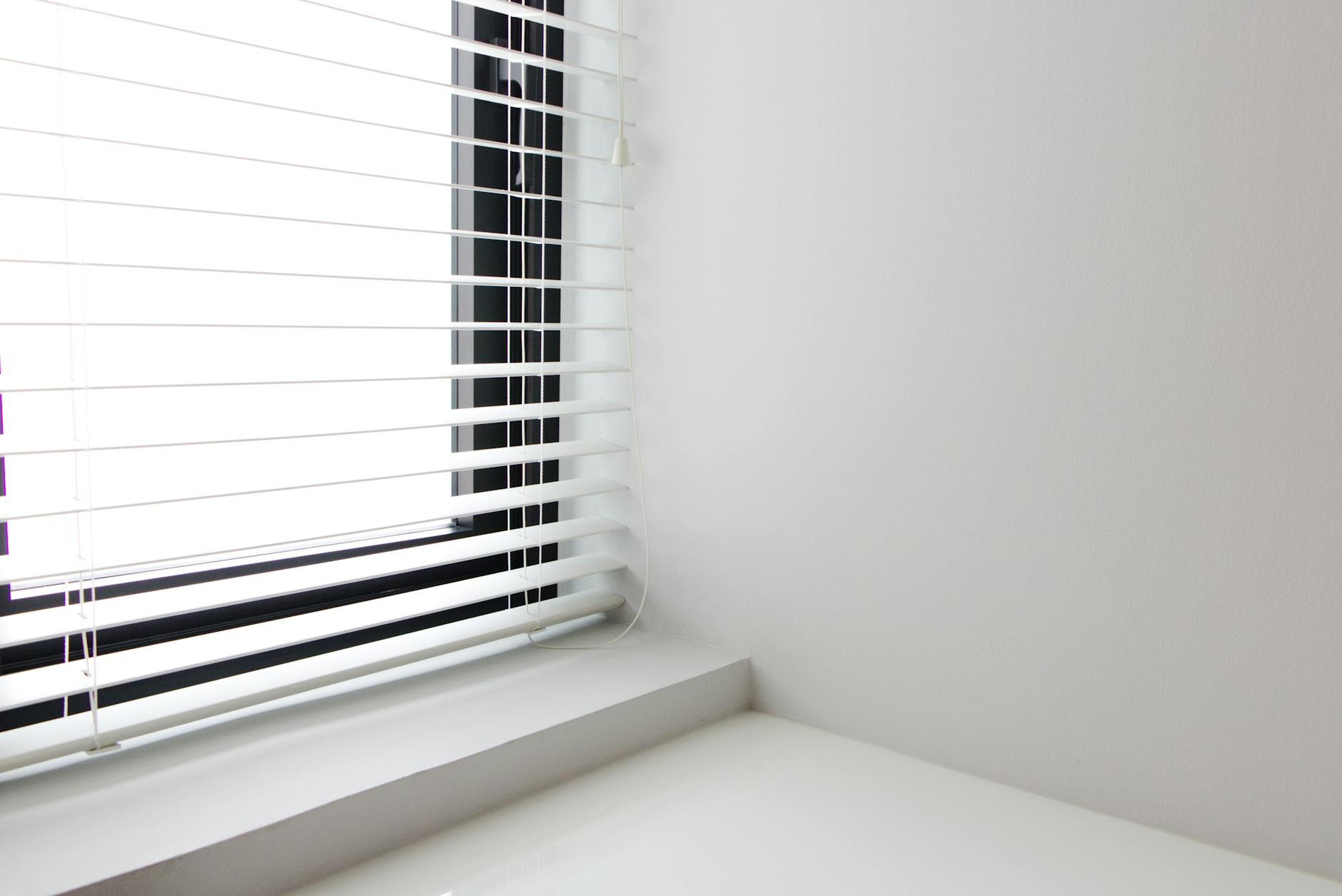
The term “faux wood” gets used loosely in home improvement retail, so it’s worth pinning down exactly what you’re buying — and why the material composition matters enormously when you’re hanging blinds above a kitchen sink or beside a gas range.
Materials and Construction
Faux wood blinds are horizontal slatted blinds manufactured from one of two core materials: 100% PVC (polyvinyl chloride) or a composite blend of real wood fiber and PVC. The composite version offers a slightly lighter weight and can feel more substantial in the hand, while pure PVC is the most moisture-resistant option available. Both types are extruded or molded into slats — typically 2-inch or 2½-inch widths — and then finished with paint or a wood-grain transfer print that closely mimics the look of basswood, oak, cherry, or walnut.
Key construction specs to look for:
- Slat thickness: 4–5 mm for residential durability
- Tilt mechanism: wand or cord-tilt, with cordless options for child safety
- Headrail: aluminum or steel for rigidity across wide spans
- Bottom rail: weighted for clean closure and light control
Faux Wood vs. Real Wood: The Core Difference
Real wood blinds are beautiful, but they’re made from a hygroscopic material — meaning wood naturally absorbs and releases moisture from the surrounding air. In a kitchen environment, this causes slats to warp, bow, crack, and eventually split. Faux wood is non-hygroscopic: it does not absorb moisture at all. A quality faux wood slat can be submerged in water and come out completely unchanged. That’s the single most important distinction for kitchen applications. Beyond moisture resistance, faux wood is also significantly heavier than real wood (which matters for wide windows) and tends to cost 20–40% less for comparable quality.
3. Moisture Resistance Ratings: What the Numbers Mean

When a salesperson or product listing says a blind is “moisture resistant,” that phrase covers a wide spectrum of actual performance. Here’s how to decode what you’re really getting — and what specs matter most for a Jackson, TN kitchen.
How Manufacturers Rate Moisture Resistance
Not all faux wood blinds are created equal when it comes to moisture performance. Better manufacturers subject their products to standardized tests including humidity chamber exposure (typically 95% RH at 100°F for 72–240 hours) and thermal cycling tests (repeated swings between 40°F and 120°F). Look for products that explicitly state they are rated for high-humidity environments or are labeled “bath and kitchen” grade. These have passed the most rigorous testing and will hold their shape and finish in a West Tennessee kitchen for 10–20 years under normal use.
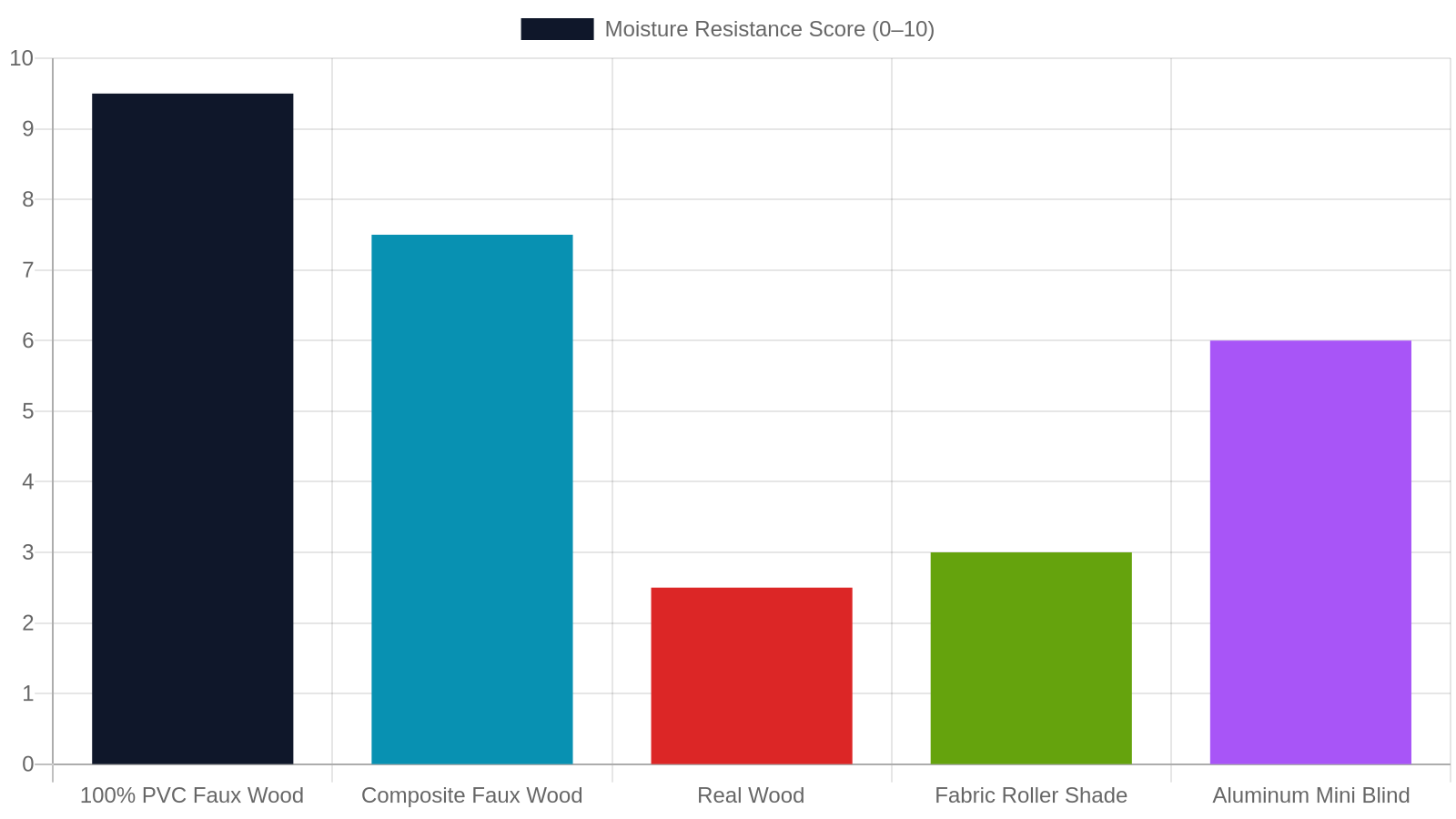
PVC vs. Composite: Which Performs Better in Humidity?
Pure PVC faux wood blinds score highest on moisture resistance — they are essentially waterproof. Composite faux wood (wood fiber + PVC binder) scores slightly lower because the wood fiber content, even when encapsulated, can absorb trace moisture over years of extreme exposure. For a kitchen directly above a sink or in a home with a steamer or instant-pot used daily, 100% PVC is the safer long-term choice. For a kitchen with good ventilation and a range hood, composite faux wood performs beautifully and offers a slightly more realistic wood-grain appearance. A Blinds Galore consultant can help you weigh these trade-offs during your free in-home visit.
4. Style Guide: Matching Faux Wood Blinds to Your Kitchen Design
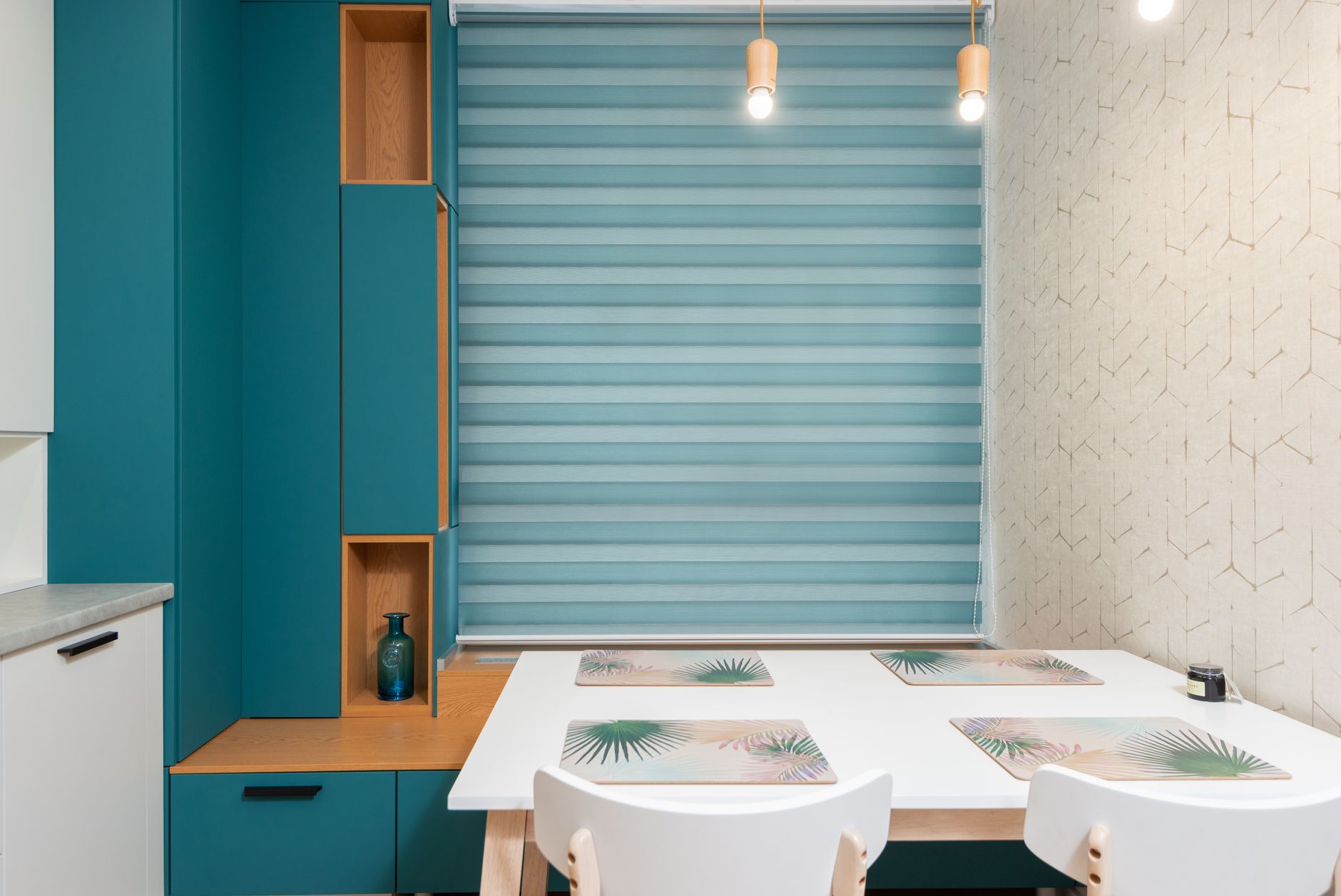
Faux wood blinds have come a long way from the basic beige slat of the 1990s. Today’s custom options give Jackson homeowners genuine design flexibility — here’s how to match them to your kitchen’s personality.
Color and Finish Options for Every Kitchen Palette
One of the biggest misconceptions about faux wood blinds is that they only come in a few basic wood tones. Today’s custom faux wood lines offer 40–80+ color and finish options depending on the manufacturer, ranging from crisp bright whites and soft off-whites through warm honey and golden oak tones, rich espresso and dark walnut finishes, and even painted colors like gray, sage green, and navy for more contemporary kitchens. For Jackson-area homeowners with traditional Southern farmhouse kitchens, a warm white or antique white finish pairs beautifully with shaker cabinets and subway tile. For modern or transitional kitchens, a cool gray or weathered driftwood finish adds sophistication without competing with other design elements.
Slat Width and Scale: Getting the Proportions Right
Slat width dramatically affects how your blinds read in the room. The two most popular widths for kitchens are:
- 2-inch slats: The classic choice. Works well for standard 30–42 inch kitchen windows. Provides good light control and a traditional look.
- 2½-inch slats: A more contemporary profile. Better for larger windows (48 inches and wider) or high-ceiling kitchens where the broader slat scale feels proportionate. Also allows more light in when open.
For small kitchen windows — common in older Jackson-area homes — a 1-inch or 1⅜-inch aluminum mini blind might actually be worth considering as a complement, but for most standard and larger windows, 2-inch faux wood is the sweet spot of style and function.
Inside Mount vs. Outside Mount for Kitchen Windows
Kitchen windows often have unique mounting challenges: deep sills from thick exterior walls, window frames that sit flush with drywall, or windows positioned directly above a sink with limited clearance. Inside mount (blind fits within the window frame) gives a clean, built-in look and is preferred when you have a deep sill of at least 2¼ inches. Outside mount (blind hangs on the wall above the frame) is the better choice when you want to make a window appear larger, when the inside depth is insufficient, or when you want to maximize light blockage around the frame edges. A professional measurement — like the free measuring service Blinds Galore provides — ensures you get this right the first time.
5. Light Control and Privacy: What to Expect in a Kitchen
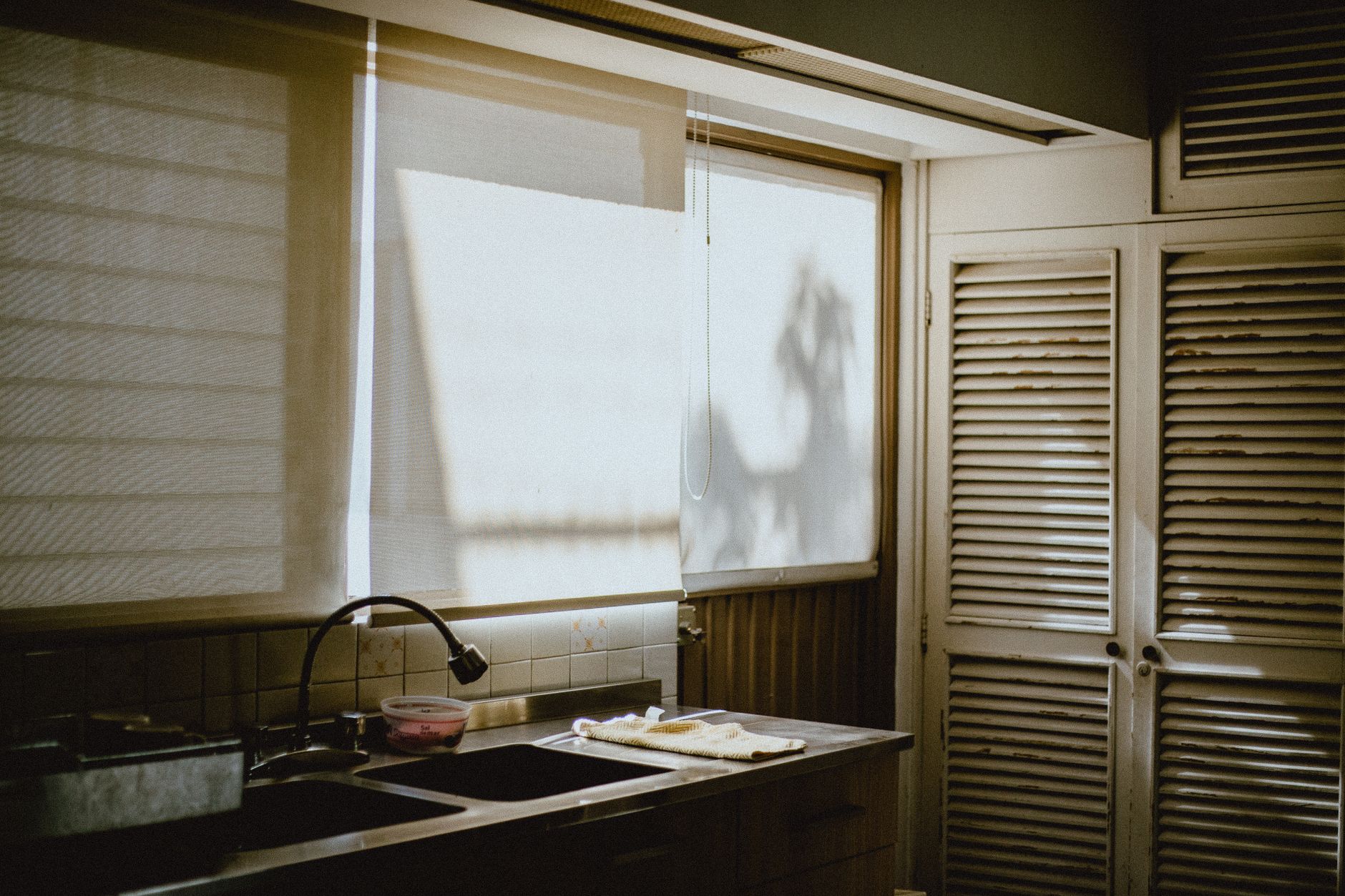
Light control is one of the top reasons homeowners choose blinds over shades or curtains for kitchens — and faux wood blinds deliver some of the most precise and flexible light management available in any window covering category.
Tilt Angles and Light Filtering
Faux wood blinds offer continuous tilt adjustment — you can angle the slats anywhere from fully open (maximum light and view) to fully closed in either direction. In a kitchen, this flexibility is particularly valuable because light needs change throughout the day. Morning sun from an east-facing kitchen window can create glare on countertops and screens; tilting slats upward bounces light toward the ceiling rather than directly into your eyes while still keeping the room bright. In the afternoon, west-facing kitchen windows can create intense heat gain — closing slats to 45° can reduce solar heat gain by up to 45% compared to an uncovered window, according to the U.S. Department of Energy.
Privacy Without Sacrificing Natural Light
Kitchen windows above a sink often face a neighbor’s yard or a street — privacy matters, but so does natural light while you’re working. Faux wood blinds solve this elegantly: tilt slats downward at roughly 30–45° and you block sightlines from outside while still allowing diffused daylight to enter from above the slats. This is a technique professional installers call the “privacy tilt” position, and it’s one of the most practical features of horizontal slatted blinds compared to roller shades or curtains, which require a full open-or-closed choice.
6. Cleaning and Maintenance: Keeping Kitchen Blinds Looking New
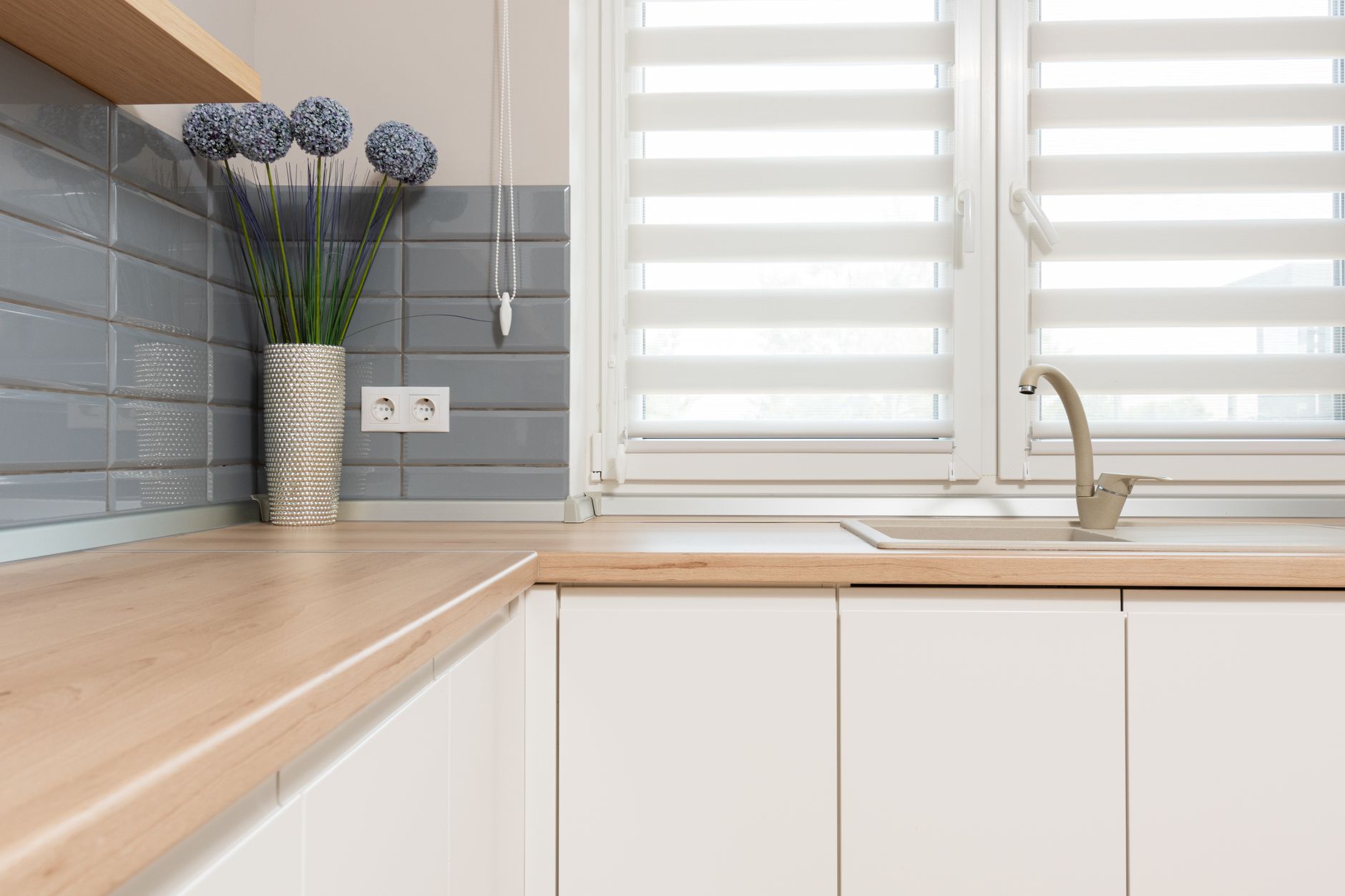
One of the most practical advantages of faux wood blinds in a kitchen is how easy they are to maintain. Compare this to fabric Roman shades (which require dry cleaning or spot treatment) or real wood blinds (which can’t be wet-wiped without risking damage), and the maintenance case for faux wood becomes very clear.
Weekly Dusting Routine
The good news about faux wood blinds in the kitchen is that their non-porous surface doesn’t trap grease or odors the way fabric does. A weekly dusting with a microfiber cloth or a blind duster (the comb-style tool that cleans multiple slats simultaneously) takes about two minutes and prevents grease and dust from building up into a harder-to-remove film. Close the slats flat, dust one side, flip, dust the other. That’s it for routine maintenance most weeks.
Deep Cleaning for Grease Buildup
Every 2–3 months (or more frequently if you cook heavily), do a deeper clean. The best method for faux wood kitchen blinds:
- Mix 1 tablespoon dish soap per quart of warm water in a spray bottle
- Spray lightly onto a microfiber cloth (not directly onto the blind)
- Wipe each slat individually, working from the headrail down
- Follow immediately with a dry cloth to prevent water pooling in the headrail
- For stubborn grease near the range, a small amount of white vinegar solution (1:1 with water) cuts through buildup without damaging the PVC finish
Unlike real wood, you never need to worry about warping from the moisture used during cleaning — a significant maintenance advantage in a kitchen environment.
7. Energy Efficiency: Faux Wood Blinds and Your Utility Bills
Energy efficiency might not be the first thing you think of when shopping for kitchen blinds, but it’s a real and measurable benefit of well-fitted faux wood blinds — particularly relevant for West Tennessee homeowners dealing with high summer cooling costs.
Insulating Properties of Faux Wood Slats
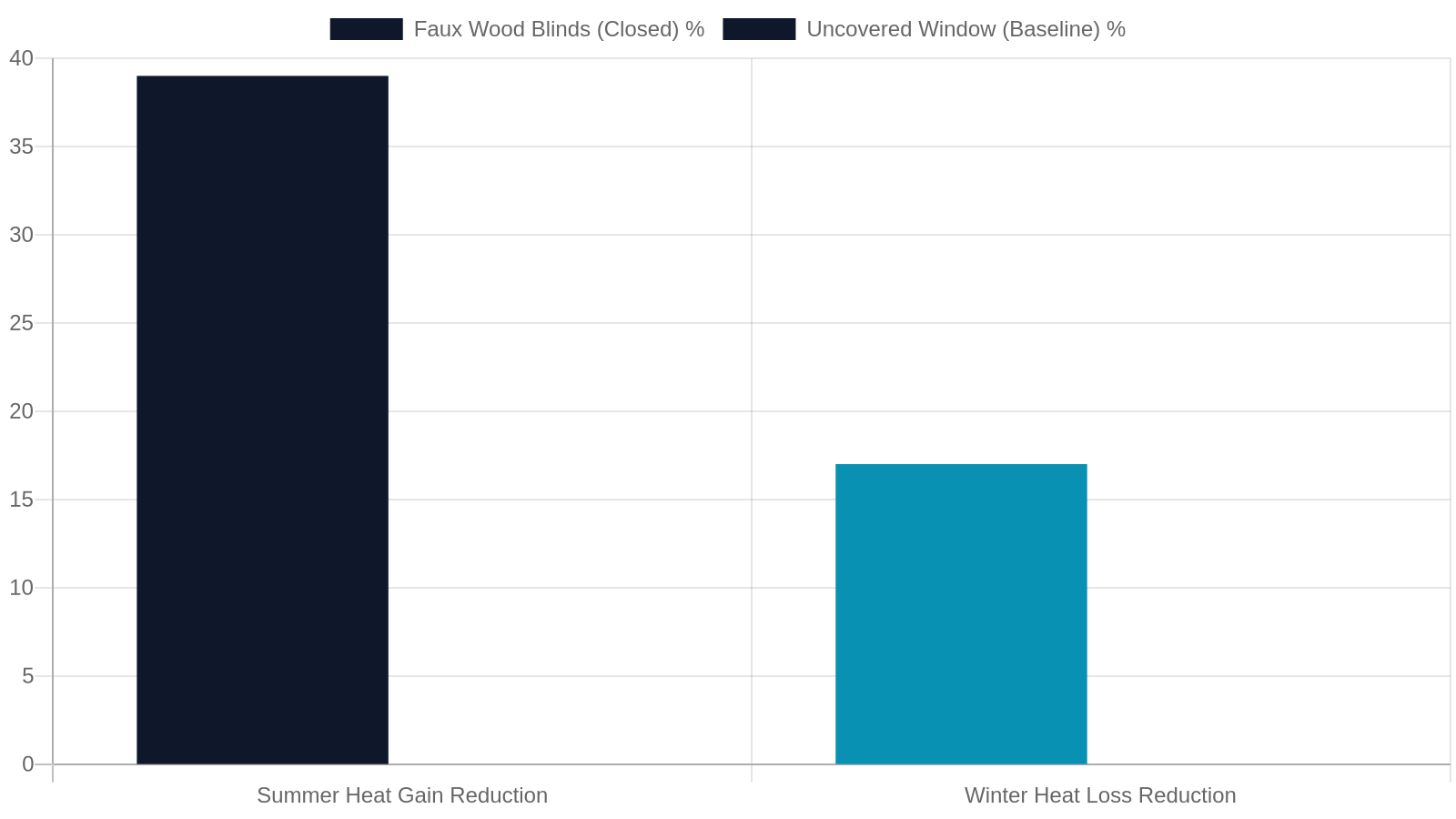
While faux wood blinds aren’t insulated window coverings in the same category as cellular shades, they do provide a meaningful thermal barrier between your window glass and your living space. The air gap created by the blind hanging 2–4 inches in front of the glass acts as a dead-air insulating layer. Studies by the Attachment Energy Rating Council (AERC) show that interior horizontal blinds can reduce heat gain through windows by 33–45% in summer when closed, and reduce heat loss in winter by approximately 14–20% compared to an uncovered window. In a Jackson, TN summer where cooling bills can spike significantly, that’s a real dollar impact.
Strategic Use in the Kitchen for Seasonal Comfort
In West Tennessee’s hot summers, keep south- and west-facing kitchen blinds tilted closed during peak afternoon hours (2–6 PM) to prevent solar heat gain from adding to your air conditioning load — especially important when the oven or range is already adding heat to the space. In winter, open the blinds on sunny days to capture passive solar warmth, then close them at dusk to retain heat. This simple behavioral adjustment, combined with the insulating air gap of the blinds, can meaningfully reduce HVAC cycling in the kitchen zone of your home.
Faux Wood vs. Other Kitchen Window Treatments: 6-Point Comparison
Use this side-by-side comparison to see how custom faux wood blinds stack up against the most common alternatives for kitchen window treatments in West Tennessee homes.
8. Cordless and Motorized Options: Safety and Convenience
The way you operate your kitchen blinds matters almost as much as how they look. Modern faux wood blinds offer operation options that are safer, cleaner, and more convenient than the corded blinds of previous generations.
Why Cordless Is the Standard for Kitchens
Traditional corded blinds present a strangulation hazard for young children and pets — a risk the U.S. Consumer Product Safety Commission (CPSC) has flagged as responsible for approximately 8 child deaths per year nationally. Beyond safety, cords in a kitchen environment collect grease, become sticky, and are genuinely harder to operate when your hands are wet or covered in cooking residue. Cordless faux wood blinds — operated by simply pushing the bottom rail up or down — have become the standard recommendation for kitchens and are now required by safety standards in many new construction projects. They cost only marginally more than corded versions and are dramatically more practical in daily kitchen use.
Motorized Faux Wood Blinds: A Growing Option
For kitchen windows that are hard to reach — above a deep sink, over a peninsula, or in a high transom position — motorized faux wood blinds are an increasingly affordable solution. Battery-operated motors (no wiring required) can be integrated into faux wood headrails and controlled via a remote, a wall switch, or a smartphone app. Some systems integrate with Amazon Alexa, Google Home, or Apple HomeKit. Motorized options add approximately $80–$150 per blind to the cost of a standard custom faux wood blind, depending on the motor brand and control system. For hard-to-reach windows, the convenience is well worth the investment.
9. Cost Guide: What to Budget for Custom Faux Wood Kitchen Blinds
Understanding the real cost of custom faux wood blinds — and what drives that cost — helps you budget confidently and understand the value difference between custom and off-the-shelf options.
Price Ranges by Window Size and Feature Level
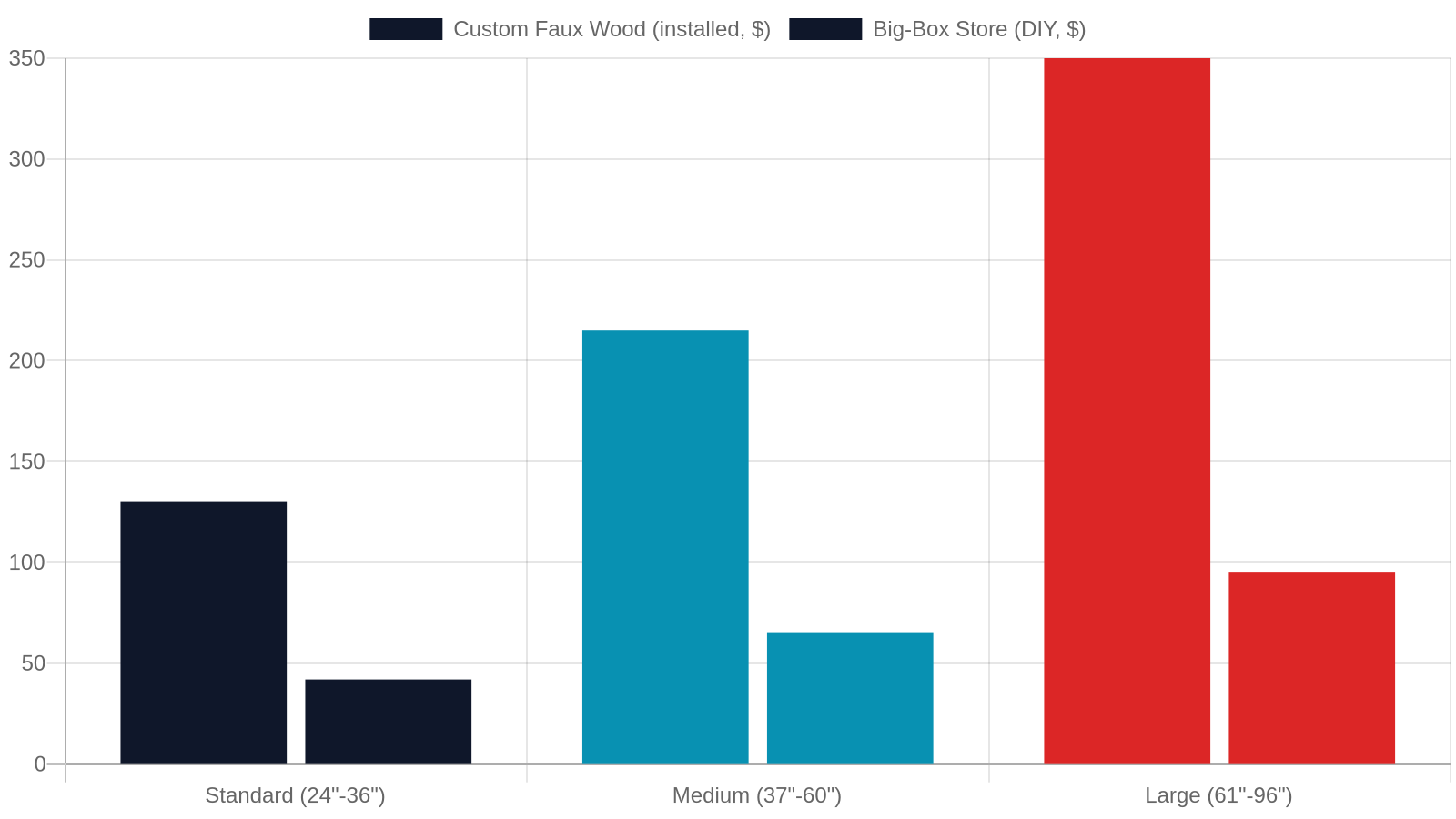
Custom faux wood blinds are priced per blind, based on width, height, and selected features. Here are realistic budget ranges for the Jackson, TN market as of 2024–2025:
- Standard kitchen window (24″–36″ wide): $85–$175 per blind for basic cordless faux wood
- Larger window (37″–60″ wide): $150–$280 per blind
- Wide or specialty window (61″–96″ wide): $250–$450+ per blind
- Motorized upgrade: Add $80–$150 per blind to any tier above
- Professional installation: Typically $25–$50 per blind, often bundled or discounted with multi-blind orders
A typical Jackson-area kitchen with 3–4 windows might budget $400–$900 installed for a complete custom faux wood blind package at the standard tier — a fraction of what plantation shutters would cost for the same windows.
Custom vs. Big-Box Store: Where the Value Lies
Big-box store faux wood blinds (Home Depot, Lowe’s, Walmart) are available in standard sizes starting around $25–$60 per blind. The trade-offs are significant: limited size options (non-standard windows won’t fit properly), thinner slat construction (typically 3mm vs. 4–5mm for custom), fewer finish options, and no professional measuring or installation. Gaps at the edges from ill-fitting blinds defeat the purpose of light control and look unfinished. Custom blinds from a local specialist like Blinds Galore are measured precisely to your window, manufactured to exact dimensions, and installed by experienced professionals — delivering a result that looks and performs dramatically better over a longer lifespan.
Ready to Upgrade Your Jackson TN Kitchen Windows?
You’ve done the research — now it’s time to see what custom faux wood blinds can actually do for your kitchen. Blinds Galore makes the process simple, stress-free, and completely tailored to your home in Jackson, TN and the surrounding West Tennessee communities.
What to Expect from a Free In-Home Consultation
Blinds Galore brings the showroom directly to your home — no driving across Jackson, no guessing at samples under store lighting. During your free in-home consultation, a Blinds Galore specialist will:
- Measure every kitchen window precisely (inside and outside dimensions, depth, and clearances)
- Bring physical samples of faux wood finishes, slat widths, and tilt mechanism options so you can see exactly how they’ll look in your actual kitchen light
- Recommend the right moisture-resistance level for your specific kitchen layout and cooking habits
- Provide a transparent, no-pressure quote with no hidden fees
- Schedule professional installation at your convenience
With over 18 years of experience serving Jackson, Lexington, Henderson, Milan, and communities throughout West Tennessee, Blinds Galore’s team has seen every kitchen window situation imaginable — and knows how to solve it beautifully.
Your 100% Satisfaction Guarantee
Every custom faux wood blind installation by Blinds Galore is backed by a 100% satisfaction guarantee. If something isn’t right — the fit, the finish, the operation — the team will make it right. That’s the kind of commitment you get from a locally owned West Tennessee business that has built its reputation one kitchen window at a time. Ready to see how custom faux wood blinds can transform your kitchen? Explore our custom faux wood blind options and get started today, or call us directly at (731) 571-5179 to schedule your free in-home consultation. You can also reach out through our contact page and a friendly team member will be in touch quickly.
Frequently Asked Questions
Are faux wood blinds really waterproof enough for a kitchen above the sink?
Yes — 100% PVC faux wood blinds are essentially waterproof and will not warp, swell, or crack even when regularly exposed to sink splash and steam. Composite faux wood (wood fiber + PVC) is highly moisture resistant and suitable for most kitchens, though pure PVC is the safest choice for windows directly above a sink.
How do I clean faux wood blinds in my kitchen without damaging them?
For routine maintenance, dust weekly with a microfiber cloth or blind duster. For grease buildup, wipe slats with a cloth dampened in a mild dish soap and water solution, then dry immediately. A 1:1 white vinegar and water solution works well on stubborn grease near the range. Never use abrasive scrubbers or solvent-based cleaners.
What slat size is best for kitchen windows — 2 inch or 2.5 inch?
For standard kitchen windows (30–42 inches wide), 2-inch slats are the classic and most popular choice. For larger windows, kitchen islands with windows above, or high-ceiling kitchens, 2½-inch slats provide better visual proportion and allow slightly more light when open. A professional consultation can help you decide based on your specific window dimensions.
How much do custom faux wood blinds cost for a typical kitchen in Jackson, TN?
A typical Jackson-area kitchen with 3–4 windows can expect to budget approximately $400–$900 installed for custom faux wood blinds, depending on window sizes and selected features like cordless operation or motorization. Individual blinds range from roughly $85 for a small standard window to $450+ for large or wide windows.
Do faux wood blinds help with energy efficiency in a West Tennessee kitchen?
Yes. Closed faux wood blinds create an insulating air gap between the window glass and your living space, reducing summer heat gain by approximately 33–45% and winter heat loss by around 14–20% compared to uncovered windows. In West Tennessee's hot, humid summers, this can meaningfully reduce air conditioning costs in the kitchen zone.
Can I get cordless faux wood blinds for my kitchen, and are they worth it?
Absolutely — cordless faux wood blinds are strongly recommended for kitchens. They eliminate the child and pet safety hazard of dangling cords, are much easier to operate with wet or greasy hands, and don't accumulate grease on cords the way traditional corded blinds do. The cost premium over corded blinds is minimal, typically $10–$25 per blind.
You might also like

7 Best Custom Blinds for Jackson TN Garages: Durability and Light Control
Quick answer: The best custom blinds for Jackson, TN garages combine moisture resistance, UV protection,

How Product Videos Help Jackson TN Homeowners Choose Custom Blinds and Shades
Quick answer: Product videos let Jackson, TN homeowners see exactly how custom blinds, shades, and plantation

Video Demos: See Custom Blinds and Shades Installed in 10 Jackson TN Homes
Quick answer: Seeing is believing when it comes to custom window treatments. Blinds Galore's product
10 Best Custom Roman Shades for Jackson TN Living Rooms: Style and Light Control Guide
Quick answer: Custom Roman shades are one of the most versatile and stylish window treatments for Jackson,

What Makes Blinds Galore Jackson TN’s Trusted Window Treatment Expert Since 2006
Quick answer: Blinds Galore has served Jackson, TN and surrounding West Tennessee communities since 2006
Best Energy-Efficient Cellular Shades for Jackson TN Living Rooms: a Cost Savings Guide
Quick answer: Cellular shades — also called honeycomb shades — are the single most energy-efficient