

Best Faux Wood Blinds for Moisture-Prone Bathrooms in Jackson, TN
Quick answer: Faux wood blinds are the smartest choice for moisture-prone bathrooms in Jackson, TN homes. Unlike real wood, which warps and cracks in high humidity, faux wood — typically made from PVC or a wood-polymer composite — resists moisture, mold, and mildew while delivering the same rich, classic look. For bathrooms, choose 2-inch slats, a tilt rod for easy one-hand operation, and a moisture-rated finish. Local homeowners in Jackson and across West Tennessee can get custom-measured faux wood blinds installed by Blinds Galore with a 100% satisfaction guarantee.
Why Bathrooms Are the Toughest Room for Window Treatments

Of all the rooms in a Jackson, TN home, the bathroom is the harshest environment for window coverings. Temperature swings from a cold winter morning to a steamy post-shower fog, combined with West Tennessee’s naturally high humidity, create conditions that destroy ordinary blinds faster than anywhere else in the house. Understanding exactly why bathrooms are so hard on window treatments is the first step toward choosing something that will actually last.
The Humidity Problem in West Tennessee Bathrooms
Jackson, TN sits in a region where summer humidity regularly climbs above 70%, and that moisture doesn’t stay outside. Every hot shower sends a burst of steam toward your windows, where it condenses, drips, and soaks into whatever covering is hanging there. Over weeks and months, that repeated wetting and drying cycle destroys fabric, warps wood, and breeds mold in the gaps where you can’t easily clean.
- Average indoor bathroom humidity: 75–95% during and immediately after a shower
- Mold growth threshold: surfaces staying above 60% relative humidity for 24–48 hours
- Real wood blind lifespan in humid baths: often less than 3 years before visible warping
Privacy Needs vs. Natural Light — a Balancing Act
Bathroom windows present a unique design challenge: you need maximum privacy, especially in ground-floor bathrooms facing neighbors or the street, but you also want natural light to make the space feel open and clean. Thick curtains solve the privacy problem but block all light and trap moisture in their folds. Frosted glass handles light but offers no adjustability. A well-chosen blind lets you tilt slats for diffused light while keeping prying eyes out — and faux wood blinds do this better than almost any other option at their price point.
What Faux Wood Blinds Actually Are — and What They're Not
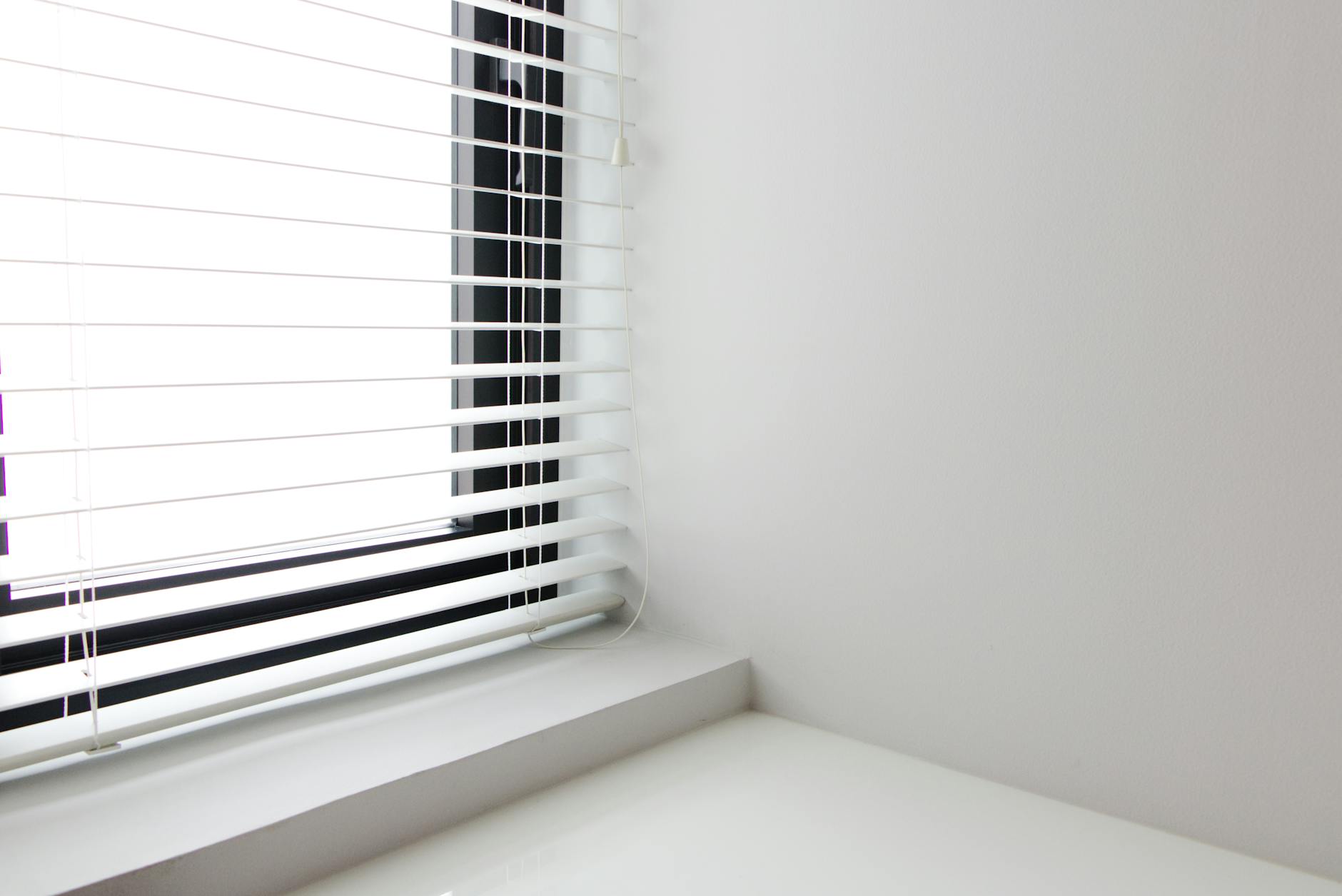
Before you can choose the best faux wood blind for your bathroom, it helps to understand exactly what faux wood is — because not all products sold under that label are created equal. The category spans a range of materials, constructions, and price points, and the differences matter a great deal in a high-humidity environment like a bathroom.
PVC vs. Wood-Polymer Composite: the Two Main Types
The term “faux wood” covers two distinct materials, and knowing the difference matters for bathrooms:
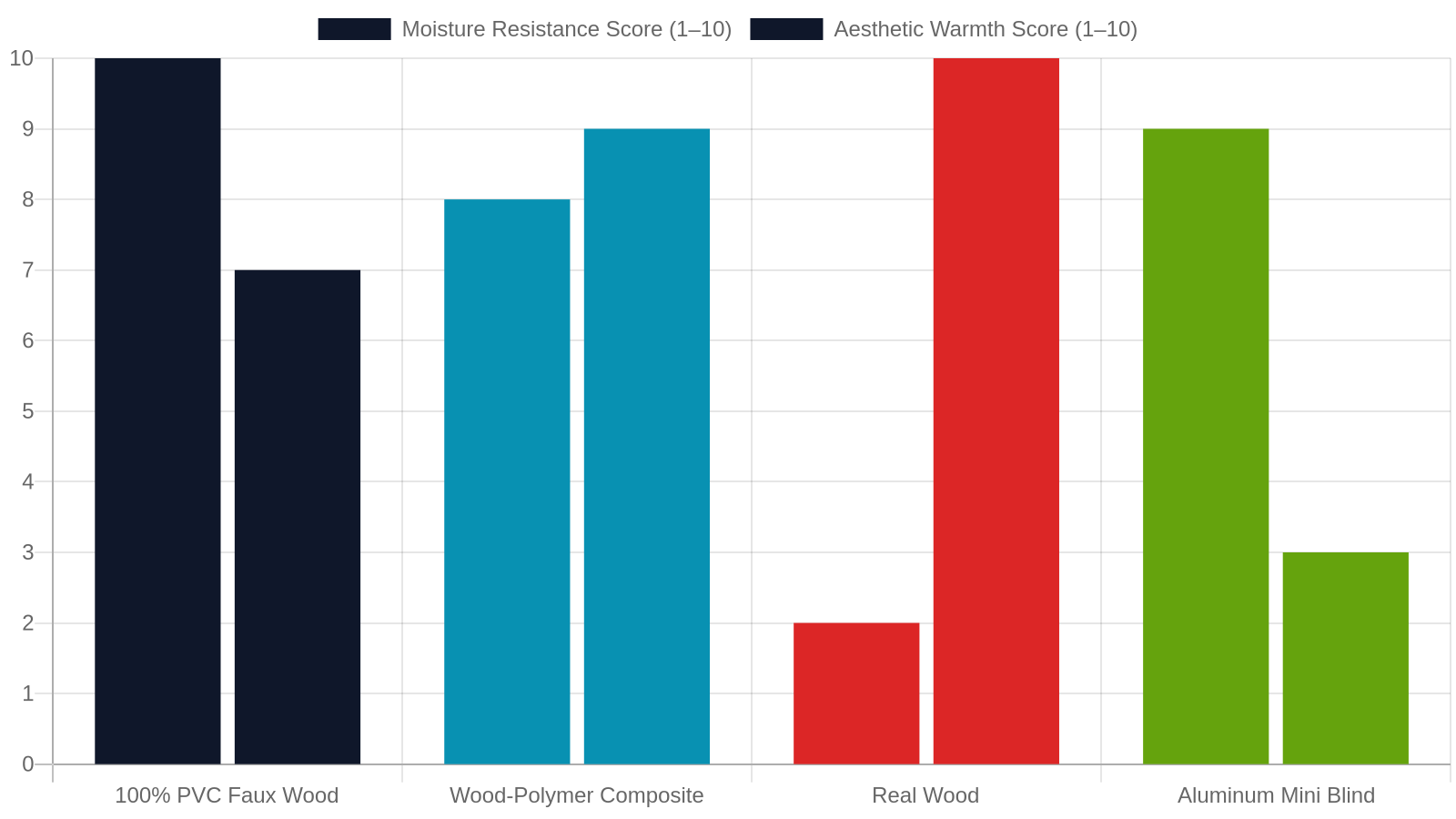
- 100% PVC faux wood blinds: Slats are extruded from solid polyvinyl chloride. Completely waterproof, very heavy, and ideal for extremely wet areas like shower-adjacent windows or basement bathrooms. Typical slat weight is 20–30% heavier than composite.
- Wood-polymer composite faux wood blinds: A blend of real wood fiber and PVC resin. Lighter, slightly warmer in appearance, and moisture-resistant (not fully waterproof). Best for standard bathrooms where the window doesn’t get direct water splash.
For most Jackson-area bathrooms, a high-quality composite faux wood blind is the sweet spot — it looks more like real wood grain and weighs less, making it easier to operate on larger windows.
How Faux Wood Differs from Real Wood and Aluminum Blinds
Homeowners sometimes ask whether real wood blinds or aluminum mini blinds might work just as well. Here’s the honest comparison:
- Real wood blinds look beautiful but absorb moisture, swell, and warp. Finishes peel. Ladder tapes rot. In a humid Jackson bathroom, expect visible damage within 2–4 years.
- Aluminum mini blinds are waterproof but cold-looking, prone to bending, and notoriously difficult to clean. The thin 1-inch slats collect soap scum in every groove.
- Faux wood blinds combine the warm aesthetic of wood with the moisture resistance of PVC, and the wider 2–2.5 inch slats are far easier to wipe down than aluminum mini blinds.
Key Features to Look for in a Bathroom Faux Wood Blind
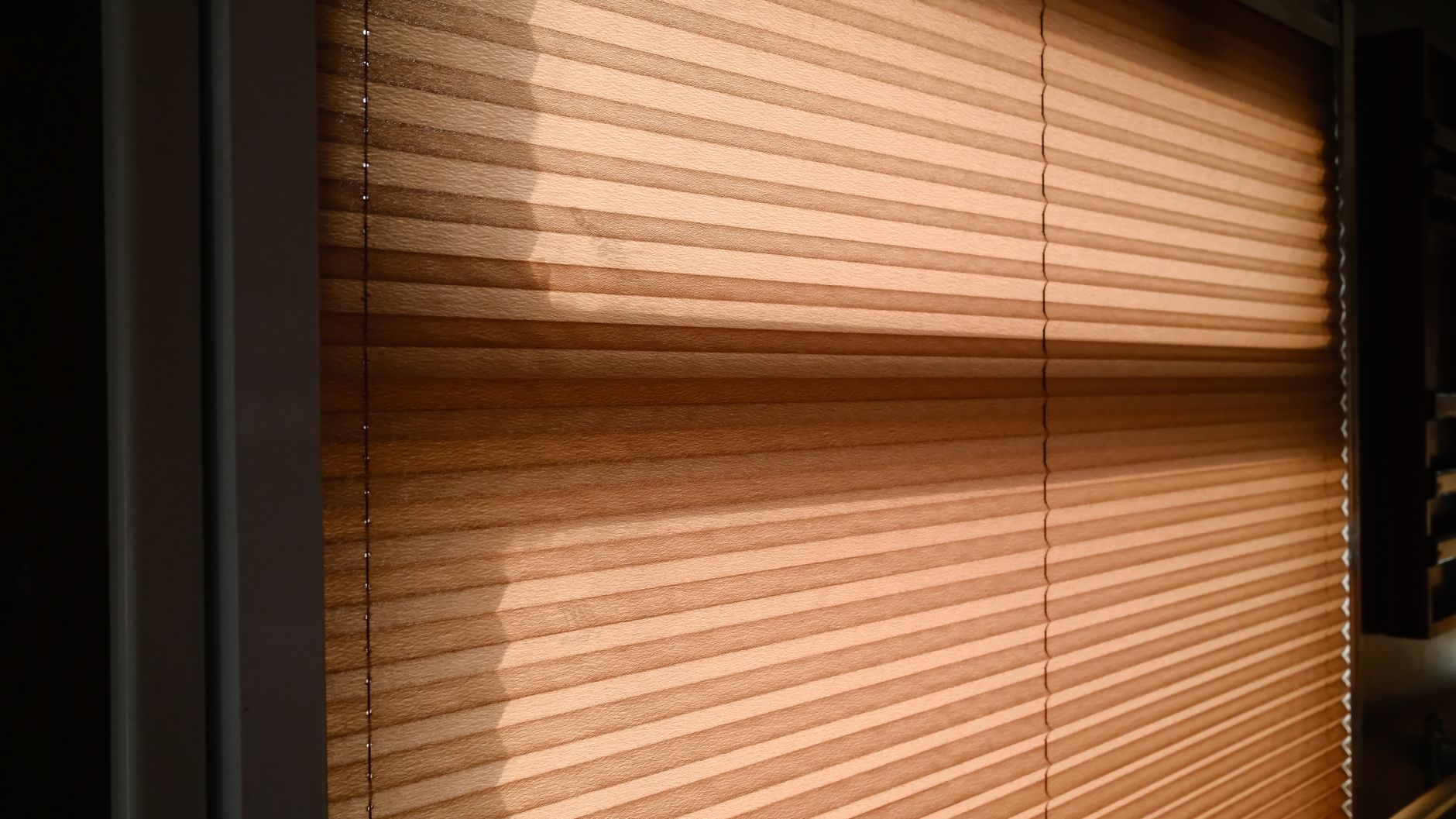
Not every faux wood blind on the market is built for a bathroom. Cheap imports may use moisture-resistant slats but pair them with cardboard headrails, standard steel hardware, or cotton ladder tape — all of which will fail in a humid environment. When shopping for bathroom-specific faux wood blinds in Jackson, TN, these are the features that separate a five-year blind from a five-month disappointment.
Slat Width: Why 2 Inches Is the Bathroom Sweet Spot
Faux wood blinds come in 1-inch, 2-inch, and 2.5-inch slat widths. For bathrooms:
- 1-inch slats look dated and are harder to clean — too many narrow grooves for soap film and mildew to hide in.
- 2-inch slats are the industry standard for bathrooms. They provide good light control, easy cleaning with a damp cloth, and a classic look that suits most Jackson-area home styles from craftsman bungalows to modern farmhouses.
- 2.5-inch slats work beautifully on larger windows (36 inches wide or more) and give a bolder, more contemporary look.
Most professional installers recommend 2-inch slats as the default for standard bathroom windows in the 24–36 inch width range.
Tilt Mechanism, Lift System, and Cord Safety
The mechanism matters as much as the material in a humid room. Look for:
- Wand tilt (no-cord tilt): A single plastic wand rotates the slats. No cord to fray, mold, or tangle — and no cord safety hazard for children.
- Cordless lift: Push the bottom rail up or down with one hand. No lift cord means no cord to absorb moisture or develop mildew. Cordless blinds are now recommended by the Window Covering Safety Council for all rooms where children are present.
- Moisture-rated hardware: Look for stainless steel or nylon headrail hardware rather than standard steel, which can rust and stain your window frame over time.
Color and Finish Options for Humid Environments
Faux wood blinds come in dozens of stain and paint finishes. For bathrooms, consider:
- Lighter finishes (white, alabaster, antique white) show mildew spots more readily but brighten small bathrooms significantly.
- Medium wood tones (golden oak, cherry, chestnut) hide water spots better and add warmth to neutral tile palettes common in West Tennessee homes.
- Dark finishes (espresso, mahogany) are dramatic but show hard-water mineral deposits clearly — factor in your water quality if you’re in a rural area with well water.
A matte or satin finish is easier to wipe clean than a high-gloss finish, which shows every fingerprint and water drip.
Measuring Your Bathroom Window the Right Way
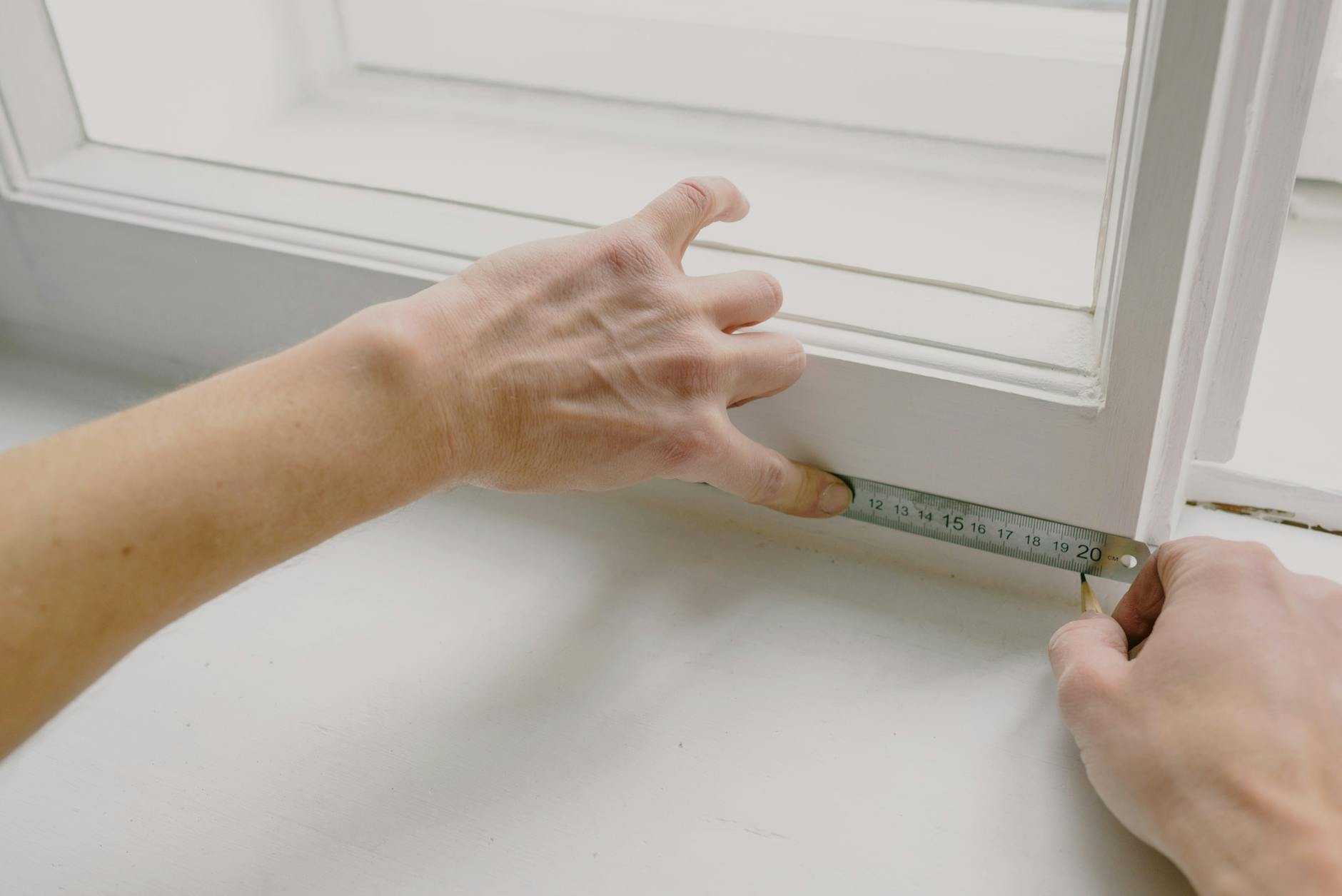
Even the best faux wood blind will look wrong and function poorly if it’s measured incorrectly. Bathroom windows in Jackson, TN homes vary widely — from narrow 18-inch powder room windows to wide 48-inch tub surround windows — and each requires precise measurement to ensure proper fit, light control, and moisture protection along the edges.
Inside Mount vs. Outside Mount — Which Is Better for Bathrooms?
The mounting choice affects both look and function:
- Inside mount (blind fits inside the window frame): Cleaner, more built-in look. Requires a minimum depth of 2.5 inches for most faux wood blinds. Allows the window trim to show, which is ideal in homes with decorative craftsman or colonial casing.
- Outside mount (blind mounts on the wall above the window): Covers more of the wall, making the window appear larger. Better for shallow window frames common in older Jackson homes. Also better if you want maximum light blockage around the edges.
For bathrooms with shallow sills — very common in 1960s–1980s construction throughout West Tennessee — an outside mount is often the only practical option.
The Three-Point Measurement Method
Whether you measure for an inside or outside mount, always measure in three places and use the smallest number:
- Width: Measure at the top, middle, and bottom of the window opening. Use the narrowest measurement. For inside mounts, the factory will deduct 1/4 to 3/8 inch for clearance.
- Height: Measure at the left, center, and right. Use the longest measurement for inside mounts (you want full coverage) or add 3–4 inches above and below for outside mounts.
- Depth: Measure the sill depth to confirm inside mount viability. Less than 2.5 inches? Go outside mount.
Measurement errors are the number-one reason blinds don’t fit correctly — which is exactly why a professional in-home measurement from Blinds Galore eliminates the guesswork entirely.
Top 5 Faux Wood Blind Styles That Work Best in Bathrooms
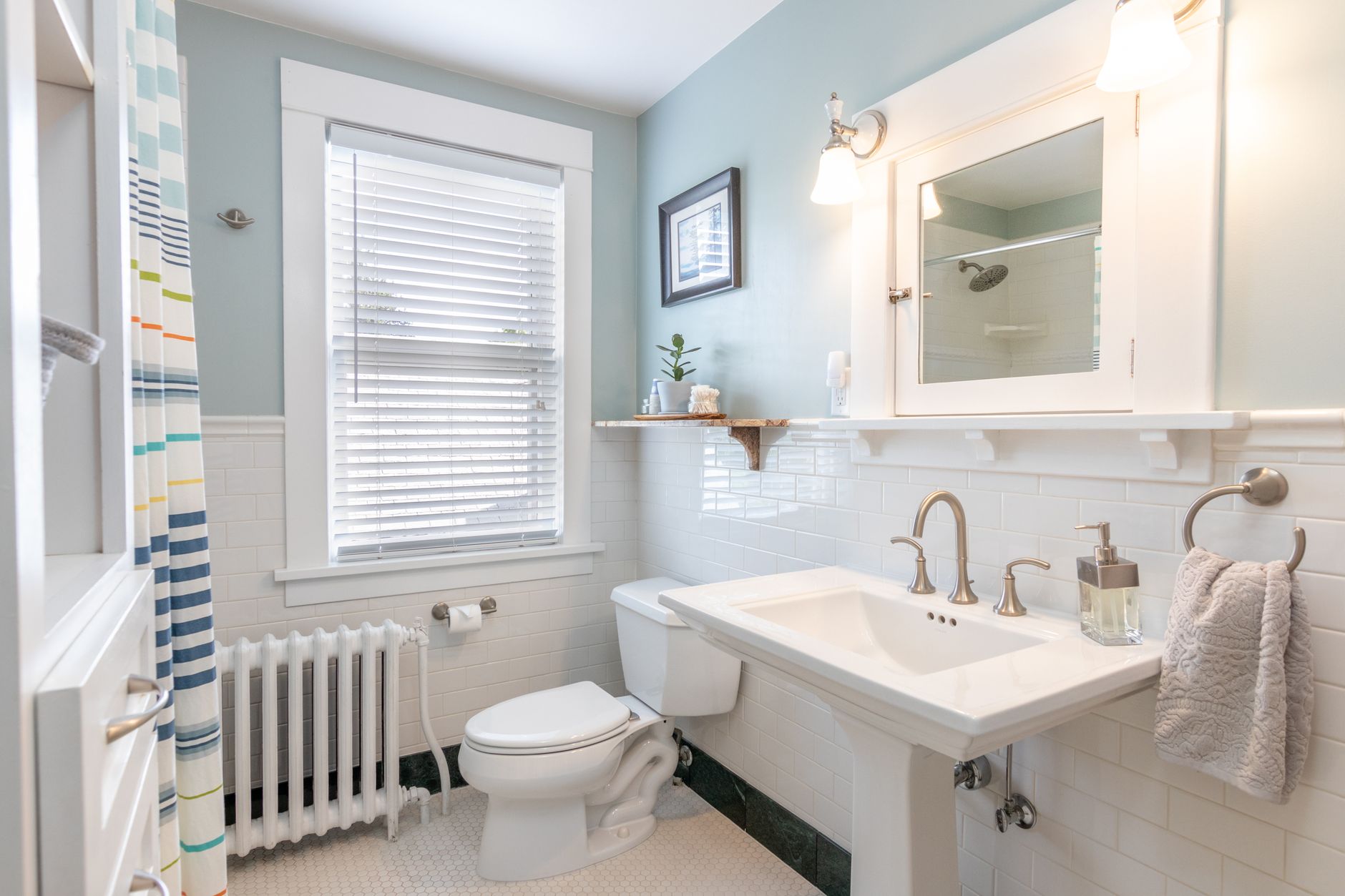
Within the faux wood blind category, there are several distinct style configurations worth considering for your Jackson, TN bathroom. The right choice depends on your window size, your bathroom’s design aesthetic, and how much light control and privacy you need throughout the day.
1. Classic White 2-Inch Cordless Faux Wood
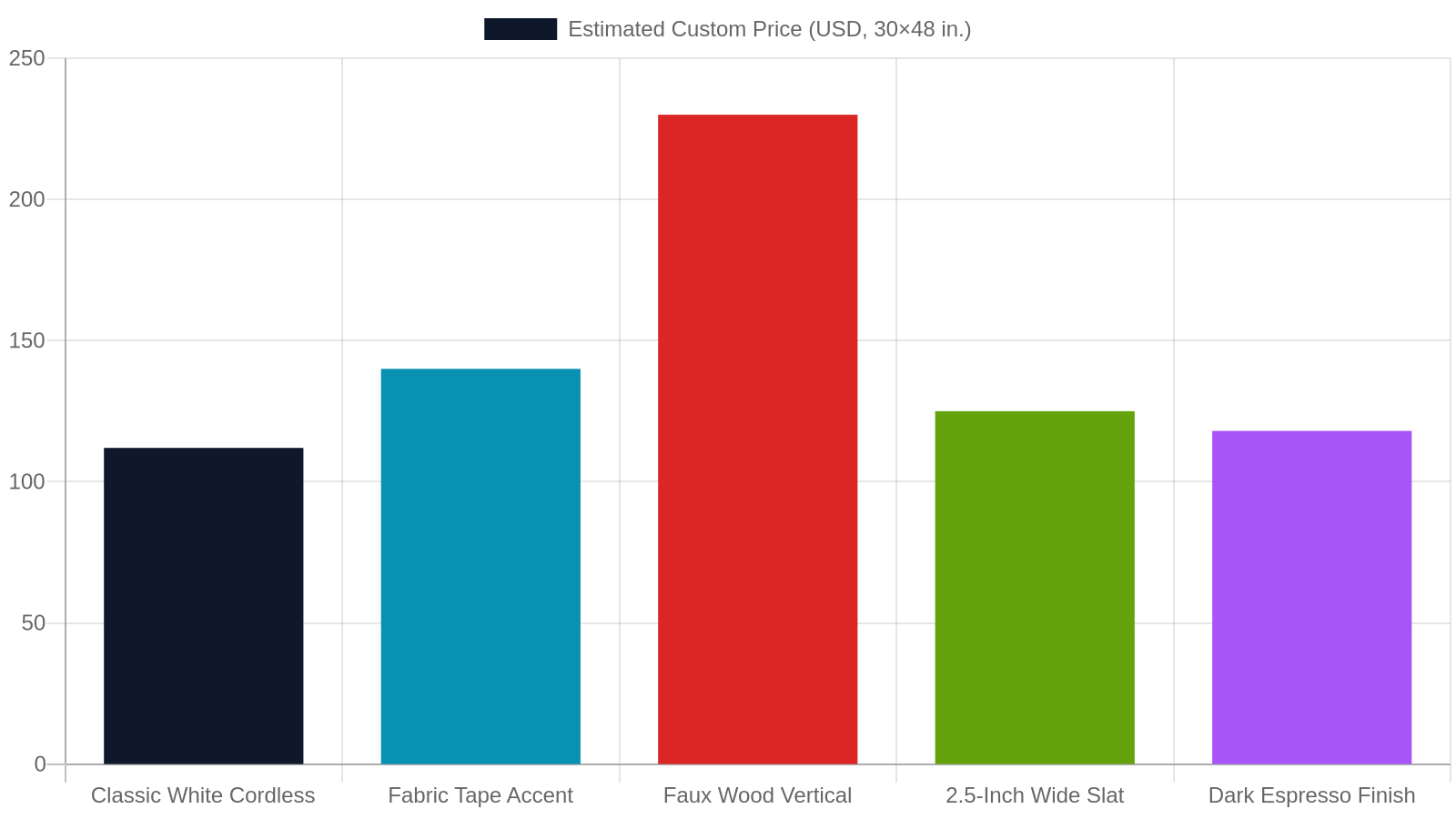
The most popular choice across West Tennessee bathrooms. Bright white or alabaster finishes reflect light beautifully in windowless or north-facing bathrooms. Cordless lift makes one-handed operation easy when your other hand is holding a towel. Easy to wipe clean with a damp microfiber cloth. Pairs with virtually any tile color or vanity style. Estimated retail range for a custom 30×48-inch unit: $85–$140.
2. Faux Wood with Fabric Tape Accents
Standard faux wood blinds use ladder cord to hold slats in place. Fabric tape replaces that cord with a woven ribbon, hiding the holes in each slat for better privacy and a more finished look. In bathrooms, choose a polyester or nylon tape rather than cotton — cotton absorbs moisture and can mildew. Fabric tape adds roughly $20–$40 to the cost of a custom blind but dramatically elevates the finished appearance, especially in master baths or guest baths where design matters.
3. Faux Wood Vertical Blinds for Sliding or Wide Windows
Some Jackson-area homes — especially newer construction in the surrounding communities of Lexington and Henderson — feature wide bathroom windows or even sliding glass doors adjacent to a soaking tub. For openings wider than 72 inches, vertical faux wood blinds (with PVC vanes rather than horizontal slats) are the practical solution. They stack neatly to one side, allow full light when open, and the PVC vanes are fully waterproof. Typical cost for a 96×84-inch custom vertical: $180–$280.
Cleaning and Maintaining Faux Wood Blinds in a Humid Bathroom
One of the biggest selling points of faux wood blinds for bathrooms is how easy they are to clean compared to fabric shades or real wood. Still, bathrooms present specific cleaning challenges — soap film, hard-water mineral deposits, and occasional mildew — that require a slightly different approach than cleaning blinds in a bedroom or living room.
Weekly Quick-Clean Routine
Faux wood blinds are low-maintenance, but a simple weekly routine keeps them looking new for a decade or more:
- Close the slats fully (tilted down) and dust with a dry microfiber cloth or duster, working from top to bottom.
- Flip the slats the other direction and repeat.
- Wipe the headrail and bottom rail with a barely damp cloth.
The entire process takes under three minutes for a standard bathroom window. Doing this weekly prevents soap film and mineral deposits from building up into a harder cleaning job later.
Monthly Deep-Clean for Soap Scum and Mineral Deposits
Once a month — or whenever you notice buildup — do a deeper clean:
- Mix a solution of warm water and a few drops of dish soap.
- Wipe each slat individually with a damp cloth or sponge, working from the center outward.
- For stubborn mineral deposits (common with hard well water in rural West Tennessee), a 50/50 white vinegar and water solution dissolves calcium without damaging the PVC finish.
- Dry the slats with a clean cloth immediately — don’t let water pool in the headrail.
Never use abrasive scrubbers, bleach, or ammonia-based cleaners on faux wood — they can dull the finish and degrade the PVC over time.
Energy Efficiency and Privacy Benefits You Might Not Expect
Most homeowners choose faux wood blinds for bathrooms primarily for moisture resistance and good looks. But there are two additional benefits — energy efficiency and enhanced privacy — that make them an even smarter investment for Jackson, TN homes, particularly given West Tennessee’s hot summers and the privacy demands of street-facing or ground-floor bathrooms.
How Faux Wood Blinds Reduce Heat Gain in West Tennessee Summers
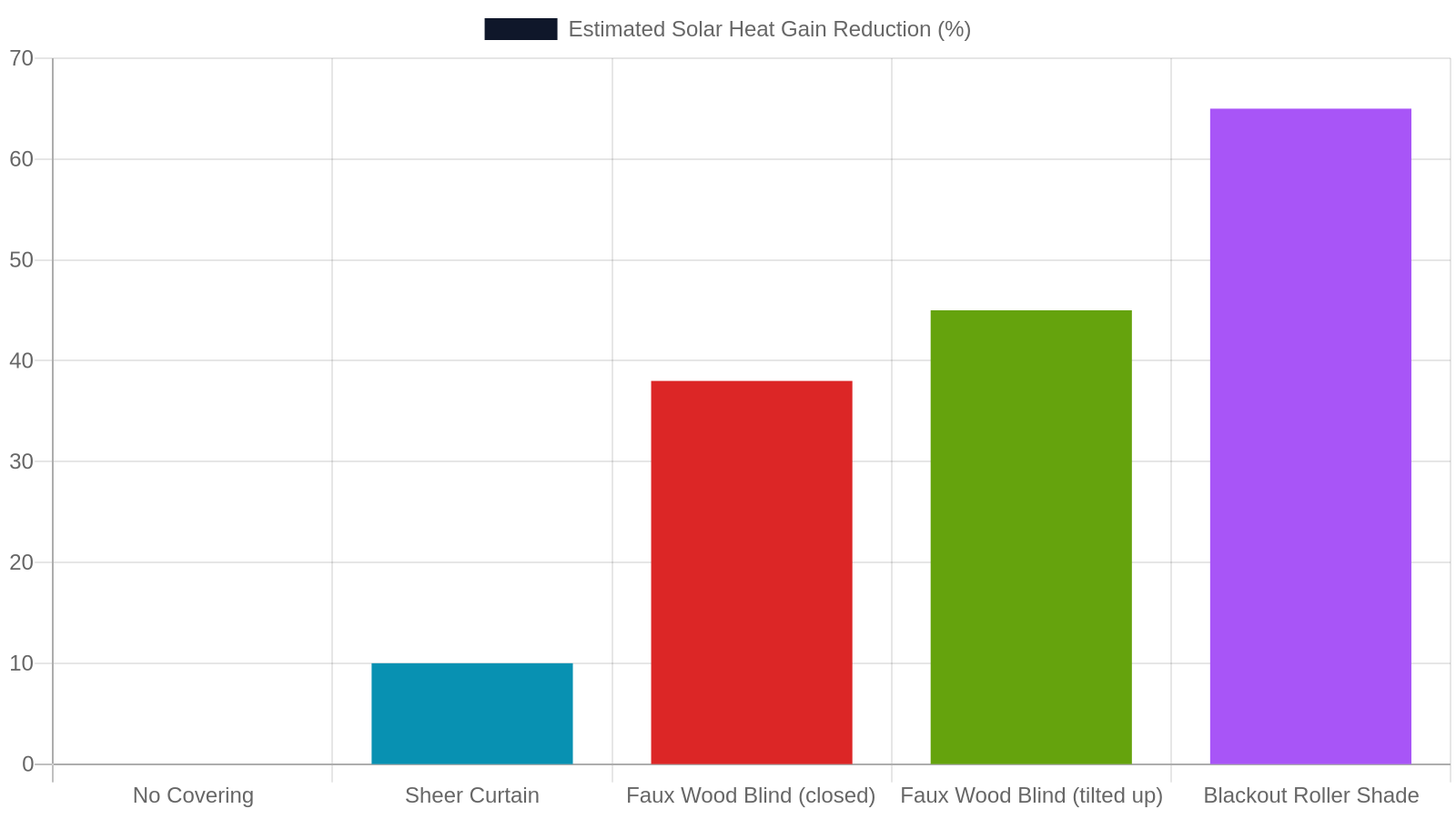
Jackson, TN summers are no joke — average July highs hover around 91°F, and bathroom windows on the south or west side of a home can let in significant solar heat gain. Closed faux wood blinds with 2-inch slats reduce solar heat gain through a window by approximately 33–45% compared to an uncovered window, according to the U.S. Department of Energy’s window treatment efficiency guidelines. That’s meaningful in a small bathroom where an air conditioner or exhaust fan is already working hard. Tilting slats upward (so the curved side faces the room) reflects more heat back toward the window while still admitting diffused light.
Privacy Levels: Full Blackout vs. Light Filtering
Standard faux wood blinds with ladder cord have small holes in each slat where the cord passes through. These holes allow a small amount of light — and visibility — even when the blind is fully closed. If your bathroom window faces a neighbor’s window or a public street, consider:
- Fabric tape (no-hole) construction: Eliminates cord holes for true privacy when closed.
- Room-darkening liner: Some faux wood blind systems accept a fabric blackout liner that attaches to the headrail, blocking all light for night-shift workers or anyone who wants total darkness.
- Top-down/bottom-up option: Lets you raise the bottom of the blind for privacy while lowering the top for natural light — a popular choice for street-facing bathrooms in Milan and Lexington neighborhoods.
Bathroom Window Treatment Options at a Glance
Use this comparison to quickly evaluate which window treatment type fits your bathroom's needs, budget, and long-term goals.
Faux Wood vs. Other Bathroom Window Treatment Options
Faux wood blinds aren’t the only moisture-resistant option for bathroom windows — but they are often the best value. Understanding how they compare to fabric shades, aluminum mini blinds, and plantation shutters helps you make the right choice for your specific bathroom, budget, and long-term goals.
Why Fabric Shades Struggle in Bathrooms
Roman shades, roller shades, and cellular shades made from fabric are popular in living rooms and bedrooms, but most fabric shades are a poor fit for bathrooms unless they’re specifically rated for high humidity. Standard fabric absorbs moisture, becomes a breeding ground for mildew, and can develop a musty smell within months in a Jackson bathroom. Moisture-resistant roller shades with a vinyl face are a partial exception — they handle humidity better than woven fabrics — but they still can’t match the cleanability and longevity of faux wood slats.
Plantation Shutters: the Premium Alternative
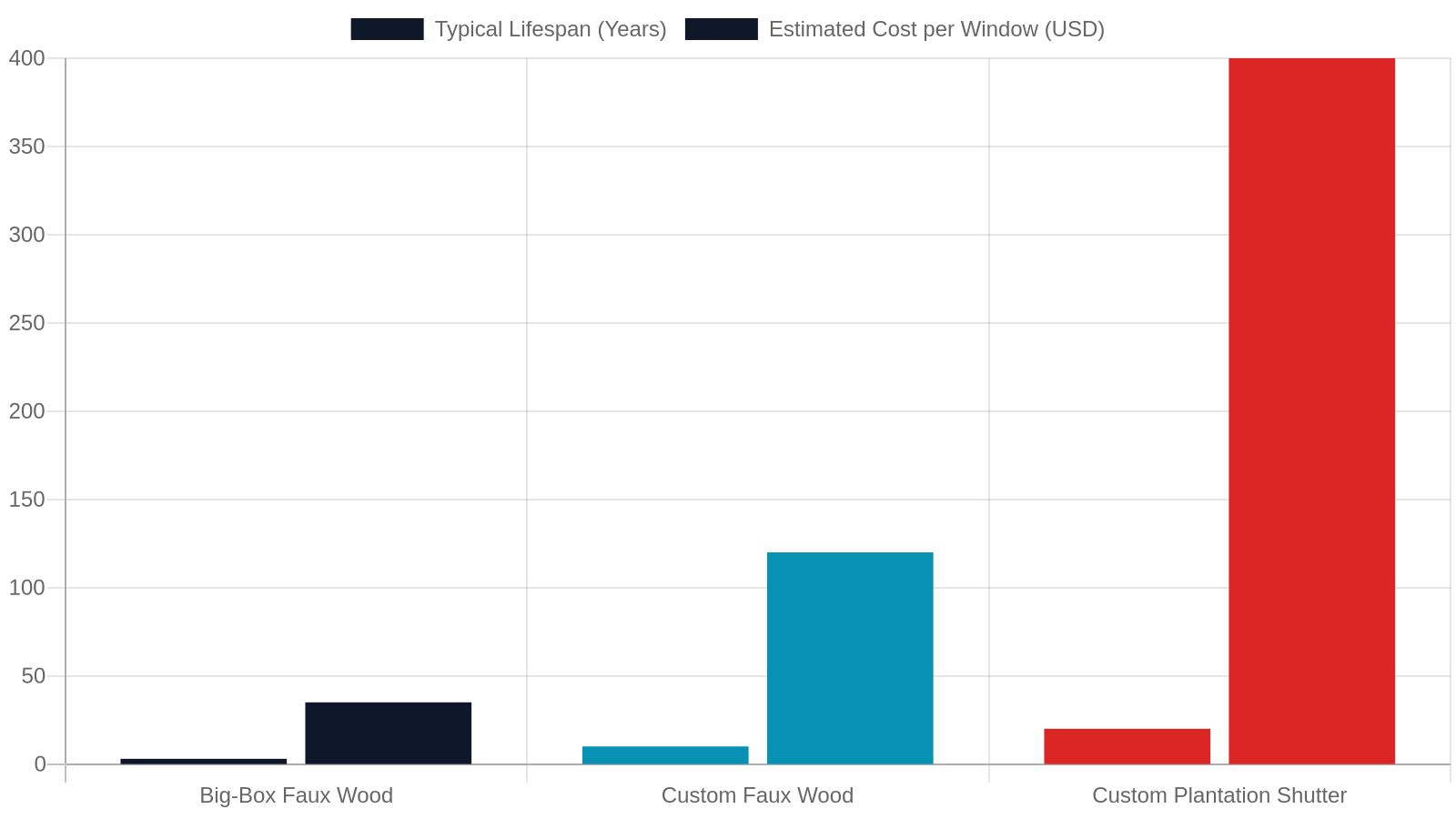
If budget allows, custom-built plantation shutters are the gold-standard bathroom window treatment. Vinyl or composite shutters are fully waterproof, incredibly durable, and add significant resale value to a home. The tradeoff is cost — custom plantation shutters typically run $250–$600 per window installed, compared to $85–$180 for a custom faux wood blind. For homeowners who plan to stay in their Jackson home long-term, shutters often make financial sense. For rental properties, investment homes, or bathrooms where budget is a priority, faux wood blinds deliver 80% of the benefit at 30–40% of the cost.
What Custom vs. Off-the-Shelf Blinds Really Means for Your Bathroom

When you’re shopping for faux wood blinds for your bathroom, you’ll encounter two very different product categories: off-the-shelf blinds from big-box retailers and custom-made blinds ordered to your exact window dimensions. The difference in quality, fit, and long-term value is significant — especially in a bathroom where fit and material quality directly affect moisture resistance.
The Problem with Big-Box Store Blinds in Bathrooms
Home improvement stores sell faux wood blinds in standard sizes — typically in 1-inch increments from 23 to 72 inches wide. If your bathroom window happens to be exactly 30 or 36 inches wide, you might get lucky. But most windows in older Jackson-area homes are non-standard sizes: 27.5 inches, 31.25 inches, 33.75 inches. A blind that’s even half an inch too narrow leaves a gap along the edge where light leaks in and neighbors can see through. A blind that’s too wide won’t fit inside the frame at all. Off-the-shelf blinds also typically use lower-grade PVC that’s thinner and more prone to warping over time.
The Custom Advantage: Fit, Quality, and Warranty
Custom faux wood blinds are manufactured to your exact measurements — down to 1/8 inch. That precision fit means:
- No light gaps around the edges
- No awkward trimming or shimming
- Better insulation value because the blind covers the full window opening
- Higher-grade materials, because custom manufacturers compete on quality rather than price-per-unit
Custom blinds also typically come with longer warranties — many brands offer 3–5 year limited warranties on faux wood bathroom blinds, compared to 90-day warranties common on big-box products. When you factor in the cost of replacing a big-box blind every 2–3 years versus a custom blind lasting 8–12 years, the custom option is often less expensive over time.
How Blinds Galore Serves Jackson, TN and Surrounding Communities

With over 18 years of experience serving Jackson, TN and the greater West Tennessee region, Blinds Galore has helped thousands of homeowners find the right window treatments for every room — including the challenging, moisture-prone bathroom. Our approach is simple: we bring the expertise and the samples to you, measure everything precisely, and install your custom blinds so they look and perform exactly as promised.
Free In-Home Consultations: the Showroom Comes to You
One of the most common frustrations with buying window treatments is trying to visualize how a sample chip will look at full scale in your actual bathroom. Blinds Galore eliminates that problem entirely. Our team brings full-size samples directly to your home in Jackson, Lexington, Henderson, Milan, and the surrounding West Tennessee communities — so you can see exactly how a white 2-inch faux wood blind looks against your tile, your vanity, and your lighting before you commit to anything. There’s no charge for the consultation, no pressure to buy, and no guesswork.
Professional Measuring and Installation
Our installers handle every measurement with professional-grade tools and years of experience in West Tennessee homes — from historic craftsman bungalows in downtown Jackson to new construction in the surrounding suburbs. We account for window depth, frame condition, and mounting surface before recommending inside or outside mount. After your custom blinds arrive, our team installs them correctly the first time, level and secure, with all hardware properly anchored. You don’t need to touch a drill or a level. And because we stand behind every installation with our 100% satisfaction guarantee, if anything isn’t right, we make it right — no runaround.
Ready to Upgrade Your Bathroom Windows? Here's Your Next Move
Your bathroom deserves window treatments that can handle West Tennessee’s humidity, protect your privacy, and look great year after year. Faux wood blinds deliver all three — and with Blinds Galore’s free in-home consultations, professional measuring, and custom installation, getting the right blind for your bathroom has never been easier. Here’s how to take the first step.
Start with a Free In-Home Consultation
The easiest way to get started is to schedule your free in-home consultation with Blinds Galore. Call us at (731) 571-5179 or visit our website to request an appointment. We’ll come to your home in Jackson, Lexington, Henderson, Milan, or anywhere in the West Tennessee area, bring our full sample collection, measure your bathroom windows precisely, and give you a detailed quote — all at no cost and no obligation.
If you’re already leaning toward faux wood and want to explore your options before we arrive, learn more about upgrading to custom faux wood blinds with Blinds Galore in West TN — it’s a great overview of what to expect from the process and the product.
What to Expect on Consultation Day
When our team arrives, here’s what happens:
- We measure every window you want treated — bathroom and beyond, if you’d like.
- We show you samples in your actual lighting and against your existing décor.
- We discuss options — slat width, color, lift system, mount type — and make a recommendation based on your bathroom’s specific conditions.
- We provide a written quote with no hidden fees.
- Once you approve, your custom blinds are ordered, and we schedule installation at your convenience.
Most bathroom window blind projects in Jackson-area homes are completed within 2–3 weeks from consultation to installation. Our 100% satisfaction guarantee means you can feel confident every step of the way. We’re your neighbors in West Tennessee, and we want your home to look and feel exactly right.
Frequently Asked Questions
Are faux wood blinds really waterproof for bathrooms?
100% PVC faux wood blinds are fully waterproof and can handle direct moisture without warping, swelling, or peeling. Wood-polymer composite faux wood blinds are moisture-resistant but not fully waterproof — they're ideal for standard bathrooms but should be kept away from direct water spray.
How long do faux wood blinds last in a humid bathroom?
A quality custom faux wood blind in a bathroom typically lasts 8–15 years with basic weekly dusting and monthly cleaning. This compares favorably to real wood blinds, which often show warping and finish failure within 2–4 years in humid conditions.
What is the best slat size for bathroom faux wood blinds?
2-inch slats are the most popular and practical choice for standard bathroom windows. They provide good light control, are easy to wipe clean, and suit most home styles. For larger windows 36 inches wide or more, 2.5-inch slats offer a bolder, more contemporary look.
Can I get faux wood blinds custom-made for oddly sized bathroom windows in Jackson, TN?
Yes. Blinds Galore specializes in custom-measured faux wood blinds for any window size, including non-standard dimensions common in older West Tennessee homes. Call (731) 571-5179 to schedule a free in-home measurement.
How do I clean faux wood blinds in a bathroom without damaging them?
For weekly maintenance, dust with a dry microfiber cloth. For deeper cleaning, wipe slats with a damp cloth and mild dish soap solution. For hard-water mineral deposits, use a 50/50 white vinegar and water solution. Avoid bleach, ammonia, and abrasive scrubbers, which can dull the PVC finish.
Are cordless faux wood blinds safer for bathrooms with children?
Yes. Cordless faux wood blinds eliminate lift cords entirely, removing the strangulation hazard that corded blinds pose for young children. The Window Covering Safety Council recommends cordless or inaccessible-cord blinds in all rooms where children are present. They're also easier to operate with one hand in a busy bathroom.
You might also like
7 Best Motorized Cellular Shades for Large Windows in Jackson, TN
Quick answer: Motorized cellular shades are the top choice for large windows in Jackson, TN homes because

9 Reasons to Choose Blinds Galore for West Tennessee Window Treatments
Quick answer: Blinds Galore is West Tennessee's go-to source for custom blinds, shades, and plantation

10 Best Custom Shades for Jackson TN Nurseries and Kids’ Rooms
Quick answer: For Jackson, TN nurseries and children's rooms, the safest and most durable custom
How to Contact Blinds Galore Jackson TN for a Free In-Home Consultation
Quick answer: Contacting Blinds Galore in Jackson, TN is simple: call (731) 571-5179 or submit a request

7 Best Custom Shades for Pet-Friendly Homes in Jackson, Tennessee
Quick answer: For pet-friendly homes in Jackson, Tennessee, the best custom shades combine durability,
10 Quick Answers About Custom Blinds and Shades for Your Jackson TN Home
Quick answer: Custom blinds and shades for your Jackson, TN home come in dozens of materials, styles,