
7 Best Custom Blinds for Sunrooms in Jackson, TN: Light Control and UV Protection Guide
Quick answer: The best custom blinds for sunrooms in Jackson, TN balance strong UV protection with flexible light control — key priorities in West Tennessee's intense sun. Top choices include solar shades (blocking up to 99% of UV rays), faux wood blinds for humidity resistance, cellular shades for insulation, and plantation shutters for timeless curb appeal. The right pick depends on your sunroom's orientation, glazing type, and how you use the space. A free in-home consultation with Blinds Galore at (731) 571-5179 takes the guesswork out of the decision.
Why Sunrooms in Jackson, TN Demand Specialized Window Treatments
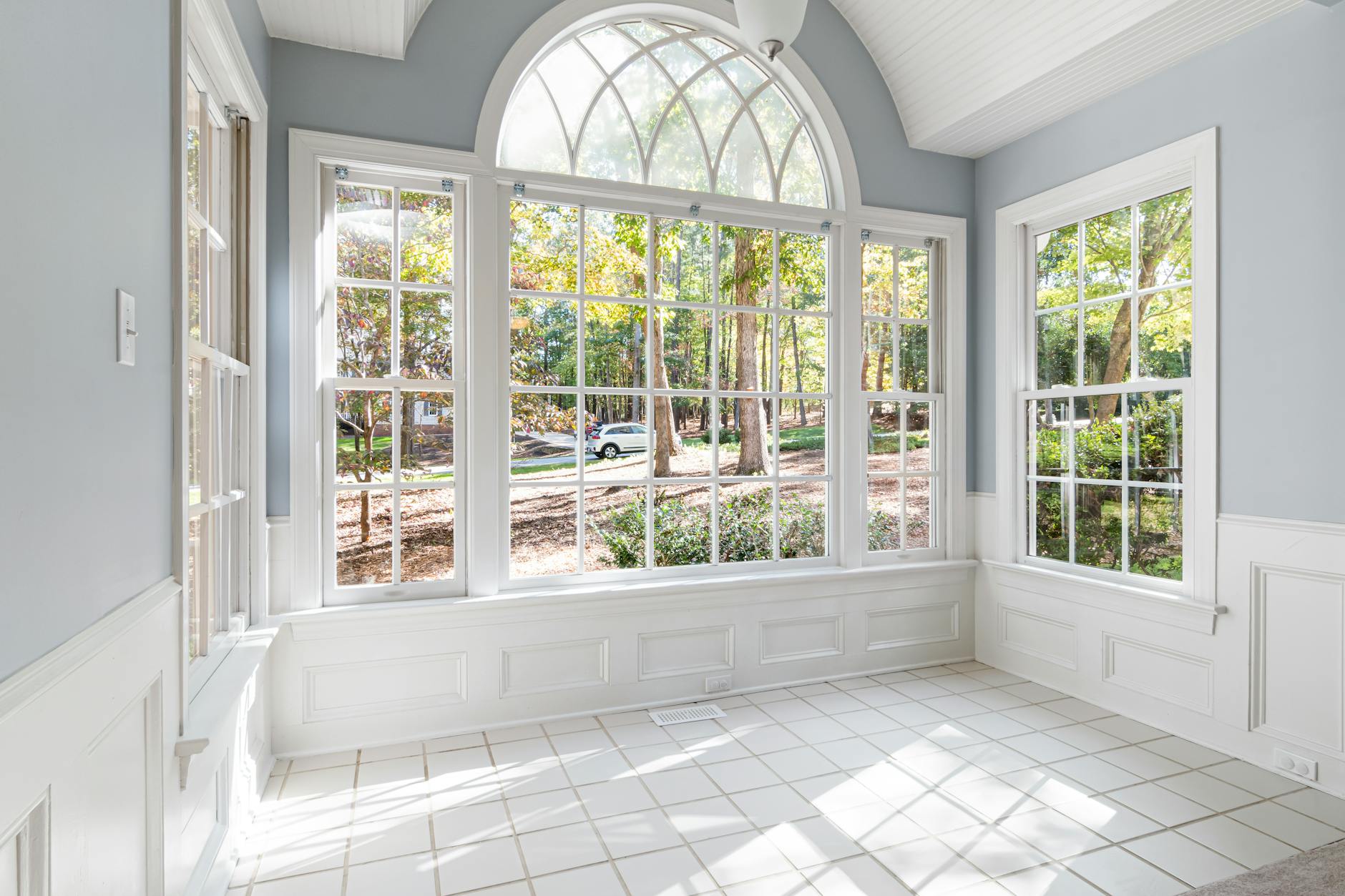
A sunroom is one of the most rewarding additions a Jackson homeowner can make — extra living space flooded with natural light, a place to enjoy West Tennessee’s mild springs and colorful falls. But that same abundance of sunlight creates real challenges: intense UV radiation, heat buildup, glare, and rapid furniture fading. Standard window treatments designed for interior rooms simply aren’t built for the sunroom’s unique microclimate. Understanding why sunrooms are different is the first step toward choosing window coverings that will look great and last for years.
West Tennessee Sun Intensity and UV Index
Jackson, TN sits at roughly 35.6° N latitude, and during peak summer months the city regularly records UV Index readings of 9–11 — classified as Very High to Extreme by the EPA. That level of solar radiation can fade upholstery by up to 40% within six months of unprotected exposure and raise sunroom surface temperatures by 15–20°F above ambient indoor air. Standard off-the-shelf blinds simply aren’t engineered for that kind of sustained punishment.
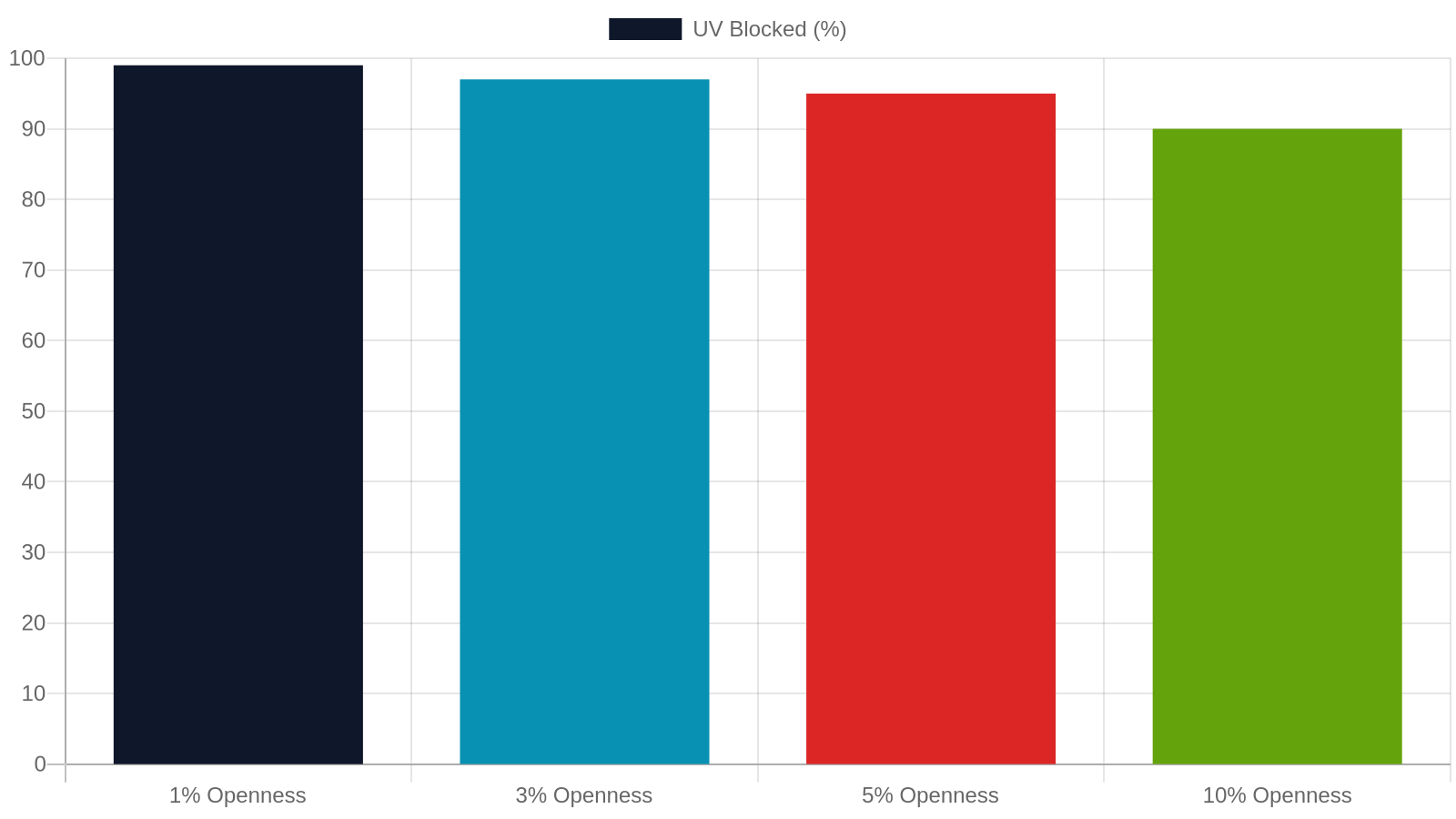
Specialized window treatments rated for solar control use materials with a defined openness factor — a percentage that describes how much light and air passes through the fabric. A lower openness factor (1–3%) blocks more UV while still preserving an outward view, making it ideal for south- and west-facing sunrooms.
Humidity and Heat Cycling in Sunroom Environments
Sunrooms experience wider temperature swings than any other room in a West Tennessee home — sometimes ranging from 55°F on a January morning to 110°F+ on a July afternoon when the sun is at full strength. That heat cycling, combined with the humidity that rolls through the Tennessee River corridor, warps natural wood, causes vinyl to yellow, and degrades adhesives in cheaper cellular shades within two to three seasons.
Materials that perform well long-term in this environment include faux wood composites, fiberglass-reinforced solar fabrics, and aluminum — all of which resist warping, cracking, and mold growth without sacrificing appearance.
1. Solar Shades — the Gold Standard for UV Protection
If protecting furniture, flooring, and artwork from UV damage is your top priority, solar shades are the single most effective window treatment you can install in a sunroom. Engineered specifically for high-sun environments, they filter ultraviolet and infrared radiation while preserving your view of the backyard — something solid blinds and shutters can’t do when closed. Here’s what makes them the go-to recommendation for many Jackson, TN sunrooms.
How Solar Shades Block UV Without Killing the View
Solar shades are woven from fiberglass or polyester coated with a UV-reflective finish. Their defining feature is the openness factor, typically expressed as 1%, 3%, 5%, or 10%. A 1% openness factor blocks approximately 99% of UV radiation while still allowing a filtered outward view — perfect for a south-facing Jackson sunroom that gets direct sun from 10 a.m. to 4 p.m. A 5% fabric lets in more diffused light and suits east-facing rooms that receive gentler morning sun.
Quality solar shades also carry a Solar Heat Gain Coefficient (SHGC) rating. Look for fabrics with an SHGC below 0.40 for maximum summer cooling benefit. In practical terms, that can translate to a 15–20% reduction in cooling costs during Jackson’s June–August peak, according to Department of Energy estimates for solar shading products.
Motorization: the Practical Upgrade for Sunrooms
Because sunrooms often have skylights, angled roof windows, or hard-to-reach high windows, motorized solar shades are especially practical. A single remote or smart-home app can adjust every shade simultaneously — critical when the afternoon sun shifts and you need to respond quickly before the room overheats. Battery-powered motors require no wiring and are a popular retrofit option for existing sunrooms in neighborhoods across Jackson, Lexington, and Henderson.
Motorized shades also eliminate the pull-cord hazard, making them a smart choice for sunrooms used as play spaces or pet areas. Expect motorized solar shades to range from $180–$420 per window for custom-sized units, depending on width and fabric choice.
2. Faux Wood Blinds — Humidity-Proof and Budget-Friendly
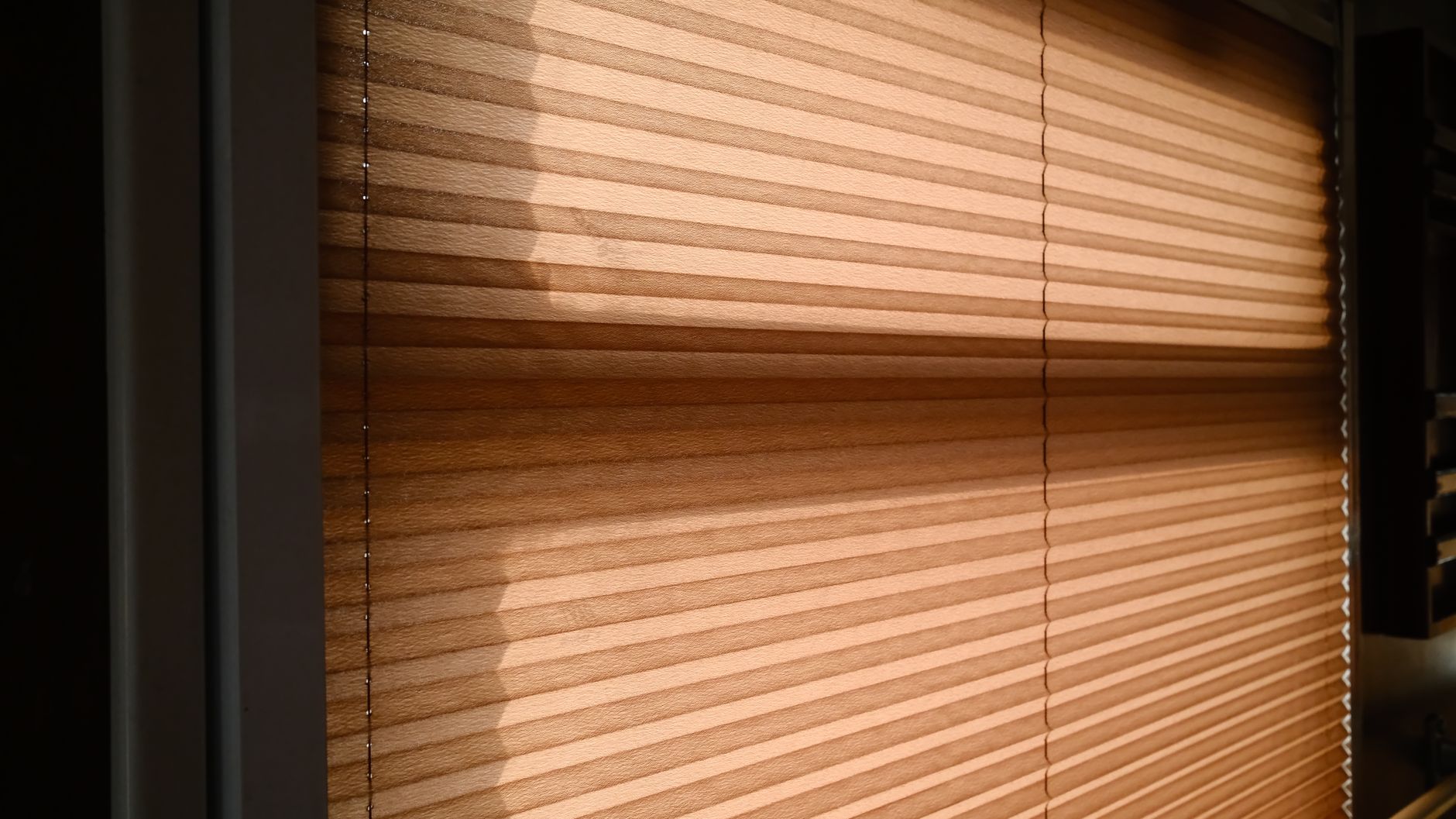
Faux wood blinds are one of the most popular window treatment choices for sunrooms across Jackson and the surrounding West Tennessee communities — and for good reason. They deliver the classic, tailored look of real wood at a fraction of the price, while handling the heat and humidity that would destroy a genuine hardwood blind within a season or two. If you want a traditional horizontal-slat blind that can take whatever a Tennessee summer throws at it, faux wood is the answer.
Why Real Wood Fails in Sunrooms
Genuine hardwood blinds are beautiful in bedrooms and living rooms, but in a sunroom they face conditions they were never designed for. Sustained heat above 90°F causes wood slats to cup, bow, and eventually crack along the grain. High humidity — common in West Tennessee from May through September — causes wood to swell, making tilt rods bind and ladders fray. Most hardwood blind warranties explicitly exclude sunroom and conservatory installations for exactly these reasons.
Faux Wood Composite: the Smart Substitute
Faux wood blinds are made from a PVC-wood composite or solid PVC that mimics the grain and warmth of real wood without any of the moisture sensitivity. They won’t warp, crack, yellow, or mold — even after years of Jackson summers. Slat widths of 2 inches and 2.5 inches are the most popular for sunrooms because wider slats provide better light blocking when closed and a cleaner stacked appearance when open.
Cost-wise, custom faux wood blinds typically run $55–$130 per window for standard sizes, making them one of the most affordable custom options available. They’re also easy to wipe clean with a damp cloth — a practical bonus in a room that may see outdoor foot traffic, pets, or potting soil. Explore Blinds Galore’s custom faux wood blind options to see the full range of stain colors and slat sizes available for West Tennessee homes.
3. Cellular Shades — the Insulation Champion
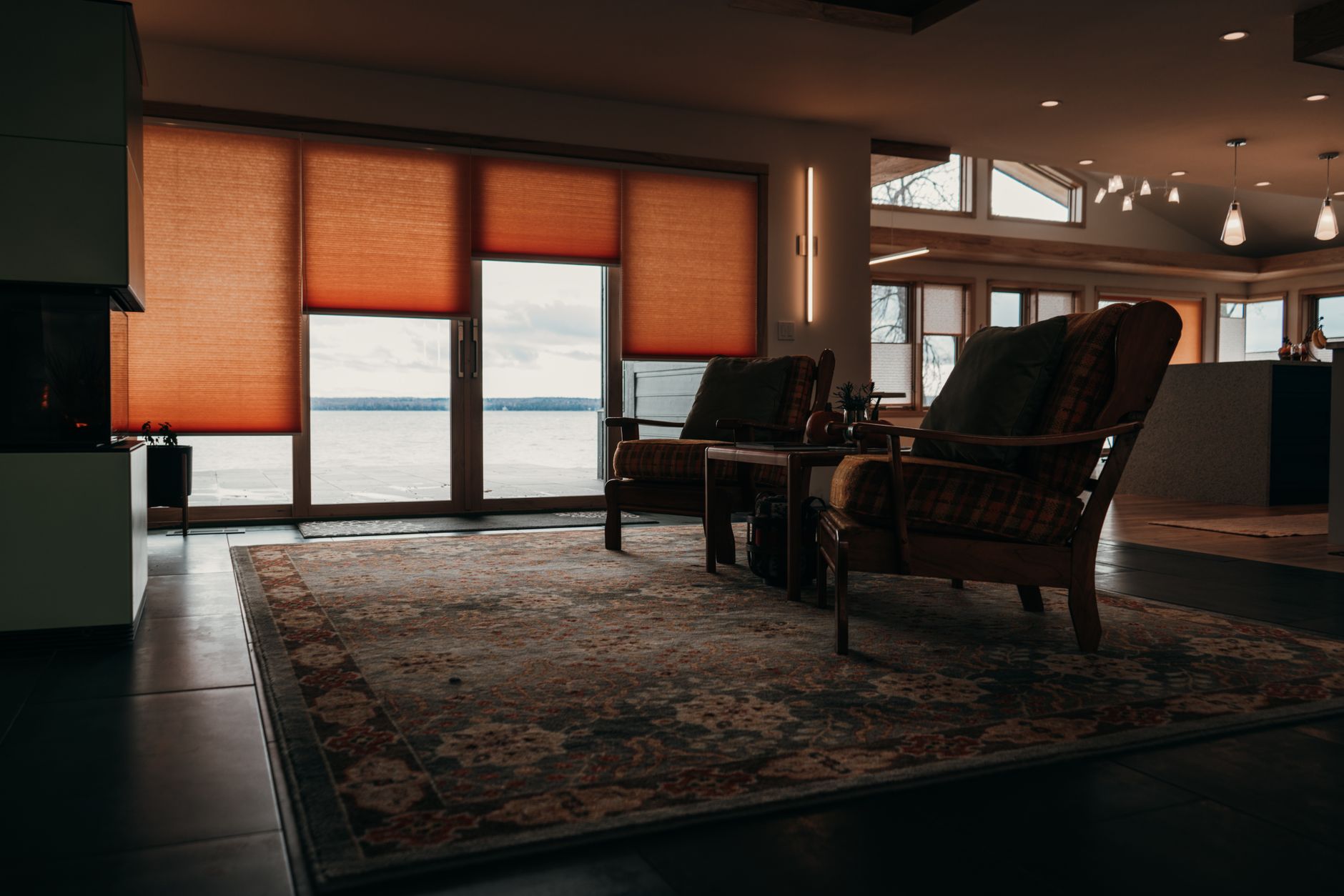
If your sunroom is a year-round living space — a reading nook, a home office, or a breakfast room — energy efficiency matters as much as light control. Cellular shades are the most thermally efficient soft window treatment on the market, and they’re a particularly smart investment for Jackson, TN homeowners dealing with both brutal summer heat and chilly January mornings. Here’s how they work and why they excel in sunroom applications.
Single-Cell vs. Double-Cell vs. Triple-Cell Construction
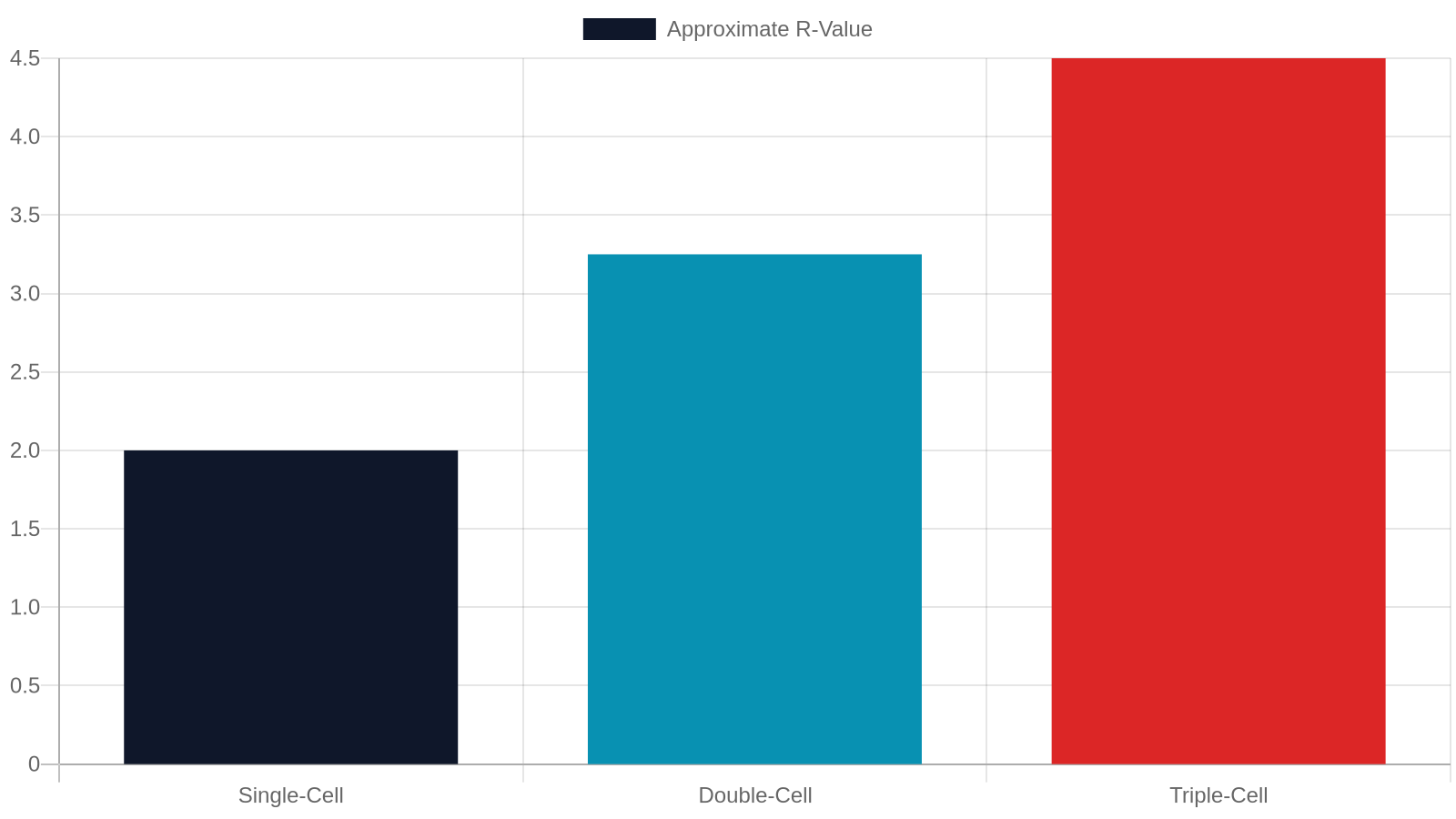
Cellular (honeycomb) shades trap air inside accordion-folded fabric cells, creating a layer of insulation between the glass and your living space. Single-cell shades offer an R-value of approximately R-2.0, double-cell shades reach R-3.0 to R-3.5, and triple-cell shades can achieve R-4.0 to R-5.0. In a sunroom with large single-pane or older double-pane glass — common in Jackson homes built before 2005 — that extra insulation makes a measurable difference in both summer cooling costs and winter comfort.
For sunrooms, double-cell shades in a light-filtering or room-darkening fabric hit the sweet spot between insulation value, UV protection, and light control. Triple-cell shades are worth the upgrade if your sunroom doubles as a year-round living space or home office.
Top-Down Bottom-Up: the Sunroom Game-Changer
One of the most useful features available on cellular shades is the top-down bottom-up (TDBU) operating system. It lets you lower the shade from the top to block overhead glare and UV while keeping the bottom raised for a clear view of the garden — or raise the bottom for privacy while still admitting natural light from above. In a sunroom, where the goal is usually to enjoy the outdoors while controlling glare, TDBU shades offer a level of flexibility that fixed horizontal blinds simply can’t match.
TDBU cellular shades are available in cordless versions for child and pet safety, and they pair beautifully with motorization for hard-to-reach sunroom windows.
4. Plantation Shutters — Timeless Style with Total Light Control
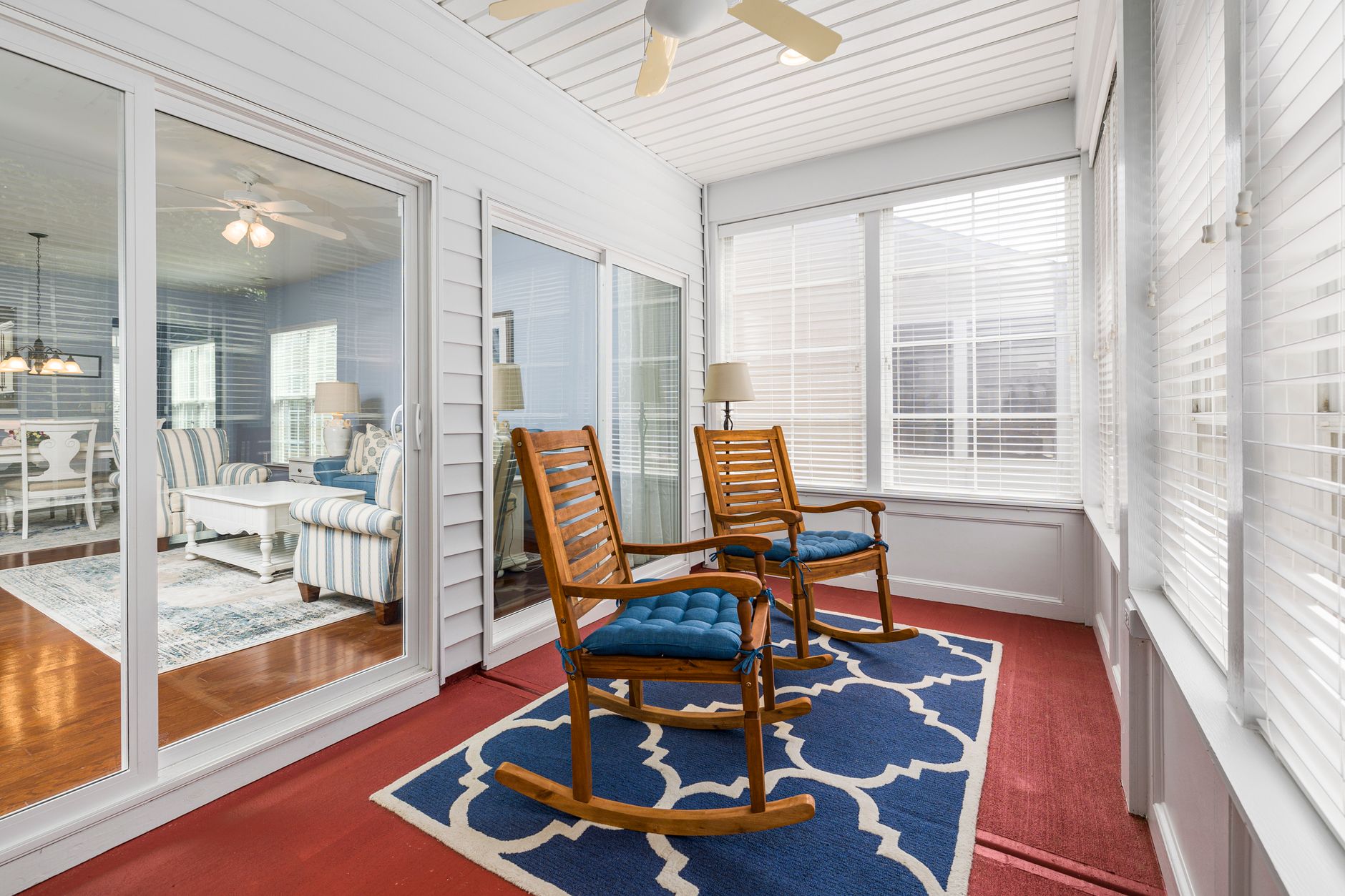
Plantation shutters are the window treatment that homeowners in Jackson, Lexington, and Henderson keep coming back to — not just because they look beautiful, but because they offer a level of durability and light control that soft treatments simply can’t match. When properly specified for a sunroom environment, composite plantation shutters will outlast every other option on this list, often by a decade or more. Here’s what to know before you invest.
Composite vs. Vinyl Shutters for Sunroom Conditions
Just as with blinds, material selection is everything in a sunroom environment. Solid wood shutters are stunning but carry the same warping and cracking risks as hardwood blinds when exposed to sustained heat. Composite shutters — made from an engineered wood core wrapped in a moisture-resistant polymer — handle sunroom conditions far better and are available in a wide range of painted finishes. Solid vinyl shutters are the most moisture-resistant option but can feel slightly less substantial than composite.
For most Jackson, TN sunrooms, composite shutters with 3.5-inch or 4.5-inch louvers are the recommended choice. Larger louvers let in more light when open and provide a more expansive view — ideal for a sunroom where the whole point is to enjoy the outdoors.
Shutters as a Permanent Architectural Feature
Unlike blinds and shades, plantation shutters are mounted directly to the window frame and become a permanent part of the room’s architecture. That permanence has a real financial upside: plantation shutters can add 2–5% to a home’s resale value, according to several real estate industry surveys, because buyers perceive them as a premium upgrade rather than a decorative accessory. In a competitive Jackson, TN real estate market, that distinction matters.
Shutters also offer the most precise light control of any window treatment. Each louver can be tilted independently, and individual panels can be folded open for full ventilation — a feature that’s genuinely useful on those perfect West Tennessee spring mornings when you want to open the sunroom to fresh air. Learn more about Blinds Galore’s custom-built shutters and the finish options available for sunroom installations.
5. Roller Shades — Clean Lines and Versatile Light Filtering
Roller shades have evolved well beyond the basic pull-down shades of a generation ago. Today’s custom roller shades offer a sophisticated range of fabrics, operating systems, and UV-protection ratings that make them a genuinely competitive choice for sunroom installations. Their clean, minimal profile is especially popular in contemporary and transitional-style sunrooms where a streamlined look is the goal.
Blackout, Light-Filtering, and Sheer Roller Fabrics Compared
Roller shades are deceptively simple — a single piece of fabric that rolls up into a compact tube — but the range of available fabrics makes them one of the most versatile options for sunrooms. Sheer roller shades (similar in function to a solar shade but with a softer, more fabric-like appearance) diffuse light and reduce glare without blocking the view. Light-filtering fabrics soften sunlight significantly while maintaining a bright, airy feel. Room-darkening and blackout fabrics are useful if your sunroom doubles as a media room or if afternoon glare becomes genuinely unmanageable.
For UV protection, choose roller fabrics with a UPF 50+ rating — a standard borrowed from outdoor apparel that guarantees the fabric blocks at least 98% of UV-A and UV-B radiation.
Banded (Zebra) Shades: the Transitional Option
Banded shades, sometimes called zebra or transitional shades, alternate between sheer and solid fabric bands that can be aligned to create varying degrees of light control. When the sheer bands align with the openings, you get a filtered, airy look. When the solid bands align, you get near-complete privacy and light blocking. This dual-mode functionality is particularly appealing in sunrooms where the light conditions shift dramatically between morning and afternoon — a common scenario for east-facing sunrooms in Jackson neighborhoods like Northgate or Lambuth.
Banded shades are available in cordless and motorized versions and pair well with smart-home systems for automated scheduling.
6. Aluminum Mini Blinds — the Practical, Low-Cost Workhorse

Every guide to sunroom window treatments should include an honest look at aluminum mini blinds — not as the top pick for most homeowners, but as a practical option for specific situations. Understanding where they fit (and where they don’t) helps you make a fully informed decision rather than ruling them out reflexively or choosing them by default because they’re cheap.
Where Aluminum Mini Blinds Make Sense in a Sunroom
Aluminum mini blinds aren’t glamorous, but they’re worth including in an honest guide because they genuinely excel in specific sunroom scenarios. If you have a utility sunroom — a potting shed conversion, a laundry porch, or a workshop with windows — aluminum blinds offer complete light control, zero moisture sensitivity, and a price point of $20–$60 per window for custom sizes. They won’t warp, rust, or mold, and they’re easy to hose off if they get dirty.
For a finished, livable sunroom where aesthetics matter, aluminum mini blinds are usually not the first recommendation. But for landlords managing rental properties in Milan or Henderson who need durable, cost-effective sunroom window coverings, they’re a legitimate choice.
Slat Width and Finish Choices That Improve Appearance
If you do choose aluminum blinds for a sunroom, a few specification choices dramatically improve their appearance. 1-inch micro-mini slats have a more refined look than the classic 1-inch standard slat and stack more compactly when raised. Matte or satin finishes in warm neutrals (champagne, bronze, sand) look far more intentional than the institutional silver-gray that most people picture. Some manufacturers offer embossed wood-grain finishes on aluminum slats that bridge the gap between the durability of metal and the warmth of a wood look.
Sunroom Window Treatment Comparison at a Glance
Use this side-by-side comparison to quickly evaluate each option against the factors that matter most for a Jackson, TN sunroom.
7. Motorized and Smart-Home Window Treatments for Sunrooms
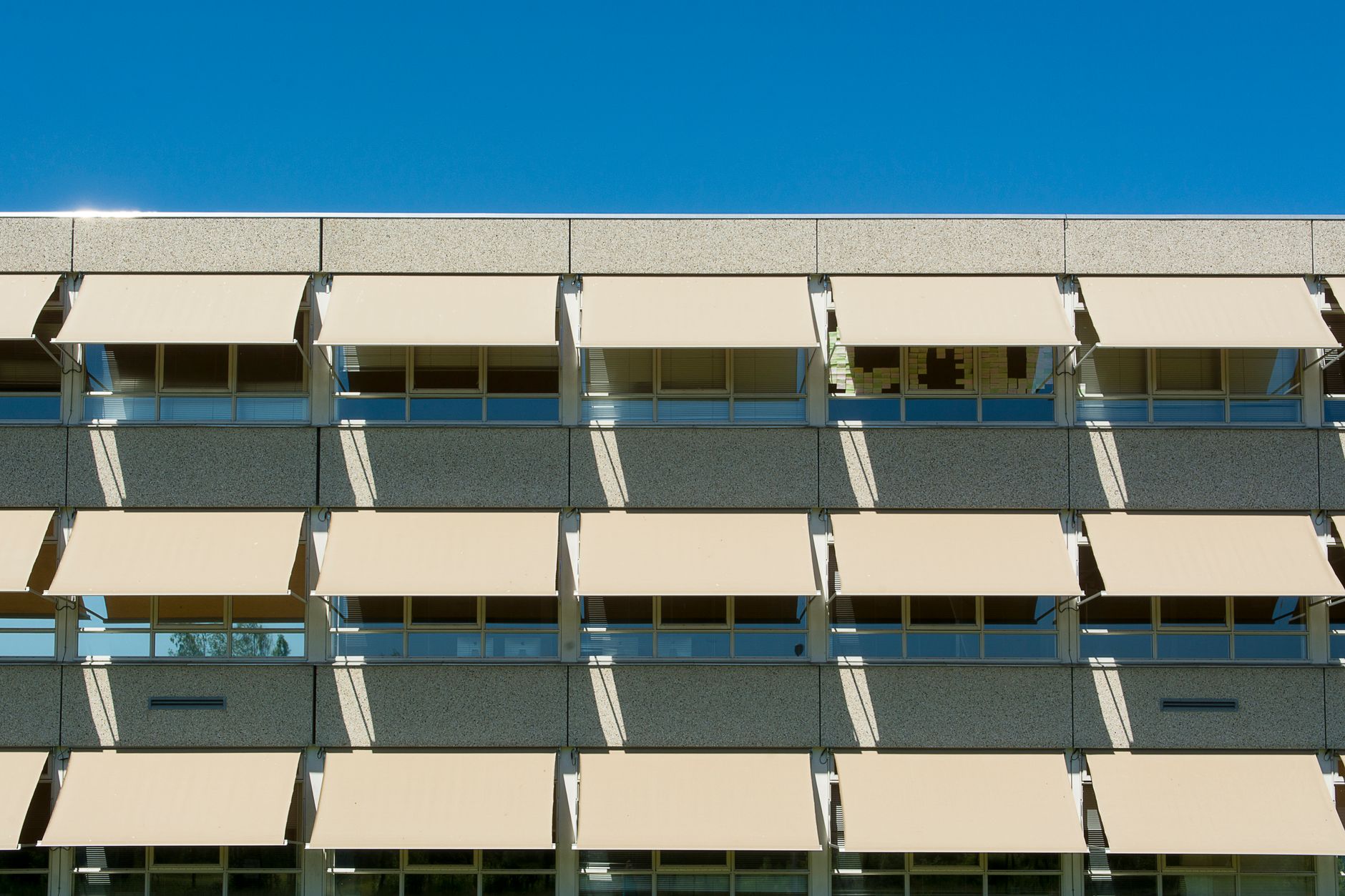
Motorization isn’t just a luxury upgrade — in a sunroom, it’s often the most practical solution to real access and usability challenges. Whether you’re controlling a single skylight or orchestrating a whole-room shading strategy tied to the sun’s position, today’s motorized window treatment systems are more reliable, more affordable, and more compatible with existing smart-home setups than ever before. Here’s what Jackson homeowners should know before specifying motorized shades for their sunroom.
Why Motorization Matters More in Sunrooms Than Anywhere Else
Sunrooms often have windows in locations that are difficult or impossible to reach manually — skylights, clerestory windows above door height, angled roof panels, or large picture windows flanked by fixed glass. Motorized window treatments solve all of these access problems elegantly. A single app command or voice instruction to a smart speaker can raise or lower every shade in the room simultaneously, a genuine quality-of-life upgrade when the afternoon sun shifts and you need to respond in seconds before the room becomes uncomfortable.
Battery-powered motors — now available from most major manufacturers — require no electrical wiring and are a clean retrofit option for existing sunrooms. Rechargeable battery wands last six to twelve months per charge under typical use, and some models include a solar charging panel that mounts discreetly on the windowsill.
Smart Scheduling and Sun-Tracking Automation
The most advanced motorized systems integrate with smart-home platforms like Amazon Alexa, Google Home, and Apple HomeKit to enable sun-position scheduling. The system knows your home’s GPS coordinates and automatically adjusts shades based on the sun’s actual position relative to each window — not just a time-of-day schedule. For a south-facing Jackson sunroom, that means shades lower automatically as the sun crests the roofline around 10 a.m. and raise again after 4 p.m. when direct exposure ends, all without any manual input.
This kind of automation can reduce peak cooling load by up to 23% on hot summer days, according to Lawrence Berkeley National Laboratory research on dynamic window shading. Over a Jackson, TN summer with average cooling costs of $180–$250/month, that’s a meaningful saving.
How to Choose the Right Option for Your Specific Sunroom
The seven options covered in this guide each have genuine strengths — but the best choice for your sunroom depends on factors specific to your home, your lifestyle, and your budget. Two homeowners in Jackson with identical sunrooms might make completely different and equally correct choices based on how they use the space. Here’s a practical framework for narrowing down your options.
Orientation: Which Direction Does Your Sunroom Face?
Window orientation is the single most important factor in selecting sunroom window treatments. South-facing sunrooms receive the most intense, sustained direct sun and benefit most from low-openness-factor solar shades (1–3%) or plantation shutters with large louvers. West-facing sunrooms get brutal late-afternoon sun — the hottest of the day — and are strong candidates for motorized shades that can respond quickly as the sun moves. East-facing sunrooms receive gentler morning light and can often use a 5% solar shade or a light-filtering cellular shade without overheating. North-facing sunrooms rarely overheat and prioritize diffused natural light over UV blocking.
Glazing Type and Existing UV Protection
Modern low-E glass already blocks a significant portion of UV radiation — typically 70–90% depending on the coating. If your sunroom was built or re-glazed after 2010 with low-E glass, you may not need the most aggressive UV-blocking fabric. A 5% solar shade or a light-filtering cellular shade may be sufficient. If your sunroom has older single-pane or standard double-pane glass without a low-E coating, you’ll want to compensate with a more aggressive window treatment — a 1–3% solar shade or solid plantation shutters.
Not sure what glazing you have? Hold a lighter flame near the glass surface: low-E glass will show a slightly different-colored reflection in one of the flame images. Or simply call Blinds Galore at (731) 571-5179 — during a free in-home consultation, we assess your existing glass and recommend treatments calibrated to your actual UV exposure.
Installation Tips and Common Sunroom Mistakes to Avoid

Even the best window treatment will underperform if it’s incorrectly specified or installed. Sunrooms present installation challenges that standard bedroom or living-room windows don’t — shallow frames, non-standard shapes, and exposure to conditions that test every fastener and bracket. Here are the most common mistakes Jackson homeowners make when installing sunroom window treatments, and how to avoid them.
Inside Mount vs. Outside Mount in Sunrooms
Most sunroom windows have shallow frames — sometimes as little as 1.5 inches of depth — because the structural framing is thinner than in a traditional wall. This can make inside-mount installations challenging or impossible for cellular shades and some roller shades, which require a minimum depth of 2–3 inches to mount properly without the shade fabric contacting the glass. Outside-mount installations — where the bracket attaches to the wall or casing above the window — are often the cleaner solution in sunrooms and allow the shade to cover the entire window opening plus a few inches of frame, reducing light gaps at the edges.
Measuring for Non-Standard Sunroom Windows
Sunrooms frequently include non-standard window shapes: trapezoids, triangles, arched tops, and angled skylights that don’t appear in any standard blind catalog. Custom fabrication is the only real solution for these openings, and accurate measurement is critical — a mistake of even 1/4 inch can mean a blind that won’t close fully or a shade that binds in its track. Professional measuring, which Blinds Galore provides at no charge as part of every free in-home consultation, eliminates this risk entirely.
We serve homeowners throughout Jackson, Lexington, Henderson, Milan, and surrounding West Tennessee communities. If you’ve been putting off your sunroom window treatments because the windows seem too complicated, that’s exactly the situation where a professional measuring visit pays for itself.
Ready to Transform Your Sunroom? Start with a Free In-Home Consultation

You’ve done the research — now it’s time to see these options in your own sunroom. The best way to make a confident decision about custom blinds, shades, or shutters is to see real samples in your real light, measured precisely for your actual windows. That’s exactly what Blinds Galore offers at no cost and no obligation to homeowners throughout Jackson, Lexington, Henderson, Milan, and the greater West Tennessee area. Call us today at (731) 571-5179 to schedule your free in-home consultation and take the first step toward a sunroom you’ll love year-round.
What to Expect from a Blinds Galore In-Home Visit
Blinds Galore brings the showroom directly to your Jackson, TN home — no driving to a store, no guessing how a sample will look in your actual light. During a free in-home consultation, a Blinds Galore specialist will assess your sunroom’s orientation, glazing type, and existing décor; take precise measurements of every window including any non-standard shapes; and present fabric and material samples in your actual space so you can see exactly how they’ll look before committing.
Every installation is backed by a 100% satisfaction guarantee and performed by Blinds Galore’s own professional installation team — not a third-party contractor. With over eighteen years of experience serving West Tennessee homeowners, we’ve handled every sunroom configuration imaginable, from simple three-window additions to complex multi-panel conservatories.
Stay Informed: More Window Treatment Resources
Choosing the right window treatments for your sunroom is just one piece of the puzzle. Whether you’re updating a single room or outfitting an entire home, staying informed helps you make decisions you’ll be happy with for years. Visit the Blinds Galore blog for ongoing tips on window treatment care, seasonal light-control strategies, and the latest product innovations for West Tennessee homeowners. You’ll find guides on everything from cleaning plantation shutters to choosing the right shade opacity for a home office.
You can also explore our full custom shades collection to see the complete range of solar, cellular, roller, and specialty shade options available for sunrooms and every other room in your home.
Frequently Asked Questions
What are the best blinds for a sunroom to prevent UV damage?
Solar shades with a 1–3% openness factor are the most effective option for UV protection, blocking 97–99% of ultraviolet radiation while still preserving your view. Composite plantation shutters and UPF 50+ roller shades are strong alternatives if you prefer a different aesthetic.
Can I use real wood blinds in my sunroom?
Real wood blinds are not recommended for sunrooms. Sustained heat above 90°F and high humidity — common in Jackson, TN from May through September — cause wood slats to warp, crack, and swell. Faux wood composite blinds or composite plantation shutters deliver the same warm look without the moisture sensitivity.
How much do custom sunroom blinds cost in Jackson, TN?
Costs vary widely by material and operating system. Aluminum mini blinds start around $20–$60 per window; faux wood blinds run $55–$130; cellular and roller shades range from $80–$250; and plantation shutters typically cost $200–$500 per window for composite units. Motorization adds $80–$200 per shade. Blinds Galore offers free in-home consultations to provide an accurate quote for your specific windows.
Are motorized shades worth it for a sunroom?
Yes, especially if your sunroom has skylights, high windows, or multiple large windows that are difficult to reach manually. Motorized shades allow you to adjust all treatments simultaneously from an app or remote, and smart-scheduling features can reduce peak cooling costs by up to 23% on hot summer days.
Do plantation shutters work well in sunrooms?
Composite plantation shutters are an excellent sunroom choice — they resist heat, humidity, and UV degradation far better than solid wood shutters, offer precise light control through adjustable louvers, and can add 2–5% to your home's resale value. Choose 3.5-inch or 4.5-inch louvers for the best light management in a sunroom.
How do I know if my sunroom glass already has UV protection?
Low-E glass, common in sunrooms built or re-glazed after 2010, blocks 70–90% of UV radiation on its own. You can do a rough check by holding a lighter near the glass and looking at the flame reflections — low-E glass shows a slightly different color in one reflection. For a definitive assessment, schedule a free in-home consultation with Blinds Galore at (731) 571-5179 and we'll evaluate your glazing and recommend the right treatment level.
You might also like

How to Install Custom Faux Wood Blinds in Your Jackson, TN Home: a 10-Step Guide
Quick answer: Installing custom faux wood blinds in a Jackson, TN home is a manageable DIY project for
How to Choose the Right Window Treatment Style Using Product Videos
Quick answer: Choosing the right window treatment — blinds, shades, or plantation shutters — comes
7 Best Custom Blinds for Laundry Rooms and Utility Spaces in Jackson, TN
Quick answer: The best custom blinds for laundry rooms and utility spaces in Jackson, TN are moisture-resistant

8 Best Custom Blinds for Kitchens with Large Windows in Jackson, TN
Quick answer: For kitchens with large windows in Jackson, TN, the best custom blinds balance moisture

9 Best Window Treatments for Jackson TN Home Theaters and Media Rooms
Quick answer: For home theaters and media rooms in Jackson, TN, the single best window treatment is a
7 Best Custom Blinds for Sunrooms and Screened Porches in Jackson, TN
Quick answer: The best custom blinds for sunrooms and screened porches in Jackson, TN balance UV protection,